

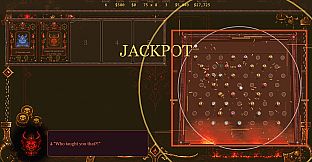
Pegs of Hell ist ein Einzelspieler-Strategiespiel mit Casual-Elementen, das Pachinko-Mechaniken mit Roguelike-Fortschritt und Brettbau-Entscheidungen verbindet. Spieler konstruieren eigene Maschinen auf handgefertigten Layouts, um steigende Quoten zu erreichen, bevor das Haus ihre Seele als Pfand einbehält.
Gameplay
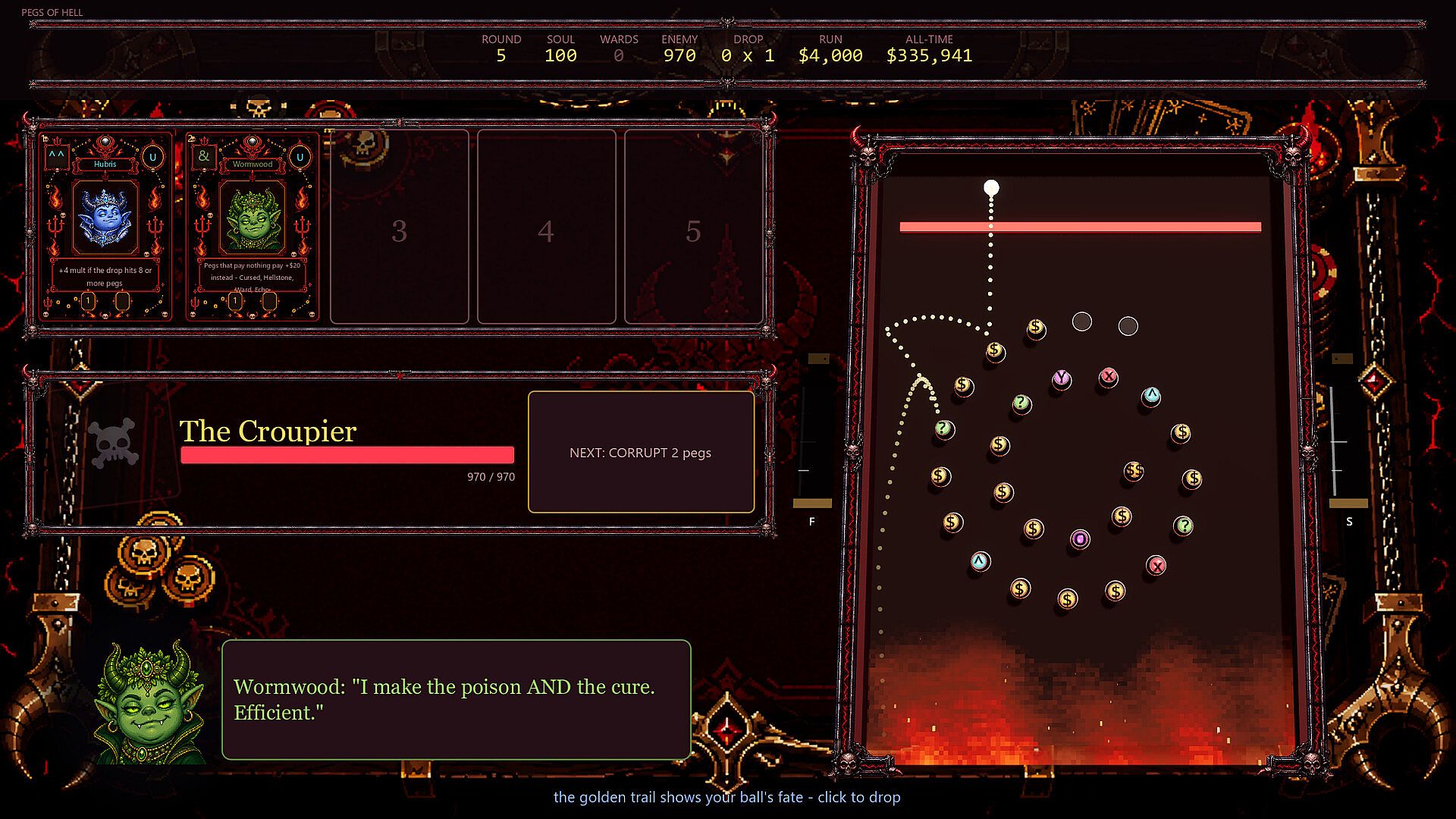
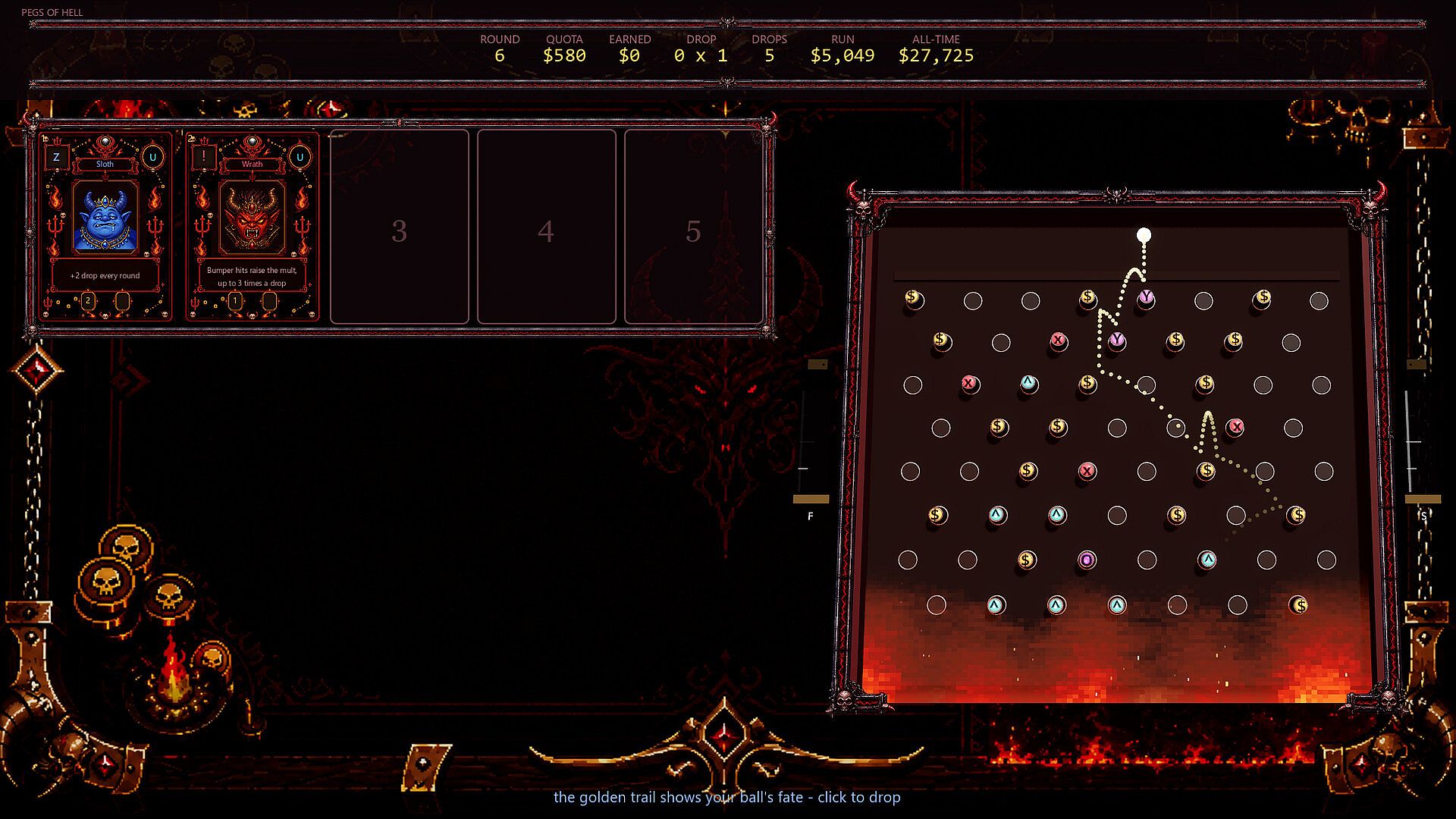
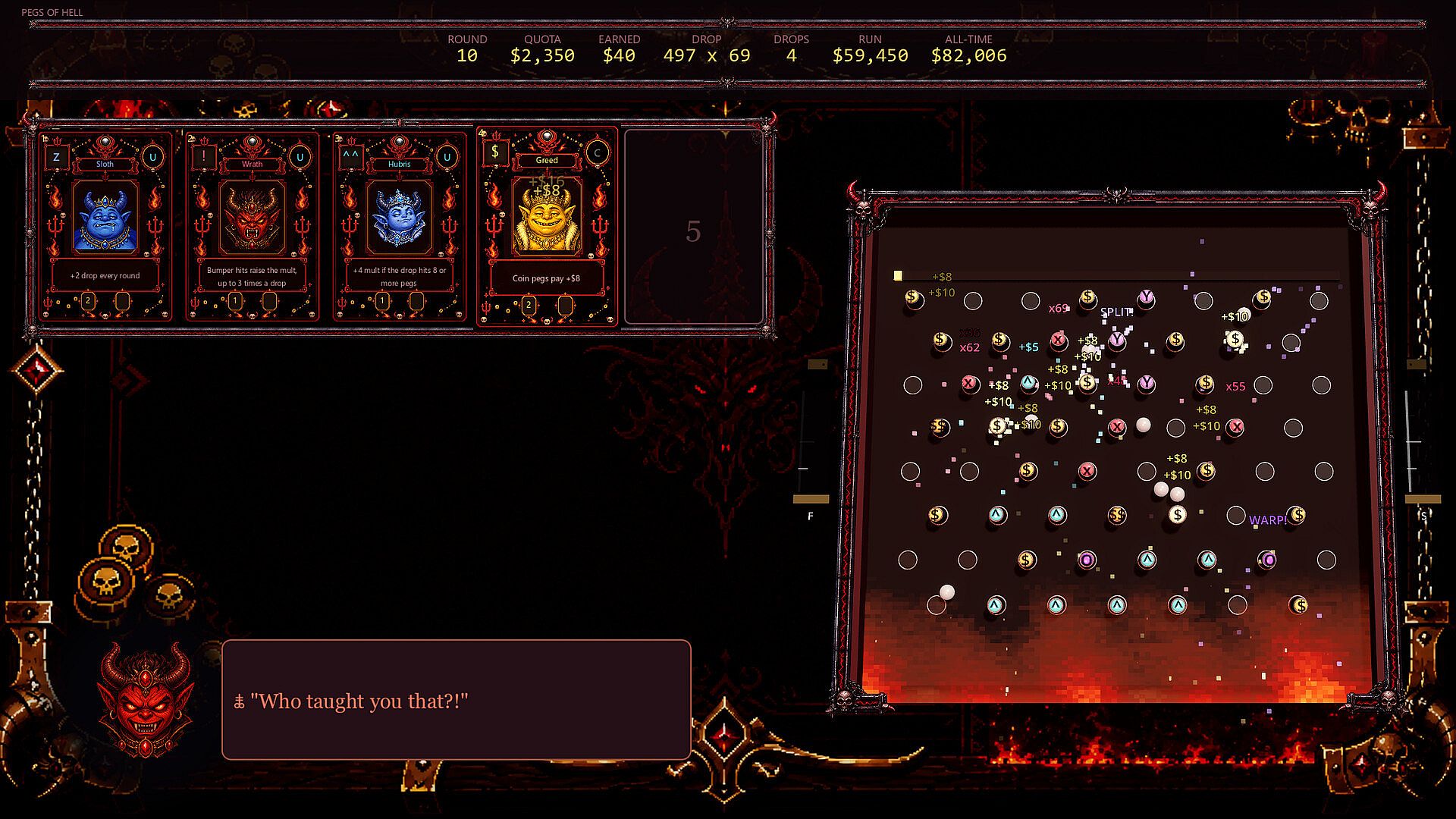
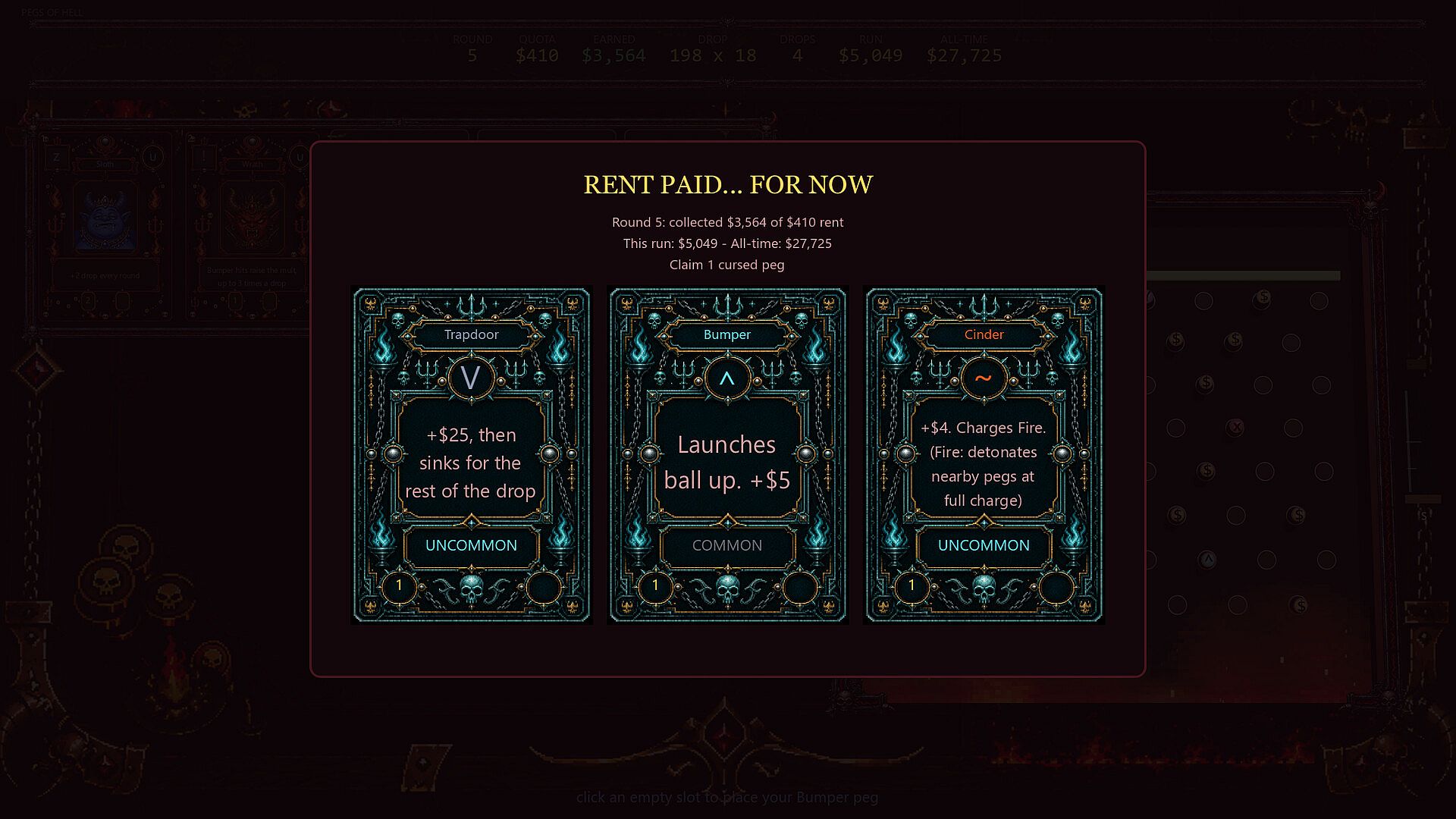
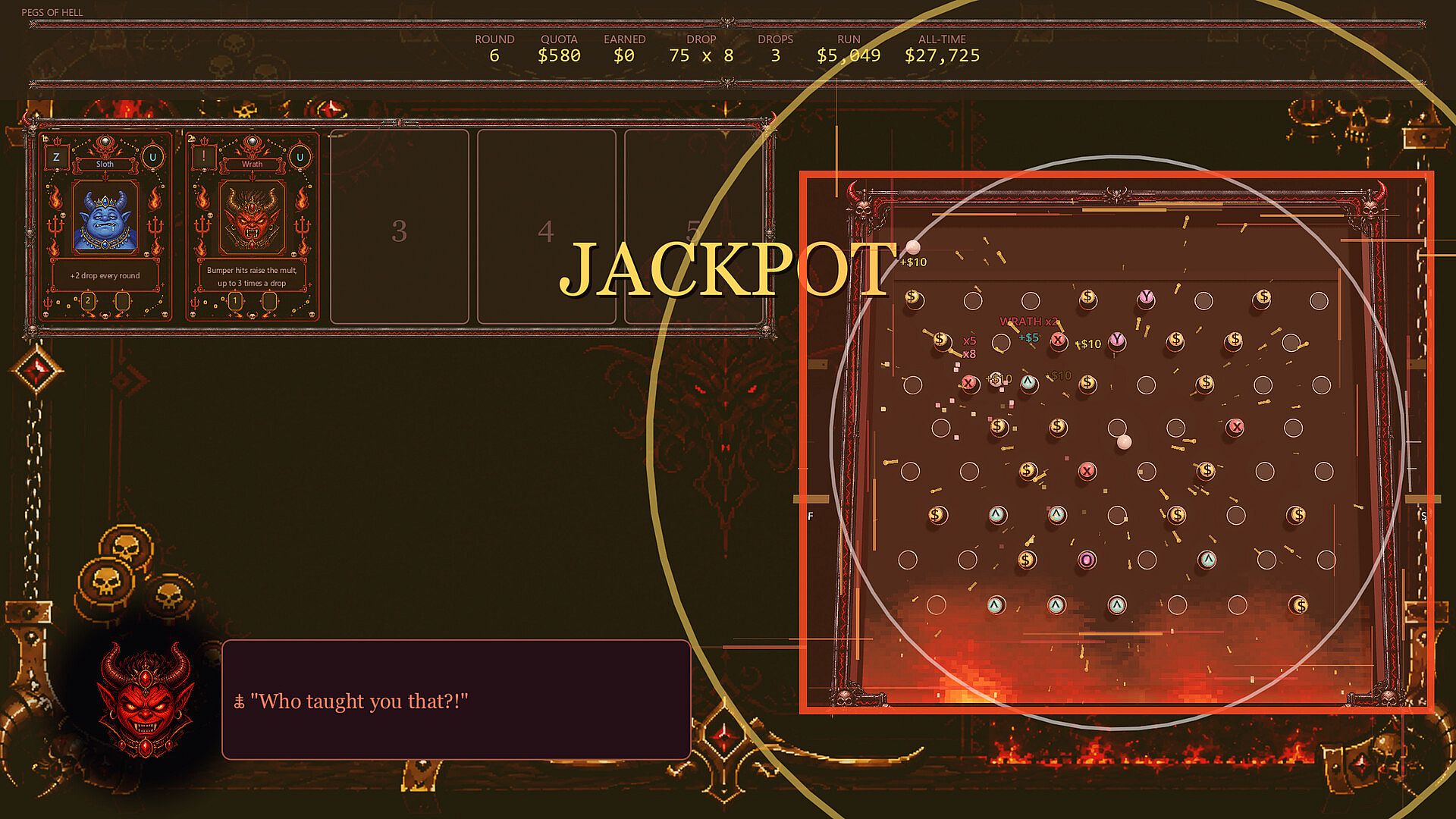
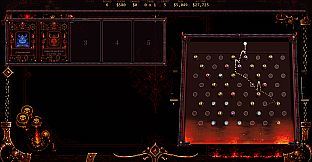
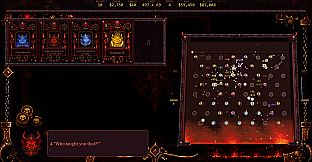
Im Zentrum steht das Platzieren von Pegs, um fallende Bälle durch immer komplexere Muster zu lenken. Jeder Wurf beginnt mit einer Zielhilfe, die die genaue Flugbahn anzeigt. Der Ball interagiert mit jedem Peg, den er berührt, und erzeugt dadurch Einnahmen, Multiplikatoren, Splits, Umleitungen oder Wiederbelebungen. Die verschiedenen Peg-Typen beeinflussen die Physik direkt: Splitter erzeugen zusätzliche Bälle, Magnete ziehen Flugbahnen an, Portale bringen Bälle zurück ins Spiel, Echos wiederholen Effekte, Revenants öffnen Falltüren erneut und Bumper schleudern Bälle wieder nach oben. Elementare Pegs für Feuer, Funken, Erde und Wasser sammeln Ladung, die bestimmte Formationen und Kettenreaktionen auf dem Brett belohnt.
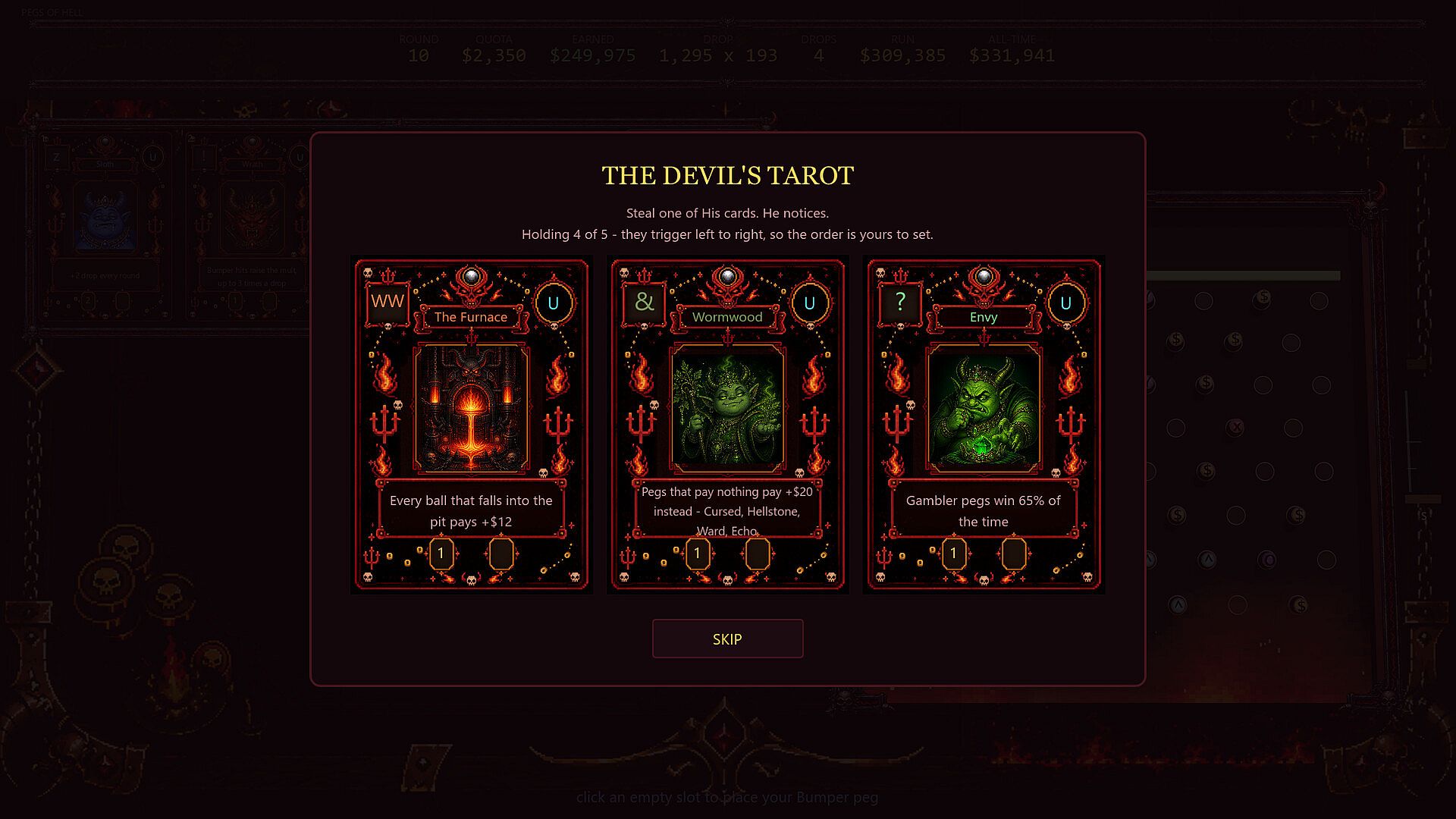
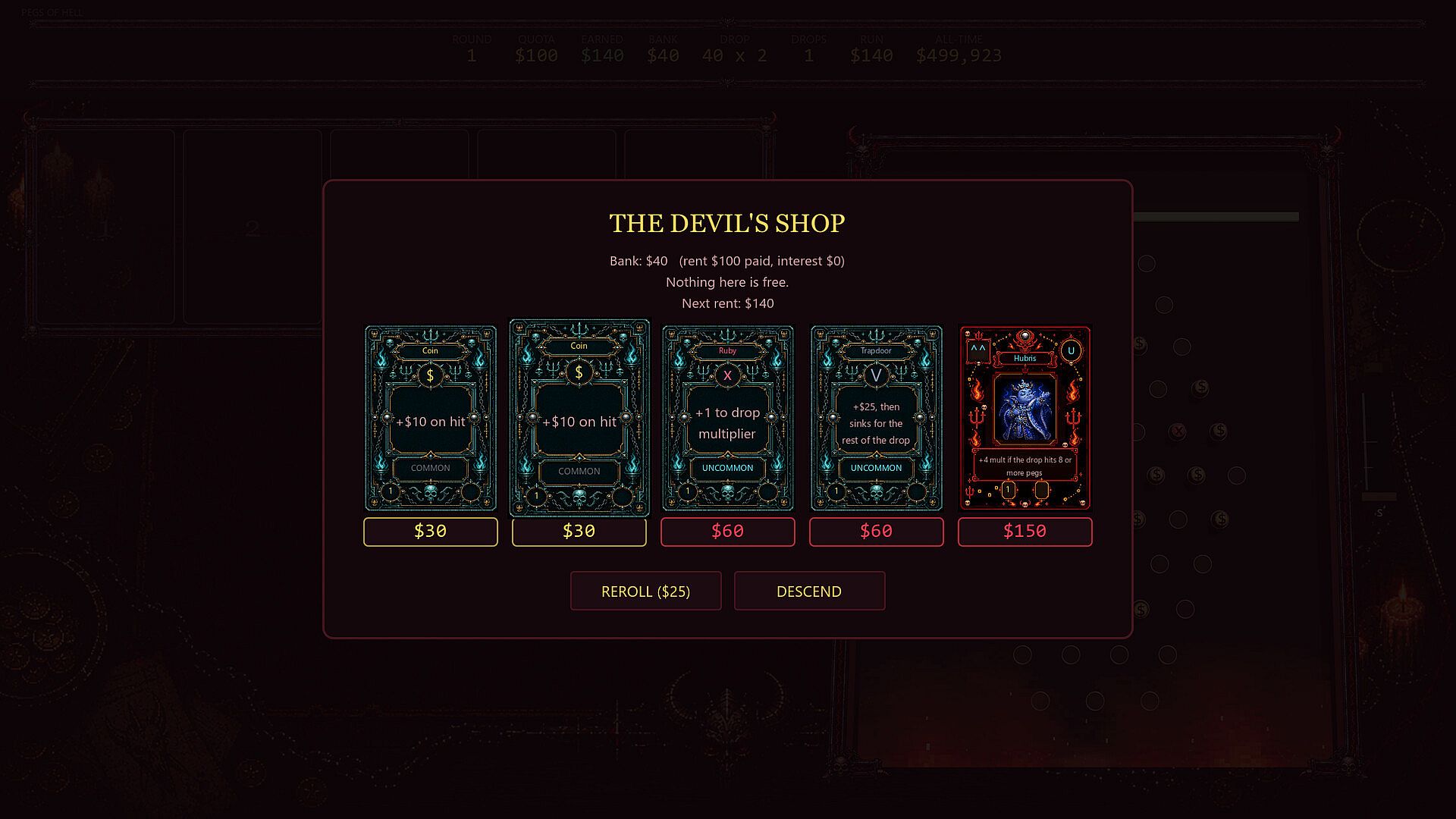
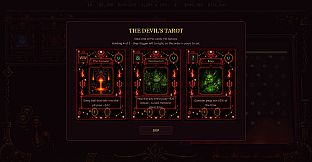
Neben dem Brett liegen fünf Arcana-Karten, die von links nach rechts aktiviert werden - ihre Reihenfolge beeinflusst daher die Endwertung. Spieler können sie jede Runde neu anordnen, um Multiplikatoren und Fähigkeiten optimal zu nutzen. In entscheidenden Momenten lässt sich eine Arcana verbrennen, um ihren Platz gegen eine dauerhafte Ewige Kraft einzutauschen, etwa zusätzliche Würfe pro Runde oder verändertes Peg-Verhalten. Upgrades verzweigen sich über 95 Pfade mit jeweils fünf Stufen und wirken sich auf alle Pegs eines Typs auf dem aktuellen Brett aus. Lebenslange Einnahmen schalten seltenere Pegs und Arcana für spätere Versuche frei, die in illustrierten Grimoiren mit Höchstwerten und Kräften festgehalten werden.
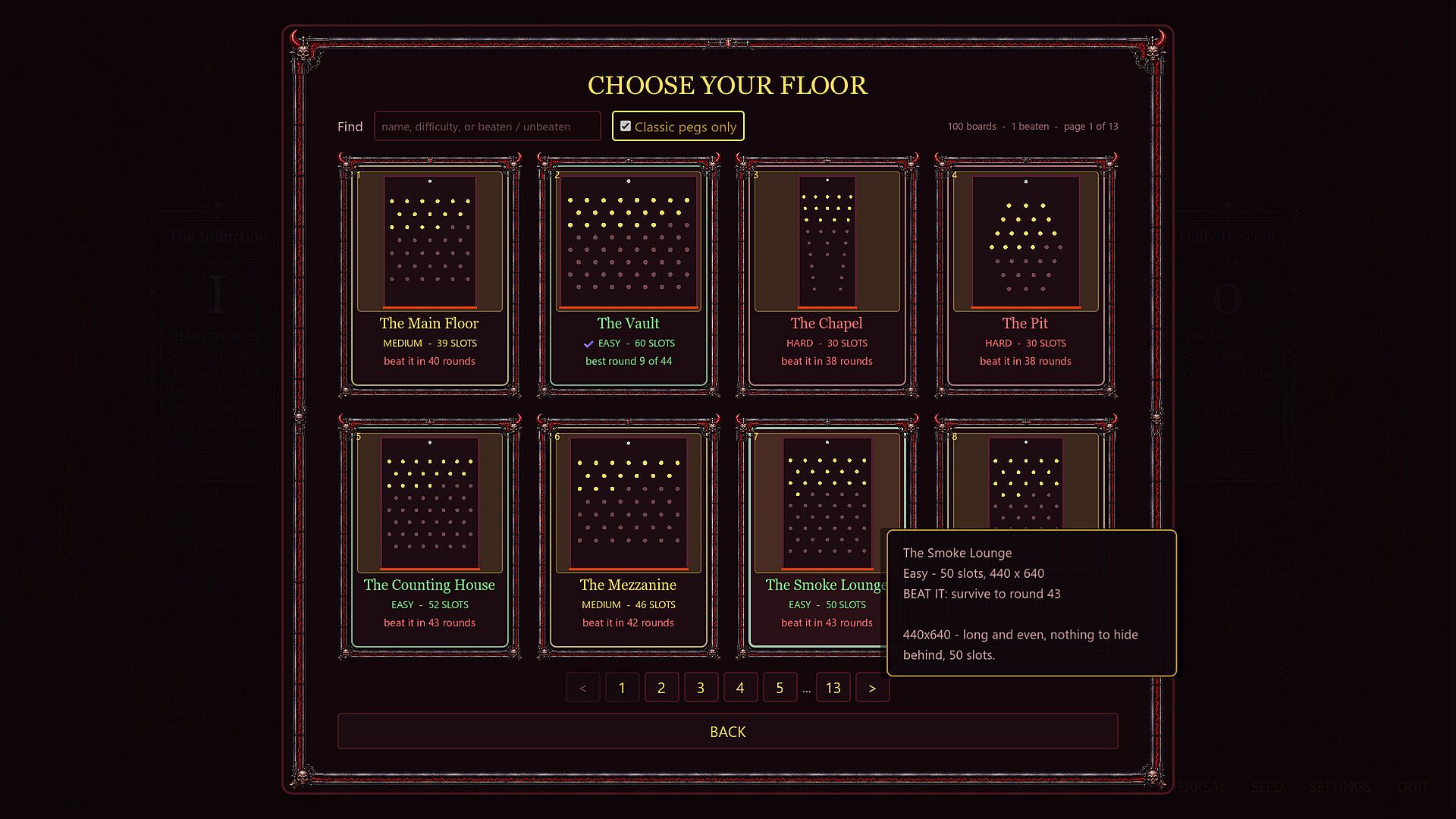
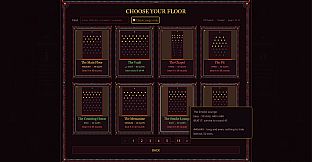
Deterministische Physik sorgt dafür, dass die sichtbare goldene Flugbahn mit dem tatsächlichen Ergebnis übereinstimmt, solange sich das Brett nicht während des Wurfs verändert. Auf 100 unterschiedlichen Brettern reichen die Layouts von Spiralen und Gittern bis hin zu thematischen Formen wie Totenköpfen oder Halbmonden, jedes mit eigenem Limit und Rekord.
Spielmodi
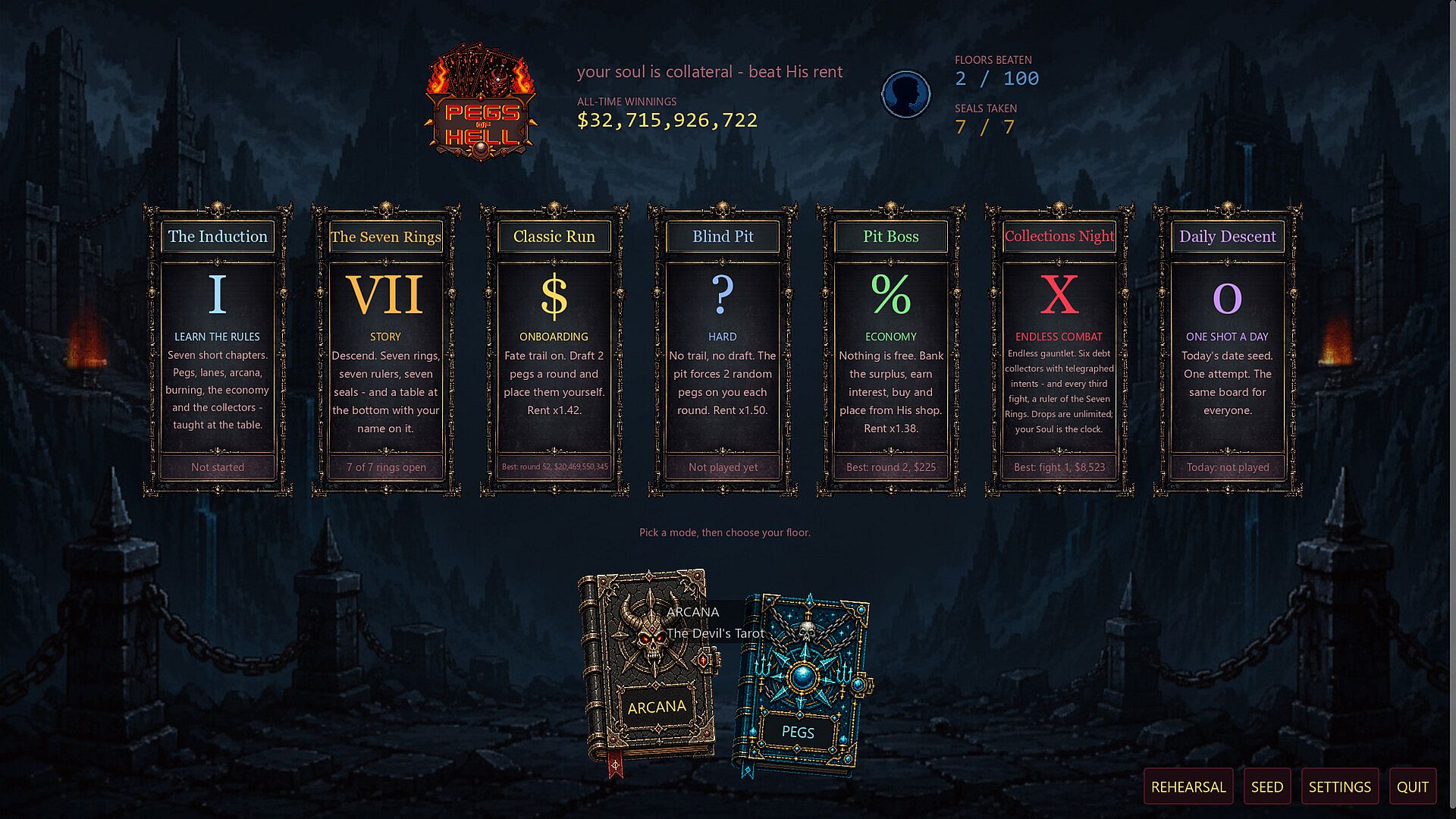
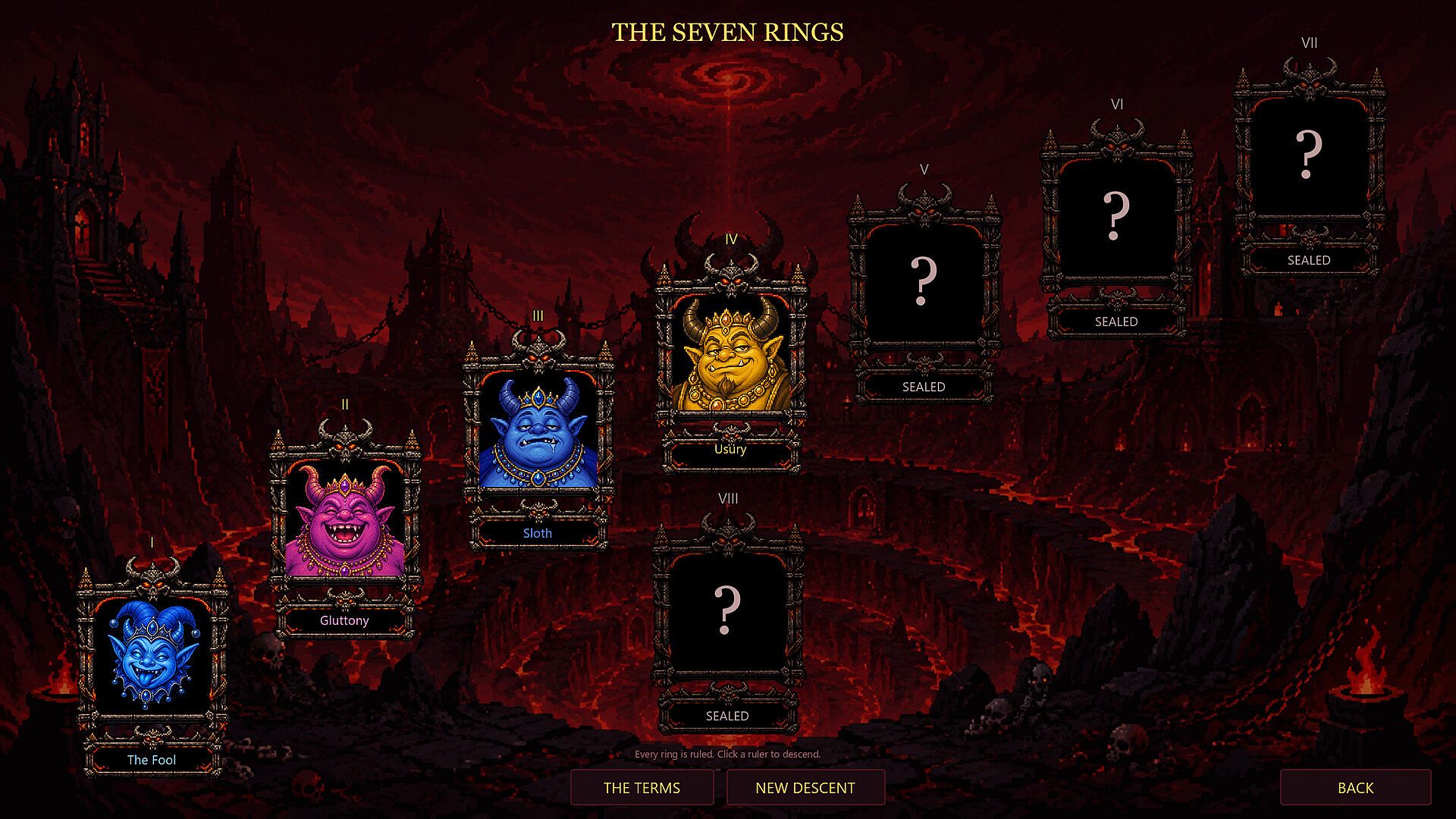
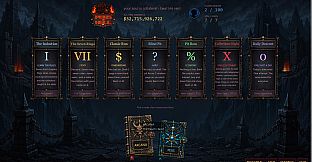
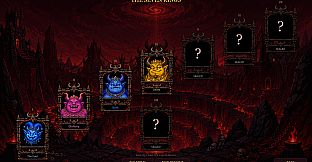
Sieben verschiedene Modi bestimmen, wie Durchläufe ablaufen. Die Einführung ist ein sieben Kapitel umfassendes Tutorial, das Platzierung, Upgrades, Arcana-Sequenzierung, Verbrennen, Wirtschaft und Kampf durch geführte Spielphasen vermittelt. Die Kampagne Sieben Ringe führt durch thematische Kreise eines Casino-Höllenreichs, die jeweils einem Laster zugeordnet und von passenden Arcana beherrscht werden - etwa Der Narr im Karneval der Torheit oder Hydra und Tod im Krieg in der Tiefe.
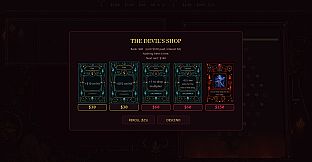
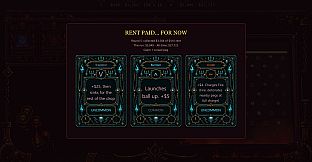
Der Klassische Durchlauf folgt dem Schicksalspfad, bei dem jede Runde Pegs gezogen werden, während die Miete steigt. Die Blinde Grube entfernt Pfad und Zug und zwingt dazu, sich mit zwei zufälligen Pegs pro Runde zurechtzufinden. Der Grubenboss konzentriert sich darauf, Überschüsse zu verzinsen und Upgrades in einem Laden zu kaufen, dessen Preise mit der Miete steigen. Die Sammlungsnacht wandelt Punkte in Schaden gegen Gegner um, die Angriffe ankündigen, Sockel verderben und Ressourcen abziehen - hier sind defensive Abwägungen gefragt. Der Tägliche Abstieg stellt allen Spielern denselben Seed, dasselbe Brett und denselben Versuch des Tages zur Verfügung.
Fortschritt und Systeme
Permanente Freischaltungen basieren auf den Gesamteinnahmen, nicht auf der Leistung eines einzelnen Durchlaufs, und erweitern so schrittweise die verfügbaren Pegs und Arcana. In manchen Modi kommen Kampfelemente durch Wards, Seelenbrunnen und Schädel-Pegs hinzu, die Brettbau in offensive Werkzeuge gegen Sammler verwandeln. Vier Elementarsysteme fördern unterschiedliche räumliche Anordnungen, während 16 Arcana verschiedene passive Effekte und Upgrade-Zweige bieten. Die Präsentation nutzt Pixel-Art für eine Casino-Höllen-Ästhetik, optional mit 3D-Gehäuseansicht oder flacher 2D-Perspektive.
Lohnt sich das Spiel?
Pegs of Hell richtet sich an Spieler, die gezielte Platzierungspuzzles, schrittweise Optimierung und Roguelike-Entscheidungen ohne Echtzeitdruck schätzen. Der Einzelspieler-Fokus und die verzweigten Upgrades belohnen wiederholtes Experimentieren auf denselben Brettern und in denselben Modi. Das Spiel befindet sich noch in Entwicklung und soll im Oktober 2026 erscheinen, daher basieren aktuelle Angaben auf den bestätigten Mechaniken und Features. Wer physikbasierte Strategie und anpassbare Wertungssysteme mag, wird hier die passenden Systeme finden.