




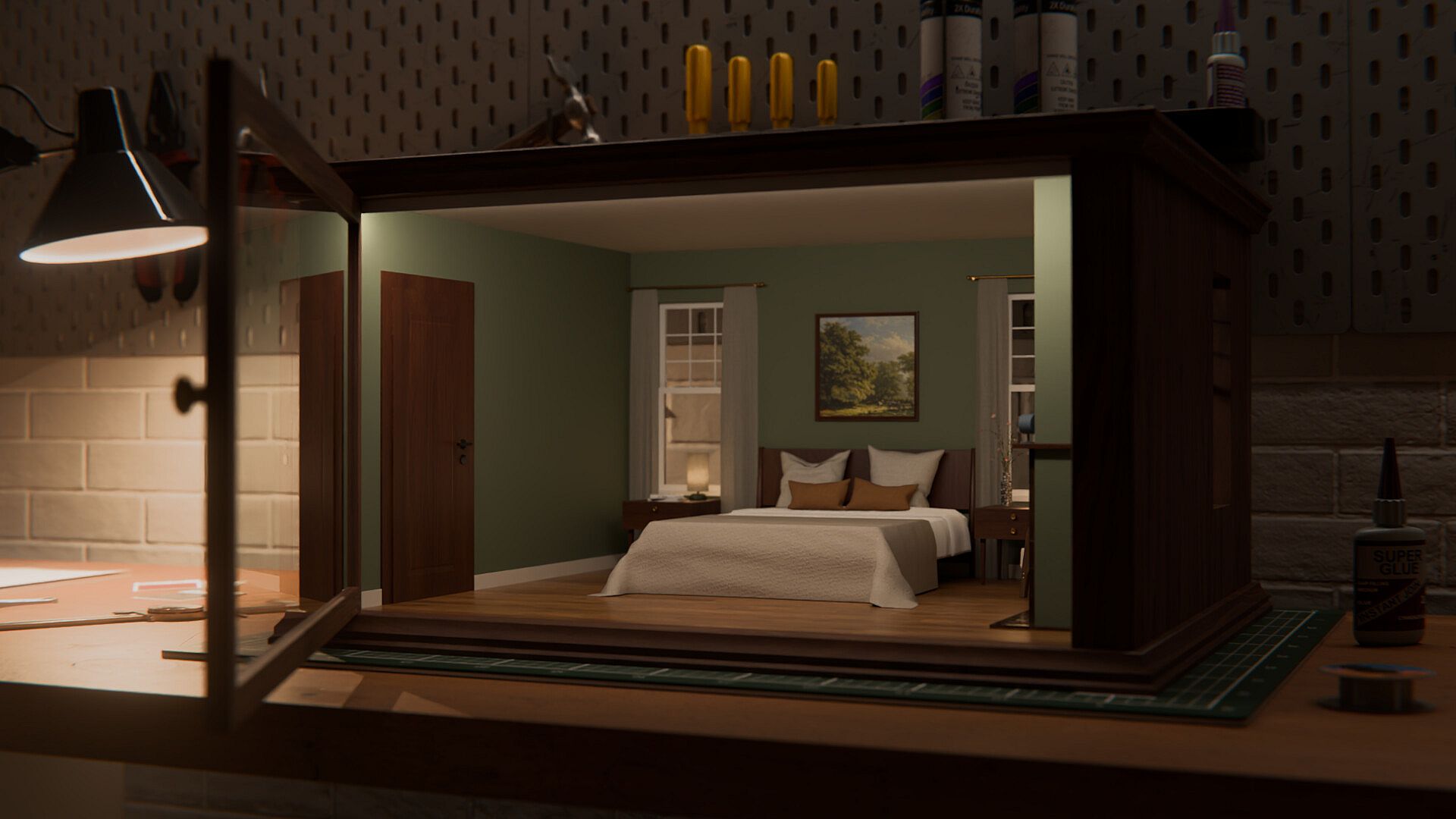
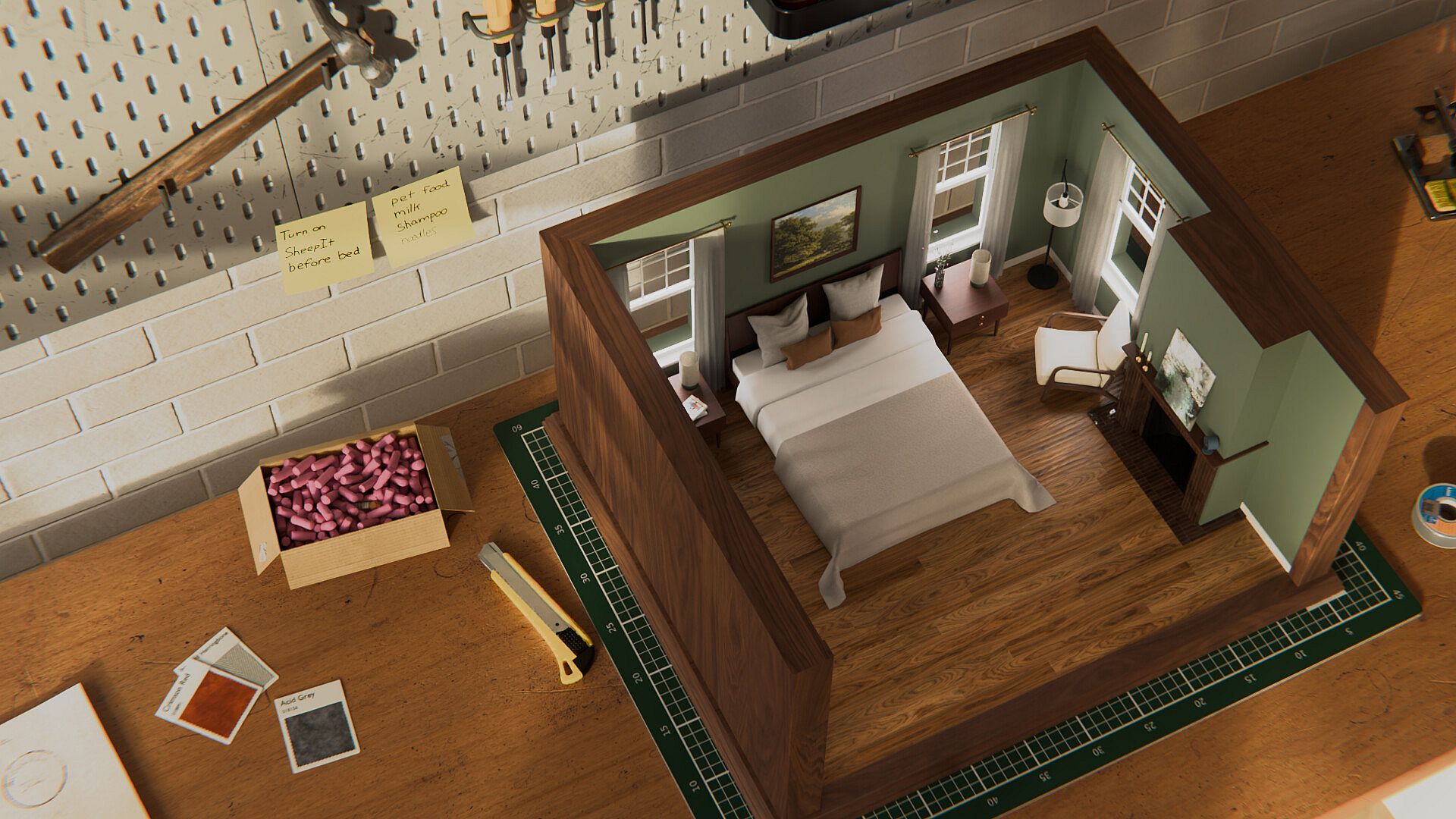
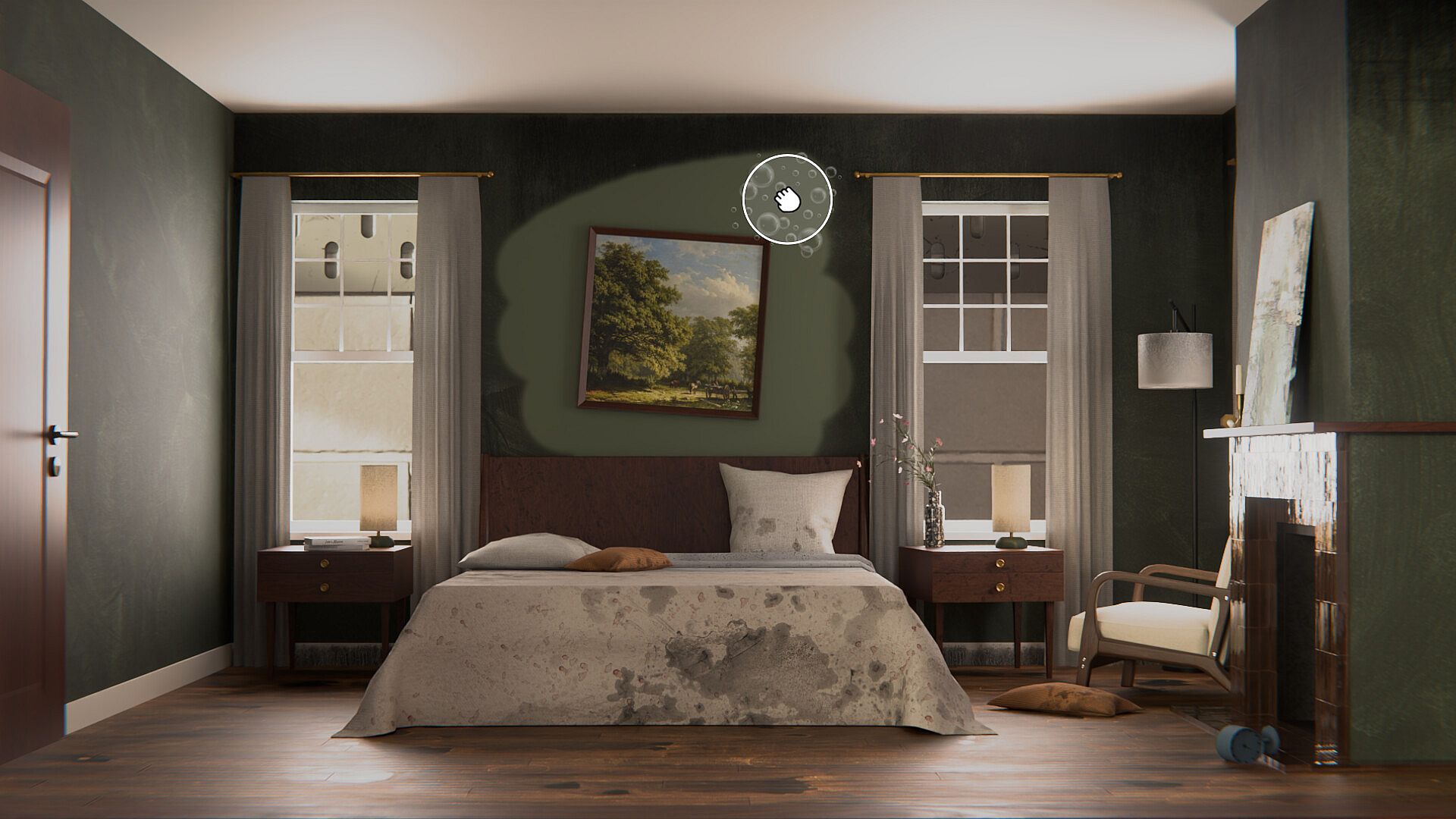
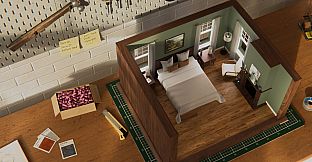
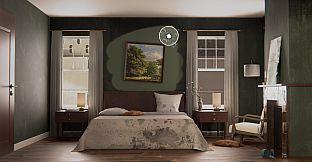
Pinwick is an indie simulation game with action elements that centers on the meticulous craft of building miniature rooms inside a personal workshop. Players take on the role of a miniaturist who receives detailed requests through letters from anonymous clients, each specifying exact historical or personal scenes such as a bedroom from 1974 or a parlor with specific damage. The experience blends hands-on creation with an undercurrent of unease as the completed spaces begin to change on their own.
Gameplay
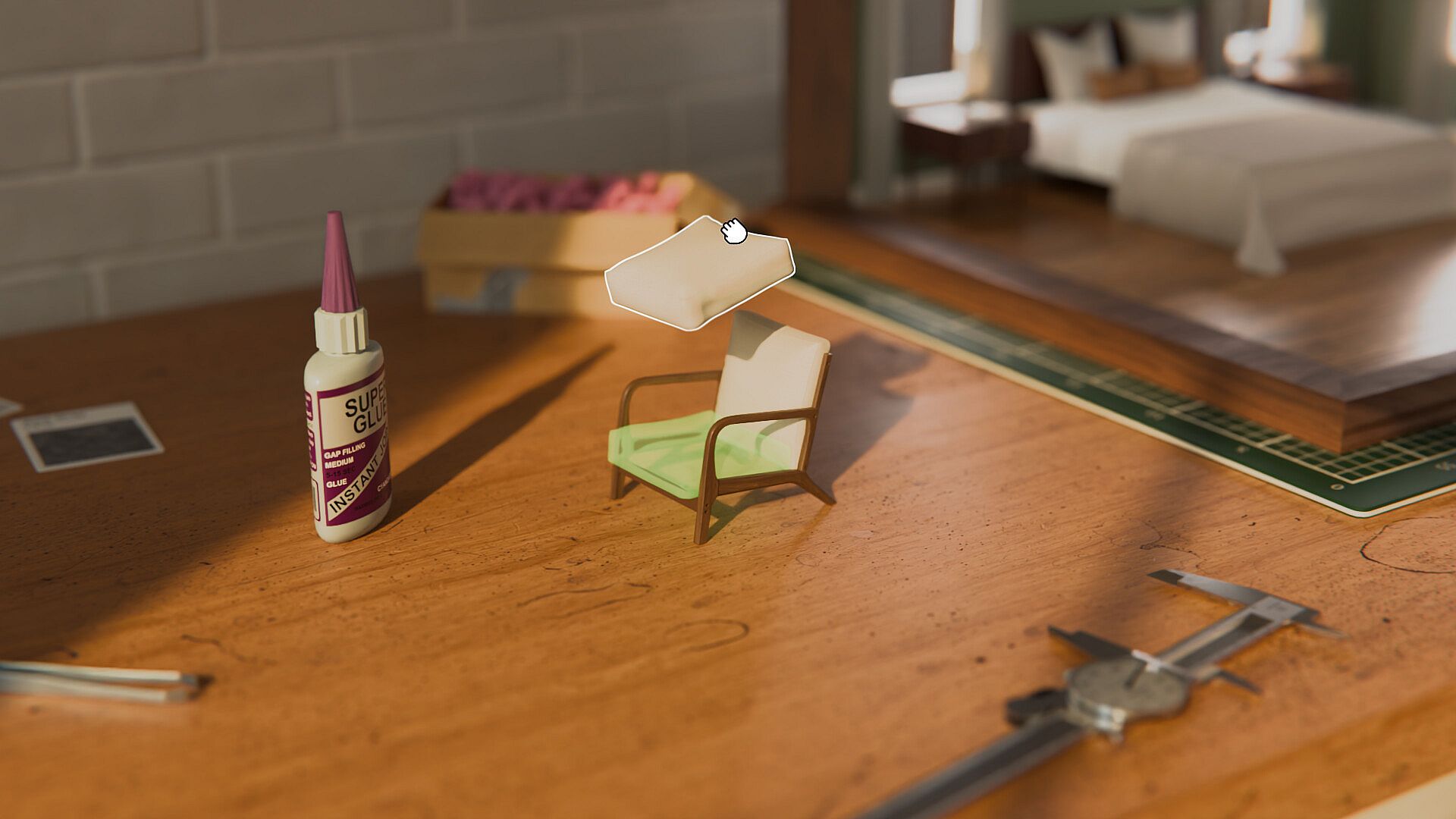
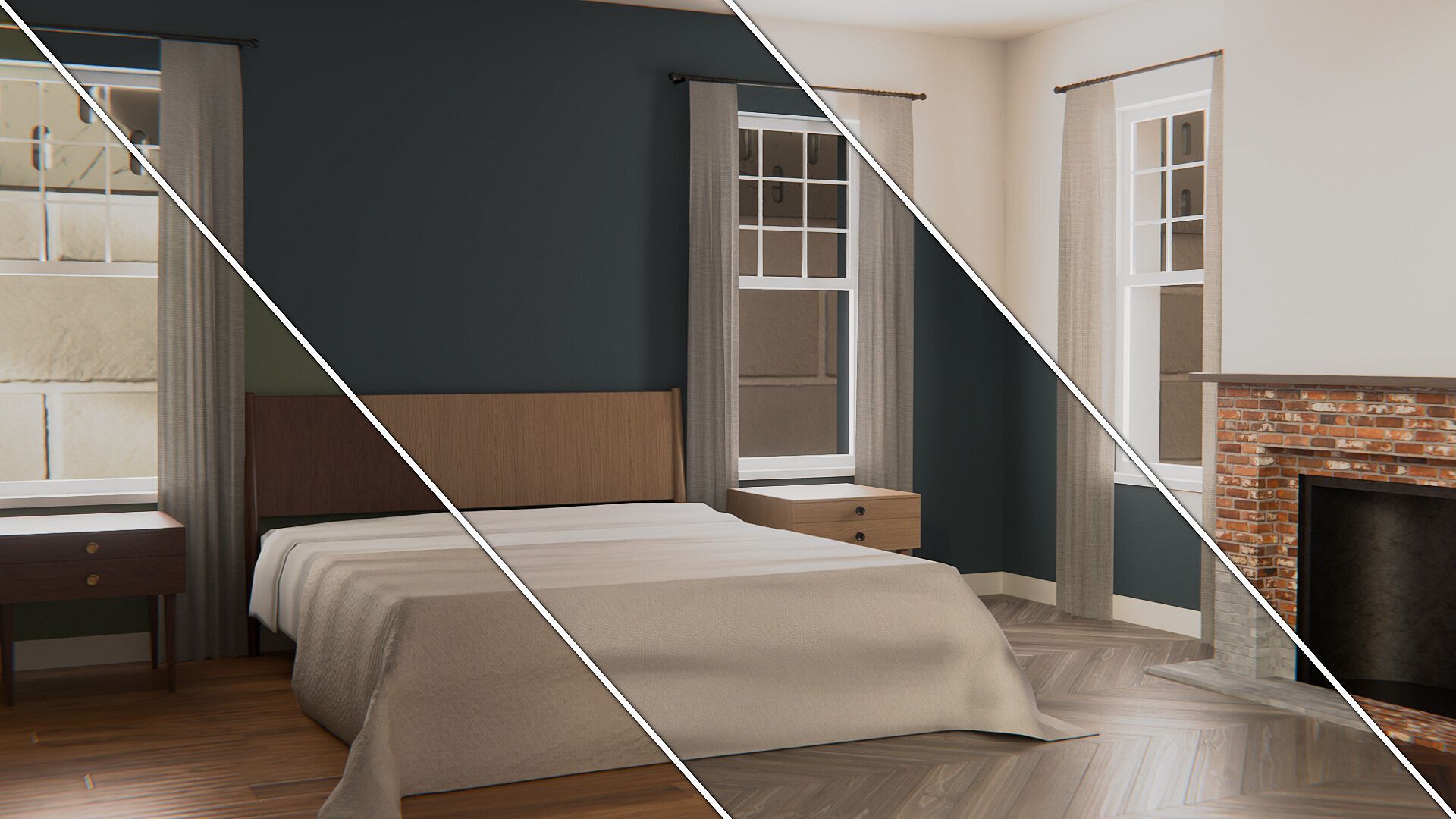
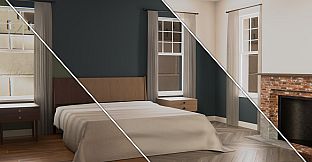
The core loop revolves around sourcing lumber and cloth, then shaping frames, gluing joints, and upholstering furniture on a workbench. Each piece receives careful attention before placement within the growing room. Walls receive paper from a library of more than fifty materials, including velvets, oaks, and florals, with specific shades requested by clients appearing repeatedly. Once a room reaches completion, the player photographs every object from multiple angles and records the date on the back of each print before filing them away. These photographs serve as the only record of the work as originally finished.
Progression comes through successive commissions that arrive in courteous, precise letters. Older pieces can be cleaned and repaired when needed, and particular material requests receive accommodation. The workshop maintains a logbook that tracks deliveries, payments, and the gradual appearance of unexplained alterations such as lights switching on without wiring or objects shifting positions overnight. A single unexpected element, a rabbit that was never crafted, appears among the documented oddities.
Game Modes
Pinwick operates as a continuous single-player experience without separate named modes or multiplayer components. All activity takes place within the workshop setting, where the player manages incoming commissions, constructs rooms, and documents the results. The structure emphasizes sequential client requests and the accumulating evidence of changes that occur between sessions, creating a unified loop of creation, observation, and response to the unexpected.
The Workshop and Its Records
Every finished room receives thorough photographic documentation from every angle, with dates noted on the reverse of each print. These images enter a dedicated drawer that functions as the sole additional witness to the work. The logbook captures daily entries, from routine deliveries and enclosed payments to notes about anomalies such as a photograph no longer matching the physical room it depicts. Clients sometimes send follow-up letters expressing thanks for alterations that the player did not perform, adding layers to the ongoing record-keeping process.
Materials remain in stock for repeated use, and the process accommodates requests for specific shades or finishes remembered by clients. Furniture begins as raw components on the bench and transforms through precise cutting, gluing, and upholstering before integration into the larger scene. The emphasis stays on careful, deliberate construction rather than speed or competition.
Is It Worth Playing?
Pinwick suits players who enjoy deliberate crafting simulations combined with subtle mystery. The hand-crafted room building and photography system provide a focused, methodical pace, while the unexplained events introduce tension without shifting into overt action sequences. Those drawn to indie titles that reward attention to detail and quiet observation will find the workshop loop engaging. The game remains in active development with new client requests and phenomena continuing to surface, making it a worthwhile choice for anyone interested in atmospheric simulation experiences that unfold gradually through personal records and incremental changes.












