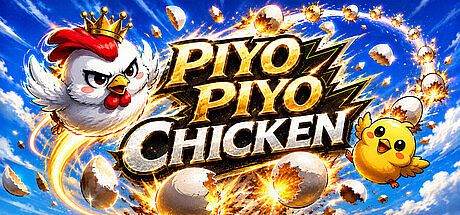


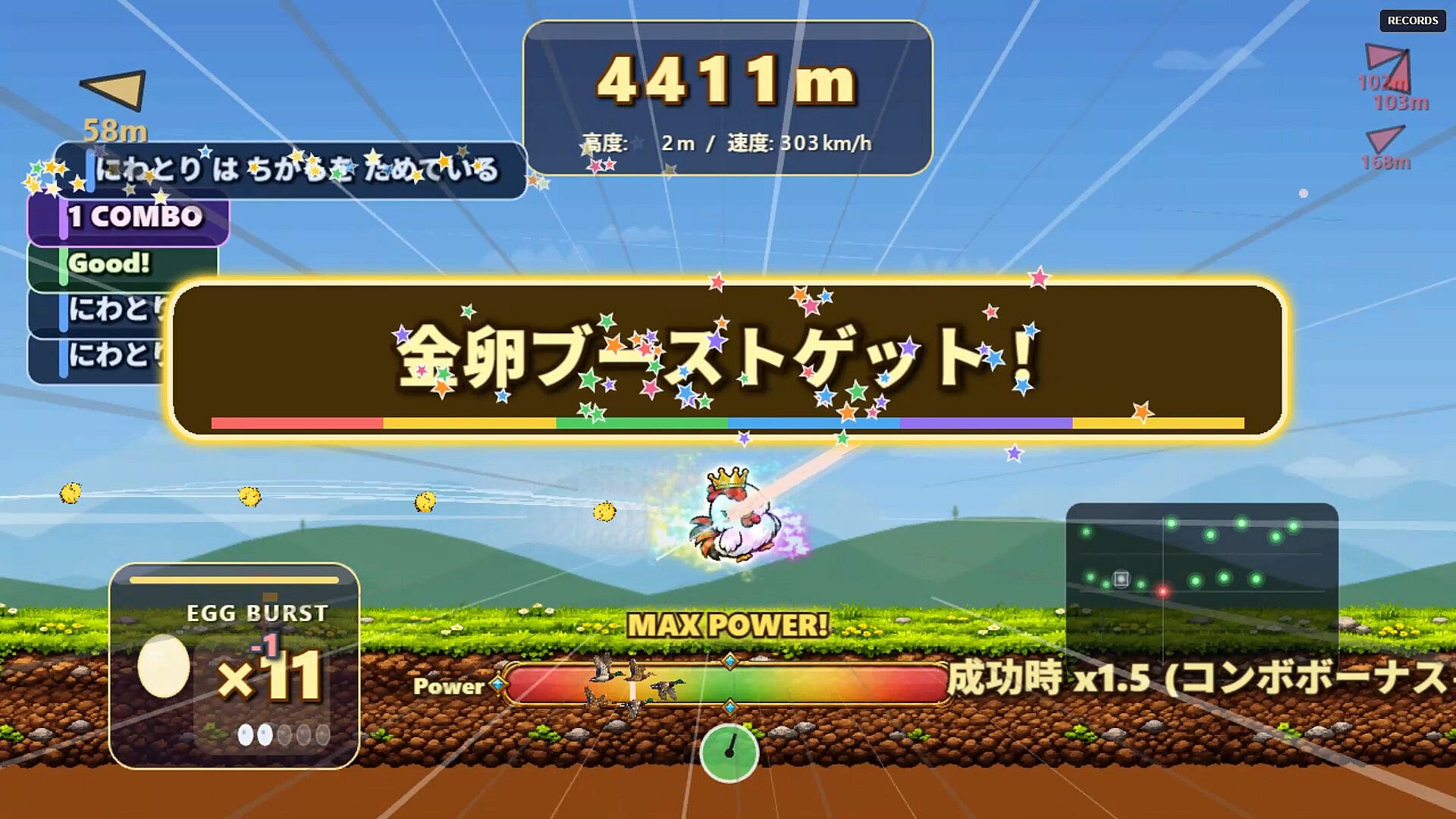
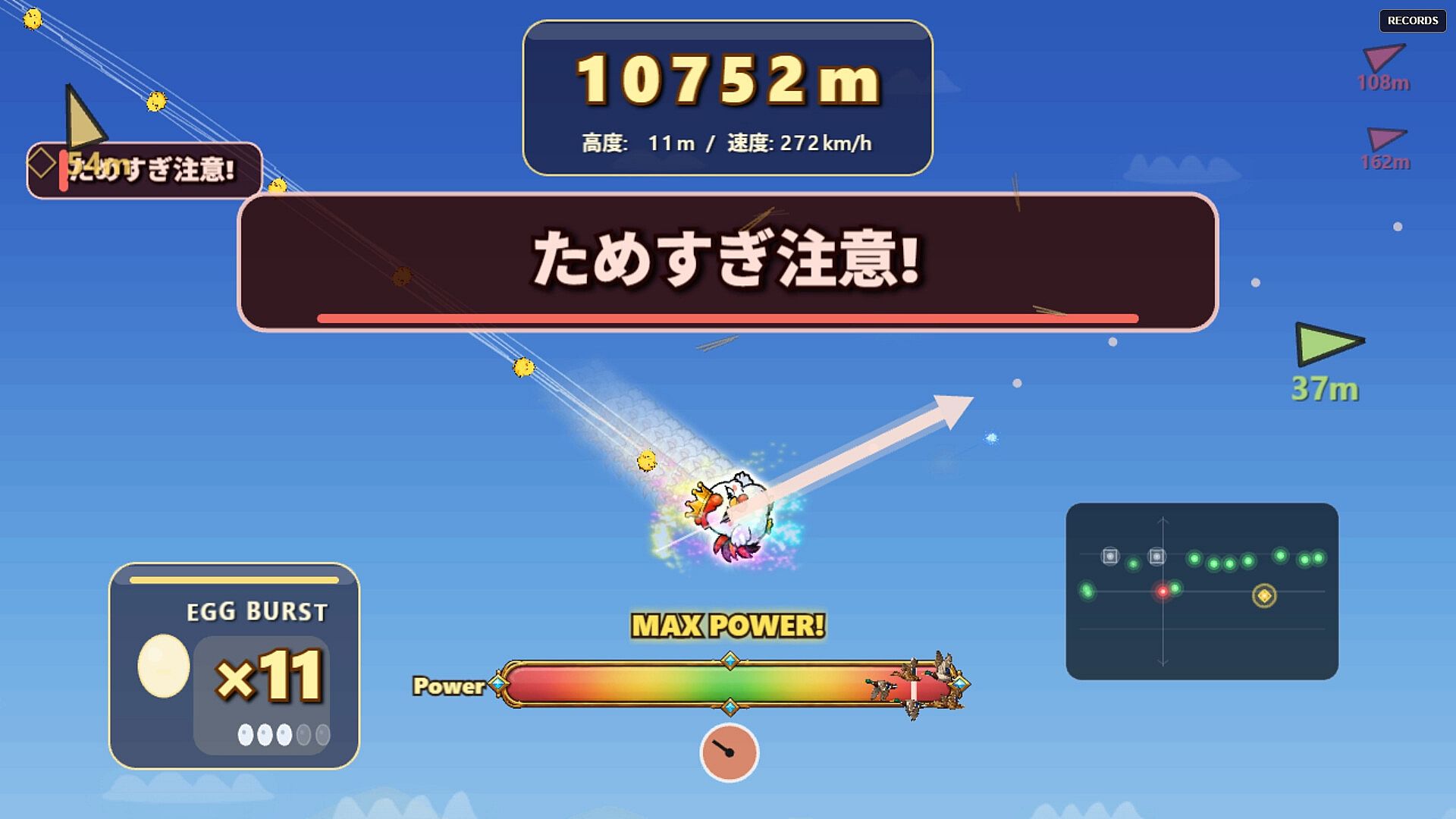
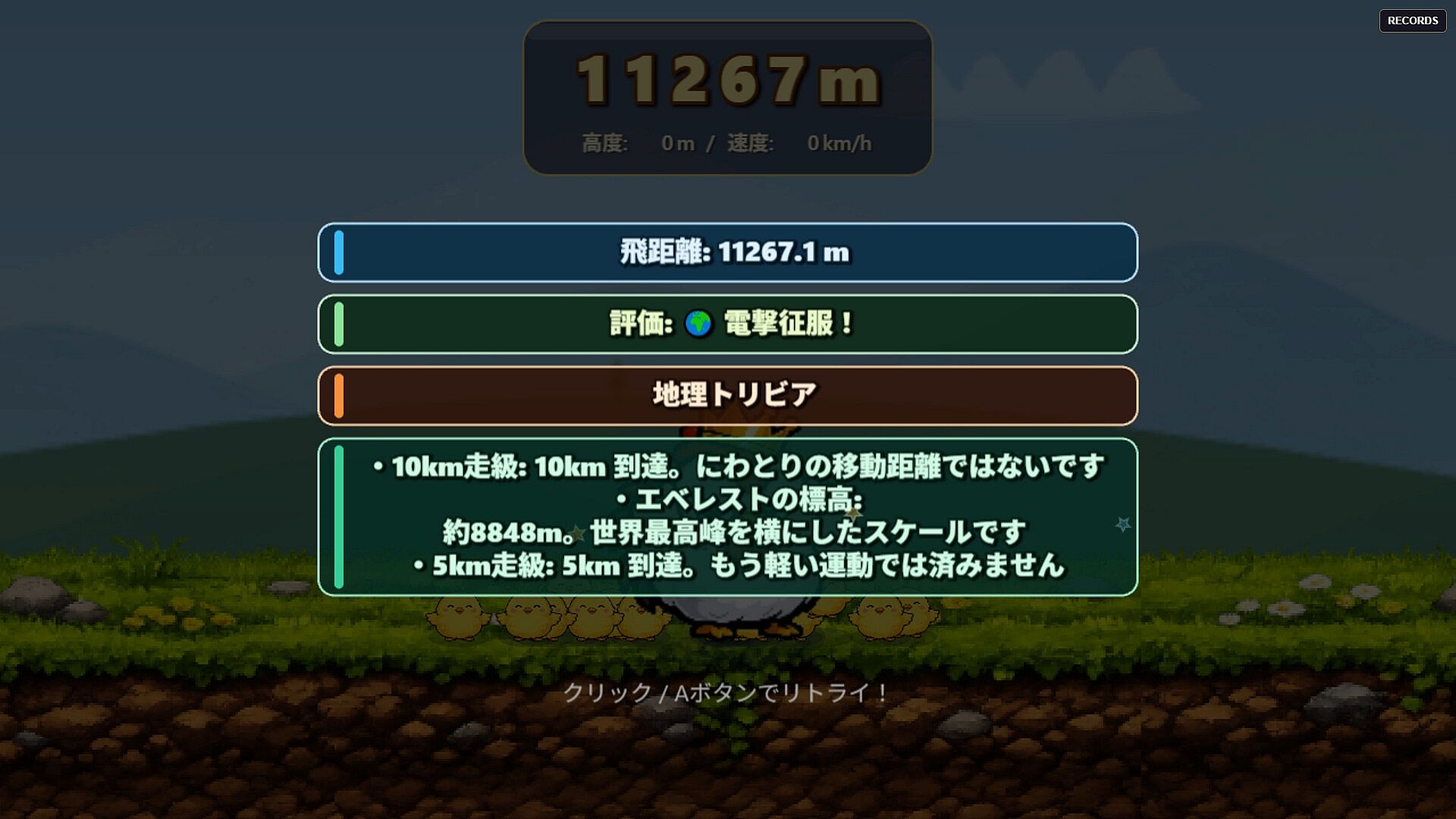
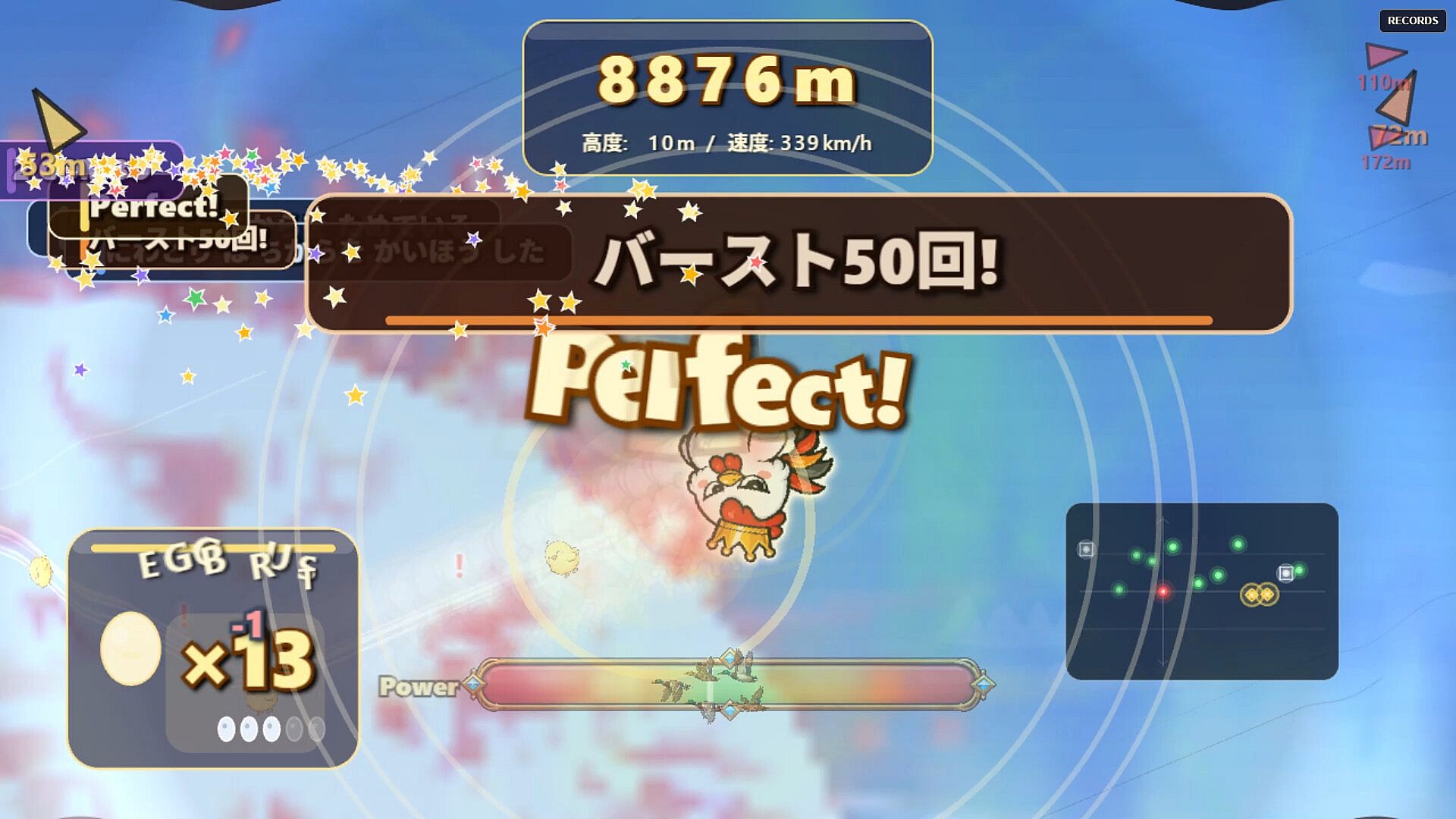

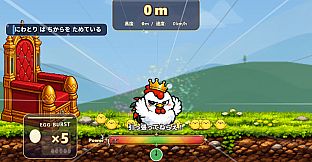
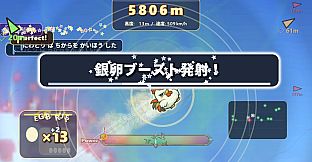
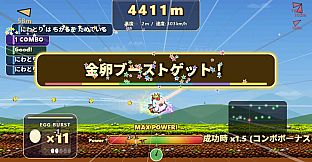
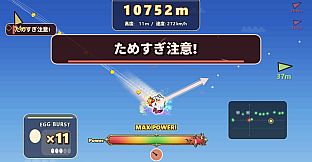
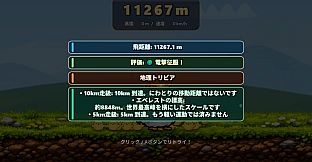
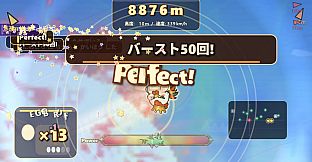

PIYO PIYO CHICKEN is a physics-based arcade action game for PC in which players launch a chicken skyward and attempt to maximize flight distance through careful timing and resource management. The experience centers on a single-player loop of repeated attempts, where each launch builds toward a new personal record. Simple inputs combine with realistic physics to create a focused challenge that rewards experimentation with angle, power, and midair adjustments.
Gameplay
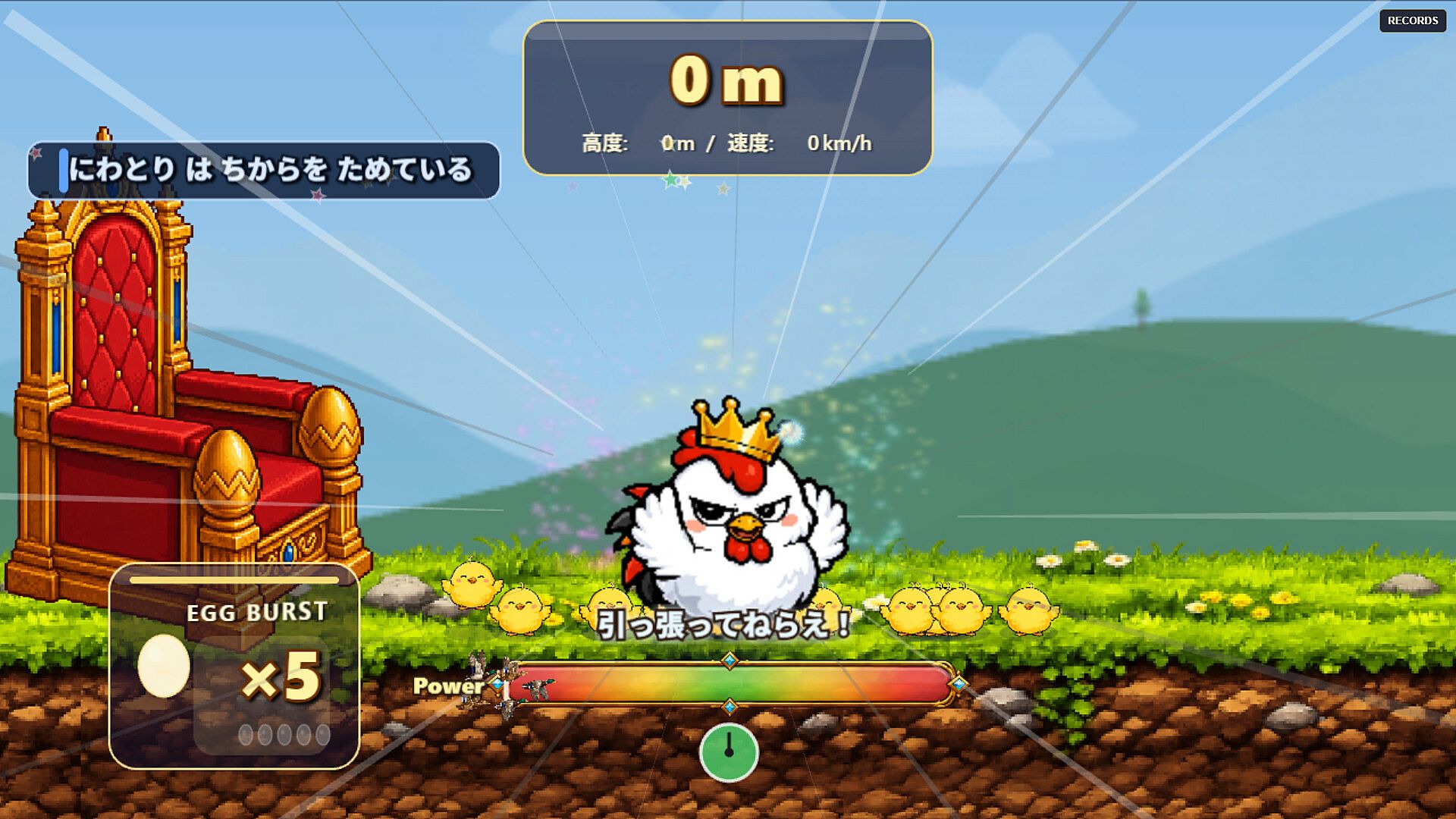
Every attempt begins on the ground with a choice of launch angle and power level. These initial decisions determine the chicken's initial trajectory and speed, setting the foundation for how far the flight can extend before gravity takes over. Once airborne, players manage a limited supply of Egg Bursts to influence momentum and altitude. Each burst consumes one of the available charges and must be directed precisely to preserve forward progress or recover height at critical moments.
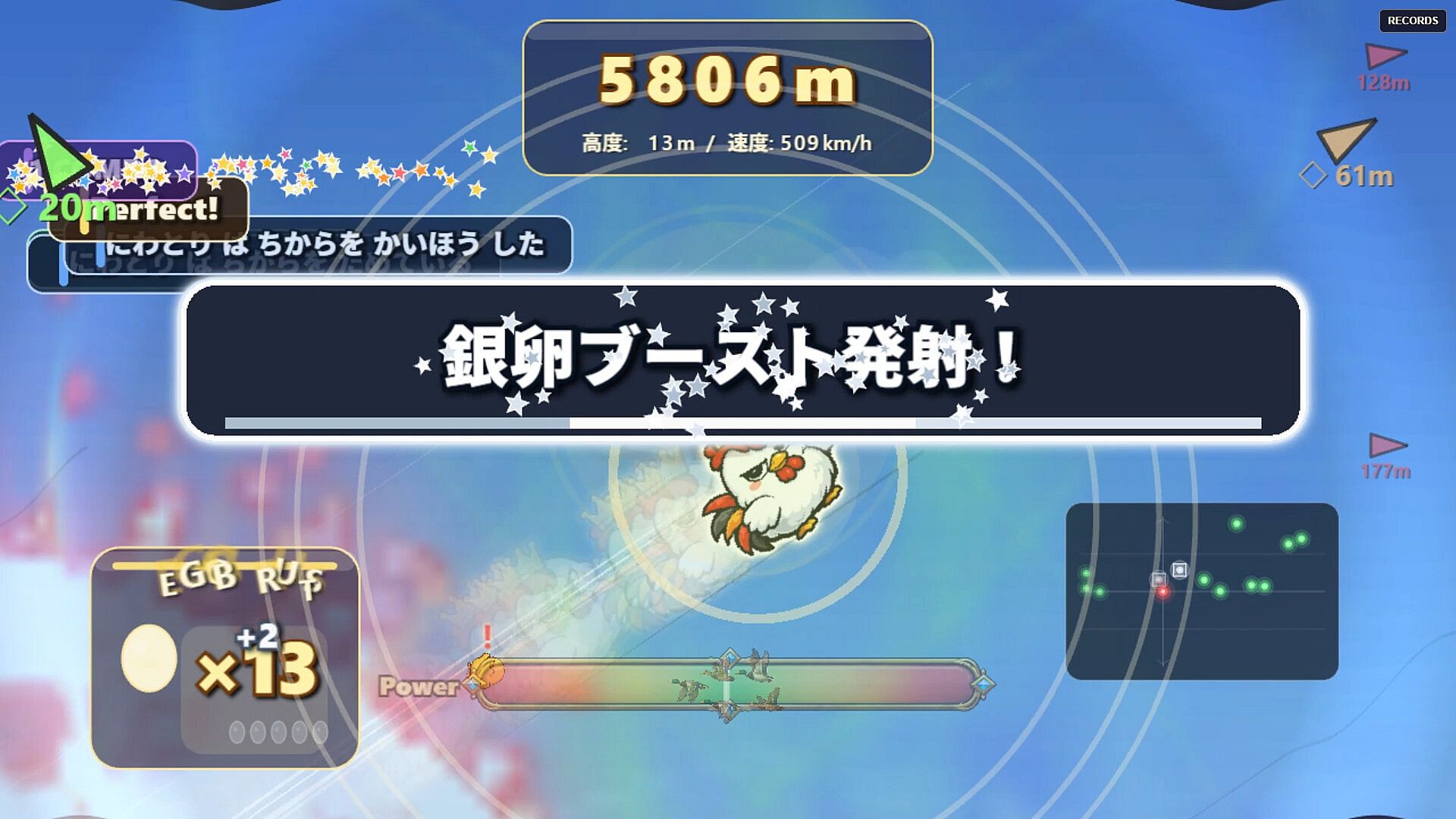
Timing plays a central role because early bursts can build additional speed while later ones help maintain altitude during descent. Direction matters as well, since bursts applied at the right moment can steer the chicken toward favorable conditions. Random events and boosts appear during flights and offer temporary advantages that skilled players can combine with upgrades to extend distance further. Unsuccessful attempts still provide feedback on what adjustments might improve the next launch.
The core loop remains consistent across sessions: launch, manage bursts in the air, land, and evaluate the result against prior distances. Upgrades become available between attempts and can alter how bursts interact with physics or how boosts trigger. This structure keeps each flight distinct while maintaining a clear progression toward longer records.
Game Modes
The game operates entirely in a single-player format with no separate competitive or cooperative options. All activity revolves around the personal-best distance challenge, where players repeat launches in the same core environment to improve their longest flight. There are no additional named modes or variations beyond this focused distance pursuit.
Each session functions as an independent attempt within the same ruleset, allowing direct comparison of results. The absence of branching modes keeps attention on mastering the physics and burst timing rather than switching between different rule sets.
Controls and Progression
Controls stay minimal to emphasize decision-making over complex inputs. Players adjust launch parameters on the ground and then activate directed bursts while the chicken is in flight. This simplicity leaves room for repeated practice and incremental improvement as players learn how small changes in timing or direction affect the final landing point.
Progression occurs through the accumulation of upgrades that modify flight characteristics. These upgrades integrate with the existing boost and event systems, giving players new tools to overcome previous limitations. The overall structure encourages short, repeatable sessions that build familiarity with the physics model over time.
Is It Worth Playing?
PIYO PIYO CHICKEN targets players who enjoy physics-driven arcade challenges and the satisfaction of beating personal records through repeated refinement. Its straightforward setup and emphasis on timing decisions make it accessible for casual sessions while still offering depth for those who analyze each flight's outcome. Because the game remains in development with a planned 2026 release and currently has no user reviews available, any assessment rests on the described mechanics rather than widespread player feedback.
The single-player focus suits individuals looking for a self-contained experience without multiplayer requirements or ongoing seasonal content. Fans of similar arcade titles that reward precise resource use and experimentation may find the loop engaging once it launches. Those seeking more varied modes or narrative elements will likely find the distance-chasing format too narrow. Availability on PC through standard digital storefronts will determine final accessibility once the title reaches release.