




Poli City is a strategy and simulation game that combines city building with political management on PC. Players construct urban areas while navigating voter opinions and election cycles in an Early Access title focused on economic decisions and real-time events.
Gameplay
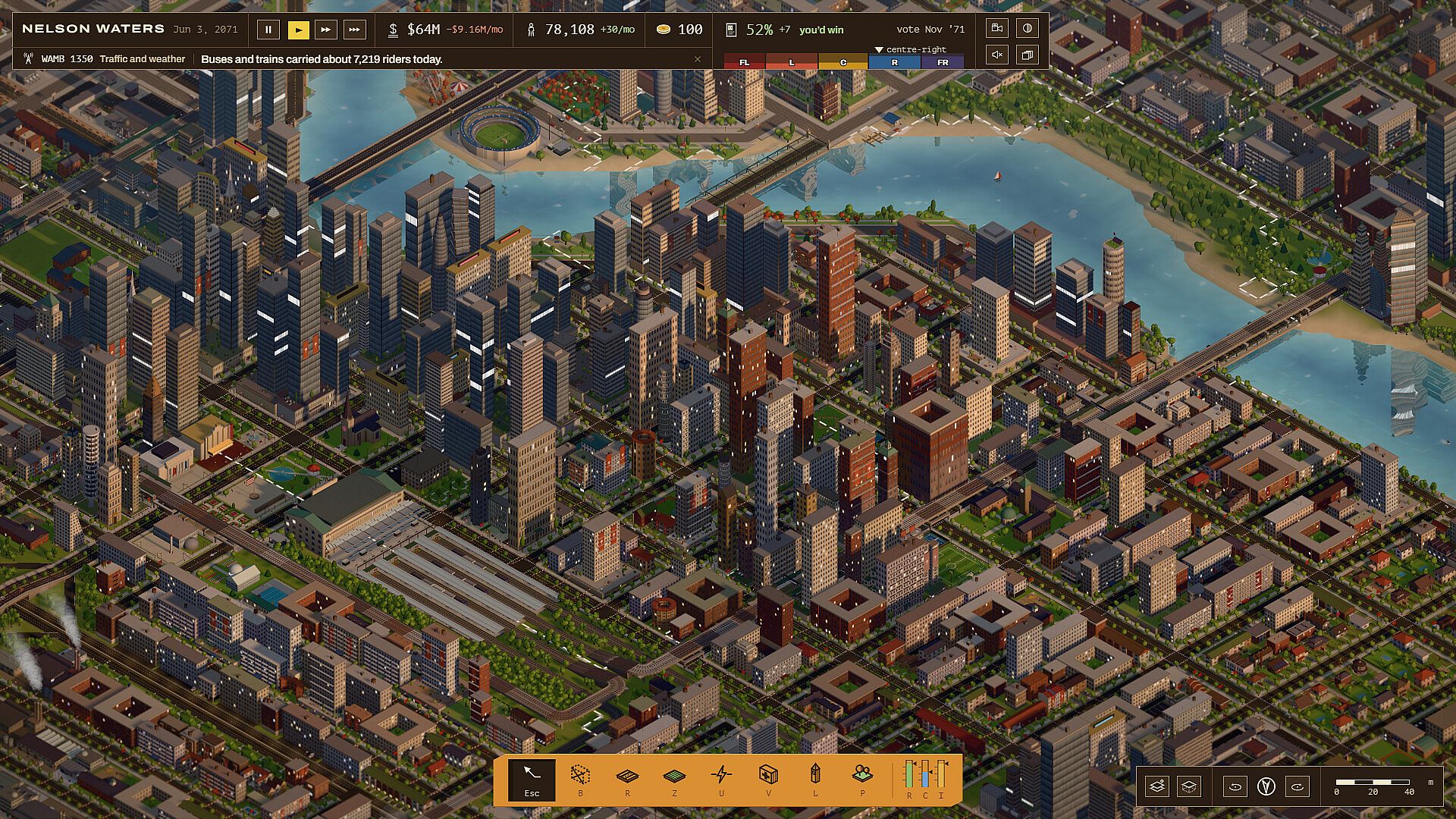
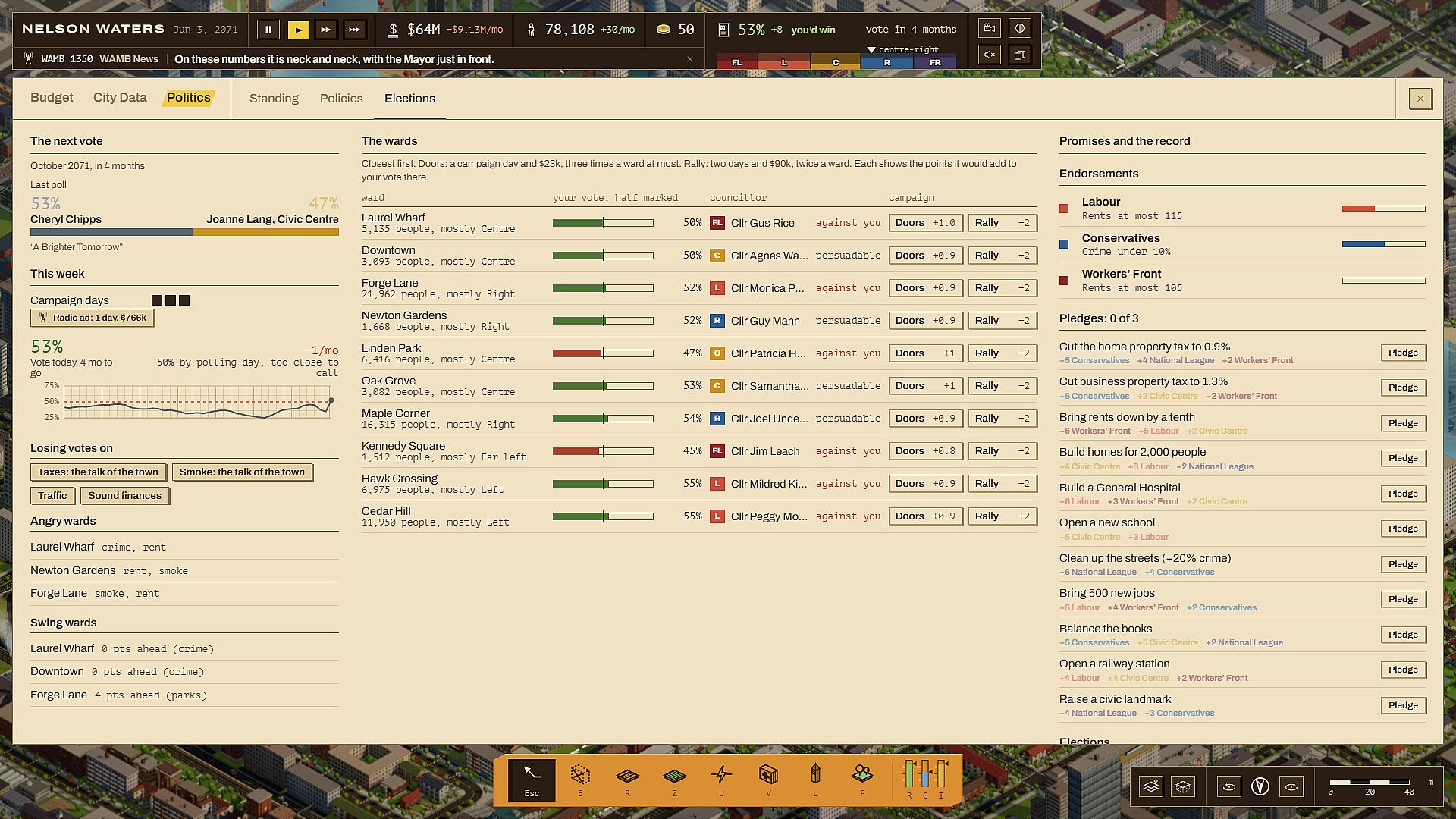
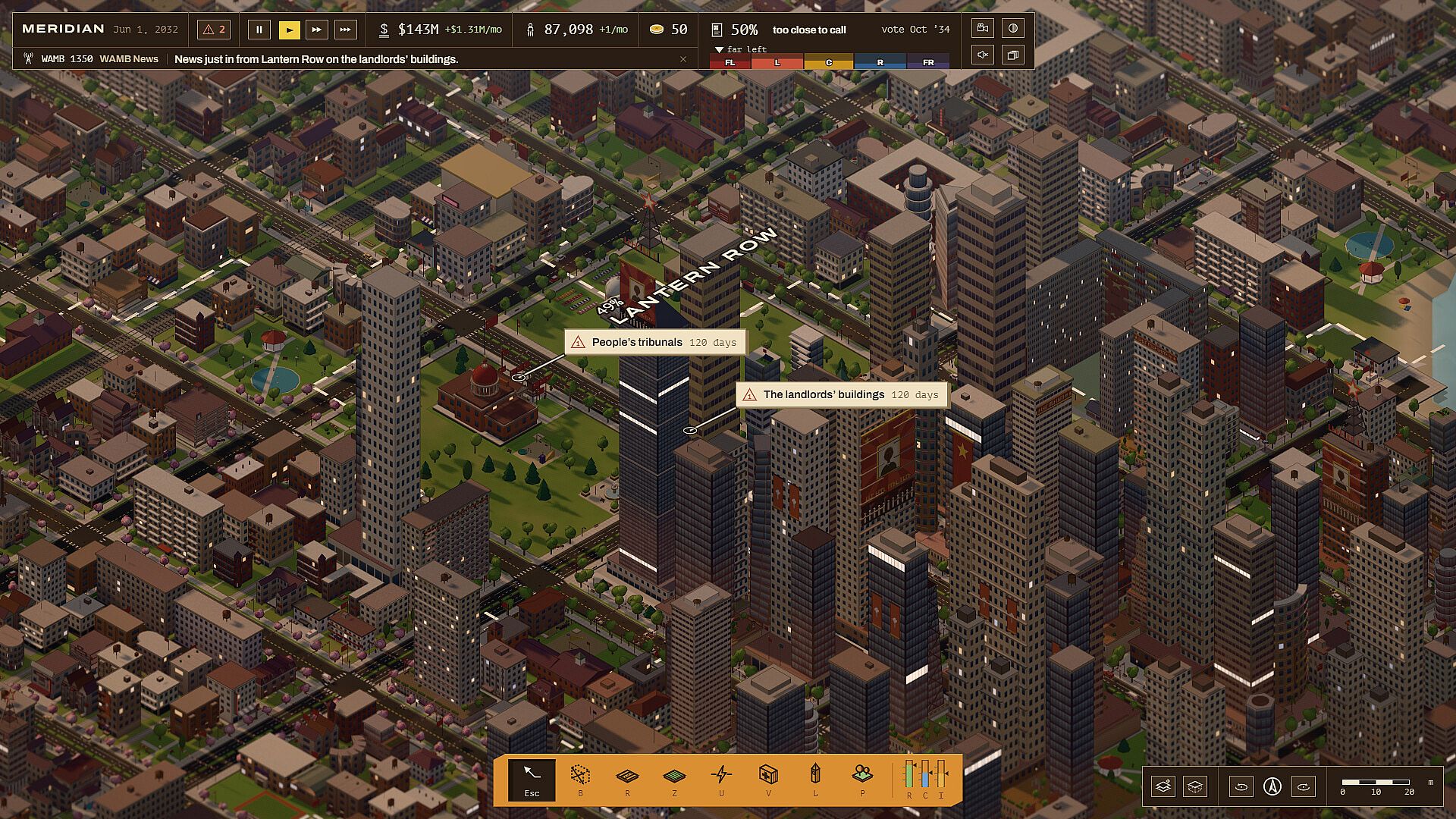
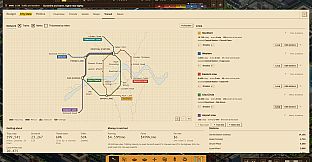
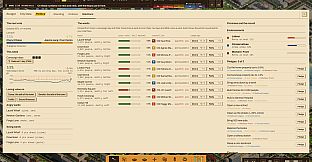
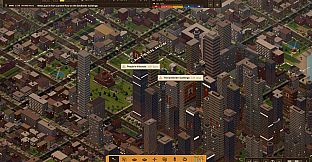
The core loop centers on laying out streets, defining zones, and expanding infrastructure to grow a settlement into a larger city. Choices in transportation networks and service placement directly influence resident satisfaction and political support. Economic oversight involves adjusting budgets, tracking unemployment, and controlling inflation, with each adjustment shifting popularity ahead of elections. Events unfold dynamically, including strikes, scandals, festivals, and protests that require immediate responses and can alter the city's political leanings over time.
Voters track policy consistency, remembering shifts in direction that affect long-term support. The simulation emphasizes fiscal discipline, where poor handling of services or deficits risks losing ground in upcoming votes. Infrastructure decisions feed into both growth metrics and political positioning, creating interconnected systems that reward careful planning across multiple city systems.
Game Modes
Play revolves around a single integrated experience that blends construction, economic simulation, and political campaigning. The process starts with foundational building and zoning, then layers in detailed financial controls that impact voter blocs across different wards. Campaign elements include ward-by-ward efforts, midterm survival, and election night results where each area declares its outcome based on prior performance.
Events integrate into the main loop without separate modes, forcing decisions that pull the city left or right on the political spectrum. The structure ties city development directly to election outcomes, with success measured by retaining power through balanced growth, service provision, and deficit management.
Key Mechanics and Systems
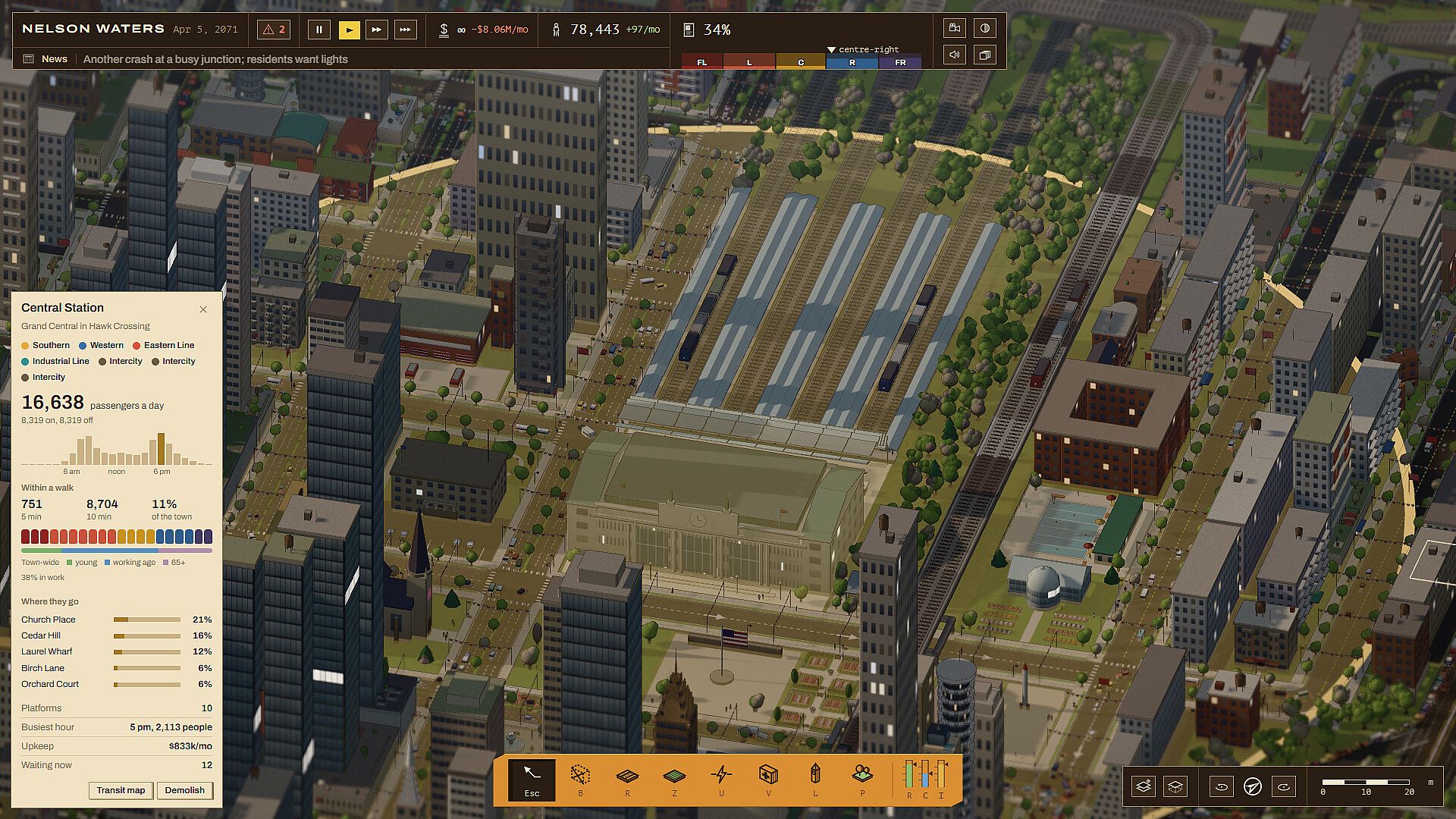
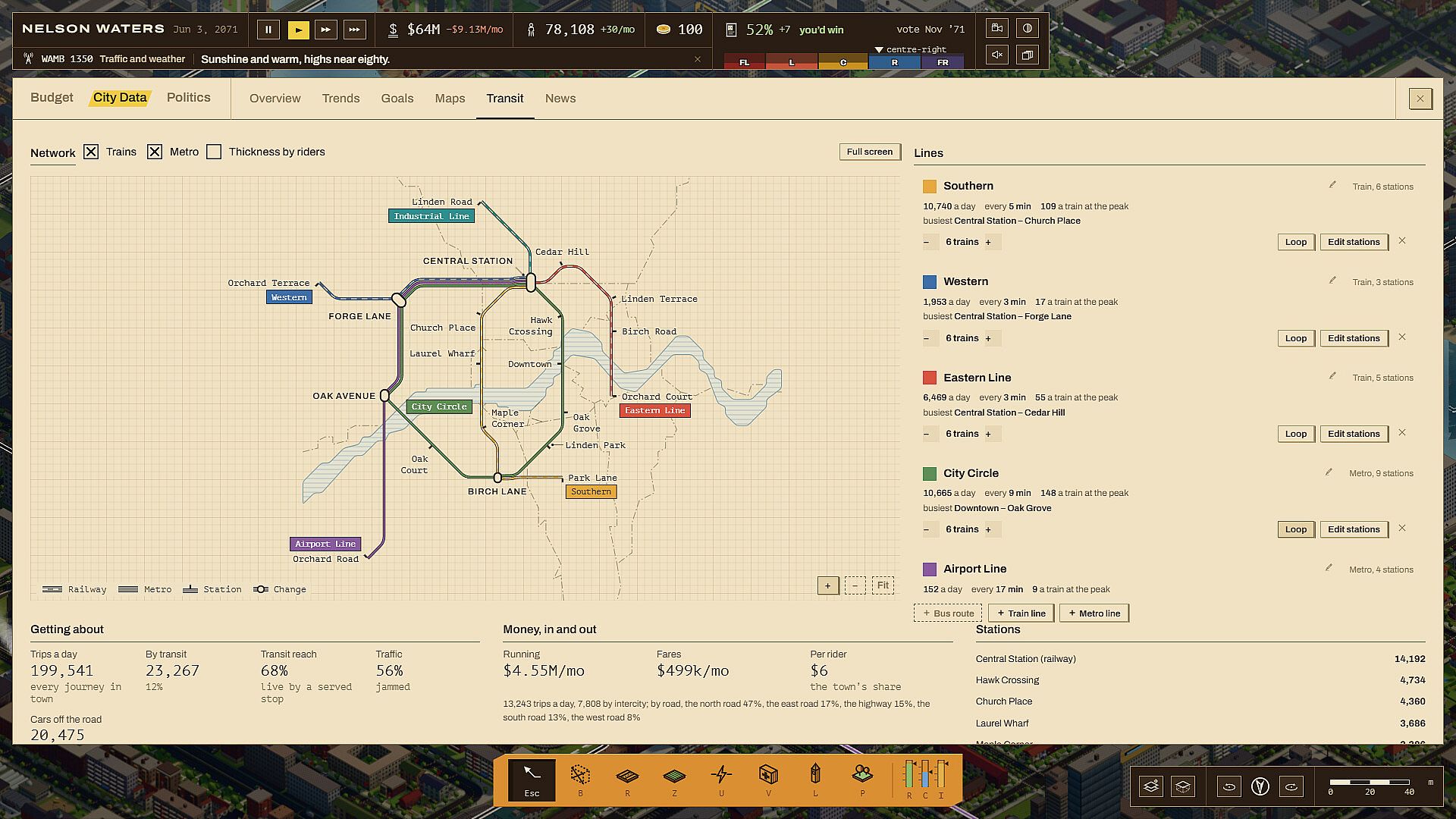
Infrastructure planning extends beyond basic roads to include rich transportation options that shape how the metropolis functions and how residents move. Economic levers provide granular control, linking budget choices to both city health and personal political standing. The event system delivers hundreds of unique political occurrences that test decision-making in real time, with consequences that persist into future cycles.
Legacy building comes through sustained governance, where cumulative choices determine whether the player holds onto office or faces defeat. The simulation tracks voter memory, making consistent policy approaches more effective than frequent reversals. City life emerges from these intertwined systems, with urban expansion reflecting the balance struck between development and political realities.
Is It Worth Playing?
Poli City suits players interested in strategy simulations that merge city building with political consequences. The Early Access state means the experience focuses on core loops of construction, economy, and elections without additional layers confirmed at this stage. Those who enjoy managing interconnected systems and facing voter accountability will find depth in the fiscal and event-driven choices.
Reception centers on the integration of building and politics, though the title remains in active development. Availability is limited to PC, and the game rewards disciplined play styles that maintain services while controlling costs. It offers a focused alternative for fans of simulation titles emphasizing long-term governance over pure expansion.











