


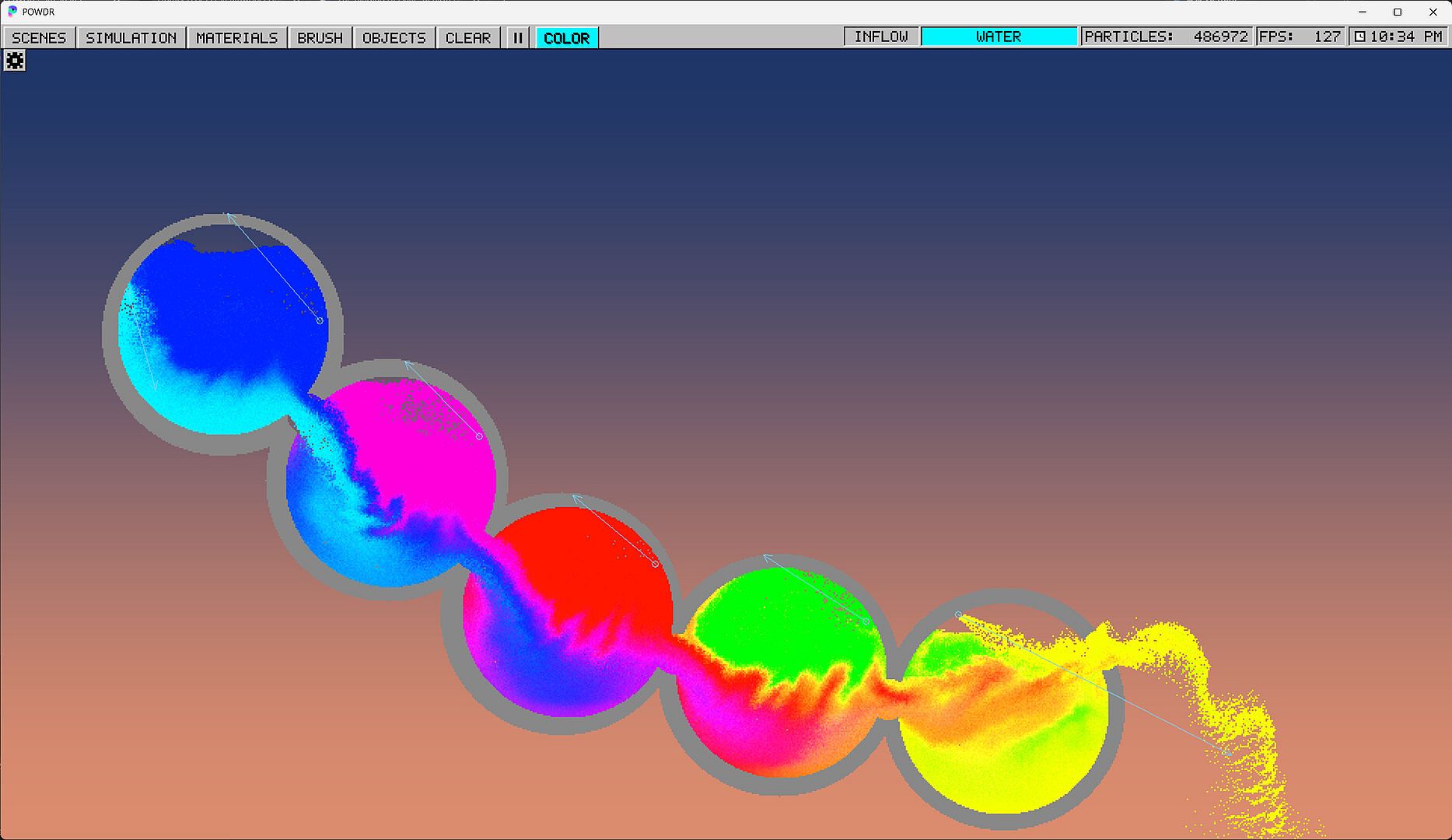
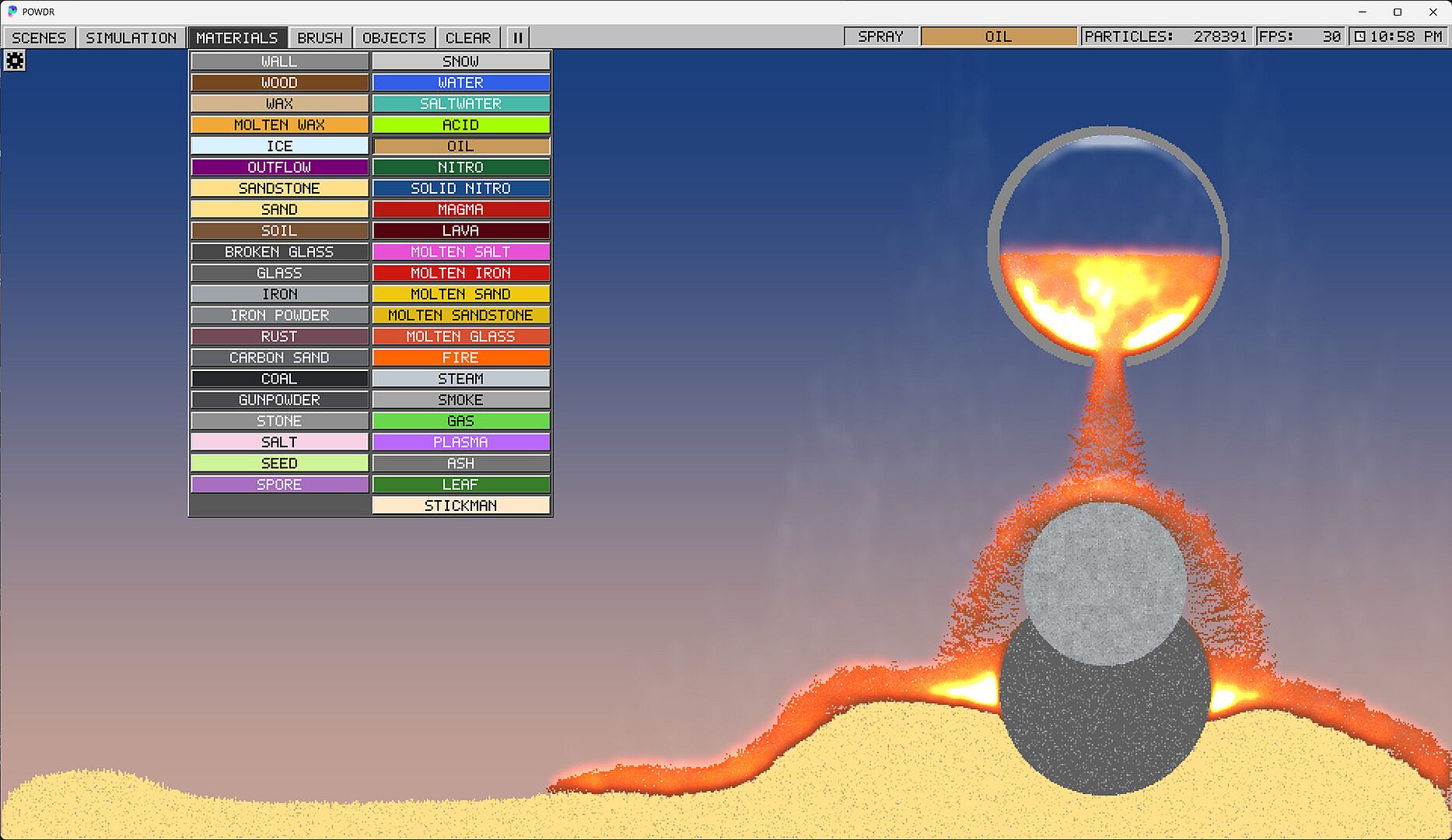
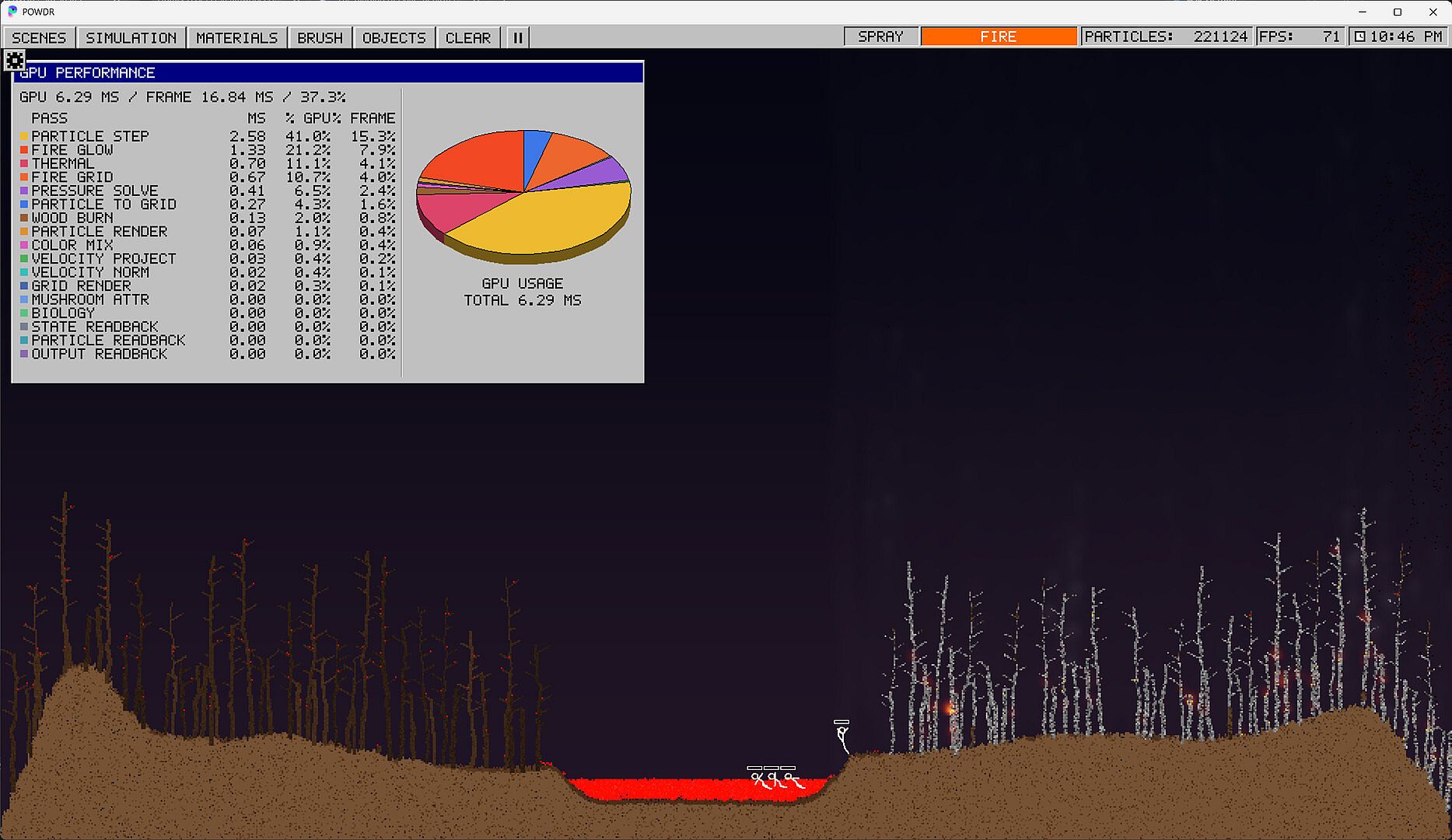
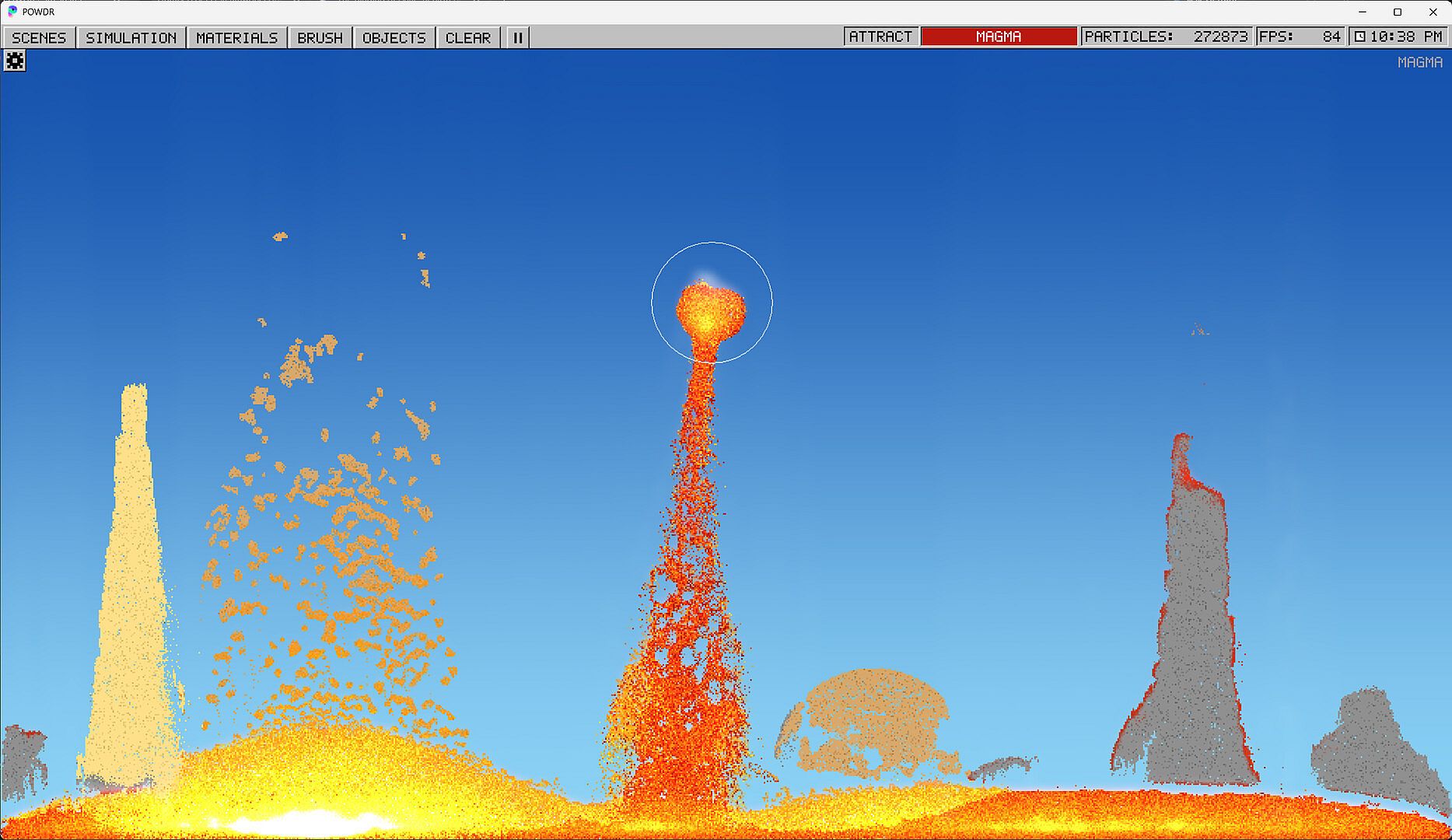
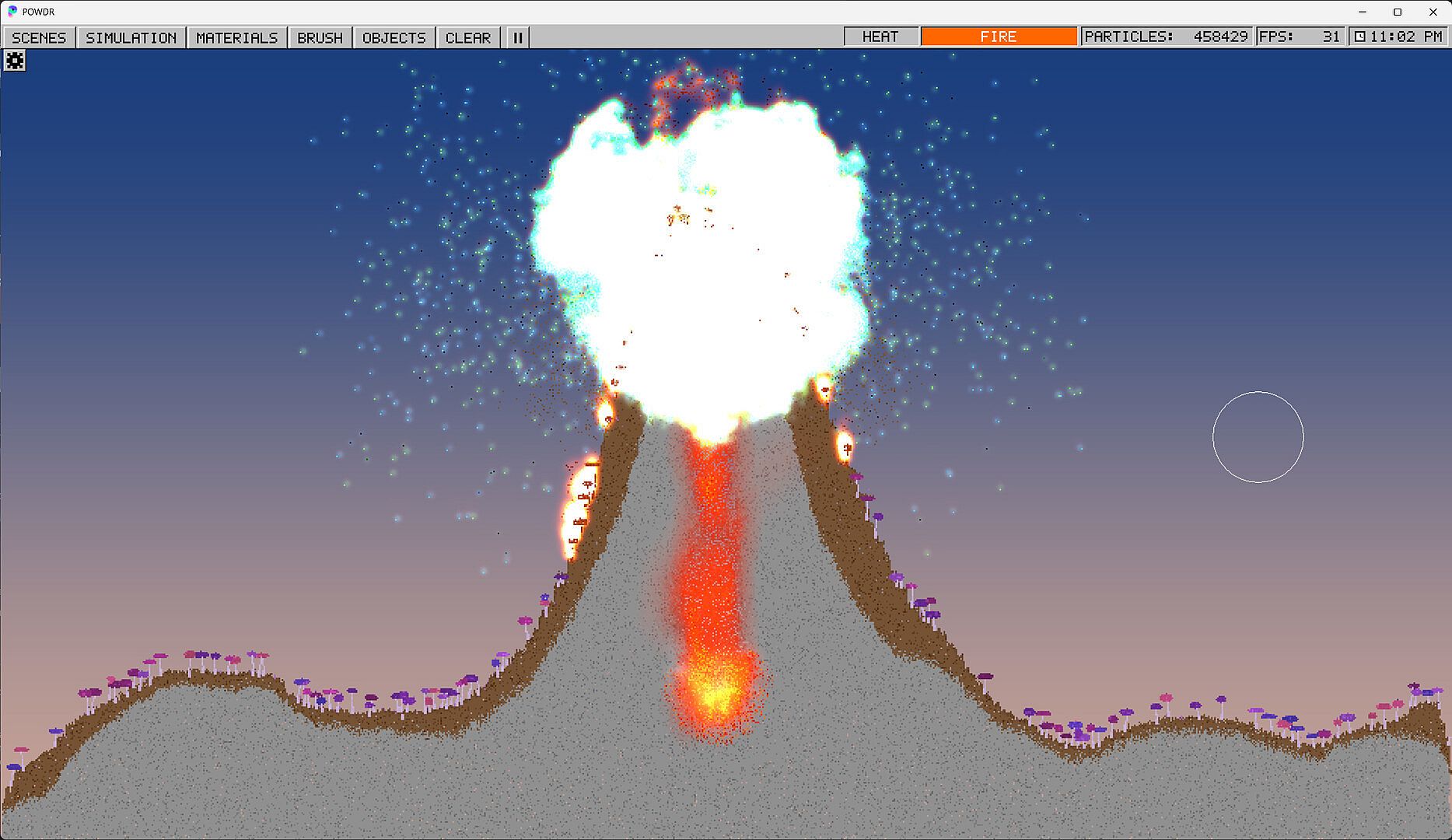
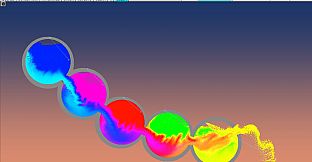
POWDR is a casual simulation game built as a GPU-accelerated particle sandbox for PC. Players interact with a world where every element behaves according to realistic physics rules involving heat, pressure, combustion, and material reactions. The core appeal lies in experimenting with powders, liquids, gases, and solids on a massive scale, up to one million particles depending on hardware performance.
Gameplay
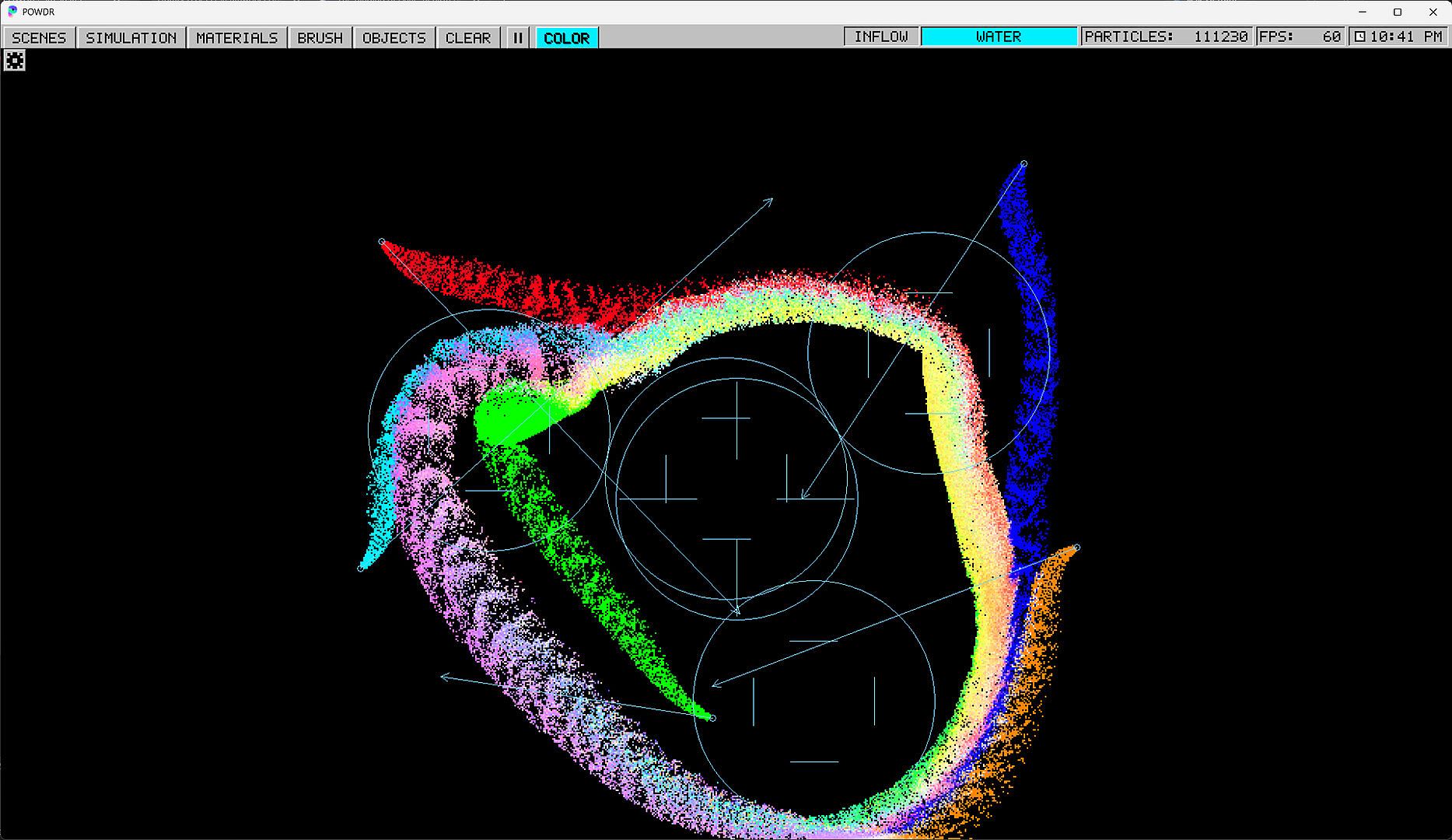
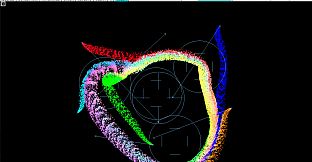
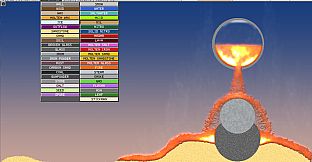
The simulation runs with an unlocked framerate and emphasizes direct interaction with the environment. Users place and manipulate more than forty distinct materials, including various powders, liquids such as water and oil, gases, molten substances, plasma, and fire. These elements undergo phase changes and react with one another under conditions of heat and pressure. Dynamic forces like vortices, attractors, and repulsors allow players to shape movement and create complex interactions across the scene.
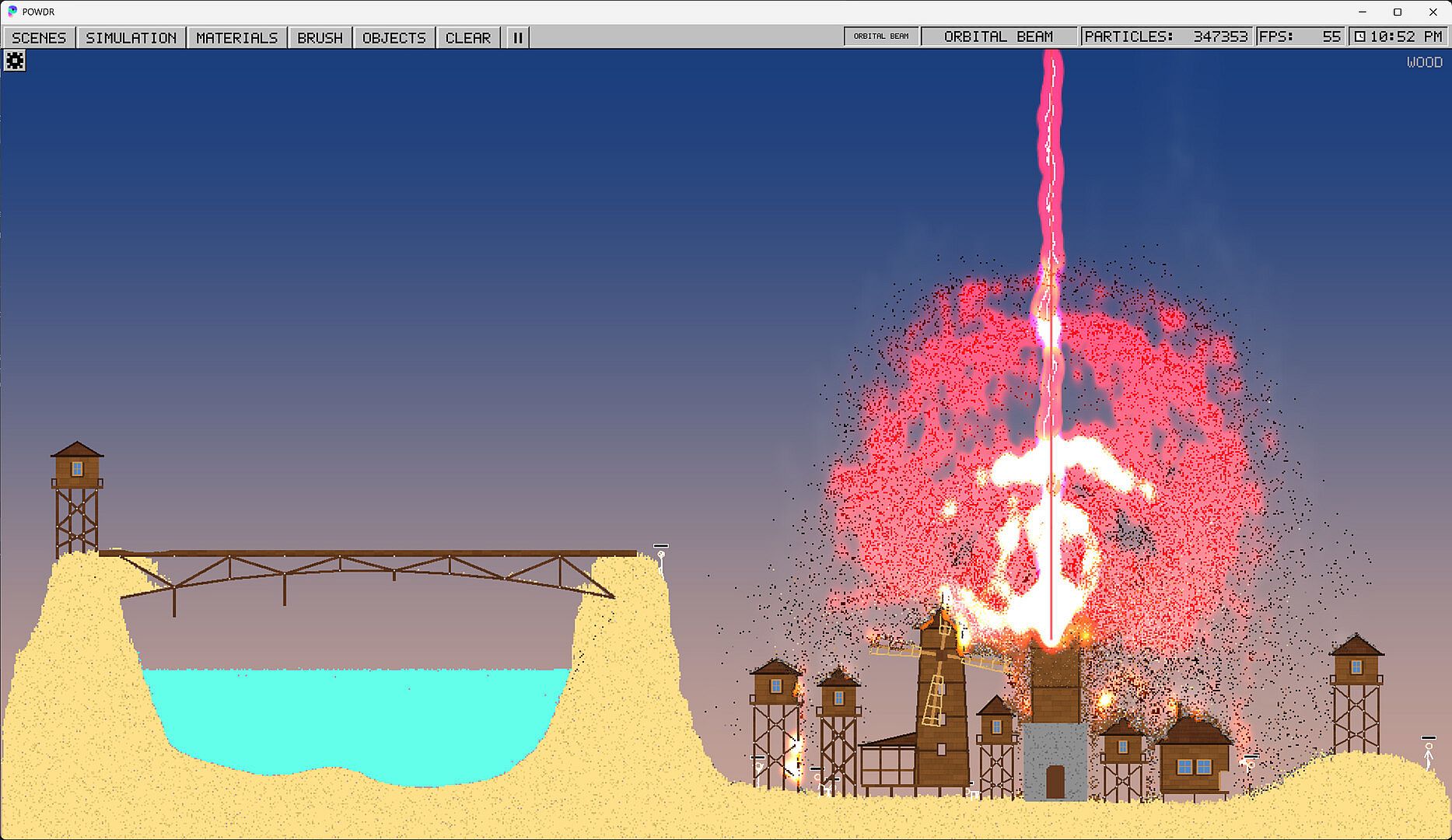
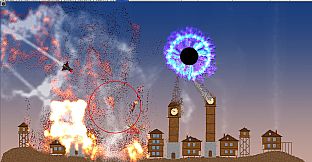
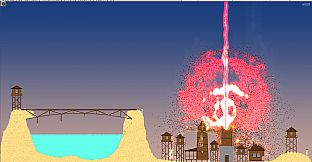
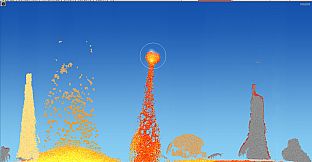
Granular materials such as sand, soil, stone, and snow can be poured to form shifting landscapes. Vegetation grows from individual seeds, creating reactive plant life that responds to the surrounding conditions. A day-and-night cycle influences the overall atmosphere and behavior of certain elements. Autonomous stickmen populate the world, moving through the environment, responding to threats, collecting resources, and collaborating to build structures. These stickmen contribute to emergent activity without direct player control over each individual.
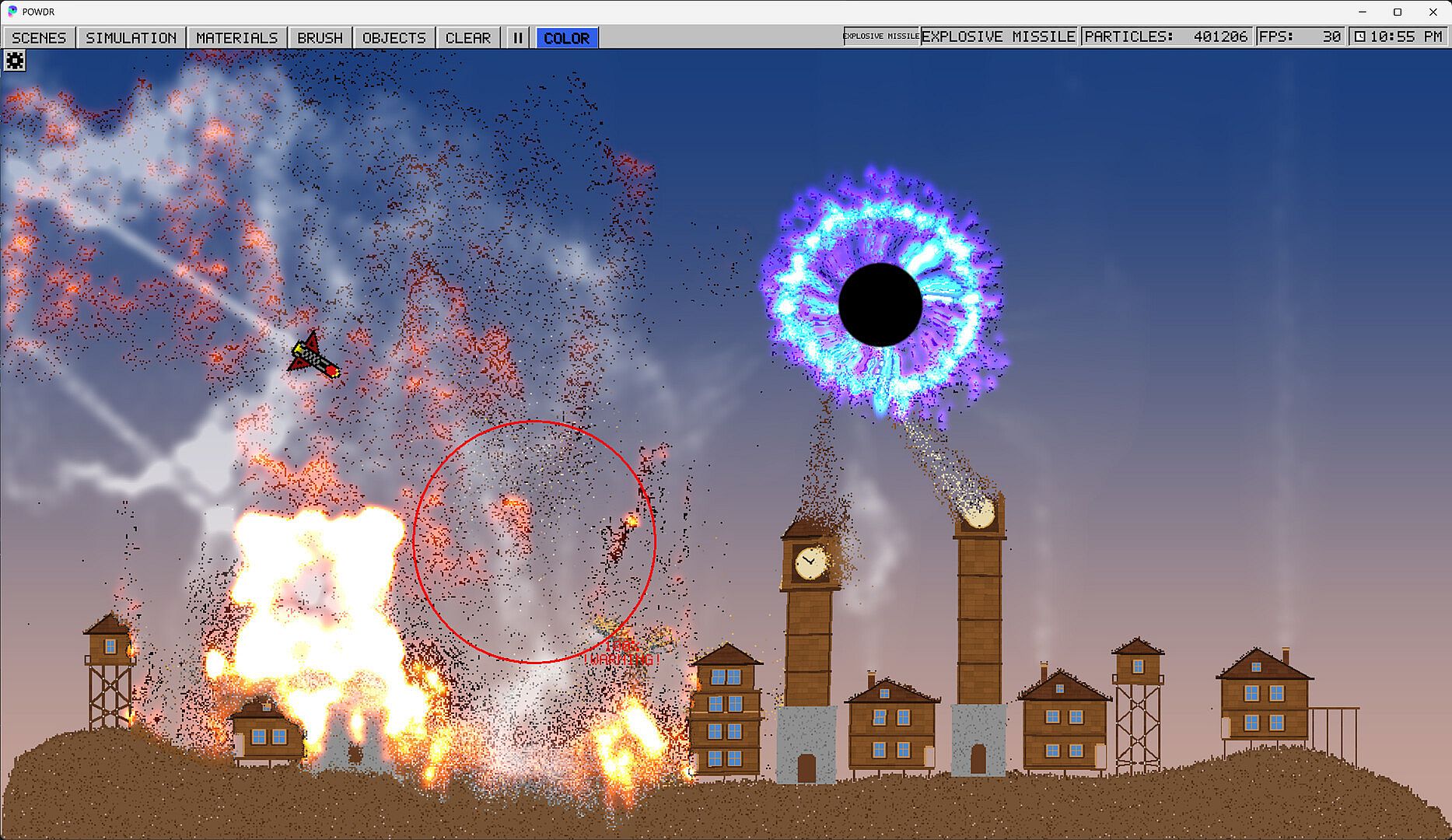
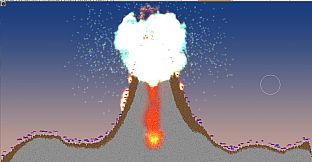
Destruction tools expand the range of experiments. Players can ignite fires, deploy volatile compounds, launch missiles, trigger nuclear strikes, direct orbital beams, or summon a growing black hole that pulls apart nearby matter. Scene saving and loading support repeated testing of setups, while adjustable simulation and performance options help tailor the experience to different hardware capabilities.
Game Modes
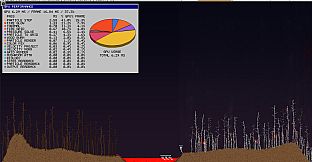
POWDR operates as a single-player experience focused on open-ended creation and experimentation. There are no structured competitive or cooperative modes listed. Instead, the design centers on a continuous sandbox environment where players freely build, observe, and dismantle systems at their own pace. Multiple performance settings allow users to balance particle count and simulation detail according to their system, supporting both detailed small-scale tests and large-scale chaos.
Key Features and Systems
The technical foundation relies on GPU acceleration to handle high particle counts while maintaining interactive speeds. Heat and pressure mechanics drive realistic behaviors such as melting, boiling, combustion, and structural collapse. Procedural generation handles stickman-built structures including houses, towers, wells, bridges, and windmills, adding variety to the autonomous activity. Growing vegetation integrates with the particle system to create living, changing ecosystems that react to fire, water, or other forces.
Players manage the simulation through direct placement tools and environmental controls. The combination of granular physics, fluid dynamics, and agent-based stickman behavior produces layered outcomes where small changes can cascade into larger events. Scene management tools encourage iterative design, letting users refine ideas across multiple sessions without losing progress.
Is It Worth Playing?
POWDR targets players who enjoy physics sandboxes and open-ended simulation. Its emphasis on large-scale particle interactions, autonomous agents, and destructive tools provides a focused creative outlet for those interested in building and breaking complex systems. The single-player format suits solo experimentation without requirements for online connectivity or social features.
As the game remains in a pre-release state with no user reviews available, potential players should consider their interest in similar particle-based titles. The listed systems, including GPU scaling to one million particles, material reactions, and procedural construction, align with established sandbox mechanics. Those who value detailed environmental simulation and emergent behavior from stickmen and vegetation will find the described toolkit relevant. Availability on PC with family sharing support broadens access once the title launches.