

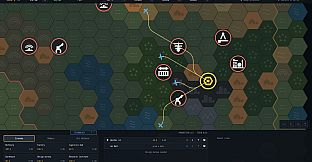
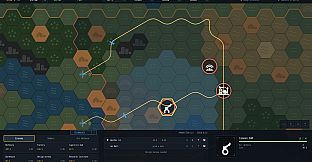
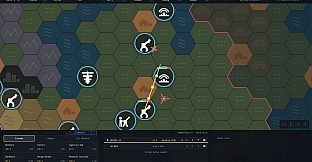
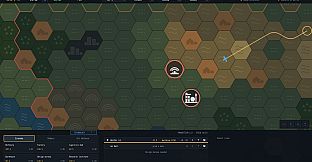
Radar Shadow is a turn-based strategy game developed for PC that challenges players to locate and destroy an enemy command base while protecting their own hidden installation. Both sides operate with full knowledge of the map terrain but complete ignorance of the opponent's construction and unit placements. The objective centers on scouting effectively, plotting precise strikes, and managing resources to outmaneuver the adversary before it uncovers your position.
Gameplay
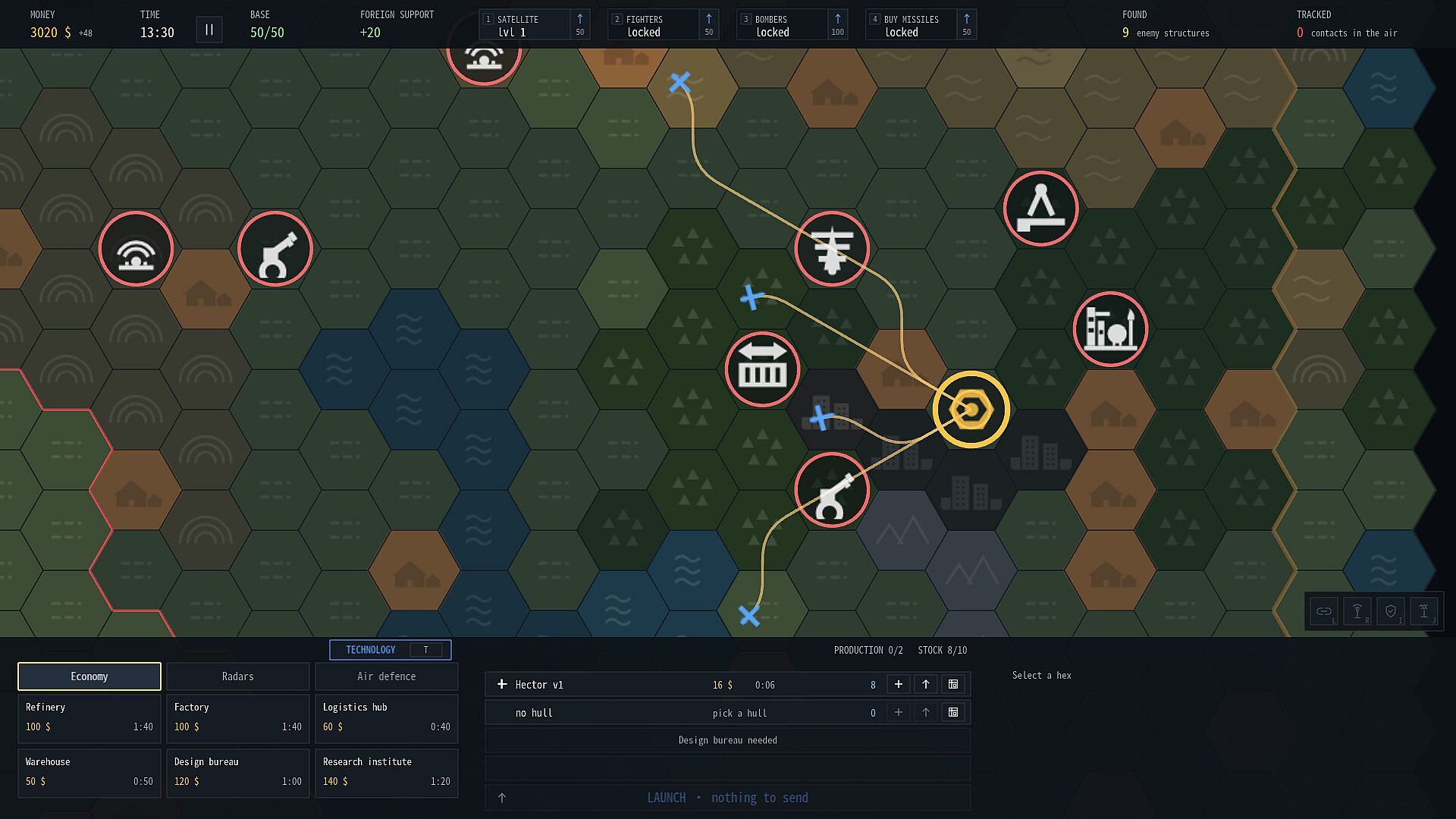
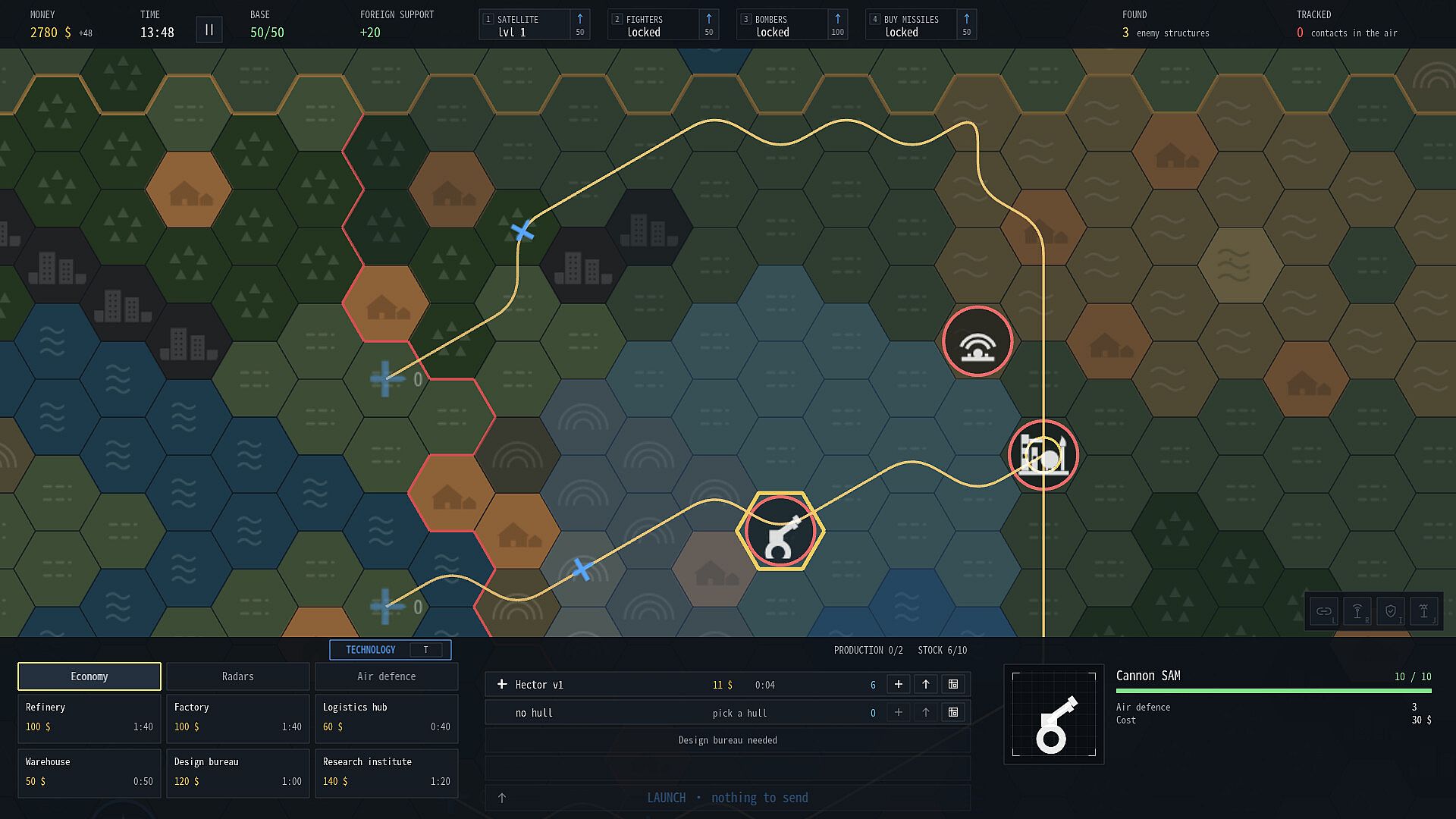
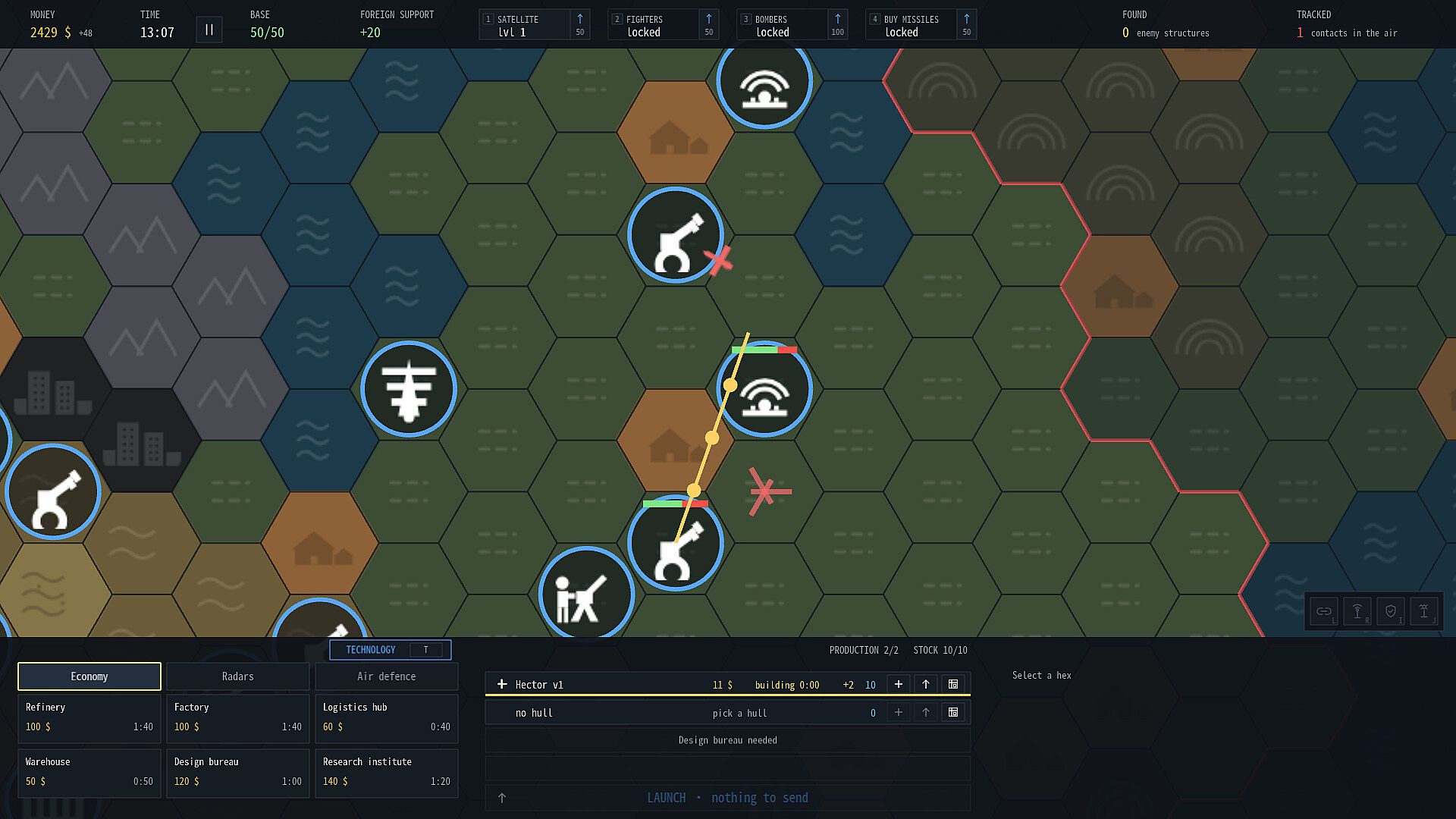
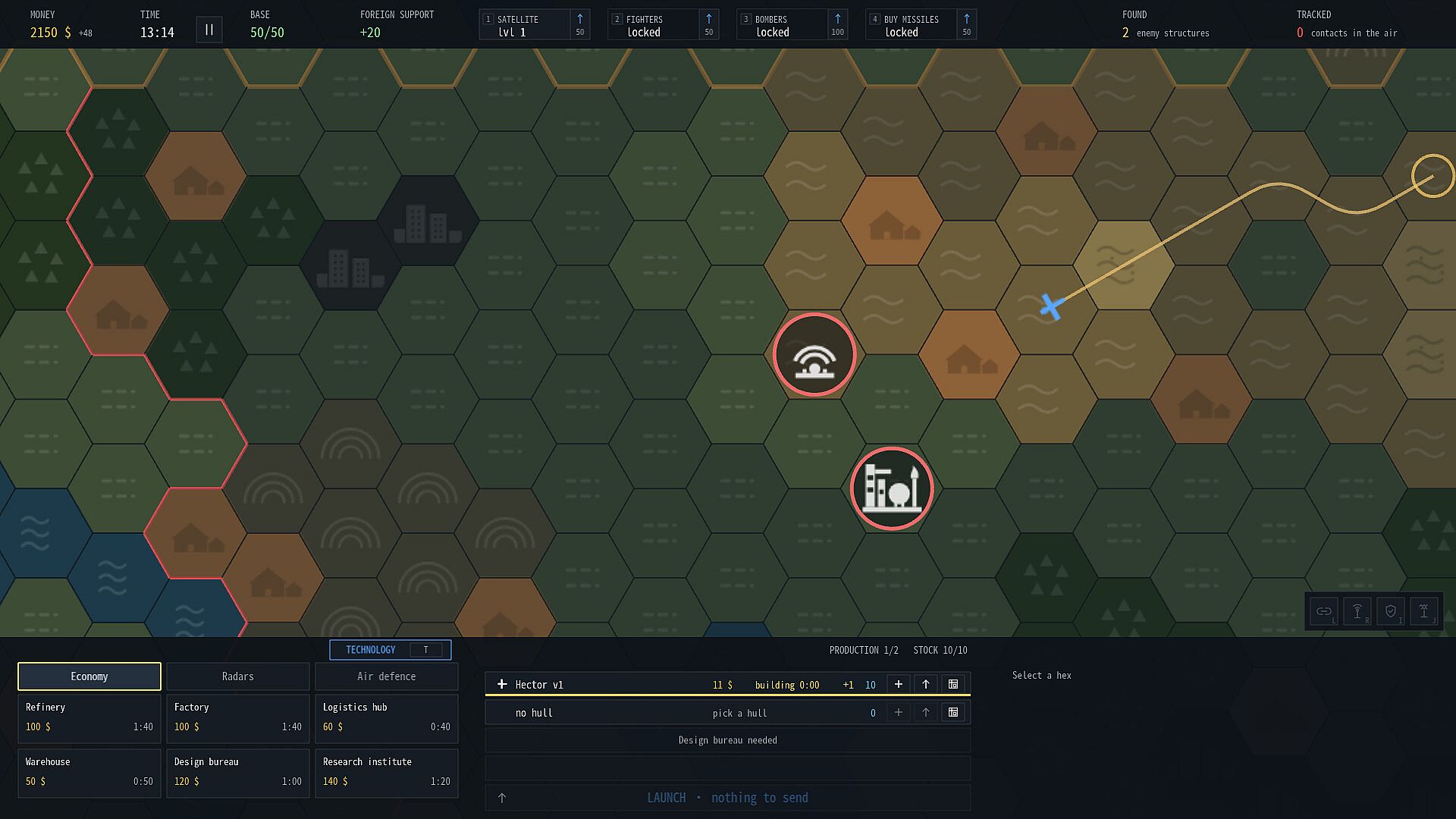
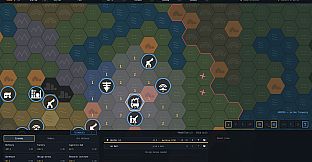
The core loop revolves around reconnaissance and calculated aggression. Players begin by sending drones along chosen routes to reveal fog of war, or they rely on satellite passes for broader but less controlled intelligence. Once a hex is observed, missiles or aircraft can be directed toward it with greater accuracy. Every route requires manual plotting hex by hex, forcing trade-offs between distance, exposure, and safety. Forests provide natural radar screening, ridges create blind zones known as radar shadows, and towns increase the risk of detection or collateral damage that reduces foreign support.
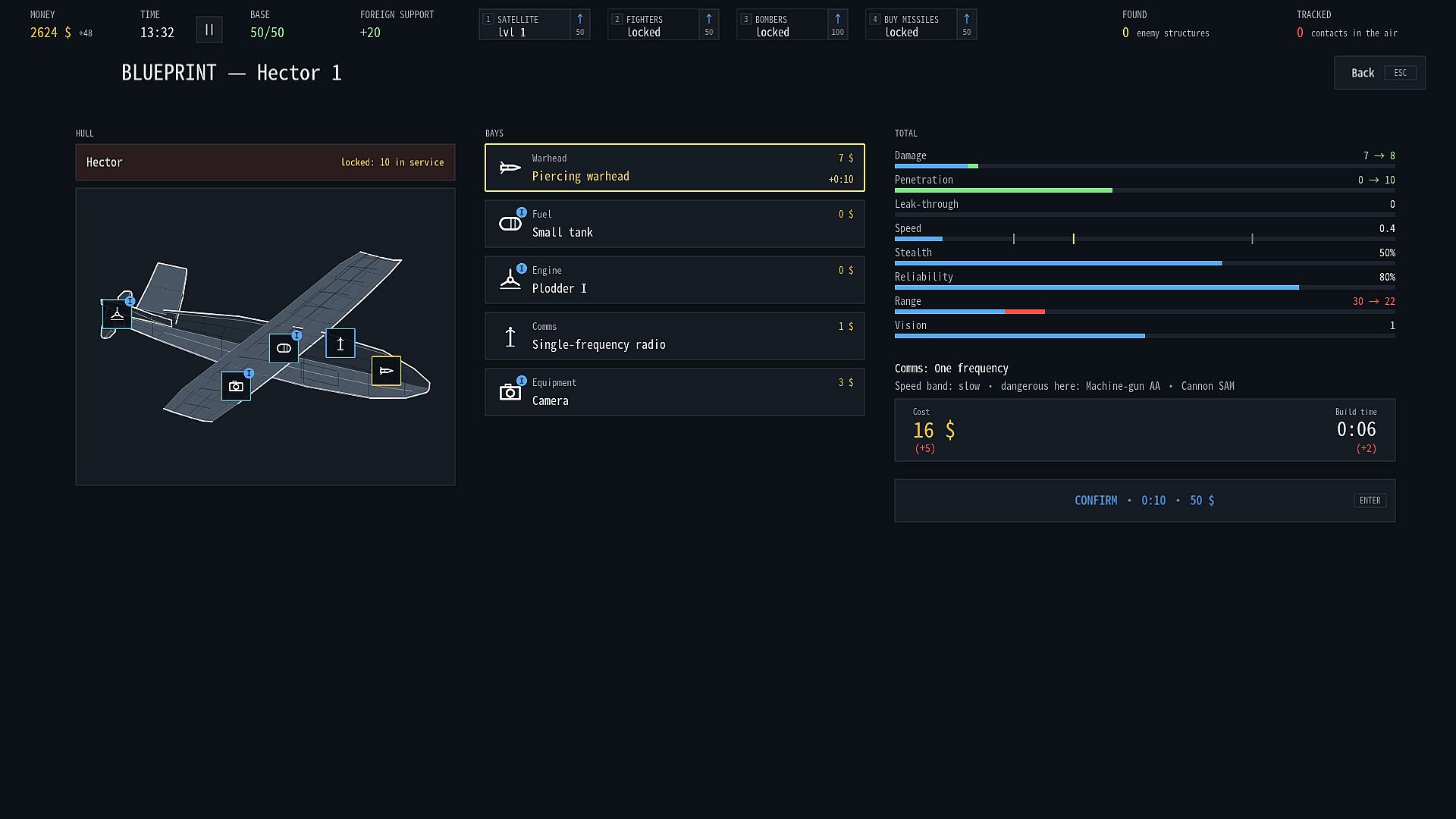
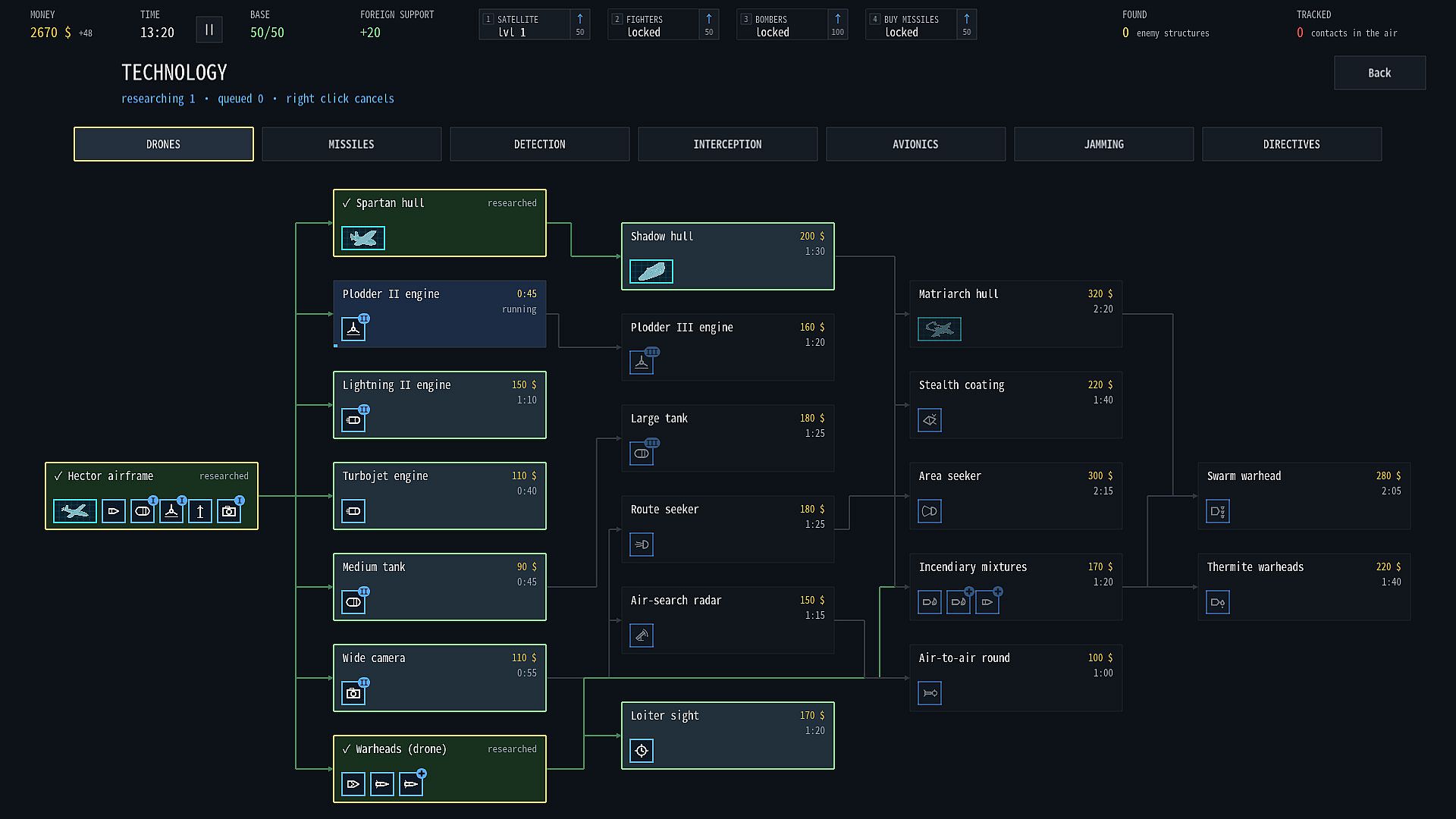
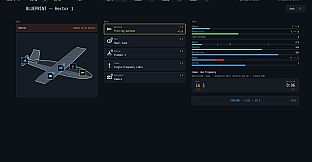
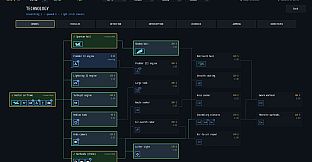
Customization adds depth to each aircraft. Hulls accept different combinations of warheads, fuel tanks, engines, radios, and cameras. Heavier payloads reduce range, while cheaper single-frequency radios prove vulnerable to jamming. Autonomous units resist electronic interference but cannot relay observations back to base. Research expands available hulls, modules, detection methods, air defense options, and jamming tools, allowing gradual improvement of national capabilities across the campaign.
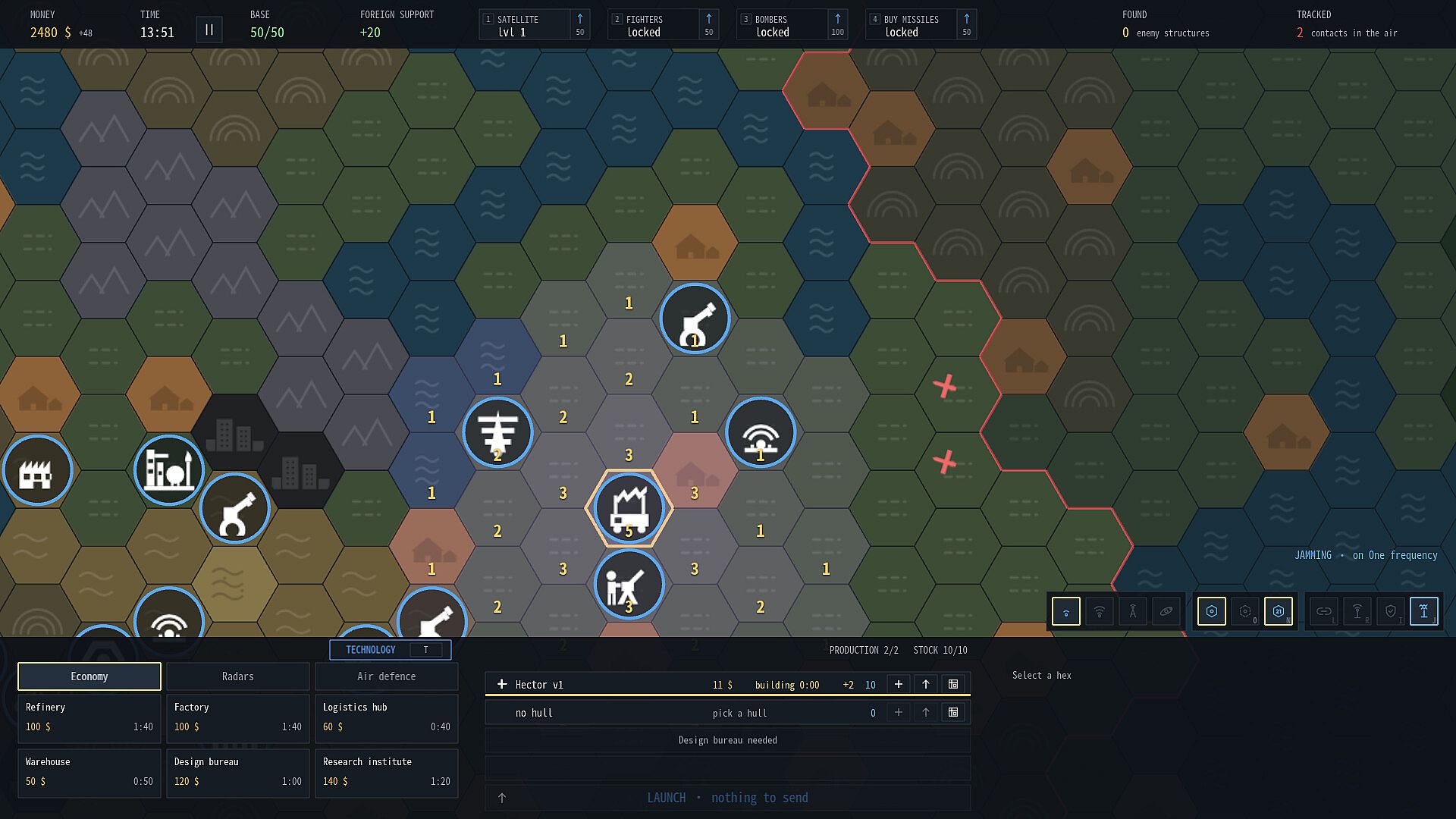
Defensive systems operate under strict limits. Air defense batteries engage only detected targets and can handle a finite number simultaneously, making swarms of inexpensive drones difficult to counter. Jamming equipment disrupts enemy routes without destroying units outright, with different jammer types offering area coverage, directional power, or satellite interference. Decoys further complicate enemy targeting by drawing strikes away from critical assets.
Game Modes
Radar Shadow presents its mechanics through a single-player campaign structure focused on iterative planning and execution against an opposing force. Each session involves mapping strike paths, deploying mixed reconnaissance and attack assets, and responding to enemy drone incursions over friendly territory. The emphasis remains on preparation rather than real-time control, with success determined by efficient scouting, terrain exploitation, and timely research investments.
Players manage a sequence of missions that build toward locating the enemy base. Multiple launch points become viable once the base position is known, allowing coordinated strikes that overwhelm limited air defenses. The absence of named sub-modes keeps attention on the central tension between information gathering and decisive action.
Key Mechanics and Systems
Terrain interaction shapes every decision. Ridges block radar lines of sight and create safe corridors, while civilian centers penalize inaccurate strikes through lost political backing. Aircraft that crash in populated areas directly impact available support for future operations. This creates a constant need to balance aggressive pushes with precise navigation around hazards.
Electronic warfare forms a parallel layer. Jammers degrade enemy reliability without expending munitions, and the choice of frequency coverage determines effectiveness against different radio types. Satellite links require specialized orbital jammers, while barrage and sector jammers trade range for intensity or precision. These tools integrate with air defense and strike planning to create layered defensive and offensive strategies.
Progression through research unlocks incremental advantages. New modules improve range, stealth, or payload options, while upgraded detection and jamming systems alter the information and disruption balance. The result is a game that rewards long-term planning and adaptation to the evolving capabilities of both sides.
Is It Worth Playing?
Radar Shadow appeals to players who enjoy deliberate, planning-heavy strategy experiences where reconnaissance and positioning outweigh direct confrontation. Its systems reward careful route design, terrain awareness, and resource allocation across multiple missions. Because the title remains in active development, features and balance continue to evolve based on the current build. Those drawn to indie strategy titles centered on hidden objectives, electronic warfare, and aircraft customization will find a focused match in its mechanics. Wishlisting provides the clearest path to follow further updates prior to release.