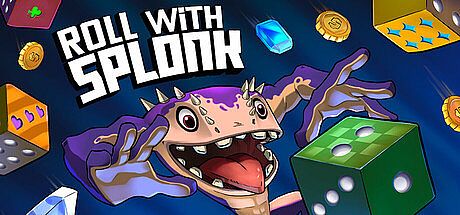


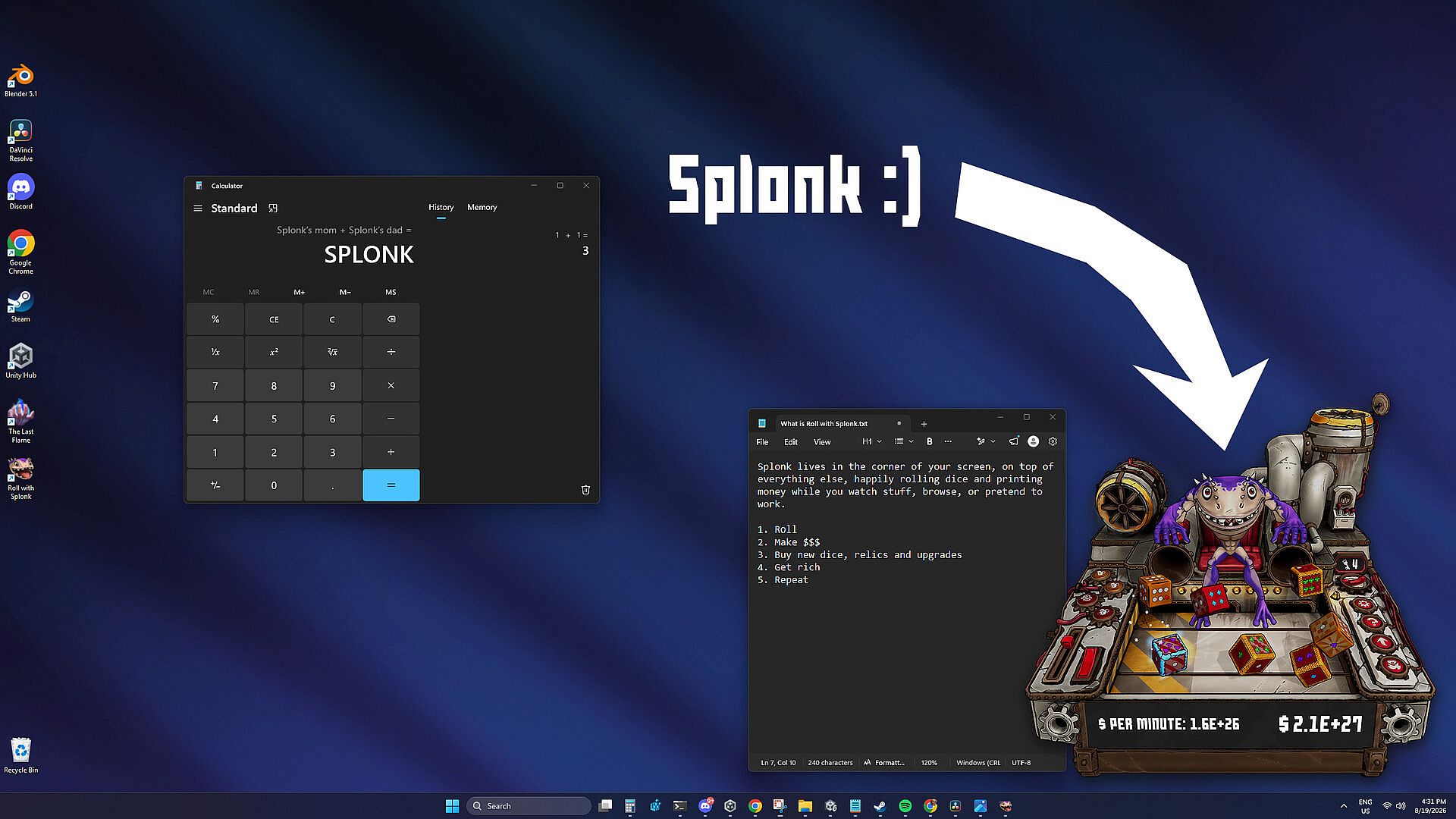
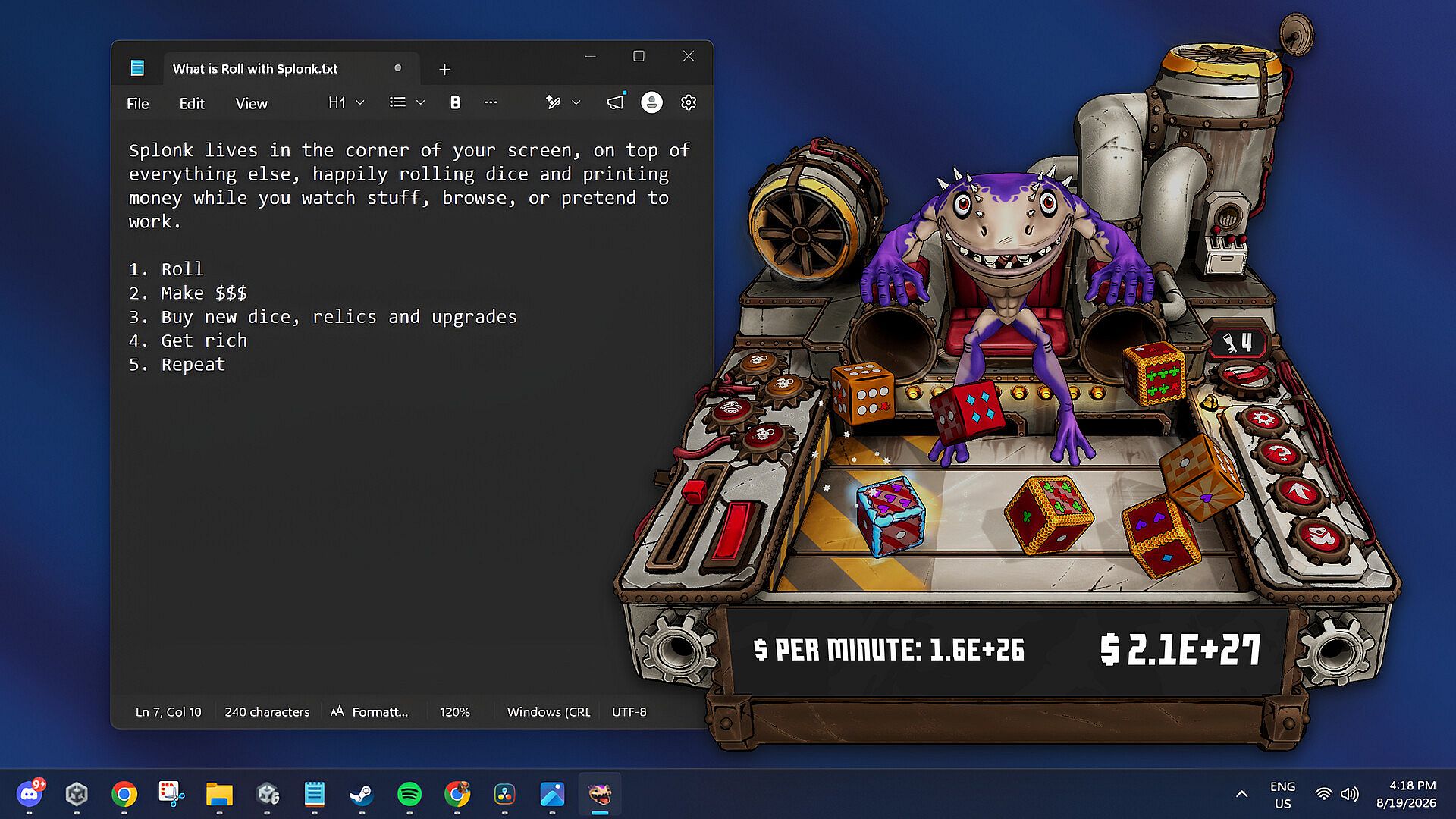
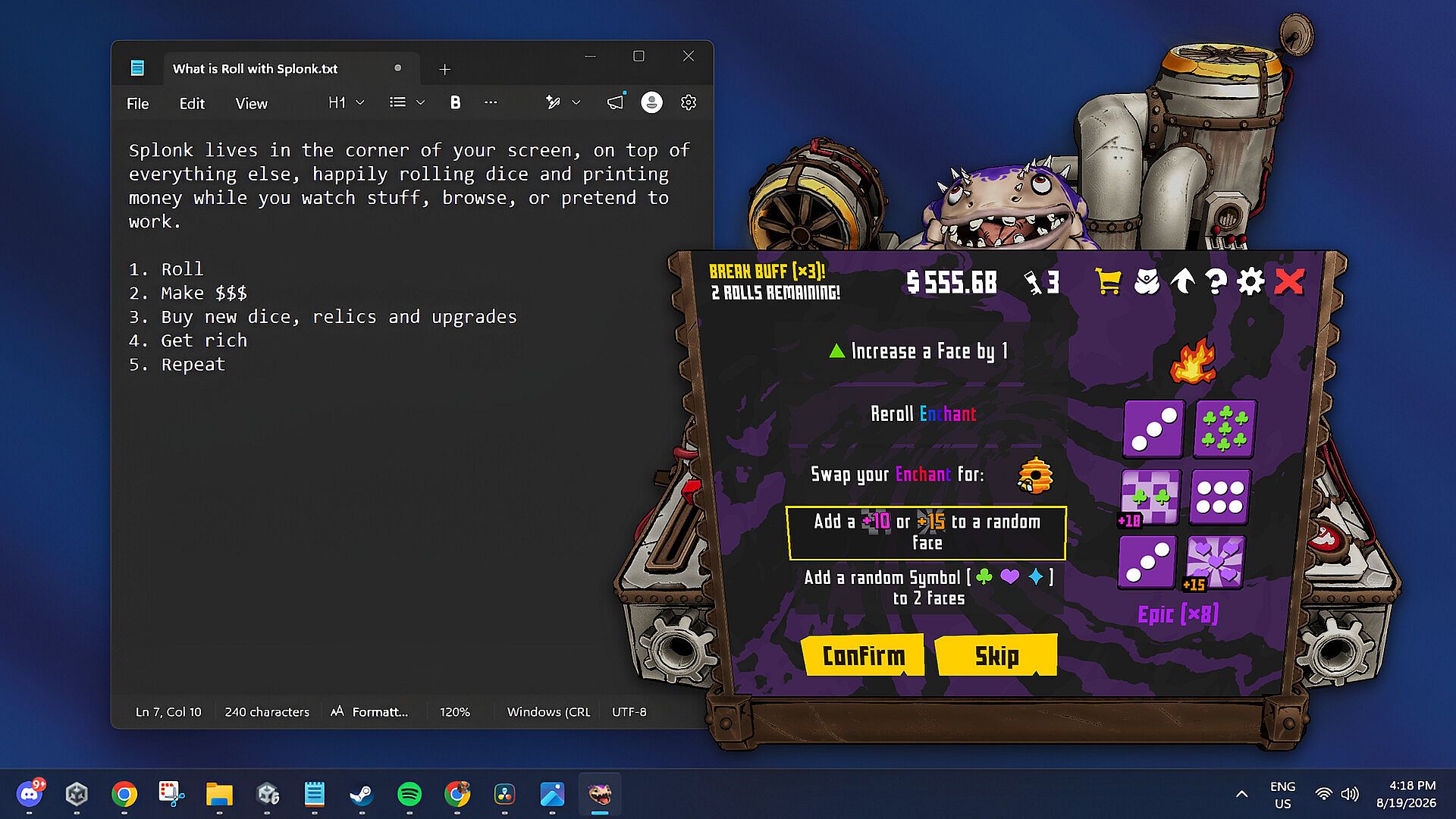
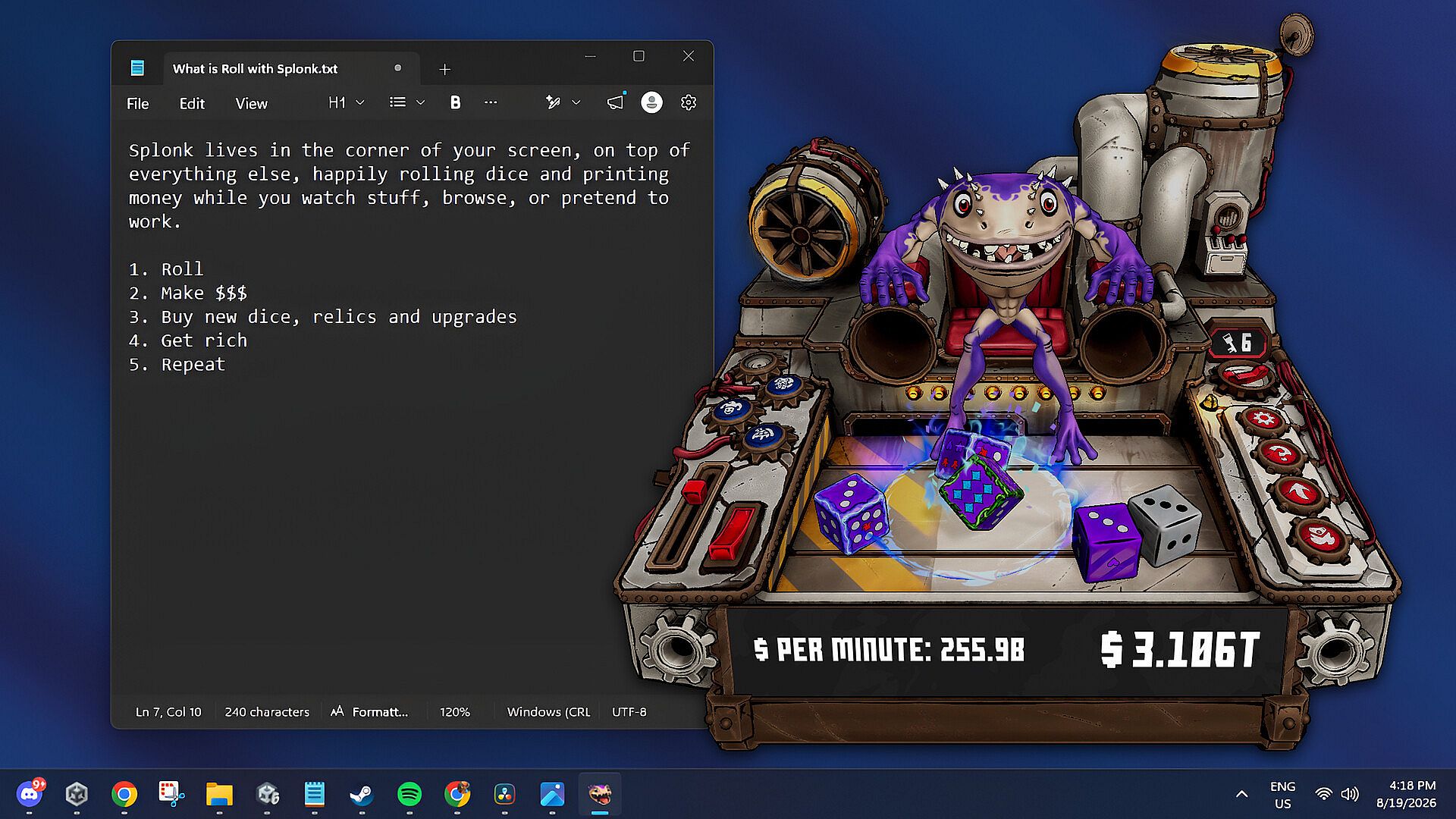
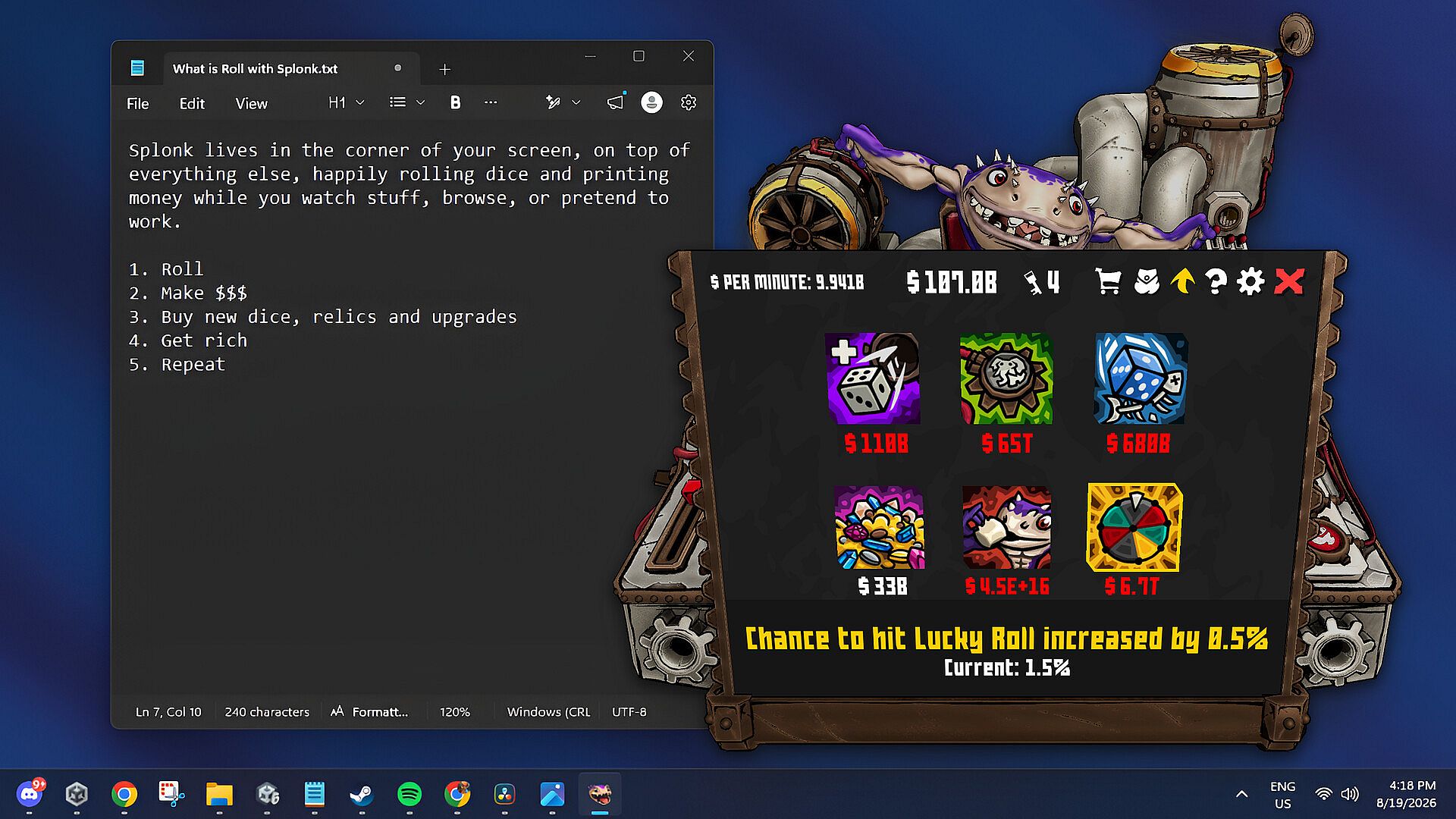
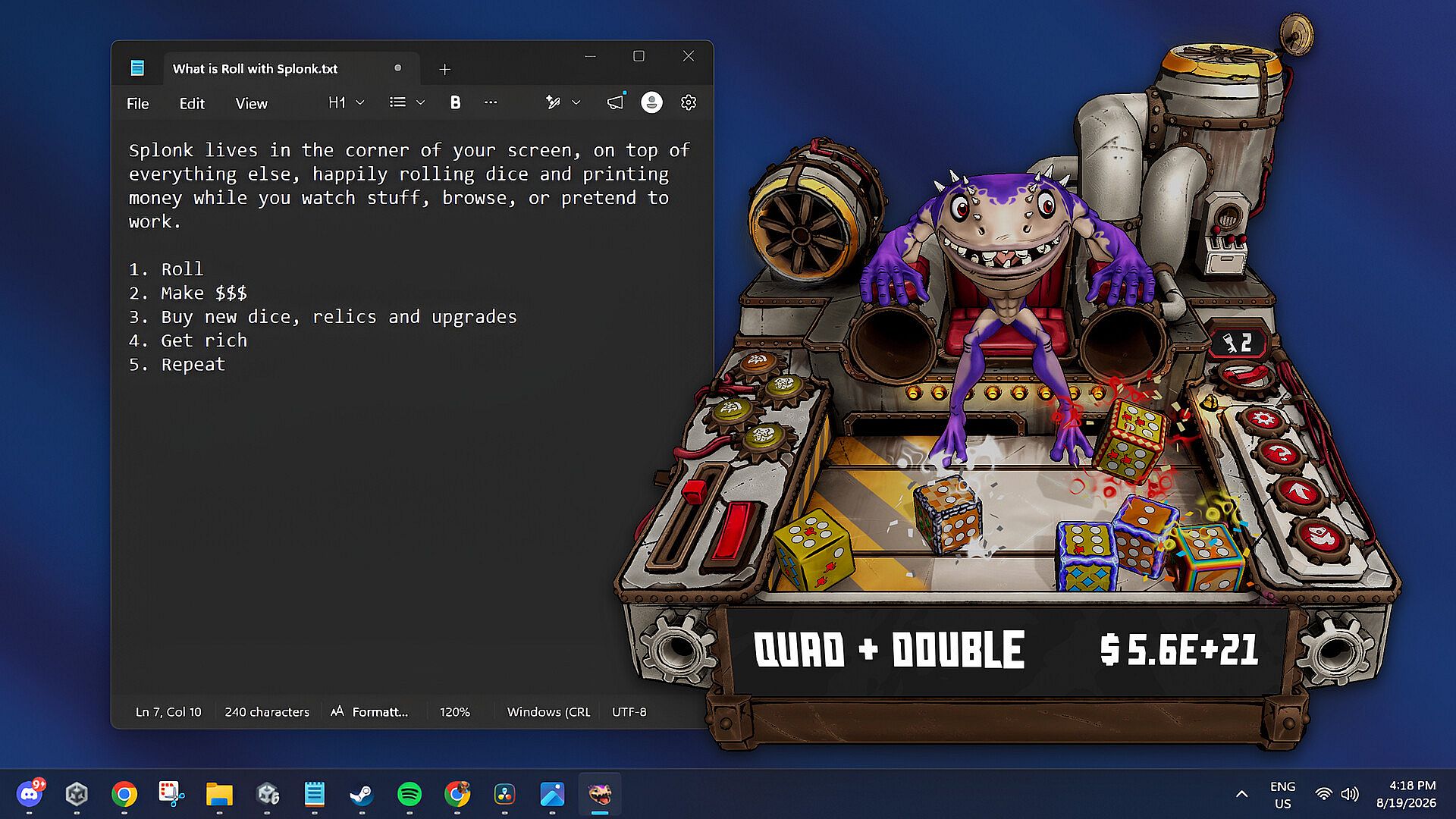
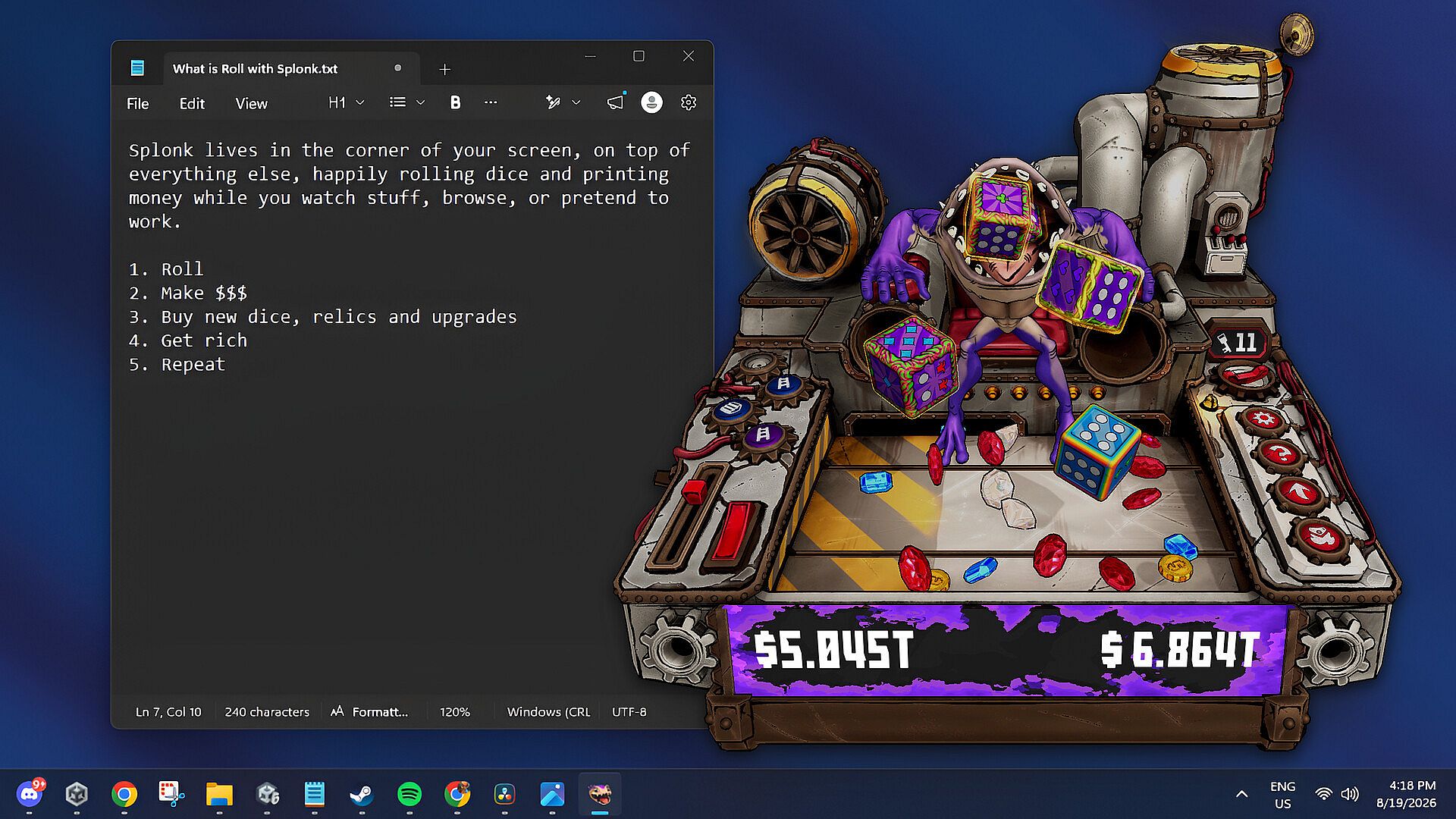
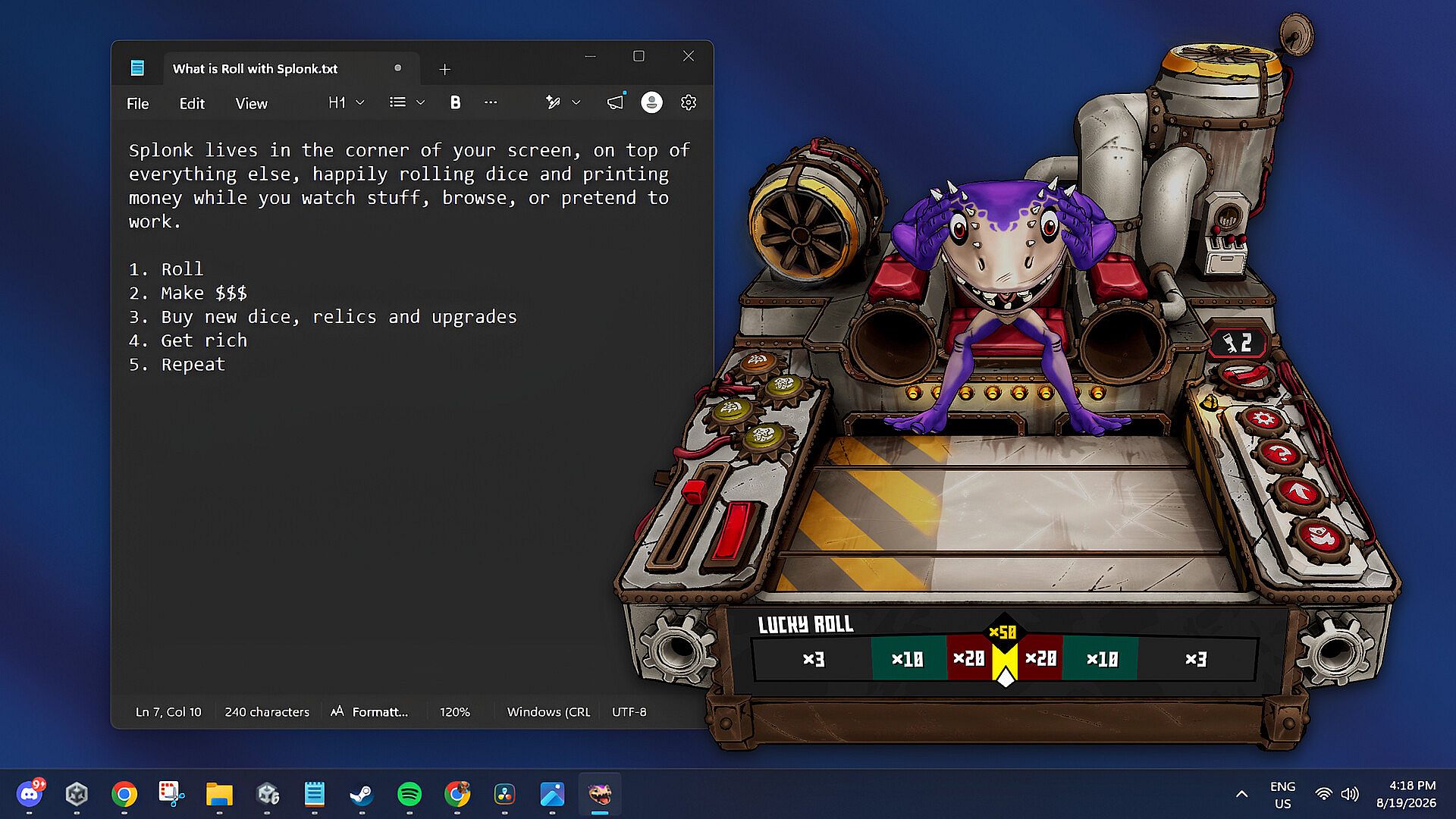
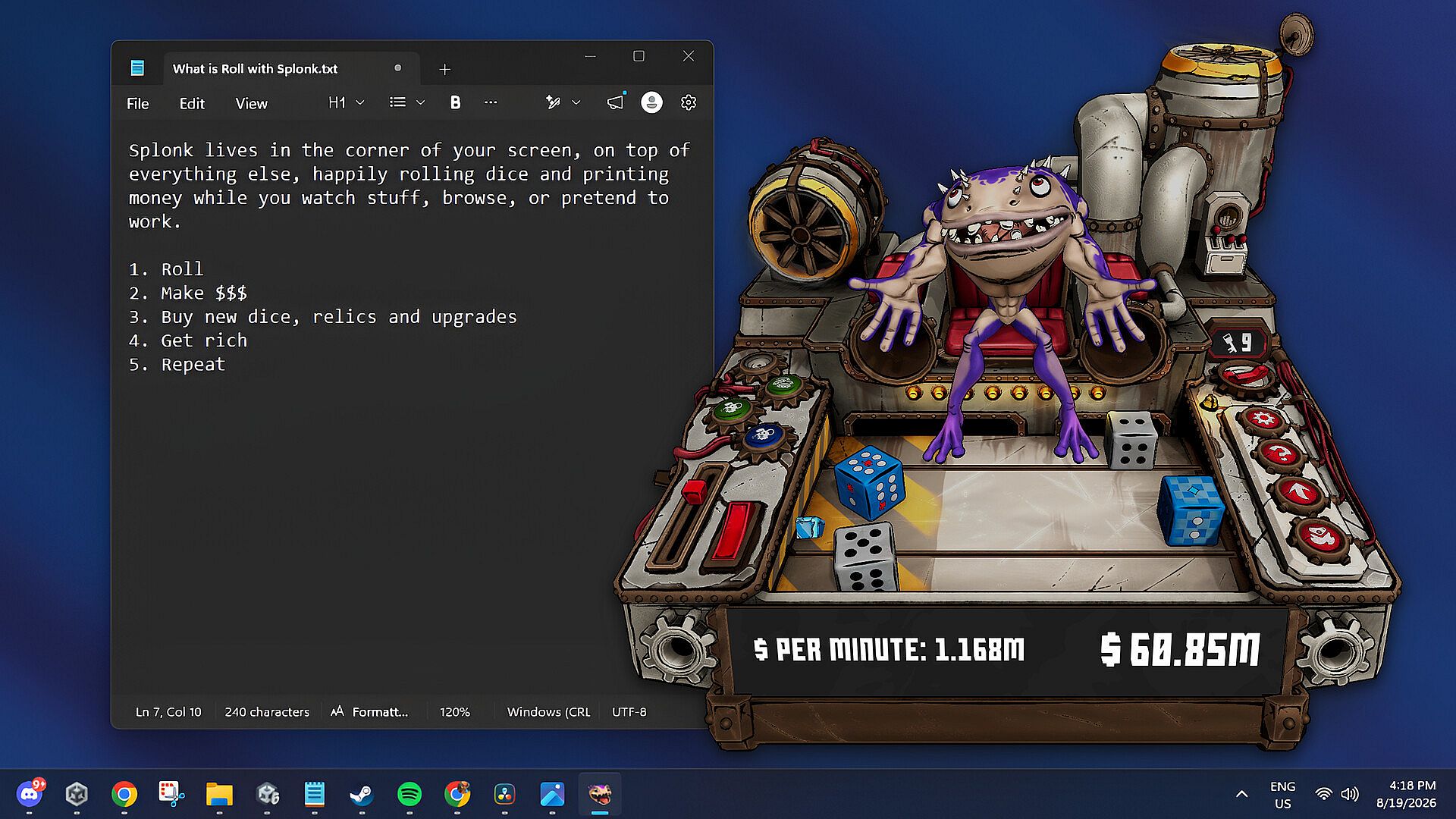
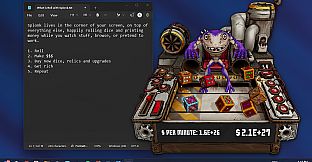
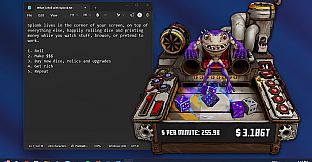
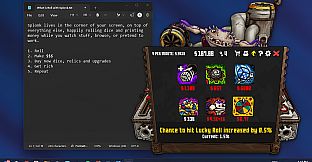
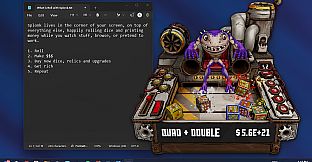
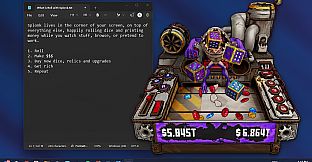
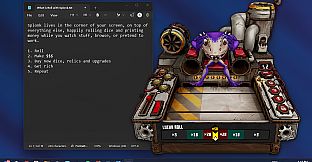
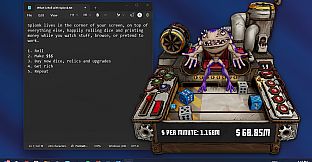
Roll with Splonk is a strategy RPG simulation game for PC that places an idle dice-rolling companion directly on your desktop. Splonk occupies a corner of the screen above all other windows and handles continuous dice rolls that generate currency while users browse, watch content, or handle other tasks. The experience centers on periodic check-ins to reinvest earnings into new dice, relics, and upgrades that accelerate future gains.
Gameplay
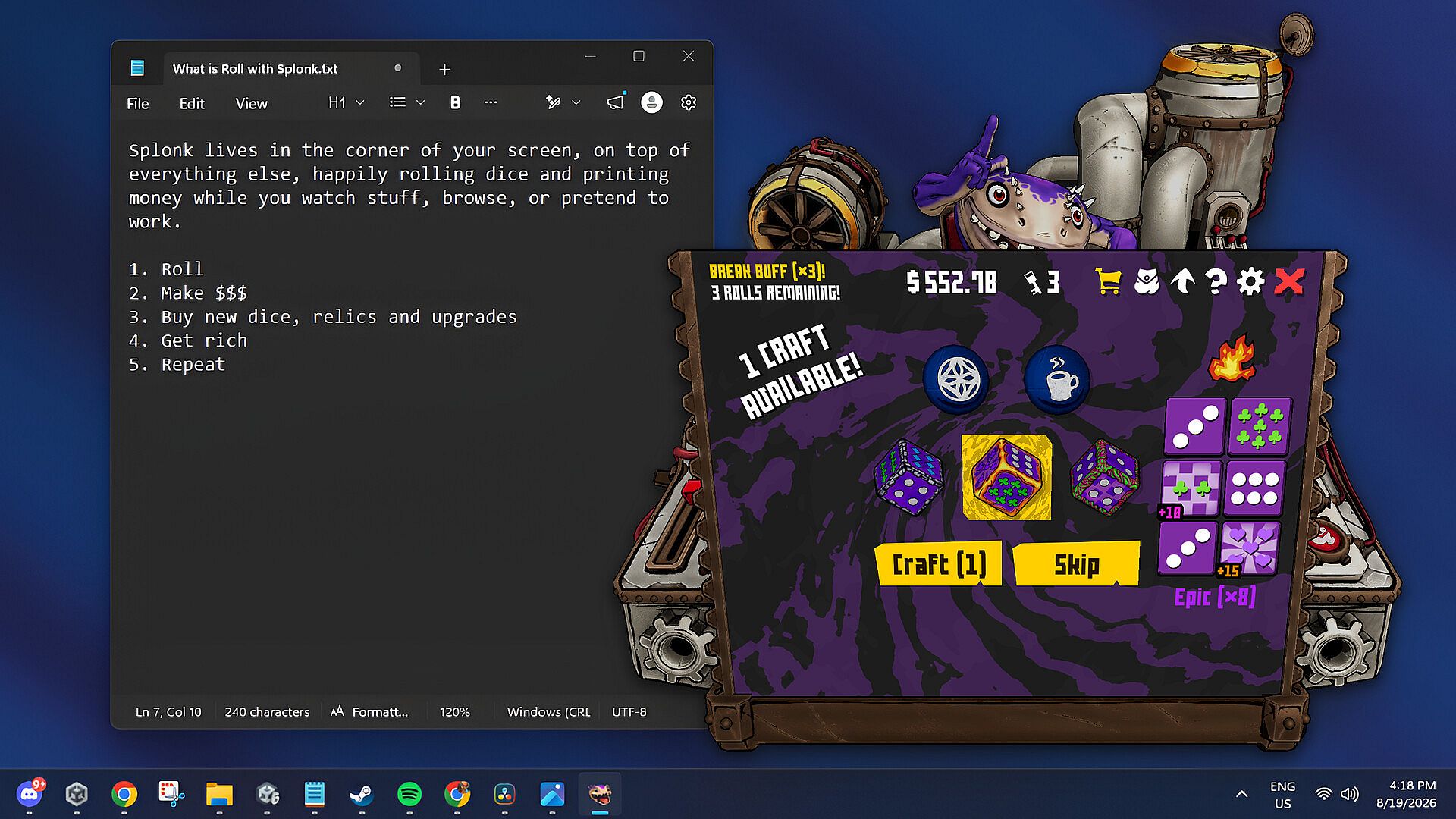
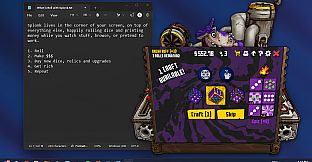
The core loop revolves around dice that Splonk rolls automatically in the background. Each roll produces money that accumulates over time, allowing players to return and spend those funds on improvements. Every die features random generation, which introduces variety and the occasional high-value outcome that can shift progression speed. Users stack multiple dice together when their effects complement one another, then layer crafted improvements, relics, and upgrades onto the collection. This combination pushes earnings higher with each cycle, creating compounding growth that continues even during extended periods away from the game.
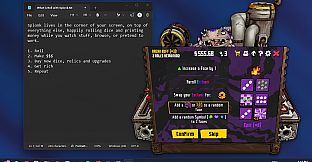
Relics and upgrades serve as permanent enhancements that modify how dice perform or how currency is calculated. The random nature of new dice means experimentation plays a role in finding strong combinations, while the overall system rewards consistent investment rather than constant active input. Splonk also performs small visual actions during rolls, adding light entertainment without demanding attention. The design keeps the focus on long-term accumulation that runs alongside normal computer use.
Game Modes
Roll with Splonk operates as a single-player idle experience with no separate competitive or cooperative structures. The primary activity involves monitoring and expanding the dice collection through repeated check-ins and reinvestment. There are no timed events, separate campaigns, or alternate rule sets that change the fundamental rolling and upgrading process. All progress occurs within the same persistent system, where time spent away from the screen continues to contribute through ongoing rolls.
The casual simulation aspect means the game adapts to different play styles by letting users decide how frequently they engage. Short visits focus on quick purchases and immediate upgrades, while longer sessions allow deeper review of current dice setups and relic choices. This flexibility supports the strategy elements without requiring dedicated play sessions away from other activities.
Progression and Upgrades
Advancement comes from acquiring new dice through earnings and then enhancing them with targeted improvements. Random generation ensures each new die carries unique properties, encouraging players to test combinations that multiply income. Relics add another layer by providing broader bonuses that affect the entire collection rather than individual dice. Upgrades refine specific mechanics, such as roll frequency or payout multipliers, and stack with existing items to produce larger returns over time.
The system emphasizes patience and incremental optimization. Early gains come from basic dice purchases, but later stages involve careful selection of complementary pieces that push totals into much higher ranges. Because the process runs in the background, progression feels steady even when the player focuses on other work or entertainment.
Is It Worth Playing?
Roll with Splonk suits players who enjoy passive progression systems and want a low-commitment way to build numbers on the side. The idle format delivers steady growth without interrupting normal computer use, which appeals to those balancing gaming with daily routines. Strategy elements emerge through dice selection and upgrade paths, while the random generation keeps each run from feeling identical.
Reception centers on the relaxing nature of watching earnings climb and the satisfaction of discovering strong dice combinations. The game requires no constant input, making it accessible for short or infrequent sessions. For users interested in casual simulation combined with light RPG-style upgrades and strategy around resource allocation, the title provides a straightforward loop that continues independently. Those seeking active, hands-on gameplay or structured challenges may find the background focus less engaging. Overall, it delivers on its premise of handling the repetitive elements while leaving time for other pursuits.