





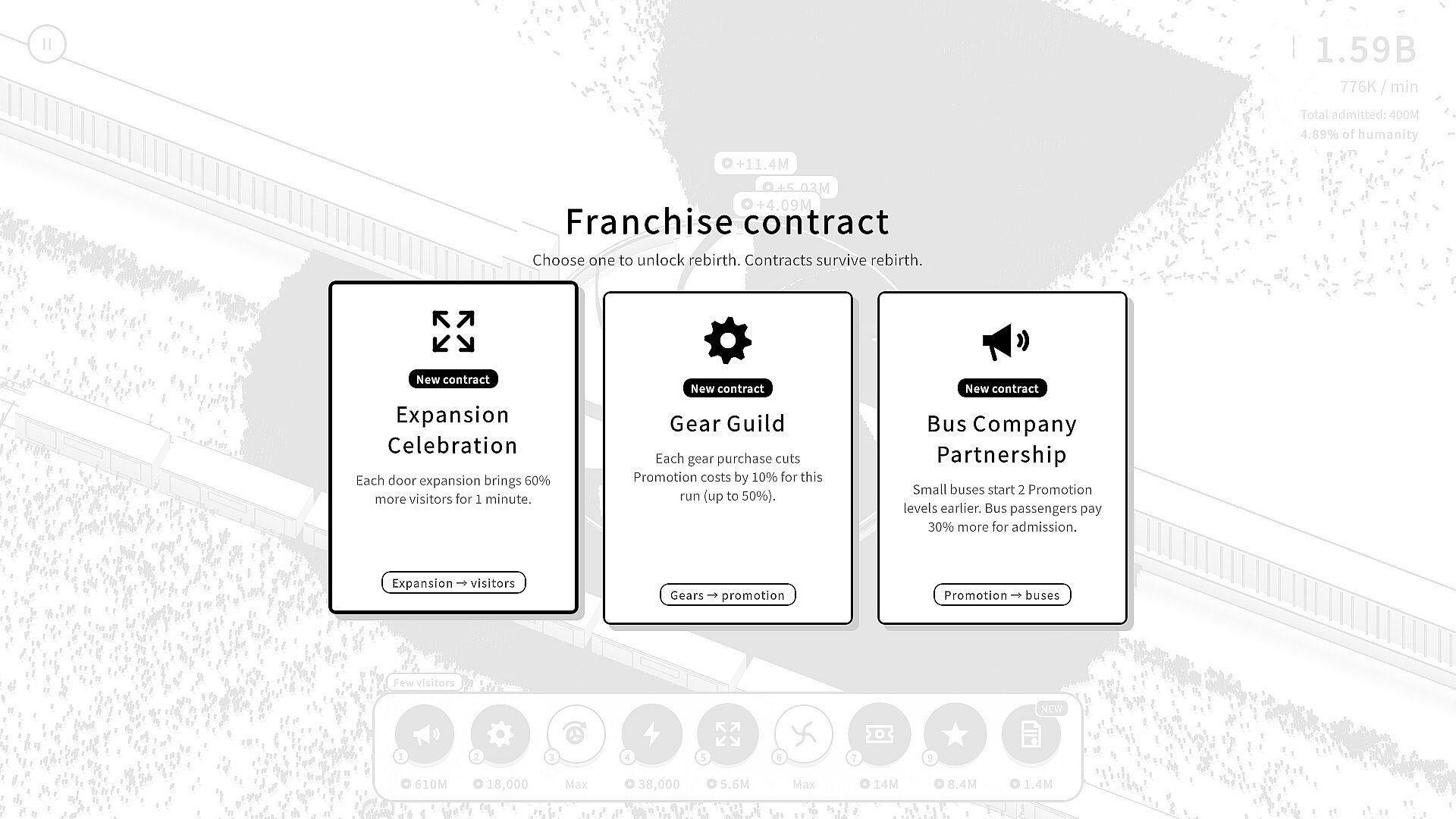
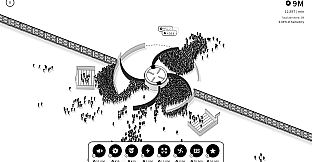
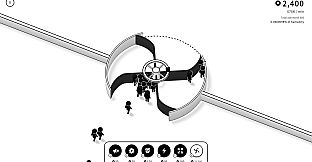


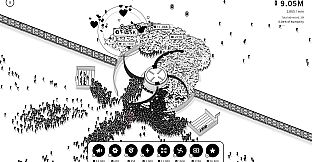
Round and Round Inc. is an indie casual simulation game built around a single revolving door and the incremental process of scaling it to handle crowds of increasing size. Players begin with a modest corner shop entrance and gradually expand operations until the door processes the entire human population. The experience centers on direct interaction with the door mechanics, resource management through upgrades, and repeated runs that build toward a defined conclusion.
Gameplay
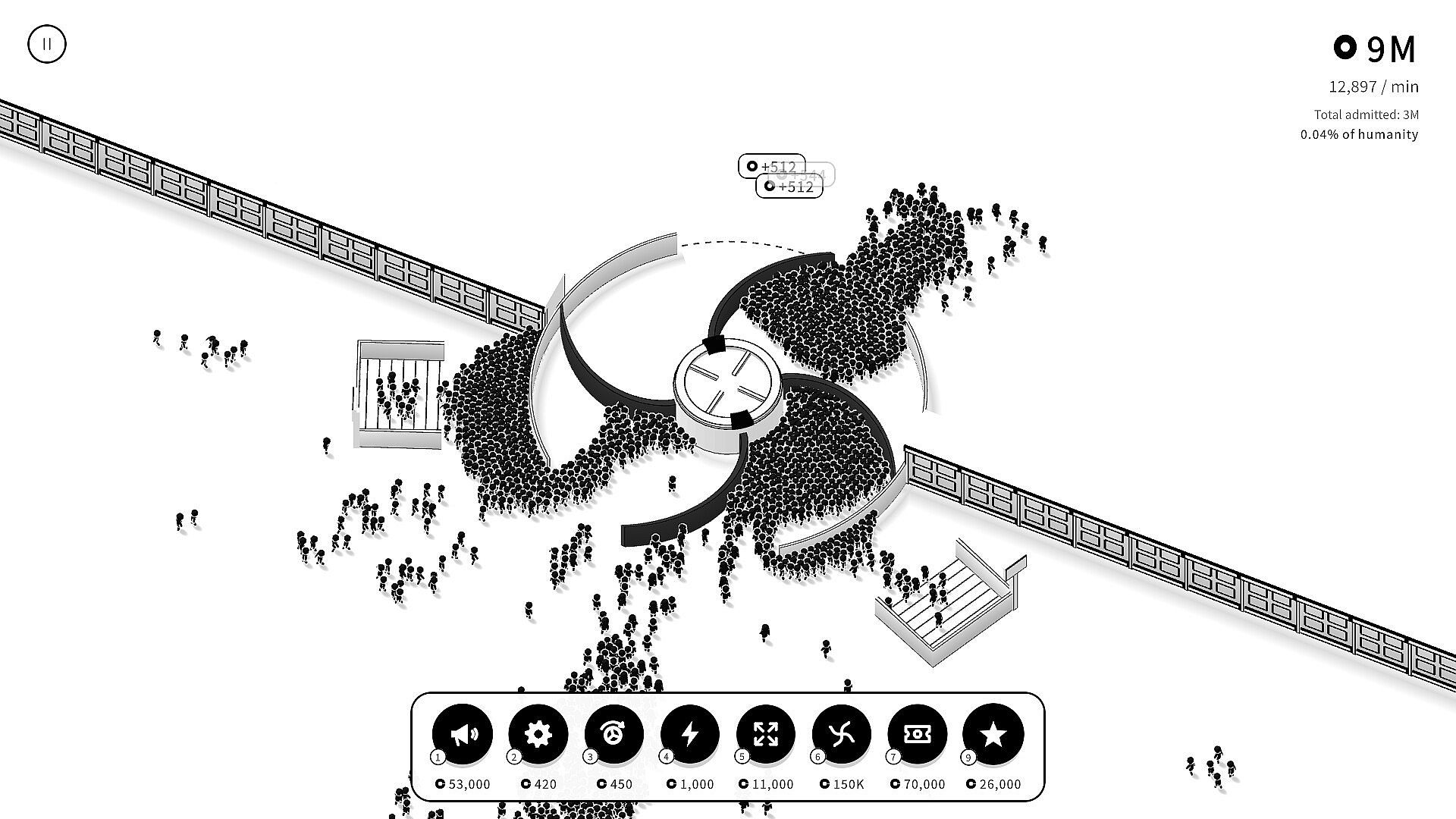
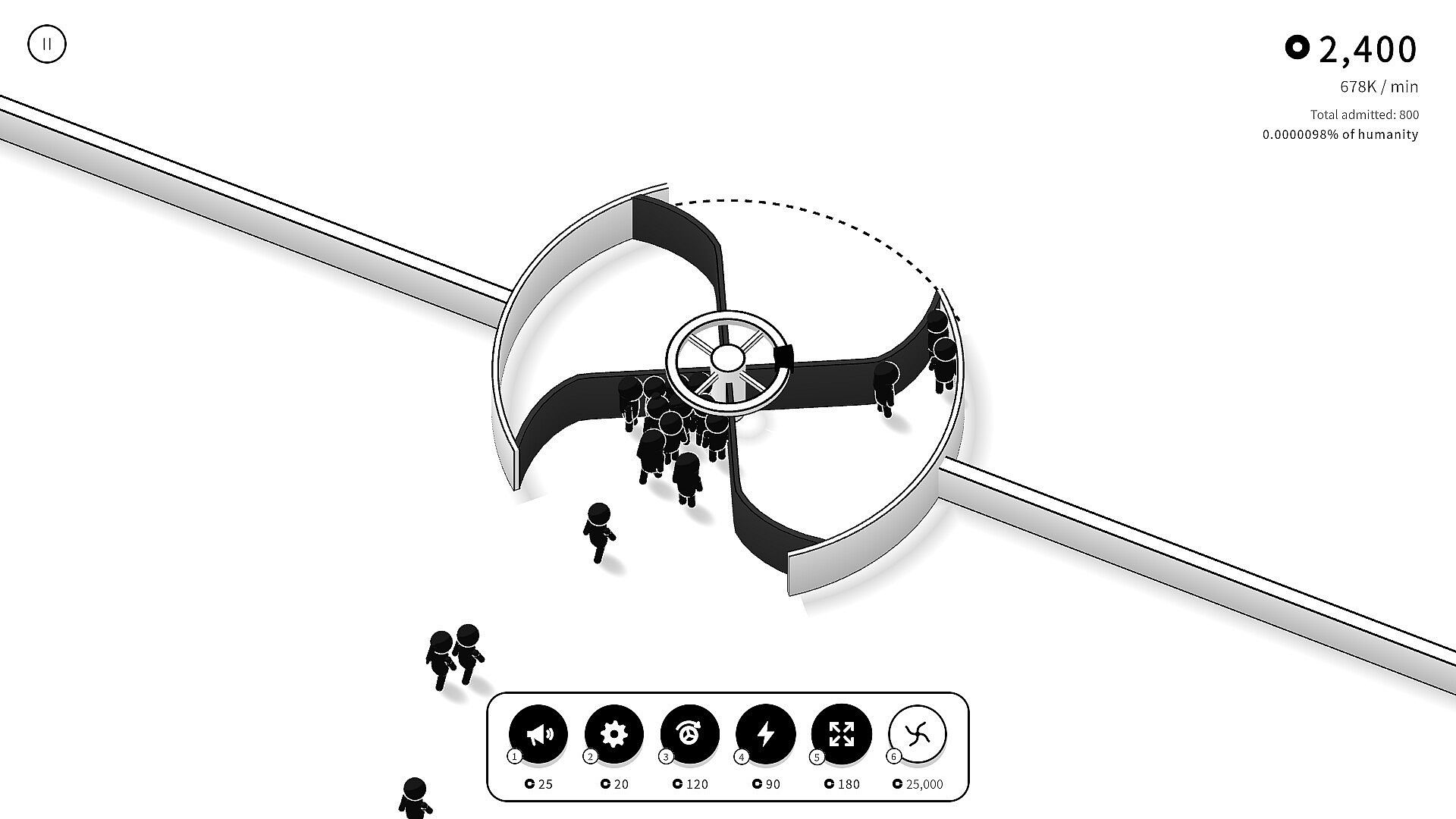
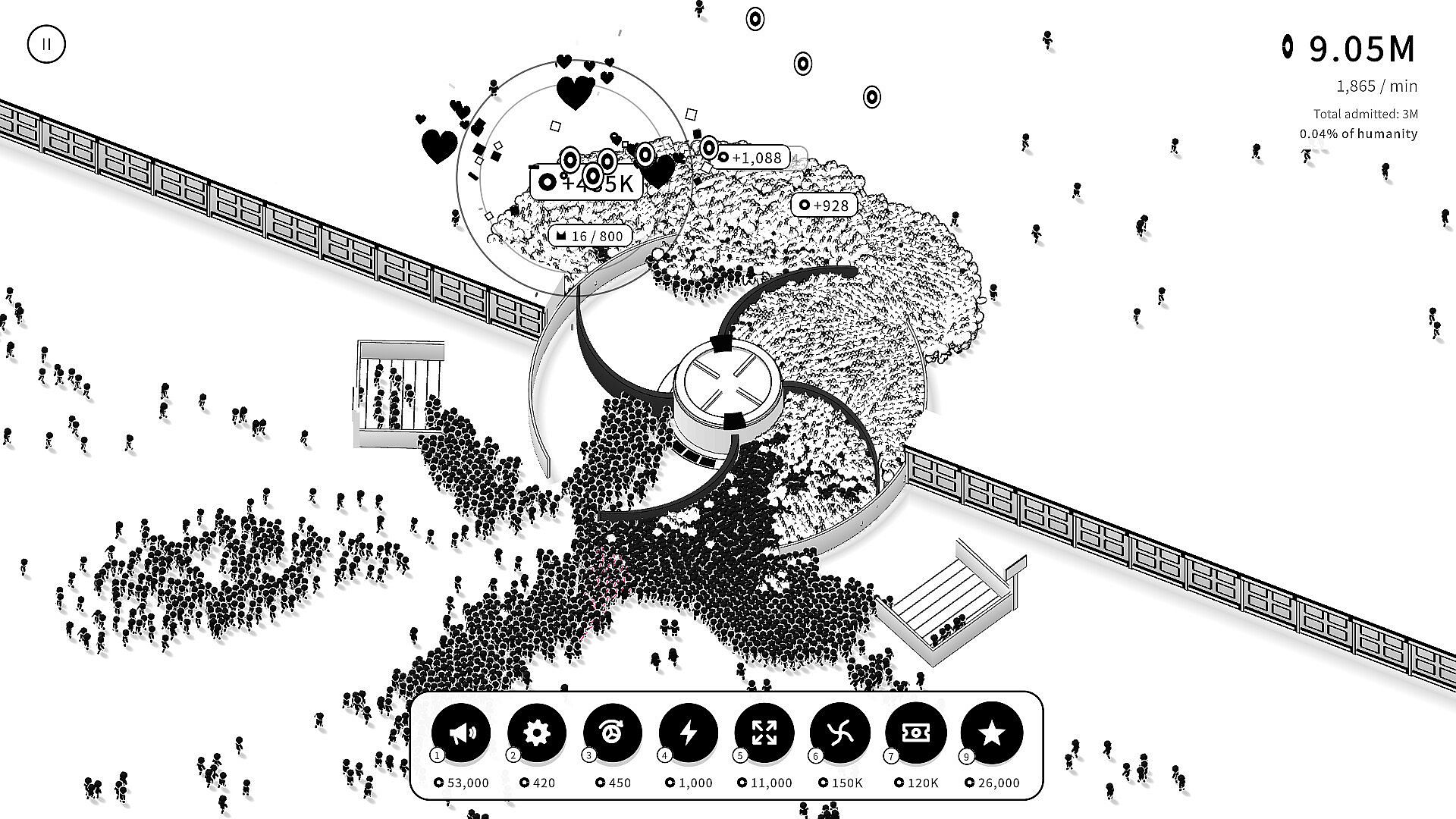
The core loop involves turning the revolving door to admit paying customers. Manual control requires drawing circles with the mouse to spin the door, with accumulated force stored in a flywheel for sustained momentum. An automatic drive option handles rotation independently once unlocked. Each admission generates income that funds expansions such as larger door frames, additional blades, and efficiency improvements.
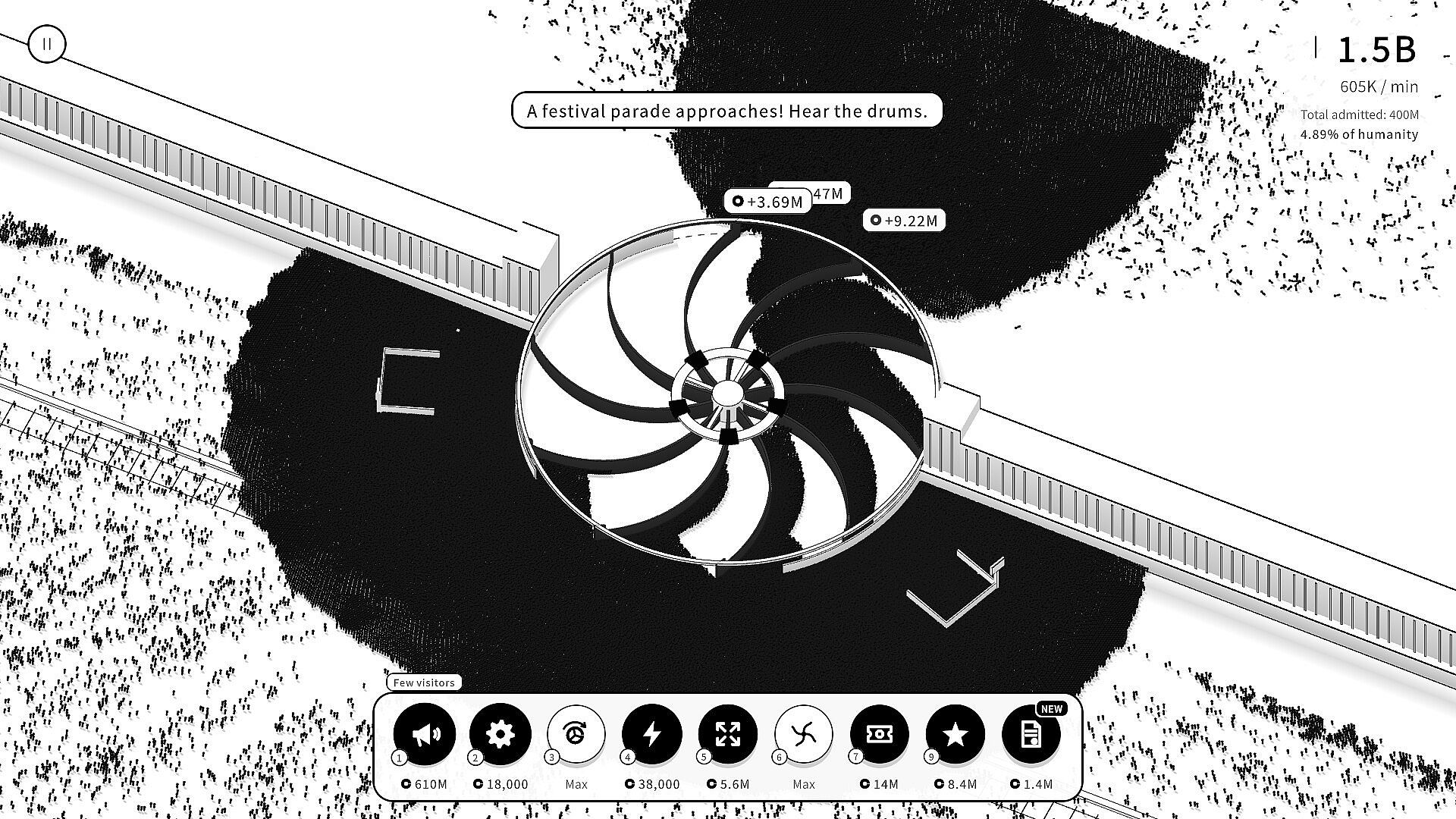
Blade shapes directly influence crowd behavior. Straight blades, curved scoops, impellers, spirals, and turbines each produce distinct patterns of intake and ejection. Overly forceful spins send people flying, though they recover and rejoin the line without penalty. Aligning multiple ejections creates chain reactions for higher throughput. Upgrades visibly alter both the door structure and the flow of visitors, from basic promotions and gears to group admission options and fee adjustments.
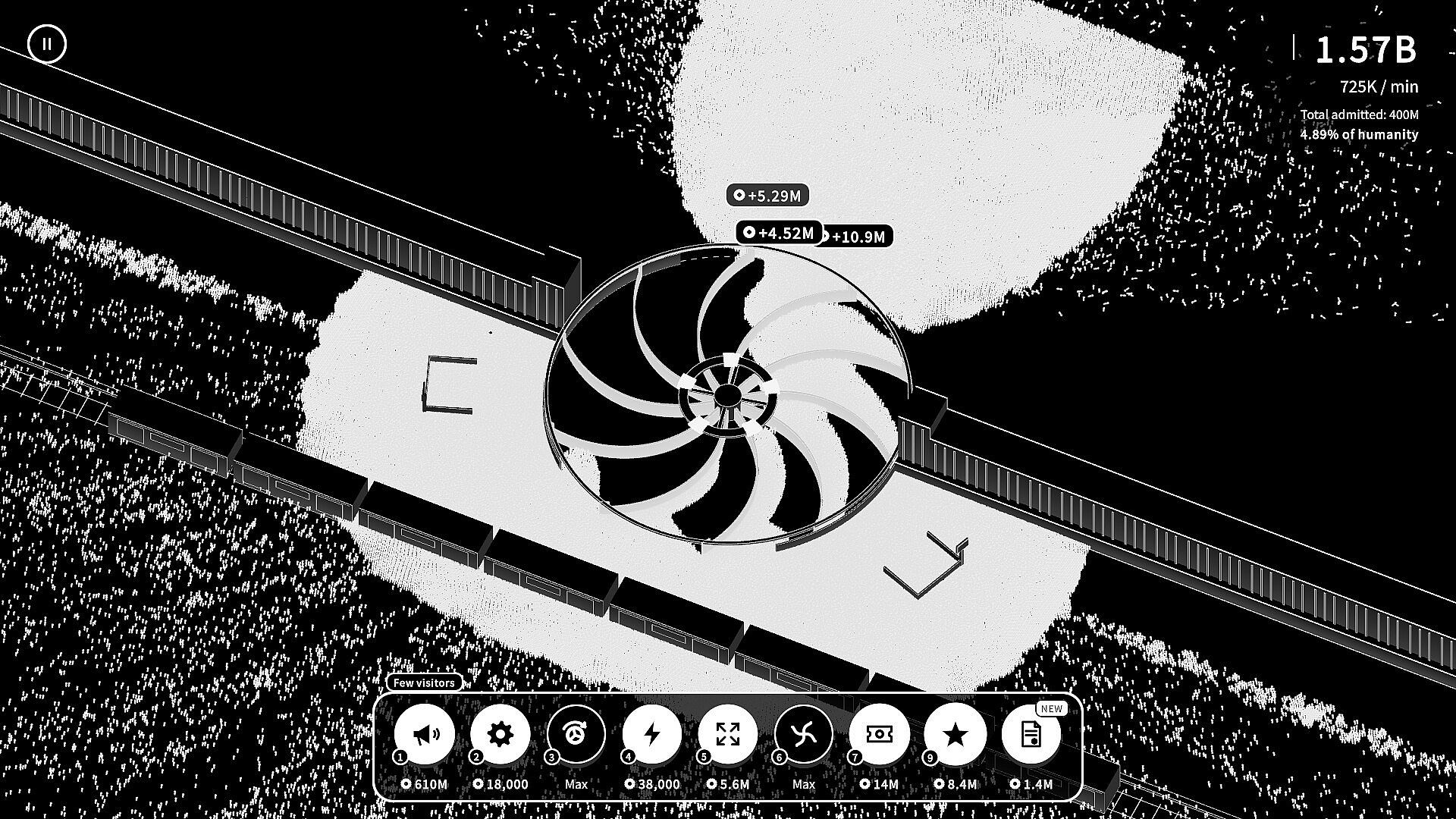
Transportation events introduce variety, with buses, subways, trains, and planes delivering groups alongside occasional special arrivals such as idols or tour guides. The visual style remains strictly black and white, supporting light and dark themes plus brightness controls. A robust crowd simulation renders large numbers of individuals simultaneously, with performance settings allowing adjustment of the active limit starting from 50,000 and scaling higher as hardware permits.
Game Modes
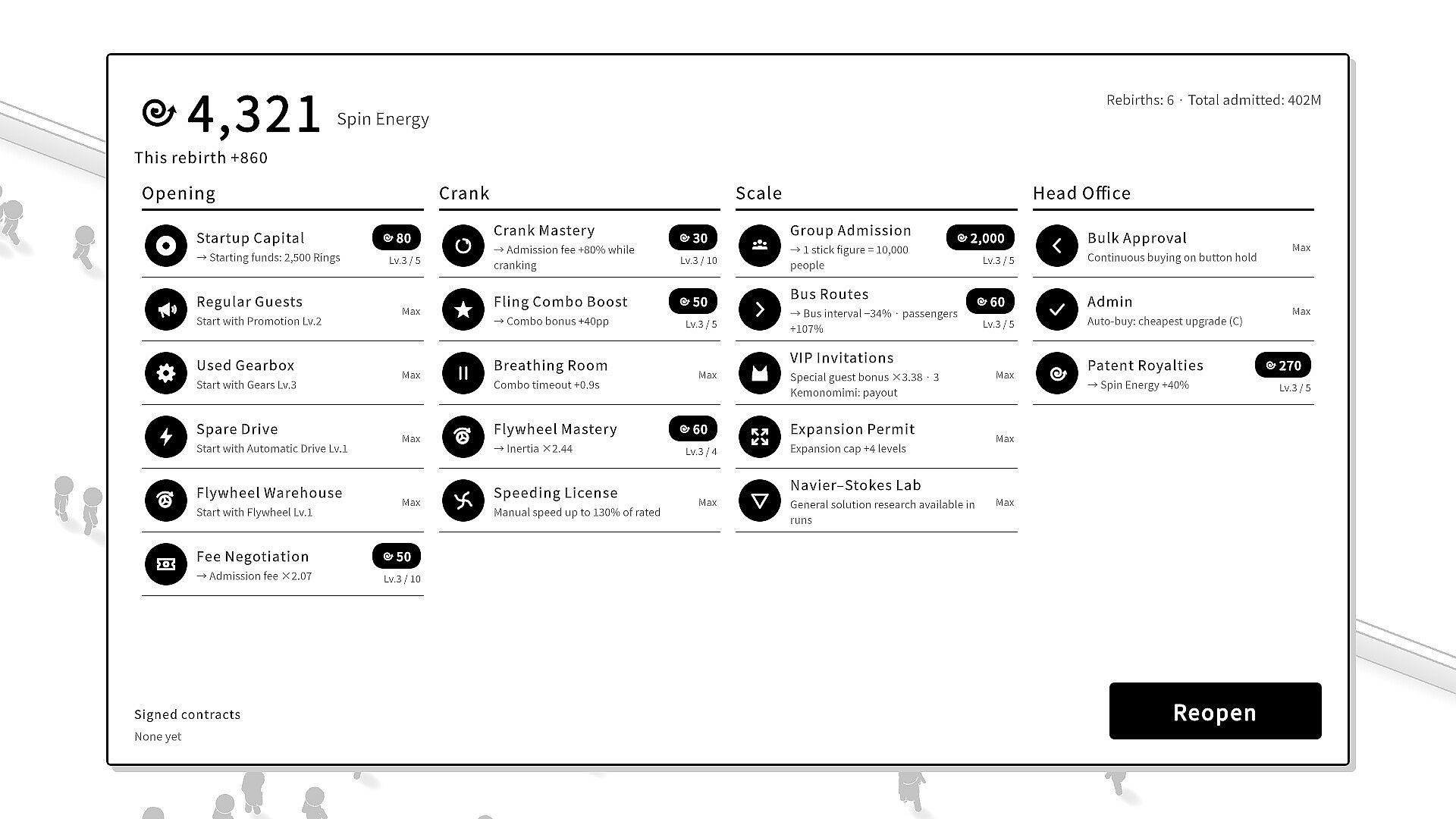
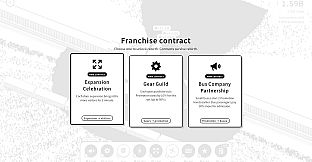
The game operates as a single-player incremental experience without separate modes or multiplayer components. Progression follows a continuous loop of expansion and customer intake, culminating in a full run that processes the target population. Rebirth mechanics allow players to reset progress in exchange for permanent enhancements through franchise contracts and Spin Energy collection. These contracts provide ongoing benefits such as temporary boosts to admission rates or increased fees from specific transport types, encouraging strategic planning across multiple cycles.
Each rebirth preserves certain upgrades while restarting the door at its initial scale, creating a layered progression system where early decisions compound over successive attempts. The structure emphasizes optimization of blade configurations and turning techniques rather than branching paths or competitive elements.
Visuals and Performance
Minimalist black-and-white presentation keeps focus on the door and crowd dynamics. Theme switching and brightness sliders accommodate different display preferences. The simulation handles substantial on-screen activity, with recent optimizations distributing crowd calculations across additional CPU cores to maintain frame rates even at elevated population counts. Settings let users balance visual density against system demands from the outset.
Is It Worth Playing?
Round and Round Inc. suits players who enjoy incremental games that combine manual input with long-term scaling. The direct door-turning mechanic and blade variety provide tangible feedback on each upgrade, while the rebirth system adds depth through contract choices and record reviews at the end of a complete run. A free demo releases on November 2 that covers the first full cycle including an initial rebirth, with progress carrying forward to the full release later that month.
Those drawn to simulation titles focused on mechanical systems and crowd management will find the approach distinctive. The absence of additional modes keeps the experience streamlined around its central concept. Availability on PC through standard digital distribution makes it accessible once launched, particularly for users interested in experimenting with turning force, blade effects, and efficiency upgrades in a contained single-player format.












