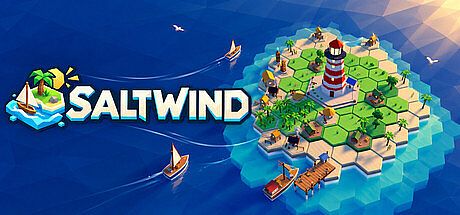


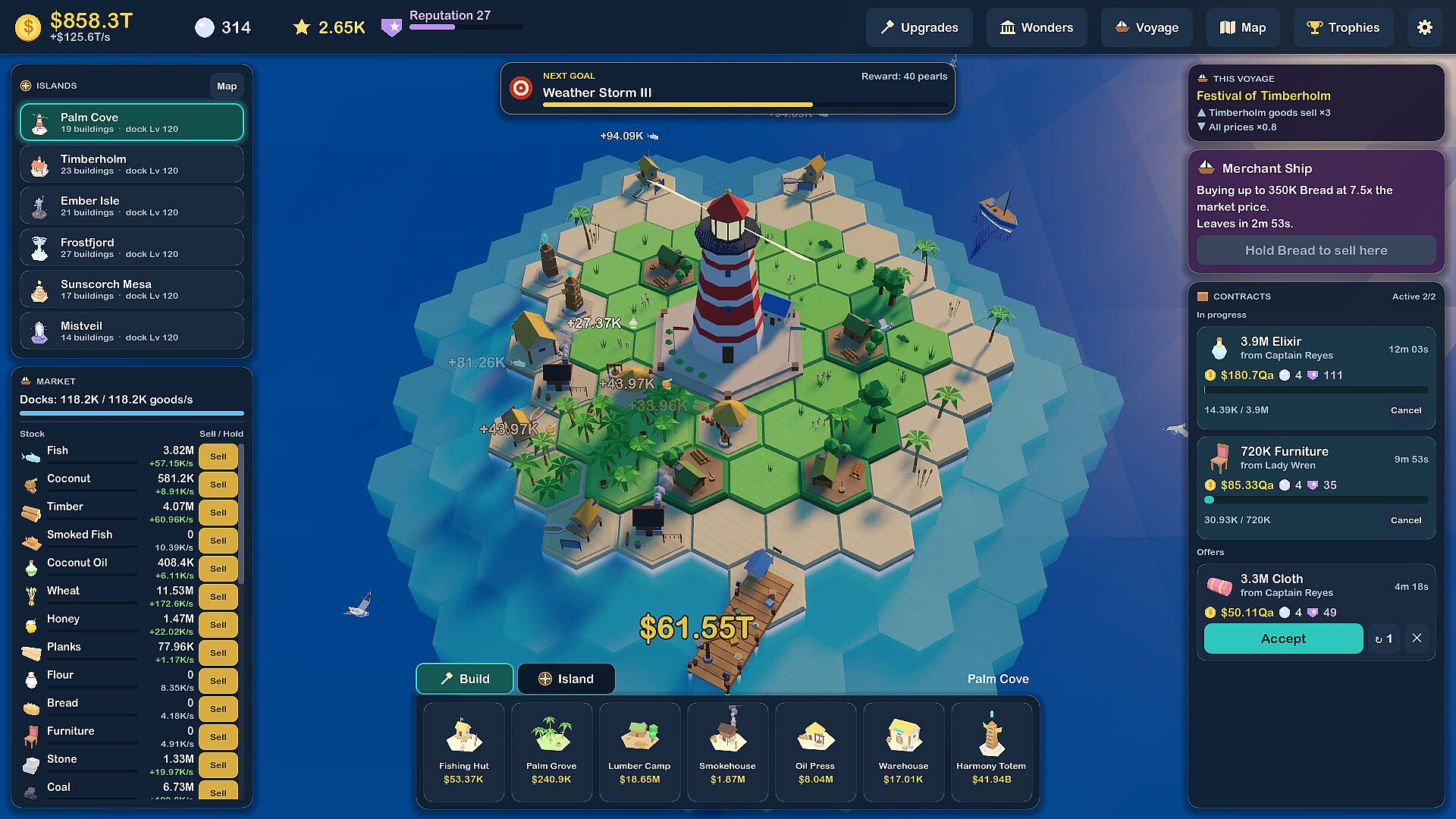
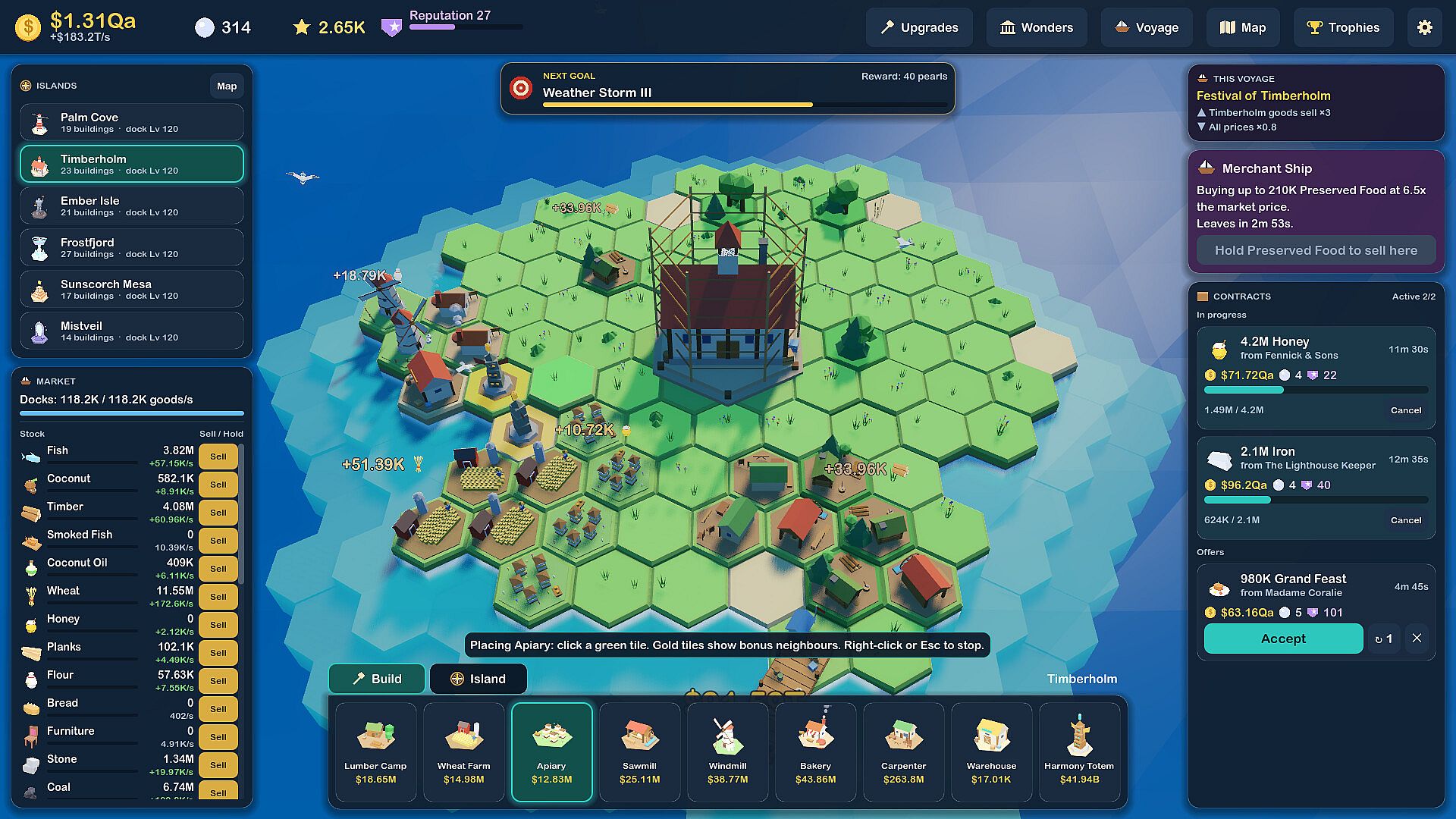
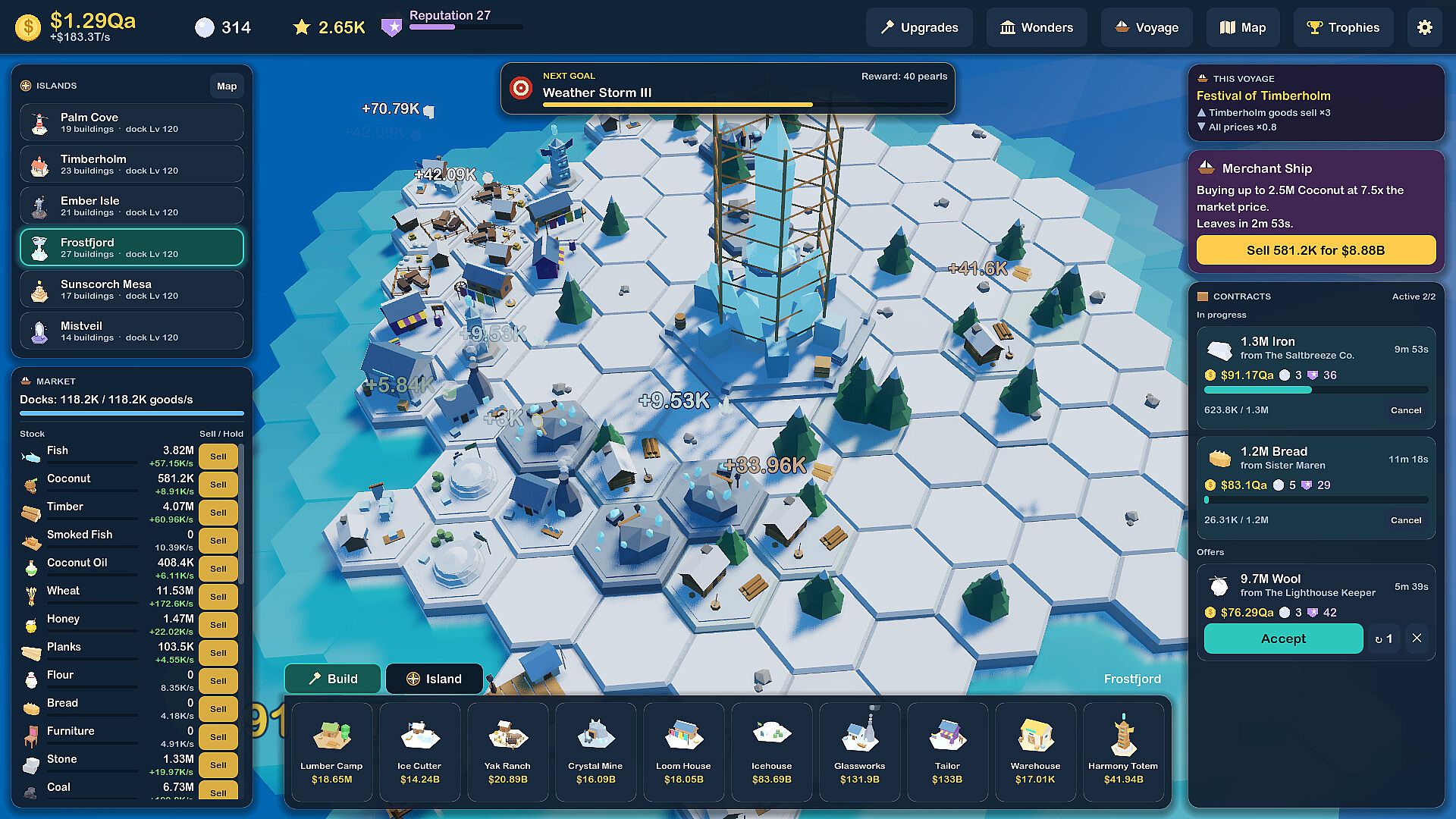
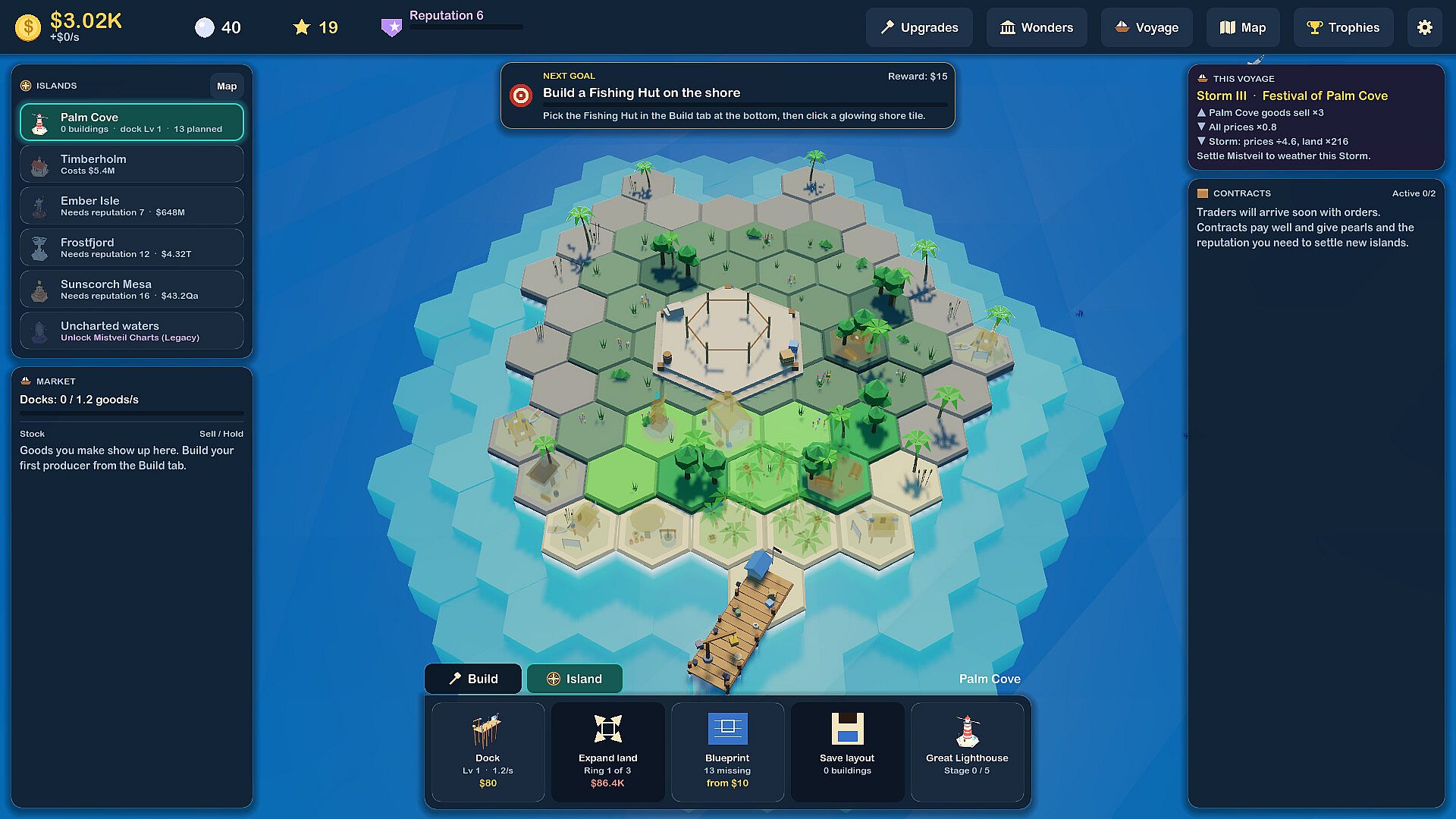
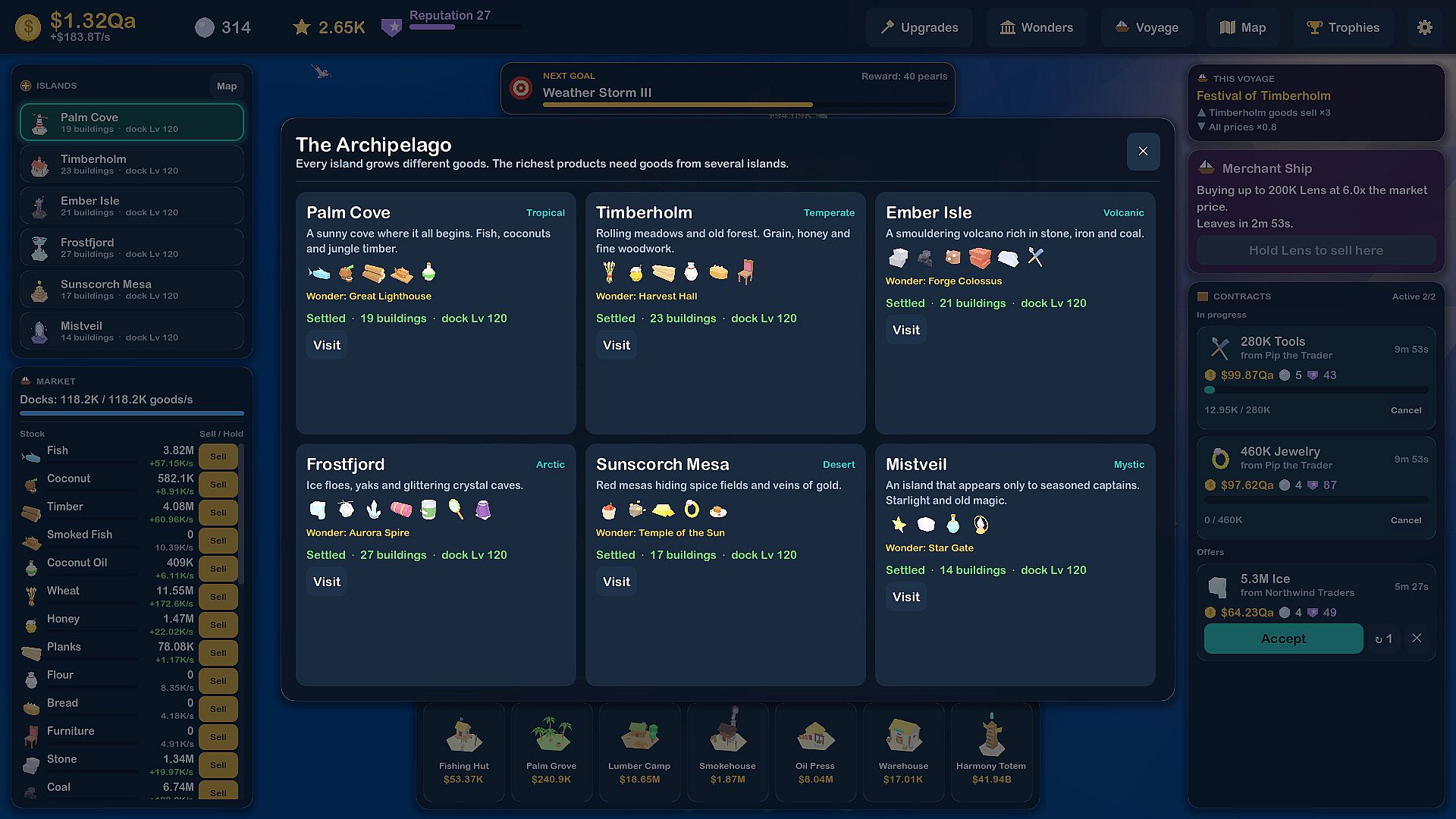
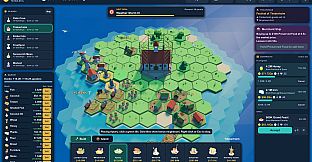


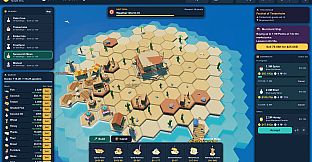

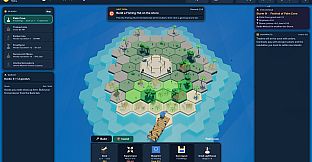
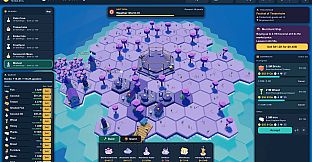

Saltwind: Idle Island Tycoon is a strategy simulation game that blends idle progression with careful planning on a series of interconnected islands. Players begin with a single dock and fishing hut on a tropical island and expand into a network of trade routes across six distinct biomes, each offering unique land types, resources, and building options. The core loop revolves around placing structures to optimize production chains, where goods from multiple islands combine into higher-value items, creating deeper complexity as more land opens up.
Gameplay
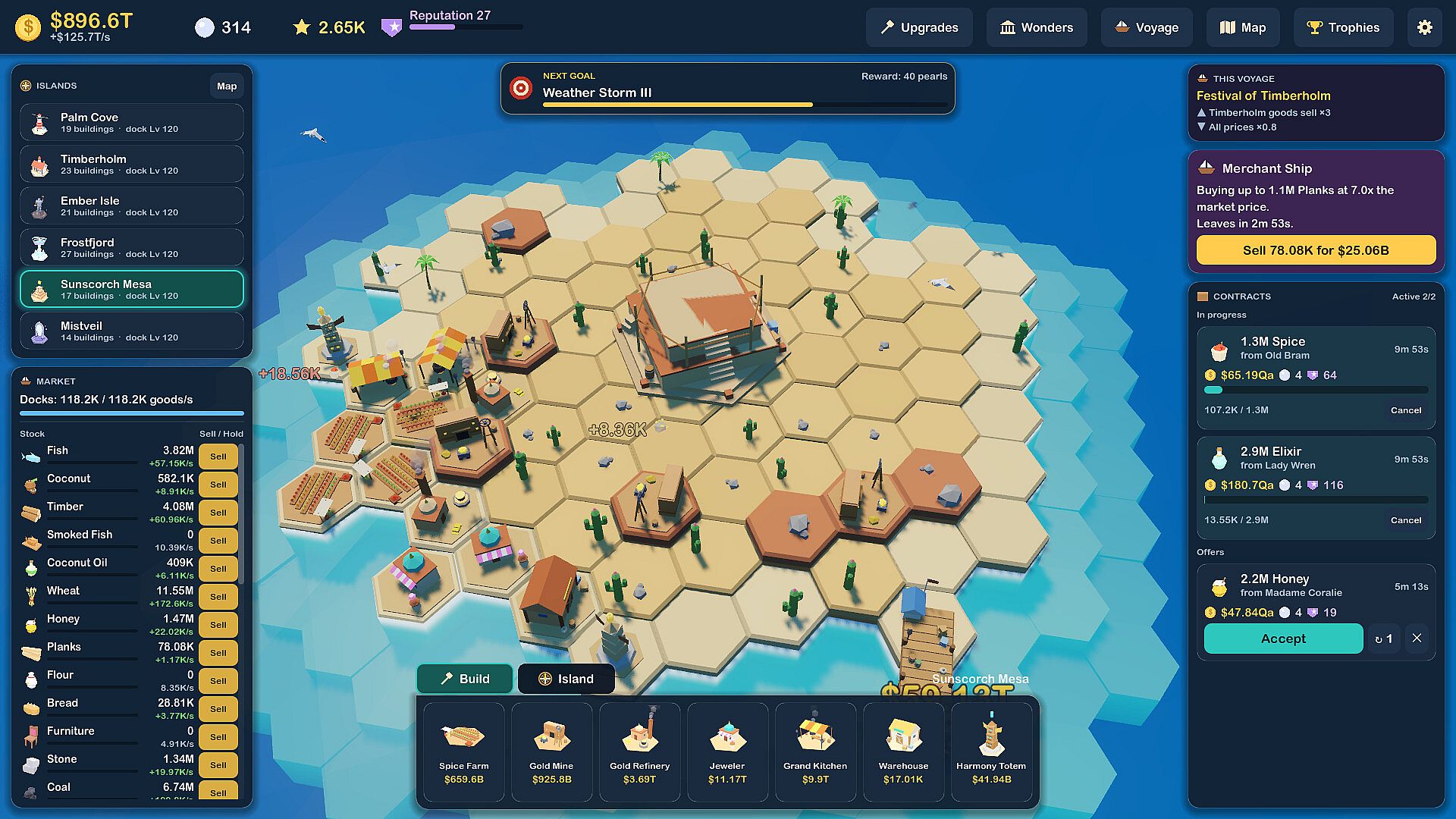
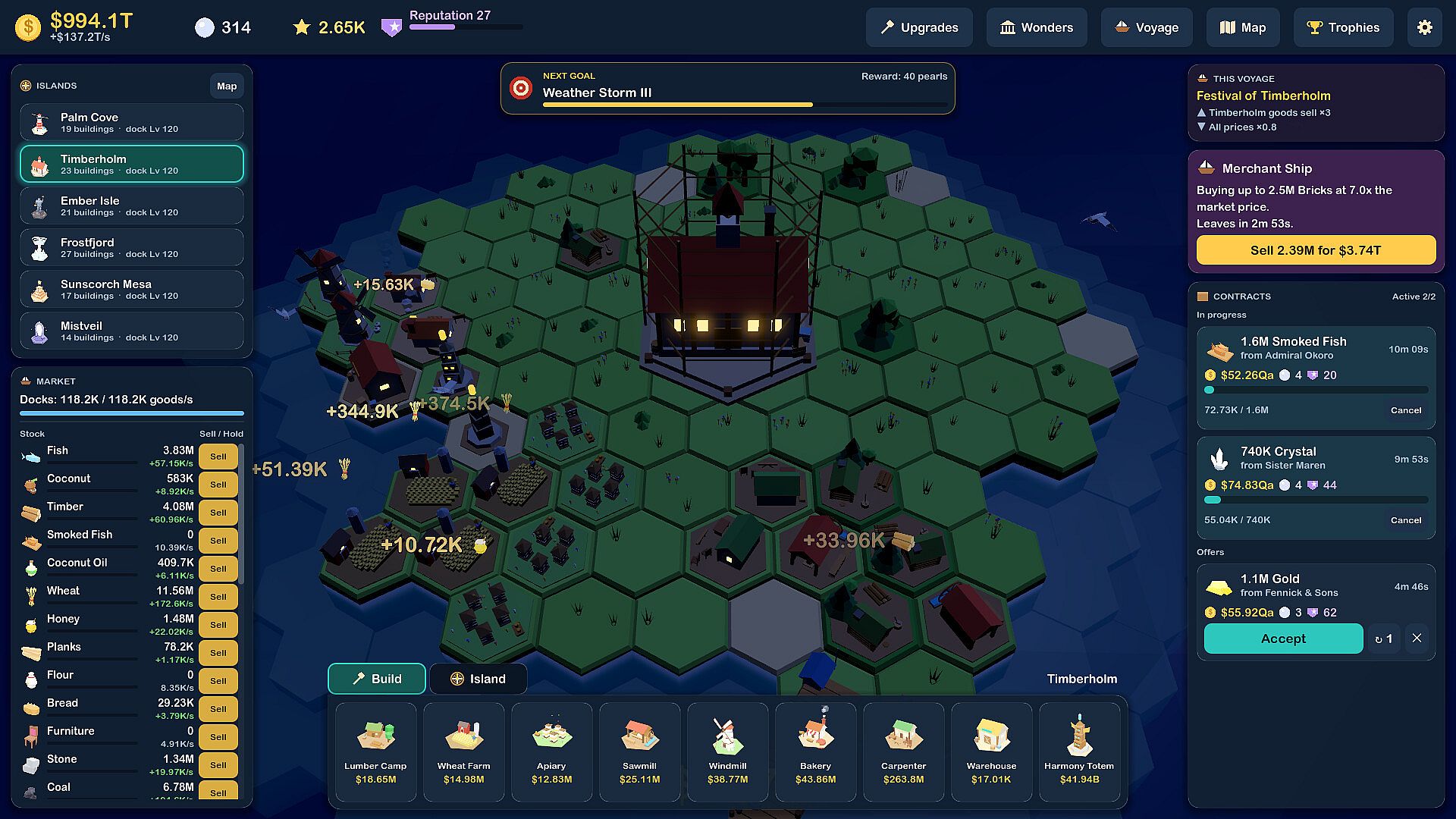
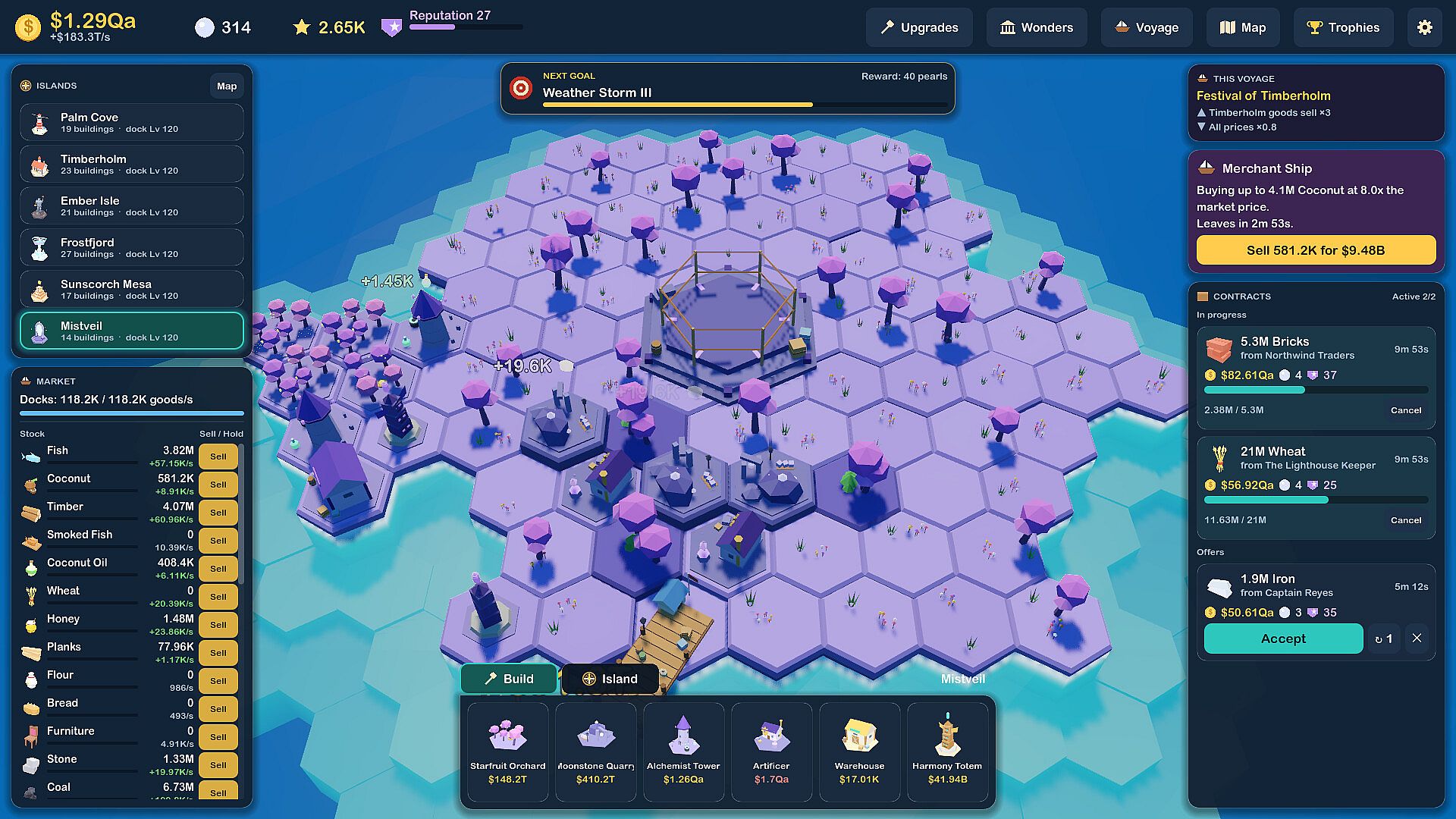
Building placement drives much of the strategy. Every structure benefits from specific neighbors, such as fishing huts near open water or apiaries beside wheat fields. Harmony Totems provide area-wide boosts, encouraging players to arrange layouts for maximum adjacency bonuses. Production chains span the biomes, so new islands unlock fresh combinations rather than simple repeats of earlier setups. Contracts deliver higher payouts than standard market sales, while wonders require large deliveries across multiple stages that remain permanent once completed. Sea events introduce variety through floating crates, golden seagulls, singing whales, and merchant ships offering premium prices for specific goods. Reputation levels unlock additional buildings and islands while improving sale prices across the board. Offline earnings continue while the player is away, allowing steady progress between sessions.
Game Modes
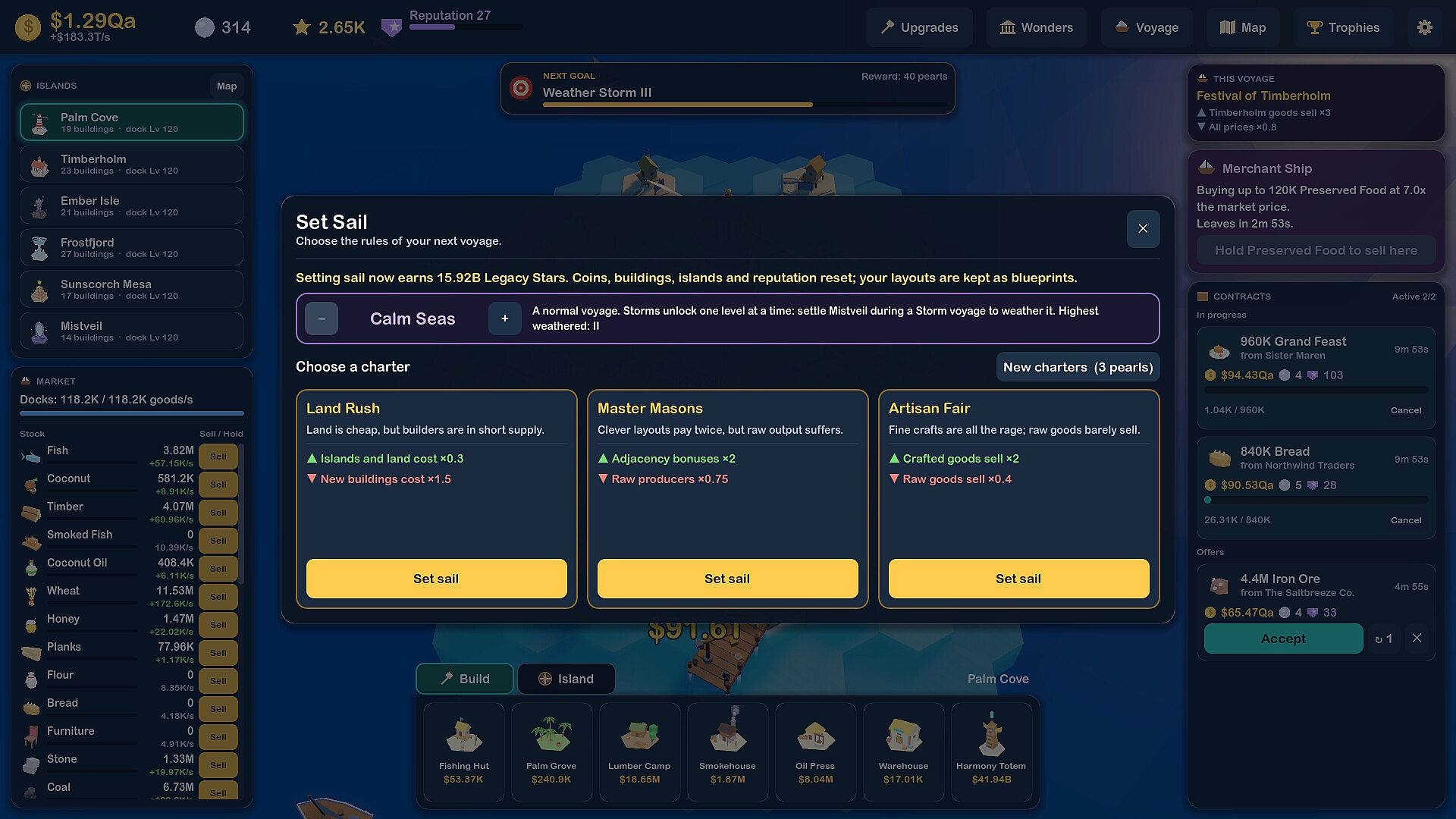
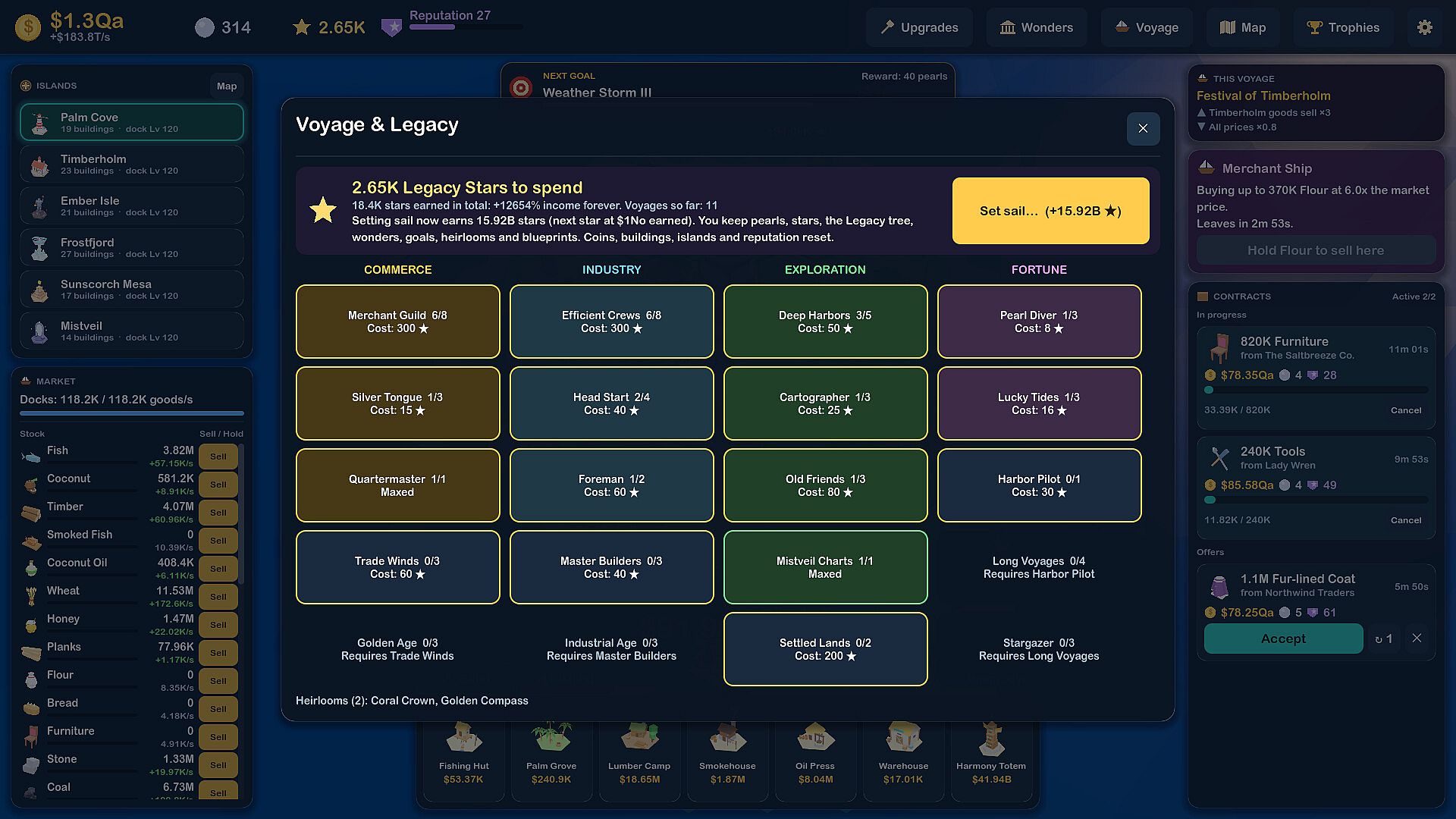
The main experience centers on building and expanding across the six islands, guided by a 45-step goal chain for early progression. When advancement slows, players launch voyages that carry over Legacy Stars, wonders, and blueprints. Each voyage features a charter that alters priorities, such as a Raw Materials Boom, Guild Strike, Drought on Timberholm, or Golden Contracts, among sixteen total options. These charters shift which buildings and goods prove most valuable, ensuring varied runs. The Legacy tree offers twenty upgrades spread across Commerce, Industry, Exploration, and Fortune categories, including options like auto-upgrading foremen and access to a hidden sixth island. Blueprints save successful layouts for quick rebuilding on future voyages, followed by adjustments to fit the new charter. Endgame content opens after settling Mistveil, introducing the Storm Seas with ten escalating difficulty levels. Players weather storms to earn one of fourteen heirlooms that permanently alter rules, while competing on Steam leaderboards for the fastest times to Mistveil.
Progression and Features
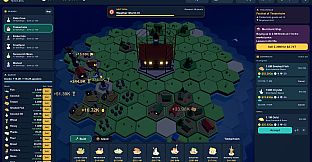
Thirty-six buildings and thirty-three goods form cross-island production chains that reward thoughtful expansion. Six wonders, each with five stages, provide long-term goals. The system supports a colorful low-poly visual style with a day and night cycle. Thirty-nine Steam achievements track various milestones, and the full experience requires no internet connection after initial setup. No microtransactions or ads interrupt play. A 45-step goal chain helps newcomers navigate the early game while deeper systems like reputation and voyages reward continued investment.
Is It Worth Playing?
Saltwind: Idle Island Tycoon suits players who enjoy strategy simulation games with idle elements, where planning layouts and managing production chains deliver satisfying growth. The voyage system with its charters adds replayability by changing optimal strategies each time, while legacy upgrades and blueprints reduce repetition across runs. Endgame content in the Storm Seas, including heirlooms and leaderboards, extends the experience for those seeking harder challenges. The absence of microtransactions and full offline support make it accessible for casual sessions or longer planning marathons. Fans of simulation titles that emphasize adjacency bonuses, cross-resource chains, and persistent progression will find a focused experience here, particularly if they appreciate games that reward careful layout decisions without constant online requirements.