

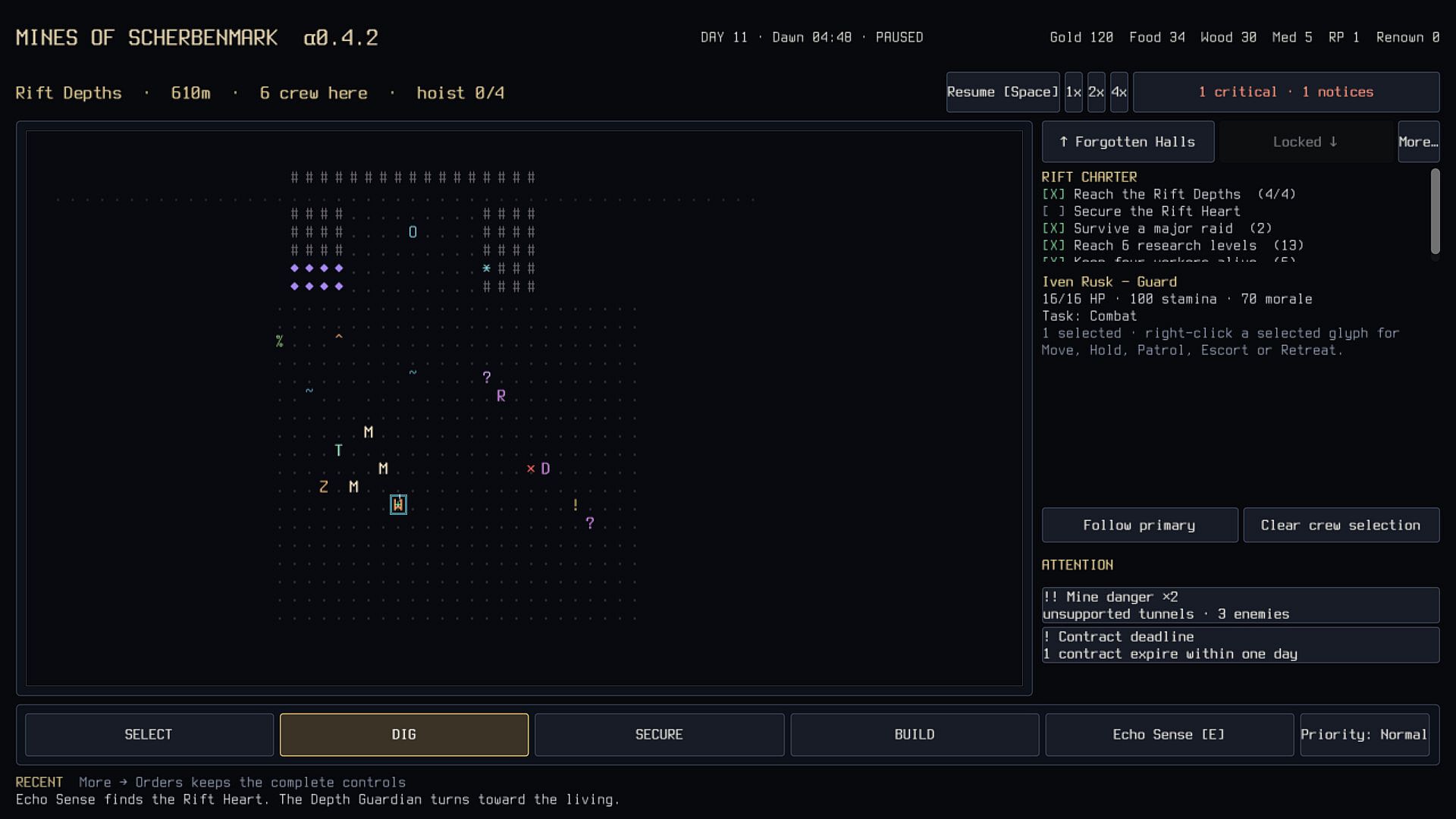
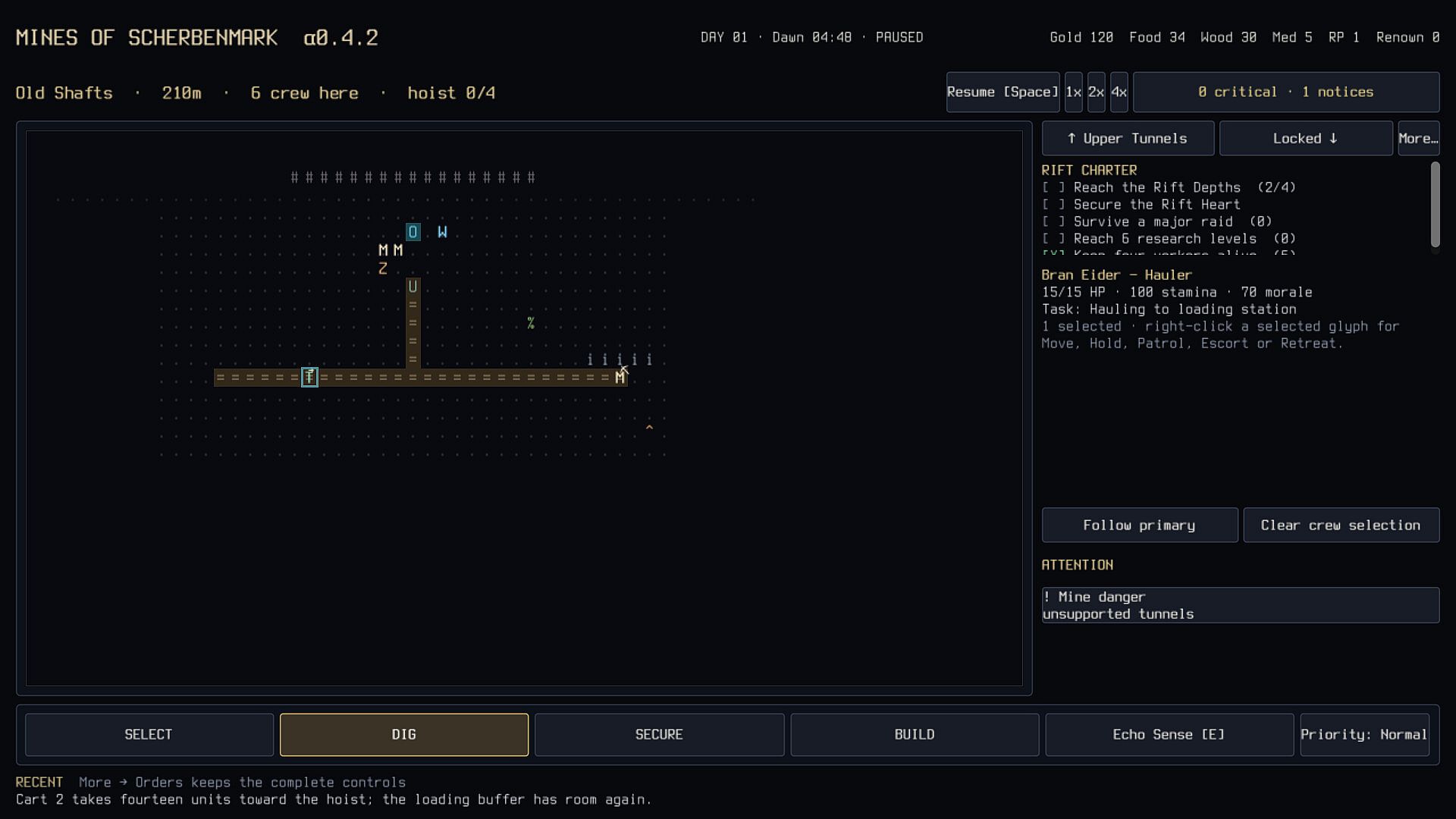
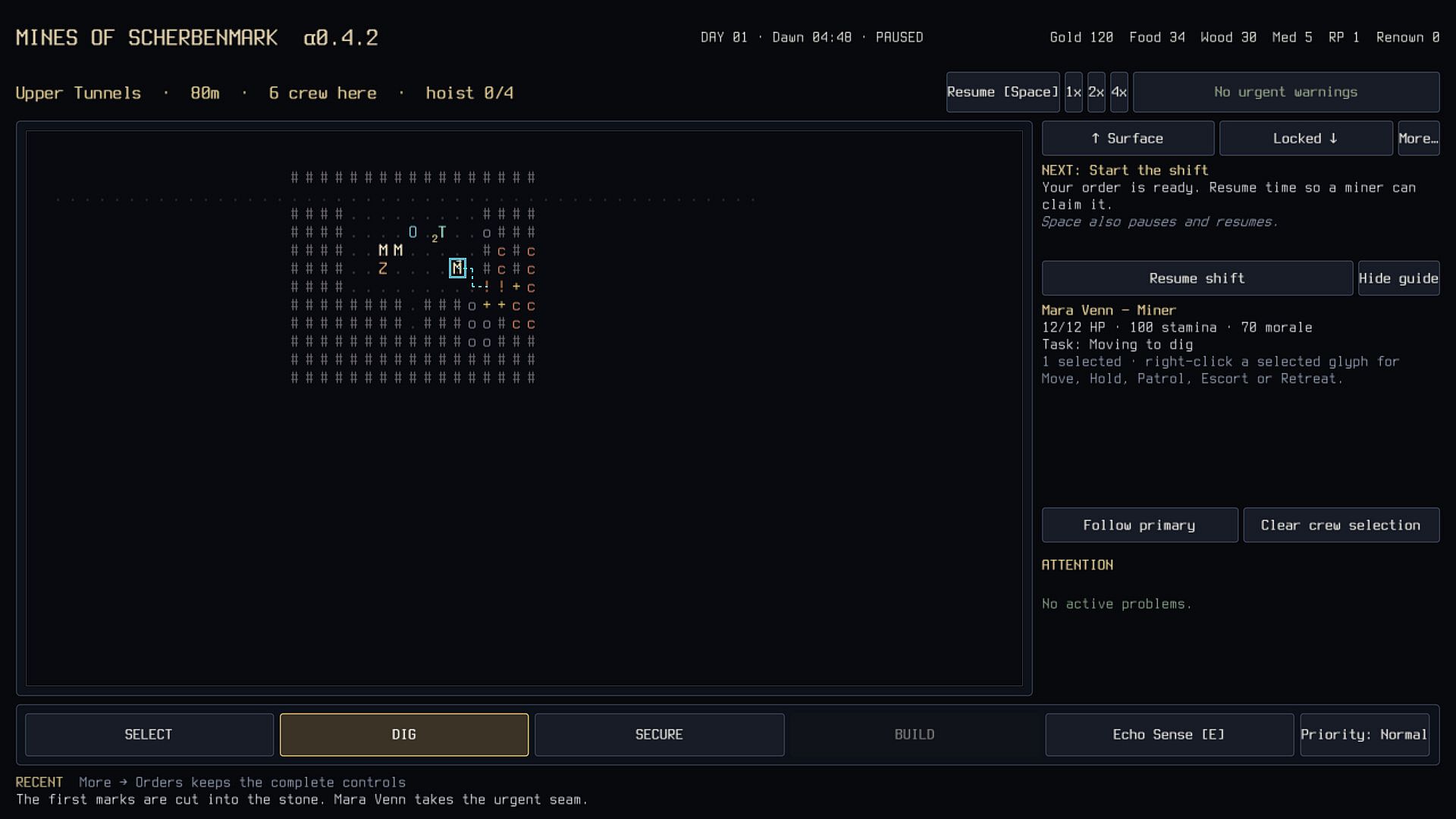
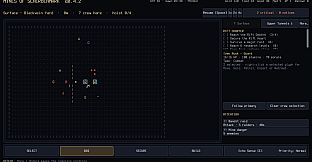
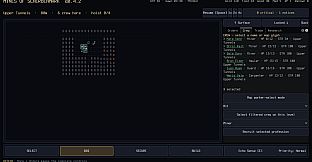
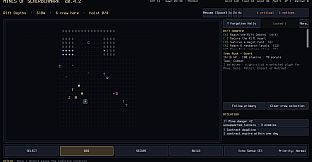
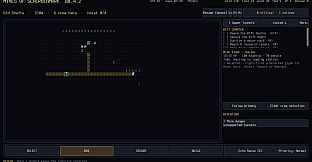
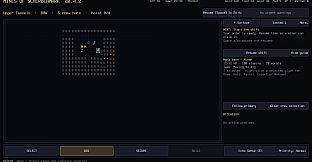
Scherbenmark: The Old Mine is a single-player strategy and simulation game for PC that centers on building and sustaining a mining operation through layered underground environments rendered in ASCII. Players lead a settlement by recruiting workers, directing excavation, and handling the persistent dangers that come with deeper exploration. The core loop involves organizing labor, managing resources, and responding to threats while the mine itself evolves and remembers prior changes across multiple levels.
Gameplay
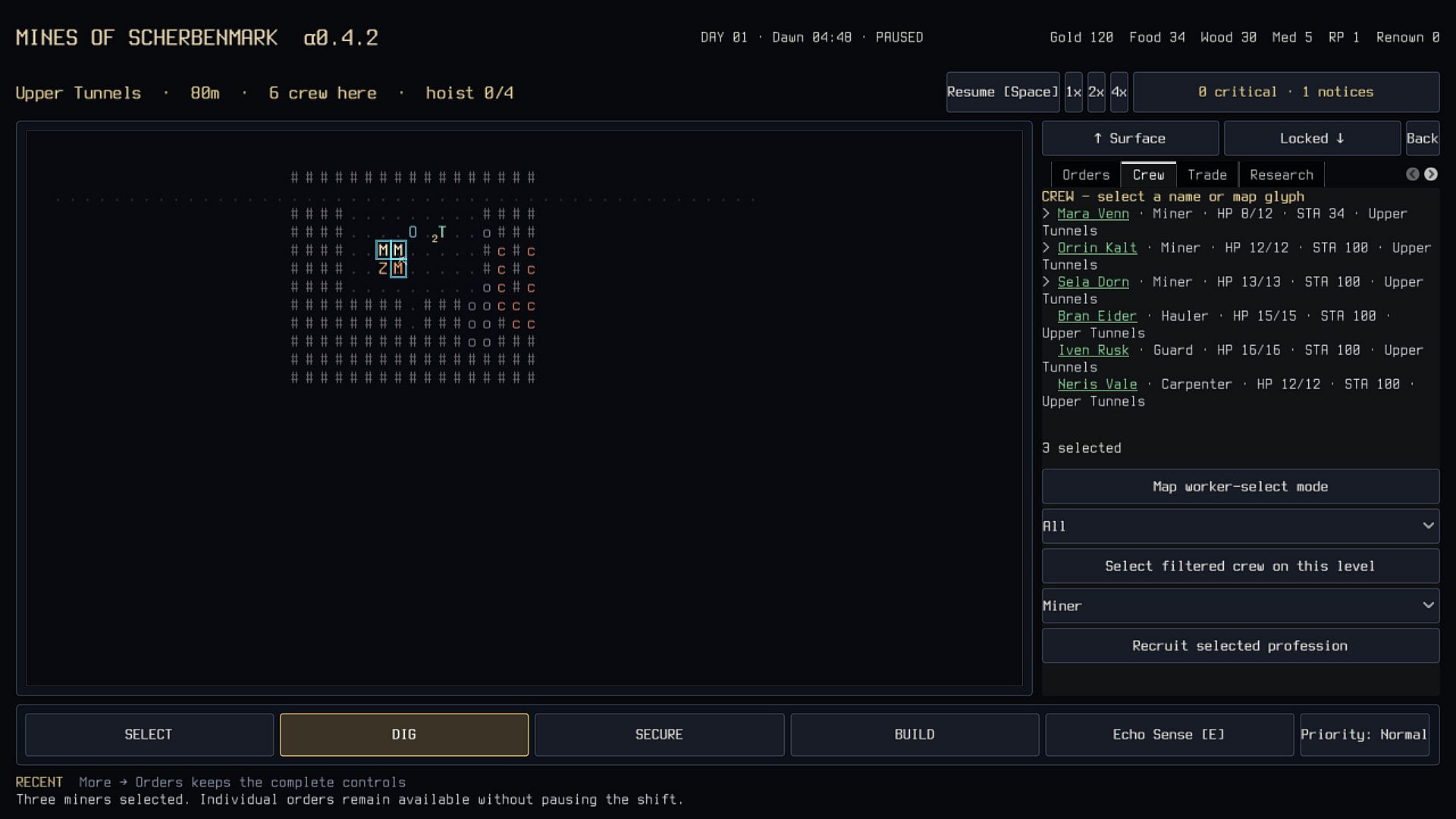
The experience revolves around directing a crew of specialized workers who each carry individual attributes such as health, stamina, morale, equipment, and traits. Players assign professions including miners, haulers, guards, carpenters, prospectors, and healers, then set priorities or issue direct commands for movement, excavation, and protection duties. Work zones are created through draggable areas with adjustable priority levels to guide excavation of tunnels and chambers. Construction options cover supports, ventilation, pumps, explosive charges, rails, stations, and ore carts that move along tracks.
Hazards form a constant pressure on operations. Unsupported areas risk collapse, toxic gas can spread through connected passages, water impedes movement, darkness lowers perception and morale, and deeper rift distortion introduces unpredictable effects. Echo Sense provides a way to probe surroundings by sending impulses through rock to sense cavities, movement, ore deposits, or other anomalies, though repeated use may draw unwanted attention. Prospectors enhance these readings but do not eliminate uncertainty.
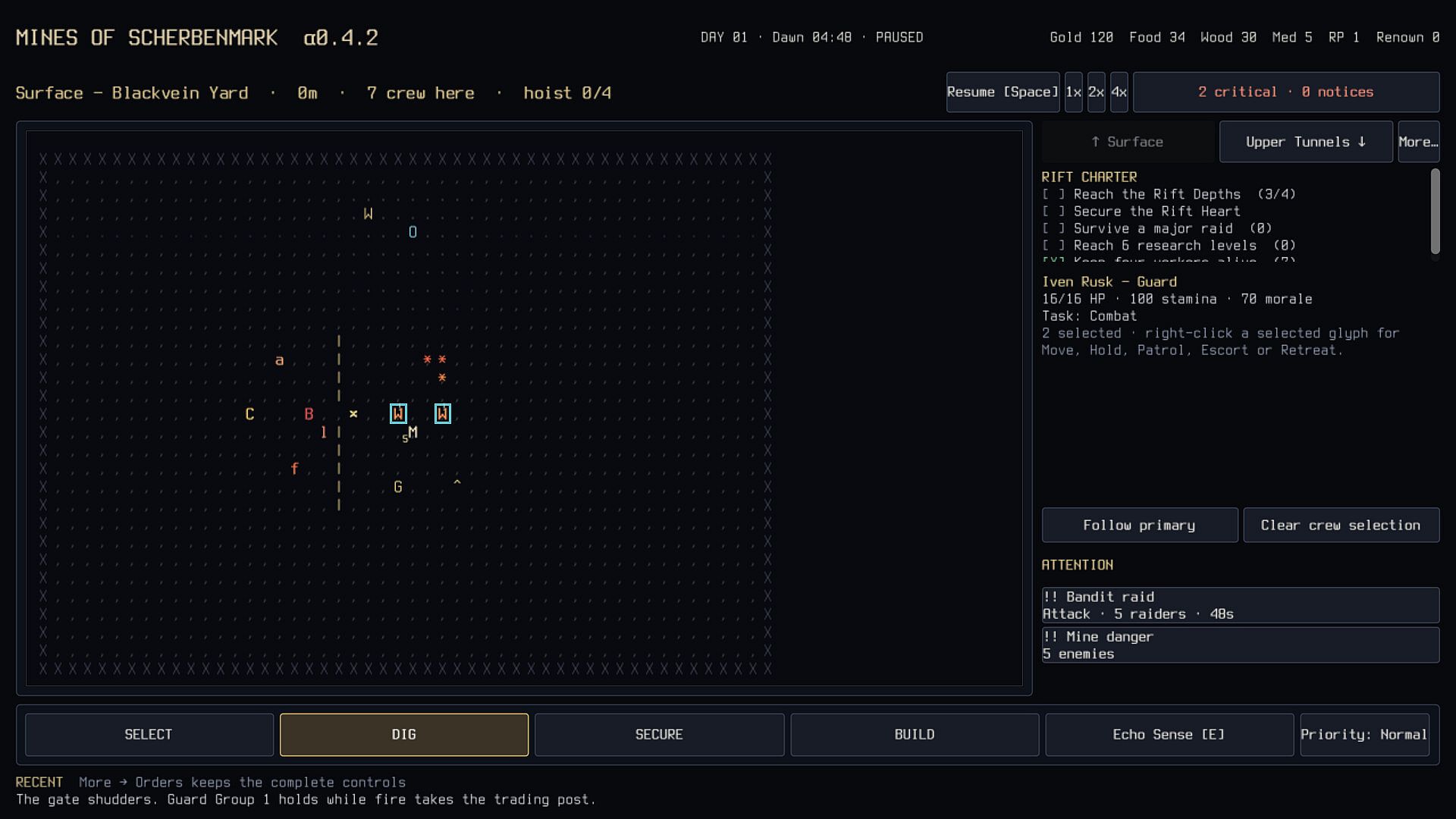
Defense integrates directly into the map. Guards patrol, hold positions, and respond to threats from seven creature types that appear as physical entities rather than random events. Surface bandit raids occur on the ASCII layout, with raiders targeting gates, workers, buildings, and resources. Players prepare by erecting palisades, barricades, guardhouses, and watchtowers while organizing defensive groups and rally points.
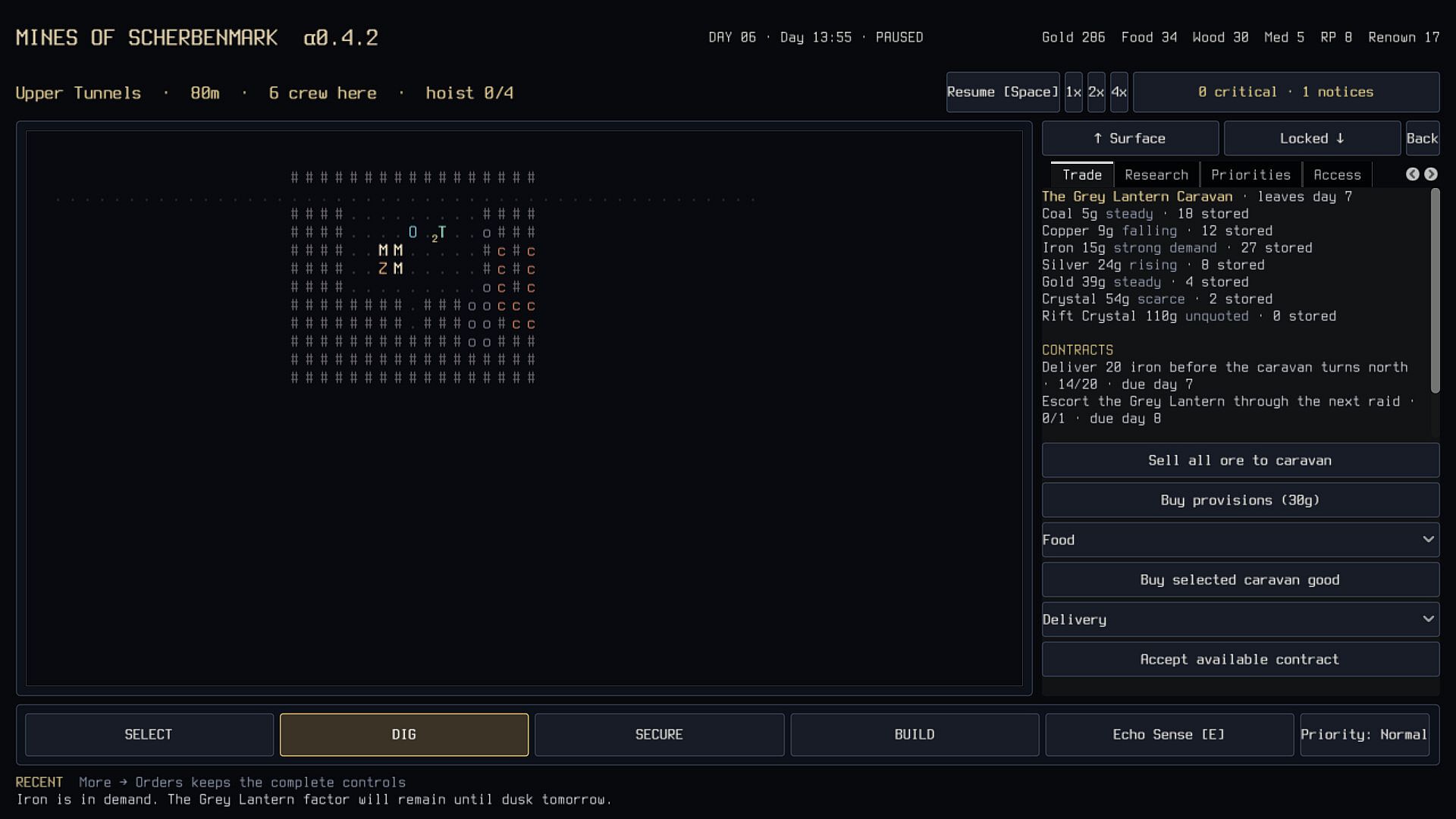
Trade and progression add layers through merchant caravans that arrive with rotating stock and market patterns. Players sell ore, buy supplies, accept contracts, and choose whether to use rare finds for immediate profit or research. Six research branches cover mining, logistics, safety, military, trade, and rift research, unlocking tools such as advanced explosives, rail systems, hazard controls, and stronger defenses.
Game Modes
The primary mode follows a structured descent through persistent levels starting in the Upper Tunnels, moving into the Old Shafts, Forgotten Halls, and Rift Depths. Excavated areas, structures, hazards, and resources remain between visits, enabling gradual expansion of the operation. The stated objective requires reaching the Rift Depths, addressing or avoiding an ancient guardian, and securing a unique Rift Crystal while maintaining economic stability and crew survival.
Endless Mode becomes available after completing the main objective. This allows players to retain the established settlement and continue expanding without the pressure of the primary goal. No additional named modes appear in the design, keeping focus on the single-player management and exploration loop.
Mine Development and Hazards
Expansion relies on careful planning because the environment actively resists unchecked growth. Collapses can trap workers or isolate entire levels from the hoist system. Gas and flooding spread through open connections, while darkness compounds morale issues. Rift distortion grows stronger at greater depths and alters predictability in the lowest areas. Players counter these through supports, pumps, vents, and strategic reinforcement rather than simple resource gathering.
Crew management extends beyond assignment. Workers experience exhaustion, wounds, fear, and dissatisfaction from unpaid wages or extended exposure to danger. Direct intervention on the map lets players redirect groups, inspect tasks, and adjust routes across levels. The persistent nature of the mine means decisions made early continue to influence later stages.
Is It Worth Playing?
This title suits players who enjoy detailed management simulations combined with strategic oversight in a single-player setting. The ASCII presentation supports accessibility options such as adjustable text size, high contrast, reduced motion, and an ASCII-only glyph mode, along with keyboard, mouse, and controller support. Fully offline gameplay removes any requirement for constant connectivity.
Those drawn to persistent worlds, crew progression through traits and experience, and layered defense against both environmental and creature threats will find substantial depth in the systems. The combination of excavation planning, research choices, and reactive hazard control creates a focused loop without extraneous elements. Players seeking lighter experiences or multiplayer features may find the deliberate pace and individual worker tracking less appealing. The design emphasizes careful expansion over rapid action, rewarding methodical approaches to reaching the deepest levels while preserving the operation.