


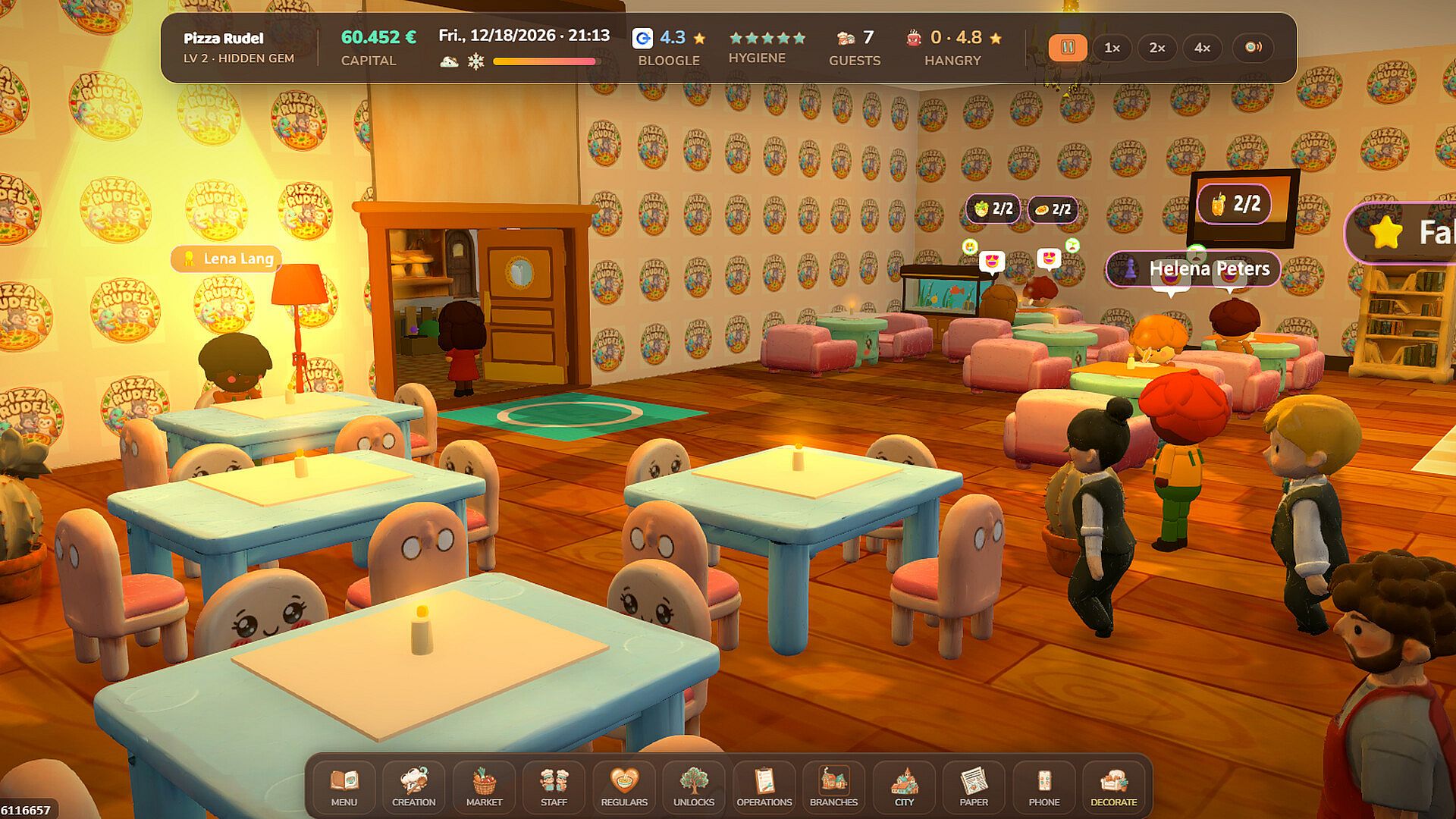


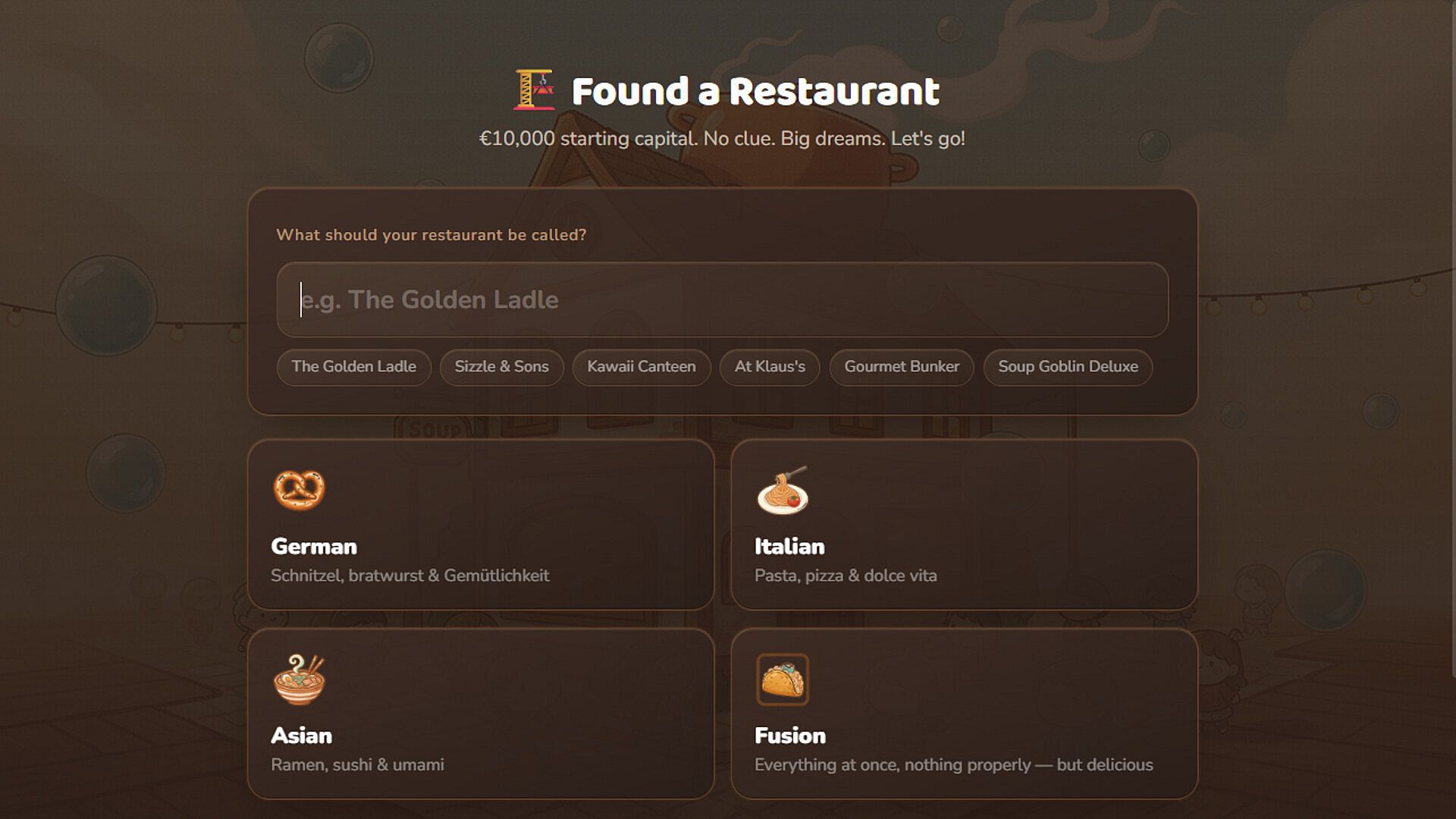
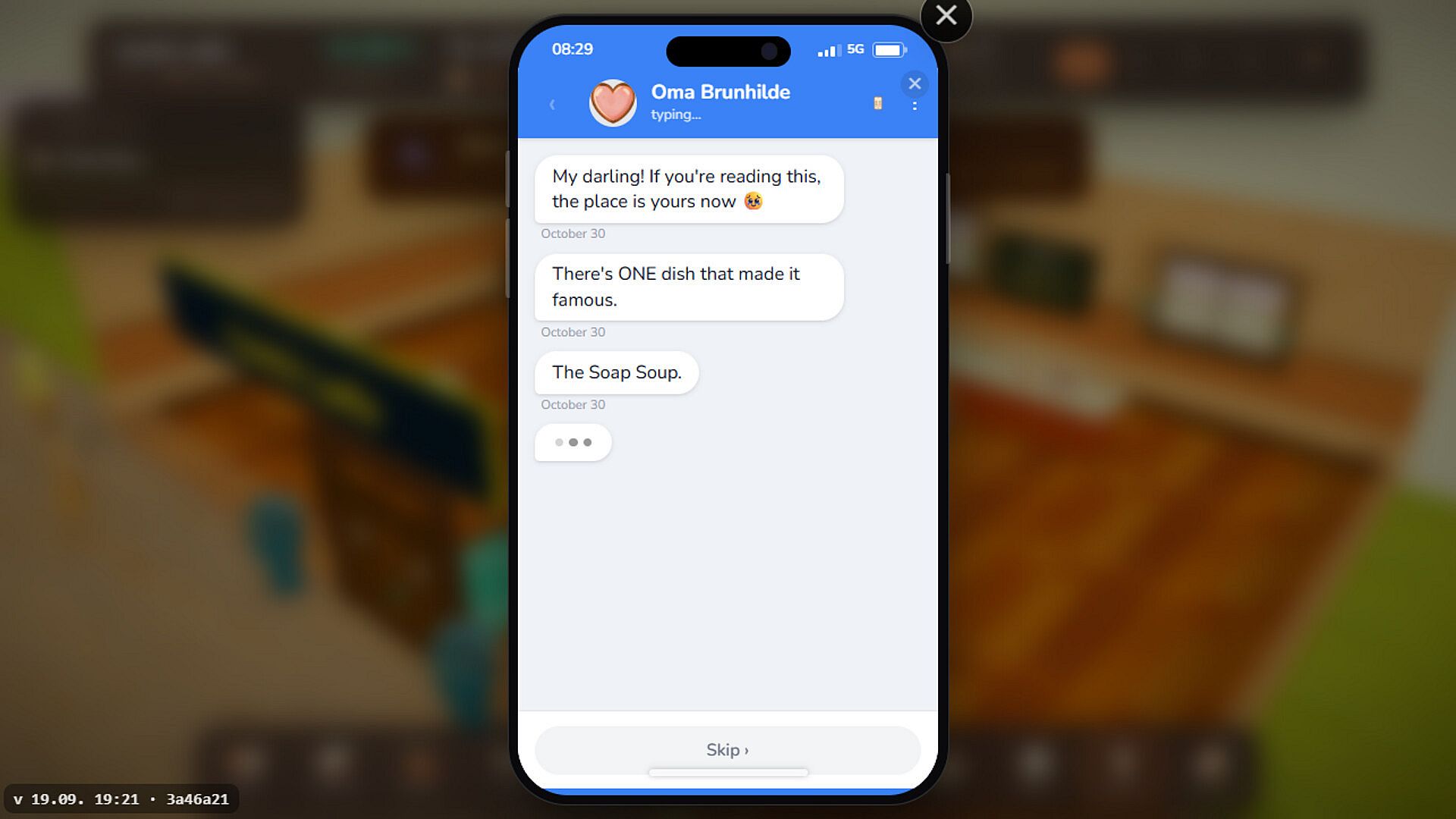





Soap Soup Tycoon is a strategy and simulation game on PC that puts players in charge of a restaurant built around an unusual family recipe. Grandma Brunhilde left behind an old establishment, some starting capital, and the challenge of perfecting soap soup, a dish that has stumped cooks for years. The experience blends cozy management with detailed economic systems, letting players grow a small kitchen operation into a larger delivery network at their own speed.
Gameplay
Players begin by handling every task themselves on the first day, from cooking and serving to making deliveries. As the business expands, hiring staff becomes essential, along with opening additional locations and scaling up operations. The core loop revolves around balancing daily restaurant activities with longer-term growth decisions. Behind the relaxed presentation lies a genuine economy simulation that tracks contribution margins, gross and net margins, cost ratios, and personnel expenses. These figures reflect actual transactions and operations rather than abstract values. Expansion often requires loans, which in turn affect credit scores and future financing options. Staff management adds another layer, as each employee brings personal quirks that influence scheduling, training needs, and performance. Burnout, overtime, and unexpected absences require careful attention to keep the team productive. Delivery partnerships introduce commissions and choices between in-house drivers and external platforms, along with options for advertising and custom packaging. The town itself reacts to progress, with returning customers who develop preferences and local media that reflects business changes.
Game Modes
The game centers on a single-player progression system where players build and manage their restaurant empire over time. There are no separate competitive or multiplayer modes described. Instead, the focus remains on a continuous campaign that combines short-term operational decisions with longer-term strategic planning. Players can adjust the pace to suit relaxed sessions or more involved management, without pressure from external timers or opponents. Economic tools and staff systems operate within this unified experience, allowing for experimentation in scaling the business while maintaining daily service quality.
Business Systems and Town Interaction
Financial tracking forms a central part of the simulation. Every sale, expense, and staffing choice feeds into visible metrics that help inform expansion choices. Loans provide a path forward when capital runs low, yet they carry consequences for credit that affect future opportunities. The neighborhood responds to improvements through repeat customers who favor specific dishes and a local newspaper that carries both useful information and occasional odd advertisements. These elements create a sense of ongoing connection between the restaurant and its surroundings. Delivery integration with the Hangry app adds ongoing commission costs and strategic choices about fulfillment methods, while ad campaigns and packaging design offer ways to influence order volume and customer perception.
Is It Worth Playing?
Soap Soup Tycoon suits players who enjoy management simulations that combine approachable visuals with substantive economic and staffing mechanics. The emphasis on real margins, personnel costs, and credit considerations appeals to those who like digging into numbers, while the flexible pace and personality-driven crew make it accessible for more casual evenings. Growth happens through hiring, location expansion, and delivery partnerships, all grounded in the central challenge of refining the signature recipe. Without external competitive elements or time pressure, the game rewards thoughtful planning over rapid execution. Those drawn to tycoon-style restaurant building with added depth in finances and team dynamics will find a focused experience here. The combination of cozy presentation and detailed systems creates a distinctive take on the genre that prioritizes steady progress and personal decision-making.