






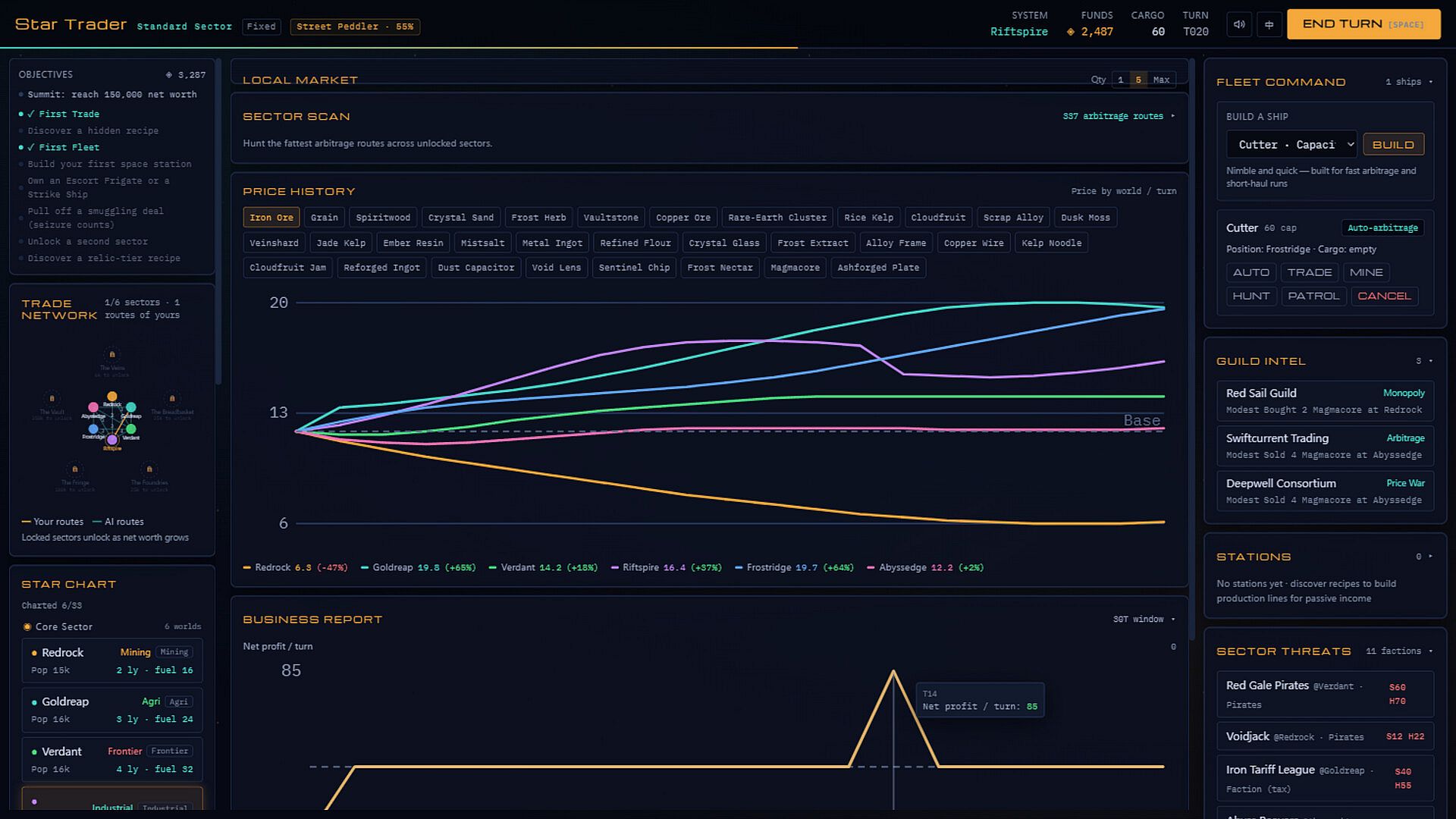
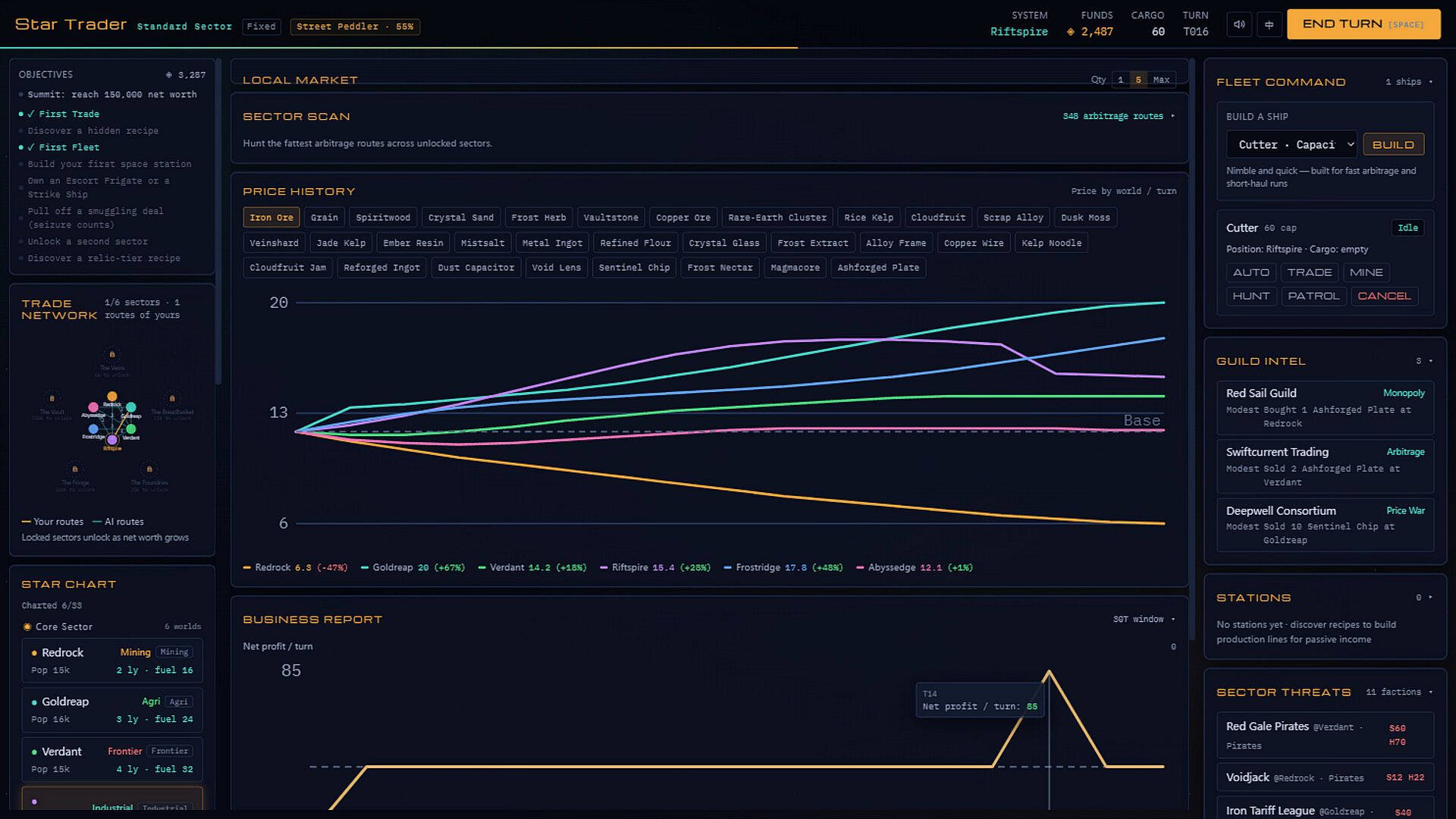
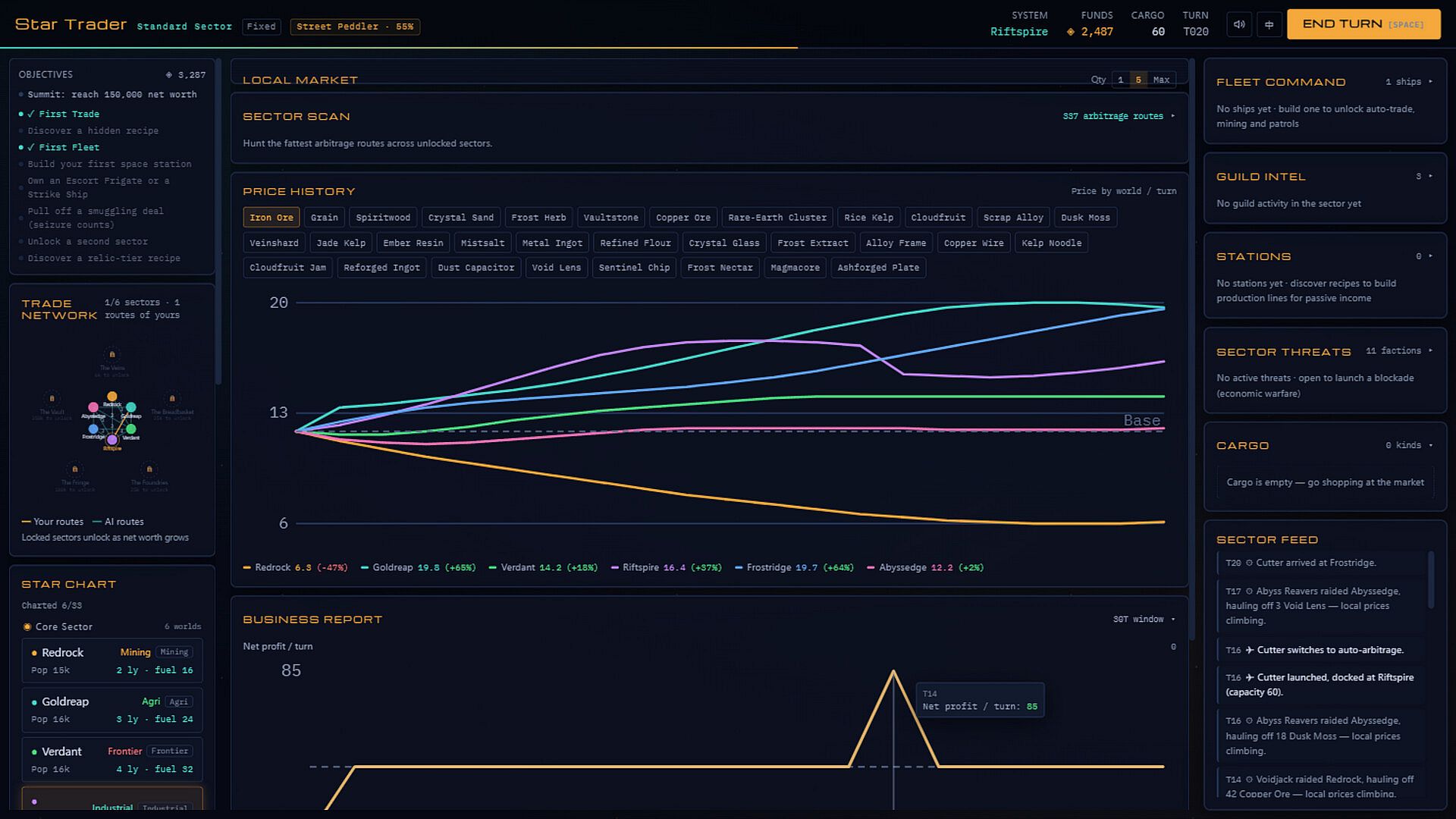
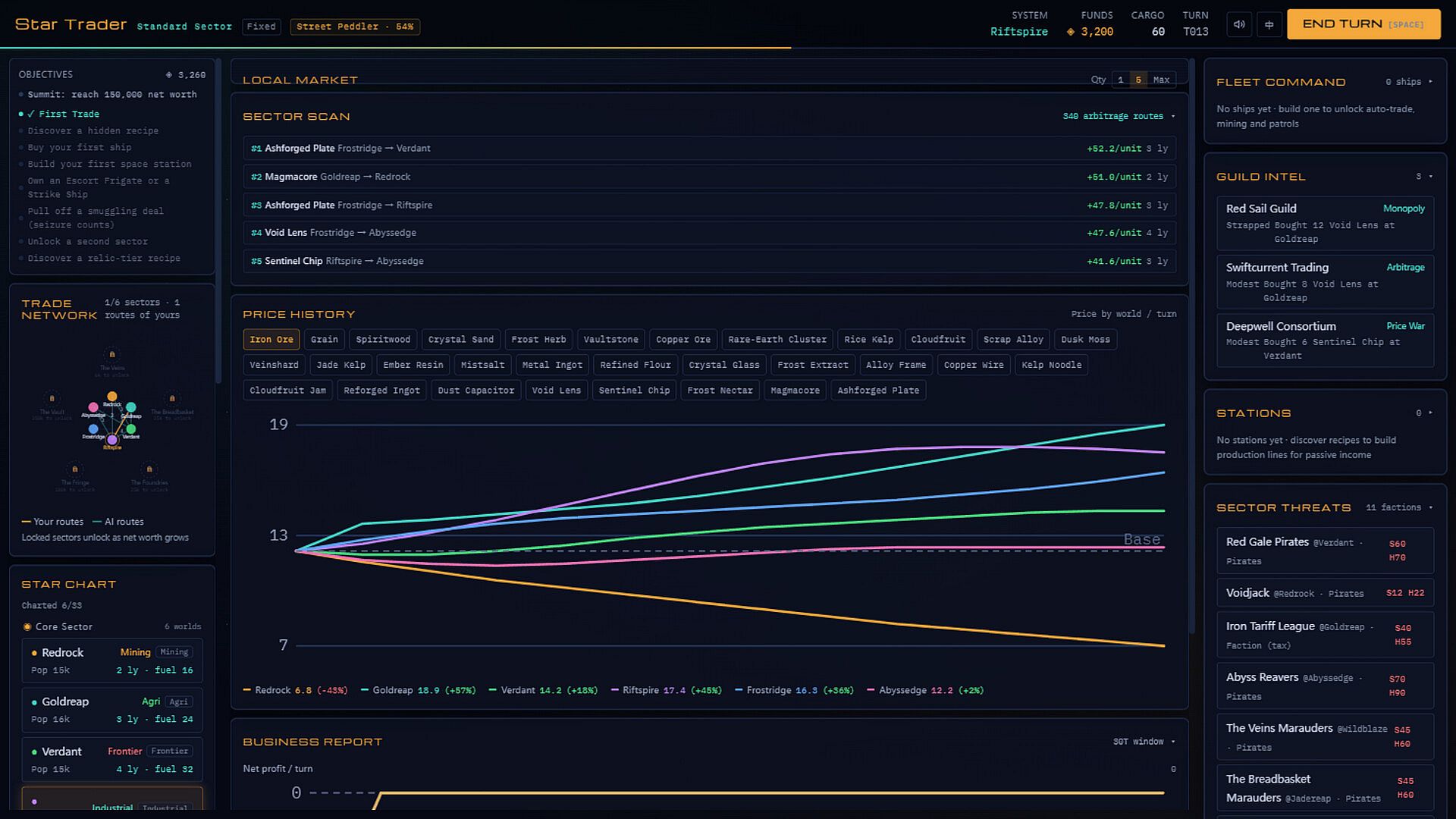
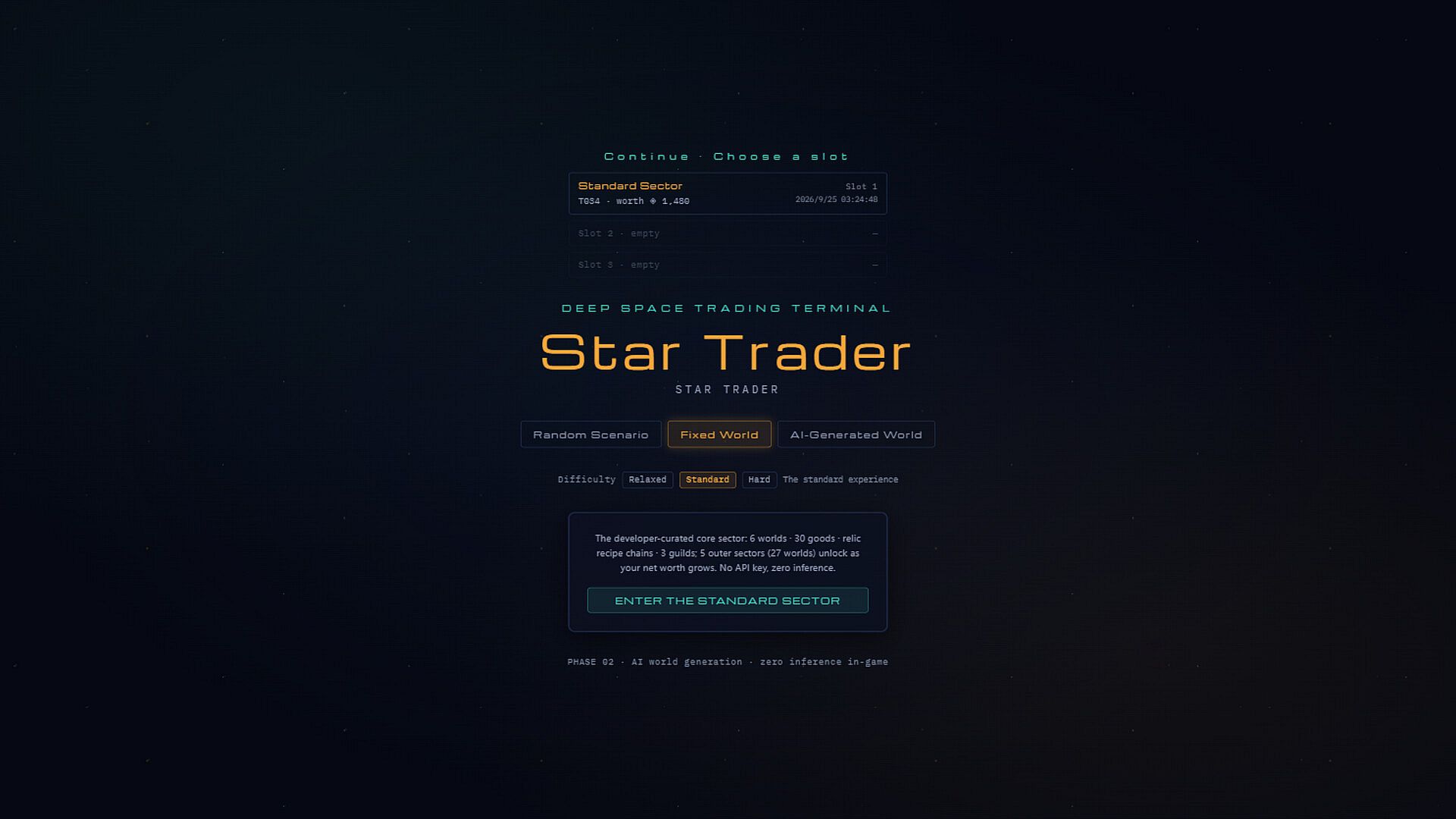
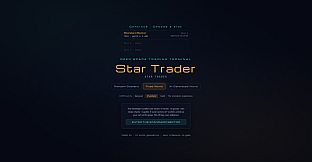
Star Trader is a single-player strategy and simulation game focused on interstellar trading in a living economy. Players manage cargo runs, respond to shifting supply and demand across multiple sectors, and scale operations from individual hauls to automated fleets and production facilities. The experience emphasizes deterministic outcomes based on scenario seeds, with full offline functionality and no external dependencies.
Gameplay
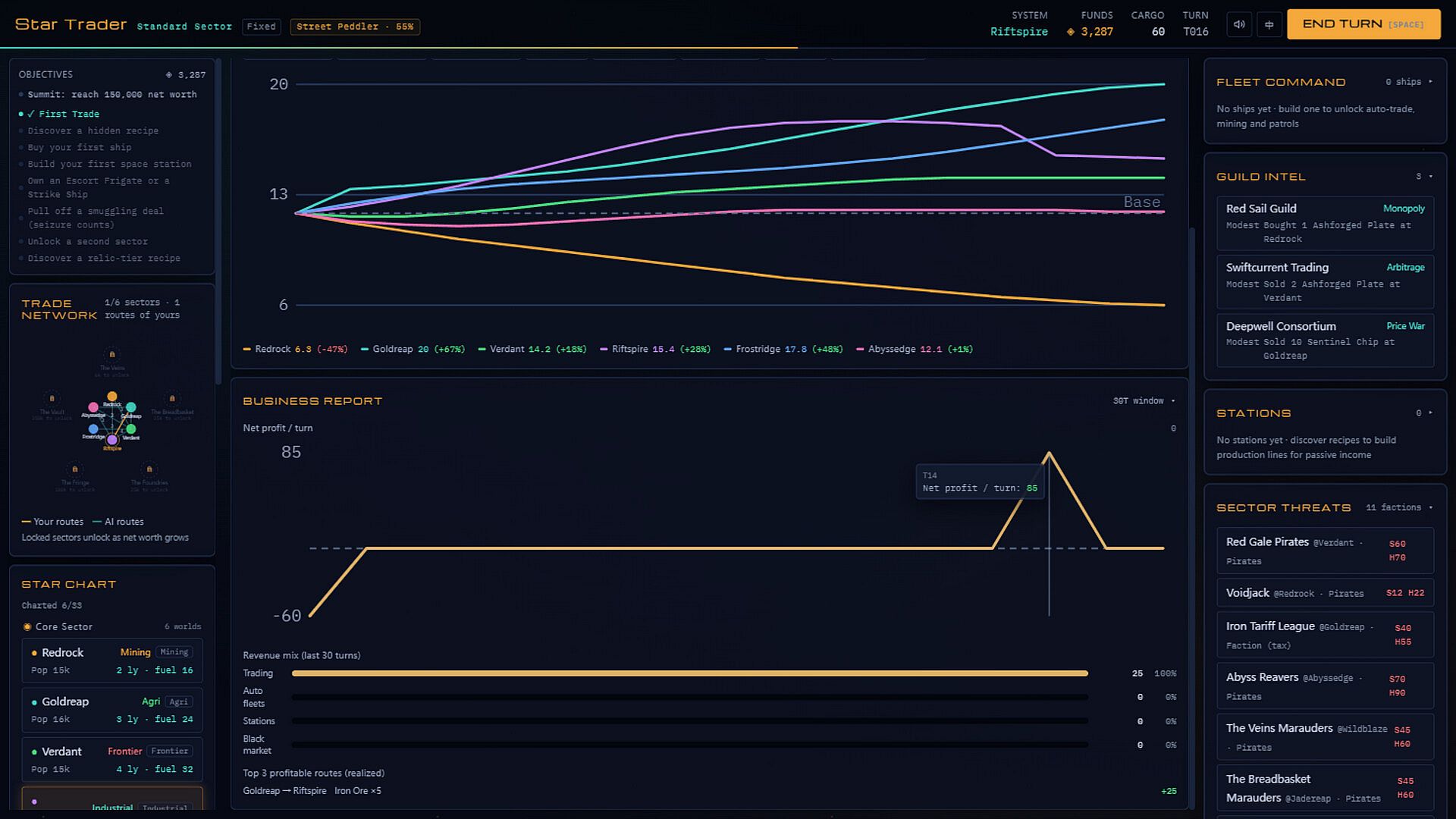
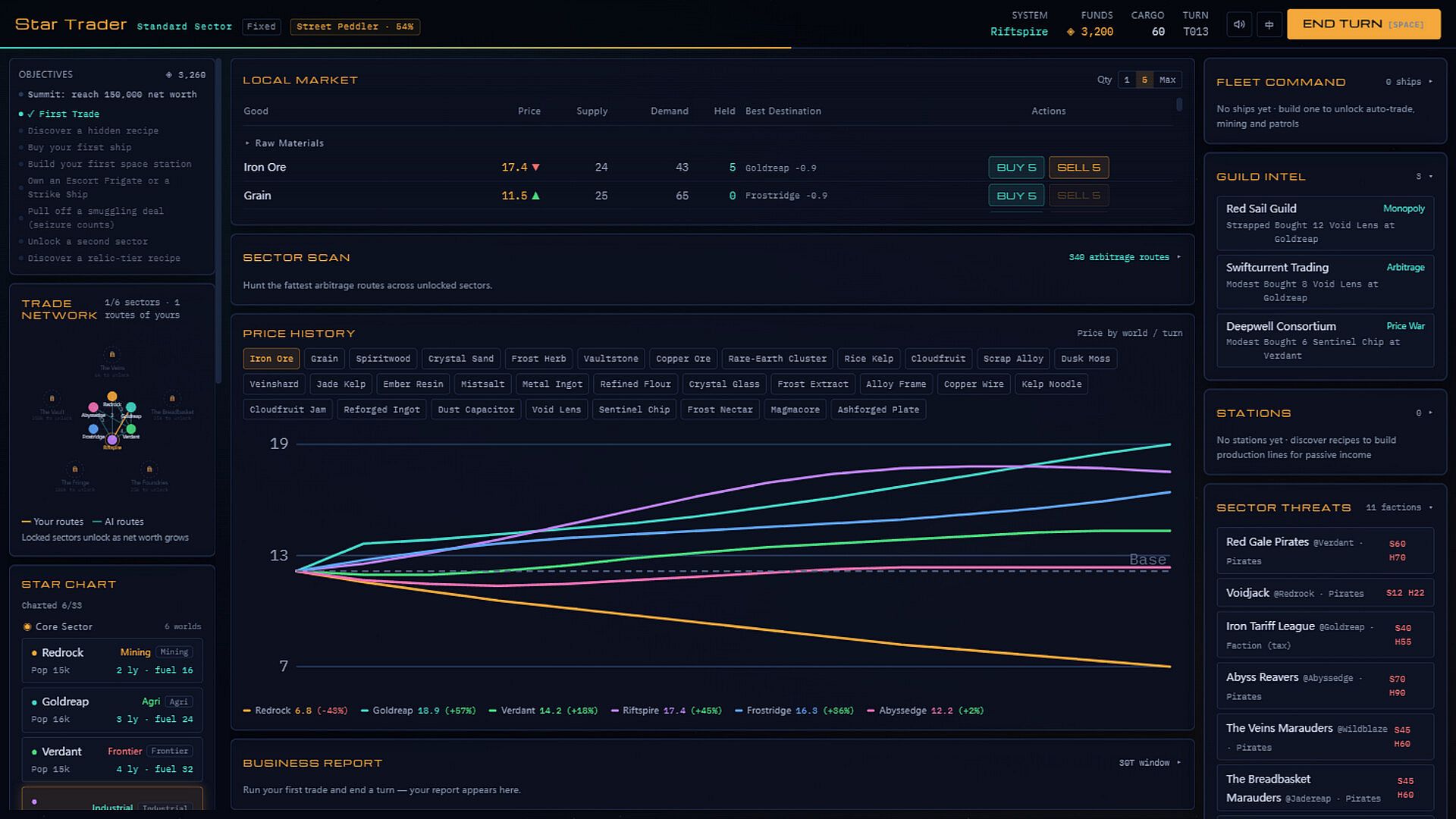
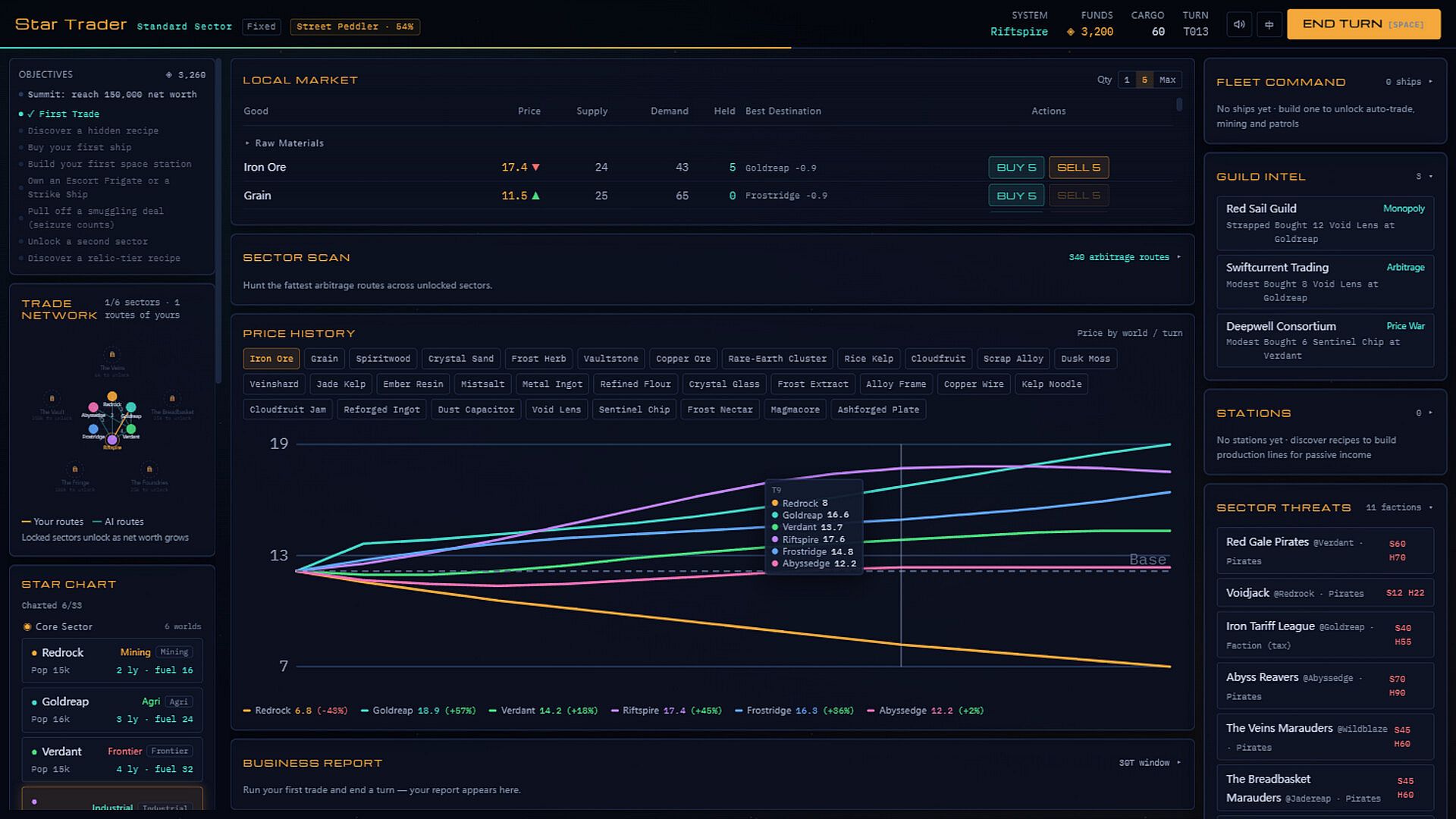
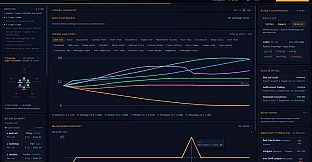
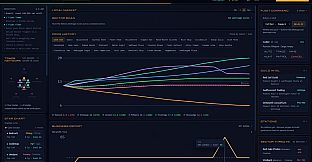
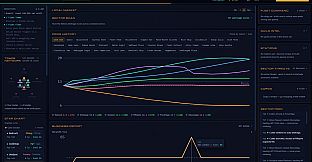
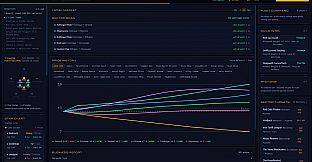
Core play revolves around buying goods where prices are low and transporting them to worlds experiencing shortages. Prices fluctuate each turn according to production levels and consumption needs on 33 worlds spread across six sectors. A sector scan tool highlights arbitrage opportunities among 37 distinct goods, allowing players to identify profitable routes or create artificial shortages through blockades.
Progression involves manual trading at first, followed by discovery of hidden recipes in a dedicated lab. These formulas enable construction of space stations that generate passive income once production lines are established. Fleets of five ship classes handle automated tasks such as mining, patrols, and additional trading runs while players manage larger strategy.
Threats include three tiers of pirates that target unescorted ships, along with protection rackets and bounty systems. Three AI merchant guilds pursue independent strategies visible through an intel panel, requiring players to anticipate moves in monopoly, arbitrage, or price-war scenarios. Narrative events tied to guild conflicts, harvest cycles, and mysterious signals add layers without altering the deterministic core.
Game Modes
Three difficulty settings shape the experience. Relaxed mode reduces pressure on margins and threats. Standard mode balances risk and reward for typical runs. Hard mode increases competition from guilds and pirates while maintaining the same underlying economy rules.
Outer sectors unlock progressively based on net worth, expanding available worlds and recipe opportunities. A standard run to the economic summit lasts between two and six hours, supporting both focused sessions and repeated attempts with different scenario codes.
Economic Systems and Progression
Every world follows consistent production and demand patterns that evolve turn by turn. Players experiment with recipes to unlock higher-tier goods and station upgrades. Fleet automation frees attention for strategic decisions such as escorting valuable shipments or disrupting rival guild operations.
Smuggled goods offer premium returns but carry seizure risks. Five handcrafted outer-sector worlds provide unique trading conditions and narrative elements once unlocked. Legacy credits carry forward into new games, and milestones track long-term advancement alongside 15 achievements.
Technical Features
The game runs entirely offline with no account requirements or telemetry. A single scenario code generates identical conditions for every player, enabling direct comparison of decisions. Bilingual support covers English and Simplified Chinese interfaces, with self-hosted audio.
Steam Cloud and achievements integrate with the single-player structure. Family sharing and local saves support consistent play across sessions without external connectivity.
Is It Worth Playing?
Star Trader suits players who enjoy methodical trading simulations and deterministic strategy. The focus on reproducible scenarios rewards careful planning over luck, while fleet and station systems provide depth for longer engagement. Those seeking quick sessions or heavy narrative branching may find the economy-driven loop more limited, but the offline accessibility and clear progression make it a strong fit for dedicated simulation fans. With release planned for Q4 2026 and no reviews available yet, interest depends on preference for pure economic management in a space setting.













