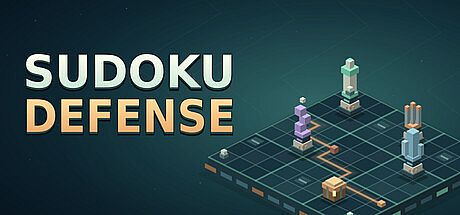


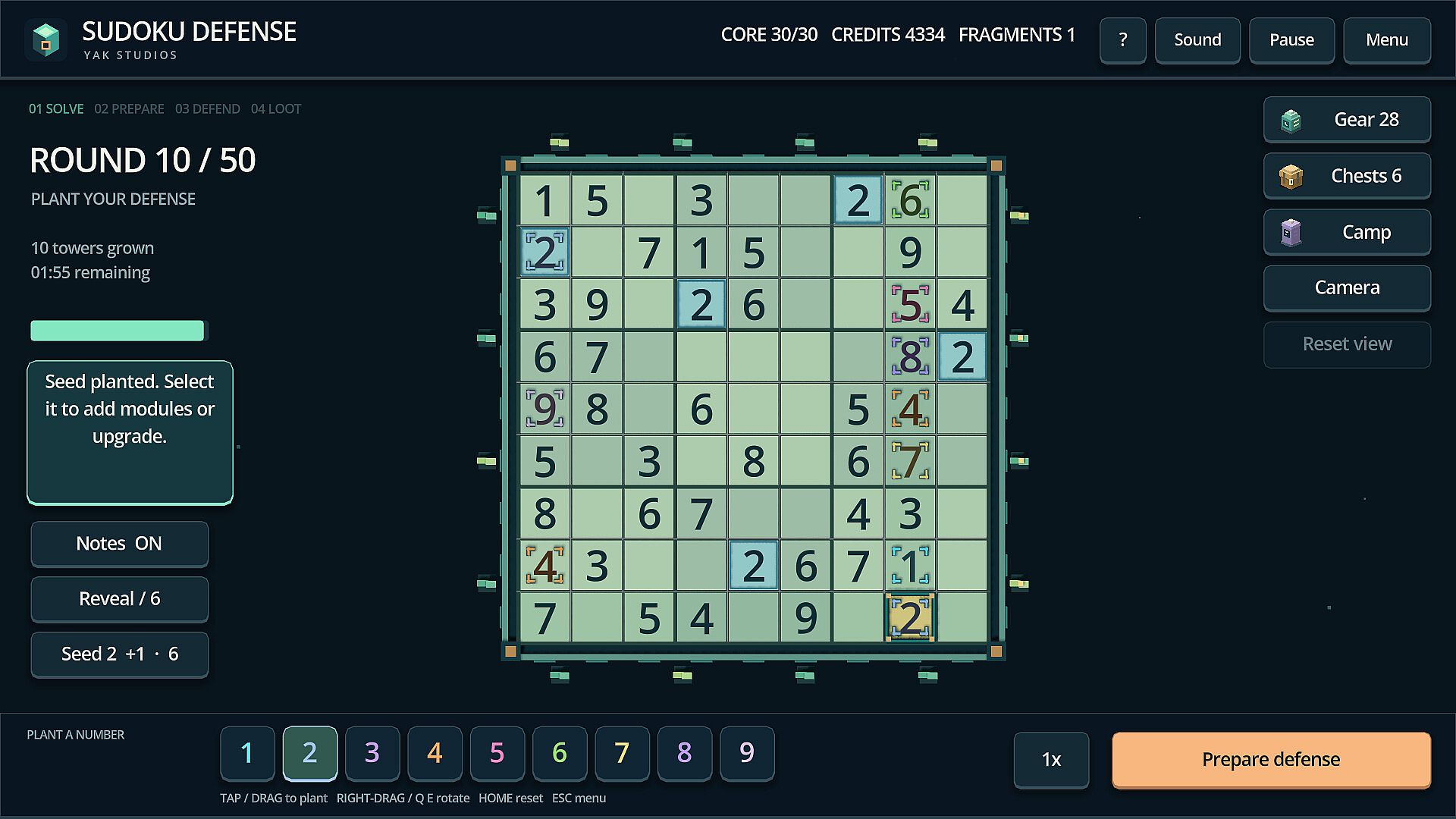
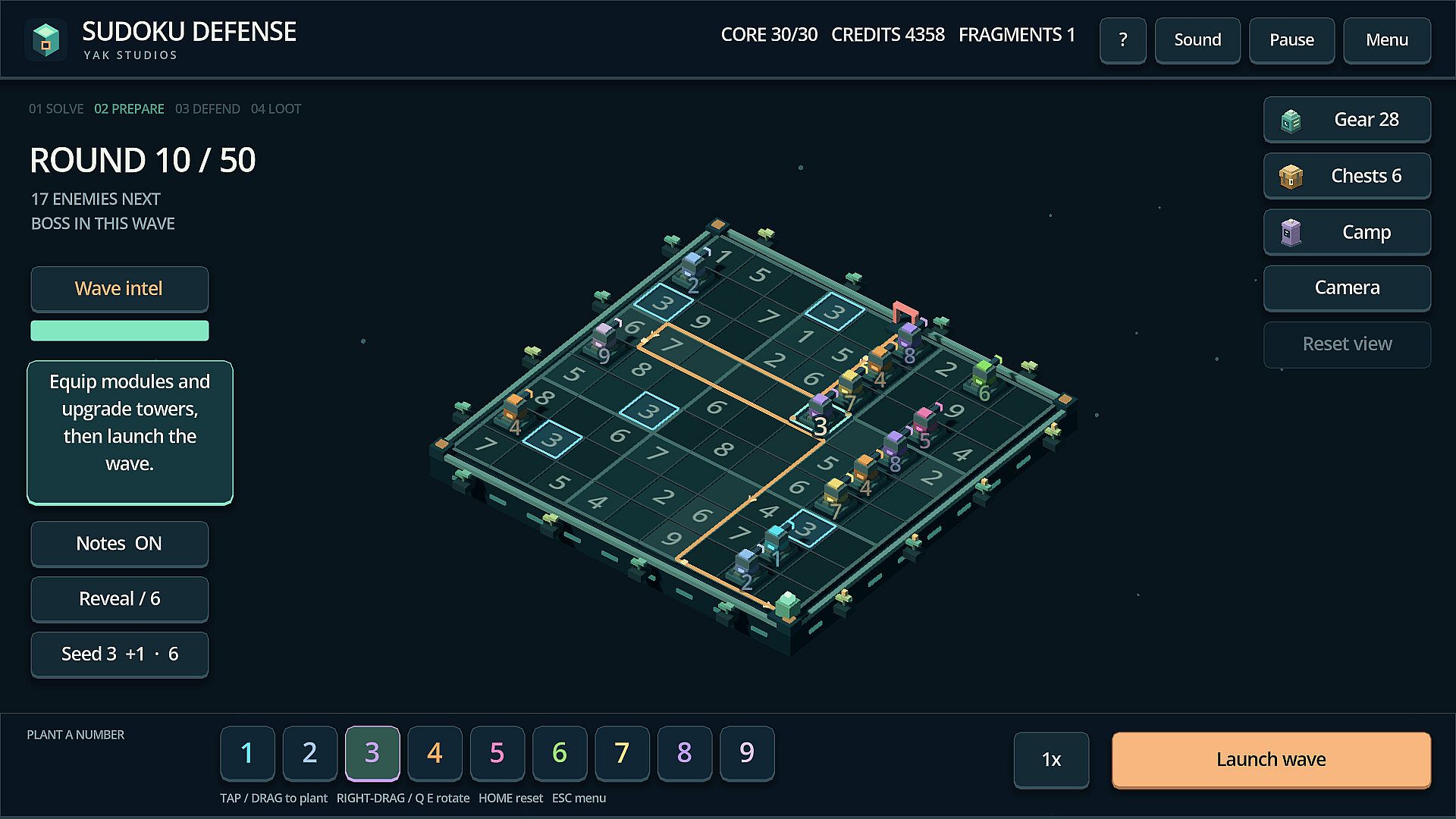






Sudoku Defense is a strategy indie game for PC that blends classic number placement with tower defense combat. Players fill a grid with correct digits to construct defensive structures, then face waves of enemies in a voxel-based arena shaped by those placements.
Gameplay
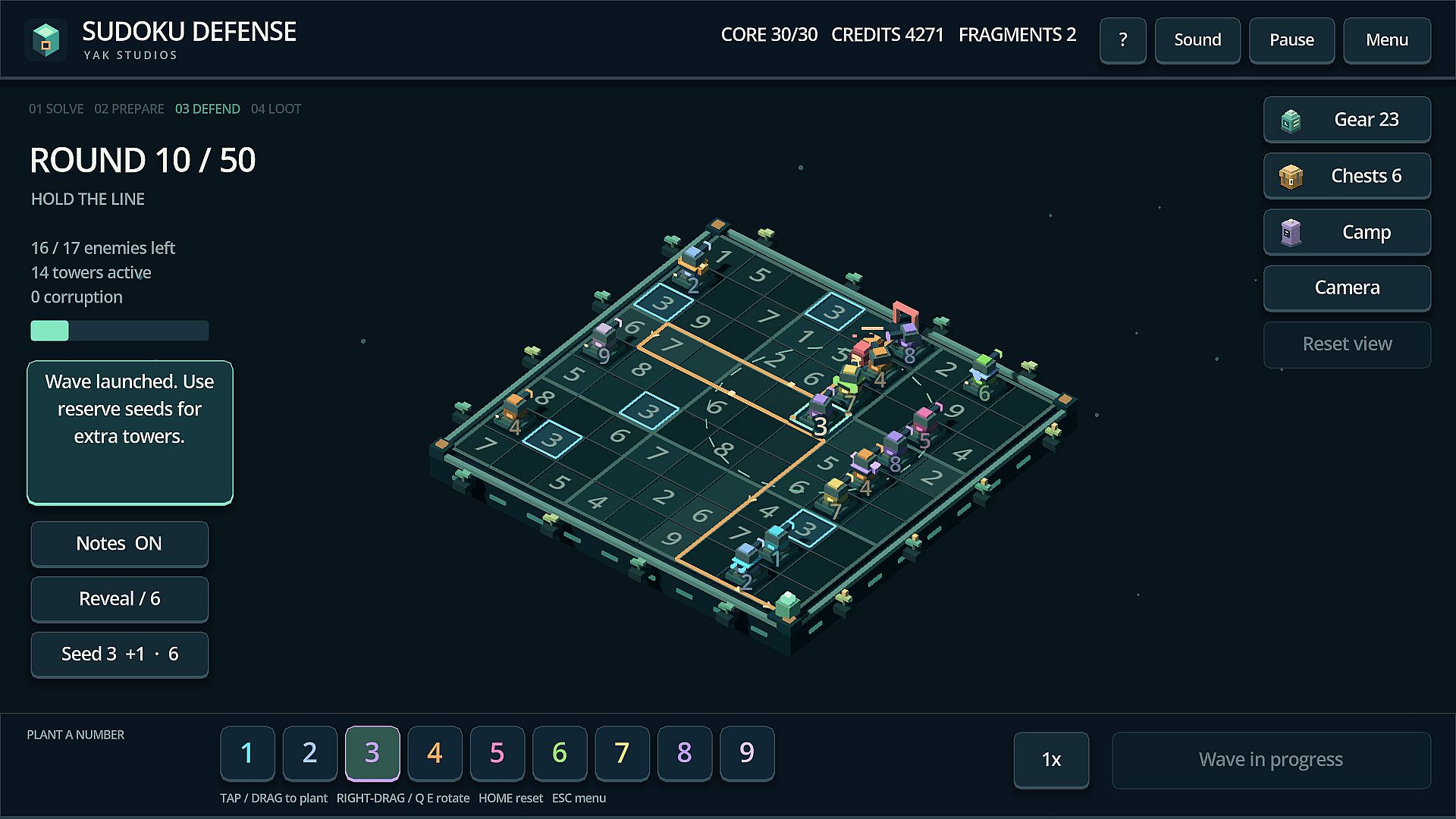
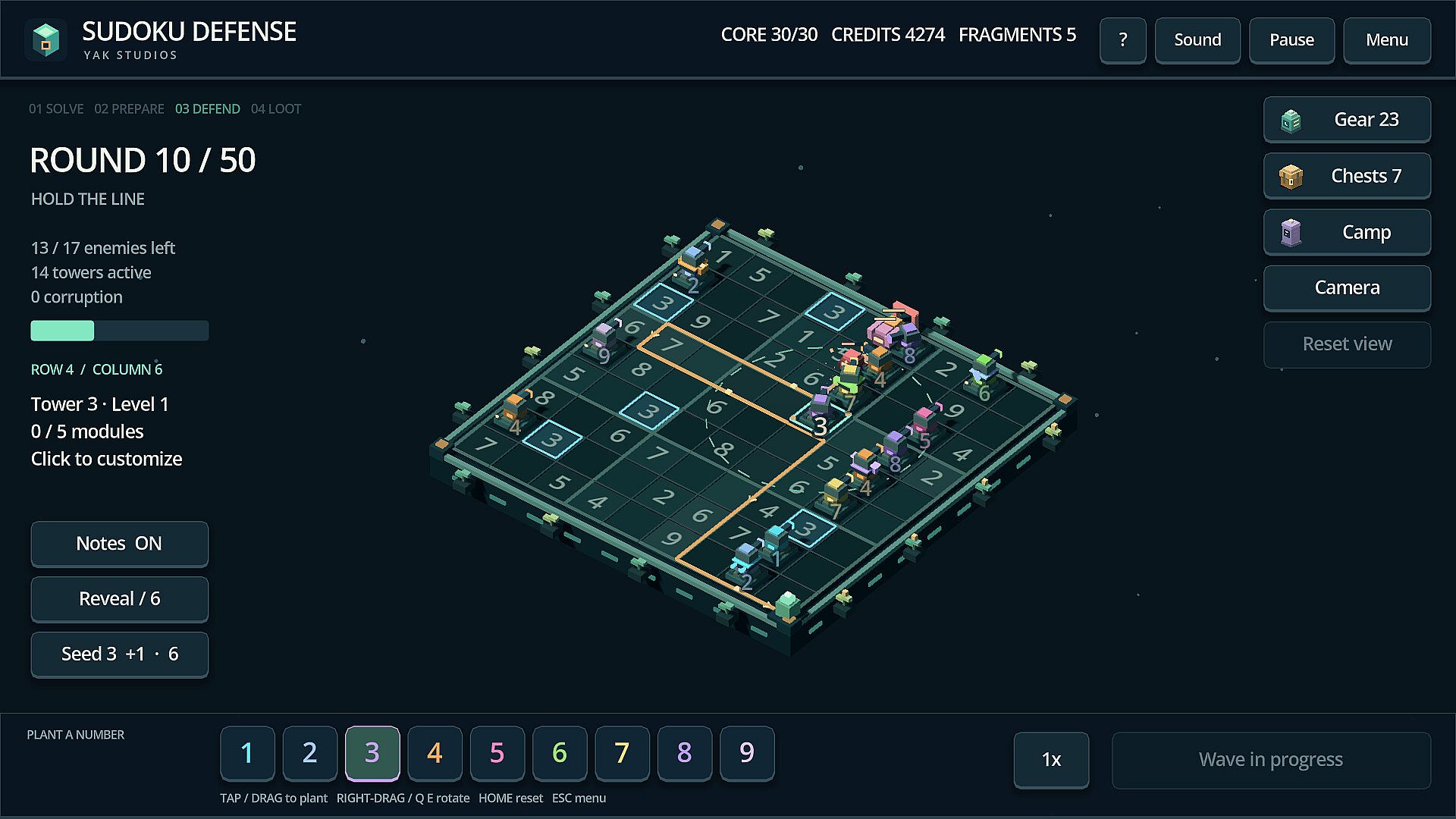
The core loop alternates between a solve phase and a combat phase. During the solve phase, placing the right number in an empty square builds a tower and generates credits. These towers form the foundation of defenses, and their positions influence how enemies navigate the board once the wave starts. The voxel battlefield visualizes the action clearly, turning the grid into a dynamic arena where routes and chokepoints matter.
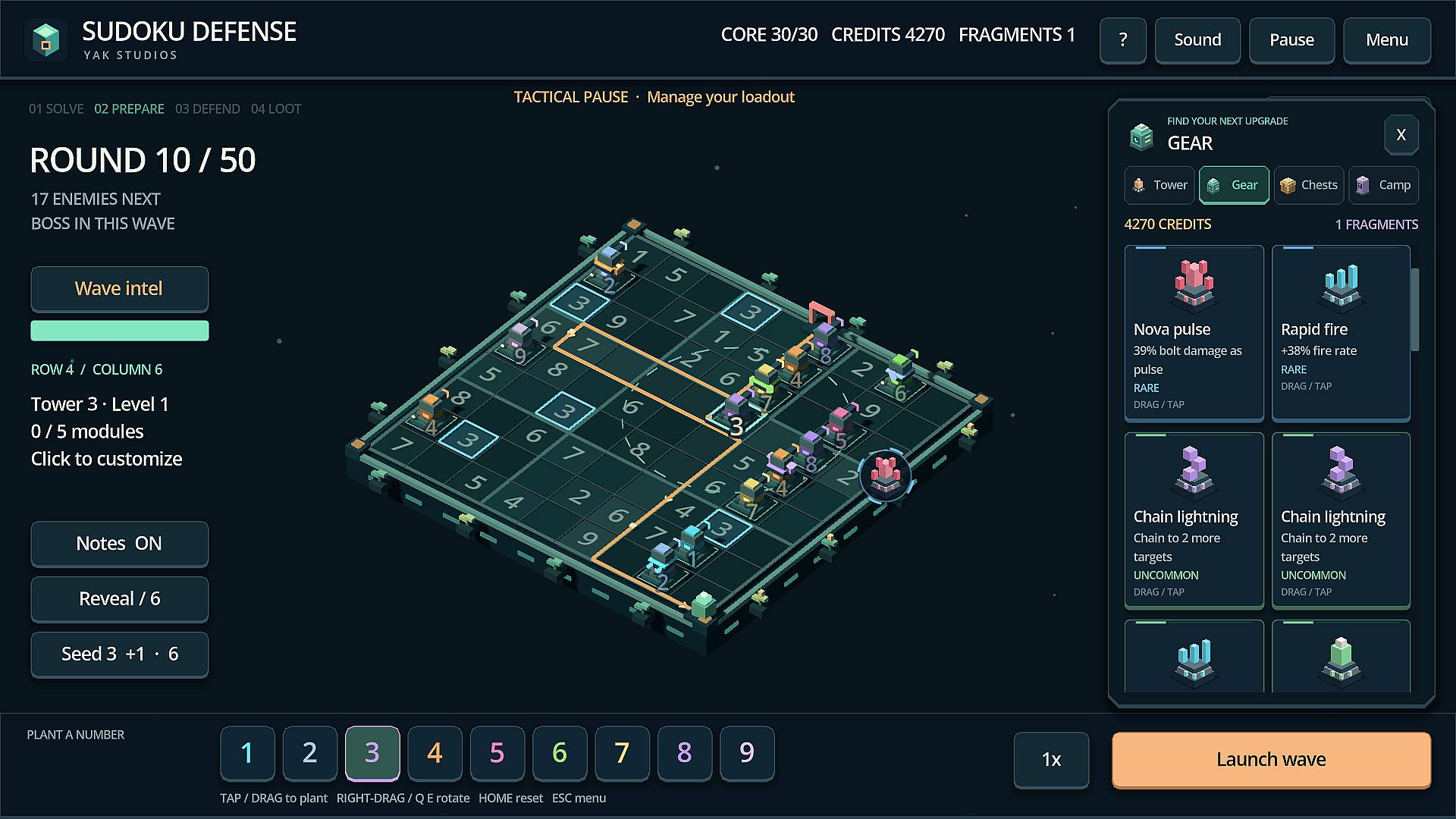
Each tower includes five module slots that accept upgrades such as lightning effects, frost slows, splash damage, or faster firing rates. Modules can be mixed and matched, dragged between towers, or swapped as needed. Upgrades that apply to all towers sharing the same number appear highlighted on the grid for quick reference. Between waves, credits fund permanent improvements or attempts at salvage slots, where a spin that yields fewer credits than its cost still grants a common module.
Defeated enemies drop fragments that open chests for new modules or temporary boosts. A reserve seed provides an emergency placement option during waves, though it risks breaking Sudoku rules and introduces corruption that strengthens later enemies. Players control the pace with options to pause via the gear menu or accelerate waves to double or quadruple speed. Support for controller, mouse, or touchscreen input keeps the experience flexible on PC.
Game Modes
Three distinct modes shape how runs unfold. Campaign mode spans up to 50 rounds, with players selecting puzzle and combat difficulty levels before each round to adjust the challenge. Locked In mode fixes the chosen difficulties for the entire run, creating a consistent test of preparation and adaptation. Free Play mode offers a single puzzle followed by one battle, ideal for shorter sessions or focused practice.
Local saves allow players to pause progress and resume later without losing their current setup. The modes emphasize different approaches to risk and planning, from flexible adjustments in Campaign to the commitment required in Locked In.
Strategic Depth and Risk Management
Success depends on balancing Sudoku accuracy with defensive positioning. Early placements determine enemy paths, so thoughtful solving creates natural bottlenecks for towers to exploit. Module combinations reward experimentation, as stacking complementary effects like area damage and slows can handle varied enemy types more efficiently than single-focus builds.
The corruption mechanic from reserve seeds introduces meaningful trade-offs. Using the seed grants immediate firepower but increases enemy durability later, forcing decisions about whether the board can withstand the boosted threats without it. Salvage spins and chest rewards add layers of resource management, letting players stockpile options for tougher rounds ahead.
Is It Worth Playing?
Sudoku Defense suits players who enjoy strategy games that reward logical thinking alongside tactical placement. The integration of puzzle rules with wave defense creates a distinctive loop where mistakes in the grid directly affect combat outcomes. Those who appreciate single-player experiences with adjustable pacing and modular customization will find repeated value in experimenting with tower builds across the available modes.
The game runs locally on PC with straightforward controls and no requirement for online connectivity during play. Its focus on core mechanics without extraneous systems makes it accessible for sessions of varying length, particularly for fans of indie strategy titles that merge genres in unexpected ways.