


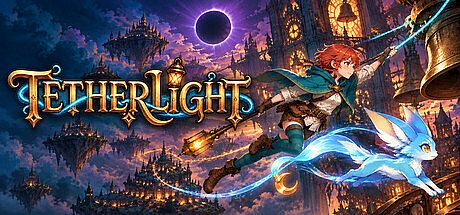


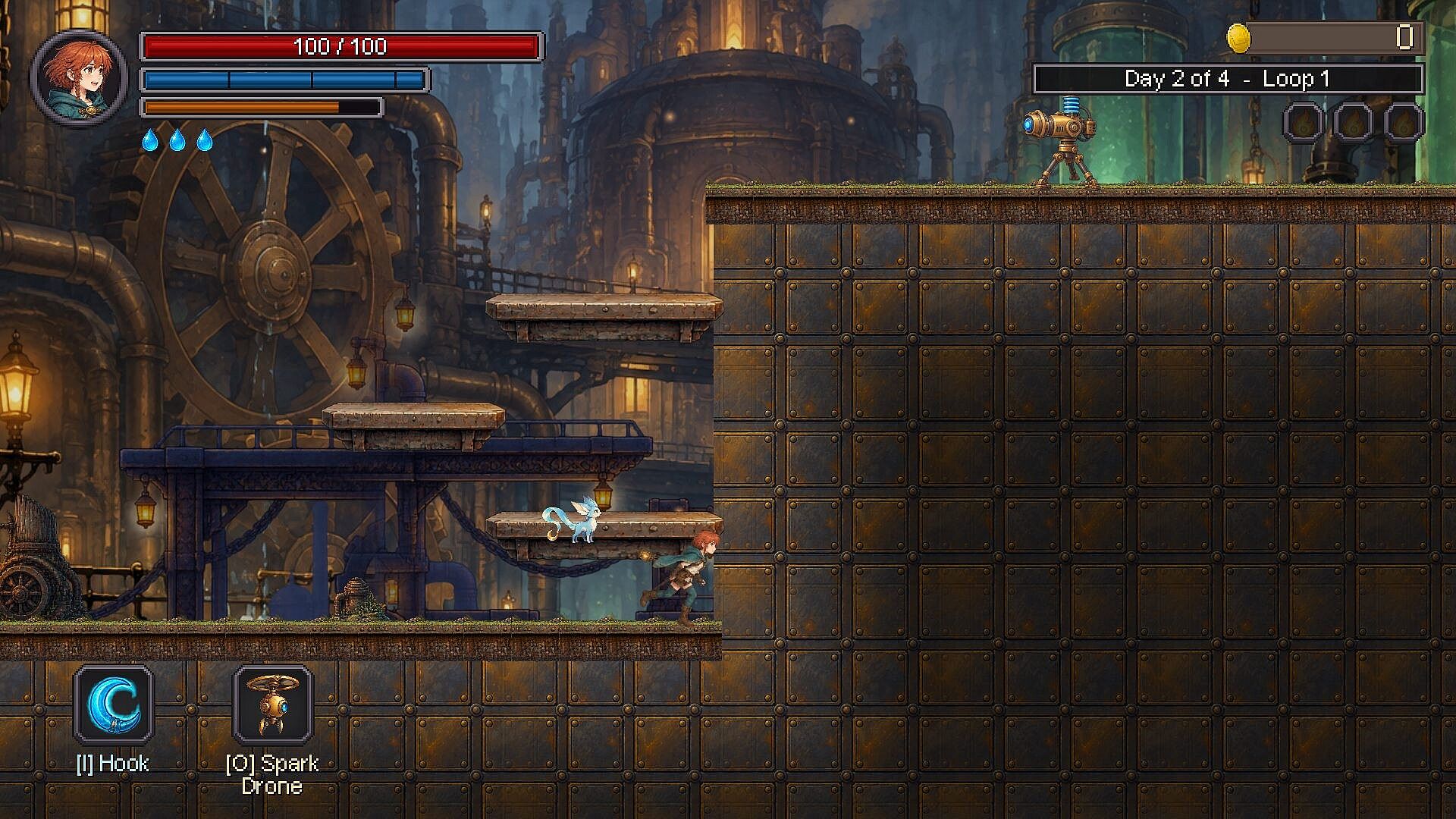
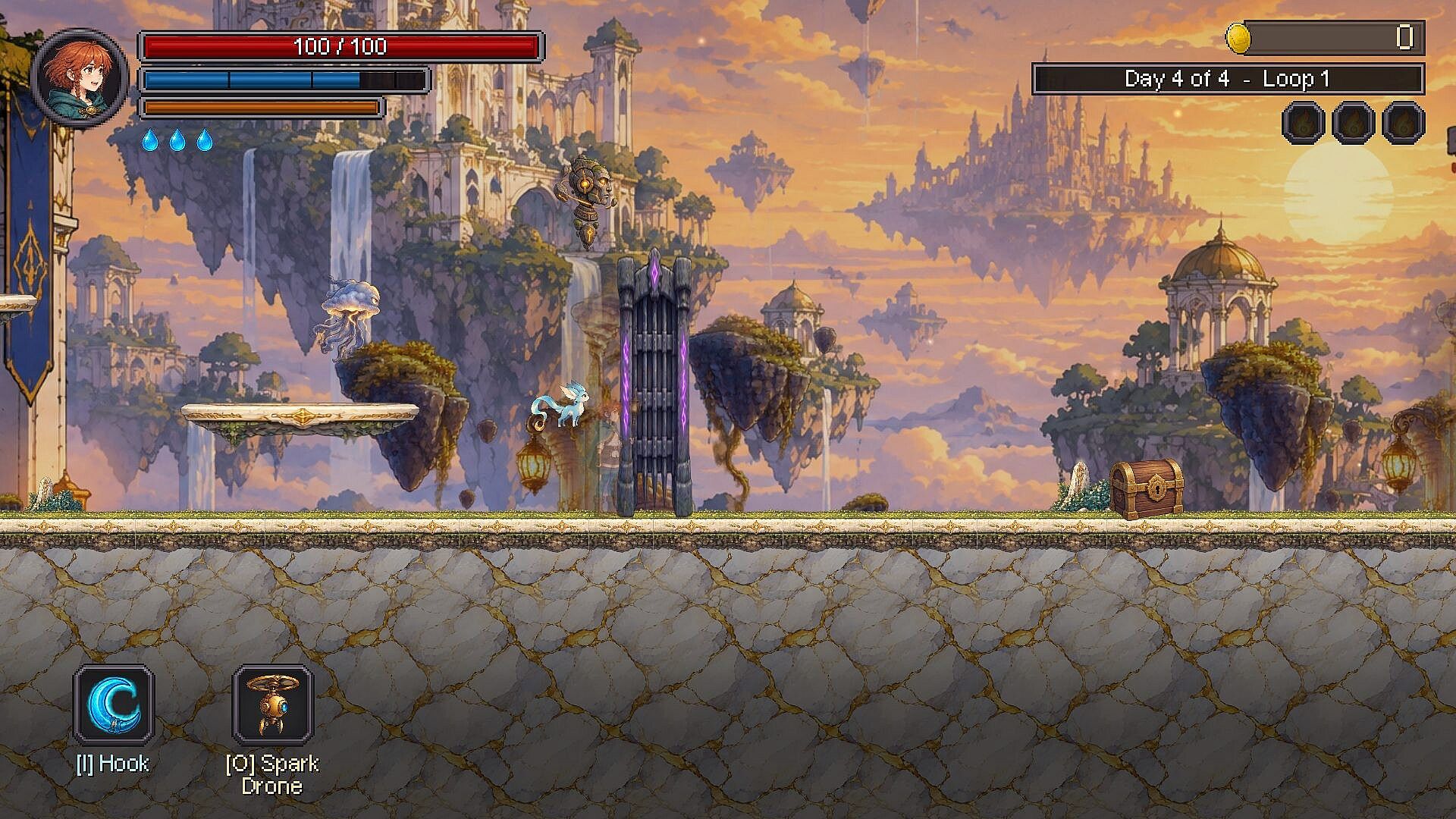
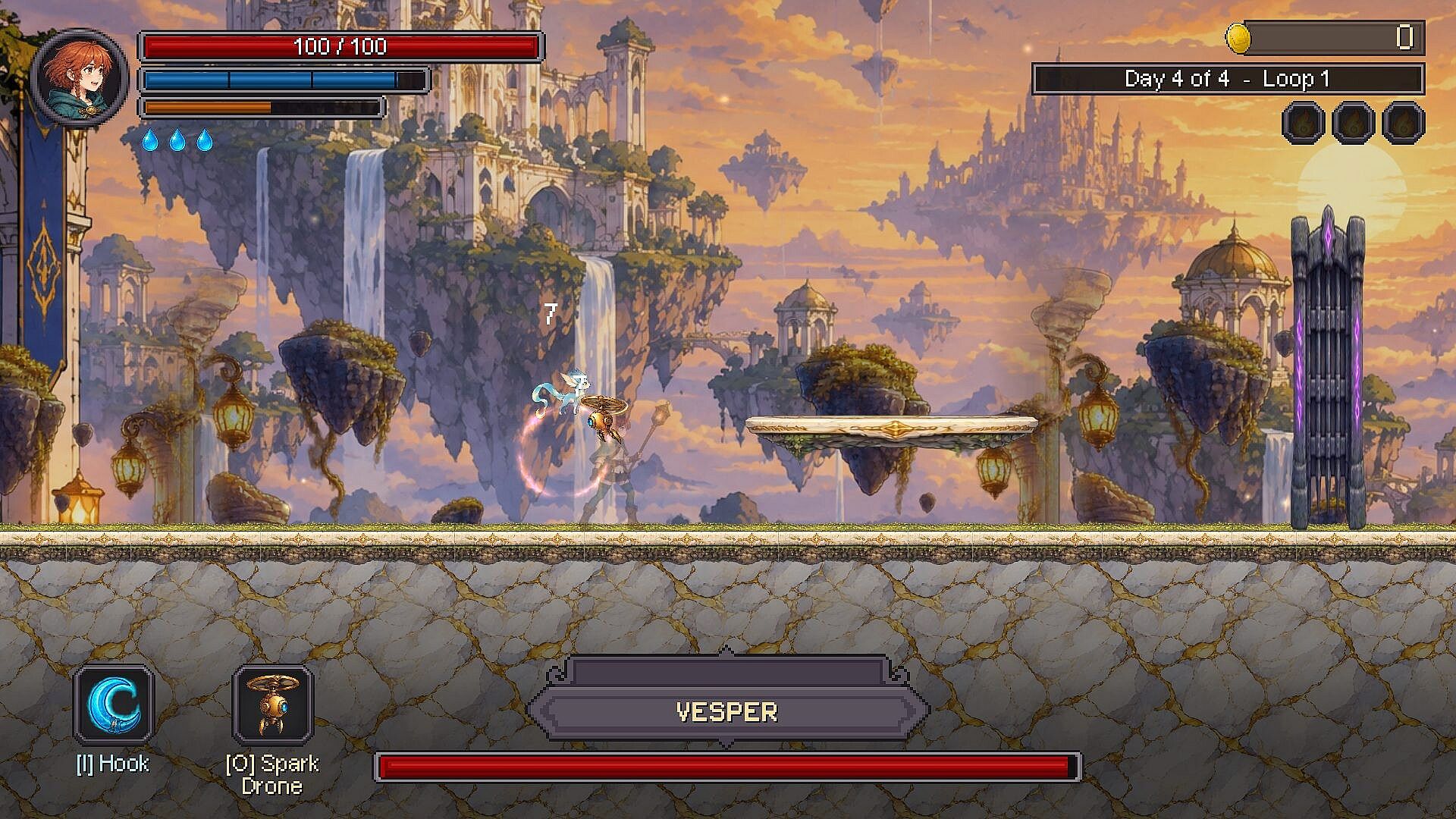
Tetherlight is a side-scrolling action adventure game developed for PC that blends precise platforming, combat, and exploration in a world shaped by repeating cycles. Players take on the role of a young lamplighter who teams up with a star-fox companion named Kit to reclaim dawn flames and push back against the silence that resets every journey. The core experience revolves around tethering mechanics that link movement and attacks, set against environments that shift with each passing day and night cycle.
Gameplay
The central hook involves throwing Kit to latch onto enemies, bells, and other objects, then pulling the player character through the air to chain together fluid sequences of staff combos, aerial strikes, and quick dashes. New tether forms unlock over time, expanding both traversal options and combat variety as players adapt to different situations. Combat emphasizes timing and positioning rather than button mashing, with evasive maneuvers playing a key role in staying alive during encounters.
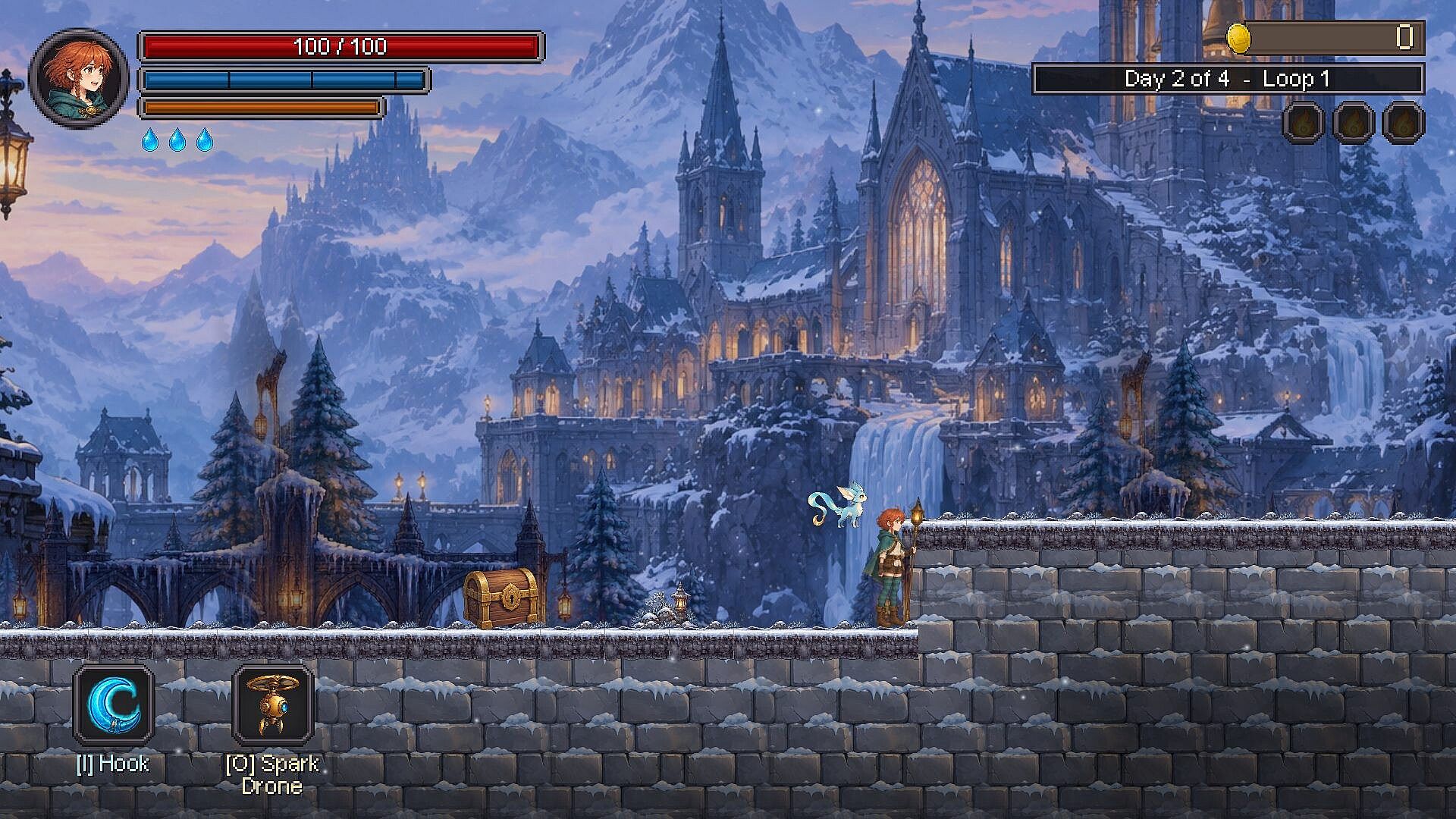
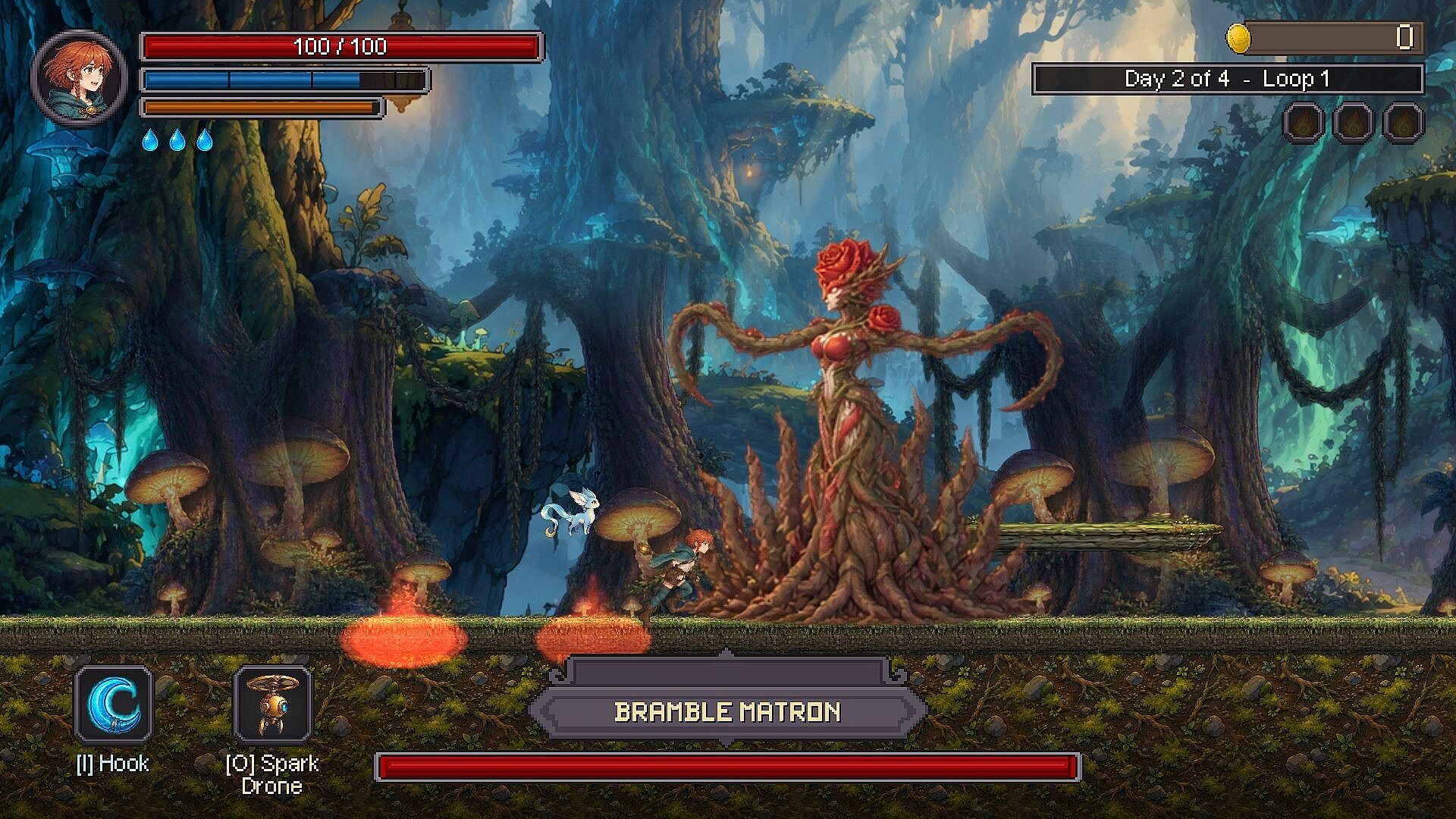
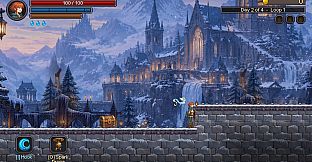
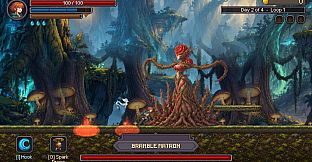
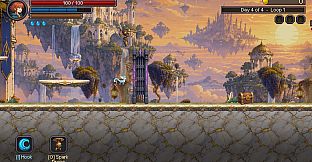
Exploration takes place across a looping world where forests turn hostile, workshops flood, and snowstorms alter paths between runs. Players return to town between excursions to speak with residents, gather knowledge, and select destinations before night falls. Lasting upgrades and collected information make each subsequent loop feel distinct, encouraging experimentation with routes and strategies. Equipment includes charms that modify abilities, staff improvements for stronger attacks, and the ability to summon spirits from defeated guardians to aid in tough fights.
Controls support both keyboard and mouse or an Xbox-compatible controller, with adjustable difficulty settings and multiple interface languages available. The emphasis stays on deliberate movement and route planning rather than overwhelming complexity, suiting players who enjoy methodical progress through interconnected challenges.
Game Modes
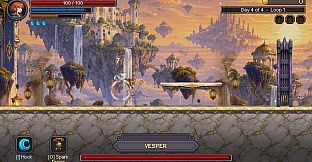
Tetherlight operates as a single-player experience focused on a continuous campaign loop rather than separate competitive or cooperative modes. The primary structure centers on repeated journeys through the changing world, with each cycle building on prior knowledge and upgrades to reach new areas and confront stronger opposition. Boss encounters require adapting loadouts and tactics on the fly, while the overarching goal involves carrying light toward a central clock tower.
Progression ties directly into the day-night cycle and environmental shifts, turning what might seem like repetition into purposeful variation. There are no additional multiplayer options or distinct side modes confirmed; the design keeps attention on the core loop of exploration, combat, and incremental advancement through a single narrative thread.
World and Progression
The setting features a world caught in repeating nights, where environmental changes force constant adaptation. Forests that start welcoming can become dangerous on later loops, while flooded workshops or sudden snowstorms reshape familiar paths. Town visits provide breathing room for upgrades and conversations that reveal more about the lamplighter's goal of reclaiming dawn flames.
Upgrades accumulate across runs, allowing players to strengthen their staff, equip different charms, and access new tether capabilities. Summoning guardian spirits adds another layer to boss fights, rewarding players who explore thoroughly and defeat optional challenges. This system rewards observation and planning, as knowledge gained in one cycle directly influences success in the next.
Is It Worth Playing?
Tetherlight targets fans of side-scrolling action adventures who appreciate tight movement systems and looping progression that rewards repeated play. The tether companion mechanic offers a distinctive way to combine traversal and combat, while the day-night environmental shifts add variety without requiring separate campaigns. With support for controllers, adjustable difficulty, and language options, it accommodates different play styles and accessibility needs.
As an upcoming indie title releasing soon on PC, its appeal rests on the described systems of chaining tethers, adapting to changing landscapes, and building upgrades over cycles. Players drawn to deliberate exploration and boss encounters that test equipment choices will find the most to engage with, particularly if they enjoy single-player experiences centered on personal progression rather than multiplayer elements. Those seeking fast-paced action without the looping structure may want to review gameplay footage once available to confirm the pace matches their preferences.












