

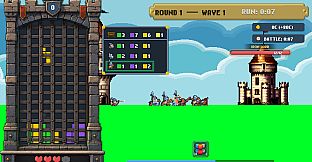
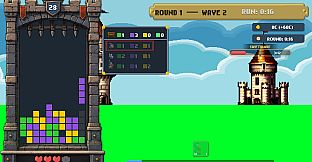
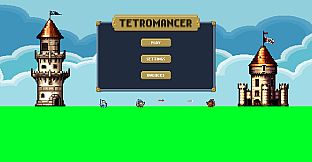
Tetromancer ist ein strategisches Indie-Casual-Game für den PC, das klassische Tetris-Mechaniken mit Echtzeit-Truppenführung in einem Roguelite-Rahmen verbindet. Spieler räumen Reihen, um Ressourcen zu sammeln, und setzen anschließend Einheiten in abwechselnden Phasen gegen gegnerische Wellen ein - alles auf einem gemeinsamen Spielfeld, das gleichzeitig als Puzzle-Fläche und Wirtschaftsmotor dient. Der Kernloop setzt auf bewusste Platzierungsentscheidungen, die unmittelbar die Optionen auf dem Schlachtfeld beeinflussen, statt auf passives Fortschreiten.
Gameplay
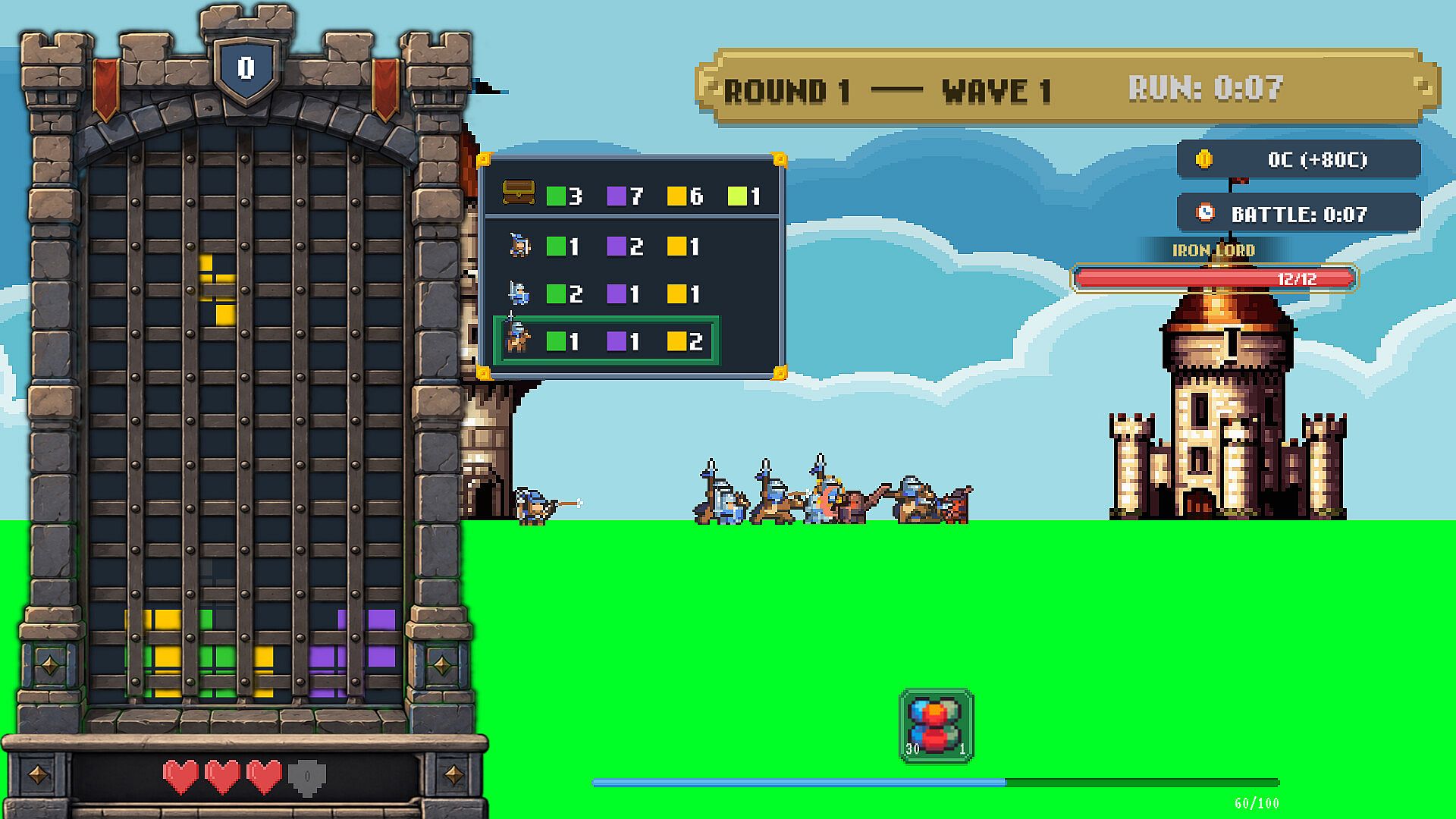
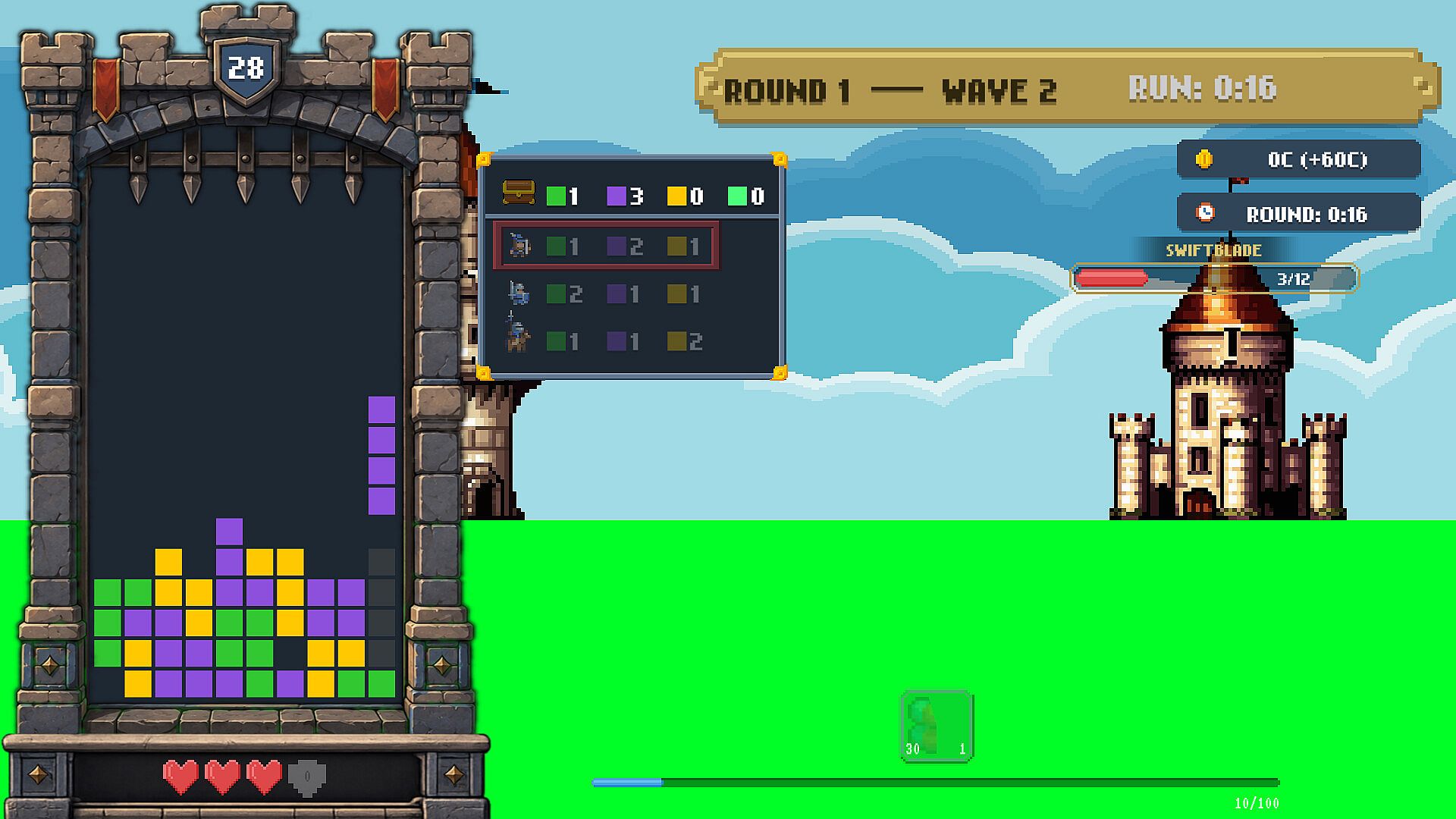
Das Spiel teilt sich in zwei klar getrennte Phasen, die sich in einem engen Zyklus wiederholen. In der Stapel-Phase landen fallende Tetrominos auf dem Spielfeld; Reihenräumungen erzeugen drei Ressourcenfarben: Grün für Gesundheit, Gelb für Utility und Lila für Schaden. Gleichzeitig füllen diese Räumungen auch das Zauber-Mana auf. Die Platzierungen sind entscheidend, weil das Spielfeld sowohl frei genug für weitere Tetrominos bleiben als auch die exakt benötigten Farben für spätere Beschwörungen liefern muss.
Sobald das Tor sich öffnet, beginnt die Kommandophase. Ressourcen werden in Einheiten umgewandelt, die auf die gegnerische Burg marschieren. Timing und Auswahl der Truppen entscheiden darüber, ob der Angriff vor Ablauf der Zeit erfolgreich ist oder die Verteidigung zusammenbricht. Zauber wirken in beiden Phasen: Sie können während des Stapelns das Spielfeld verändern oder im Kampf direkte Effekte erzielen. Zwischen den Runden erscheint ein Shop, in dem Gold neue Zauber, Einheiten-Upgrades und Burgverbesserungen kauft und so durch unterschiedliche Kombinationen Abwechslung zwischen den Durchläufen schafft.
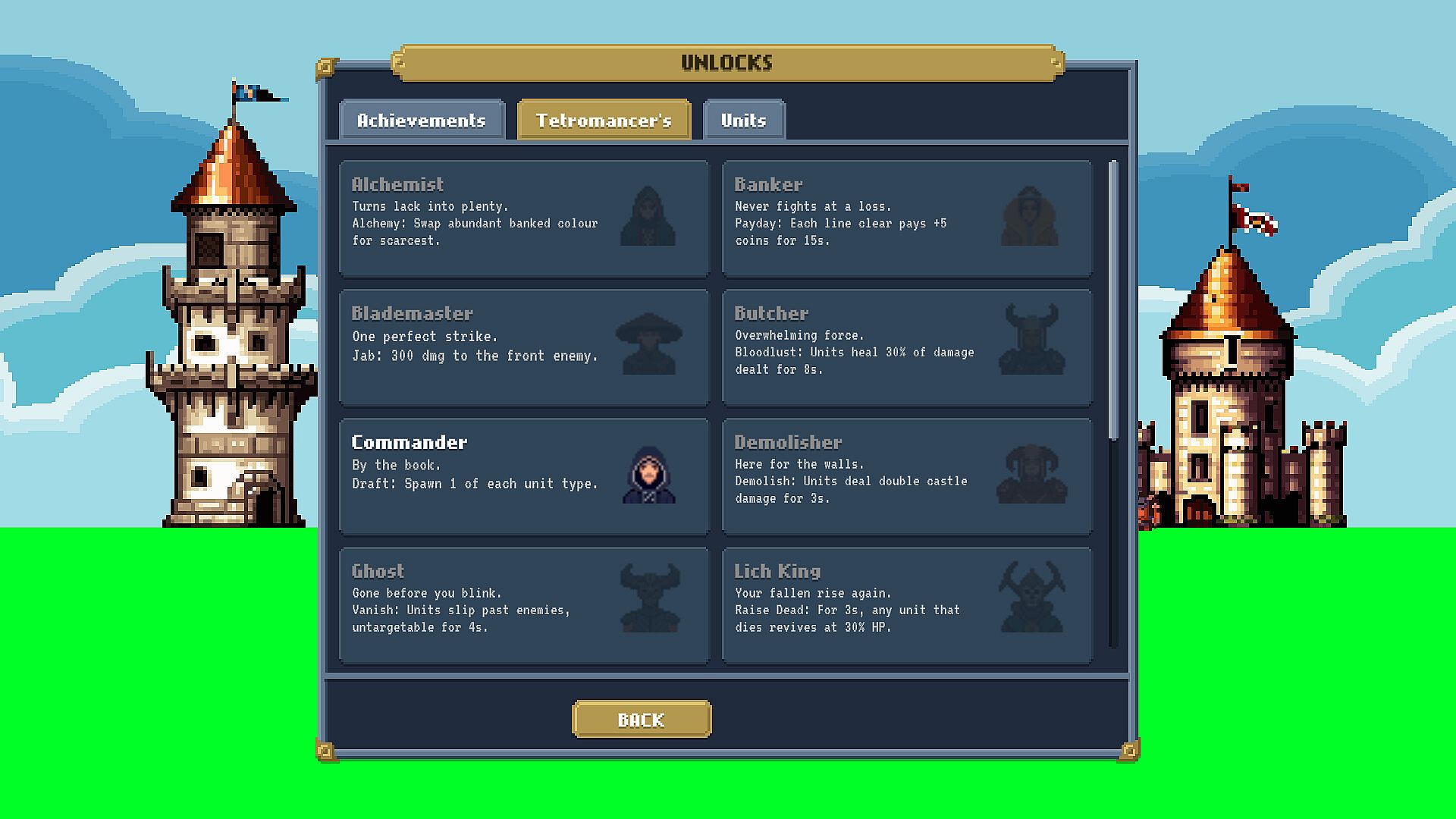
Generäle erweitern das System um einzigartige Fähigkeiten, die Regeln sowohl für den Spieler als auch für die Gegner verändern. Fortschrittssysteme schalten weitere Einheiten und Generäle frei, während Prestige-Stufen die Schwierigkeit erhöhen und dafür bessere Belohnungen bieten. Erfolge dokumentieren die Beherrschung dieser Elemente, ohne dass zusätzliche Inhalte nötig sind.
Spielmodi
Das Spiel basiert ausschließlich auf dem zentralen Zwei-Phasen-Loop, ohne separate benannte Modi. Jede Session folgt der gleichen Struktur: Stapeln für Ressourcen, gefolgt von aktivem Kommando gegen aufeinanderfolgende Wellen. Der Roguelite-Shop und die Generäle-Auswahl sorgen innerhalb dieses Loops für Abwechslung und laden zu weiteren Durchläufen mit unterschiedlichen Zauberbüchern und Upgrade-Pfaden ein. Separate Endlos-, Versus- oder Story-Modi sind derzeit nicht vorhanden.
Wichtige Mechaniken und Fortschritt
Das Ressourcenmanagement ist direkt an das Tetris-Brett gebunden, ohne separates Minispiel. Jede gesammelte Farbe steht als Währung zur Verfügung, die im Kampfphase überlegt ausgegeben werden muss - zwischen sofortiger Verteidigung und langfristigem Druck auf die gegnerische Burg. Die aktive Steuerung des Truppen-Timings ersetzt automatische Kämpfe; Spieler entscheiden selbst, wann und mit welchen Farbkombinationen sie Truppen einsetzen.
Zauber beginnen mit einer einzigen Option und erweitern sich durch Shop-Käufe. Je nach Phase können sie die Stapel-Effizienz oder das Kampfgeschehen beeinflussen. Burg-Upgrades schaffen defensive Puffer, Truppen-Upgrades steigern die Stärke beschworener Einheiten. Prestige-Stufen skalieren Gegnerstärke und Belohnungen und unterstützen so langfristiges Spielen, ohne den grundlegenden Loop zu verändern.
Lohnt es sich?
Tetromancer richtet sich an Spieler, die Puzzle-Strategie-Spiele mit Roguelite-Tiefe und direkter Kontrolle über Bau- und Kampfphasen mögen. Die Verknüpfung von Reihenräumungs-Entscheidungen mit Truppen-Einsätzen schafft bei jeder Platzierung echte Konsequenzen. Wer passive oder vollautomatisierte Kämpfe bevorzugt, könnte die aktive Kommandophase anspruchsvoller finden als erwartet. Das Spiel befindet sich nach der kürzlichen Store-Veröffentlichung noch in aktiver Entwicklung; die beschriebenen Systeme bilden die vollständige Grundlage für Durchläufe und Fortschritt. Verfügbar ist es derzeit nur für den PC.