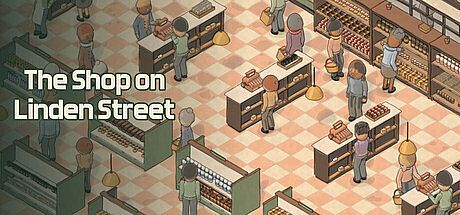


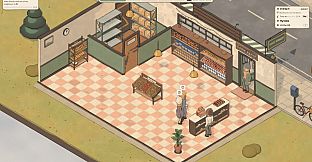
The Shop on Linden Street is a single-player shop management simulation that blends strategy, casual play, and indie storytelling. Players inherit a modest storefront from their grandmother and handle every aspect of running it, from daily operations to long-term growth across multiple districts.
Gameplay
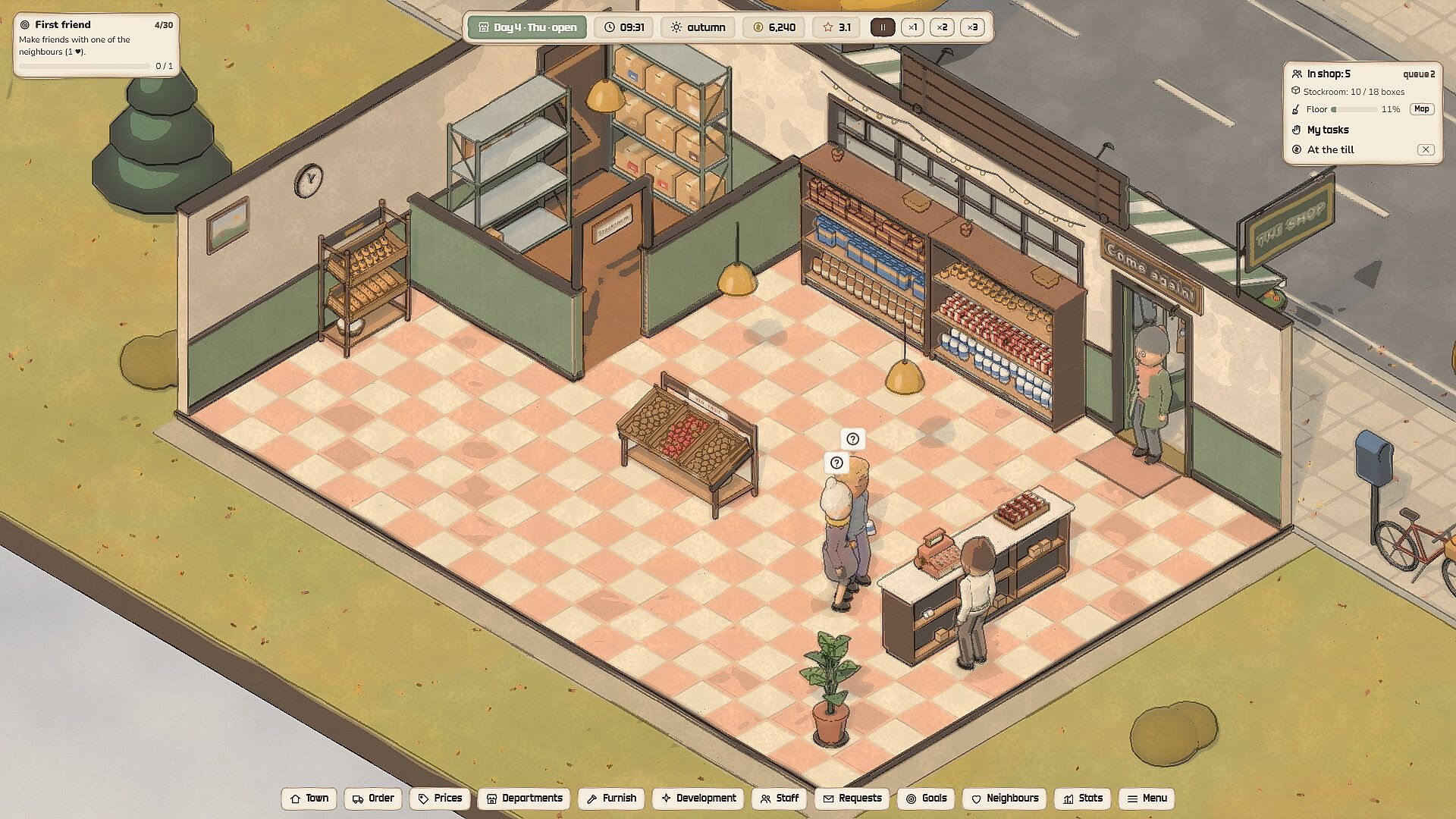
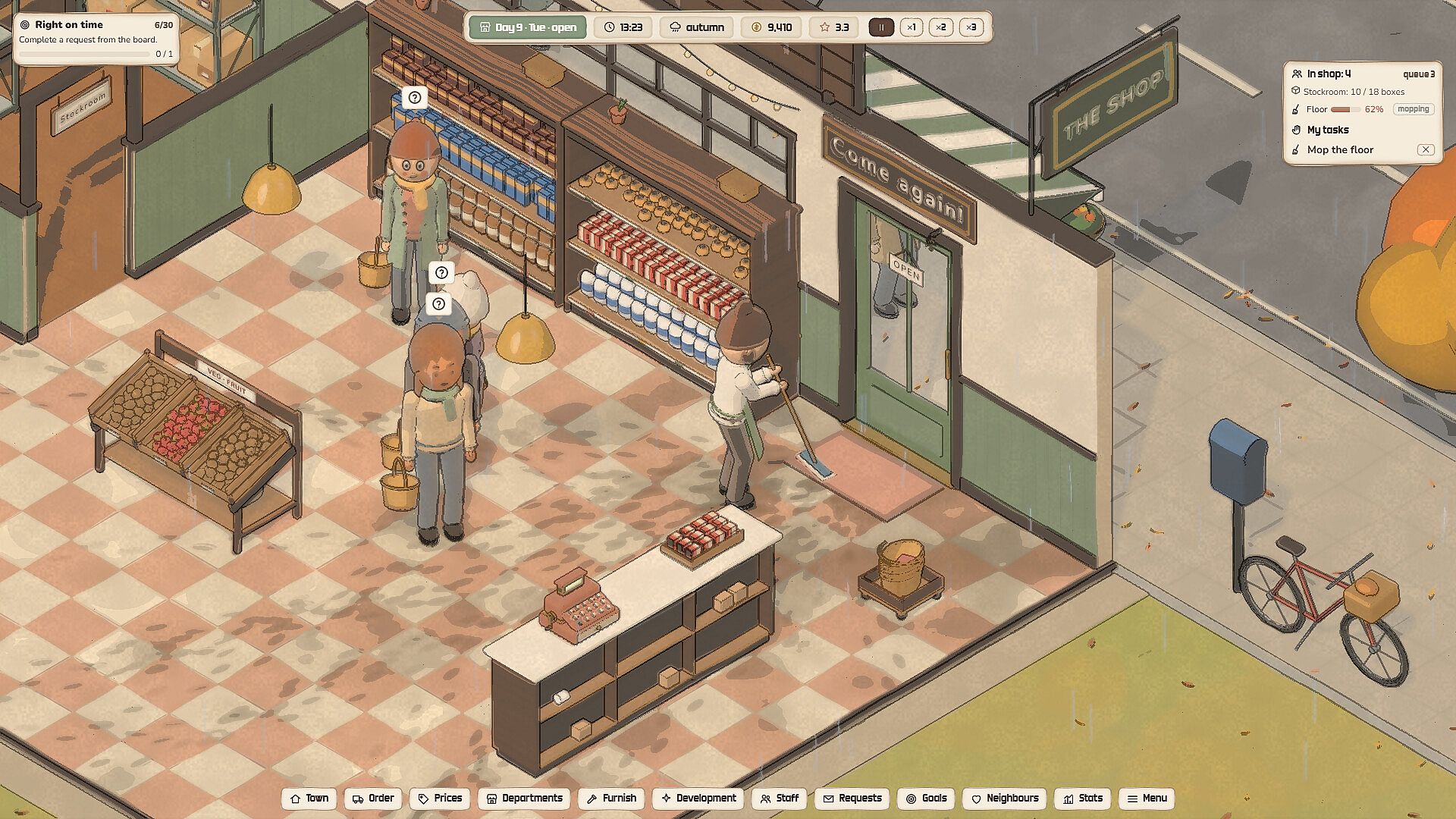
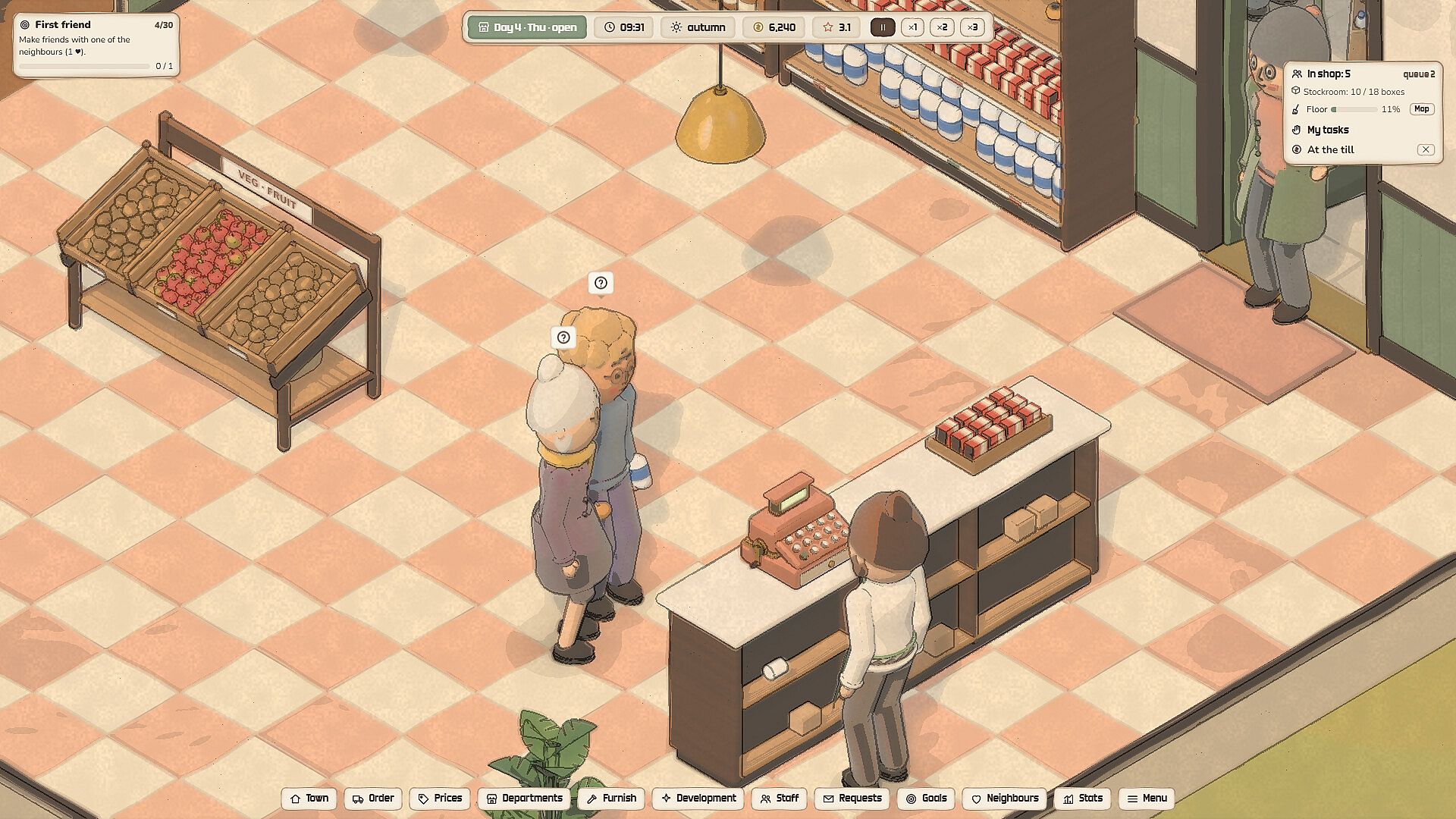
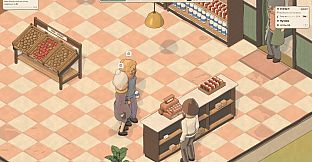
Each day begins with stocking shelves and adjusting prices before unlocking the door at eight. Customers arrive with specific needs and limited patience, so delays can lead them to abandon their baskets and leave. Weather plays a direct role: rain accelerates floor dirt, which may turn potential buyers away at the entrance unless the player mops or hires help. Closing time brings additional tasks such as cleaning, removing expired items, and preparing the next order.
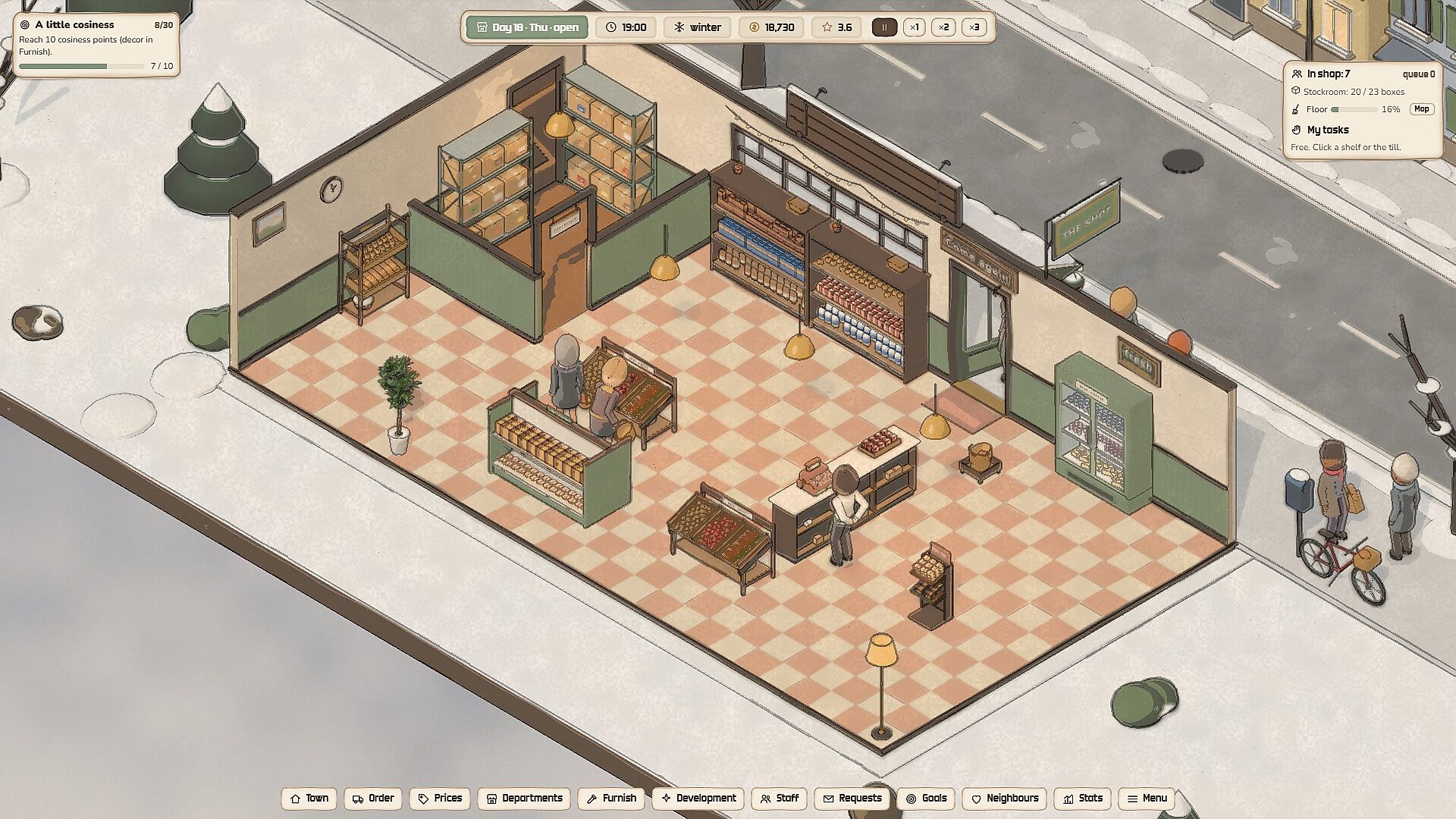
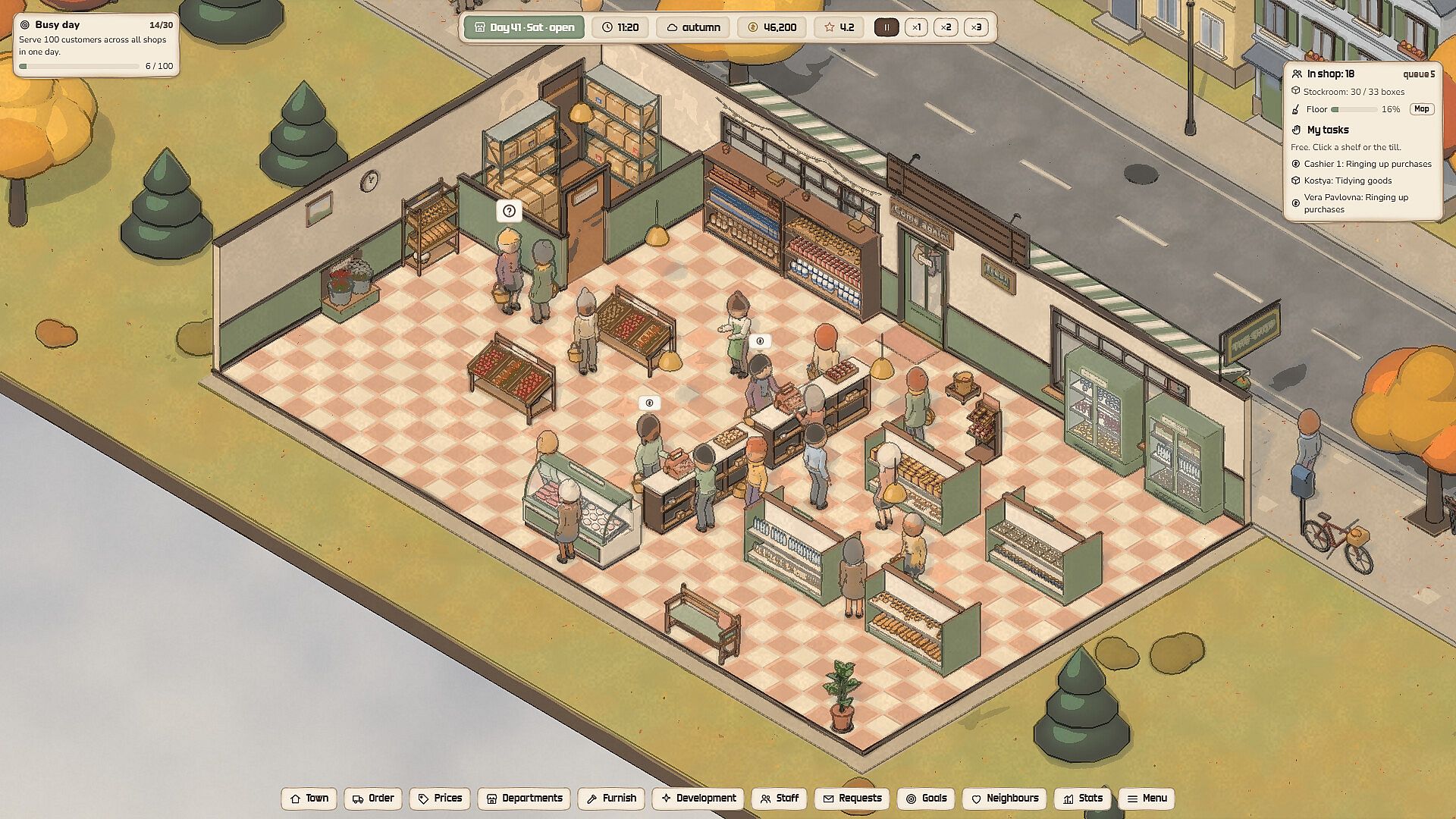
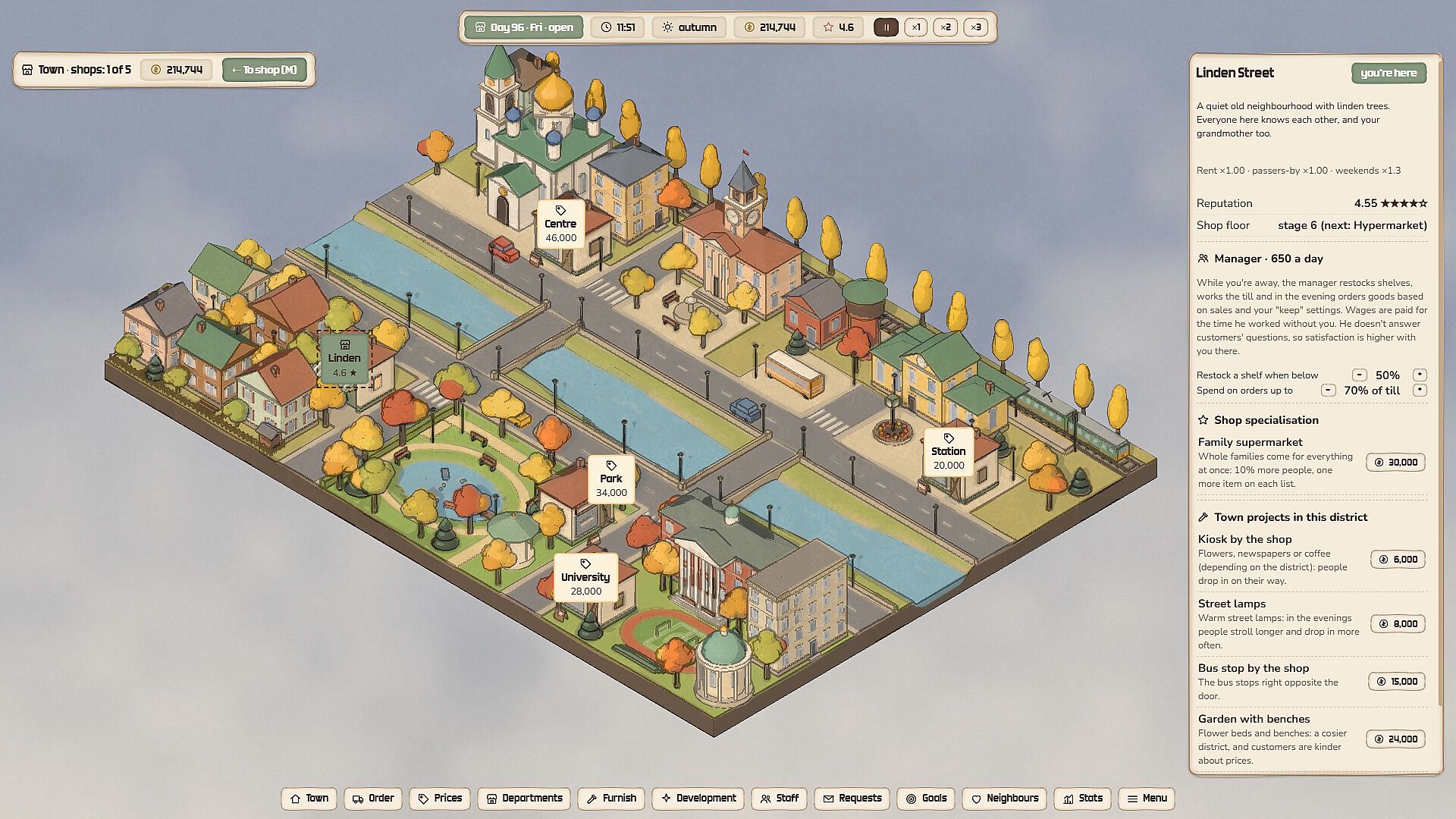
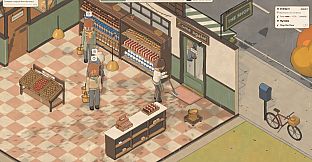
Seasonal shifts change demand patterns. Autumn introduces leaves at the entrance and pumpkins in crates, while winter brings snow and a focus on tangerines. Different districts prioritize distinct goods, including water, newspapers, and batteries near the station or bouquets and ice cream by the park. The core loop centers on balancing customer service, inventory management, and maintenance in a first-person view.
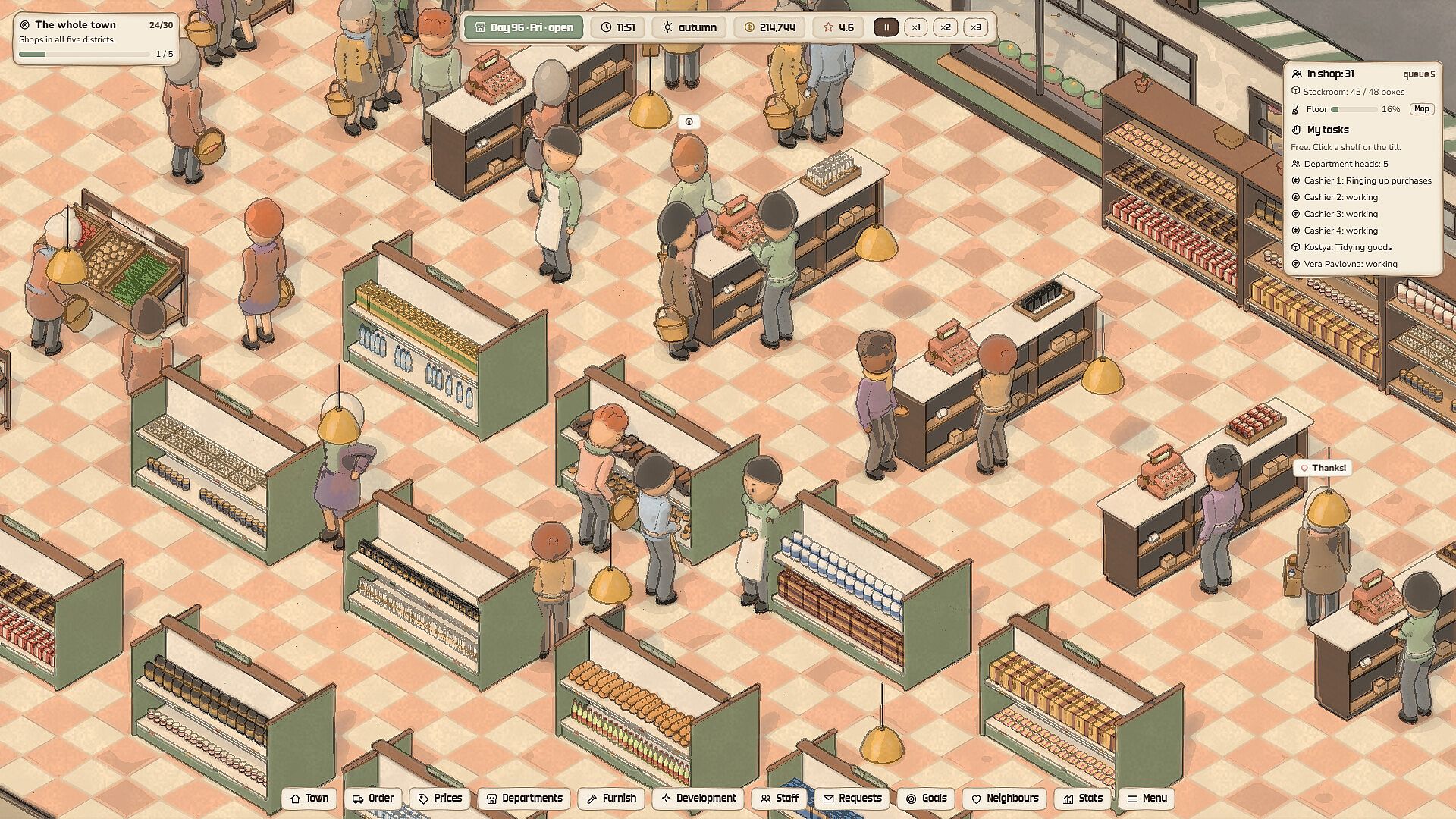
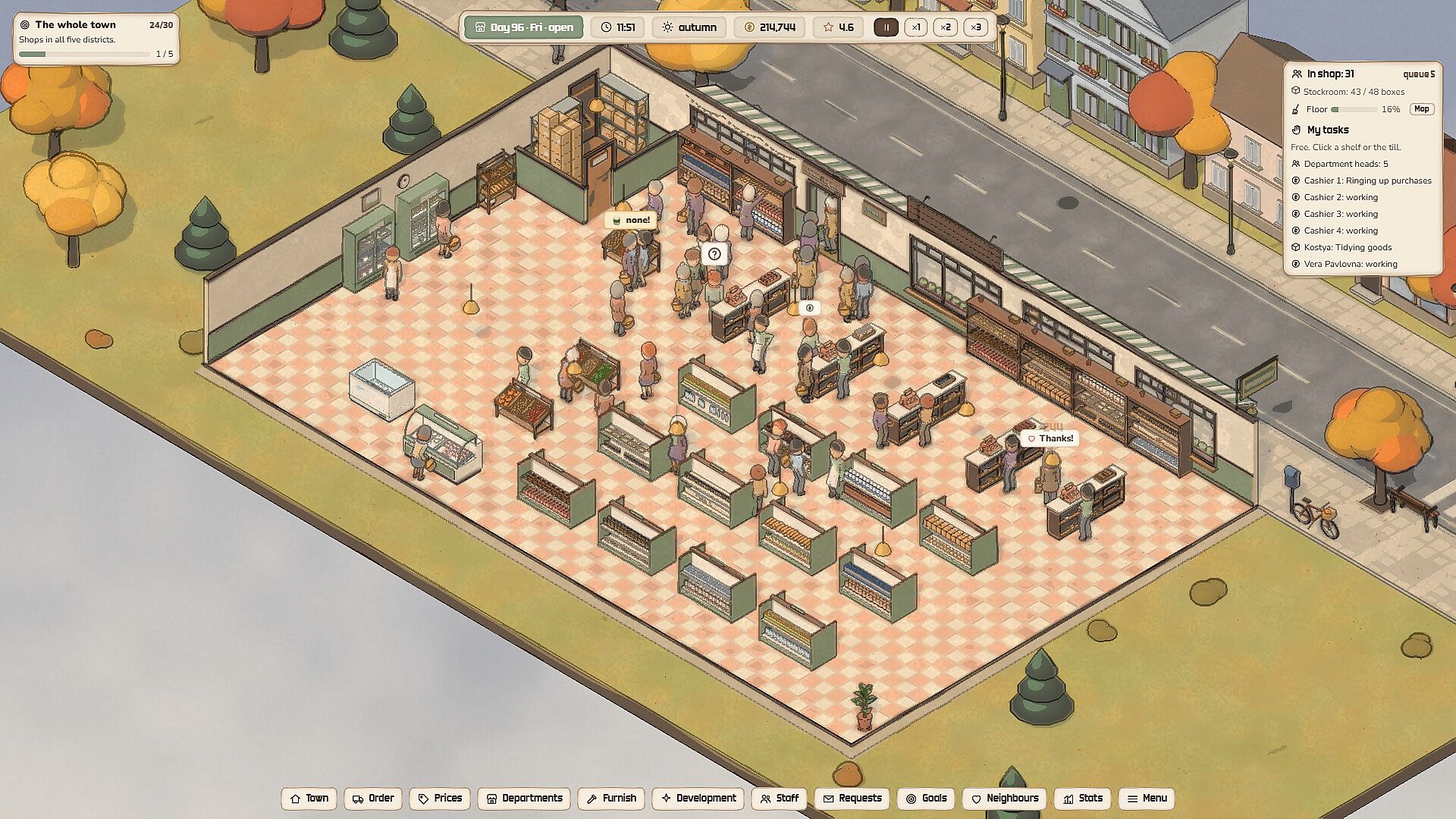
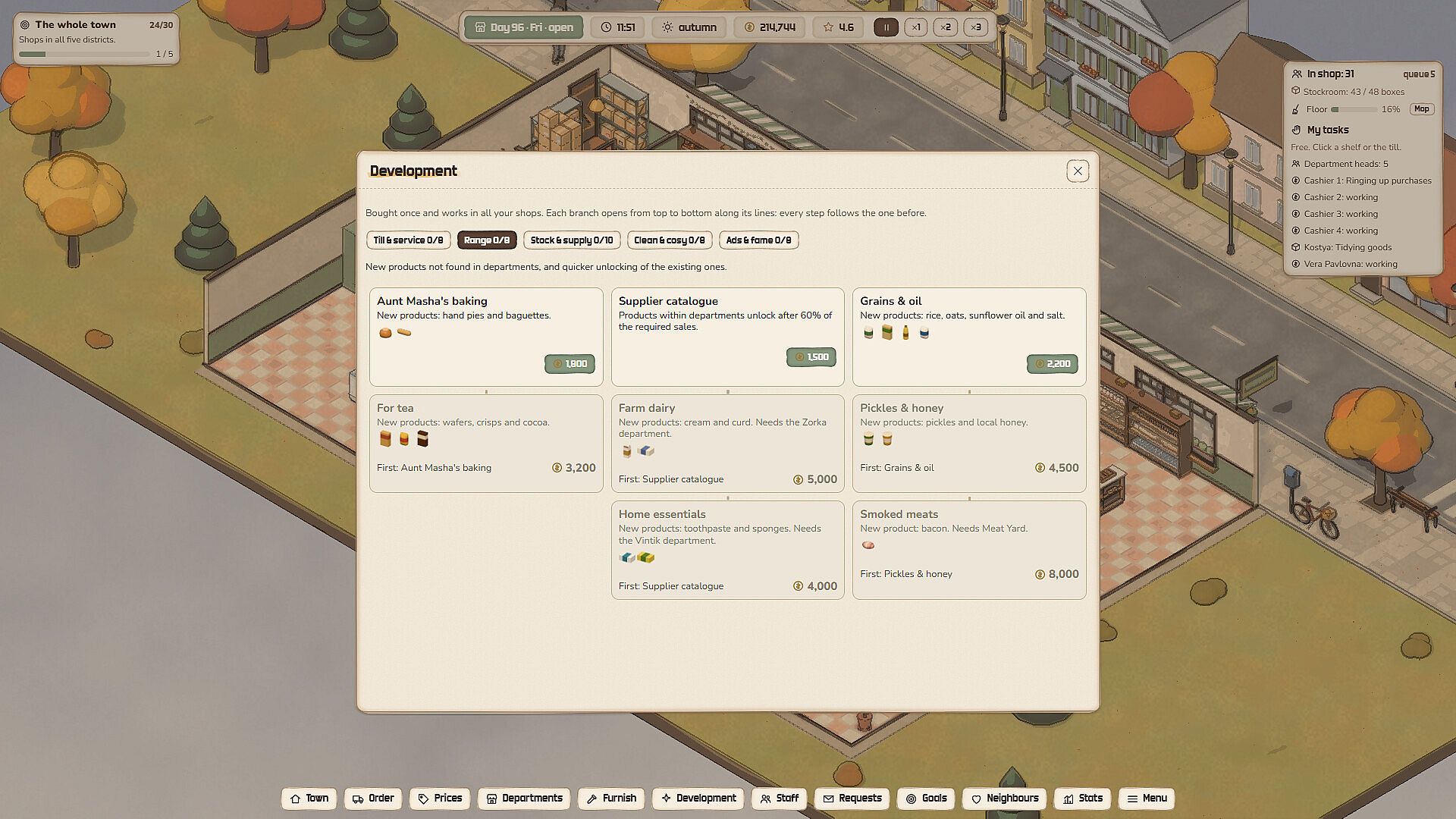
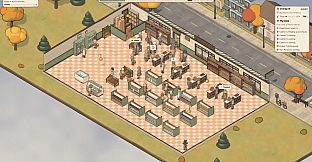
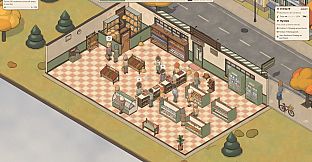
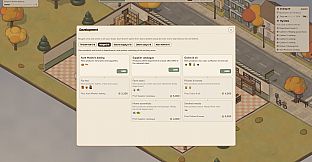
Progression expands the space from a small room into a 30 by 18 metre hypermarket. Players add cashiers and department heads, install equipment like chest freezers, and work through a system of 42 upgrades. The game features 71 products in total and supports three difficulty levels that adjust the challenge of operations and growth.
Game Modes
The experience remains single-player throughout, with no separate multiplayer or competitive modes. The main loop combines daily shop operations with progression elements that unlock larger facilities and additional locations. Three difficulty settings provide variety in pacing and resource management without altering the fundamental structure. Seasonal and weather systems integrate into the core simulation rather than functioning as isolated modes.
Expansion and Progression
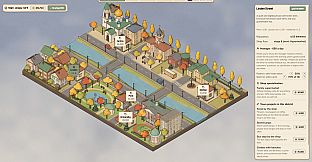
Growth moves beyond the original Linden Street location. After scaling the initial shop, players open outlets in four additional districts and assign managers to handle them. This system encourages strategic decisions about staffing, upgrades, and product selection to support multiple sites. The expansion ties directly into the 42-upgrade tree and the addition of specialized roles, creating a layered management layer on top of the daily customer interactions.
The Neighbourhood
Nine regular customers form the social backbone of the game. Each has distinct habits and dialogue that unfolds as familiarity grows. Granny Valya arrives early each day for bread, while Galina the train conductor stops for newspapers and biscuits between shifts. Other figures, such as Semyonych, reveal more personality through repeated visits. These interactions add narrative depth without requiring separate story campaigns.
Is It Worth Playing?
The Shop on Linden Street suits players who enjoy deliberate shop simulation with management depth and light narrative touches. Its single-player focus and emphasis on routine tasks, seasonal variety, and gradual expansion appeal to those who prefer thoughtful pacing over action or competition. With a planned release on December 9, 2026, and support for multiple languages including English, the game targets fans of indie strategy and casual simulation titles who value detailed daily loops and customer-driven progression. Those seeking quick sessions or multiplayer elements may find the deliberate pace less fitting, while dedicated management enthusiasts will appreciate the systems for staffing, upgrades, and multi-district growth.