






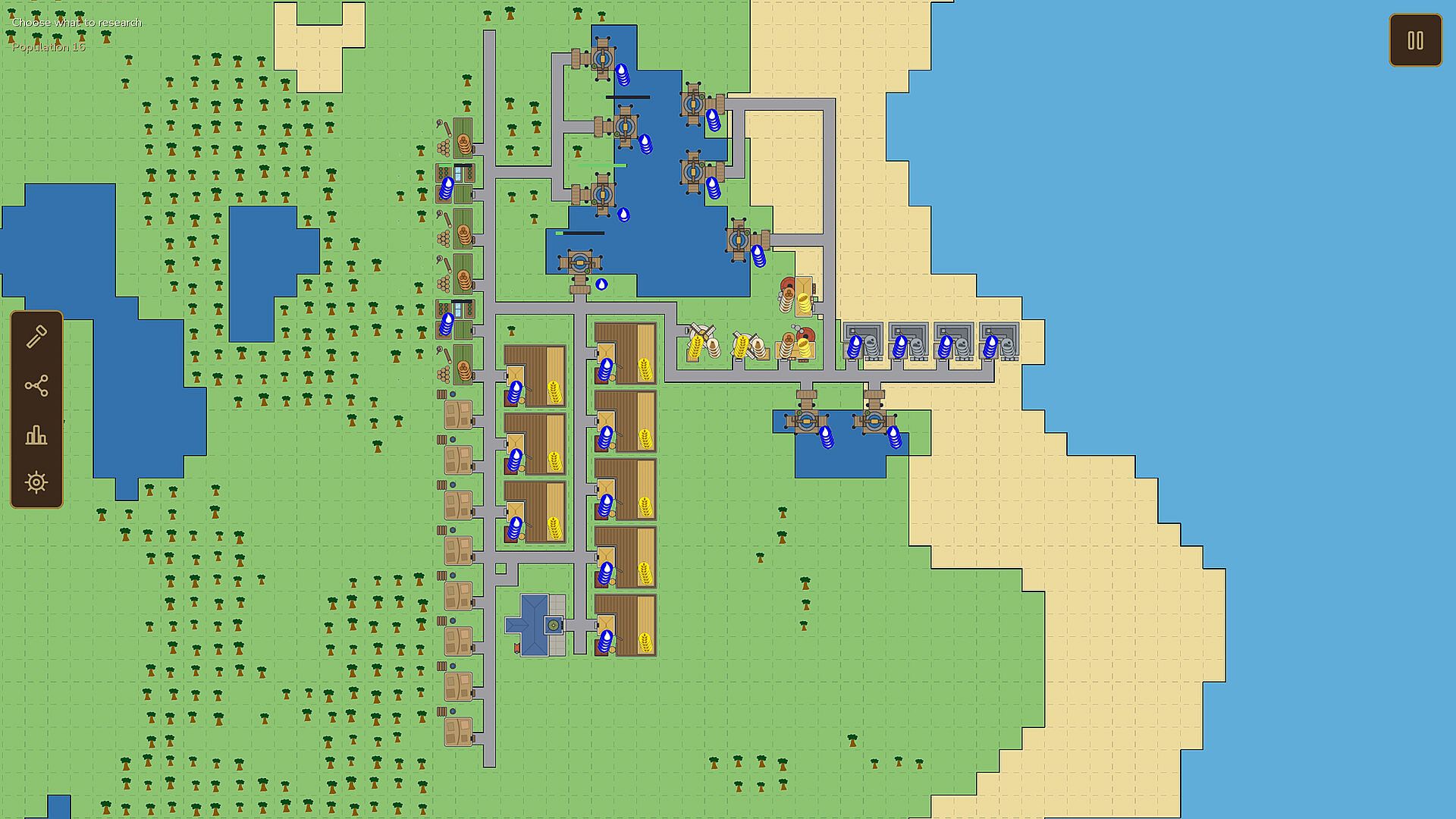
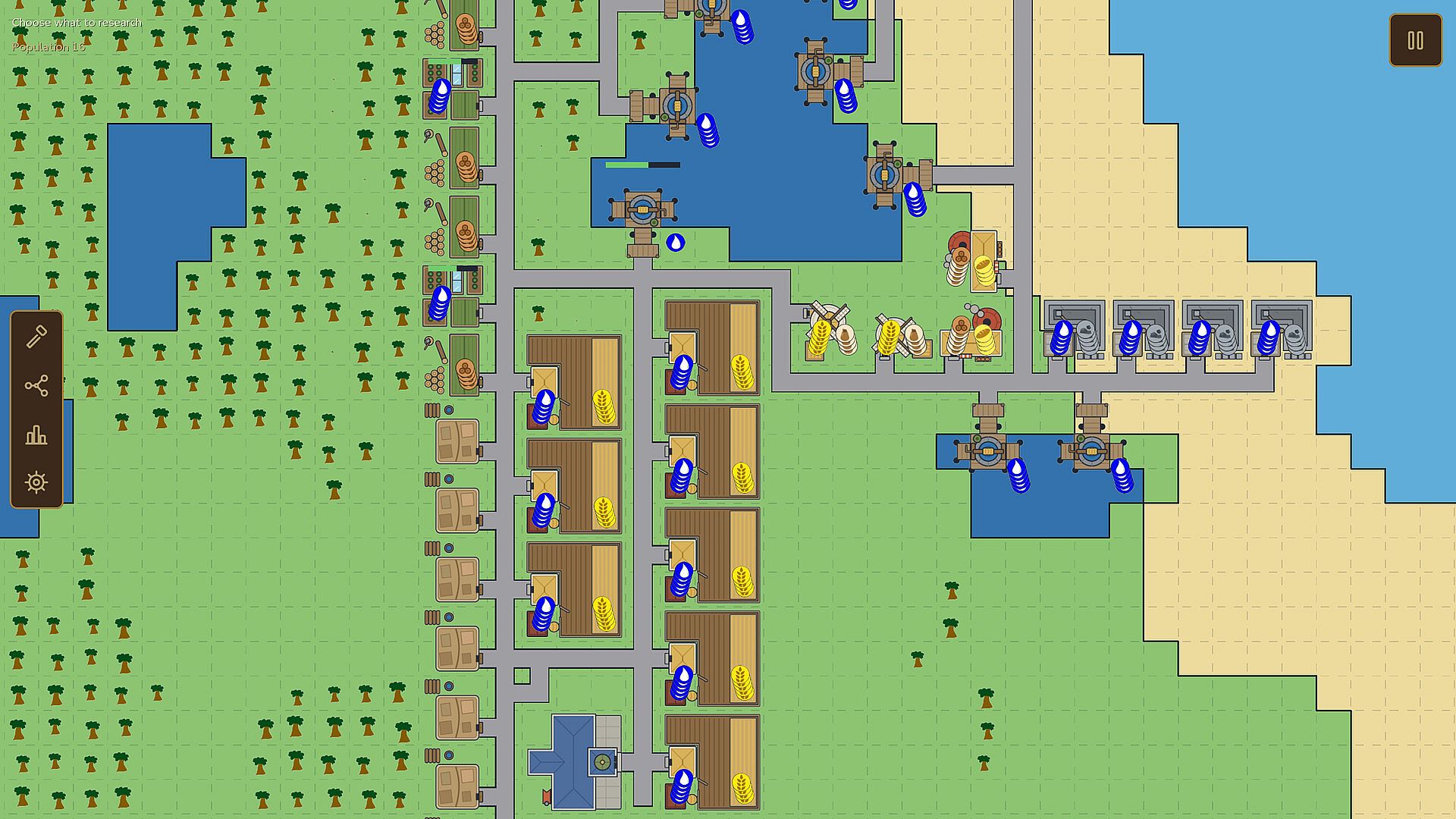
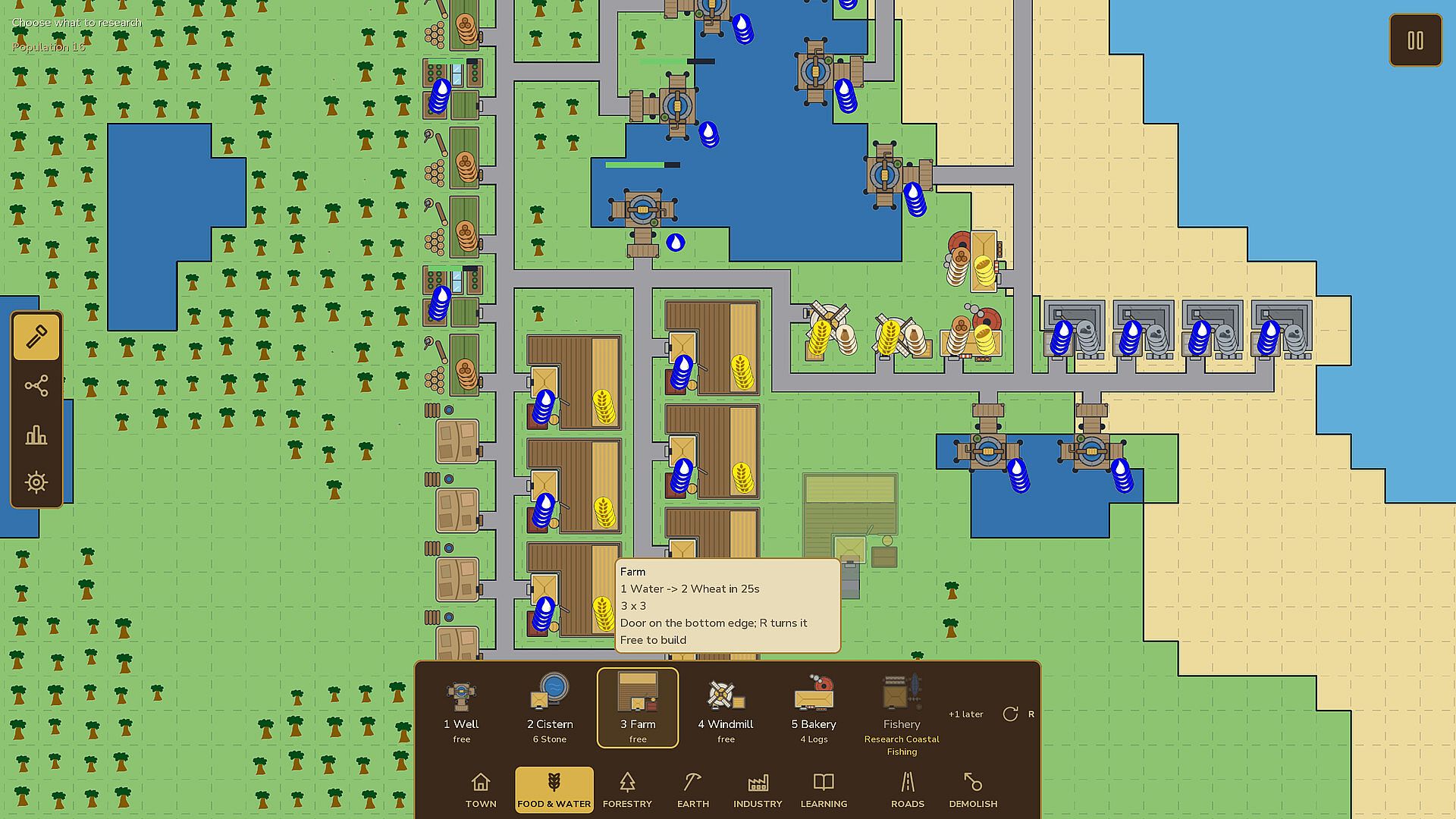
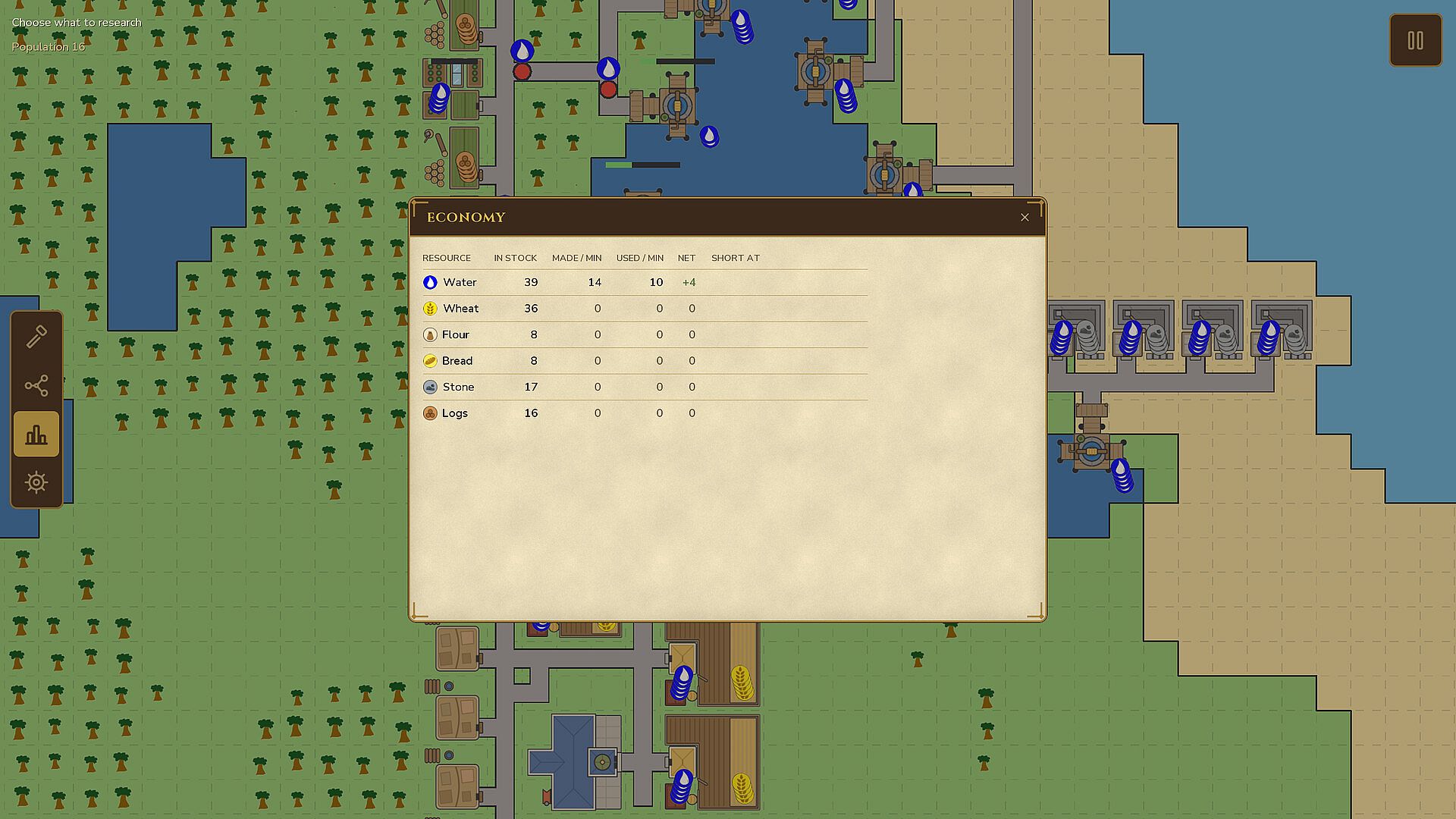
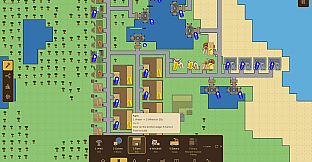
Tiny Cities is a strategy, indie, casual, and simulation city builder for PC that focuses on gradual town development on an island setting. Players begin with basic structures like a well, a farm, and a few shelters, then expand by planning roads and constructing workshops to create functional supply chains. Goods such as wheat turned into bread or clay formed into bricks move only when citizens carry them along the paths laid out, making road layout central to efficiency and growth.
Gameplay
The core loop centers on resource management and spatial planning. Starting with limited shelters, players lay roads to connect production sites and housing. Workshops process raw materials into finished goods, with every delivery handled by walking citizens. This creates a direct link between road design and town performance, as poor layouts lead to bottlenecks while thoughtful routes keep production flowing smoothly.
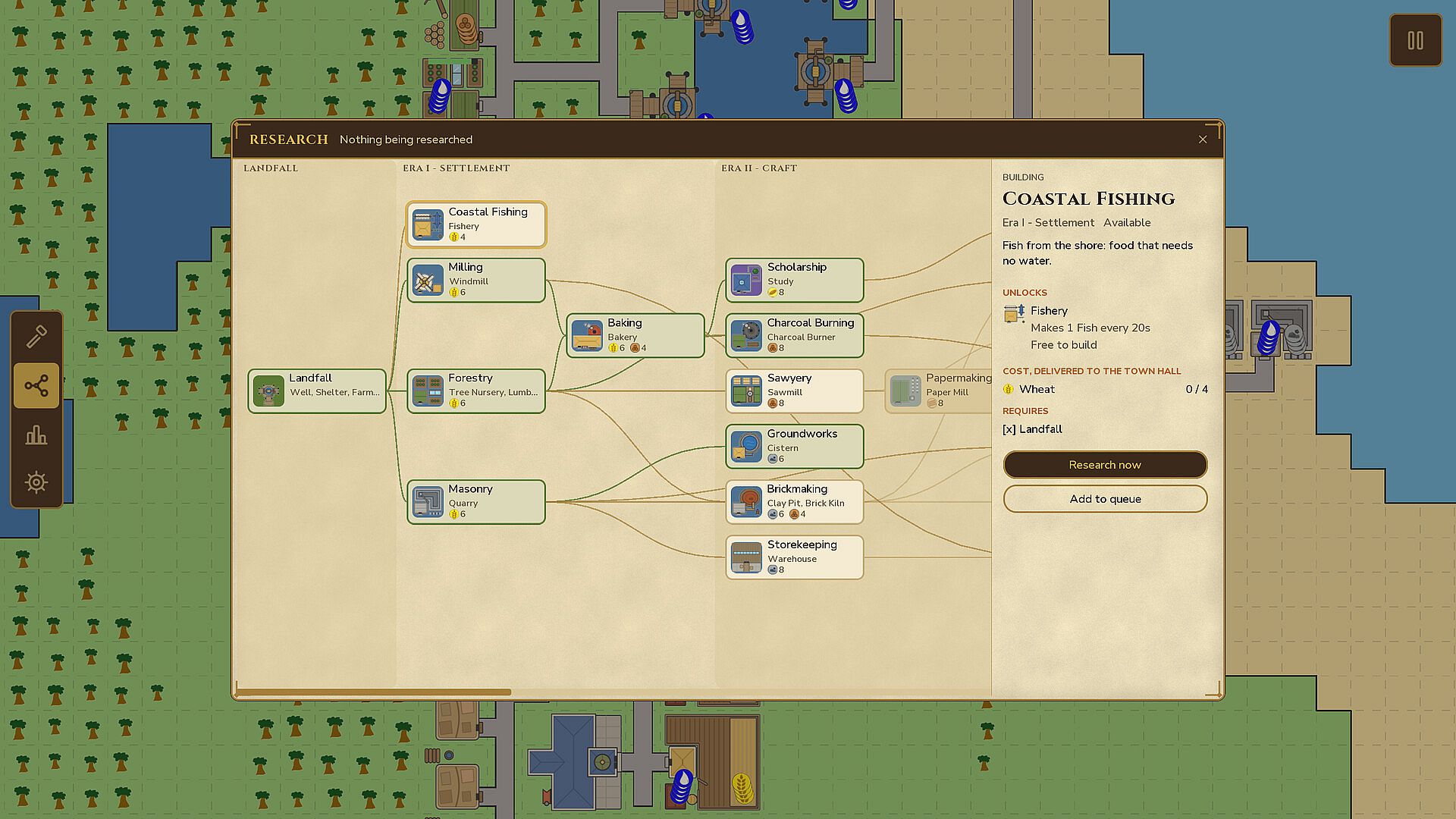
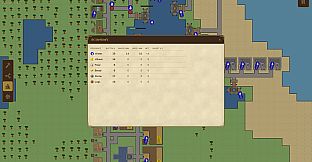
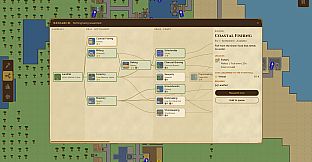
Housing evolves through three levels as supplies reach residents consistently. Neglect causes buildings to downgrade, encouraging ongoing attention to logistics. Research unlocks new options across five eras, beginning with basics like fishing and milling before advancing to industrial elements such as steel and machining. The 36 technologies include practical upgrades like wheelbarrows for faster transport, paved roads for better flow, and crop rotation for improved yields. In total, 32 buildings support these chains, covering everything from fisheries and smelters to machine shops that produce tools and furniture.
Game Modes
Tiny Cities centers on a single relaxed building experience where players manage one island settlement from initial landing through technological progress. There are no separate competitive or multiplayer modes described, allowing uninterrupted focus on planning and expansion at the player's own pace. Time can be paused at any point to adjust layouts or review supply needs without pressure from timers or opponents.
Progression and Systems
Advancement ties directly to research and supply balance. Early eras emphasize resource gathering and basic processing, while later stages introduce complex manufacturing that demands precise road networks to sustain higher housing demands. Citizens act as the sole transporters, so every new workshop or upgraded home requires corresponding path adjustments to avoid idle production. The tech tree rewards steady investment in studies, libraries, and universities that train scholars and unlock era-spanning improvements.
Supply chains form the backbone of success, converting raw inputs into multiple outputs like bread, bricks, glass, tools, and furniture. Each chain depends on consistent citizen movement, turning the map into a living network where placement decisions compound over time. Housing upgrades increase both population capacity and consumption, creating natural escalation that tests planning skills without overwhelming complexity.
Is It Worth Playing?
Tiny Cities suits players who enjoy methodical strategy and simulation elements in a low-pressure environment. Its emphasis on road-based logistics and incremental tech progression offers satisfying depth for those who like watching systems interconnect through citizen activity. The casual pace and pause feature make it accessible for extended sessions or shorter planning periods alike. With its focused single-player structure and clear progression from basic shelters to industrial facilities, the game appeals to fans of indie city builders seeking a self-contained experience centered on thoughtful layout and resource flow rather than rapid expansion or external challenges.











