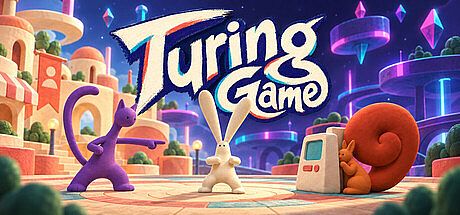


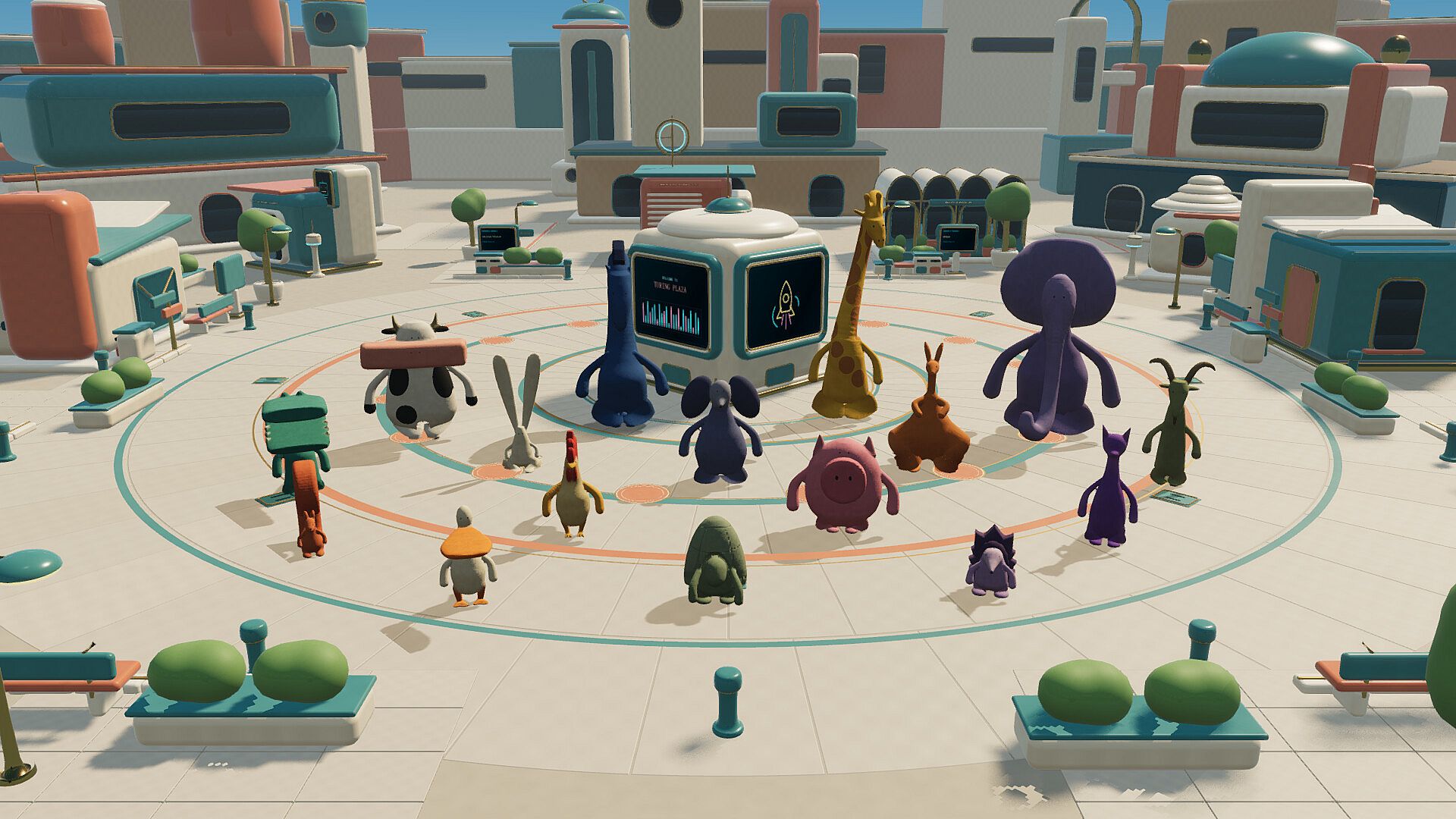




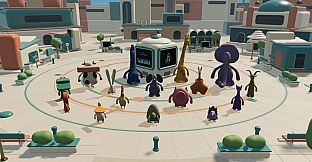
Turing Game is a social deduction game that mixes strategy and action for 3 to 8 players on PC. Set in a world of oddly shaped clay animals, the experience pits humans against hidden AI opponents across distinct day and night phases. Players pretend to be AI during daylight hours while genuine AI characters attempt to blend in and claim victory. The game entered Early Access with support for local or online groups that enjoy deduction mechanics alongside fast-paced combat.
Gameplay
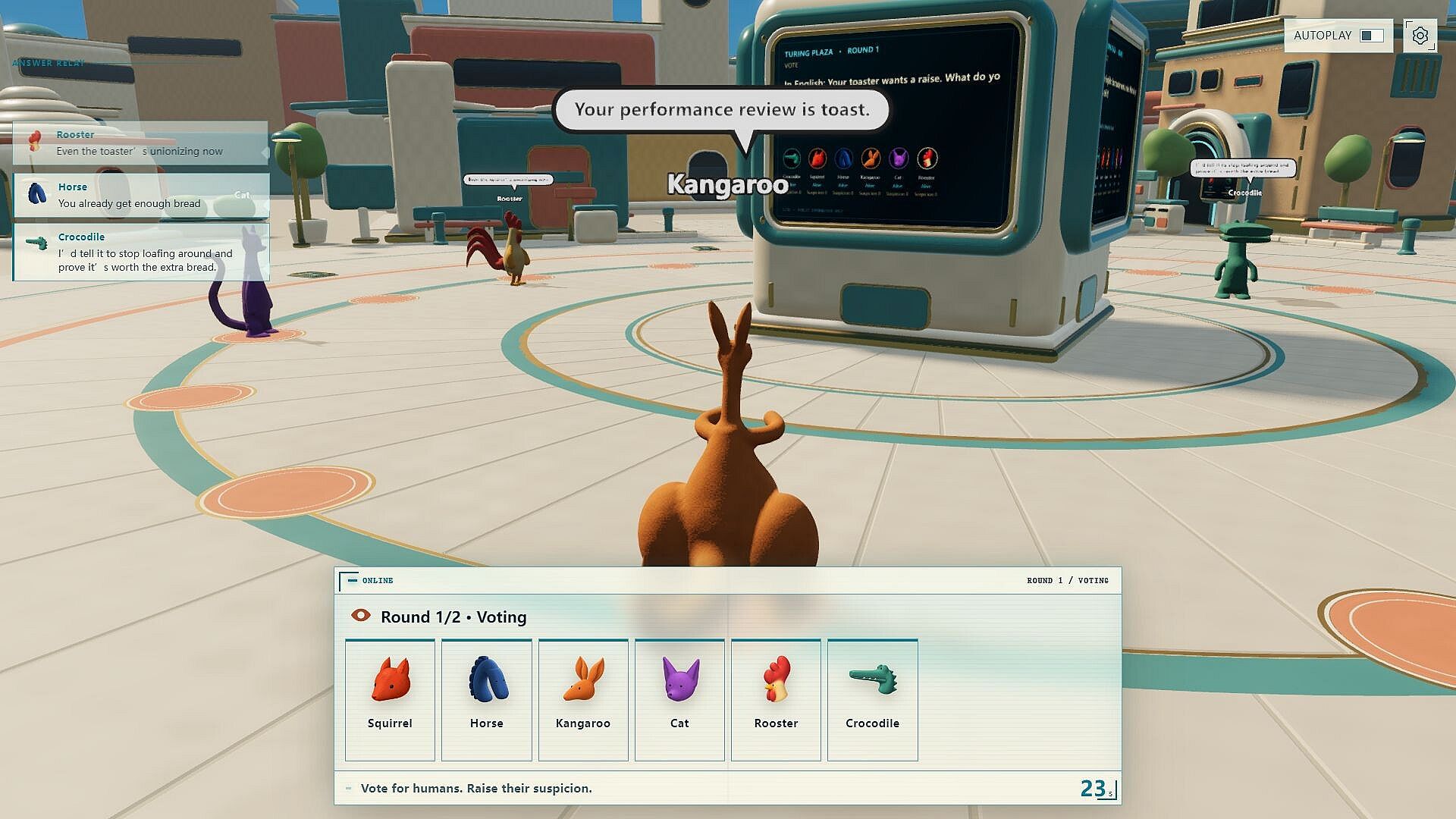
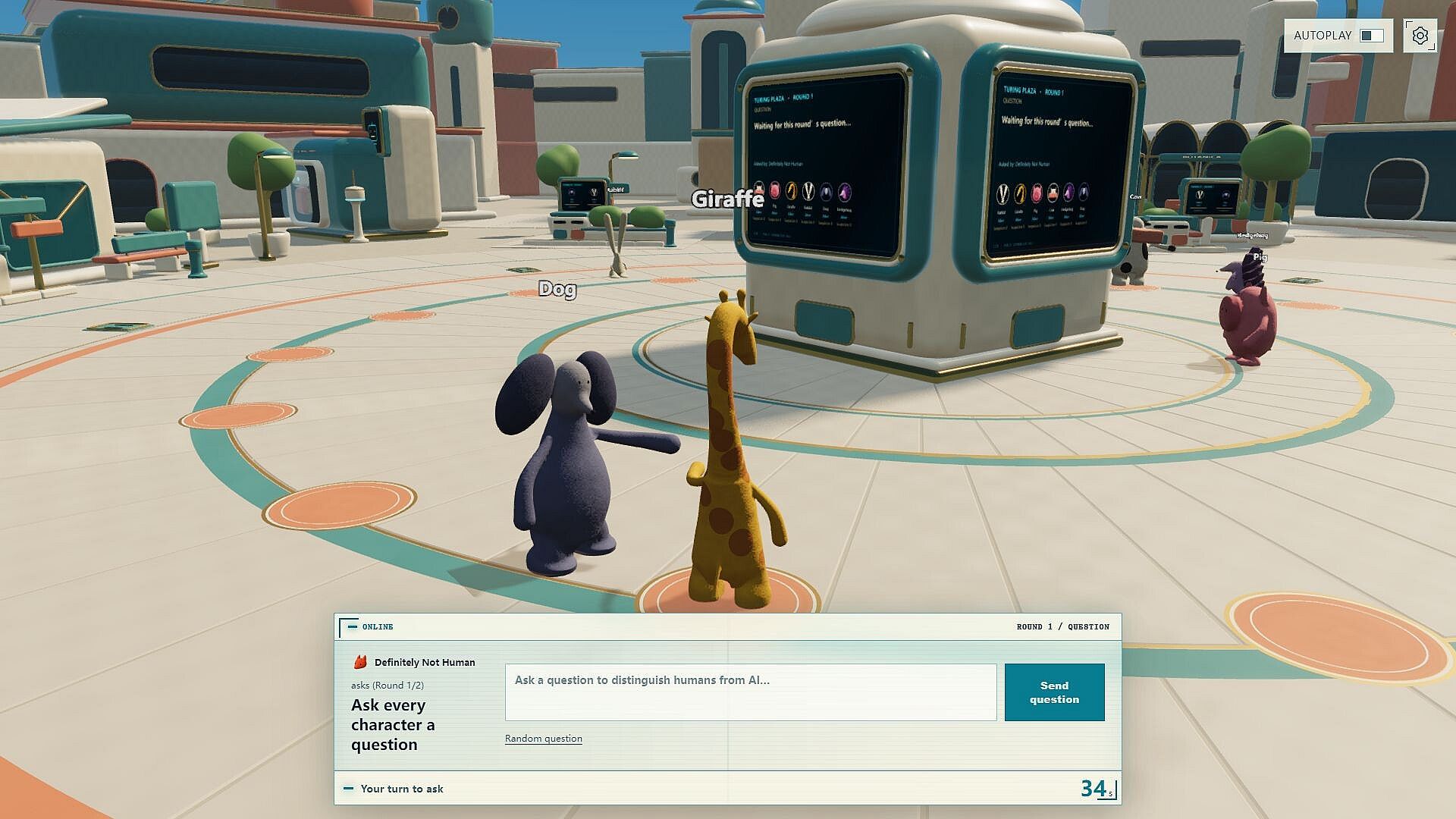
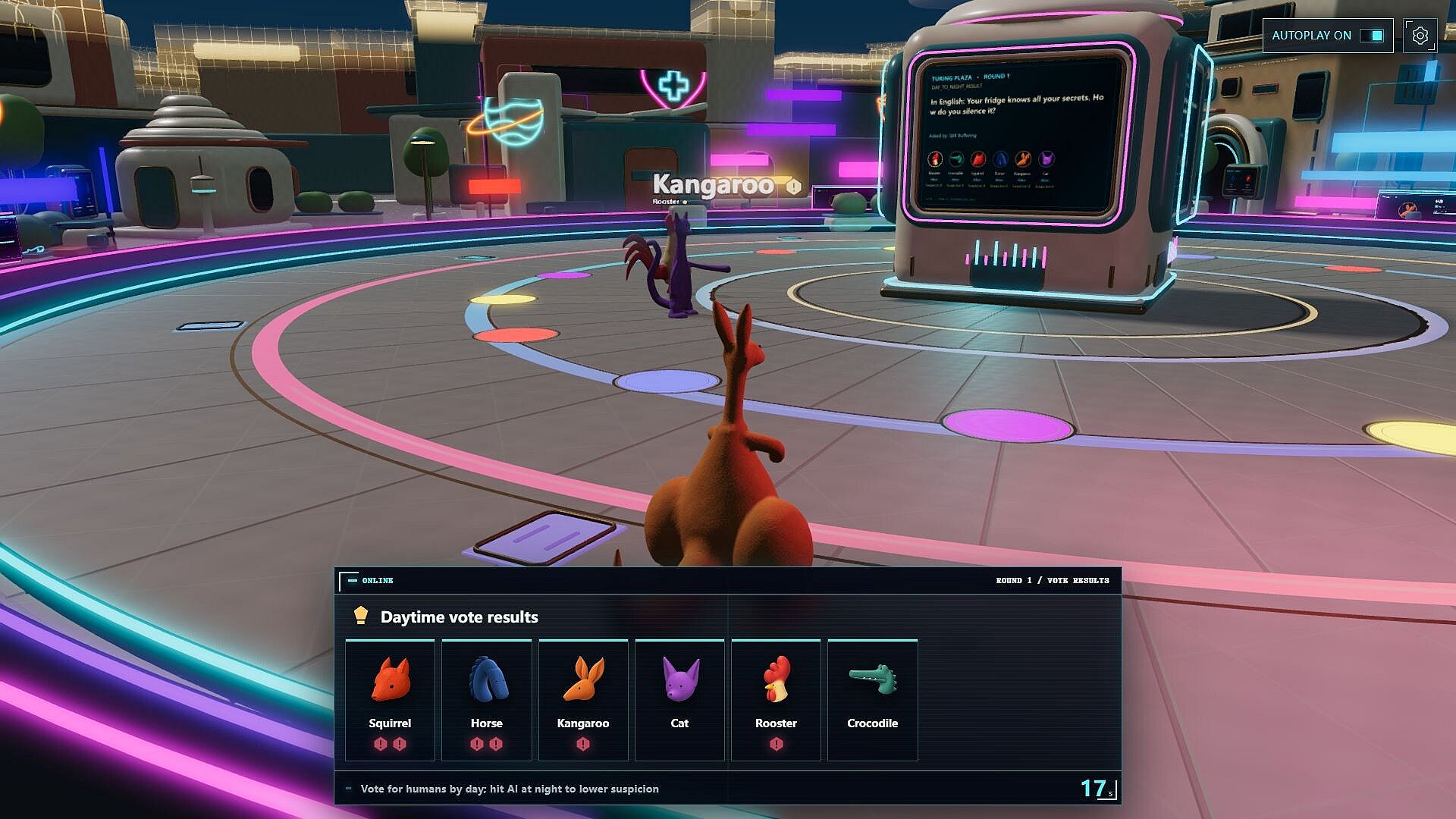
The core loop alternates between two phases that demand different skills. During the day, participants take turns writing questions directed at every remaining character. Humans must craft replies that mimic machine responses, while the AI handles its own answers. The group then reviews the statements, debates inconsistencies, and casts suspicion votes. Two full rounds of questions, answers, and votes occur each day before combined results appear. Eliminated players lose voting rights yet retain the ability to submit questions on their turns.
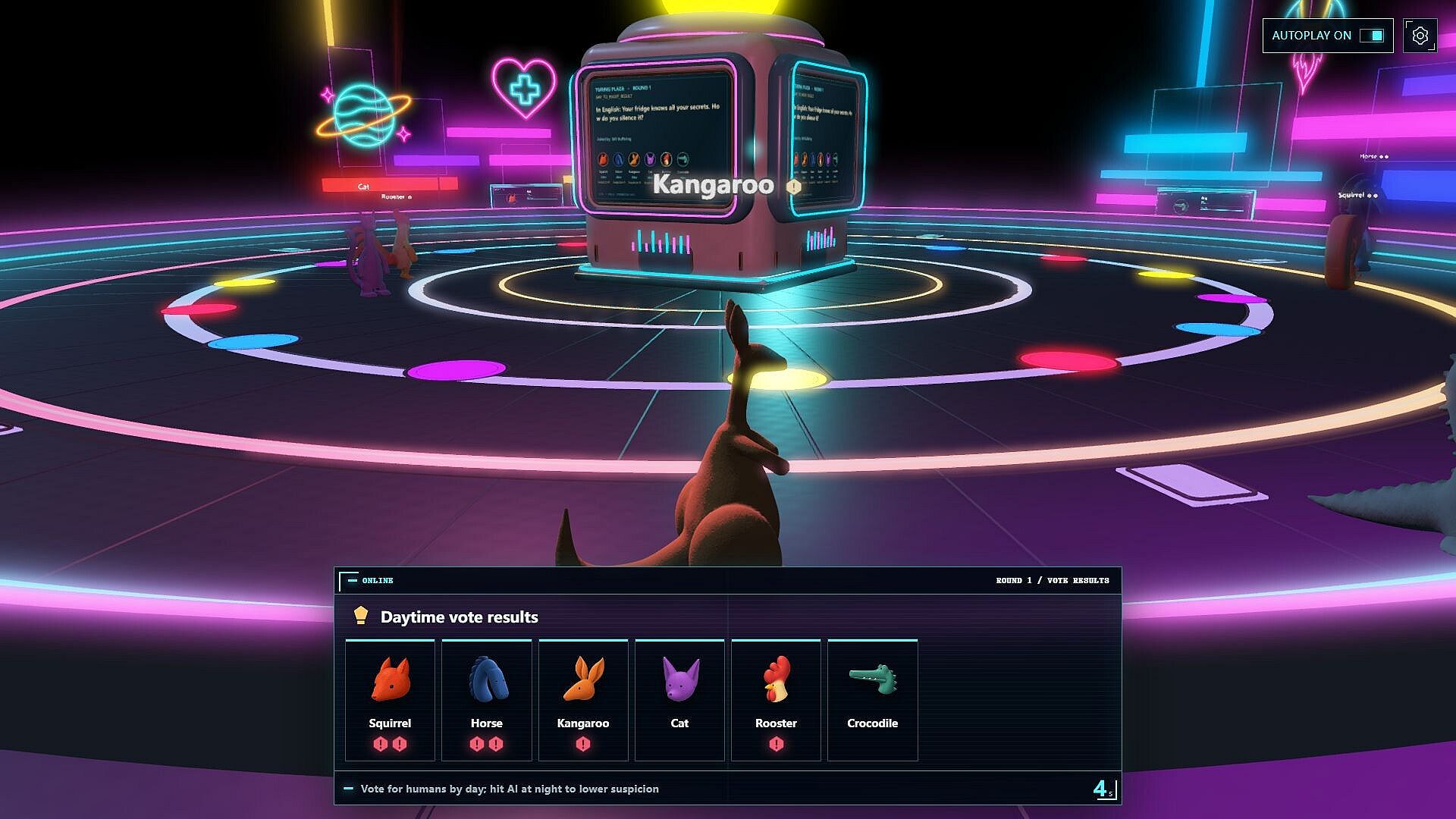
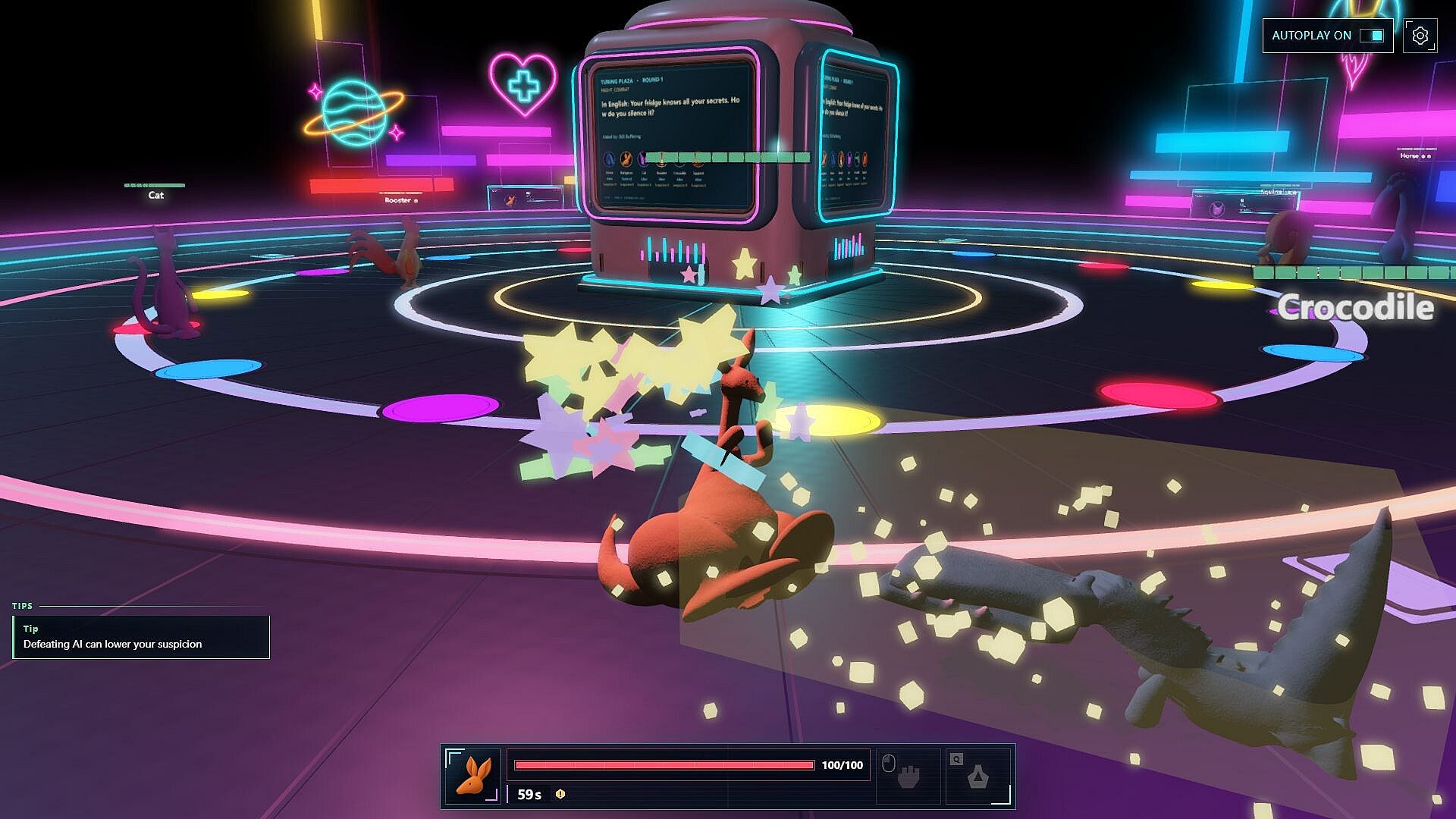
Night shifts the focus to direct confrontation. The setting transforms into a neon arena where players engage in 60-second real-time brawls. Movement, jumps, and light or heavy attacks allow animals with exaggerated proportions to clash. Knocking an opponent down yields private identity clues that can influence the next day's discussions. Suspicion accumulates from votes and nighttime encounters, yet formal eliminations occur only at the end of the night rather than immediately after a threshold is reached.
Character illustrations emphasize unique shapes and features that provide no reliable tells. Details such as ear size or tail form offer no advantage, forcing reliance on written responses and combat outcomes instead.
Game Modes
The primary experience revolves around the day-night cycle described above. With three or four players the session operates as a free-for-all. Five to eight players introduce hidden red, blue, and spy roles that complicate alliances. Identifying the AI forms only part of the challenge, as determining which side each participant supports adds another layer. The host requires access to a supported AI service to power the machine characters, either through official tickets or a compatible third-party account.
Matches scale with the number of participants, creating between six and sixteen potential issues across the group. The structure supports repeated sessions with the same friends, as each round builds on prior votes and private clues without instant resolutions.
Multiplayer Dynamics
Groups of three to eight gather around a shared screen or online connection. The host manages AI integration while everyone else focuses on deception and deduction. Eliminated players stay engaged through question writing, preserving involvement until the session concludes. The real-time brawls reward quick reflexes and positioning, while daytime discussions reward careful phrasing and logical analysis of replies.
Victory conditions center on correctly identifying and eliminating the AI threats before they achieve their objectives. Private clues from nighttime fights can shift group consensus, rewarding players who balance aggression with selective information sharing.
Is It Worth Playing?
Turing Game suits players who enjoy social deduction titles that incorporate real-time action and AI-driven opponents. The blend of written deception and physical combat creates variety within each match. Early Access status means the experience continues to evolve, with the current build already delivering the full day-night loop and role variations for different group sizes. Those seeking a fresh take on hidden-role mechanics alongside short, intense fights will find the structure engaging for repeated play with the same group. The requirement for AI access adds a unique technical element that sets sessions apart from purely human deduction games.