



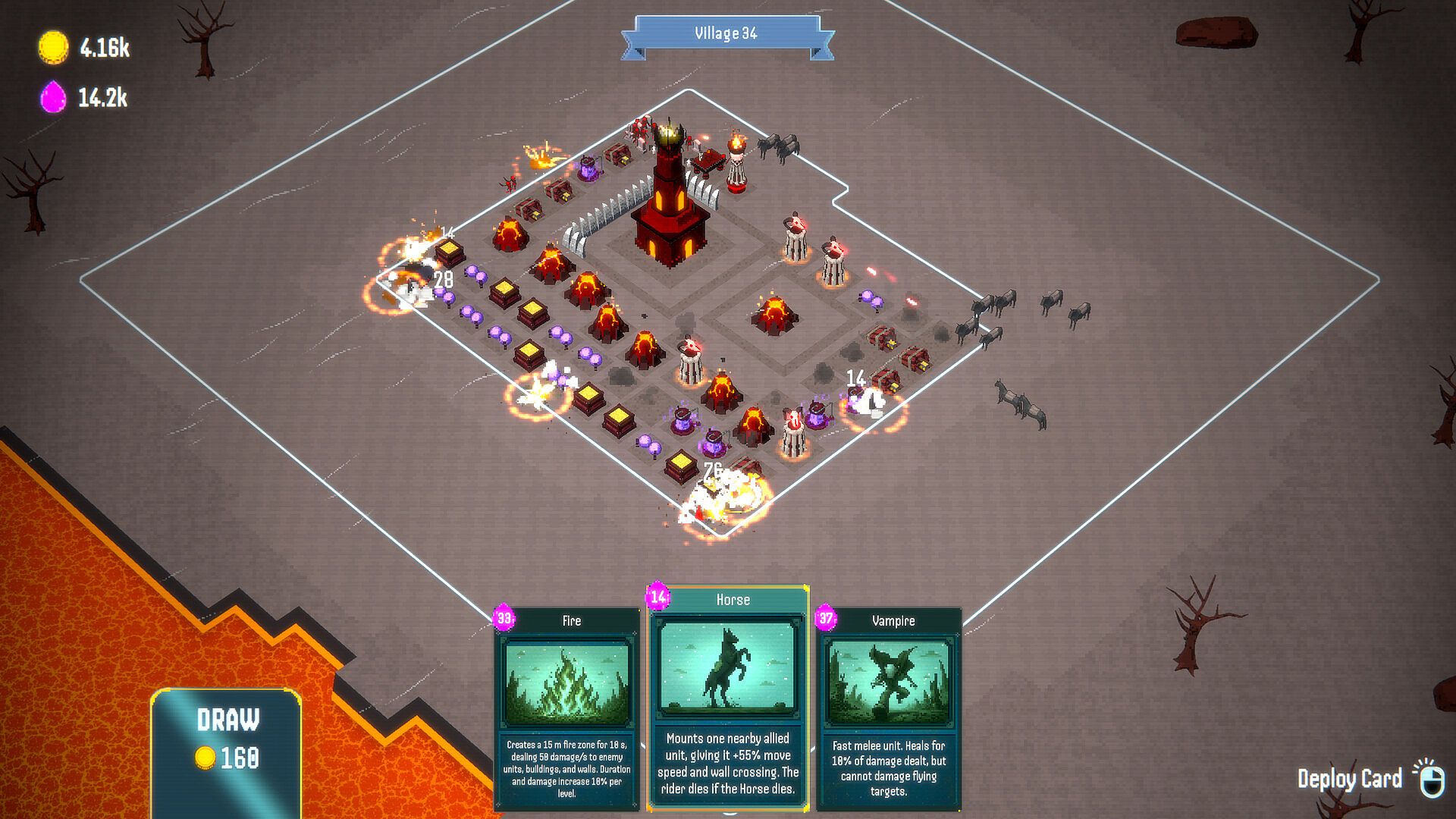
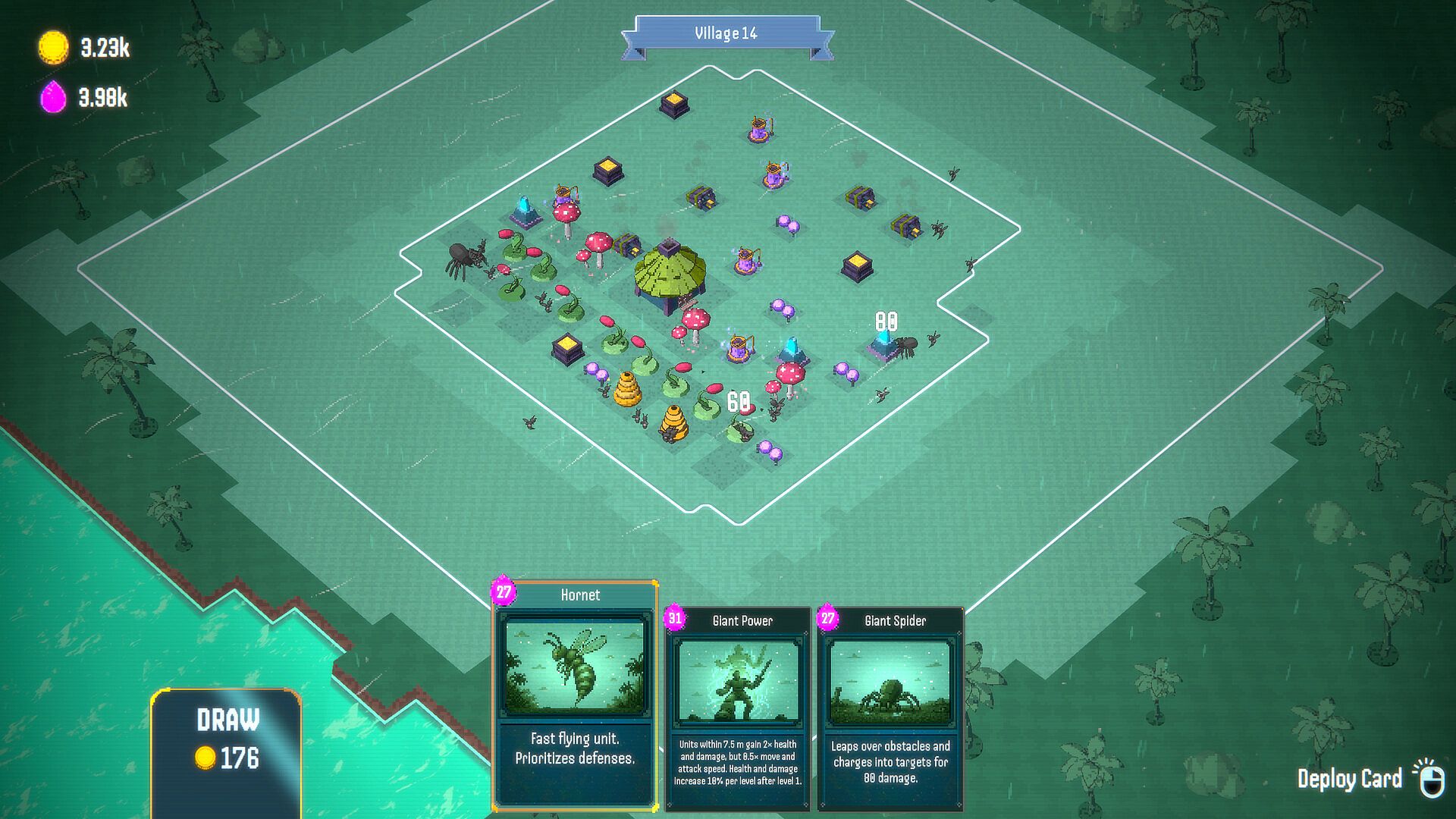
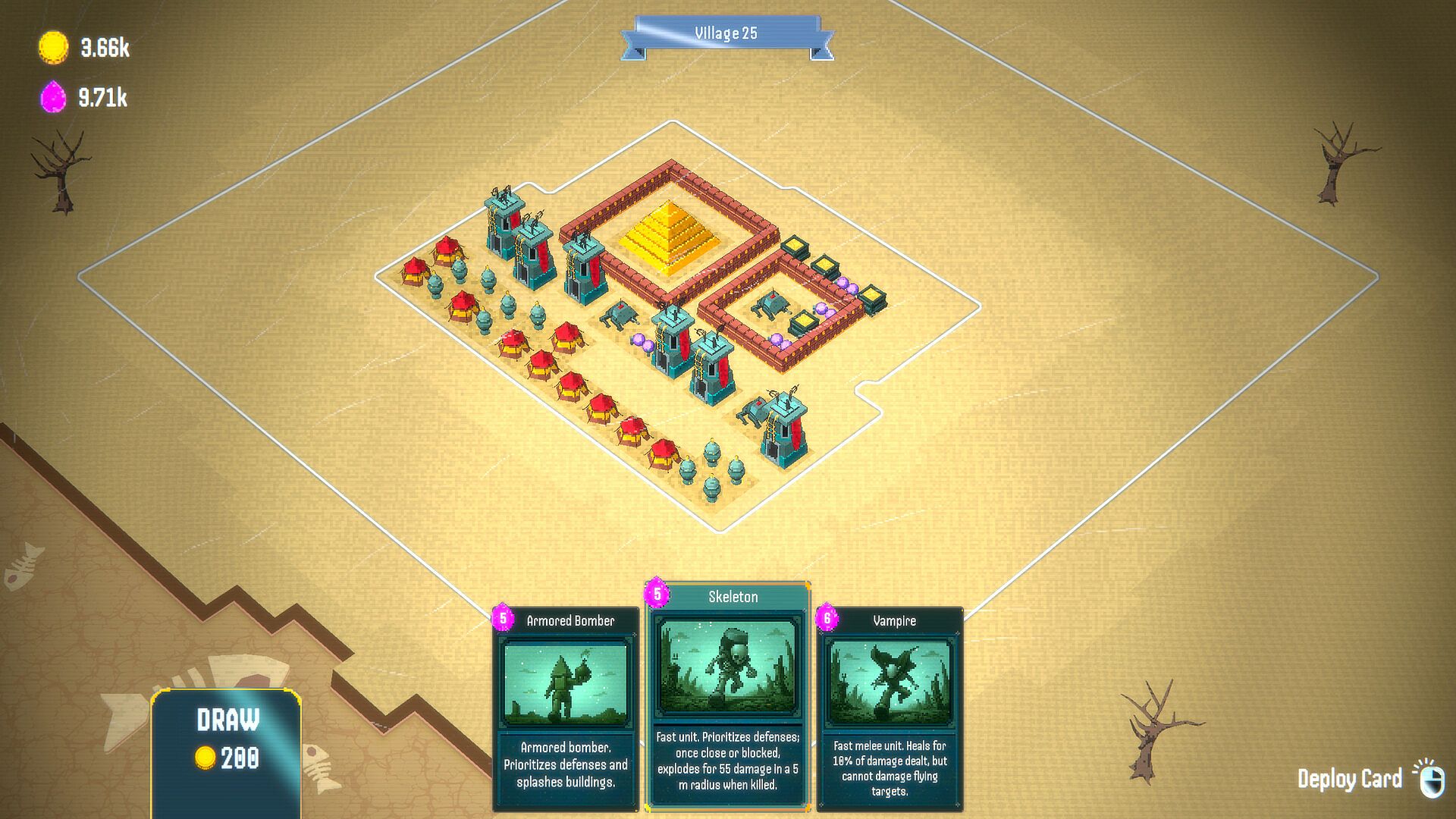









Village Invaders is a roguelite card battler that puts players in the role of the raider targeting procedurally generated villages. Developed as an indie title in Early Access for PC, the game blends action and strategy through deck building and automated troop deployment across varied environments.
Gameplay
Core play revolves around selecting cards to deploy troops outside a village and watching them advance on their own. Units handle targeting and combat independently, with players managing only the composition of their forces and the timing of card plays. Elixir costs rise with repeated use of the same card, which encourages varied sequences rather than repetition. Gold serves as a resource to purchase fresh hands or bypass difficult villages entirely.
Elixir comes from destroying storage buildings inside the village, adding more cards to the available pool as structures fall. Taking down the main building early weakens remaining defenses for the duration of the raid. Victory requires eliminating every building, not just the central one. Units exhibit distinct behaviors that shape strategies, such as thieves heading straight for resources, assassins scaling walls, horses transporting allies, golems splitting upon defeat, mummies summoning copies, and skeletons charging in for explosive attacks.
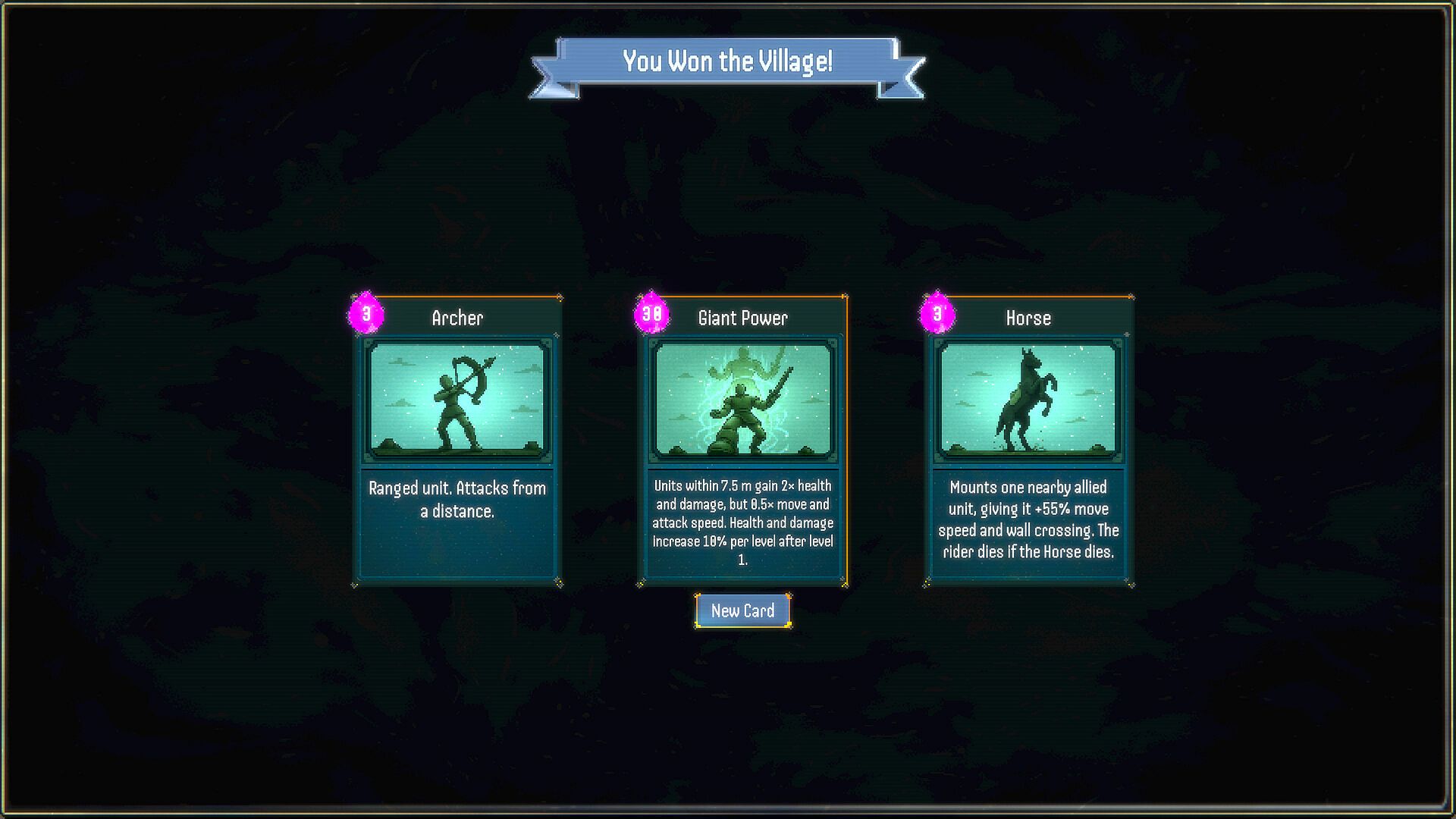
Spells introduce additional layers, including freezing defenses, reviving fallen units, duplicating attacks, burning paths, or confusing towers into firing on their own side. Between raids, captured villages yield rewards like new cards, upgrades, shops, or talismans that permanently alter future runs. Examples include Last Stand for elixir-depleted assaults, Patience Stone for health boosts after waiting, Gold Trade for covering shortfalls, and Battle Rune for temporary damage increases after spells.
Game Modes
The primary experience consists of complete single-player roguelite runs through procedurally generated villages. Four distinct raid locations provide variety: medieval villages protected by walls and hidden pits, open jungle terrain without walls, desert paths lined with sand pits, and hellish areas where graveyards continuously spawn sword skeletons.
Daily and long-term challenges supplement the main runs by unlocking permanent upgrades that carry across attempts. These systems support ongoing progression without altering the core single-player focus.
Deck Building and Progression
Building an effective deck forms the central loop. Rewards after successful raids allow expansion through new cards, upgrades, or talismans that reshape strategies over multiple attempts. Shops and upgrade options between raids further customize options. The system ensures no two runs produce identical decks due to procedural generation and random reward selections.
Procedural villages incorporate walls, traps, storages, support buildings, and defenses that change with each attempt. This setup rewards adaptation and experimentation with different card combinations and talisman effects.
Is It Worth Playing?
Village Invaders suits players who enjoy roguelite structure combined with automated card-based combat and strategic decision-making around troop deployment and resource management. The single-player focus, procedural variety across four raid environments, and permanent progression through challenges provide replayability for those drawn to deck-building and raid planning. Early Access status means the experience centers on the described core systems of 35-plus unit and spell cards plus 15-plus talismans without additional unconfirmed features. Those seeking fast-paced strategy sessions with independent unit behavior and elixir-driven hand management will find the mechanics align directly with that preference.