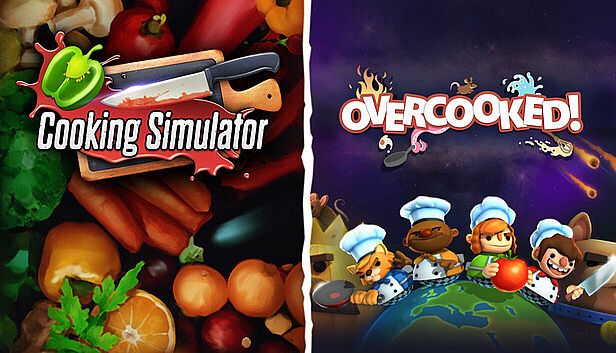




Cooking Simulator x Overcooked vereint zwei unterschiedliche Koch-Erlebnisse für den PC in einem Bundle. Die eine Seite legt den Fokus auf präzise, physikbasierte Zubereitung in einem Restaurant, während die andere schnelles Teamwork unter Zeitdruck in wechselnden Küchen erfordert. Das Paket spricht Spieler an, die sowohl methodische Simulation als auch actionlastiges Casual-Gameplay in den Indie- und Simulationsgenres suchen.
Gameplay
Der Simulationsanteil dreht sich um realistische Zutatenverarbeitung und Kücheninteraktionen. Über 80 Rezepte mit mehr als 140 Zutaten stehen zur Verfügung, wobei jedes Element auf physikalische Einflüsse wie Schneiden, Braten und Anrichten reagiert. Fortschritt ergibt sich durch das Erlernen von Techniken, das Auswählen von Perks für mehr Tempo oder Konstanz sowie das Servieren von Bestellungen zum Aufbau des Rufs in einem strukturierten Umfeld.
Der Action-Teil verlangt abgestimmte Bewegungen und Aufgabenteilung unter bis zu vier Mitspielern. Köche müssen Hindernisse und Gefahren umgehen, während sie Zutaten hacken, Gerichte zubereiten und ausliefern, bevor Timer ablaufen. Die Küchen bringen Variablen wie bewegliche Plattformen oder begrenzten Platz mit sich, die schnelle Anpassung und Kommunikation erfordern.
Beide Ansätze teilen sich die grundlegende Abfolge aus Vorbereitung, Zubereitung und Servieren, unterscheiden sich jedoch in Tempo und Schwerpunkt. Die Simulation belohnt sorgfältige Planung und Experimentierfreude, während der Action-Part blitzschnelle Entscheidungen und Rollenverteilung während hektischer Servicephasen in den Vordergrund stellt.
Spielmodi
Der Karrieremodus strukturiert das Simulationserlebnis durch fortschreitende Herausforderungen. Spieler beginnen mit einfachen Aufgaben, schalten durch erfolgreiche Services neue Rezepte frei und erweitern nach und nach ihre Küchenausstattung.
Der Sandbox-Modus hebt alle Beschränkungen auf und gewährt von Anfang an Zugriff auf sämtliche Werkzeuge, Zutaten und Rezepte. Diese Variante eignet sich für freies Üben, Rezepttests oder kreative Küchenkonfigurationen ohne äußeren Druck.
Der kooperative Teil bietet mehrere thematische Küchen mit steigender Komplexität. Jede Layout-Variante bringt eigene Gefahren und Bestellmengen mit sich und fordert wiederholte Durchläufe, um Koordination und Effizienz über mehrere Sessions hinweg zu verbessern.
Zusätzlich stehen Tutorial-Sequenzen zur Mechanik-Einarbeitung sowie Challenge-Formate mit Fokus auf Einzelgericht-Präzision oder zeitbasierte Leistungsverfolgung zur Verfügung.
Singleplayer und Multiplayer
Die Simulationserfahrung unterstützt Solo-Sessions über Karriere- und Sandbox-Optionen und ermöglicht individuelles Tempo sowie gezieltes Skill-Training. Der Action-Anteil entfaltet sich besonders in Gruppen, wo lokale oder Online-Kooperation aus dem routinierten Kochen einen gemeinsamen Test von Timing und Anpassungsfähigkeit macht.
Der Wechsel zwischen beiden Titeln bietet Abwechslung für unterschiedliche Gruppengrößen und Spielstile. Solo-Runden eignen sich für konzentriertes Üben an Rezepten oder Techniken, während Multiplayer-Sessions die chaotische Koordination bei gleichzeitig eingehenden Bestellungen betonen.
Lohnt sich das Spiel?
Das Bundle spricht Spieler an, die Koch-Themen sowohl im Simulations- als auch im Action-Format genießen. Wer realistisches Küchenmanagement sucht, findet Tiefe in den detaillierten Physik- und Rezeptsystemen, während Gruppen, die leichte, wettbewerbsorientierte Unterhaltung bevorzugen, von den zeitkritischen Teamwork-Elementen profitieren.
Die Verfügbarkeit auf dem PC macht das Paket sowohl für kurze Sessions als auch für längere Koop-Abende zugänglich. Die unterschiedlichen Mechaniken sorgen dafür, dass die beiden Titel sich ergänzen statt überschneiden - mit Fortschritt in der einen und sofortiger Wiederspielbarkeit in der anderen.
Spieler, die entspanntes, selbstbestimmtes Kochen oder energiegeladene kooperative Herausforderungen bevorzugen, werden in beiden Varianten Anreize finden. Das Paket trennt klar zwischen strukturiertem Fortschritt und hektischen Service-Szenarien, ohne Vorkenntnisse in einem der beiden Stile vorauszusetzen.