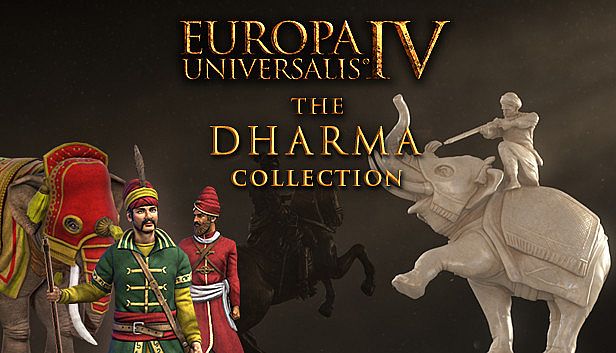














Europa Universalis IV: Dharma Collection is a grand strategy simulation game for PC that places players in control of nations across centuries of history. The title combines the core experience of managing empires with the specific additions from the Dharma expansion, which emphasizes the Indian subcontinent through expanded map regions, new playable nations, and targeted mechanics for trade and governance.
Gameplay
Players select any nation from hundreds available and guide it from the mid-15th century onward through periods of exploration, conflict, and internal development. The central loop revolves around balancing economic growth, diplomatic relations, military campaigns, and administrative reforms while responding to events that shape the world map. Trade forms a core pillar, with players directing flows through key provinces and nodes to accumulate wealth that funds further expansion or stability measures.
Development of provinces occurs through investment and policy choices, allowing nations to increase their output in goods, manpower, and tax revenue. Colonization extends reach into new territories, where settlers can also enhance existing holdings rather than solely claiming fresh land. Government structure evolves via unlockable reforms that customize how a state operates, granting bonuses to policies and estate influence. In the Indian region, additional layers appear through specialized estates such as Brahmins, Jains, Marathas, Rajputs, and Vaishyas, each offering distinct interactions and benefits tied to local politics.
Unique mission trees guide progress for many nations in South Asia, providing structured objectives that reward territorial consolidation, cultural integration, or economic dominance. Centers of trade receive upgrades that amplify their regional power when players invest resources. Trade companies operating in Africa and Asia become vehicles for further bonuses through targeted spending.
Game Modes
Singleplayer campaigns allow full control over one nation in a persistent world that advances through historical ages, with options to begin at any starting date within the supported timeline. Ironman mode restricts saving to enforce commitment to decisions and unlocks achievements upon successful completion of goals.
Multiplayer supports competitive sessions where each participant directs a separate nation, as well as cooperative play in which up to 32 players jointly manage a single country. These modes run over internet connections and accommodate both short sessions and extended campaigns.
Key Systems and Features
Diplomacy and alliances shift dynamically based on royal marriages, guarantees, and coalition formations that can deter or encourage aggression. Military management includes army composition, fortification placement, and naval power projection to secure trade routes or project force overseas. Internal stability depends on handling estate demands, religious tensions, and technological advancement that unlocks new units and ideas.
The Dharma additions integrate seamlessly with these foundations by layering region-specific content onto the existing framework. Players engaging with Indian nations encounter reworked provinces, new starting positions, and mechanics that reward careful navigation of local power structures alongside broader empire-building objectives.
Current State and Updates
The collection reflects the state of the game following the 1.26 patch that accompanied the Dharma release, with subsequent patches maintaining compatibility and refining balance across all systems. Ongoing support keeps the title accessible for new and returning players interested in long-form historical strategy sessions.
Is It Worth Playing?
This collection suits players who enjoy detailed grand strategy simulations focused on long-term planning, trade optimization, and nation customization rather than fast-paced action. The cooperative multiplayer option broadens appeal for groups seeking shared control of a single empire, while singleplayer offers deep solo campaigns with high replay value through varied nation choices and starting conditions. Reception for the Dharma content highlights its value for those exploring South Asian history or seeking government reform tools, though players uninterested in that region may find the additions narrower in scope. The title remains available for those ready to invest time in mastering its interconnected economic, diplomatic, and military layers.