




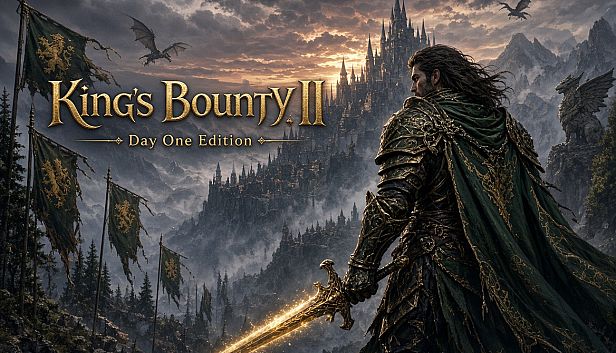









King's Bounty II is a turn-based tactical RPG that blends third-person exploration with grid-based combat on PC. Players take control of one of three distinct heroes and navigate a fantasy realm filled with quests, army management, and strategic battles shaped by an alignment system.
Gameplay
The core loop centers on exploring the world of Nostria from a third-person perspective. The hero moves across the landscape, interacts with NPCs, accepts quests, and recruits units to build an army. Combat shifts to an isometric hex grid where up to five squads engage in turn-based fights. Positioning matters due to elevation, line of sight, and terrain features that affect movement and attacks.
Each hero starts with different strengths. Aivar emphasizes raw combat power, Katharine focuses on magic, and Elisa leans toward protection and support. Progression involves leveling leadership to field larger regiments, equipping items that boost stats, and unlocking talents through an ideals system. Units gain experience in battle and unlock special abilities, while the player manages resources like gold to maintain and expand forces.
The ideals system divides alignments into four categories: Order, Anarchy, Power, and Finesse. Story choices and actions award points in these areas, unlocking corresponding talents and influencing unit compatibility. Mixing units from opposing ideals incurs morale penalties, encouraging players to align their army with their chosen path. This creates meaningful decisions about army composition and playstyle without allowing endless grinding, as battles and resources remain finite.
Game Modes
The game operates as a single-player experience with a non-linear campaign. There are no separate multiplayer or competitive modes. All content unfolds through the main story path and side quests, where decisions branch outcomes and affect available units or dialogue. Players can replay with different heroes to see variations in perspective and starting traits, but the structure remains focused on one continuous adventure per character.
Exploration and Progression
Fast travel points scattered across the map help navigate the open areas. Quests range from straightforward combat encounters to those requiring investigation or moral choices that shift alignment. Recruiting happens through NPCs in towns and the field, drawing from over seventy unit types tied to specific ideals such as imperial troops for Order or undead for Anarchy. Equipment collected or purchased enhances the hero's leadership, warfare, and magic capabilities, directly impacting army performance in battles.
Skill trees branch according to the four ideals, rewarding deeper investment in one path while allowing limited points in others. This setup supports varied army builds but penalizes unfocused mixing due to morale effects. The overall campaign offers dozens of hours of content, with combat forming the central challenge and exploration providing the context for recruitment and decisions.
Is It Worth Playing?
Reception has been mixed, with praise directed at the tactical depth of combat and the consequences of alignment choices. Critics note that battles feel engaging and strategic, rewarding careful positioning and unit synergy. The ideals system adds replay value through different army compositions and story branches across the three heroes.
Some players find the open world sparse and the pacing slowed by frequent travel between locations. Voice acting and certain technical elements receive criticism for inconsistency. The game suits those who enjoy deliberate, grid-based tactics and army-building over fast-paced action or dense narrative delivery.
For fans of turn-based strategy with RPG progression and alignment mechanics, the experience delivers satisfying combat loops and meaningful decisions. Those seeking polished open-world traversal or strong storytelling may find the execution uneven. The single-player focus means the value lies entirely in completing the campaign and experimenting with different hero paths.


