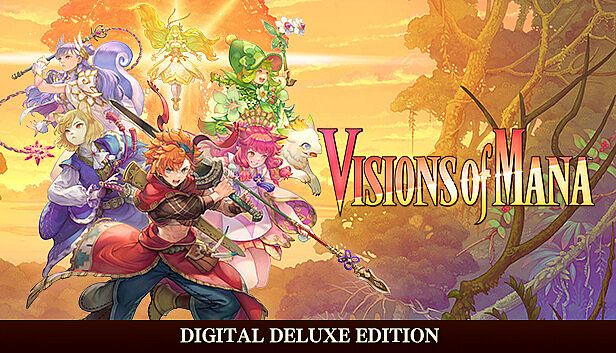







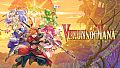
Visions of Mana is an action RPG developed by Ouka Studios and published by Square Enix for PC and other platforms. The game places players in control of Val, a Soul Guard tasked with protecting a group of Alms on their pilgrimage to the Mana Tree. This journey unfolds across a vibrant fantasy world where elemental forces shape the environment and combat encounters.
Gameplay
Exploration takes place in semi-open field areas that connect towns, dungeons, and hidden locations. Players move freely between these zones, discovering collectables and treasure chests, some of which require platforming solutions unlocked by powers from the eight Elementals. Save points scattered throughout the world enable fast travel once activated. The core loop combines overland travel with frequent action combat triggered by roaming enemies.
Combat operates in real time with a three-character party. Players directly control one member while the others follow preset behaviors. Standard attacks include light and heavy strikes, supplemented by a dodge, air dash, and a ring menu for items and abilities. Each character can equip one of eight Elemental Vessels at a time, which automatically assigns an associated class and grants element-specific moves and spells. Only one party member can hold a given vessel during any battle, encouraging rotation and strategic assignment.
Progression centers on the Elemental Plot system. Element Points earned in fights unlock new moves and class options for each vessel. Ability Seeds provide additional customization through passive stat boosts or entirely new skills, with some obtained by transferring Corestones from defeated foes. The system supports multiple difficulty settings that adjust enemy aggression and resource demands without altering the fundamental structure of exploration or combat.
Game Modes
The experience centers on a single-player campaign that follows the pilgrimage story from start to finish. Encounters blend field exploration with triggered battles in both open areas and structured dungeons. Dungeons typically feature short, focused layouts built around a central gimmick or mechanic that players learn and apply. No separate competitive or cooperative modes exist beyond the main narrative progression.
Side activities integrate directly into the campaign flow. Quests, hidden chests, and optional platforming challenges appear throughout the semi-open zones, rewarding players who deviate from the primary path. The structure remains consistent across the journey, with new regions and elemental powers introduced at a steady pace to expand movement and combat options.
Story and World
The narrative follows Val and his childhood friend Hinna as they join other Alms on the journey to restore mana flow to the world. Every four years, selected individuals make this pilgrimage, and failure carries consequences for their homelands. The world features distinct regions tied to the eight elements, each with its own visual identity and environmental interactions. Towns serve as hubs for rest, equipment upgrades, and additional tasks, while the broader landscape encourages discovery through interconnected paths and elevation changes.
Character interactions develop alongside the central quest. Party members bring unique weapons and backstories that influence both dialogue and available combat styles. The tone mixes lighthearted moments with the weight of the pilgrimage's purpose, revealing more about the world's history and the true nature of the Mana Tree as progress continues.
Is It Worth Playing?
Player reception on Steam stands at Mostly Positive based on thousands of reviews, while Metacritic aggregates place the game in the Generally Favorable range for both critics and users. Strengths frequently cited include the layered class and skill systems that reward experimentation, the colorful presentation, and the orchestral score. Some reviews note pacing fluctuations in the story and occasional technical hiccups during combat or exploration.
The game suits players who enjoy action RPGs with customizable party builds and a focus on real-time combat rather than turn-based systems. Those seeking a self-contained single-player adventure with clear progression and elemental mechanics will find a complete experience without ongoing seasonal content or multiplayer requirements. Availability on PC supports standard controller or keyboard input, and the title remains accessible at its standard price point with no additional live-service elements required for the core campaign.