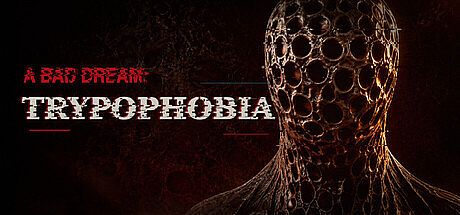




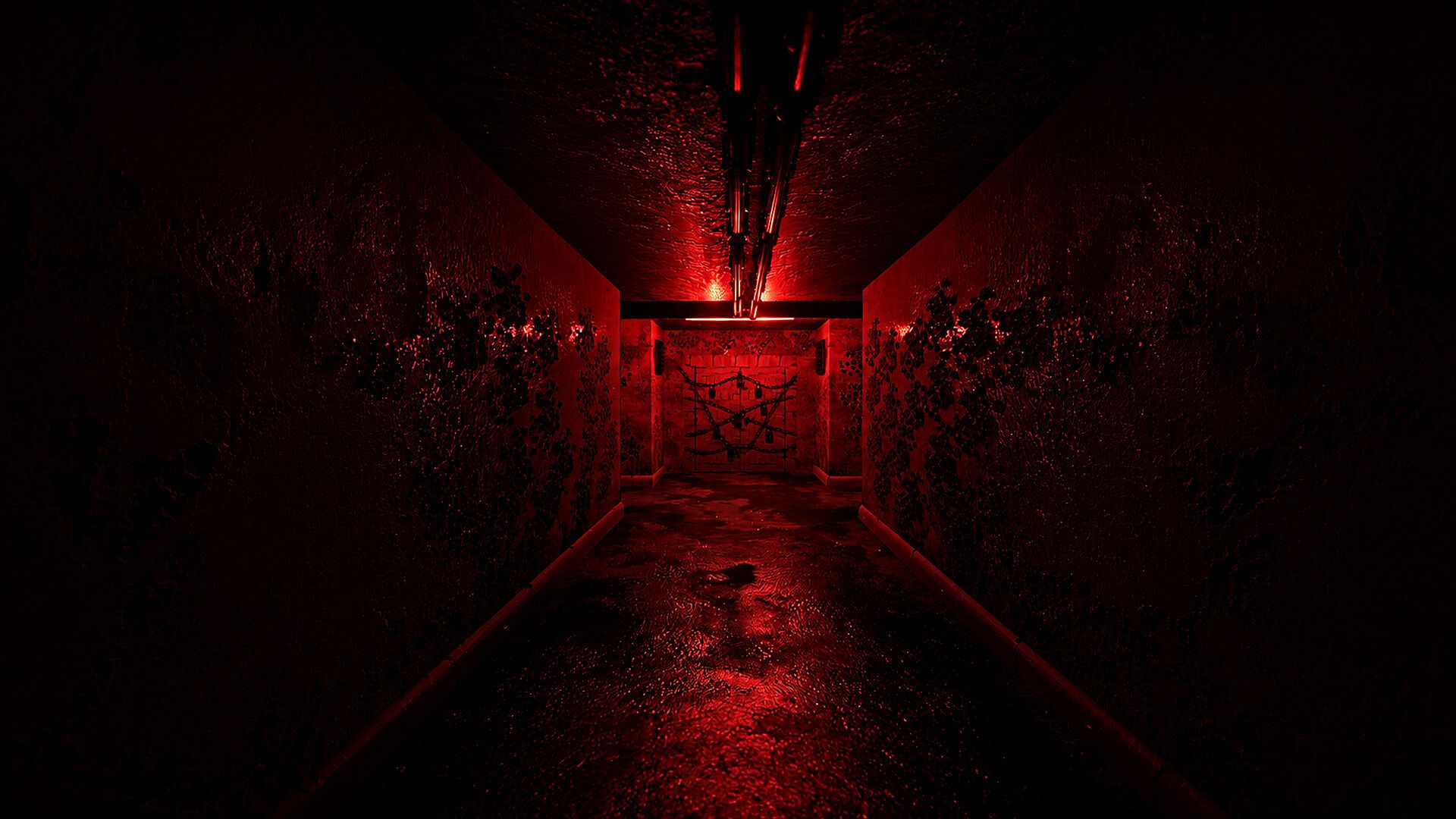
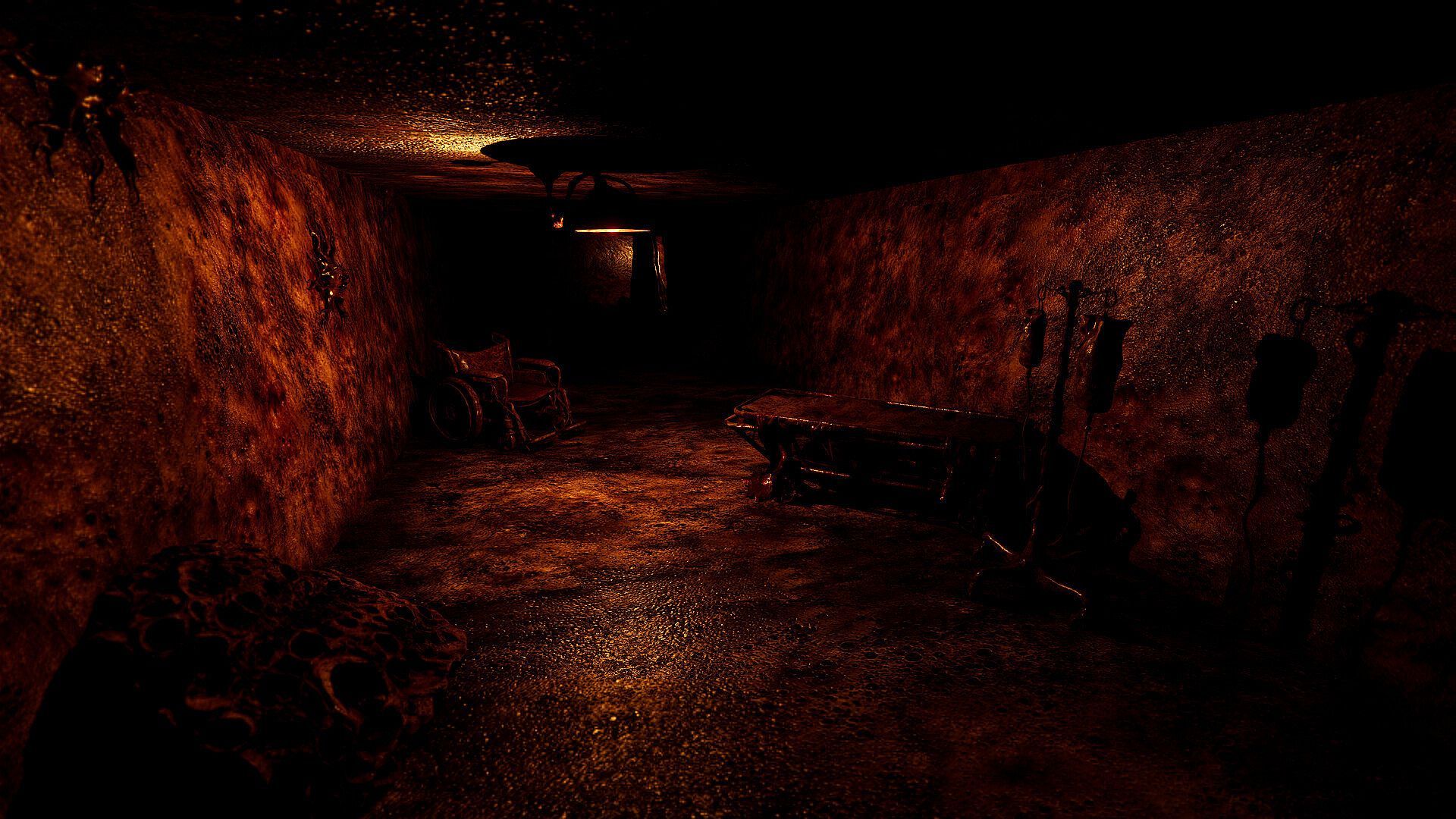
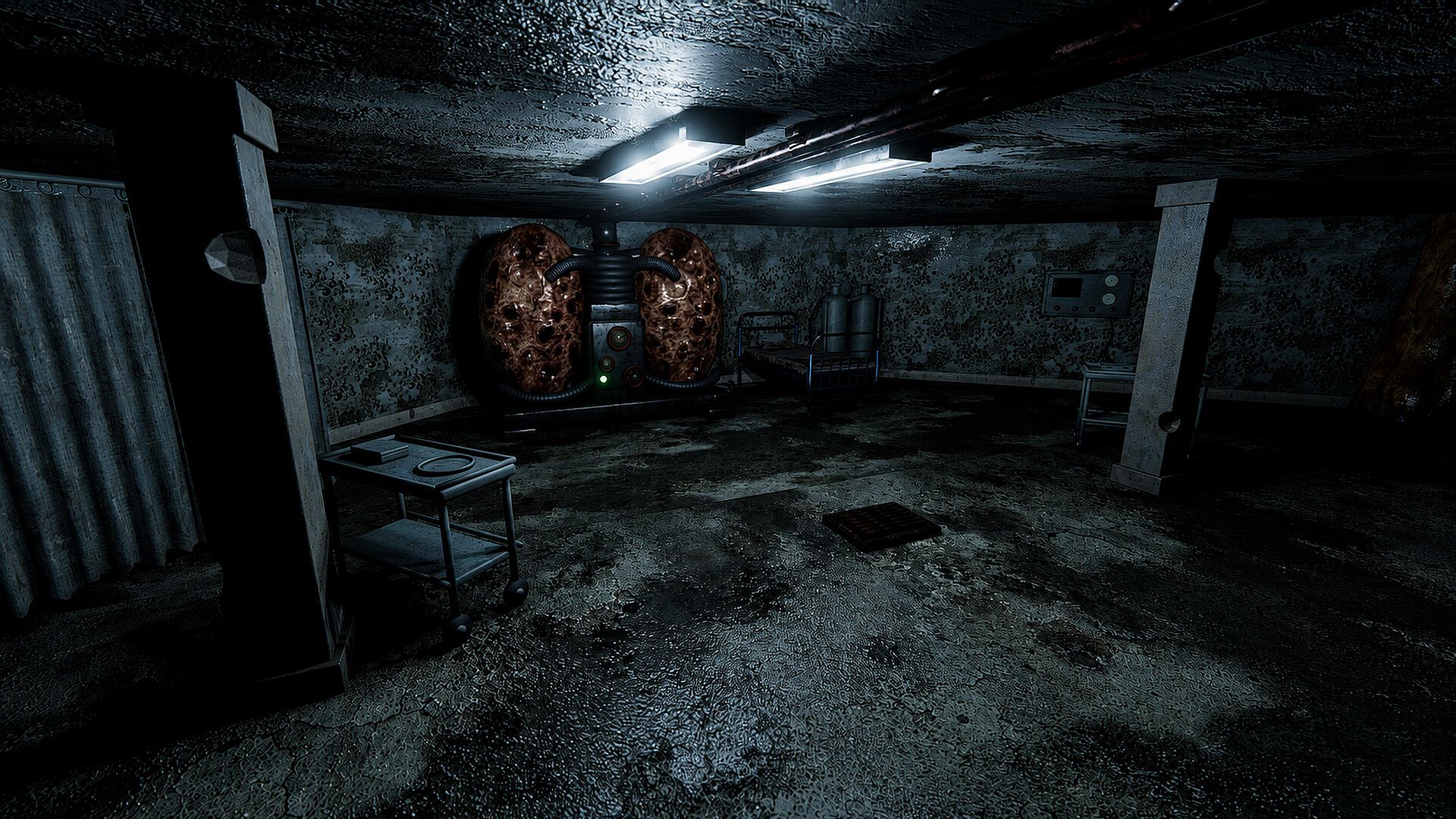
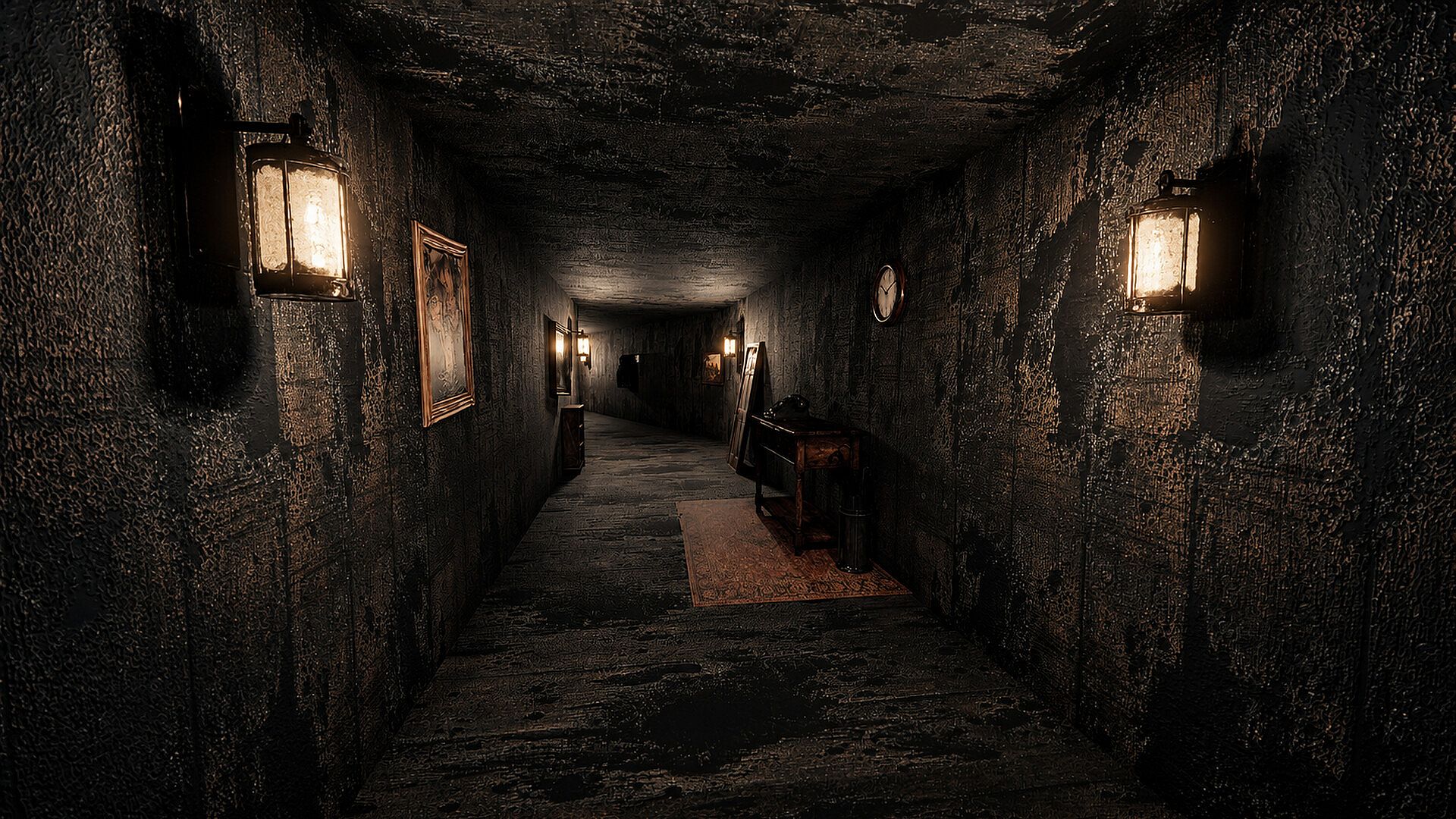
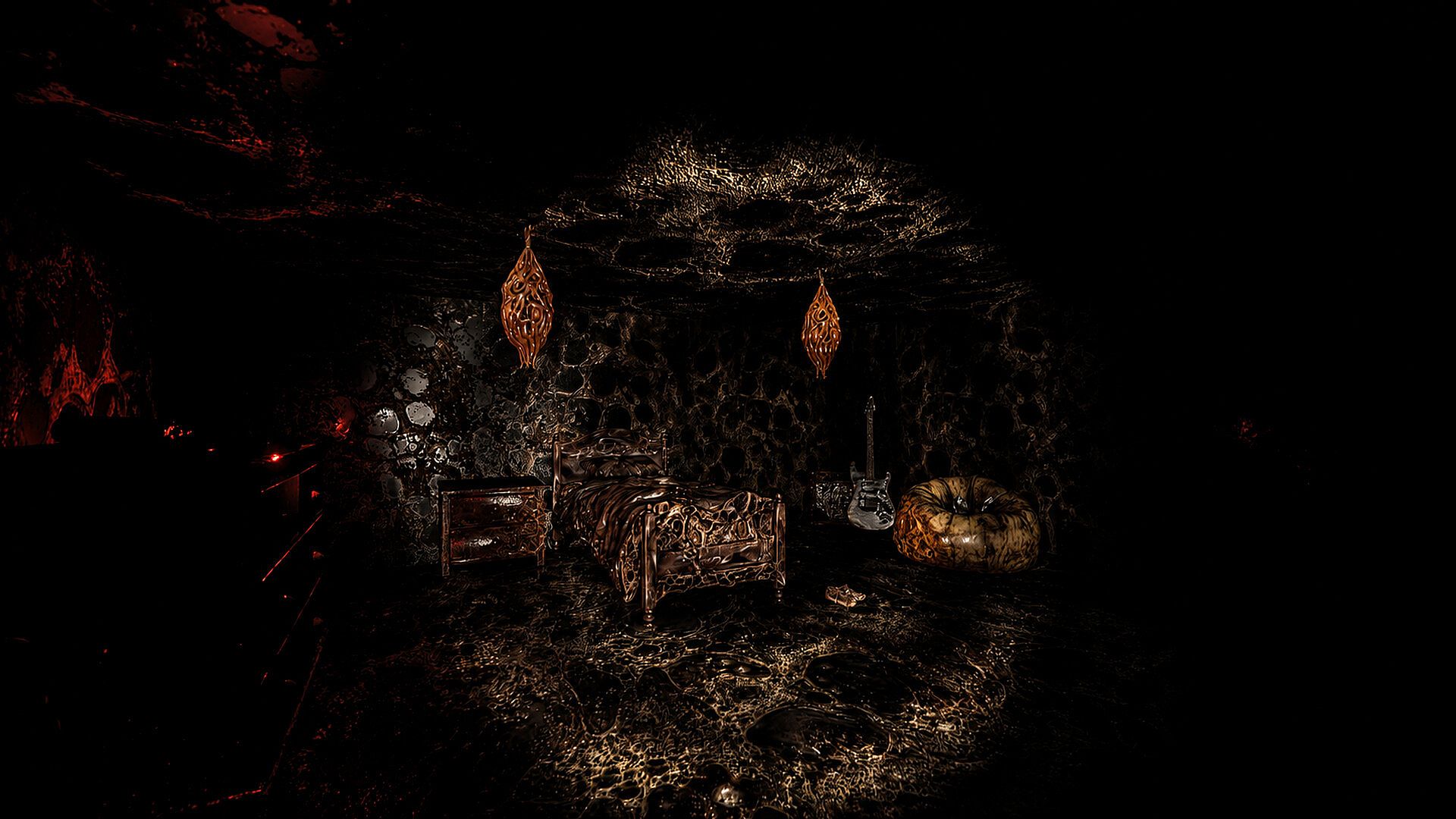
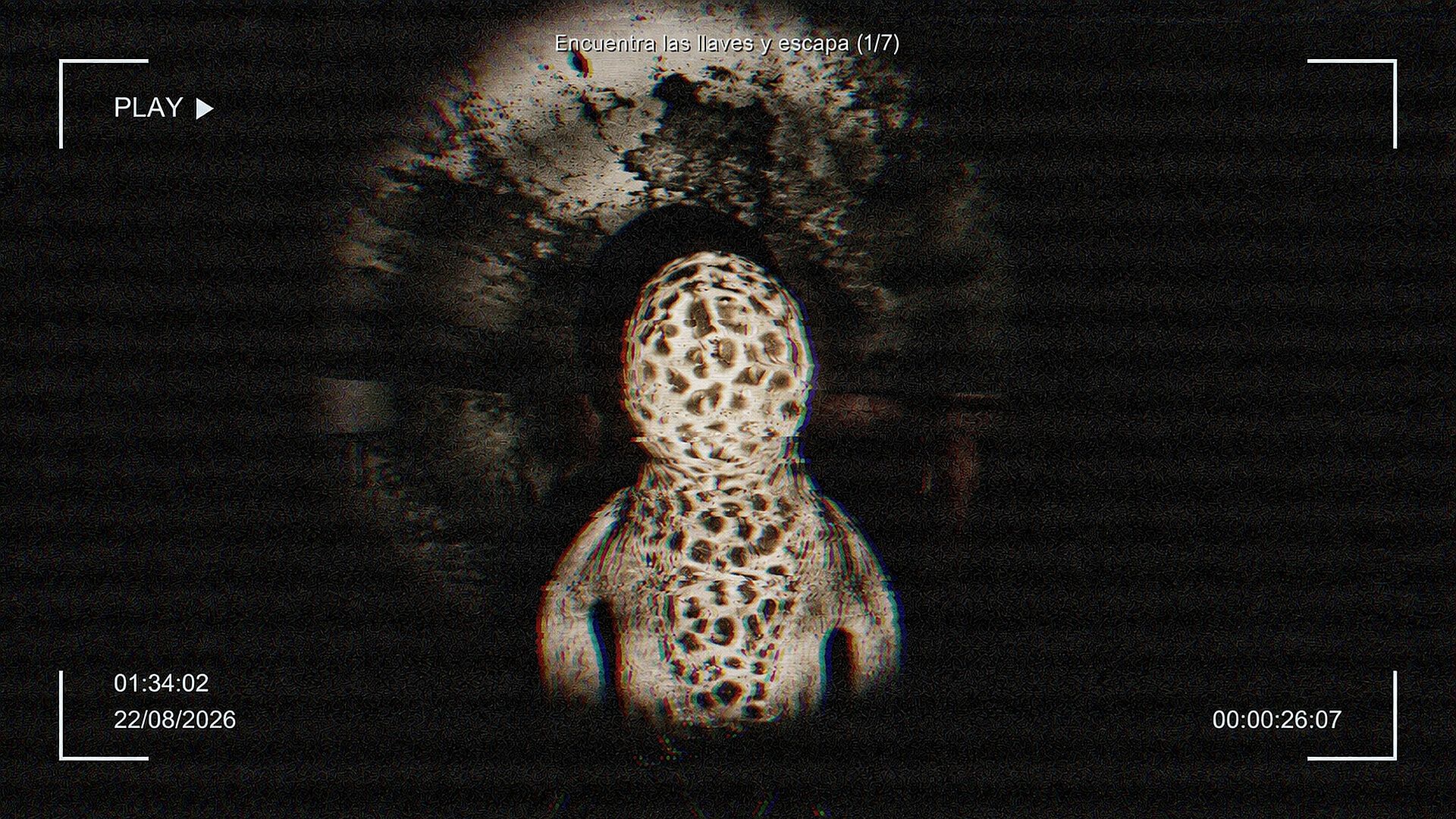
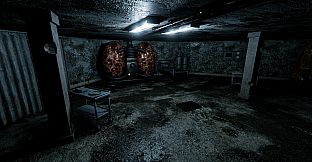
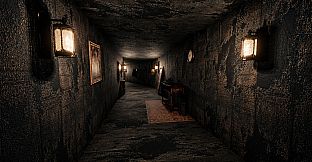
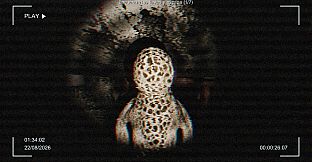
A Bad Dream: Trypophobia is a first-person psychological horror adventure game set entirely within a shifting nightmare. Players awaken in a sealed environment built from distorted memories and must locate scattered keys to unlock a chained door and break free. The experience emphasizes careful exploration across hospital corridors, abandoned rooms, a corrupted family home, and organic structures marked by clusters of holes, all while managing the growing threat of a persistent entity named Laura.
Gameplay
The core loop revolves around searching environments for keys that appear in different spots across playthroughs. Routes change because not every key spawns in the same place each time, forcing players to adapt their path and decide when to return to the central door. Exploration reveals details through the surroundings themselves rather than explicit notes or explanations, building a sense of unease through environmental storytelling alone.
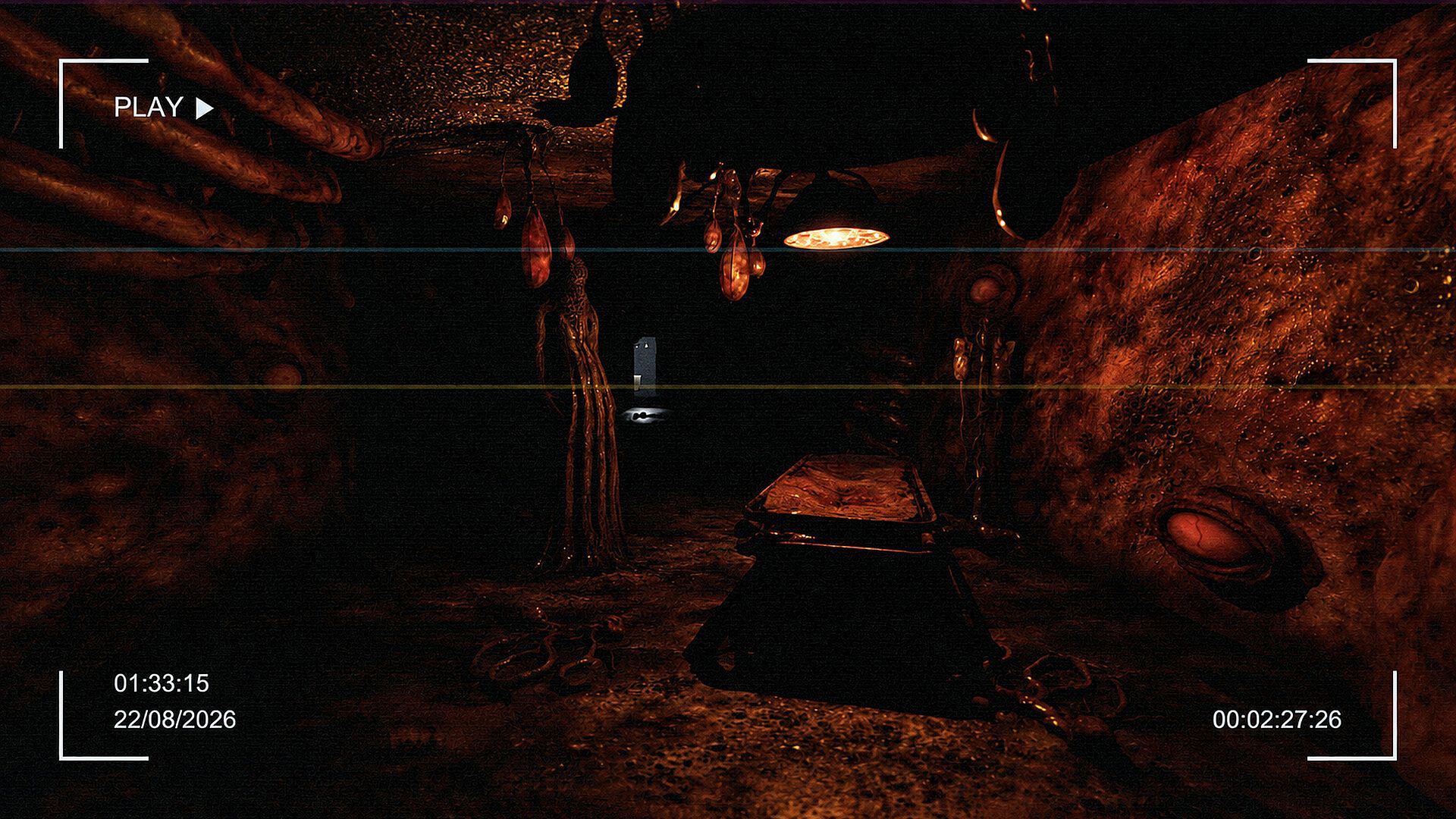
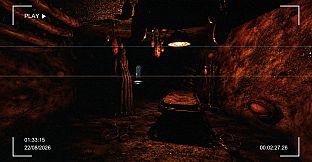
A VHS-style camera overlays the view with film grain, chromatic aberration, depth of field, and occasional dynamic glitches that intensify during tense moments. Players must avoid staring at Laura for extended periods or allowing her to approach too closely, as prolonged exposure increases the risk. Her presence grows more frequent and unpredictable the longer a session lasts or the further the player progresses, turning simple navigation into a constant balance of searching and evasion.
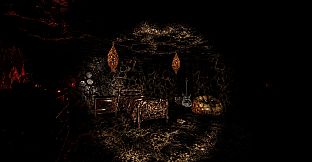
Organic imagery and patterns of holes feature prominently in the environments, designed to trigger trypophobia responses alongside the horror elements. Flashing lights and visual interference add to the disorienting atmosphere without relying on traditional jump scares.
Game Modes
Three difficulty settings shape the experience. Easy mode reduces the pressure from Laura and key scarcity, allowing more time for exploration. Normal mode presents the standard balance of tension and discovery. Nightmare mode heightens Laura's aggression and frequency while further randomizing key placements, demanding precise route planning and minimal mistakes.
Every run features variable key locations and shifting routes, so no two playthroughs follow the exact same sequence. This structure encourages repeated attempts to uncover different areas and test new strategies for reaching the door safely.
Story and Atmosphere
The narrative unfolds through the nightmare's structure rather than direct dialogue or cutscenes. Hospital halls blend into personal memories and grotesque organic forms, creating a cohesive yet unsettling world. Escaping the initial room does not guarantee awakening, as the game hints at layers beyond the immediate escape attempt. A final encounter alters the established rules, shifting the dynamic between player and entity in ways that redefine prior survival tactics.
Big Mount Interactive developed this title as the first entry in a planned horror series, focusing on psychological tension over action or combat. The single-player experience rewards patience and observation while punishing carelessness around Laura.
Is It Worth Playing?
Players who enjoy deliberate first-person exploration paired with escalating stalker mechanics will find the variable layouts and key-hunting loop engaging. The three difficulty options let newcomers ease in while offering veterans a stricter challenge on Nightmare. Those sensitive to trypophobia triggers, flashing visuals, or intense organic imagery should approach with caution due to the deliberate design choices.
The game suits fans of atmospheric psychological horror who prefer tension built through avoidance and environmental detail rather than combat or heavy exposition. Its replay value stems directly from the randomized elements and the promise of a rule-changing finale, making it a focused experience for those comfortable with its specific visual and thematic intensity.