







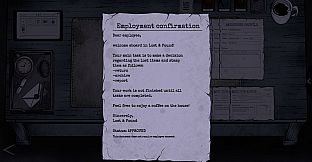
After Hours: Lost and Found is a single-player indie simulation game set during the night shift at a quiet lost and found office. Players process incoming items, review associated records, and make decisions that shape how each shift unfolds. The experience blends routine administrative tasks with moments of discovery, where every belonging carries potential clues about its owner or the larger situation surrounding the workplace.
Gameplay
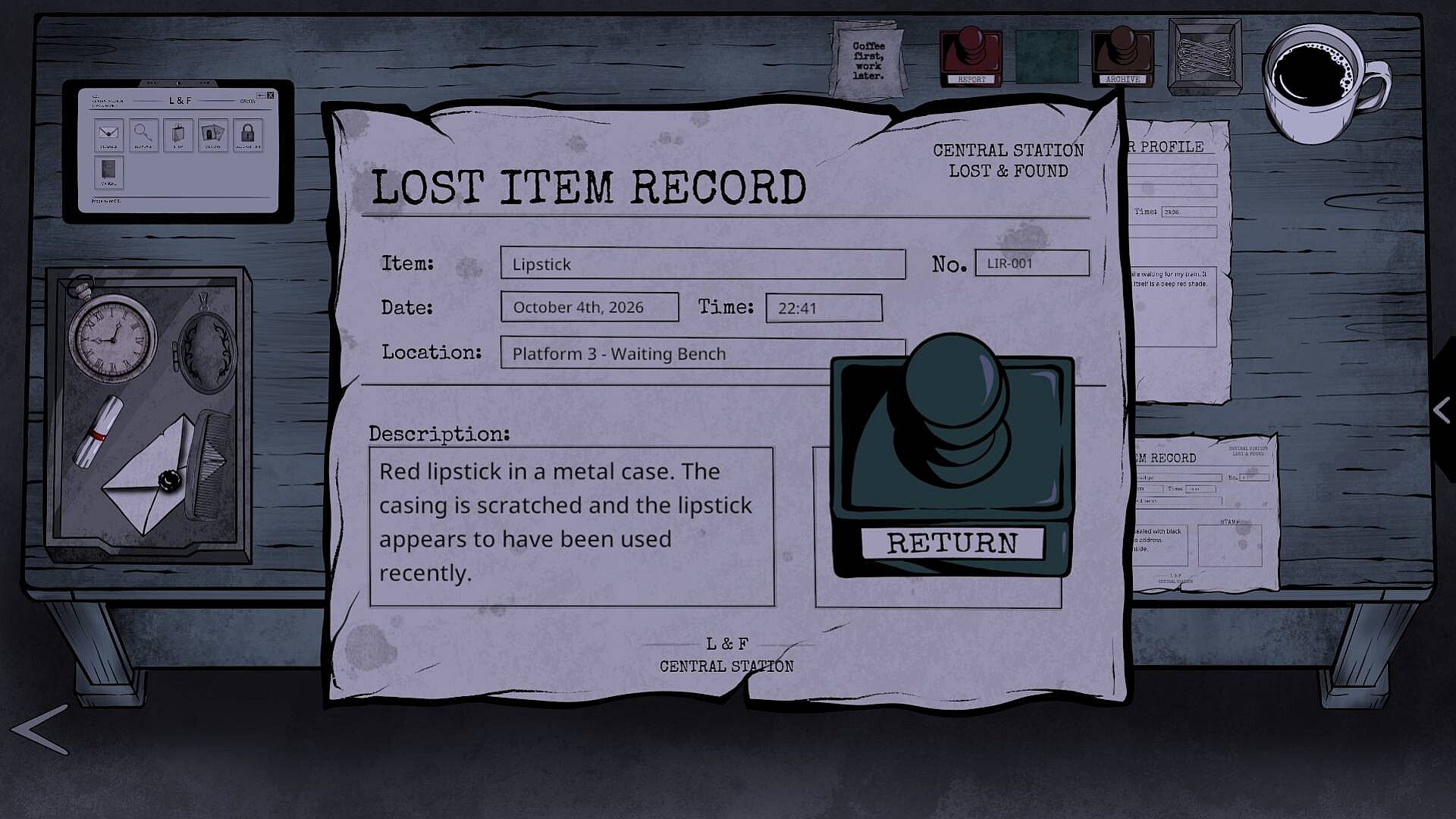
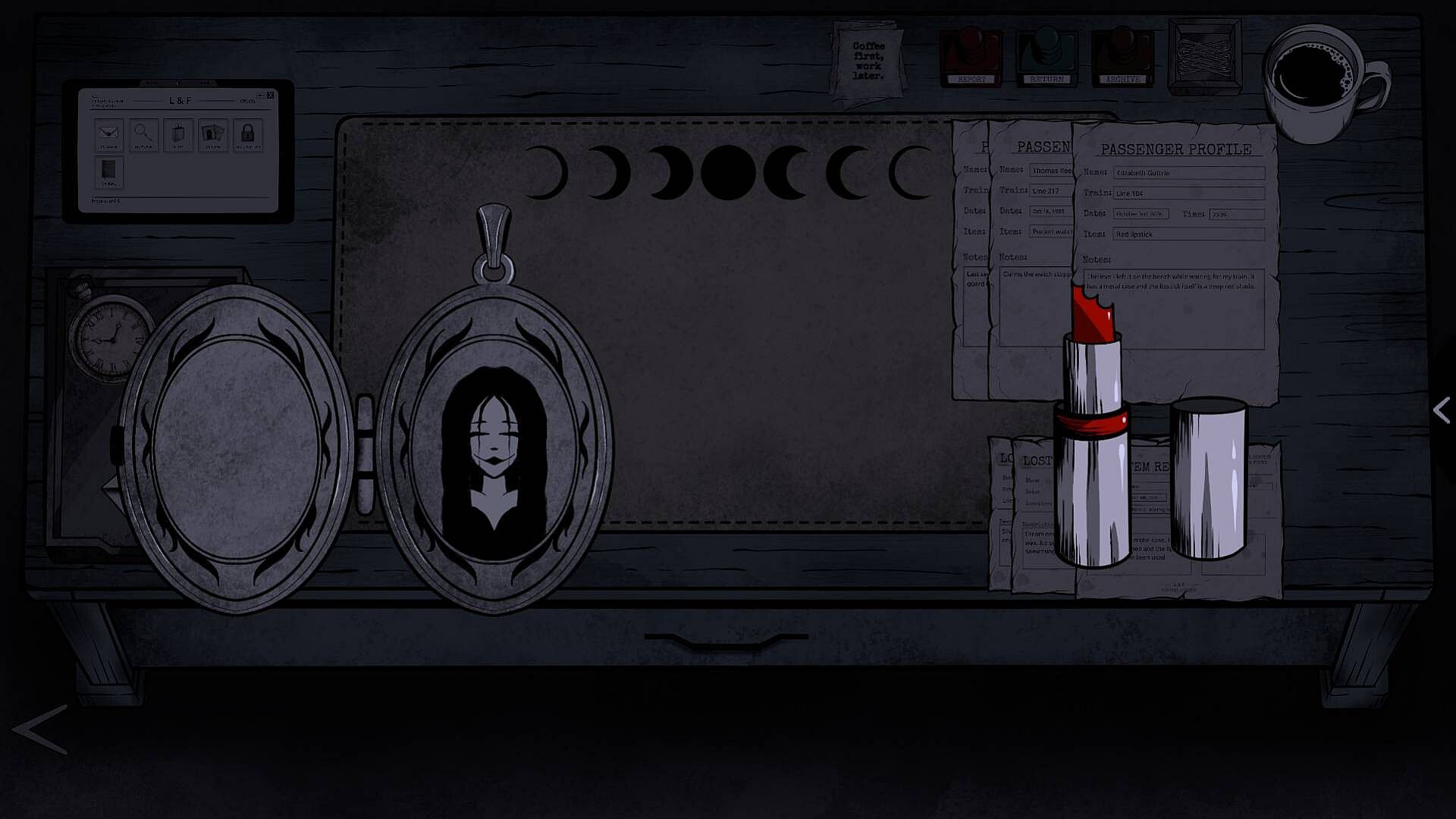
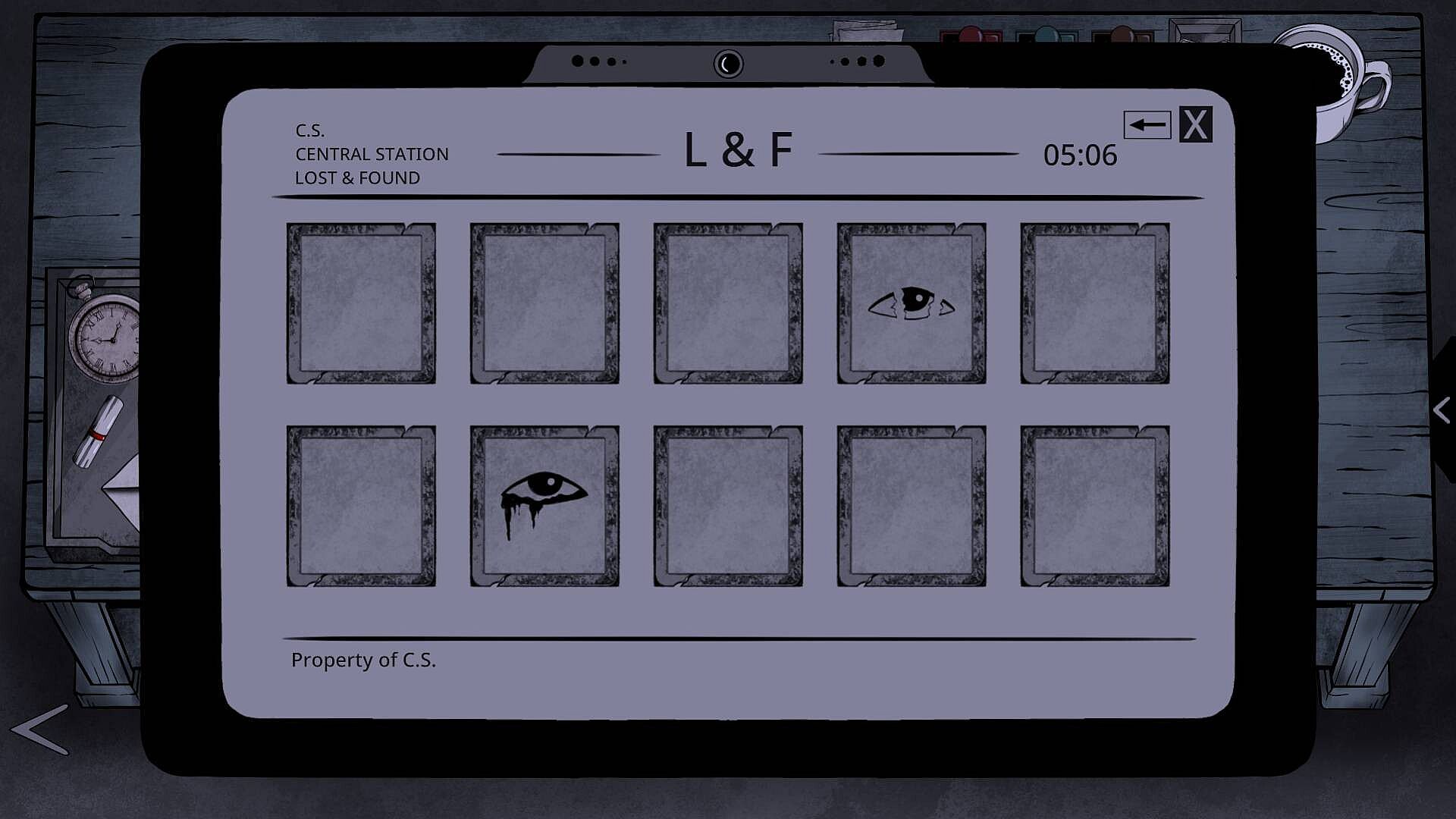
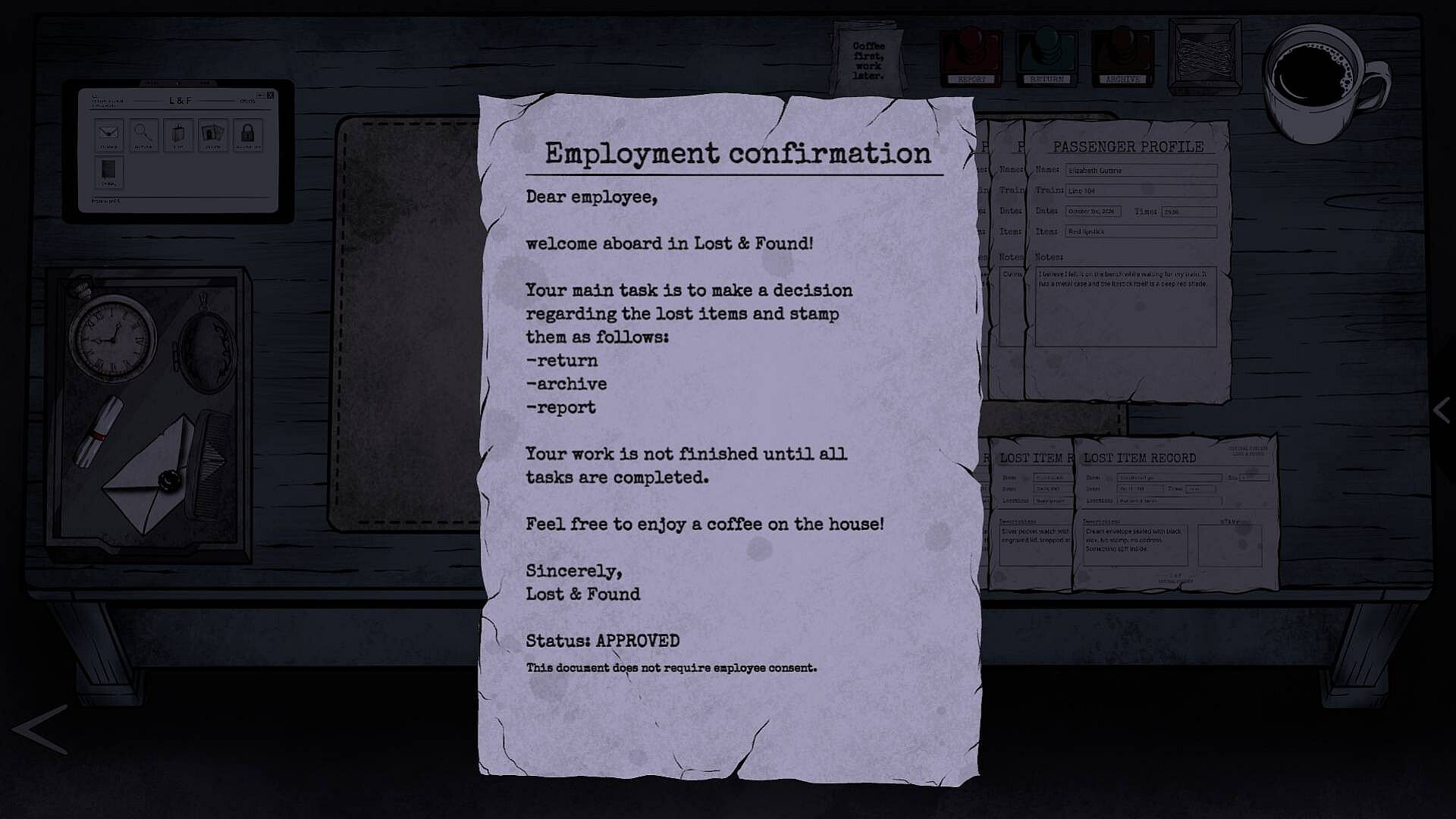
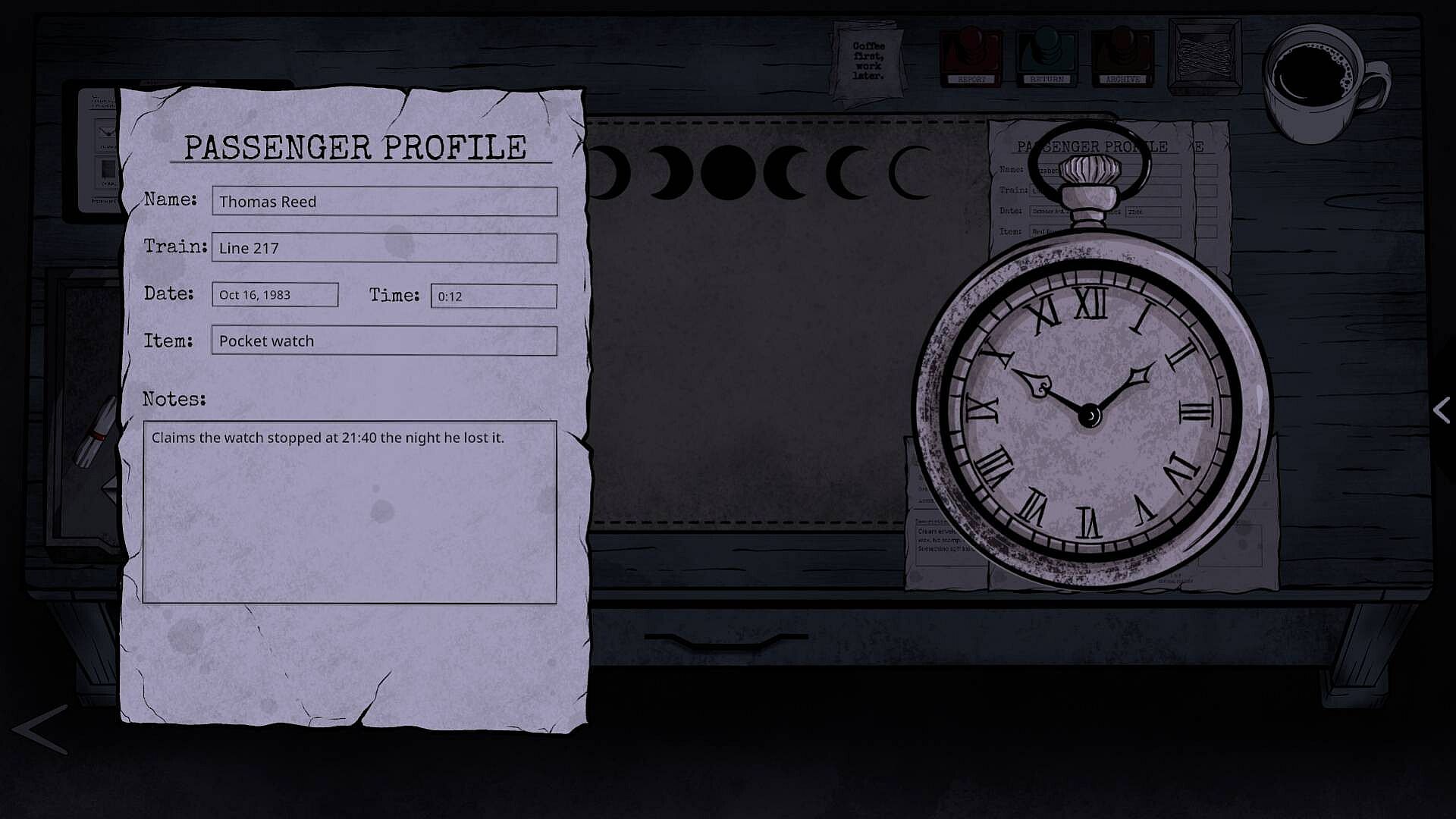
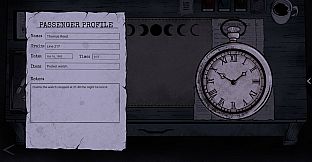
The core loop centers on receiving lost items and determining their fate through careful examination. Players inspect objects for physical details, compare them against passenger records, and look for inconsistencies that might indicate something unusual. Specialized tools help reveal hidden markings or contents, while interactive puzzles require close attention to patterns and connections across multiple pieces of evidence. Progress comes from processing items efficiently while noting anything that deviates from expectations. The system tracks compliance with procedures, and deviations can open new lines of inquiry or alter available options later in a shift. This creates a steady rhythm of observation, decision, and consequence that rewards methodical play.
Game Modes
The game operates as a continuous single-player experience without separate named modes. Instead, variety arises from the branching outcomes tied to player choices during each shift. Decisions to return items, report irregularities, or archive materials influence the narrative threads and available information in subsequent shifts. Over time, these choices accumulate into distinct paths that explore different aspects of routine, authority, and personal judgment. The structure encourages replay to observe how alternate decisions reshape the overall sequence of events and revelations.
Narrative and Themes
Story elements emerge gradually through the items themselves and the records that accompany them. Players uncover fragments of larger stories by cross-referencing details and noticing when information does not align. The setting emphasizes the tension between following established procedures and responding to situations that feel off. Themes of obedience, institutional oversight, and the weight of small choices run through the experience. Multiple endings reflect these tensions, with some conclusions focusing on personal outcomes and others on broader shifts in perspective about the work and the environment.
Is It Worth Playing?
This title suits players who enjoy deliberate, detail-oriented simulation games with strong narrative undercurrents. The focus on inspection and decision-making creates a thoughtful pace that rewards patience and observation rather than quick reflexes. Those interested in stories about everyday systems and the questions they raise will find the branching structure engaging across multiple playthroughs. The game remains in active development with its core systems centered on the described mechanics, making it a solid choice for anyone seeking a contained indie experience built around investigation and consequence rather than action or open-world exploration.











