


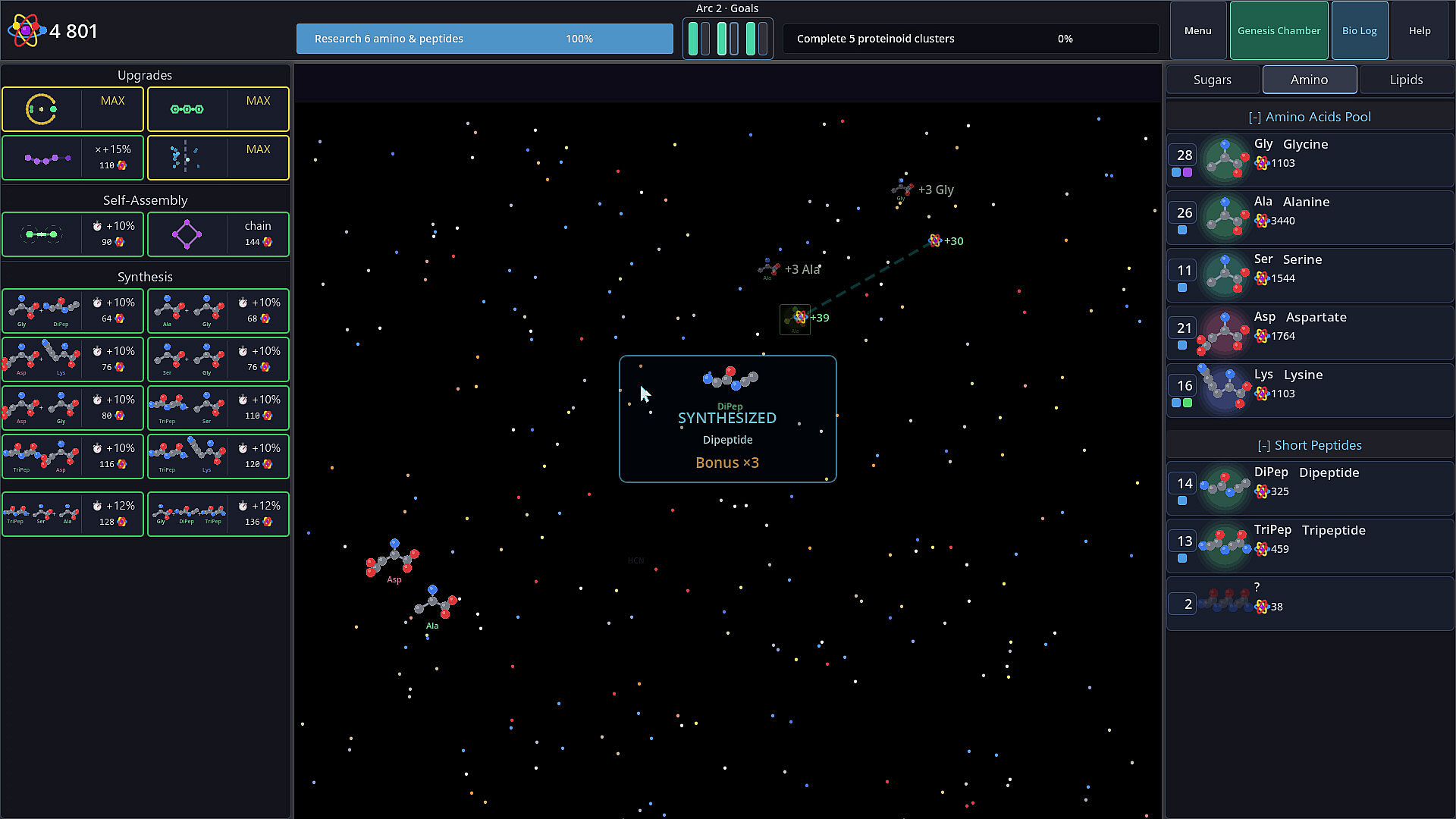
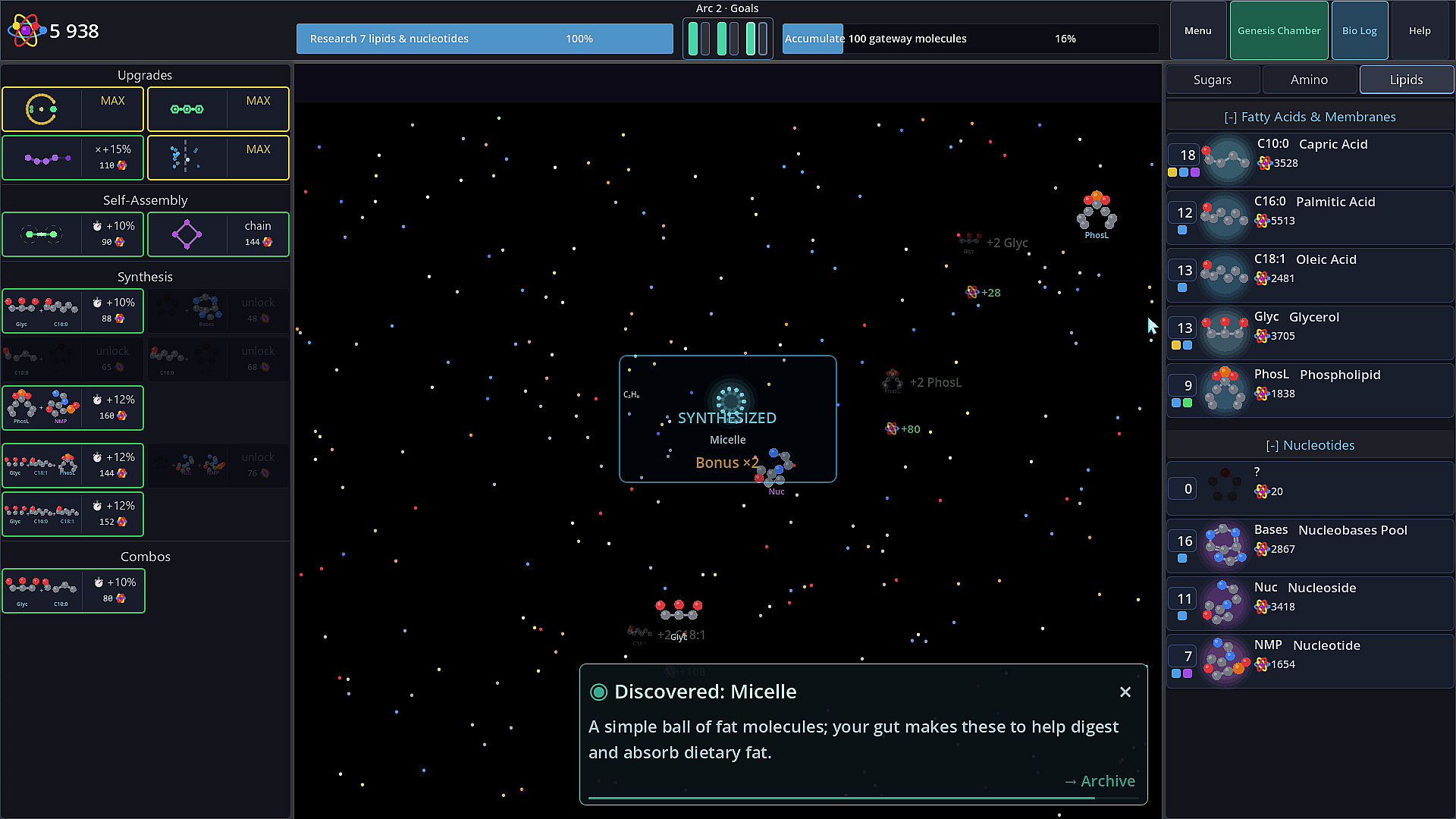

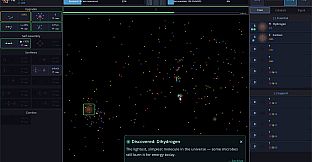
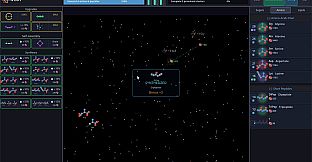
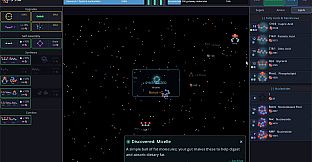
BioSphere: Genesis is an indie early access science clicker game available on PC. Players begin with elementary particles and progress through increasingly complex chemical and biological structures to shape a living world. The experience blends active clicking with a background idle system, drawing loose inspiration from real biochemistry while keeping the focus on steady progression rather than strict accuracy.
Gameplay
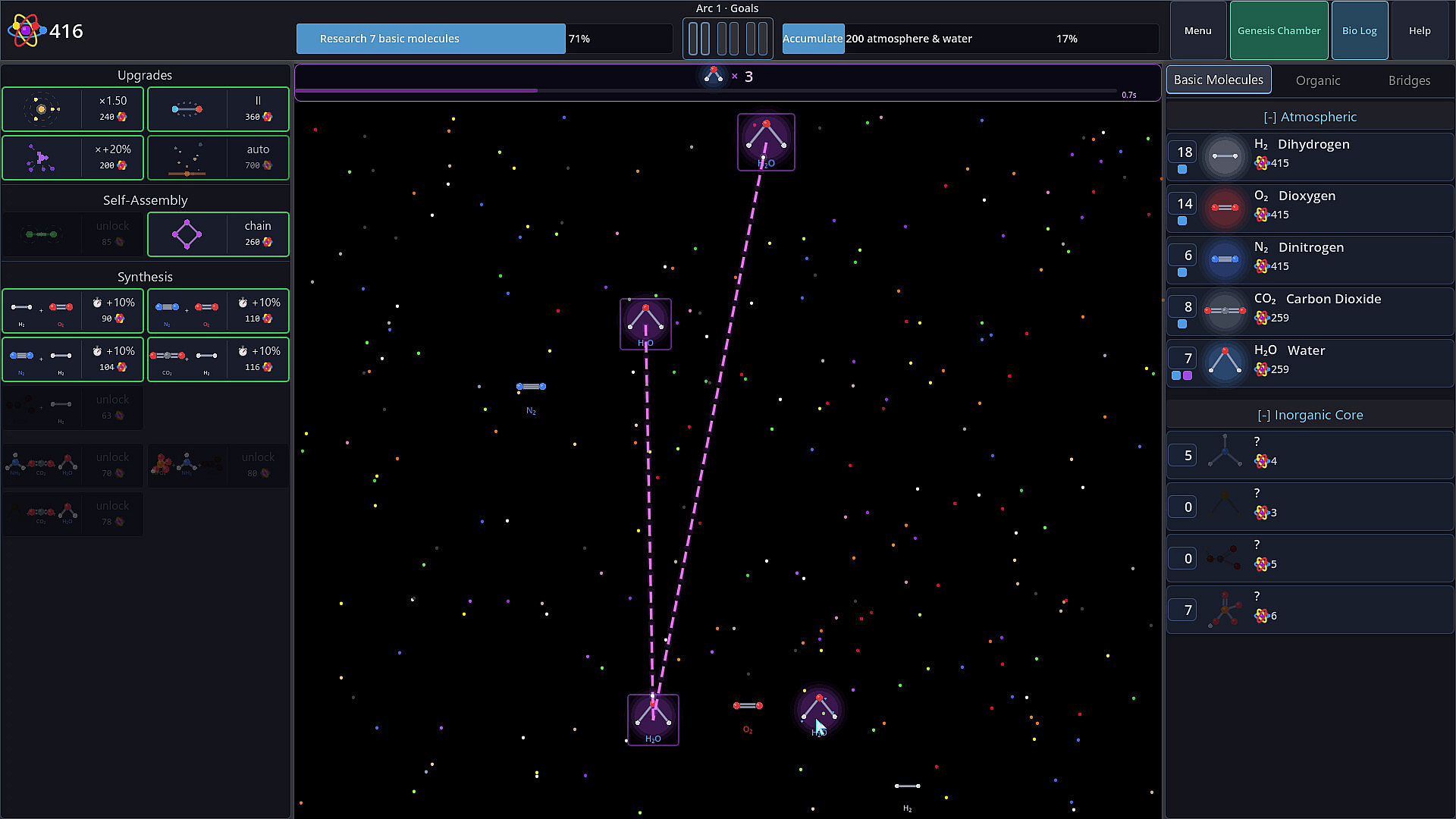
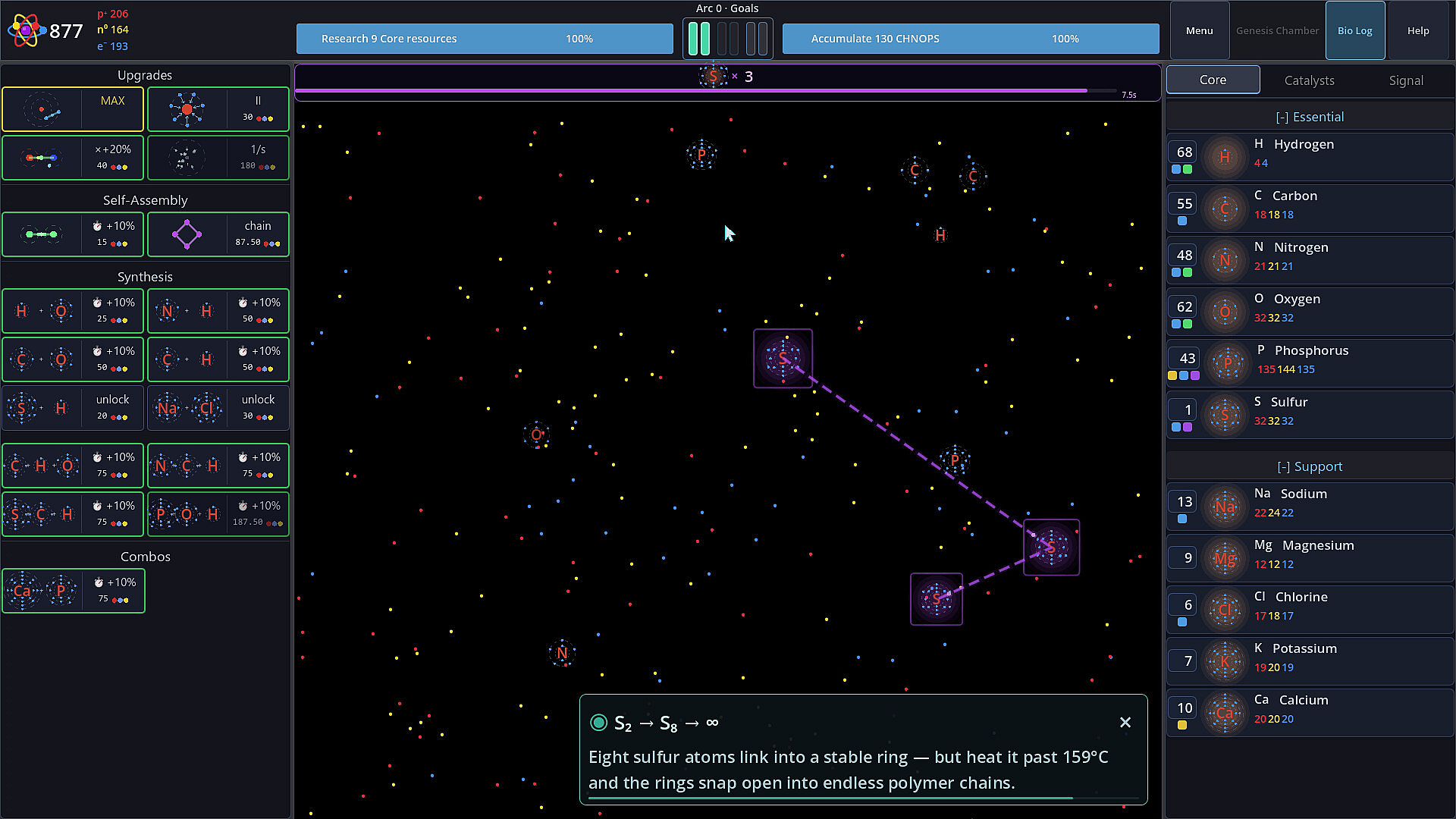
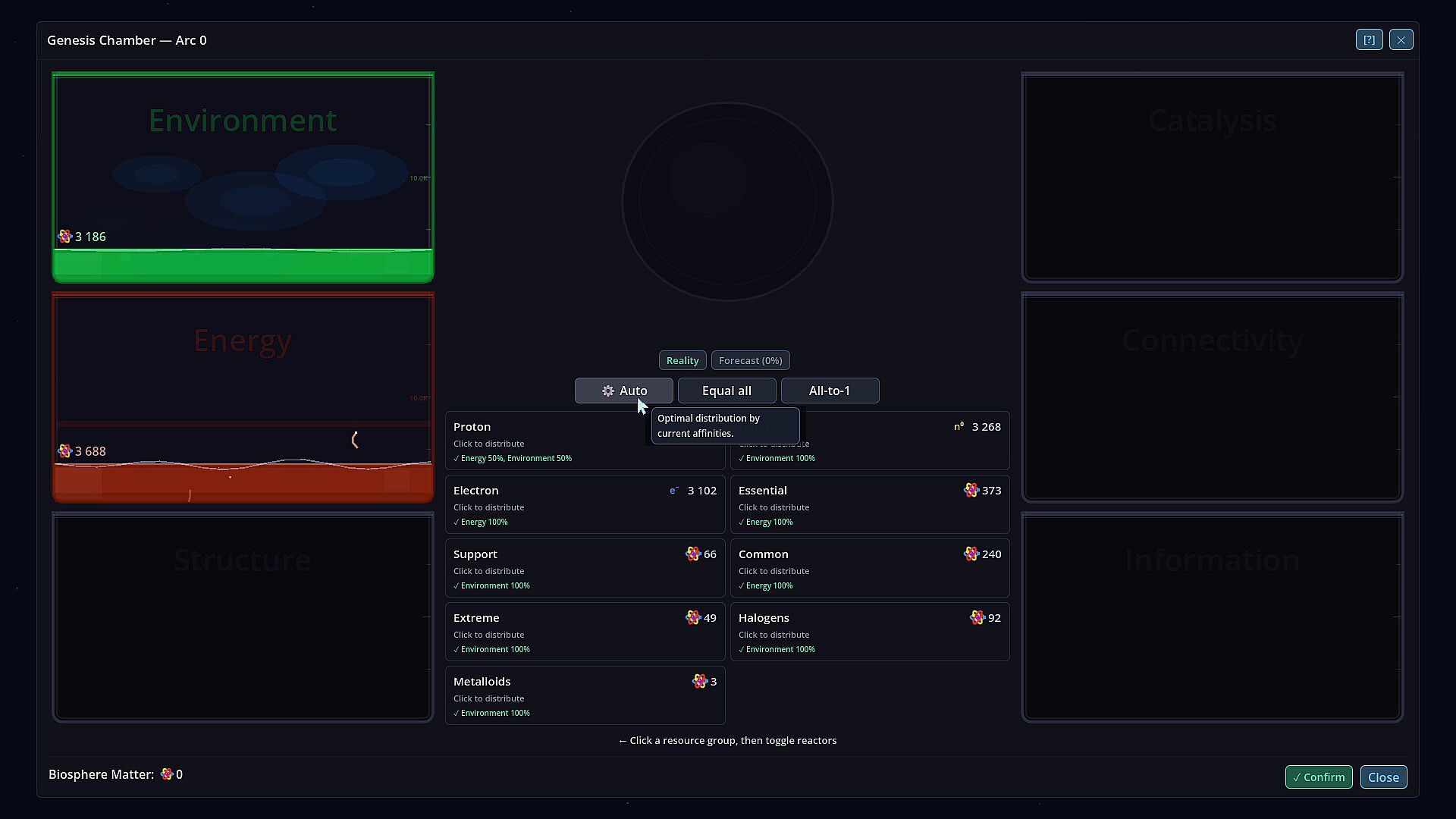
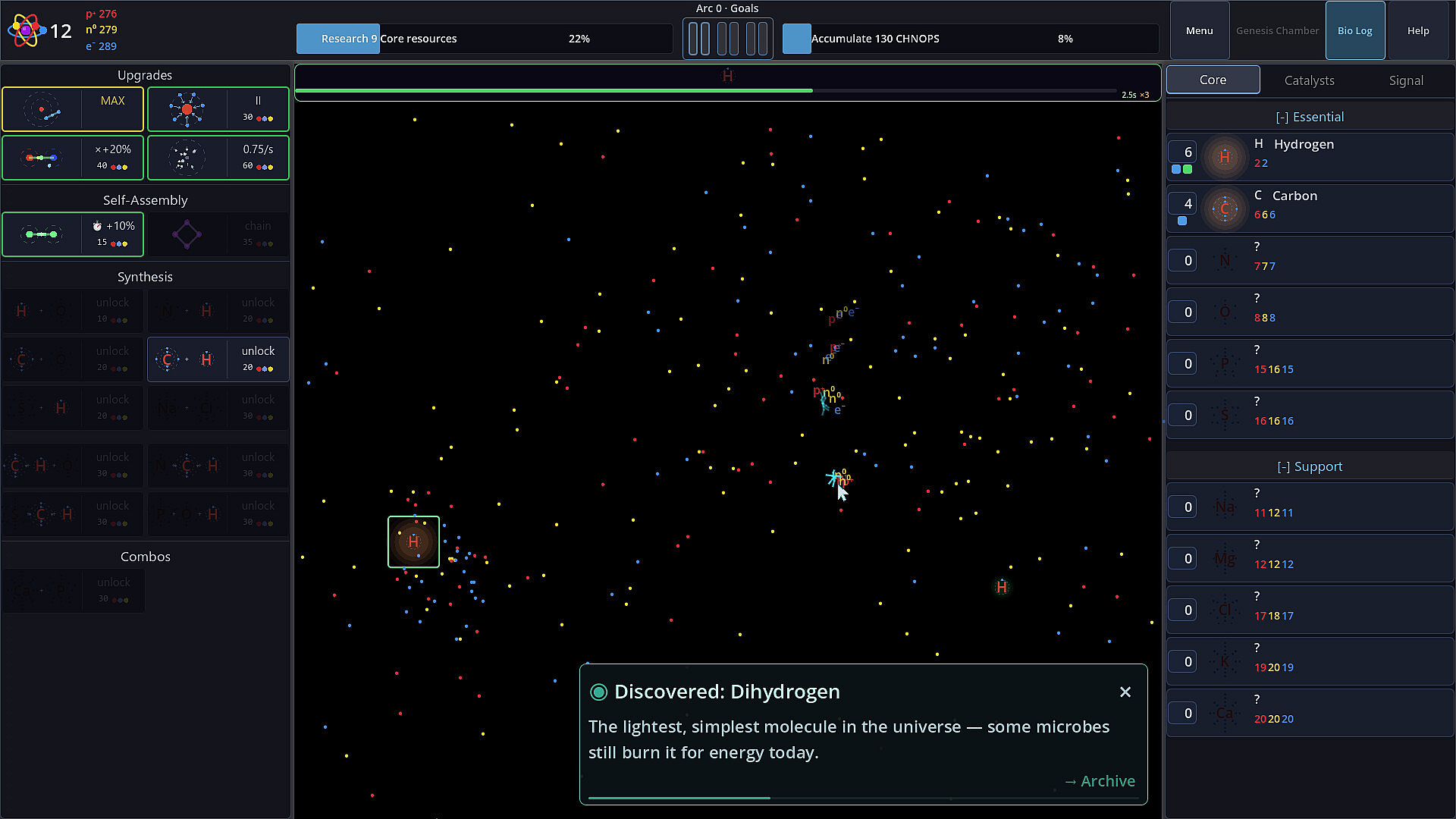
The core loop centers on catching drifting components on screen and directing them into reactions. Atoms combine into molecules, monomers link into polymers, and these building blocks advance toward cells, organisms, and larger biomes. Each successful synthesis feeds into a central Genesis Chamber that stores produced matter and influences the balance of elements in the emerging planet. Progress relies on consistent clicking to capture resources while the idle layer continues generating output in the background. Visuals remain minimalist with vector-style graphics, and the audio stays restrained with a sci-fi ambient track that supports focus without distraction.
Mechanics emphasize natural units of matter such as particles, atoms, molecules, and cells rather than abstract scores or prestige resets. Reactions simplify certain real-world processes for accessibility, such as allowing hydrogen and oxygen to form water through direct clicks without tracking every atom. This approach keeps the pace brisk for active play sessions while the strategic layer rewards longer-term planning around resource allocation in the chamber.
Game Modes
The game operates as a single continuous progression system without separate named modes. Active clicking handles immediate resource gathering and reactions, while the idle components run steadily in the background to support advancement even during lighter play. The Genesis Chamber serves as the main strategic hub, where collected matter determines the proportions of the developing biosphere. No distinct multiplayer elements or alternate scenarios appear in the current build.
Progression and Systems
Unlocks occur through synthesis milestones that introduce new resources and reaction types. Starting from basic particles, players expand the range of available combinations step by step. The chamber acts as a persistent bank that carries forward everything produced, allowing the world-building process to scale organically. Early access development focuses on expanding these layers, with the stated goal of reaching a full biosphere through community-guided updates.
Resource management stays grounded in tangible matter categories rather than multipliers or currencies. This design encourages attention to the types of elements being synthesized and how they interact within the chamber to shape the final planet composition.
Is It Worth Playing?
BioSphere: Genesis suits players who enjoy incremental clicker games with a thematic focus on scientific concepts. The combination of hands-on clicking and passive idle growth provides a steady sense of advancement without requiring constant attention. As an early access title, the experience continues to evolve, with the developer emphasizing collaborative charting of the path from chemistry to life. Those interested in minimalist presentation and biochemistry-inspired mechanics will find the current systems rewarding, particularly if they prefer games that avoid artificial scoring systems in favor of material-based progression. The title remains available on PC for those ready to engage with its developing state.