







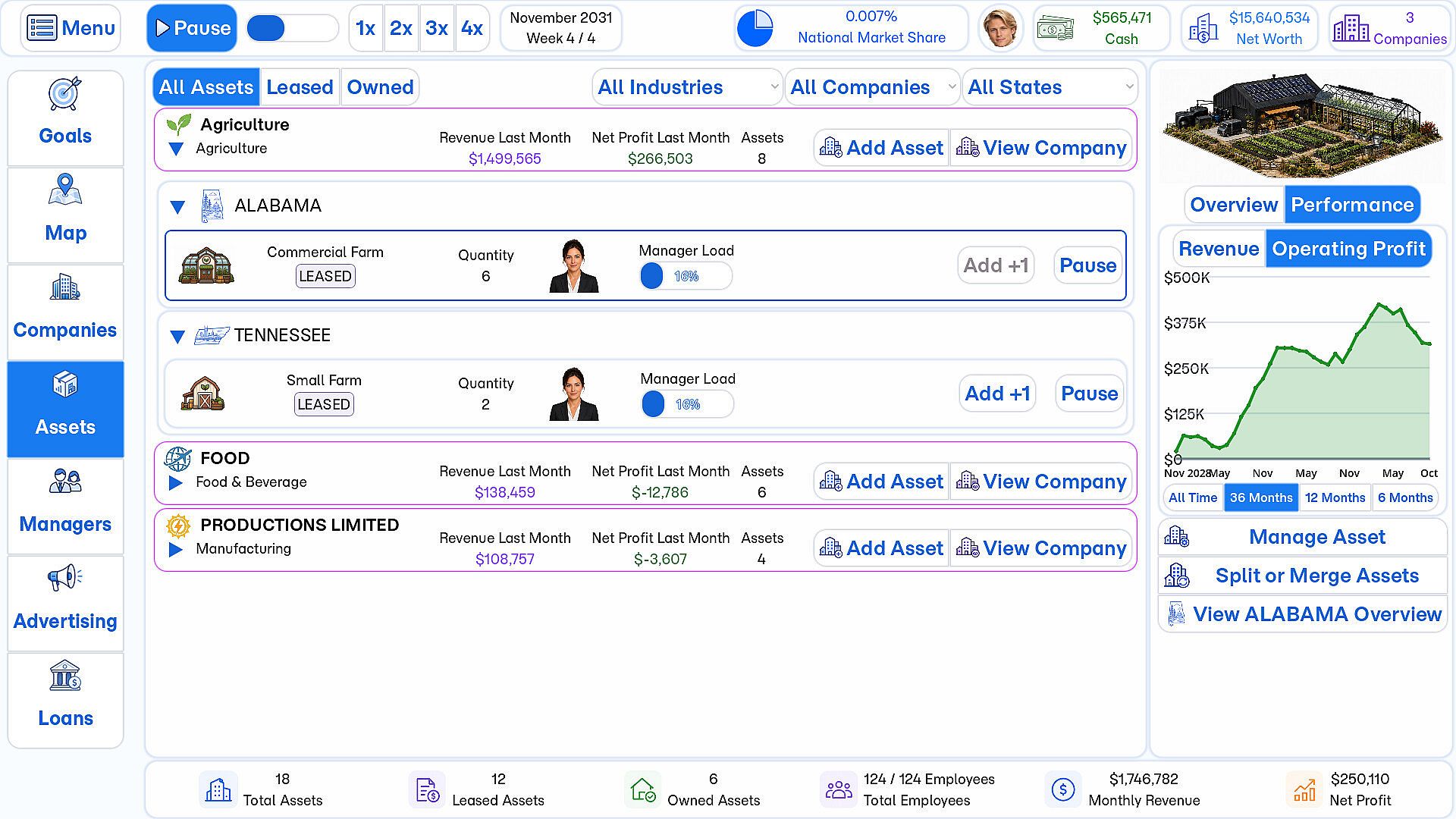
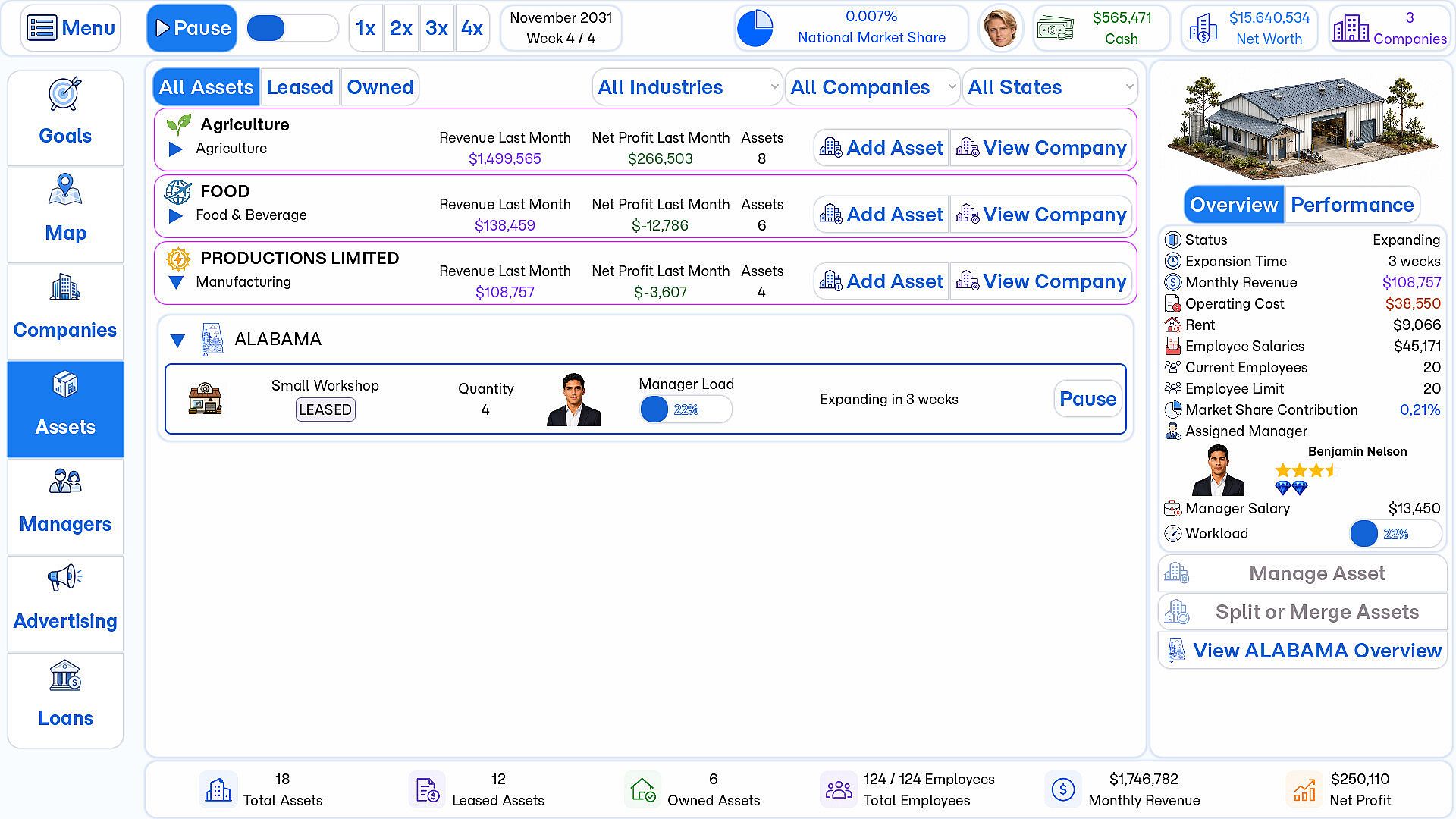
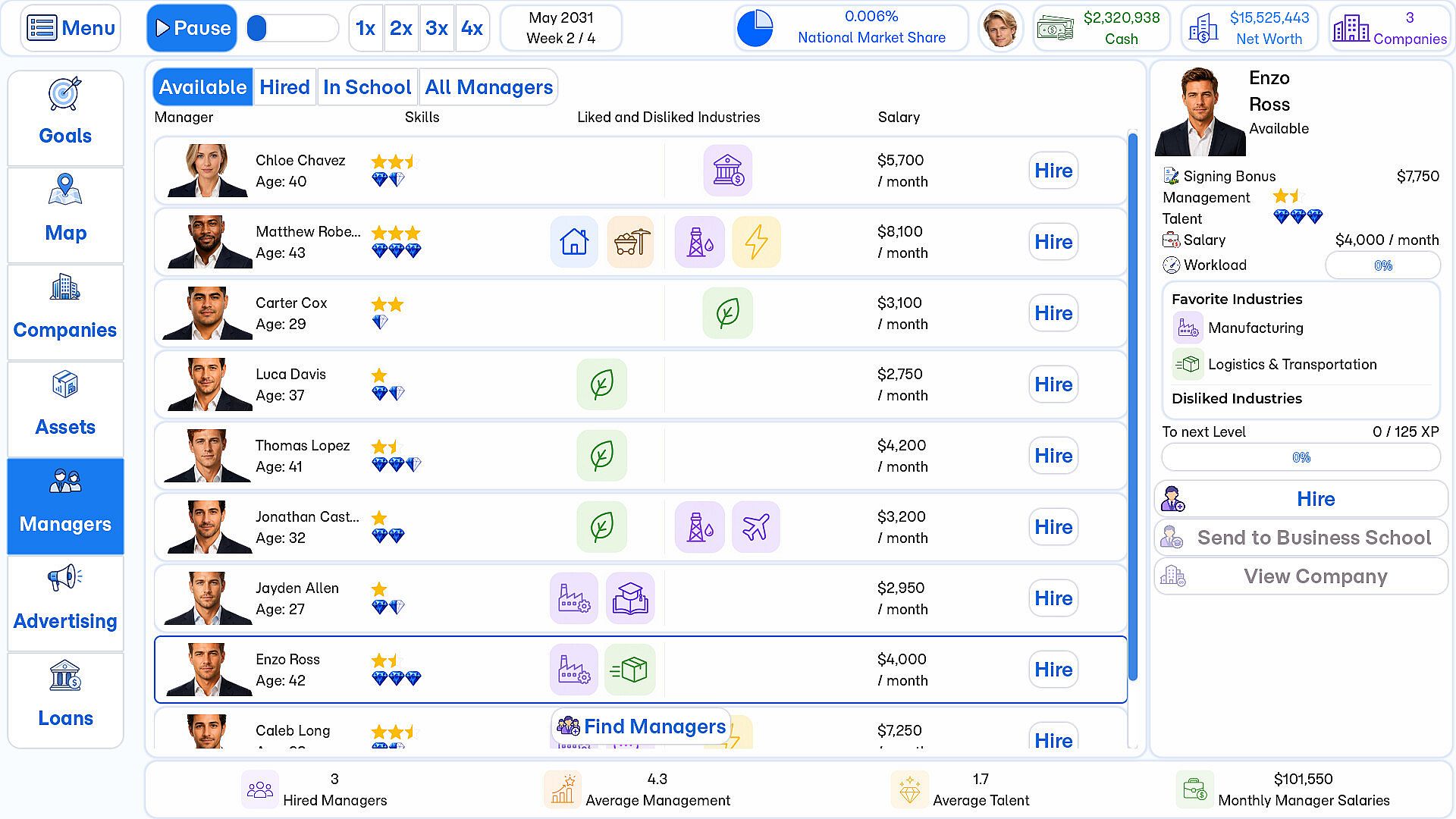
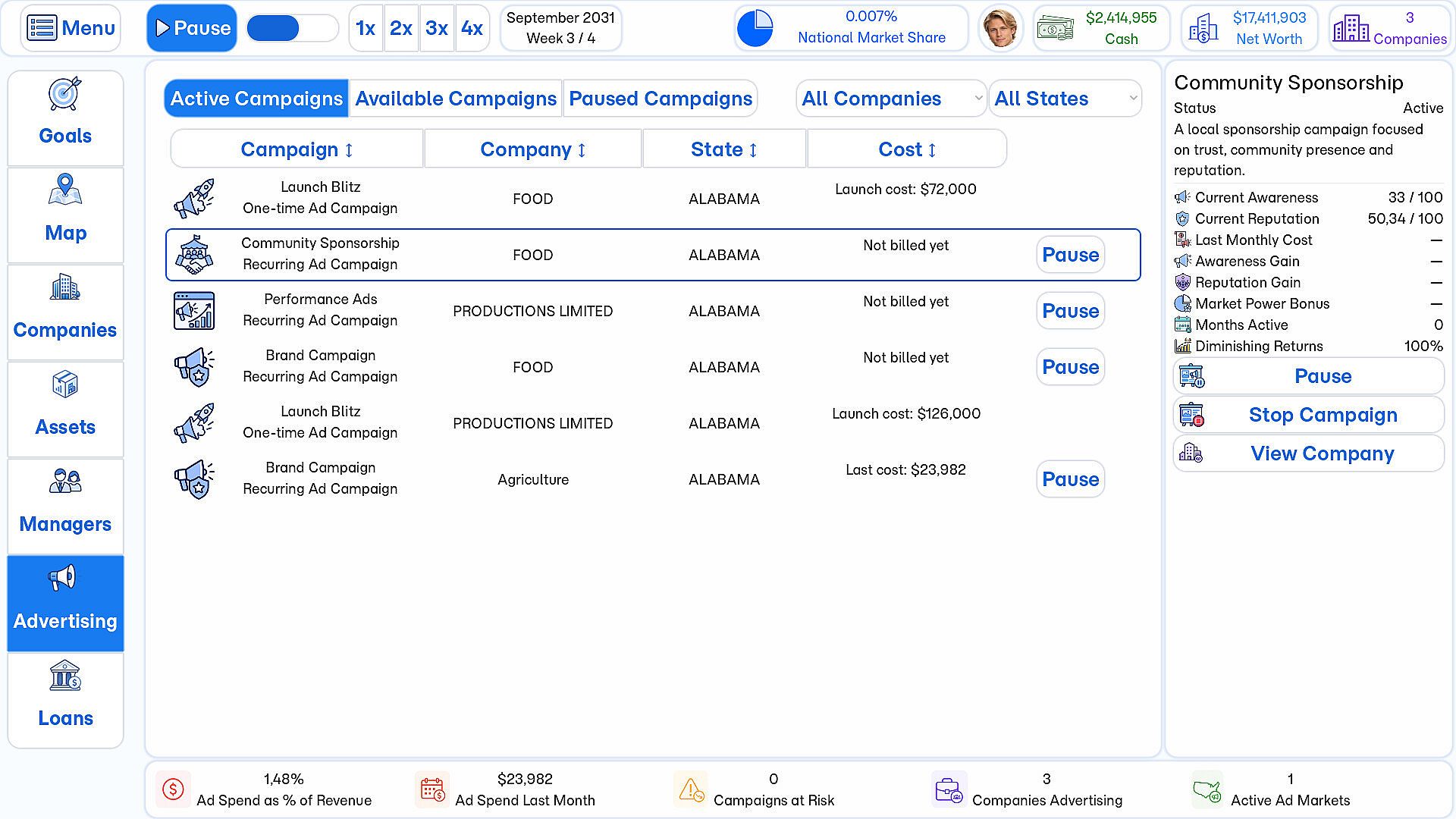



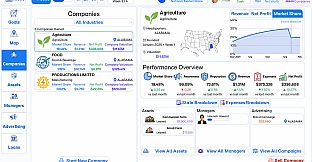
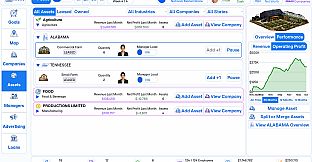
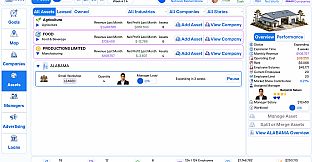
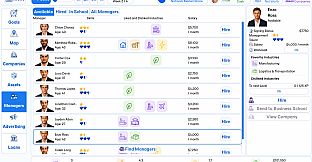
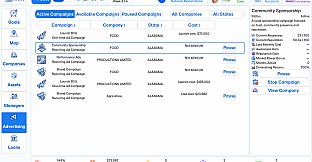
Business Tycoon is a single-player economic strategy simulation game in the indie, casual, and simulation genres for PC. Players start with limited capital and work to build a business empire spanning the United States by creating companies in various industries, opening and upgrading assets, hiring managers, managing expenses, running advertising campaigns, and expanding into new states.
Gameplay
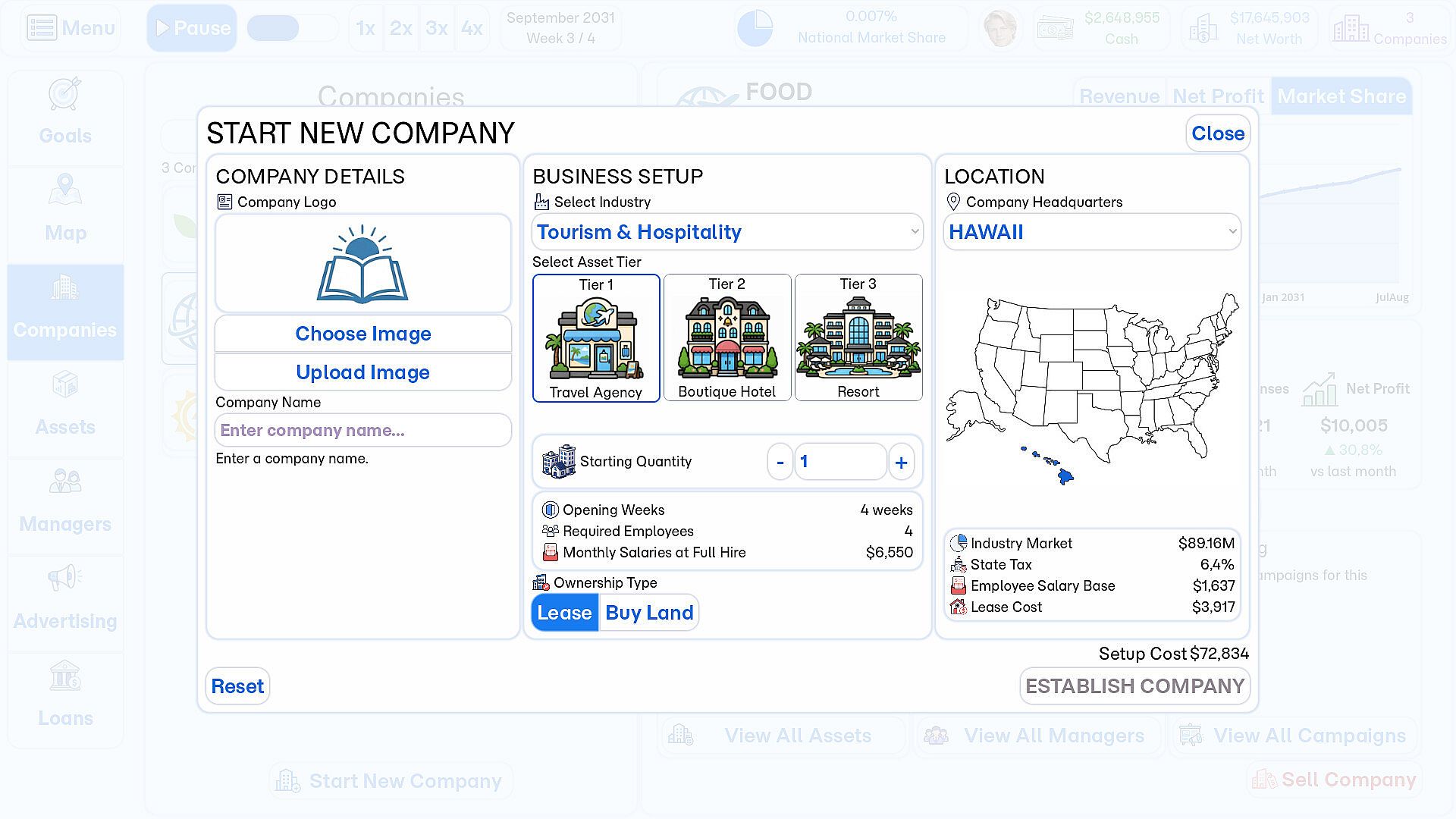
The core loop centers on strategic decision-making around capital allocation and expansion. Players select from 17 industries that range from food and retail to finance, software, energy, mining, and oil and gas. Each decision involves choosing where to open assets, how to scale capacity, and when to upgrade facilities while tracking revenue, profit, company valuations, and market share.
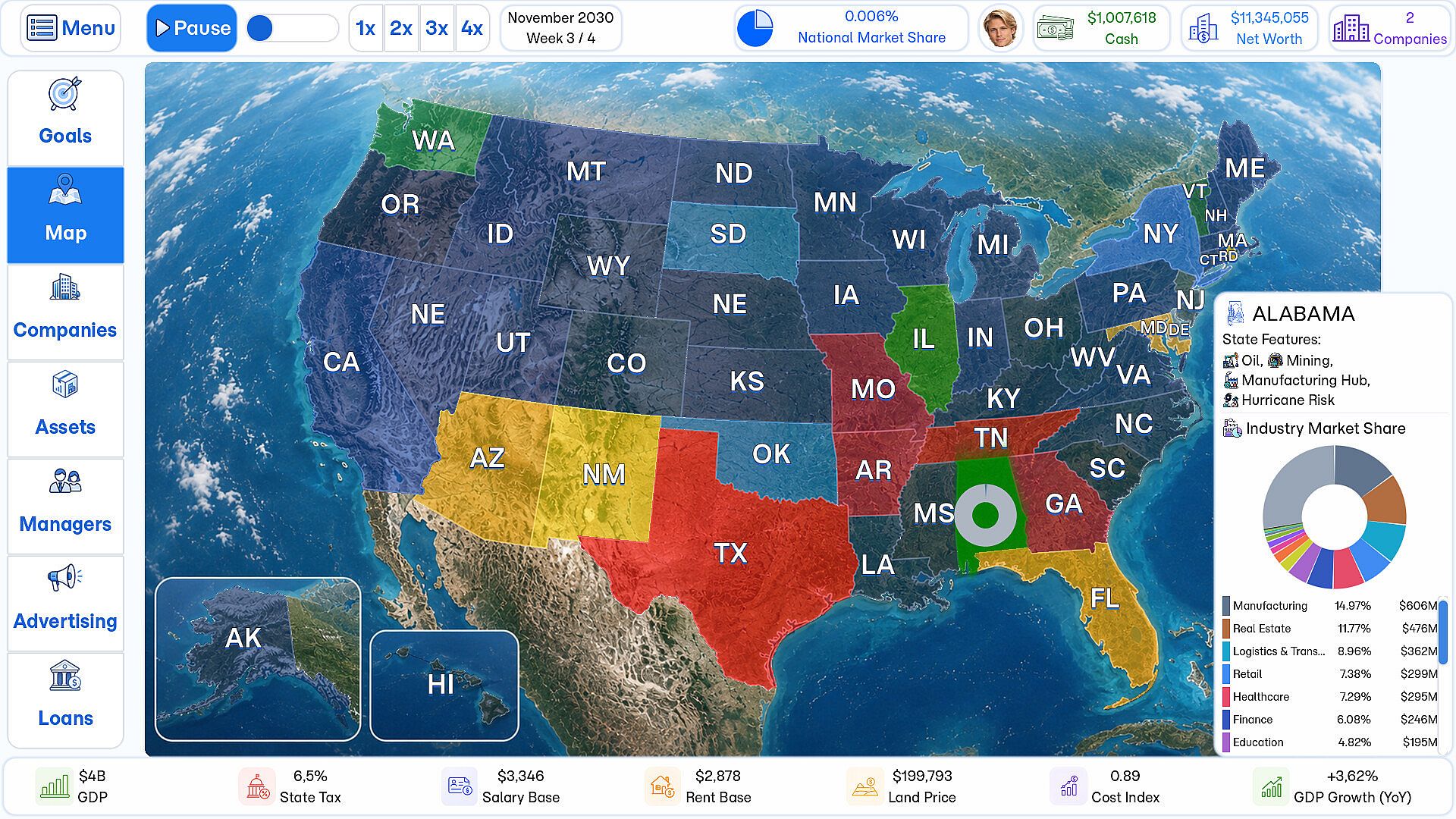
Every one of the 50 U.S. states presents distinct economic conditions. Operating costs, salaries, rent, land prices, and industry opportunities differ by region, so a profitable approach in one state may underperform in another. Players must adapt strategies to local market sizes and costs while competing for state and national market share.
Financial tools include loans that provide extra capital for faster growth. However, excessive borrowing risks insolvency if obligations cannot be met. Random events such as economic downturns, natural disasters, political shifts, employee issues, and management problems can interrupt plans and require quick adjustments to maintain progress toward larger valuations.
Game Modes
Business Tycoon operates as a single-player experience focused on long-term empire building. The primary mode involves starting small and scaling operations across states and industries until companies generate billions and then trillions in value while securing meaningful portions of the national economy. Progression relies on careful financial management, asset expansion, and response to in-game events rather than separate named modes or multiplayer sessions.
Core systems emphasize ongoing monitoring of expenses and revenue streams alongside decisions about hiring managers and launching advertising. Expansion continues through repeated cycles of investment and adaptation until the player dominates targeted markets.
Key Mechanics and Systems
Asset management forms a central pillar. Players create multiple companies, open new locations, increase their capacity, and apply upgrades to boost output and efficiency. Market share competition occurs at both state and national levels, with the end goal of controlling entire sectors.
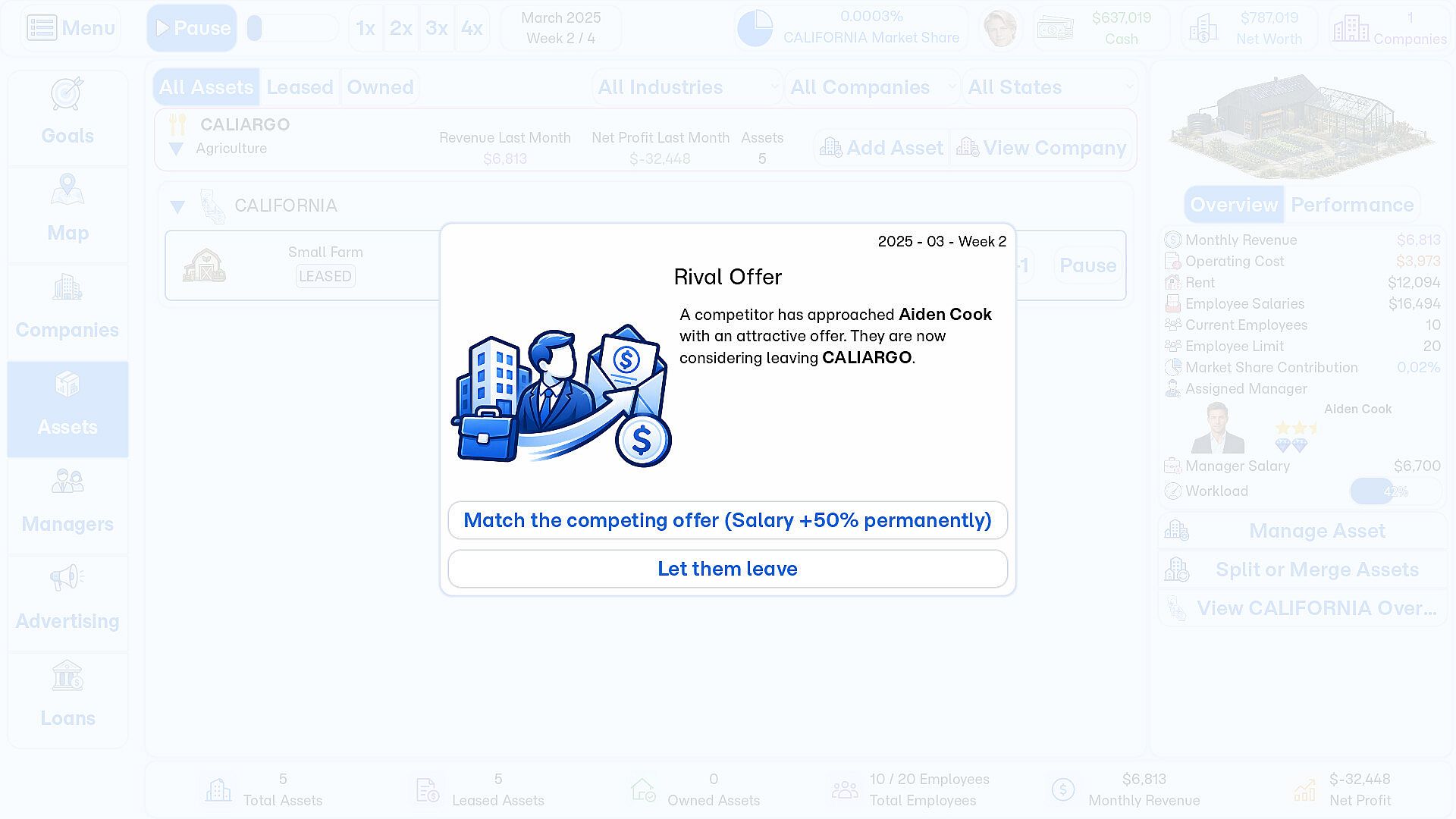
Event handling adds variability. Economic downturns, natural disasters, political changes, industry crises, and internal corporate problems force players to revise strategies mid-expansion. These elements interact with the differing economies of each state to create varied playthroughs.
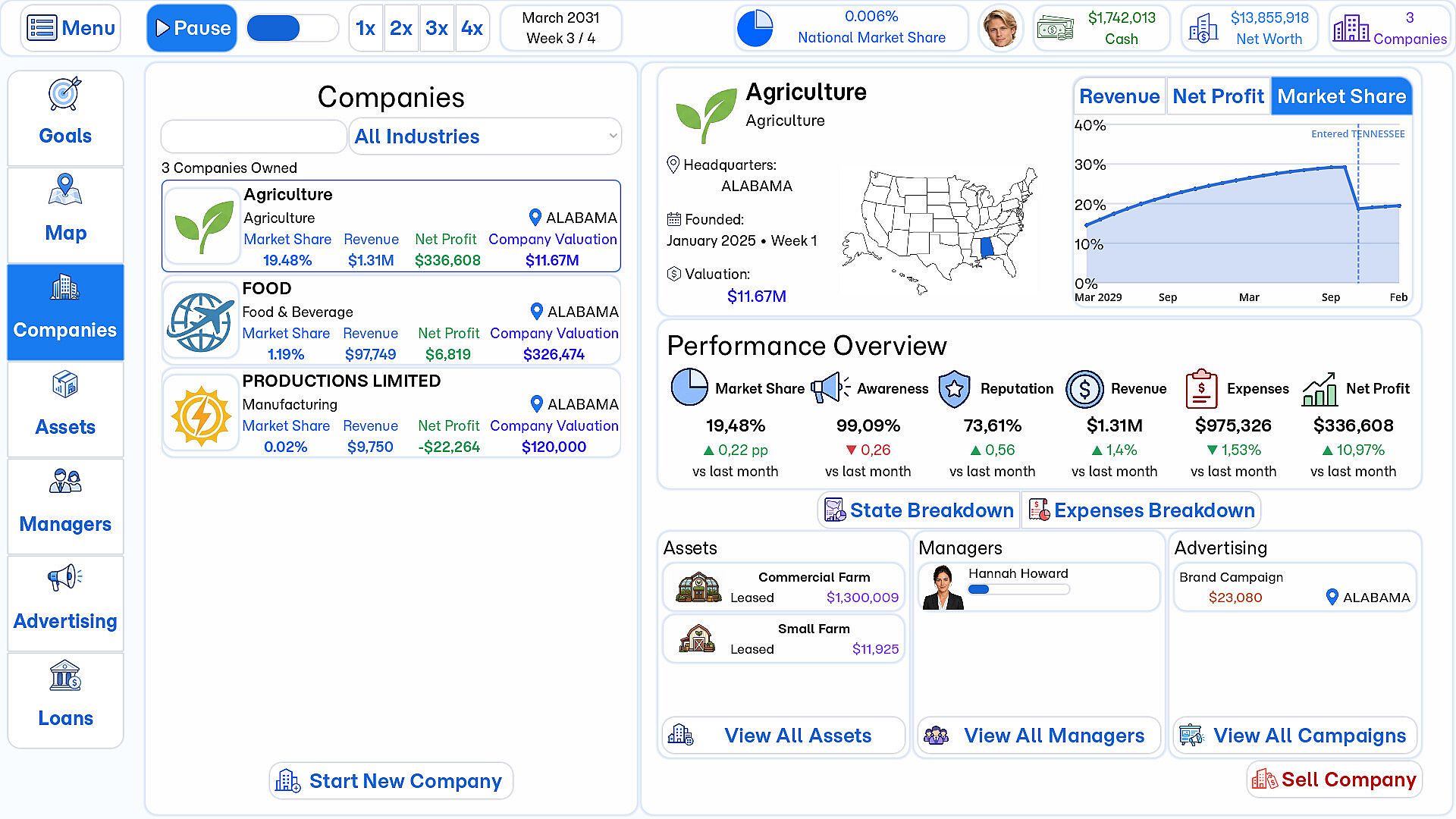
Financial oversight includes revenue tracking, profit analysis, valuation monitoring, and market share calculations. Loans serve as a double-edged tool that accelerates growth when used prudently but can lead to bankruptcy if mismanaged.
Is It Worth Playing?
Business Tycoon suits players who enjoy detailed economic simulations and incremental empire-building without multiplayer elements. The emphasis on state-specific economies, industry variety, and event-driven challenges provides depth for those interested in long sessions of financial strategy and adaptation. As an upcoming title with no user reviews available yet, its appeal rests on the described systems of asset expansion, loan management, and market competition across 50 unique regions. Those seeking a focused single-player tycoon experience centered on realistic business variables may find it aligns with their preferences once released.











