

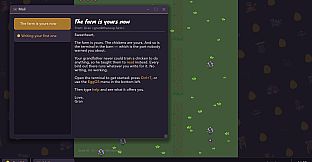
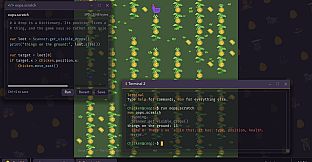
ChickenScratch: Cluck & Code is a single-player strategy, indie, and simulation game for PC in which players program a chicken to navigate fields, collect resources, and survive threats through real code rather than direct control.
Gameplay
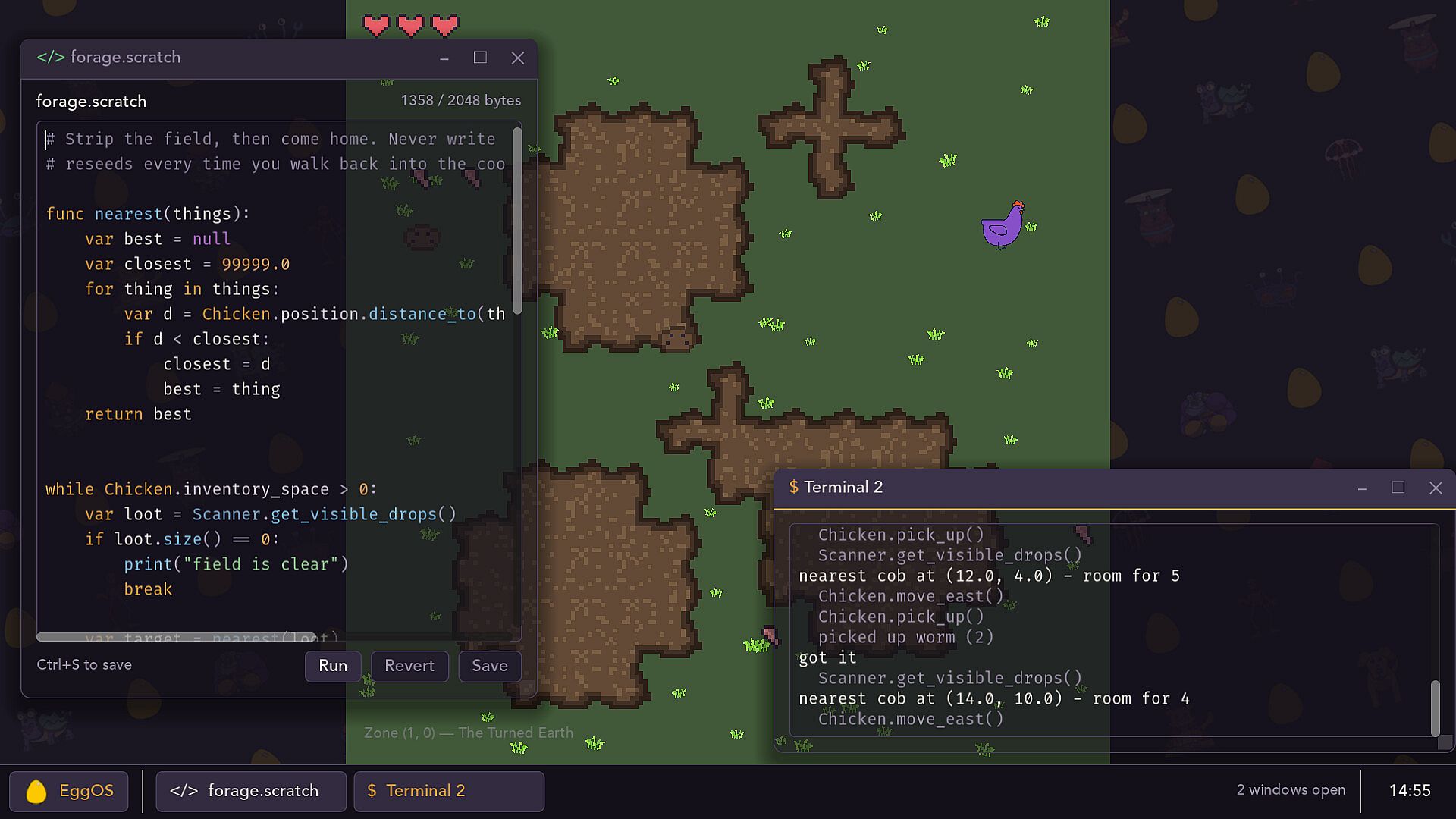
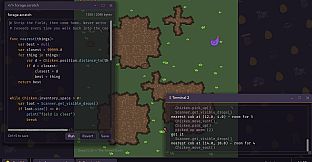
The core loop centers on writing scripts in a terminal and text editor that direct the chicken across a five-by-five grid of zones. There are no movement keys or manual steering. Instead, scripts use commands such as move directions and pick_up to handle actions, with the bird executing them one instruction at a time on its own virtual machine. The language matches GDScript syntax exactly, including significant indentation, variables, functions, conditionals, loops, arrays, and dictionaries.
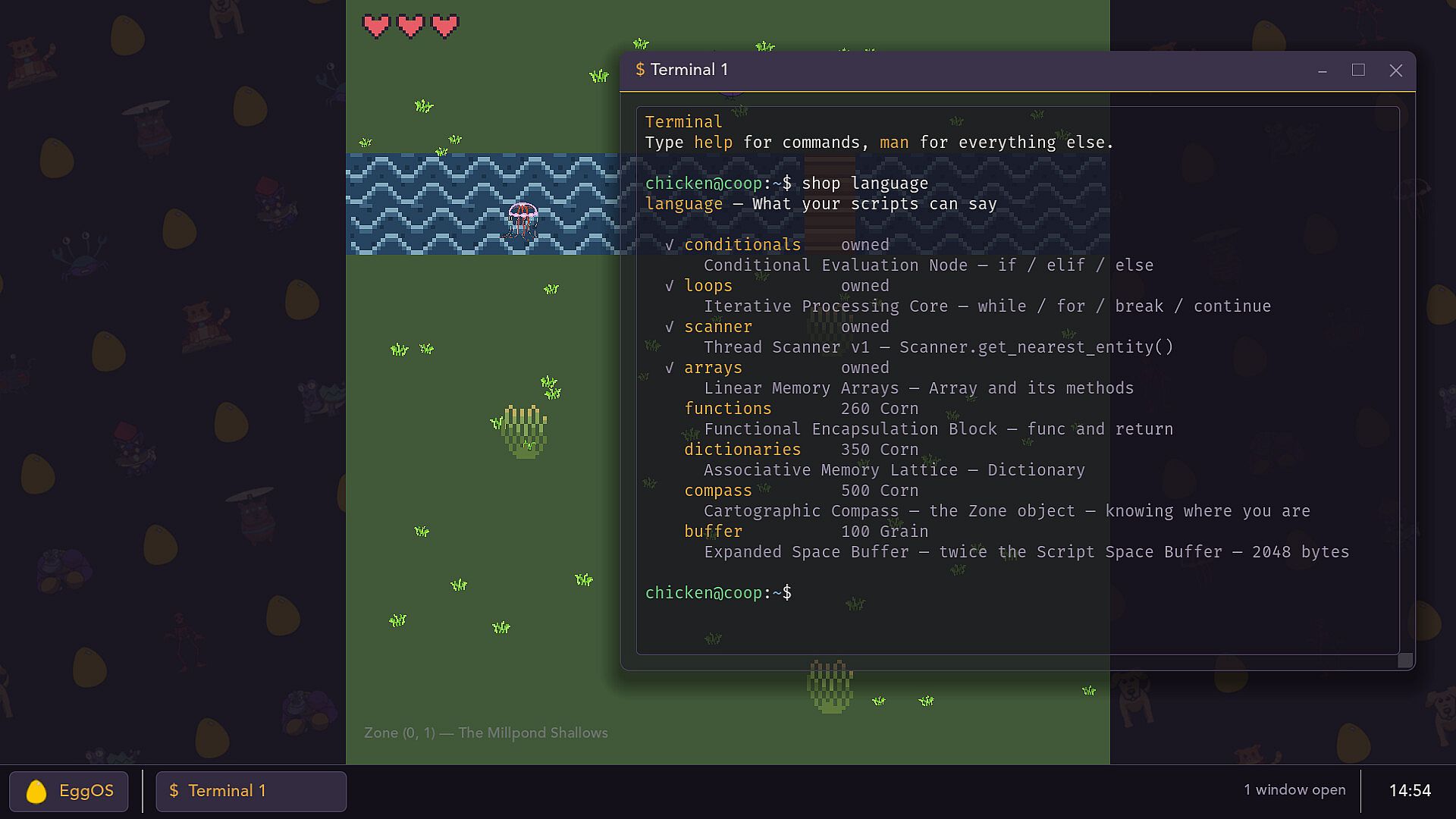
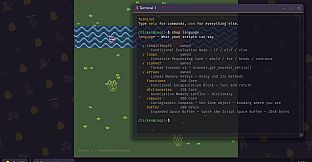
Upgrades purchased from the shop expand available syntax rather than providing numerical boosts. Early purchases introduce if statements and loops, while later ones add lists and coordinate memory. Each run begins with basic straight-line movement, and progress toward advanced behaviors like searches comes from repeated successful trips that fund the next syntax node.
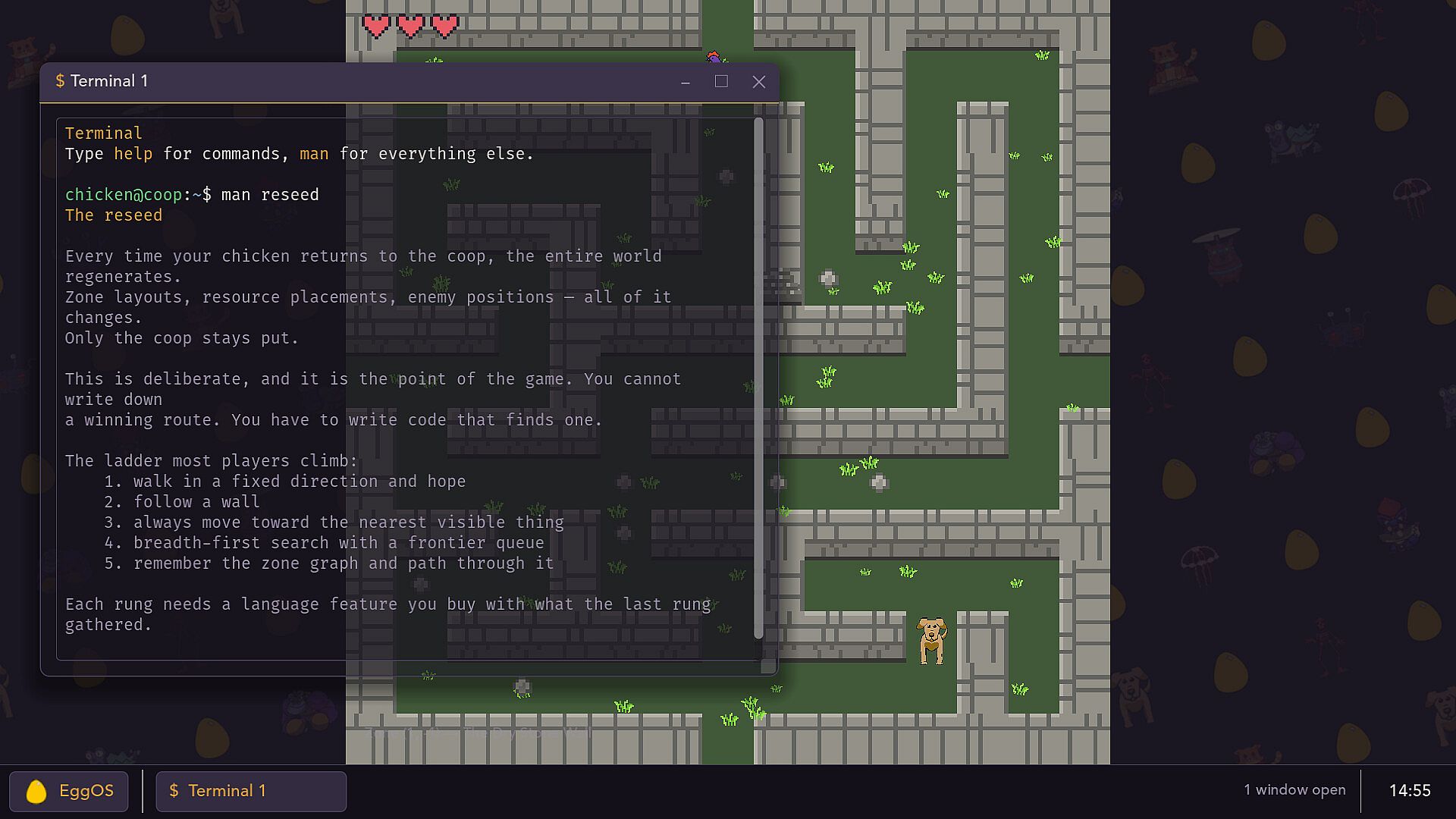
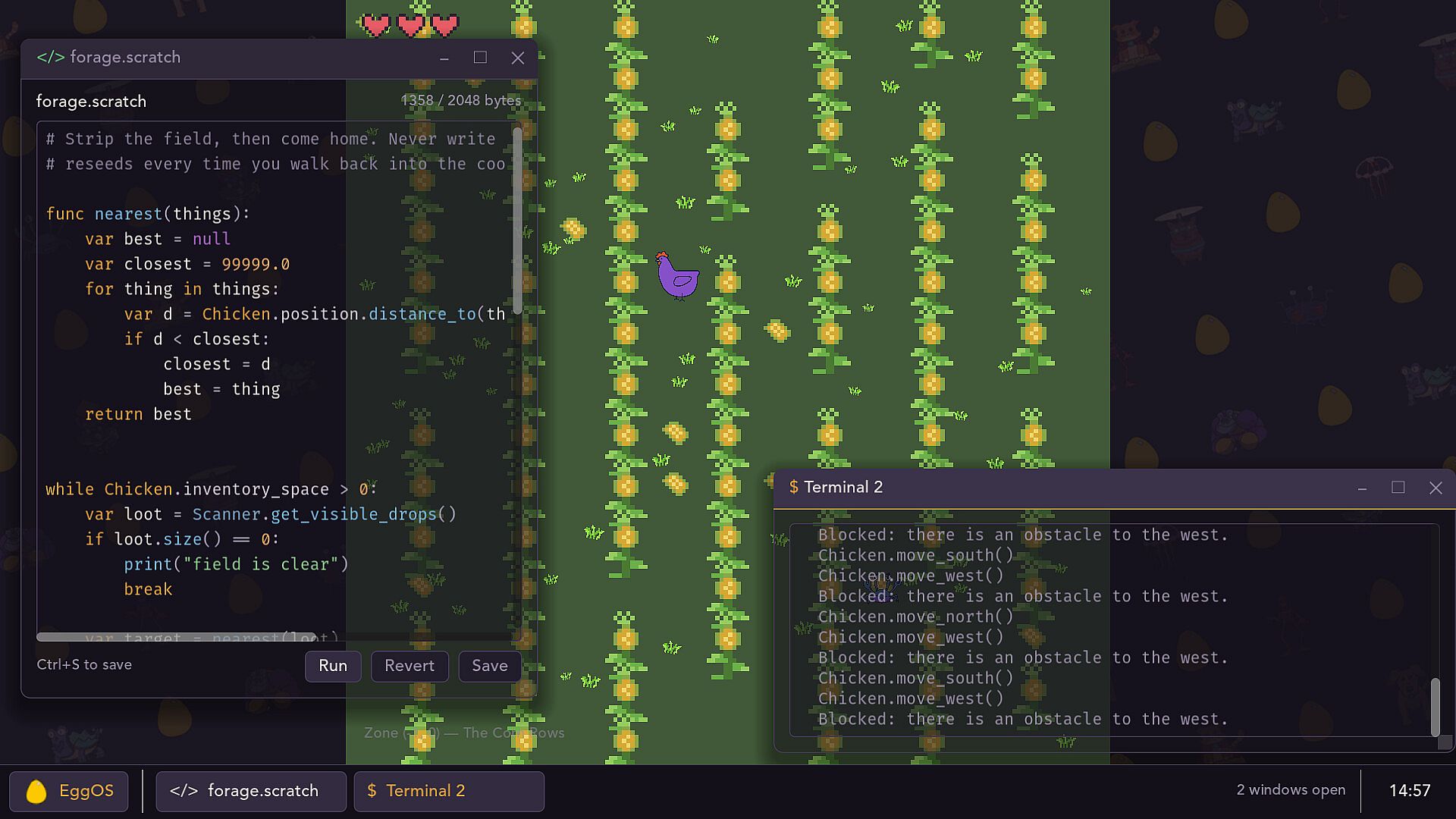
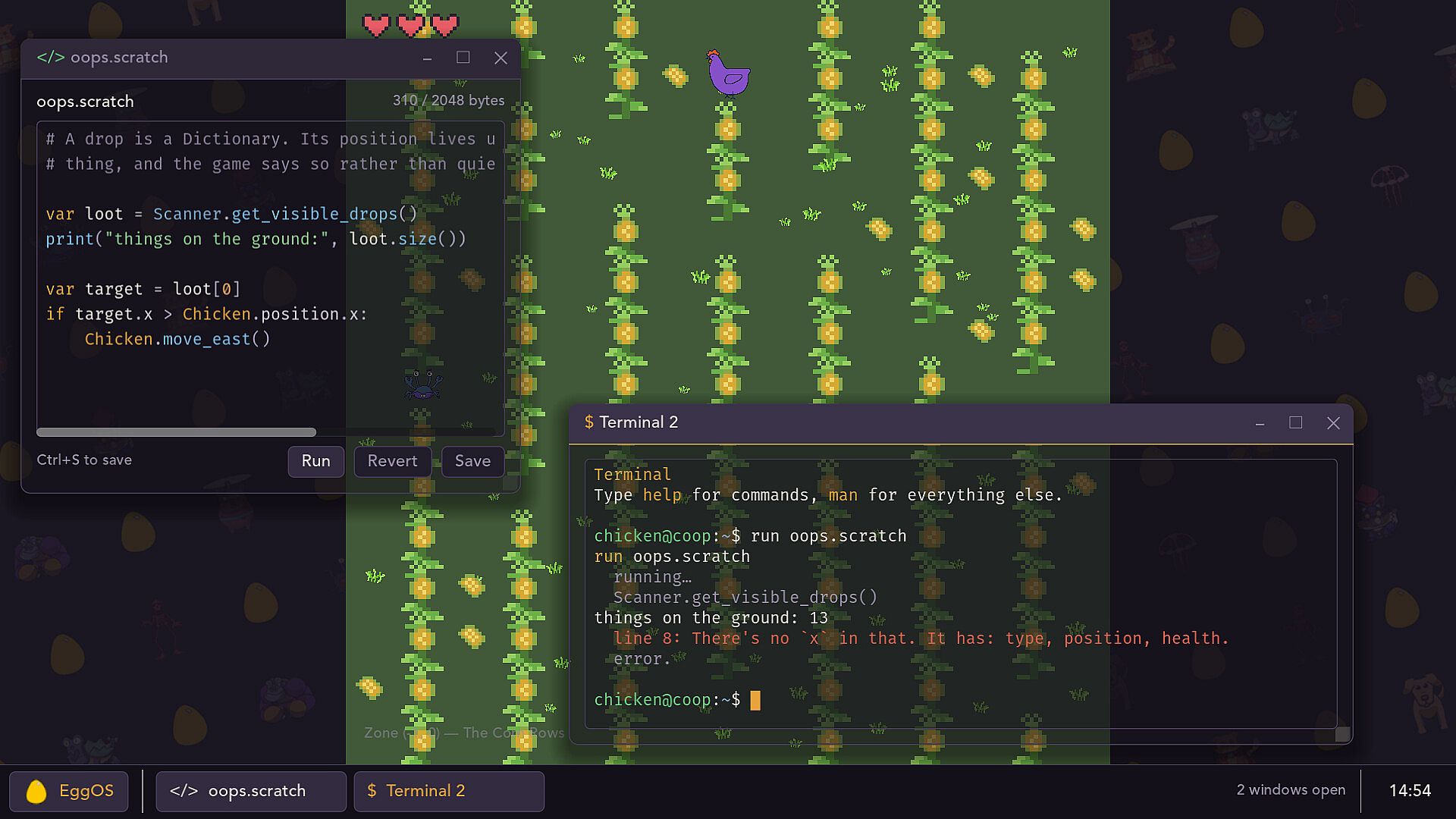
The environment resets every time the chicken returns to the coop, regenerating layouts, item positions, and enemy placements across all twenty-five zones. Specific zone types remain consistent in theme, such as corn rows that offer cover or turned earth that slows movement, but routes change each time. Errors from impossible commands return clear feedback about available options, turning failures into data for refining scripts. A crab enemy can end runs after two hits, though banked resources stay safe.
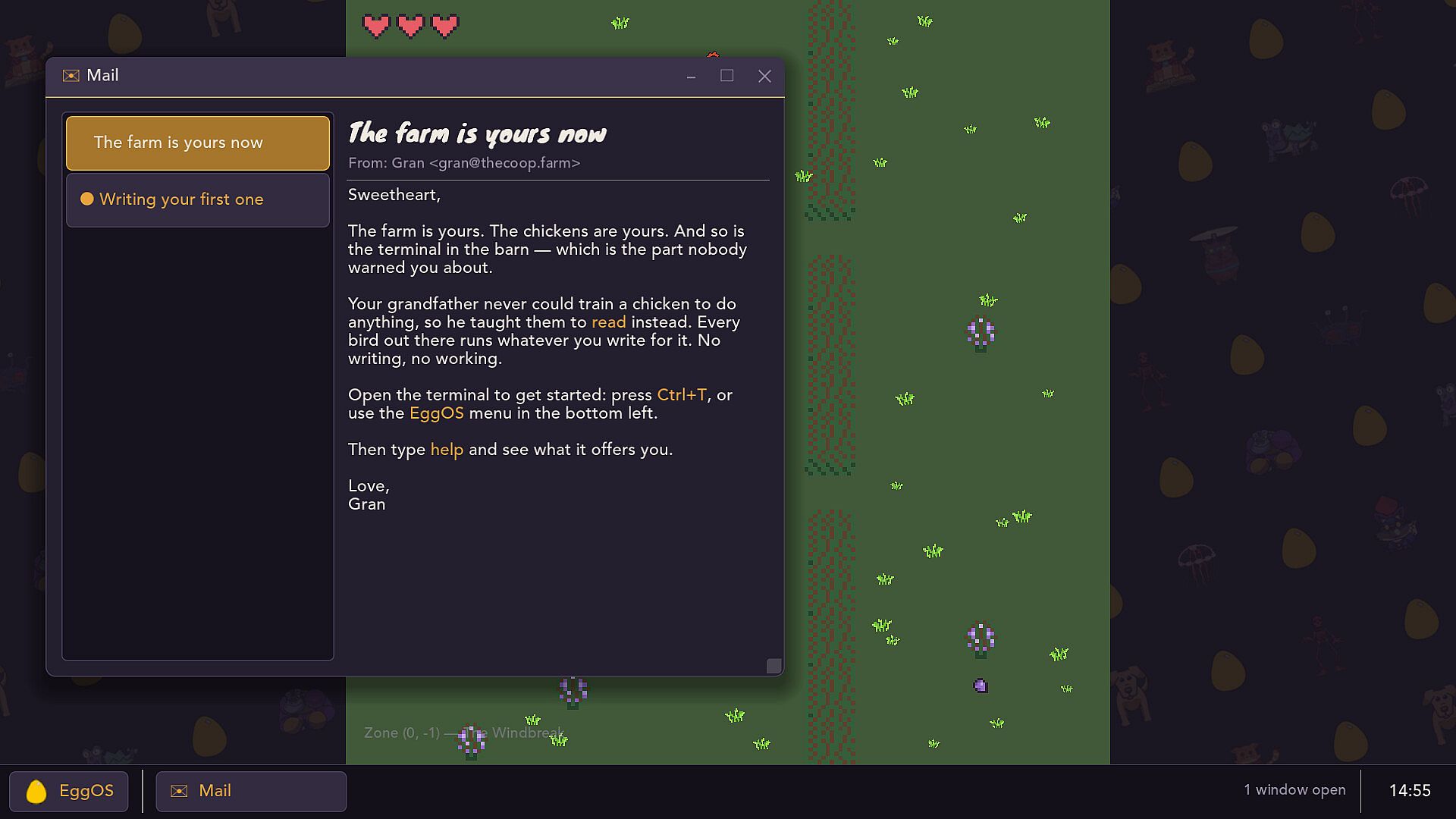
The interface functions as a complete desktop environment with commands for file management, a vim-style editor, and a manual that documents the language and bestiary. Multiple terminals allow parallel scripts, though they share control of the single chicken and can conflict if both issue movement commands.
Game Modes
The game operates exclusively in single-player mode. All activity takes place within the persistent farm simulation where runs feed into long-term progression through the shop and saved resources. No separate multiplayer, co-op, or competitive modes exist.
Progression and World Structure
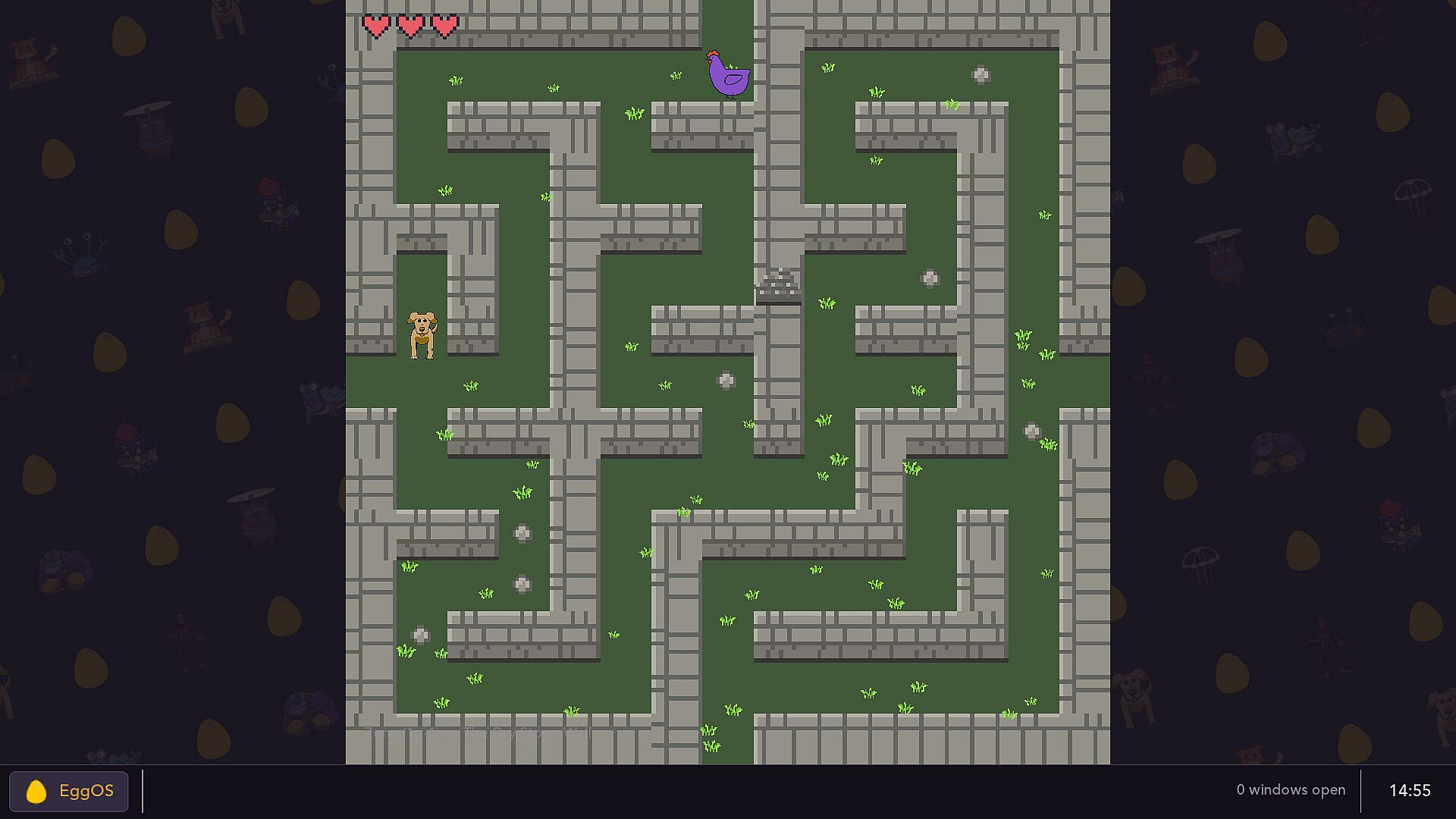
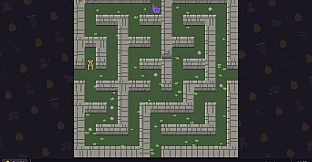
Zones teach distinct lessons through their mechanics. Corn rows require awareness of the crab's patrol patterns for safe passage. Turned earth introduces moving resources and slowing terrain. Windbreaks present choices between gaps whose distances vary by position. Later areas add water that requires tools, mazes that reward wall-following, and outer regions with ore, bogs, and packs that demand specific equipment or weapons.
Scripts improve through iteration rather than raw speed. A blocked move returns false instead of halting execution, supplying information that helps locate paths without prior knowledge. The absence of an instruction limit encourages readable code that measures distances or checks conditions before acting. The world never pauses during editing, so the crab continues its route while the player refines logic.
Is It Worth Playing?
ChickenScratch: Cluck & Code suits players interested in programming practice framed as resource management and exploration. The single-player structure emphasizes careful script design and adaptation to procedural layouts over twitch reflexes or competitive elements. With a planned release in Q4 2026 and no user reviews available yet, the experience remains untested by a broad audience. Those who enjoy coding challenges or simulation games built around logic and observation will find the systems align closely with that preference, while others seeking traditional action or multiplayer options may prefer titles with different mechanics.