




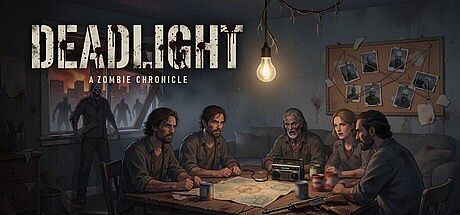


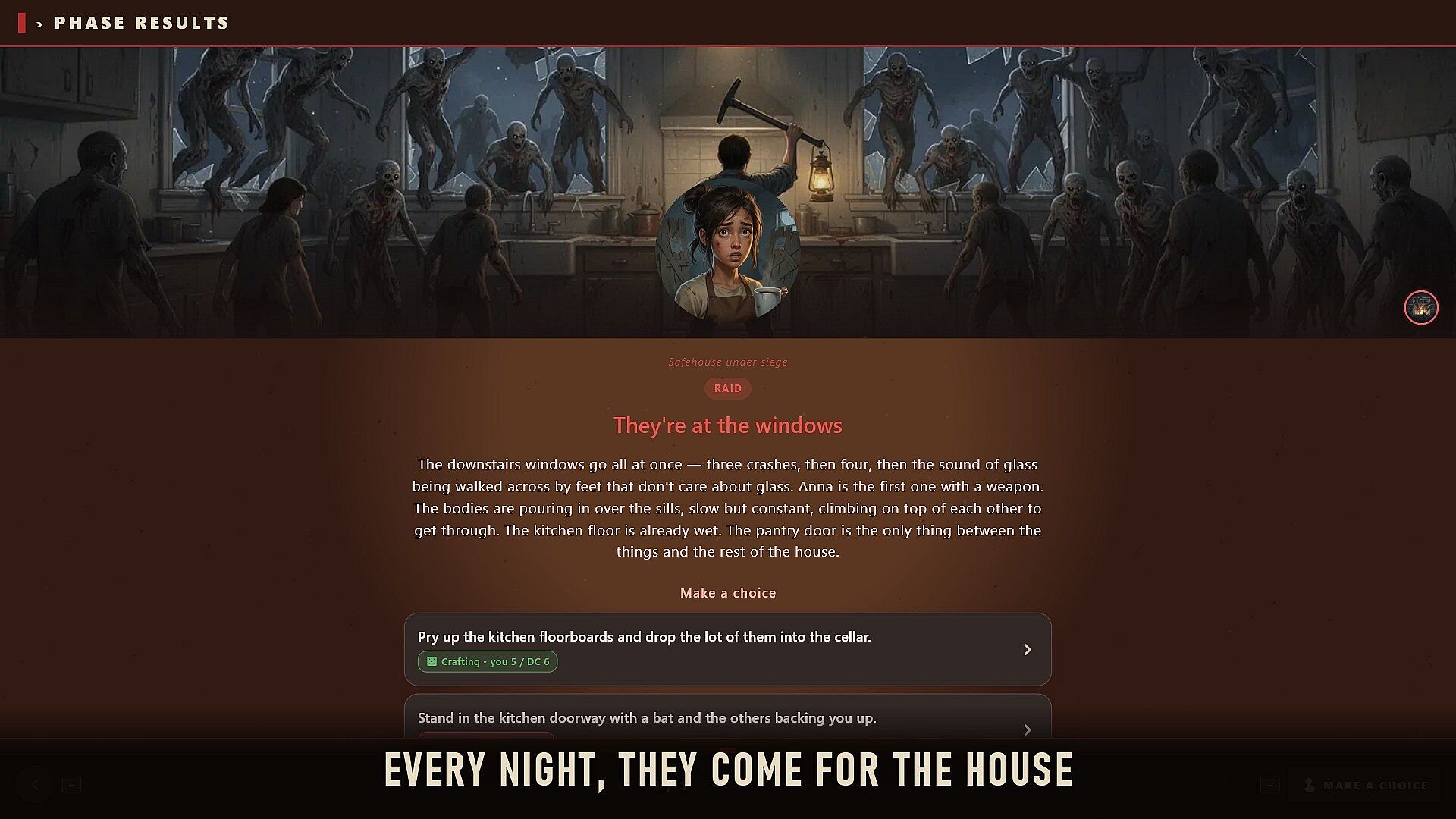
Deadlight: A Zombie Chronicle is a singleplayer survival management simulation set in the aftermath of a zombie outbreak. Players oversee a small group of survivors sheltering in a suburban house, balancing daily needs against the constant threat of raids and resource shortages. The core loop revolves around assigning tasks across morning, afternoon, and night phases while preparing for the dangers that arrive after dark.
Gameplay
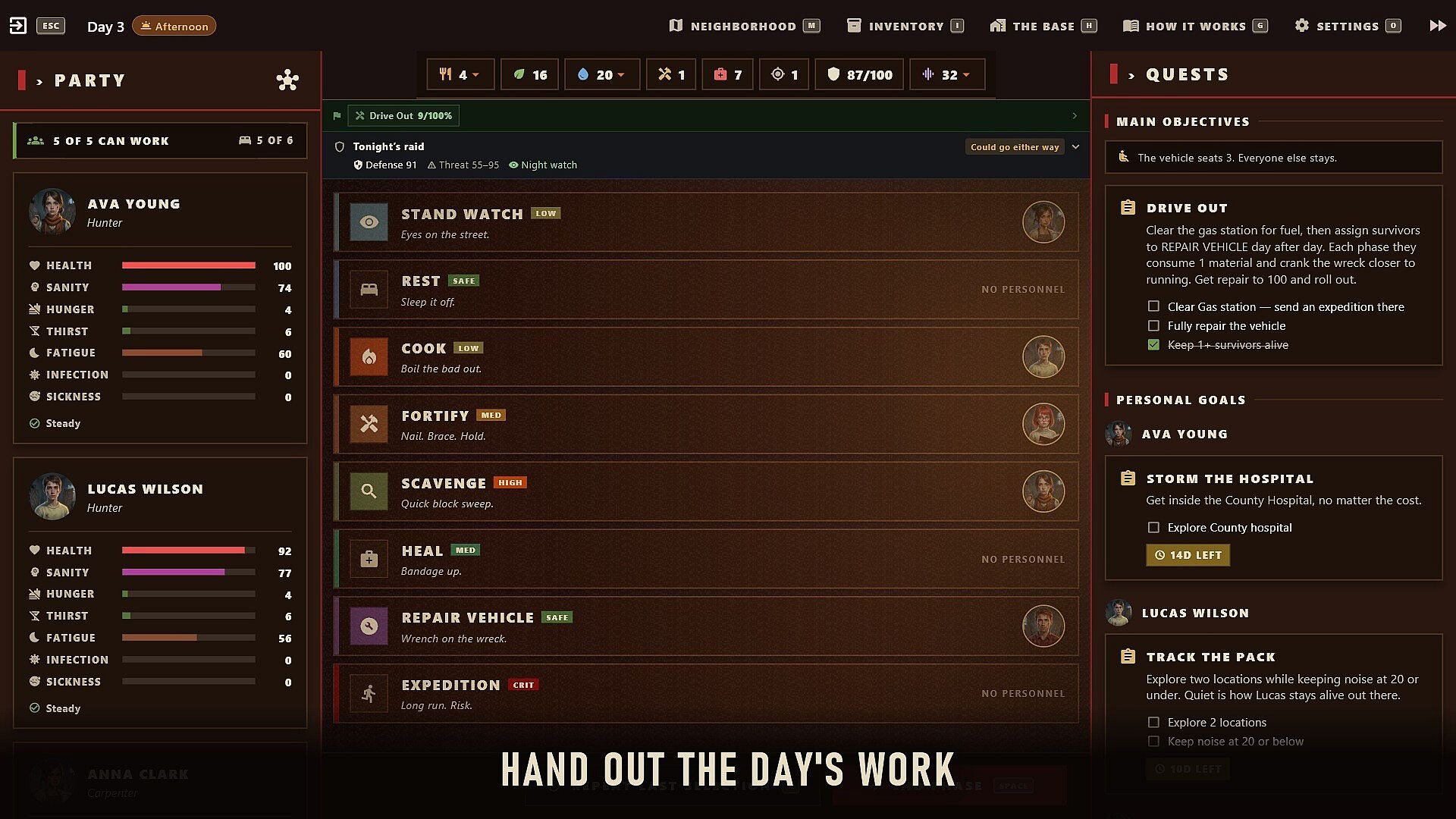
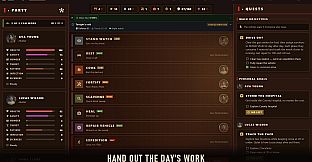
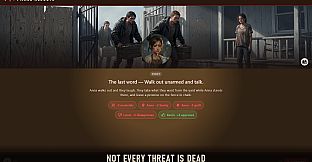
Each day unfolds in three distinct phases where survivors receive specific assignments such as standing watch, resting to recover, cooking meals, fortifying defenses, scavenging nearby locations, healing the injured, repairing a vehicle, or venturing out on expeditions. Survivors carry individual backgrounds from their pre-apocalypse lives along with personal quirks and relationships that influence group dynamics. Hunger, thirst, fatigue, illness, and fear accumulate over time, and mismanagement can lead to breakdowns or conflicts between incompatible teammates.
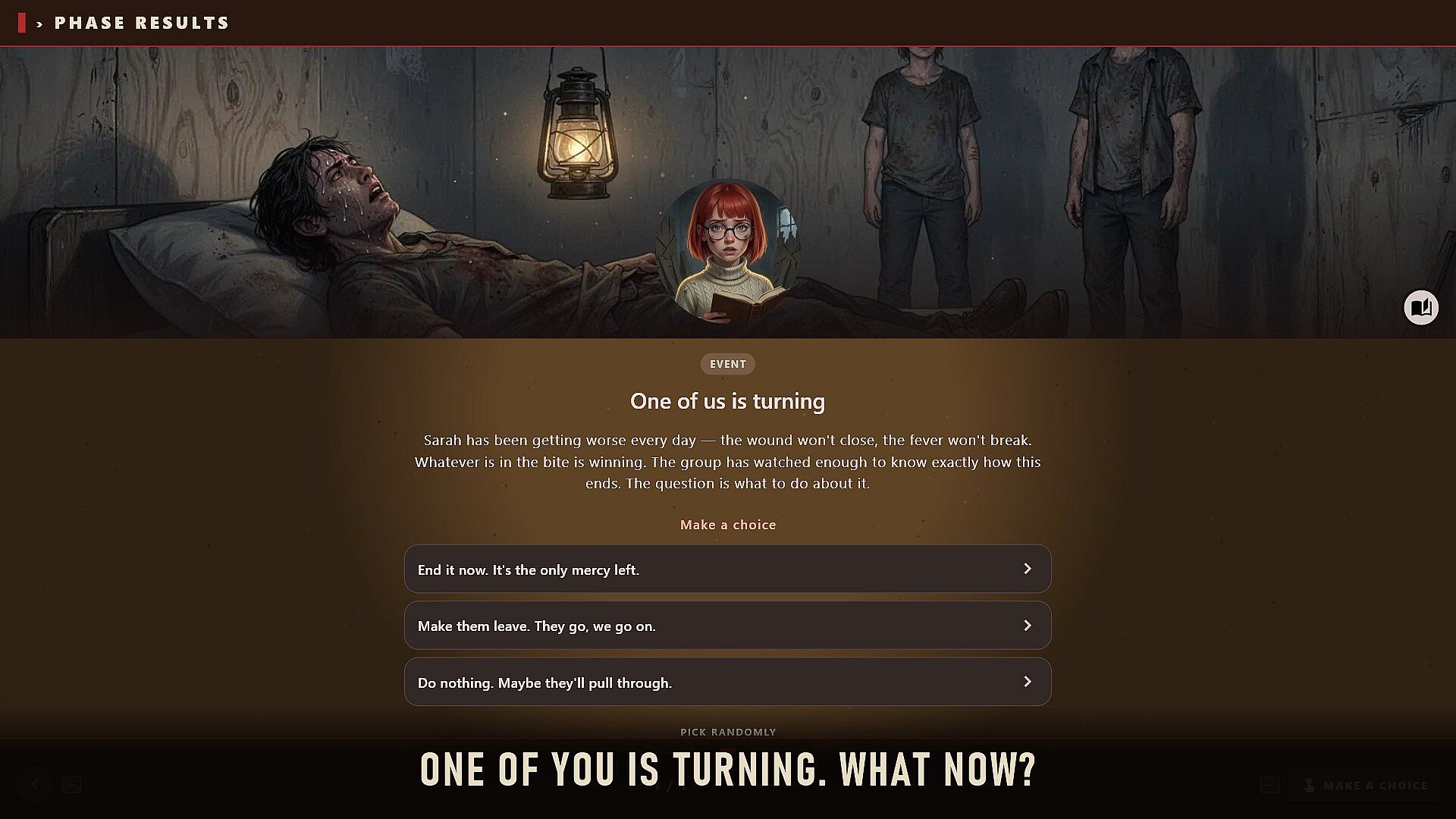
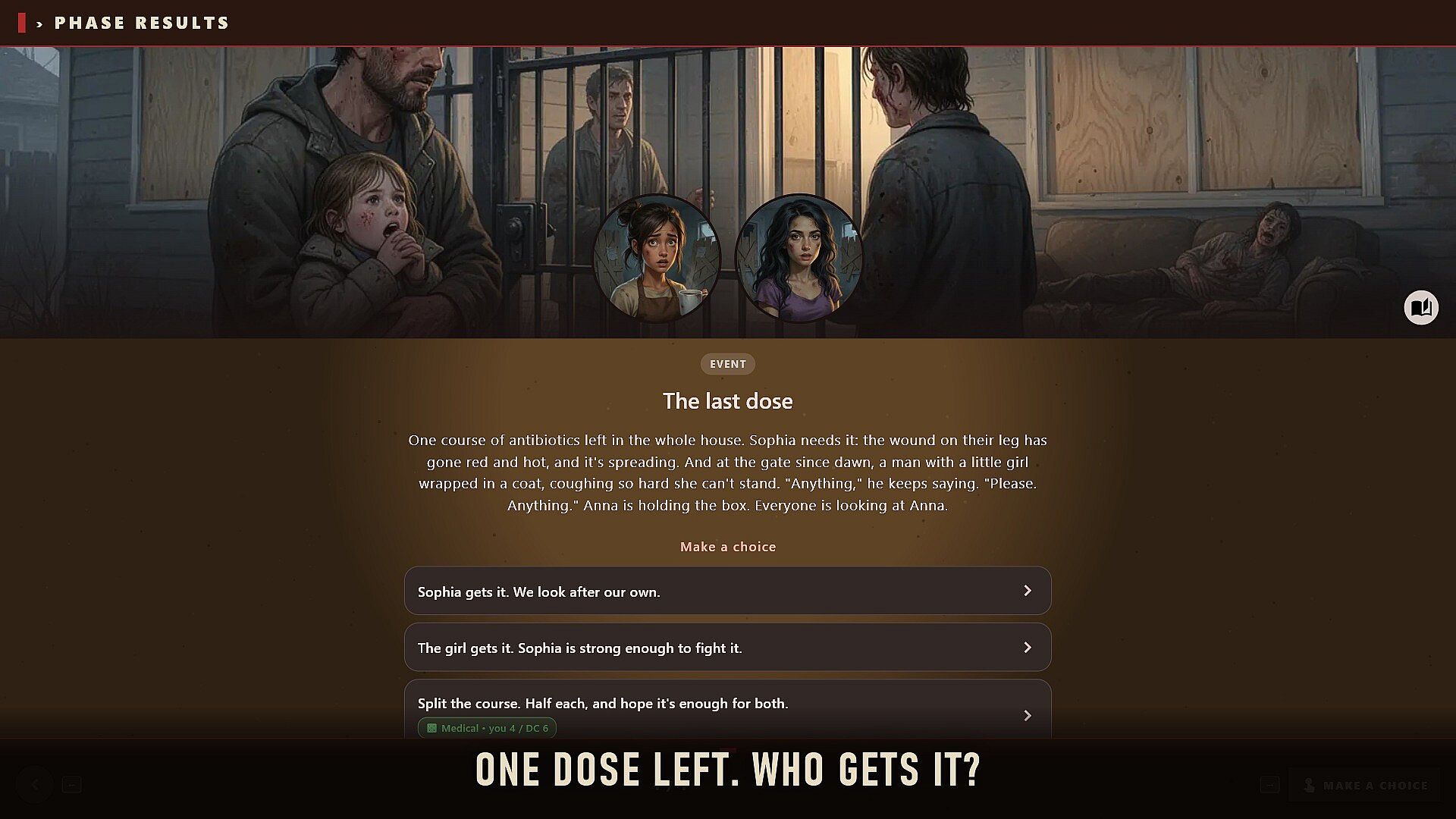
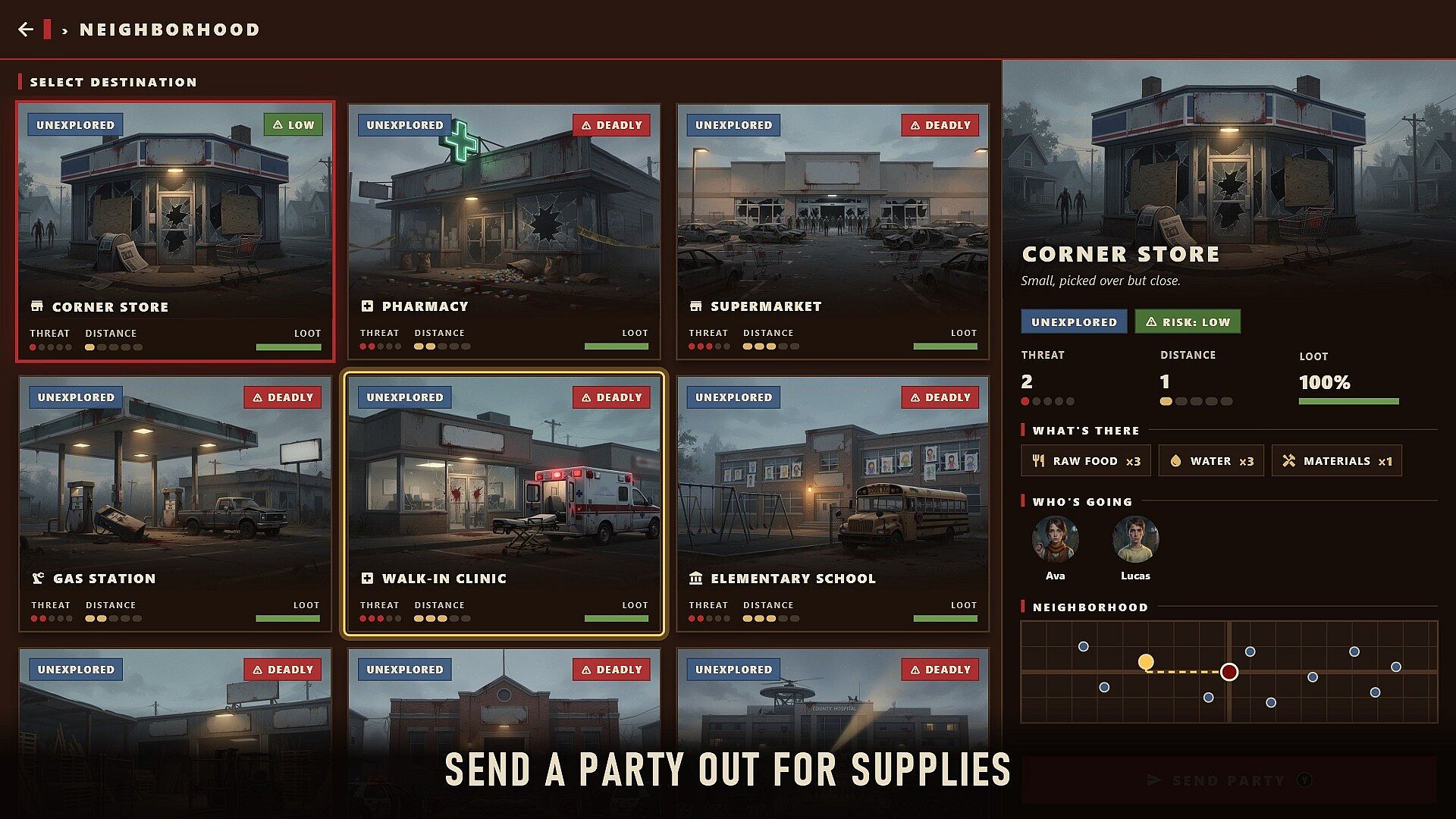
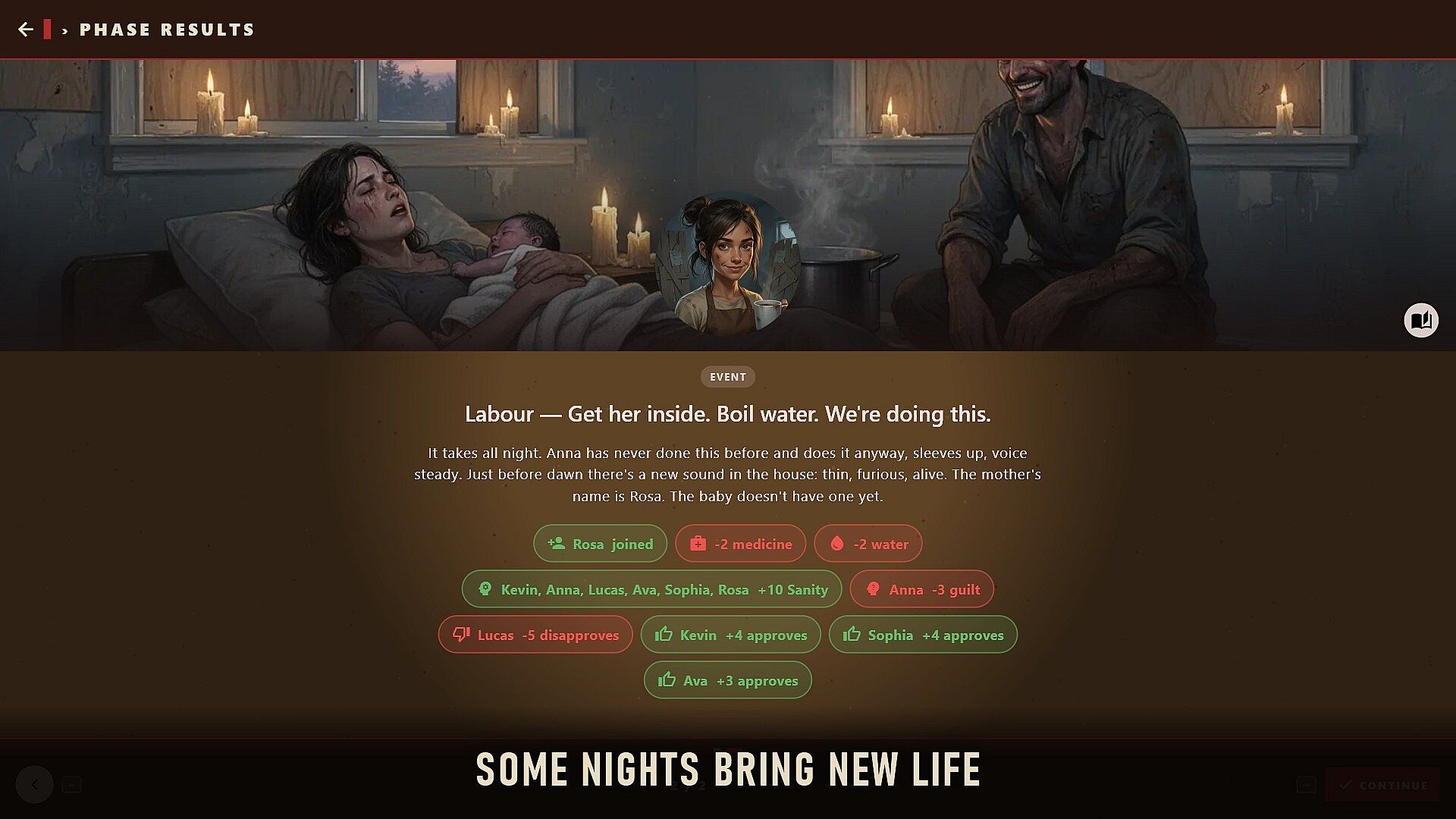
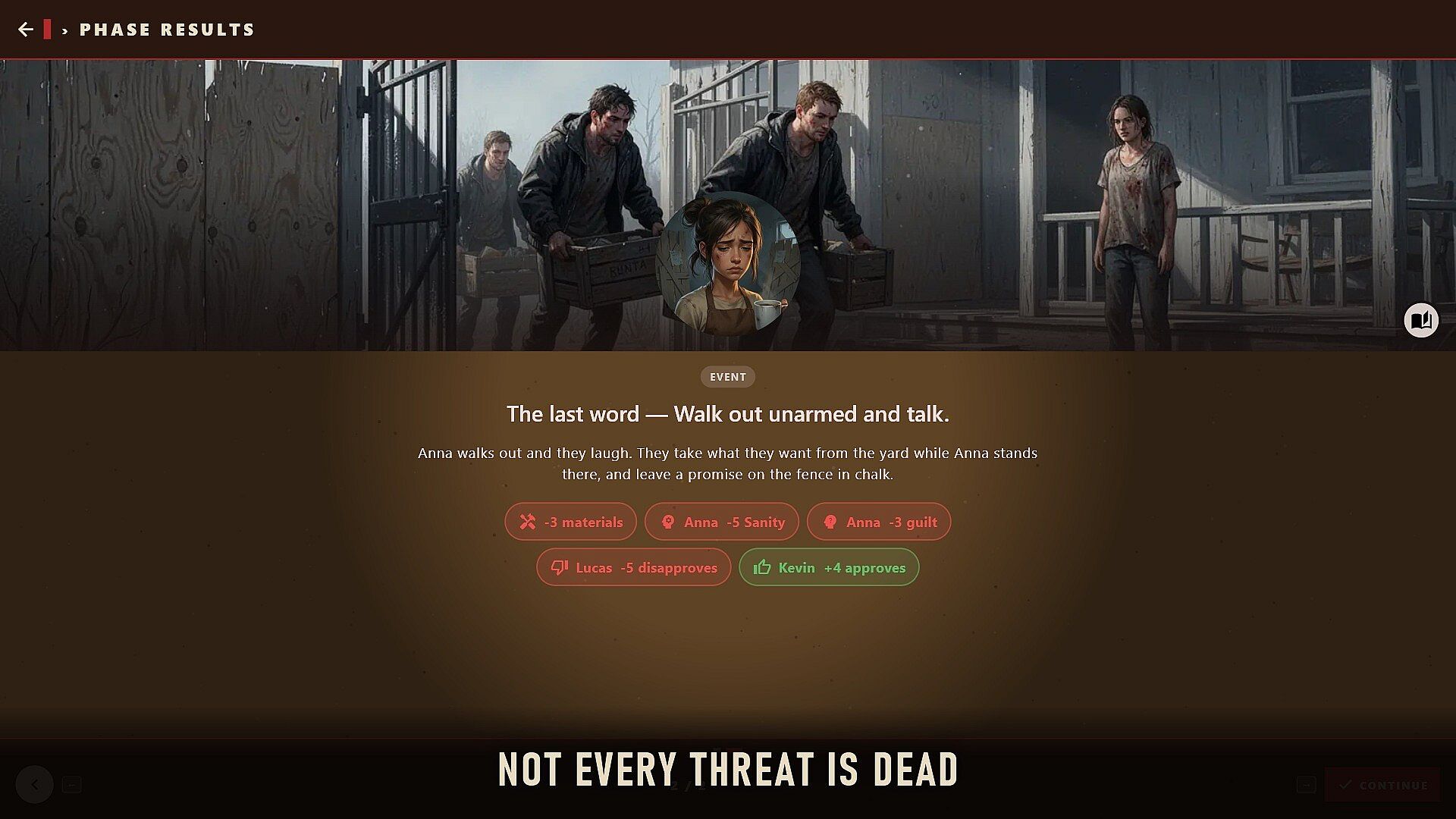
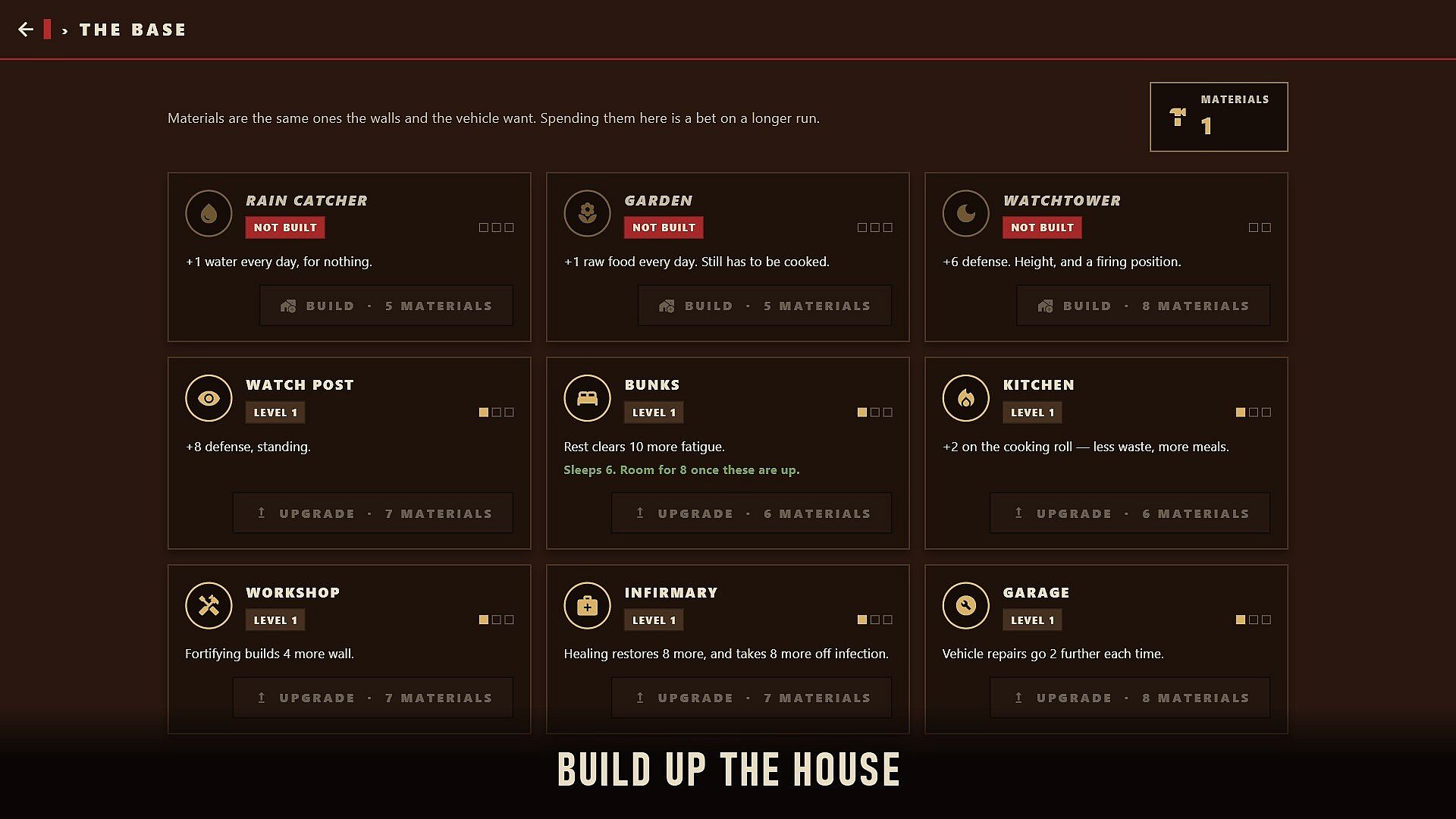
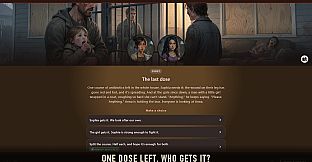
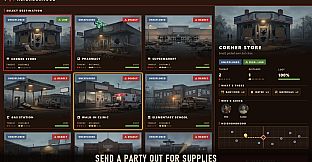
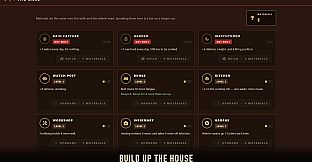
The neighborhood map offers ten distinct scavenging sites, each presenting unique risks and potential rewards in supplies or equipment. Players review a raid forecast before committing to nightly defenses and navigate more than 170 narrative events that often carry forward consequences for the group. Personal goals for each survivor run alongside the primary objective of long-term survival, while house upgrades like rain catchers, gardens, and watchtowers expand options for sustainability. The command interface consolidates survivor status, house conditions, and objectives on a single screen, with full keyboard and controller support plus adjustable display settings.
Game Modes
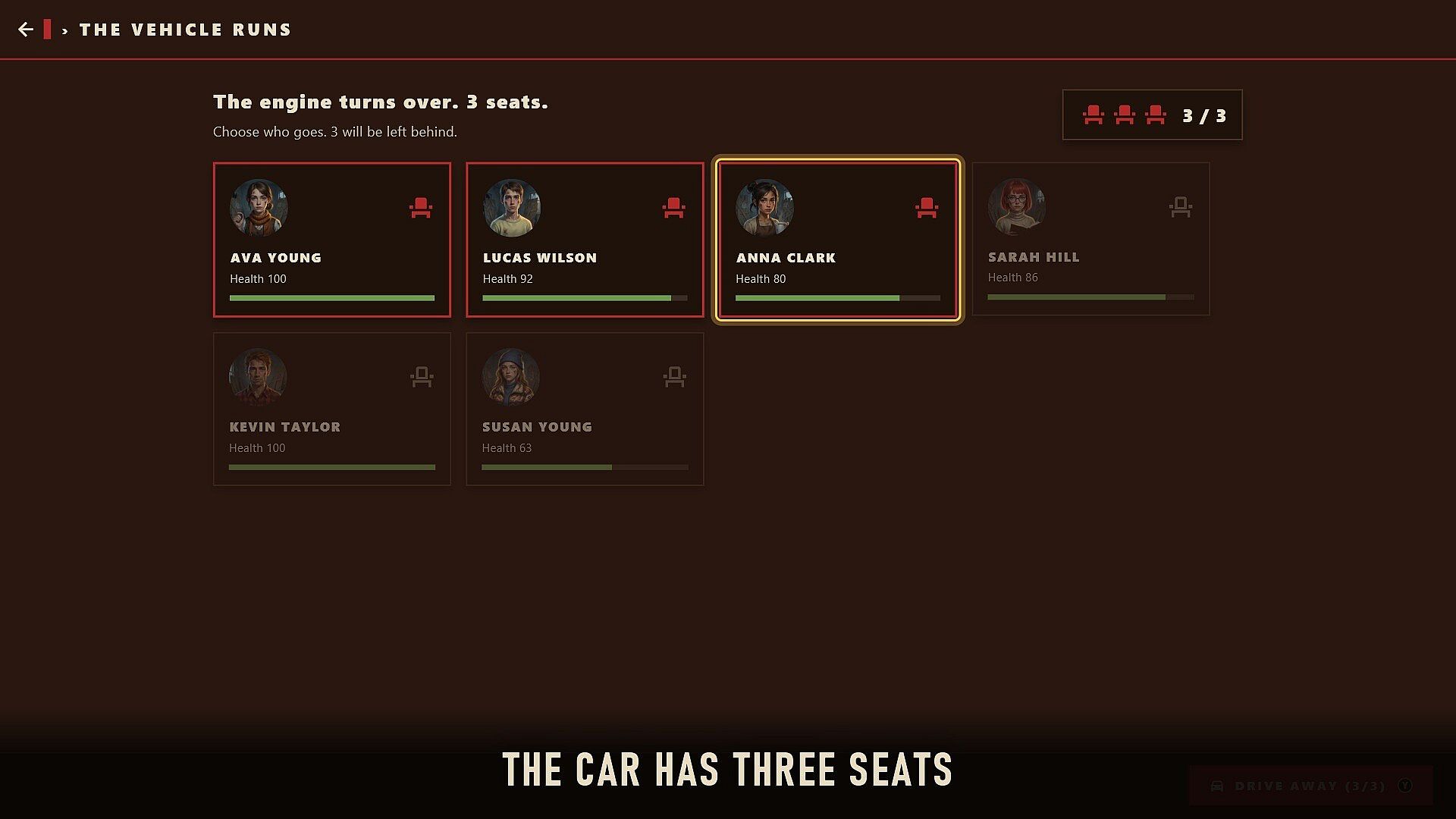
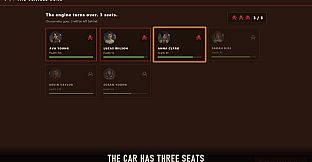
Runs vary in length, with standard attempts spanning roughly three weeks of in-game time and extended versions lasting twice as long. Every playthrough concludes with one of six possible escape routes or survival strategies: repairing and driving away in the old car, signaling a helicopter, reaching a bunker, joining a passing convoy, fortifying the house into a permanent stronghold, or responding to a radio broadcast. Most of these paths accommodate only a limited number of survivors, forcing difficult decisions about who stays behind. The Ledger records the outcome of each attempt, tracking survivors who made it through, those who did not, and the circumstances of any deaths, while granting carryover perks for subsequent runs.
Survivor Management and Base Building
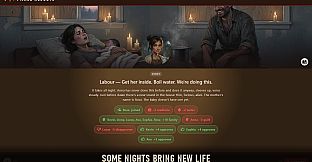
Individual survivors function as distinct characters rather than interchangeable units. Their former professions affect task efficiency, while interpersonal opinions can spark arguments or cooperation depending on shift pairings. Opening the door to outsiders introduces new members who may bring valuable skills like medical expertise or create additional complications through their own needs and conflicts. Base expansion focuses on practical additions that mitigate daily hardships, from water collection systems to improved observation points that aid defense planning.
Expeditions require careful party selection because not every participant returns, and events encountered during these outings or at home often present branching choices with ripple effects across multiple days. The system emphasizes resource allocation under pressure, where overworking individuals risks physical or mental collapse and poor planning leaves the group vulnerable once night falls.
Is It Worth Playing?
Deadlight: A Zombie Chronicle suits players who enjoy deliberate resource and personnel management in a contained zombie survival setting. The emphasis on character relationships, timed daily decisions, and multiple ending paths creates replayability through varied run outcomes and carryover progression. As an Early Access title scheduled for release on November 6, 2026, the game already contains the full core loop including short and long runs, over 170 events, ten scavenging locations, and six distinct endings, with plans for additional content and balance adjustments based on player input. Those drawn to simulation and strategy experiences centered on tough choices and group dynamics will find a focused, self-contained experience without multiplayer elements or ongoing monetization. The single purchase model and broad language support further position it as a complete package for fans of narrative-driven management sims.











