

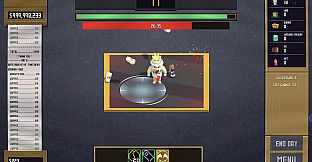
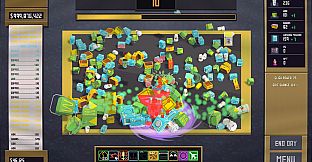
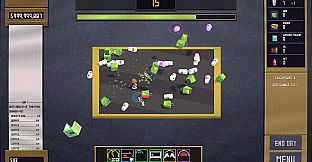
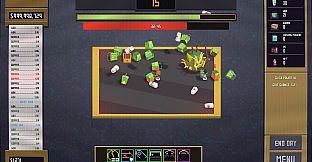
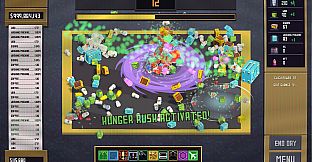
Death by Taxes is an indie casual game for PC that puts players in the role of a billionaire racing to spend down a massive fortune before tax season arrives. The premise flips traditional wealth-building games on their head by making deliberate overspending the path to survival. Starting with one billion dollars, the challenge centers on emptying the account through increasingly extravagant purchases while unlocking tools that accelerate the process.
Gameplay
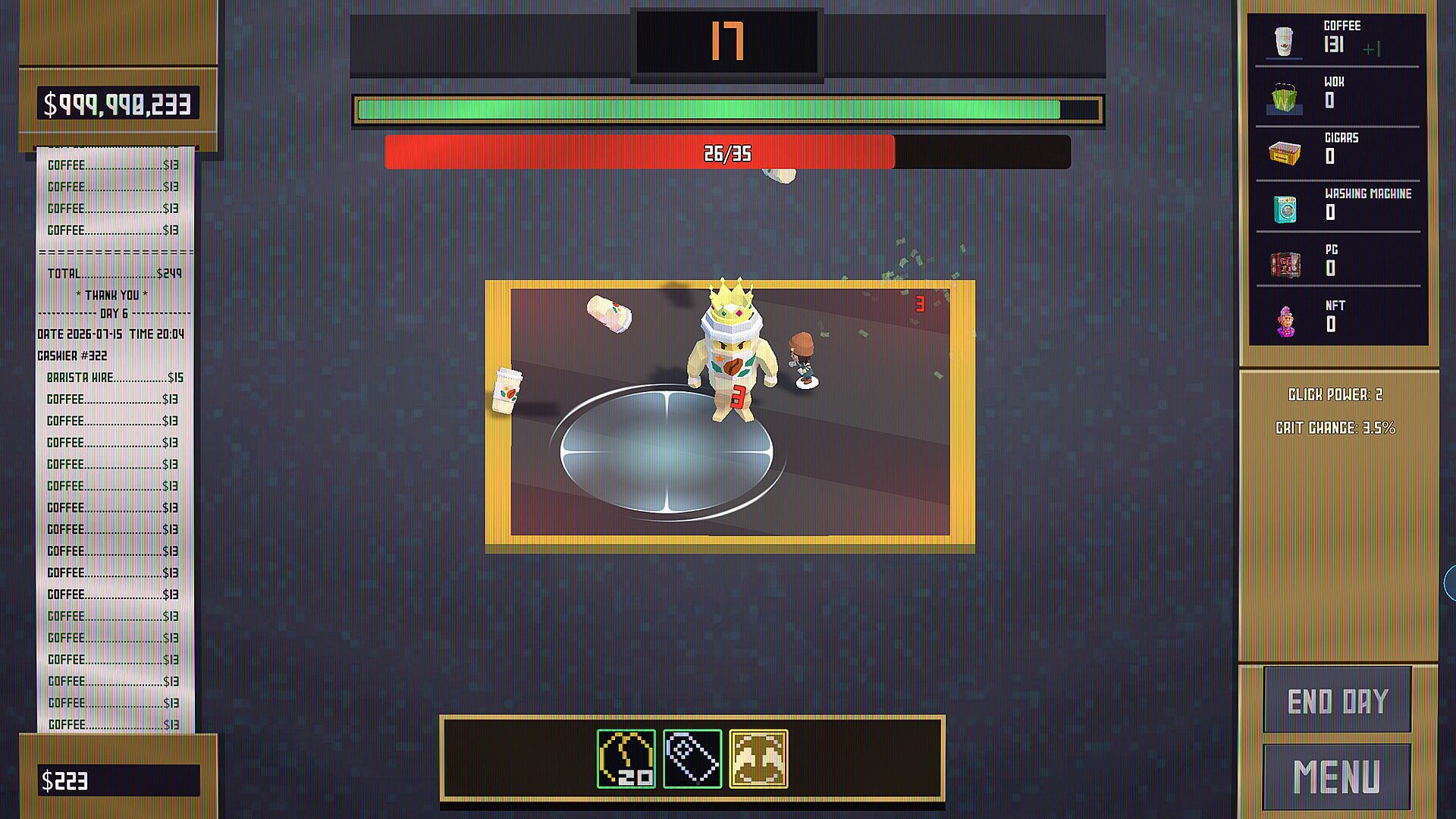
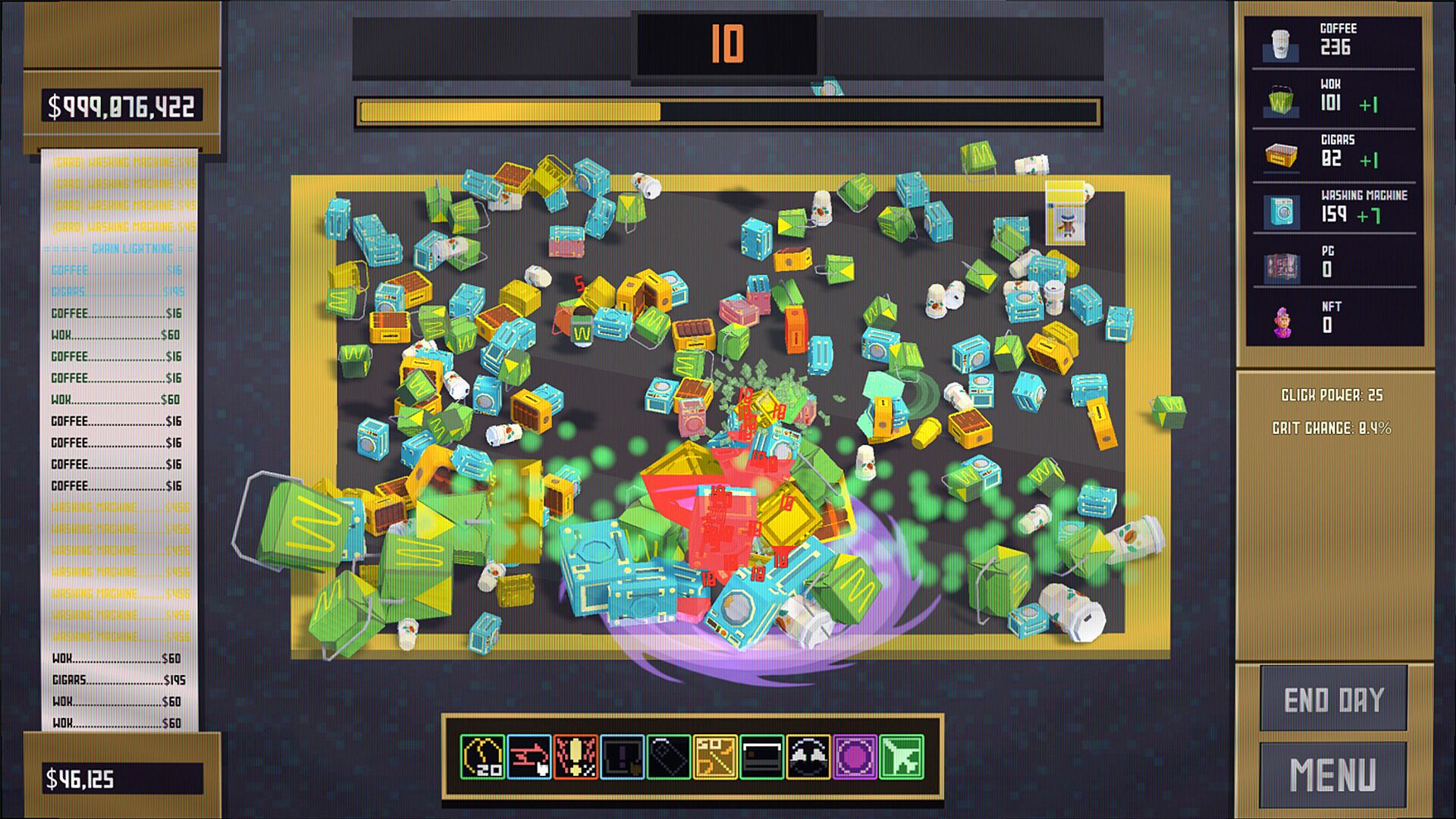
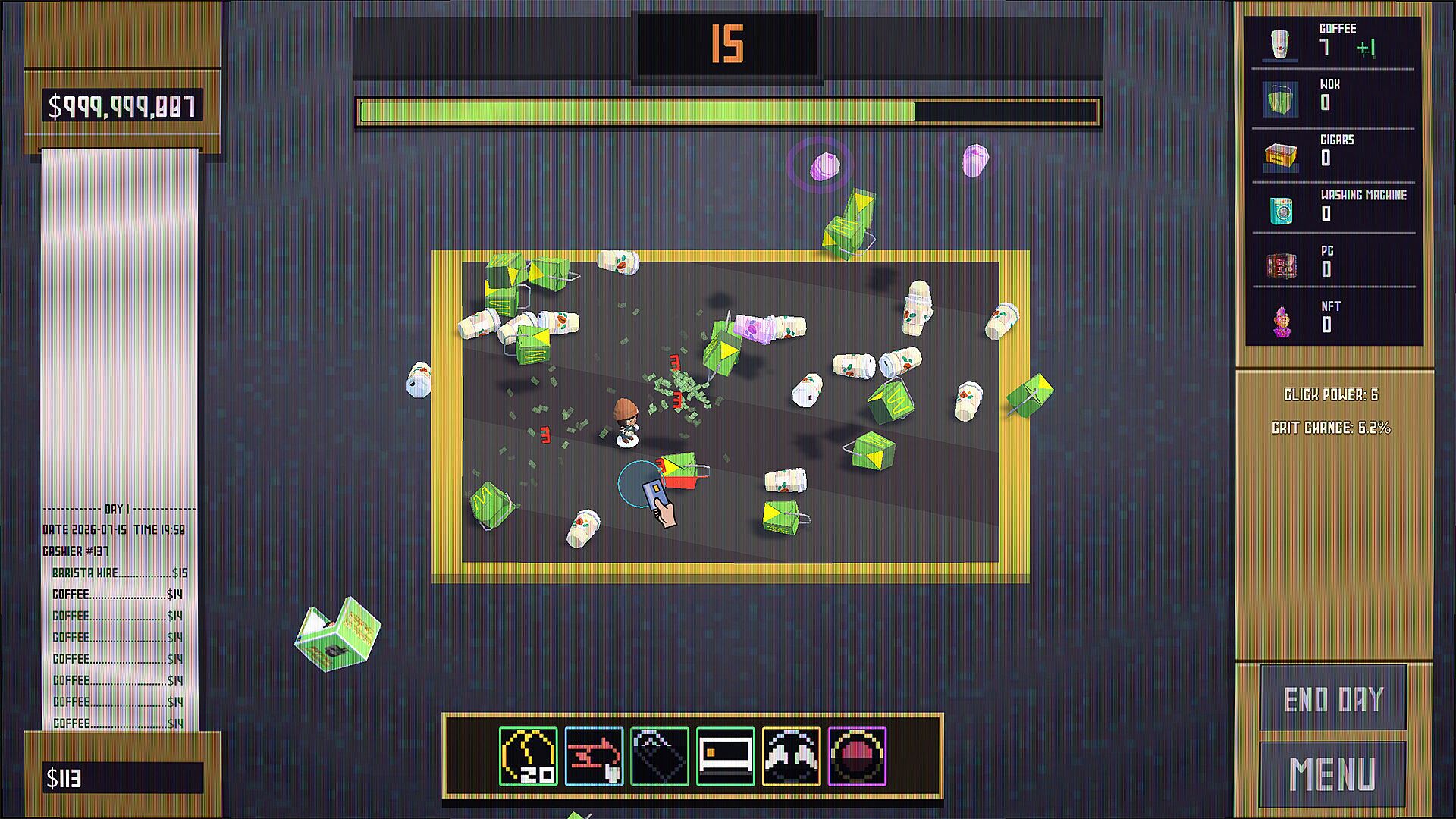
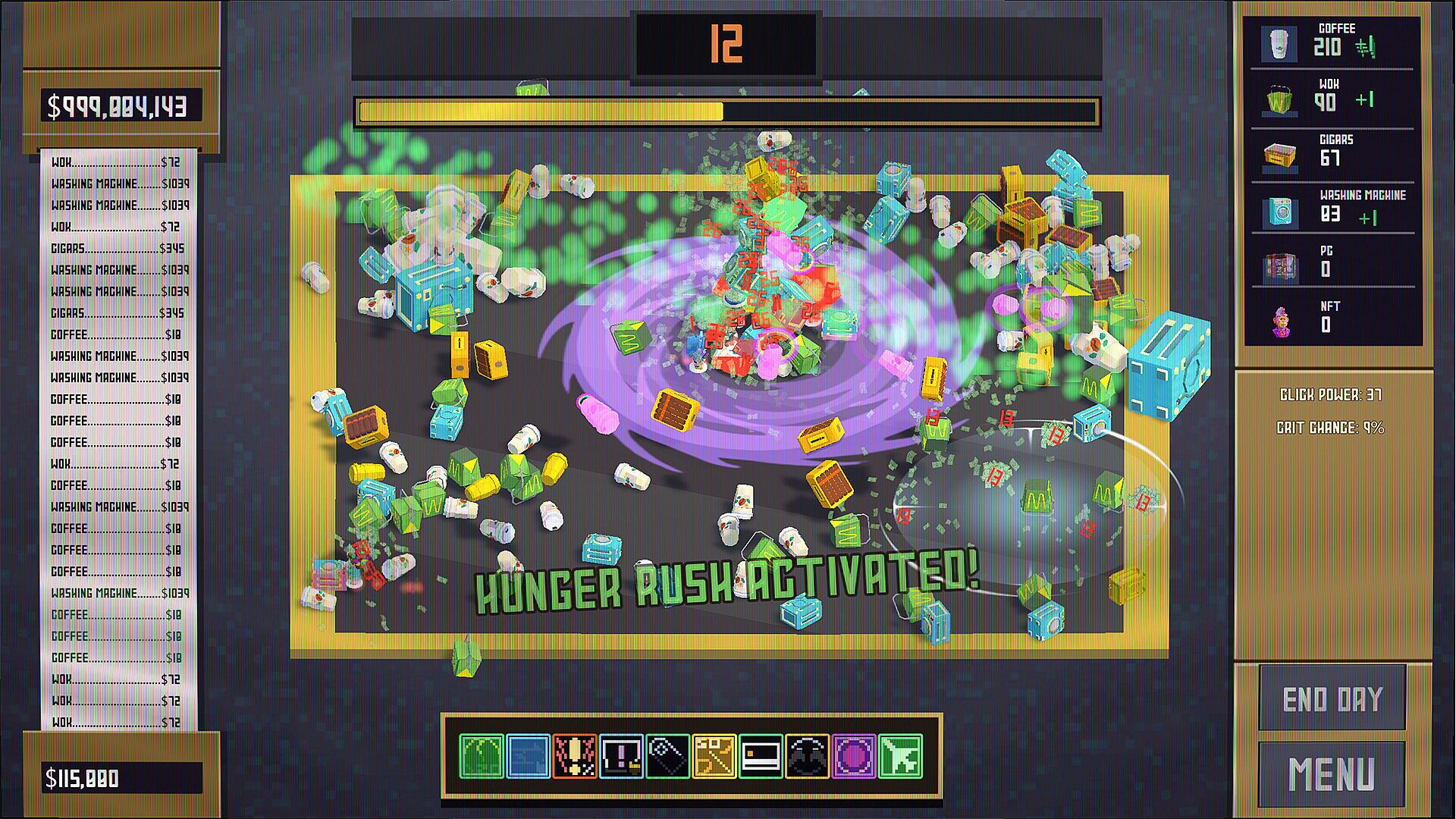
The core loop revolves around clicking to acquire everyday items in absurd bulk quantities. Coffee runs, food orders, cigars, and gadgets form the foundation, but each purchase feeds into a larger system of upgrades. A extensive skill tree branches into abilities that boost click power, speed up buying rates, and transform individual actions into automated spending operations. Players select paths through the tree, stack multipliers, and watch as simple clicks trigger cascades of expenditures that rapidly drain the balance.
Progression builds through layers of efficiency. Early stages focus on manual purchases, while later stages incorporate combinations of skills that turn casual shopping into high-volume operations. The numbers scale upward quickly, filling the screen with activity as the balance trends downward. Recruitable NPCs handle portions of the spending automatically, freeing the player to focus on strategic upgrades and timing. These helpers maintain momentum but require oversight to keep the entire system running at peak efficiency.
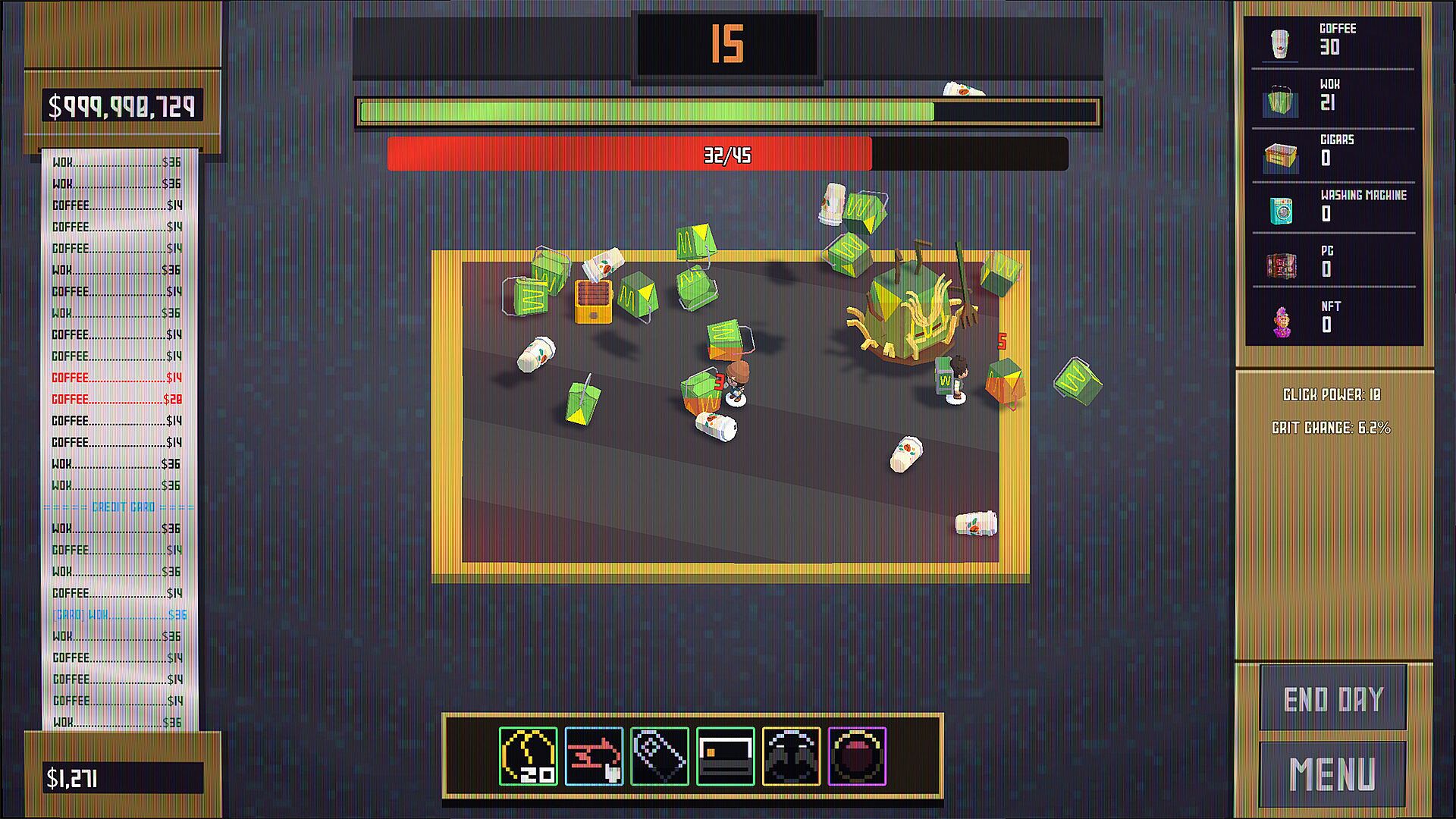
Boss encounters punctuate the spending phases. At the close of each segment, a distinct opponent appears with defenses that must be overcome. Defeating them grants powerful new upgrades that open even more expensive avenues for cash burning. The cycle repeats with greater scale, emphasizing steady improvement in spending speed and volume over any form of accumulation.
Game Modes
The experience unfolds as a continuous single-player progression without separate competitive or cooperative options. Players advance through sequential spending segments that each conclude with a boss fight. The structure encourages repeated runs to explore different branches of the skill tree and optimize paths toward faster balance reduction. No distinct named modes exist beyond this core campaign-style flow, where the emphasis remains on personal efficiency and strategic choices within the upgrade system.
Mechanics stay consistent across play sessions, rewarding experimentation with skill combinations and NPC assignments. The absence of multiplayer elements keeps the focus squarely on the solo challenge of outpacing the tax deadline through deliberate financial mismanagement.
Progression and Upgrades
The skill tree serves as the primary driver of long-term engagement. Branches cover stronger individual clicks, accelerated purchase timers, and industrial-scale automation that multiplies spending output. Stacking bonuses from multiple paths creates compounding effects, turning early modest gains into overwhelming cash outflows later on. Discoveries along the tree reveal its full depth, encouraging players to revisit earlier choices or pursue alternate routes on subsequent attempts.
NPC recruitment adds another dimension by offloading routine tasks. These characters sustain spending momentum during idle moments, though they function best when paired with active player input and targeted upgrades. The interplay between manual control, automated helpers, and boss rewards creates a layered system that grows more intricate as the balance shrinks.
Is It Worth Playing?
Death by Taxes appeals to fans of incremental and idle-style games who enjoy the satisfaction of watching large numbers decrease through optimized systems. Its satirical take on wealth and taxes provides a light premise that supports the clicker mechanics without requiring deep narrative investment. The skill tree and boss structure offer clear goals and measurable progress, making each session feel productive even as the core activity remains repetitive by design.
Because the game remains in development with a planned release in December 2026, current details are limited to the described systems. Players interested in casual PC titles that reward strategic spending and upgrade paths may find the loop engaging once it launches. Those seeking varied game modes or multiplayer features should note the single-player focus confirmed in available information. The emphasis on purposeful overspending sets it apart from conventional clicker experiences, potentially suiting anyone drawn to unconventional financial themes in gaming.