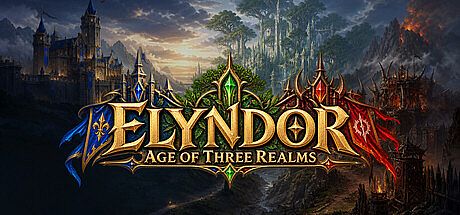


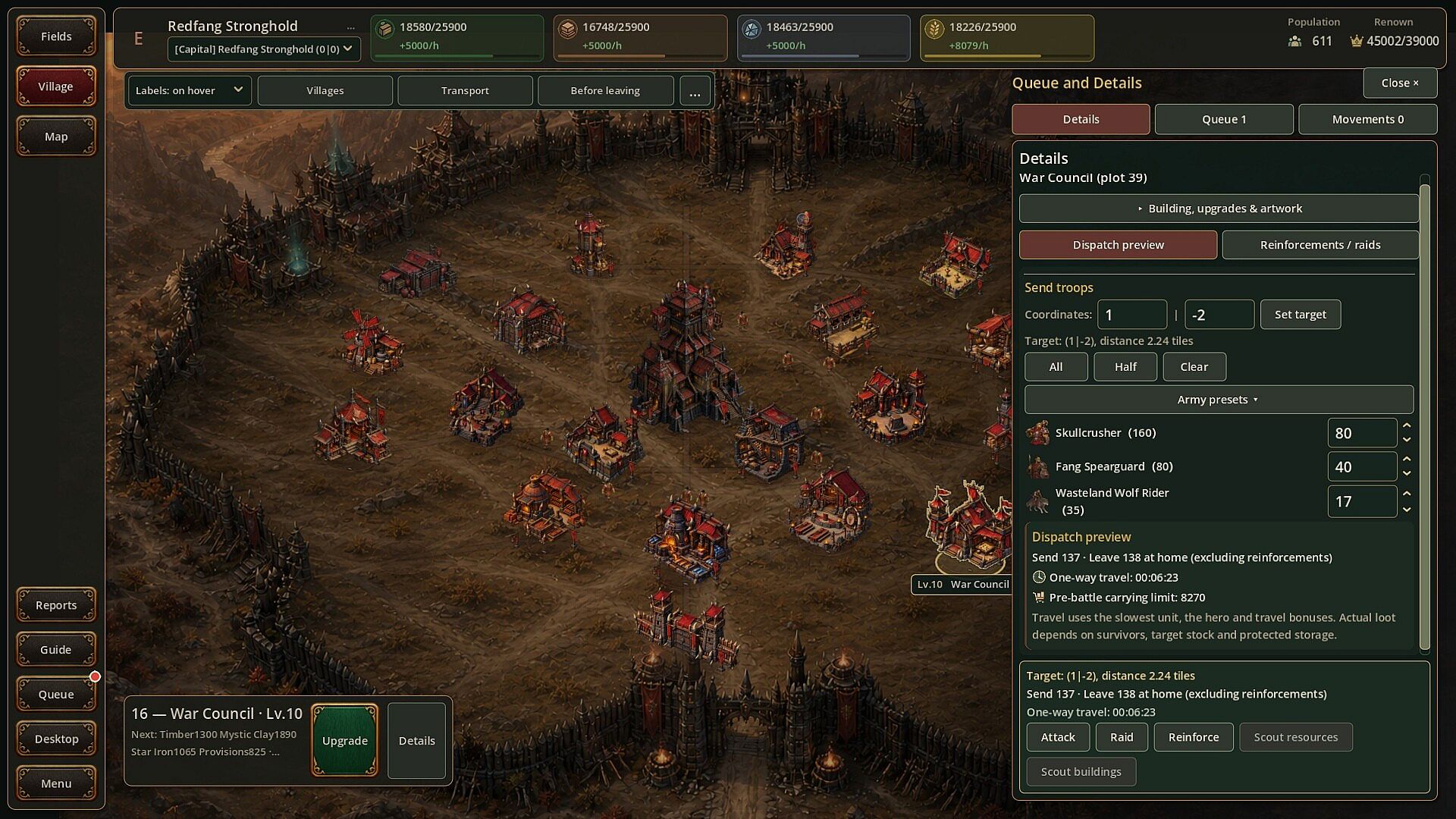
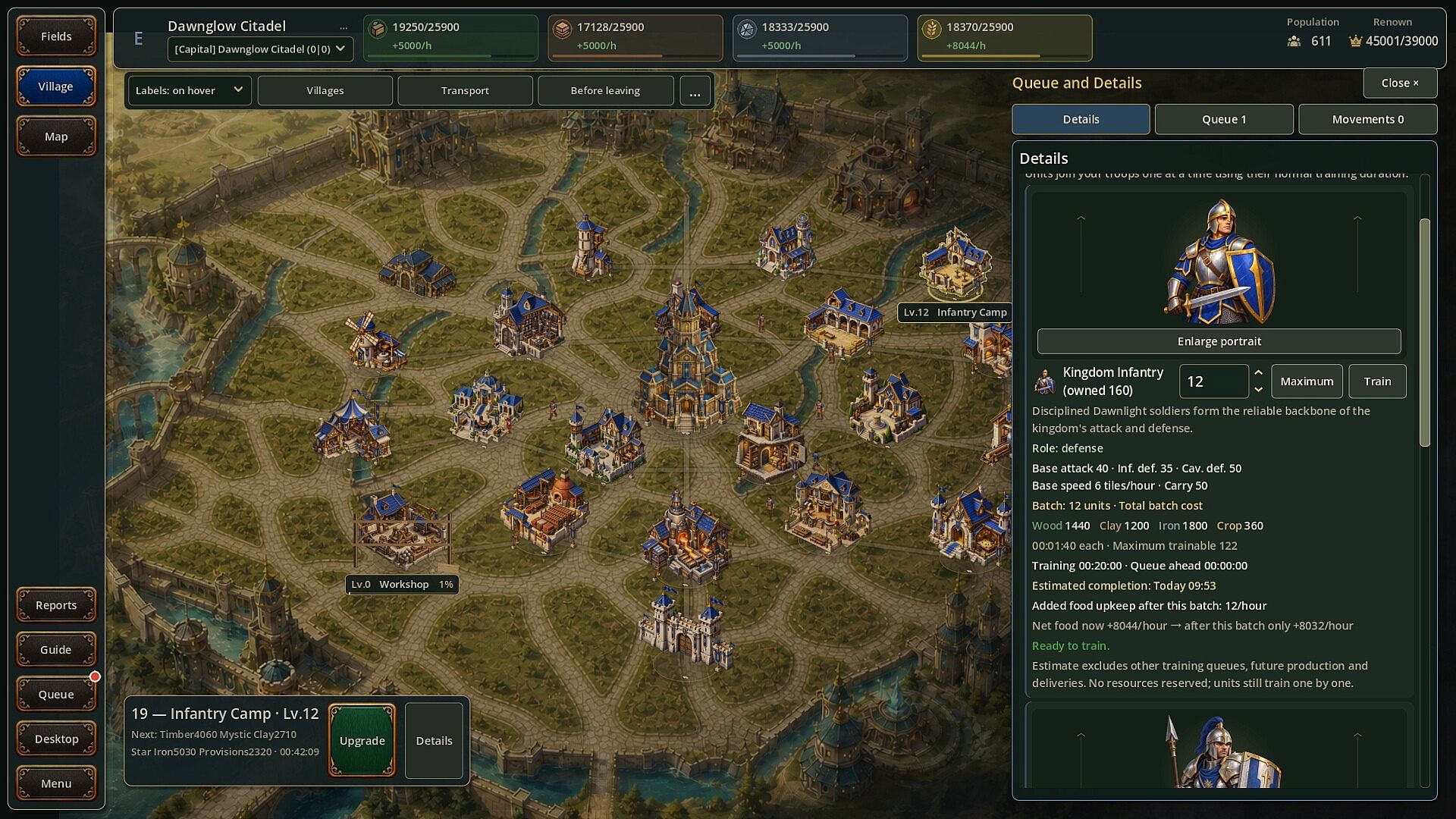
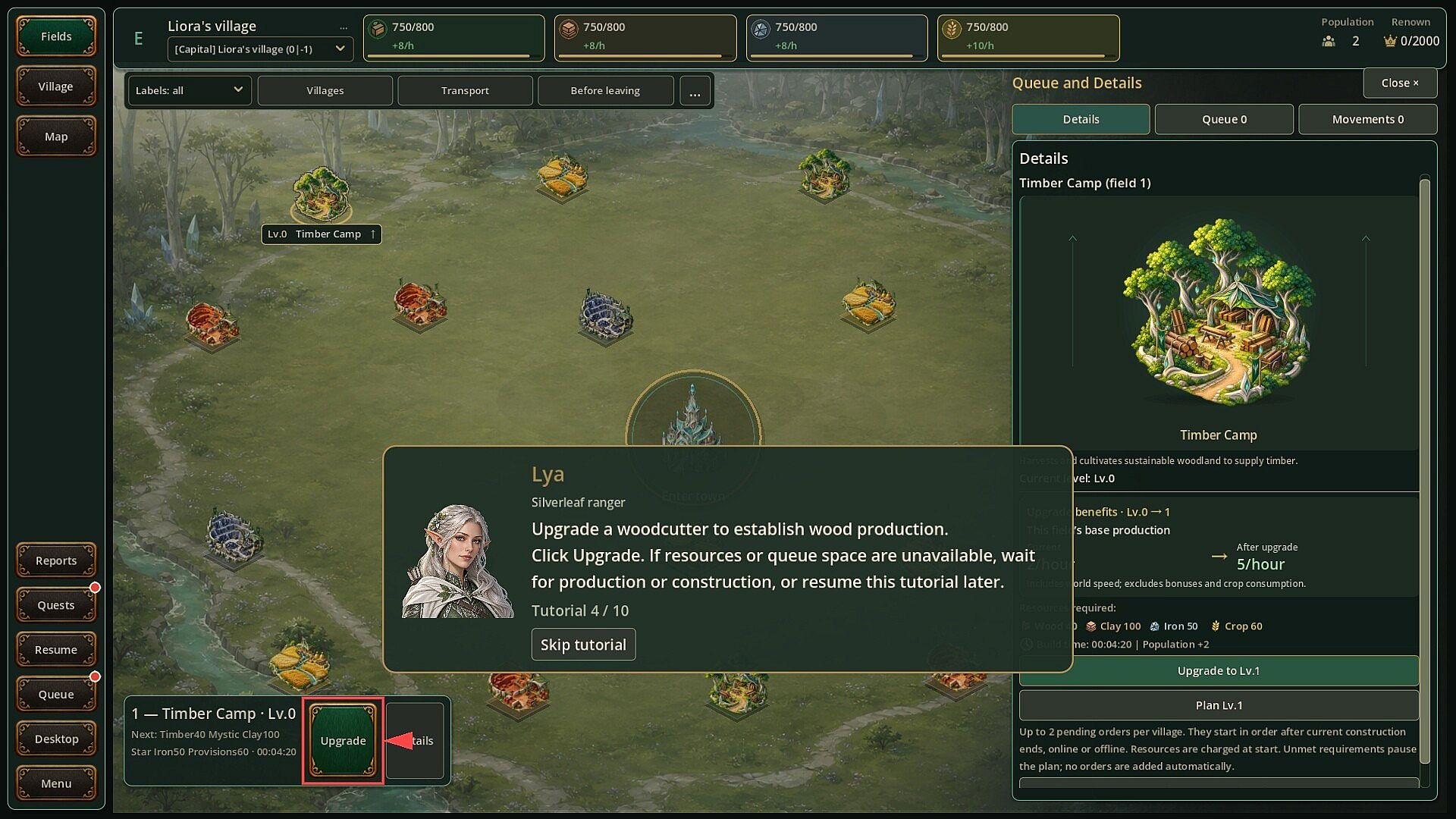
Elyndor: Age of Three Realms is a single-player strategy game for PC in which players build and expand a kingdom on a continent split among three rival peoples. The setting follows the collapse of an old empire after the night of Starfall, leaving humans of Dawnlight, Redfang orcs, and Silverleaf elves to compete for villages, relics, and leyline oases while the Starfall Royal City stays under the control of surviving imperial forces. The core experience centers on starting with one frontier village and growing it into a realm through careful resource management and military decisions against computer-controlled lords.
Gameplay
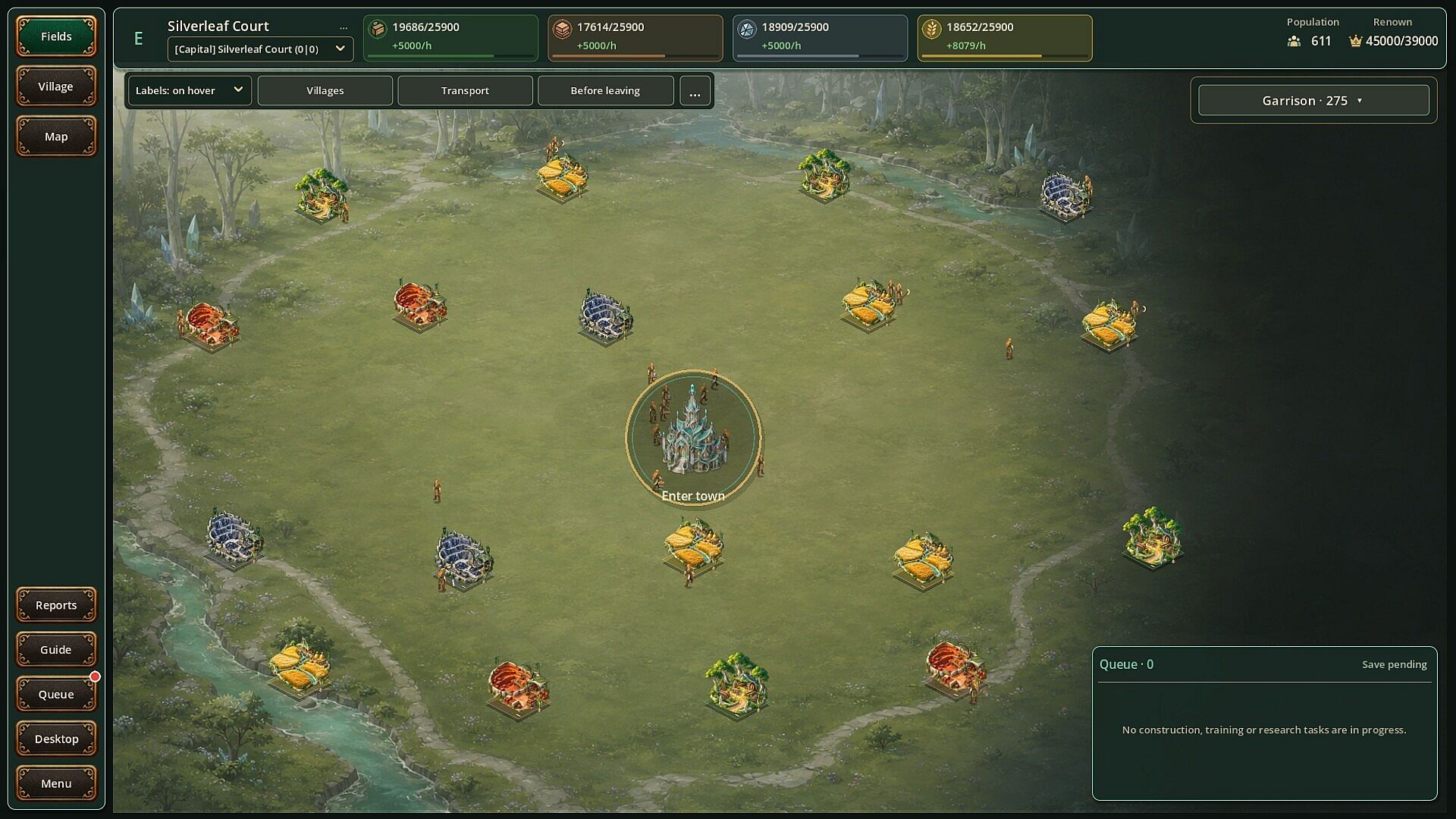
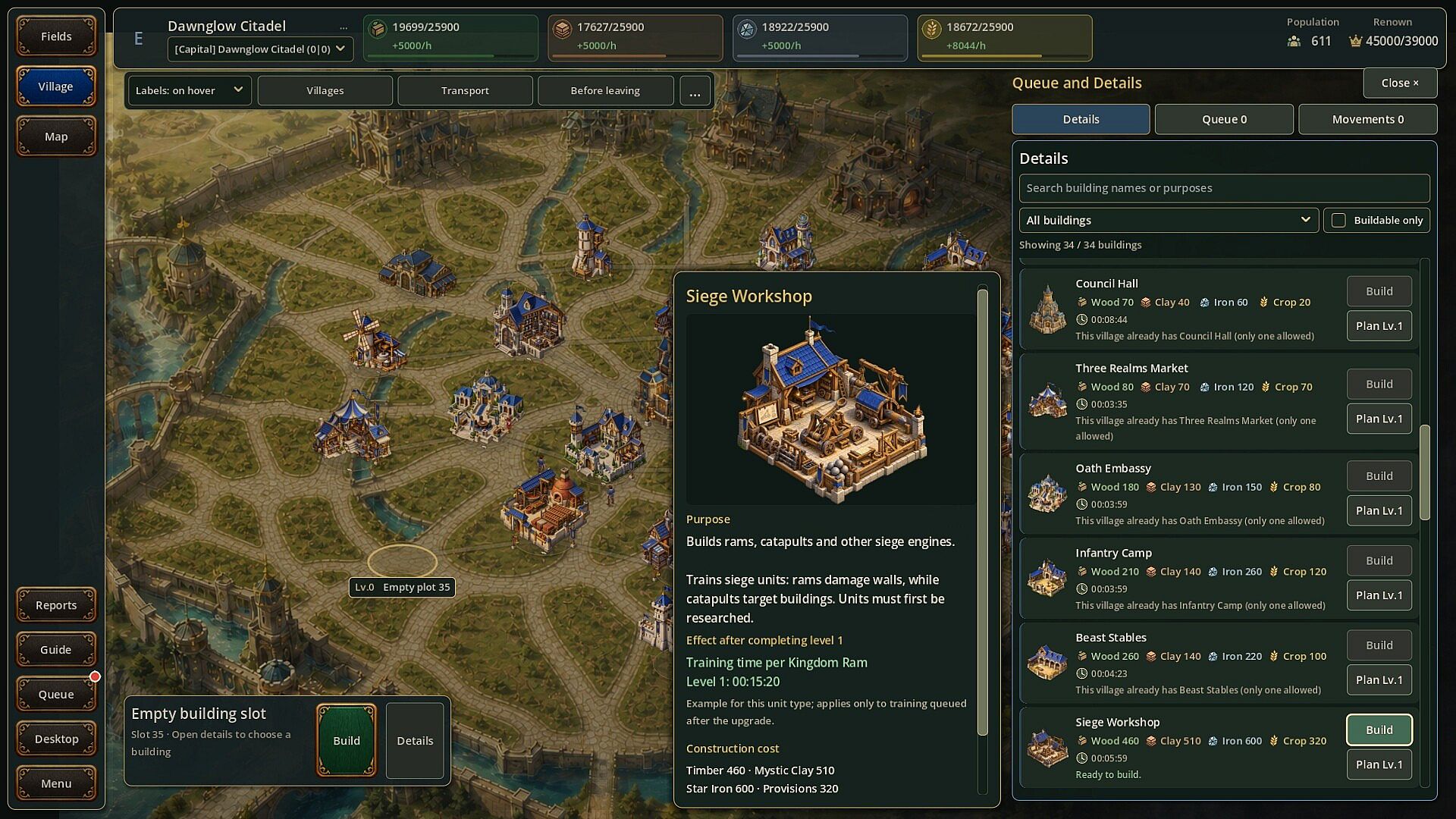
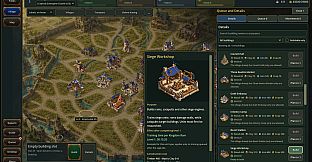
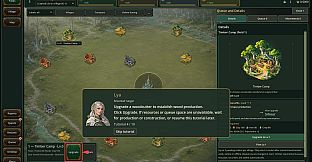
Players manage four key resources: Timber, Mystic Clay, Star Iron, and Provisions. These materials support both economic expansion and military preparation, forcing choices between increasing output through upgraded fields and warehouses or committing supplies to training troops. Construction covers resource fields, markets, academies, barracks, and defensive structures, while military options include infantry, cavalry, scouts, and siege engines such as rams and catapults.
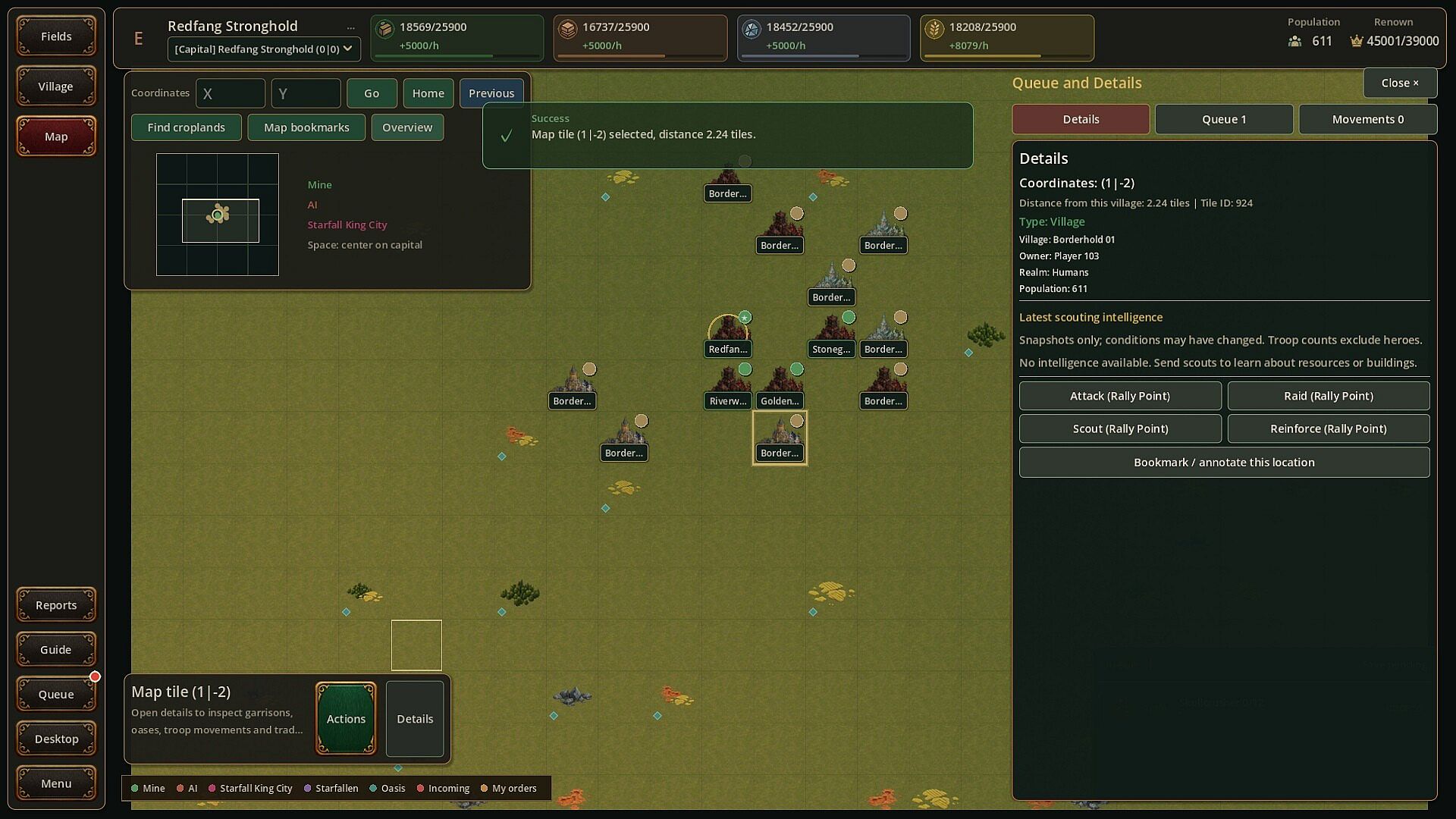
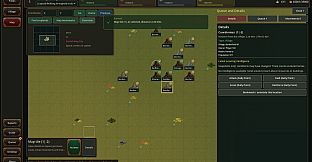
Exploration and movement take time, so coordinating marches from multiple villages becomes necessary for larger operations. Scouting reveals threats and opportunities on the map, and battle reports show how walls, traps, hero bonuses, and garrisons influence results. Heroes gain experience by exploring relics and can equip items that provide advantages in combat or development.
Three playable peoples shape available strategies. Dawnlight humans support balanced growth with strong engineering and mounted units. Redfang orcs emphasize rapid training and aggressive raids. Silverleaf elves focus on scouting, trade, and layered defenses that include mobility and traps. Each faction features distinct building styles and troop rosters, encouraging players to experiment across separate campaigns.
AI lords operate independently with their own villages, research, and expansion plans. They claim oases for production bonuses, found new settlements, and launch raids or attacks. Monitoring rankings and reports helps identify growing threats, allowing players to reinforce borders or launch preemptive strikes.
Game Modes
The primary mode is a long-running campaign against AI opponents. Players begin with a single village and pursue the objective of assembling sufficient economic and military strength to march on the Starfall Royal City. Resource transport through markets supports distant outposts and new settlements, while renown grows through successful expansion and victories.
Campaign creation allows customization of world seeds along with map size, game speed, number of AI lords, and overall difficulty. Multiple world saves, manual saves, and backup recovery support extended play sessions at a chosen pace. These options let players adjust the scope of conquest without altering core mechanics.
Factions and Strategic Choices
Selecting a people at the start sets the architectural theme and available unit types for the entire campaign. Humans reward steady investment in infrastructure and cavalry charges. Orcs reward early aggression through quick recruitment and hit-and-run tactics. Elves reward careful positioning and defensive setups that punish overextended attackers. Switching factions between campaigns reveals how the same map and objectives shift under different strengths.
Hero development ties into both exploration and combat. Sending a hero to clear wild creatures from leyline oases grants control of those sites, boosting nearby village production. Equipping items found during relic exploration adds further layers to army performance during sieges or raids.
Is It Worth Playing?
This title suits players who prefer single-player strategy without voice chat or live opponents. The developer created it specifically for those who enjoy building at their own pace while still facing meaningful AI pressure through scouting, raiding, and territorial competition. Custom campaign settings and save flexibility support long sessions focused on kingdom growth and eventual conquest of the central city.
The resource tension between production and military spending, combined with faction-specific playstyles, provides repeated interest across multiple campaigns. Players who value deliberate planning over fast reflexes will find the march times and coordination requirements rewarding. Those seeking immediate social elements or competitive ladders may prefer other experiences, but the focused single-player loop delivers consistent strategic depth for its intended audience.