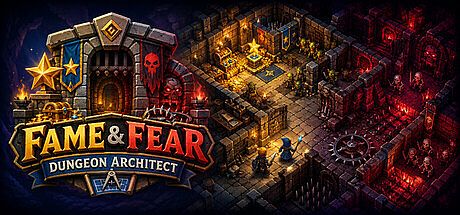


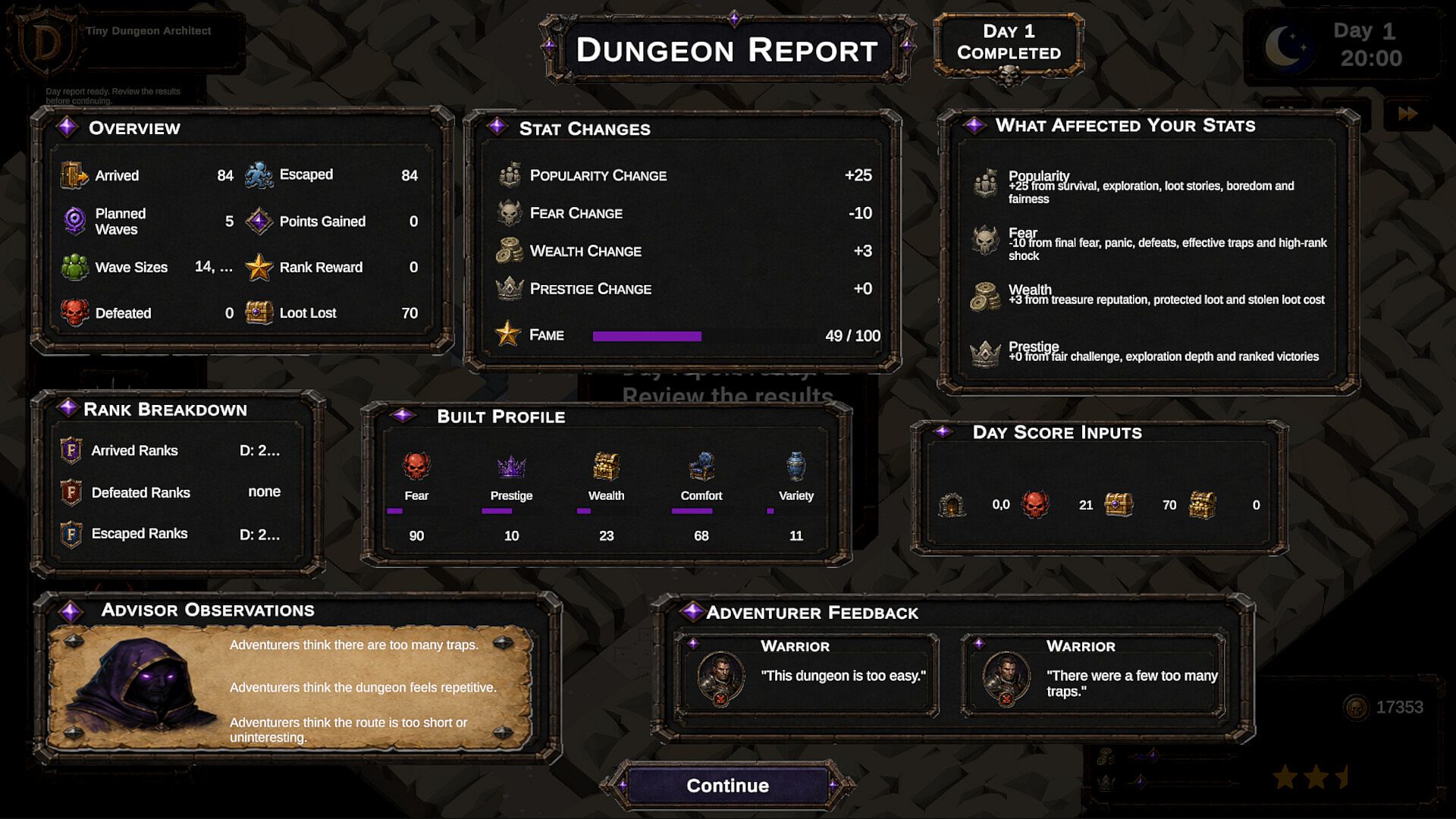
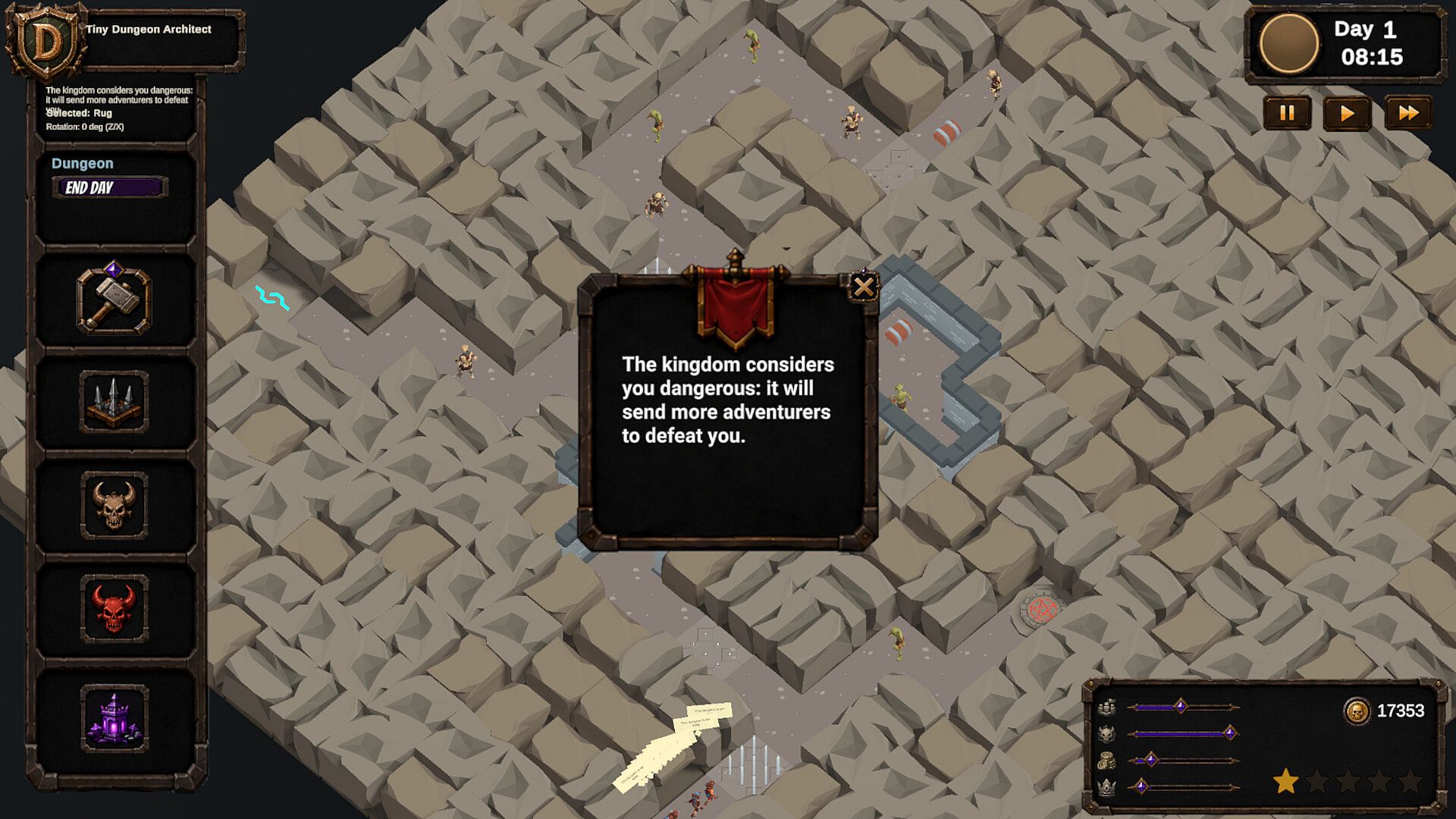
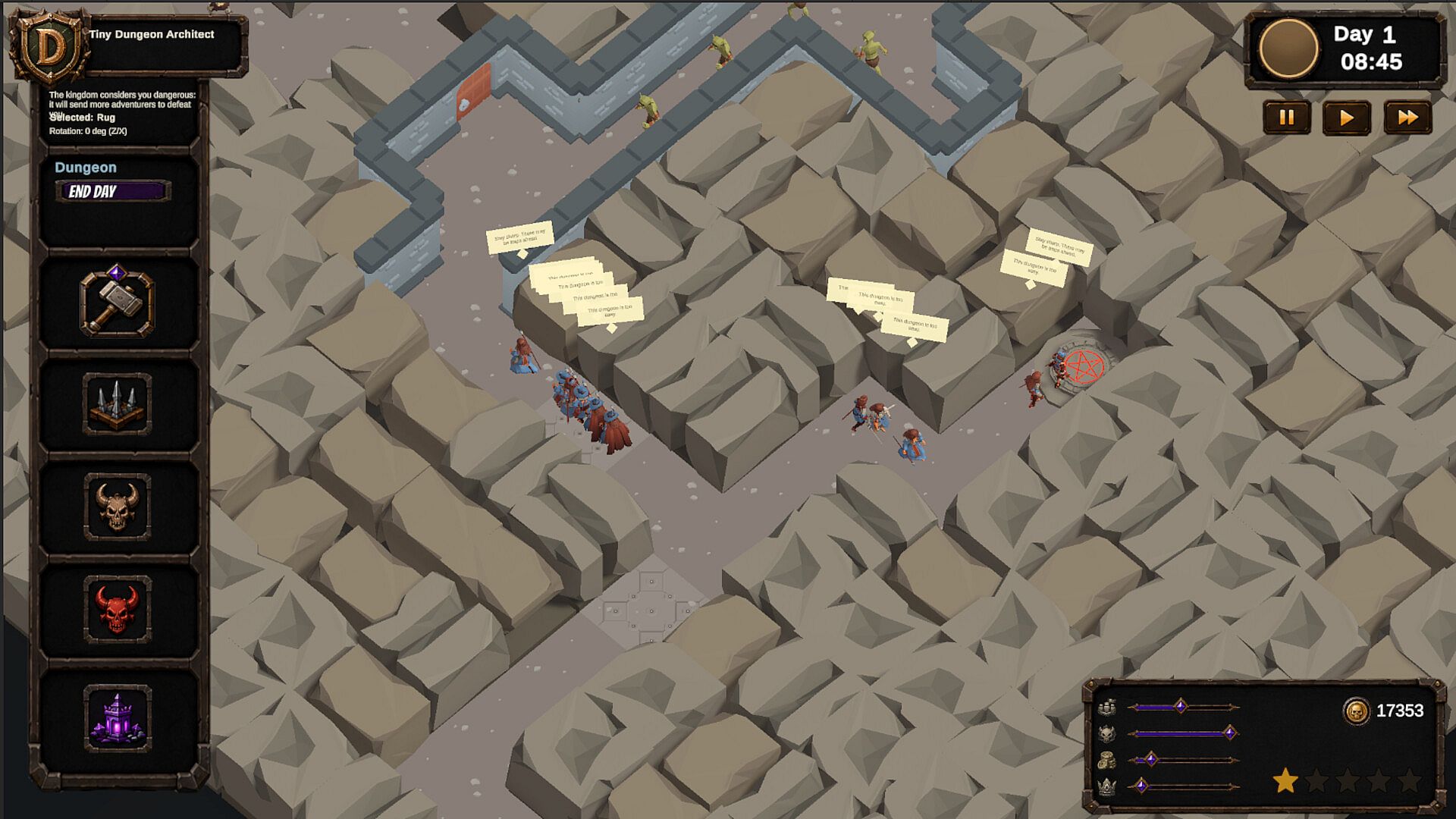
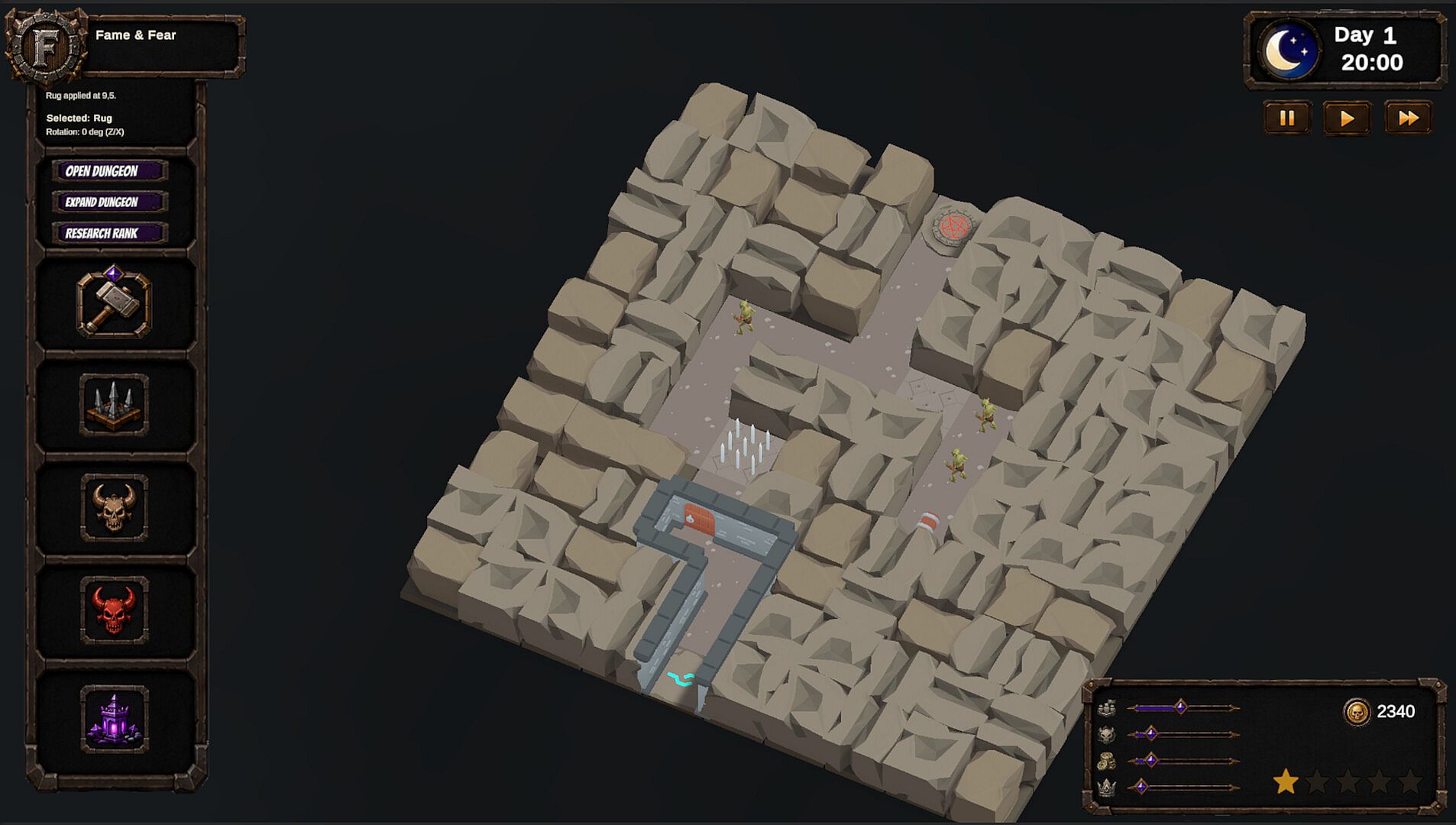
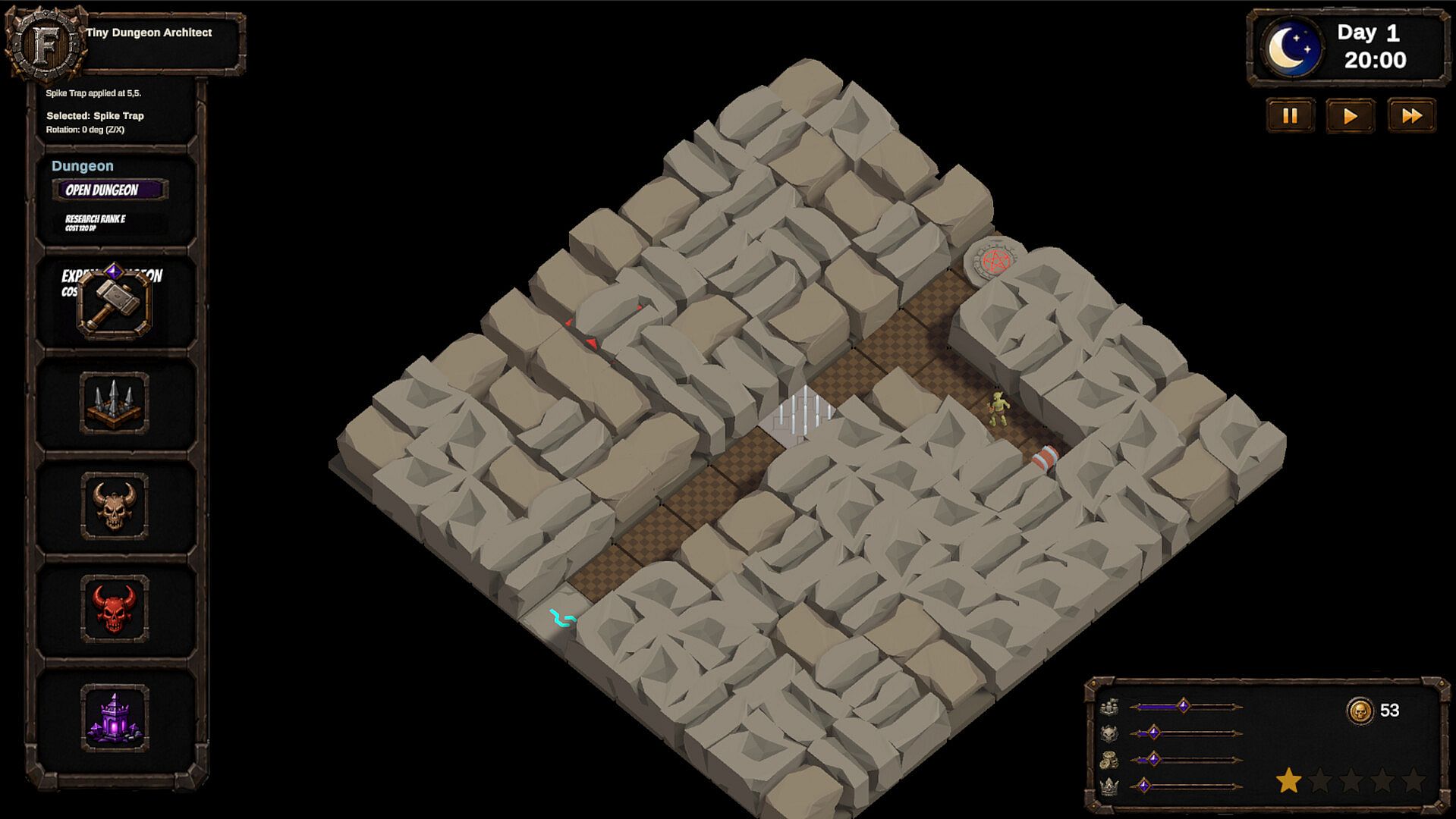
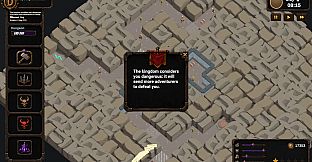
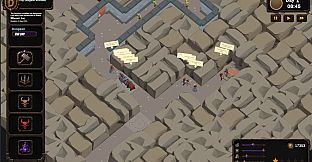
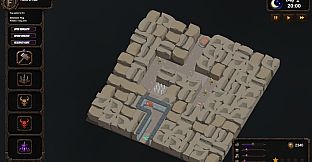
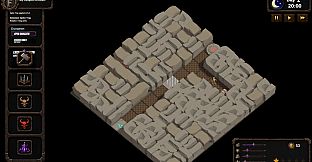
Fame & Fear: Dungeon Architect ist ein unabhängiges Casual-Simulationsspiel für den PC, in dem Spieler als unsichtbare Architekten einen Dungeon entwerfen und betreiben - statt als Abenteurer durch ihn zu ziehen. Kern der Erfahrung ist es, nachts unterirdische Räume zu erschaffen und tagsüber zu beobachten, wie sich die eintreffenden Heldengruppen darin verhalten. Erfolg liegt darin, genügend Besucher zu eliminieren, um einen Ruf der Gefahr aufzubauen, gleichzeitig aber genügend Überlebende zu lassen, damit die Kunde vom Dungeon im ganzen Königreich verbreitet wird.
Gameplay
Der Spielablauf teilt sich in zwei wiederkehrende Phasen pro Tag. Nachts graben die Spieler neue Kammern aus, verbinden Gänge, platzieren Schatzkammern, Monsterhorte, Fallenräume, Ruhezonen und Geheimgänge. Jeder Raum erfüllt dabei eine gezielte Funktion, um die Bewegungen und Reaktionen der Gruppen zu beeinflussen. Spieler beschwören Kreaturen wie Goblins, Skelette, Schleime, Orks oder größere Bosse und positionieren Fallen, die gefährlich, aber überwindbar bleiben, damit der Dungeon attraktiv statt nur tödlich wirkt.
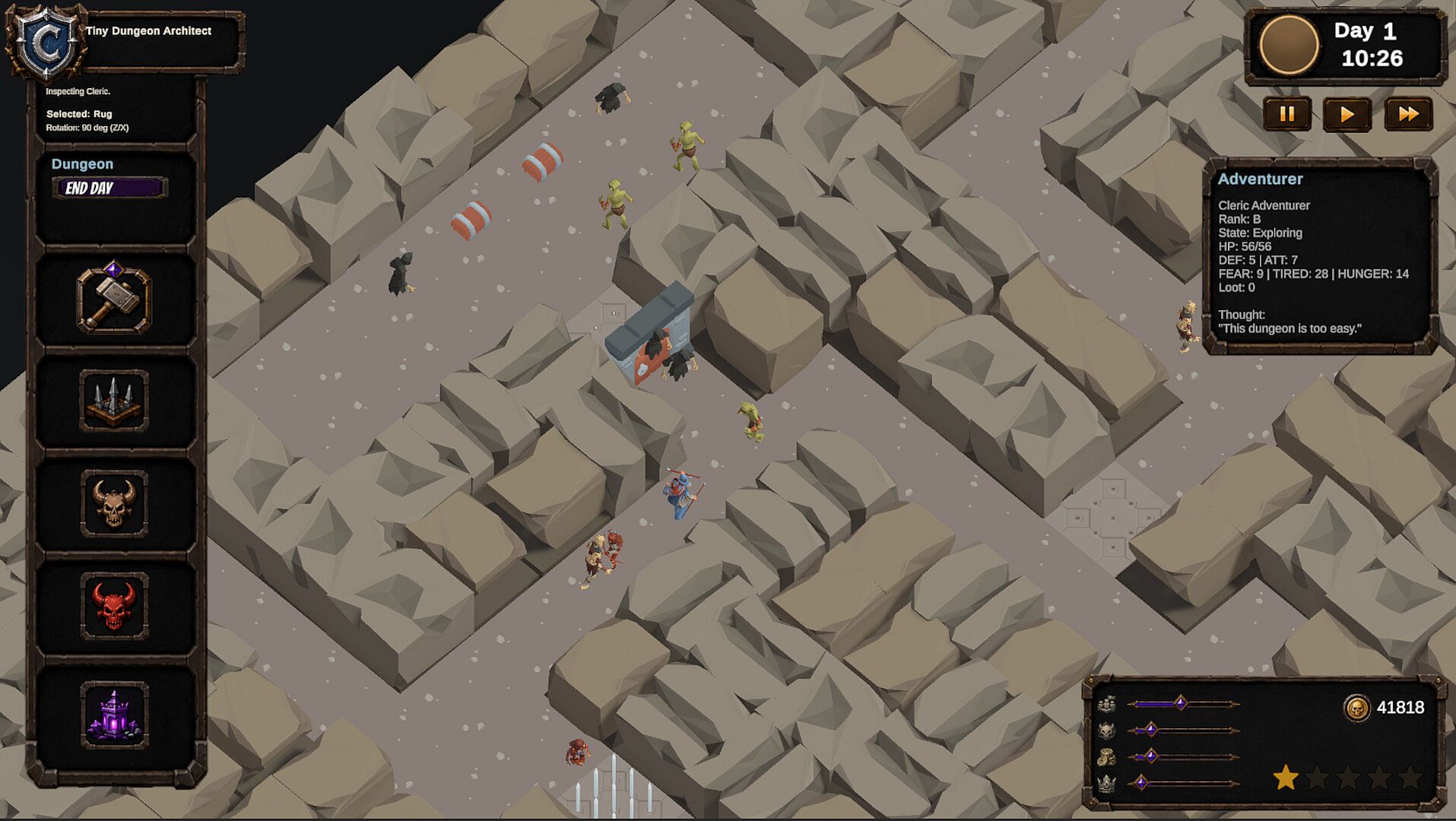
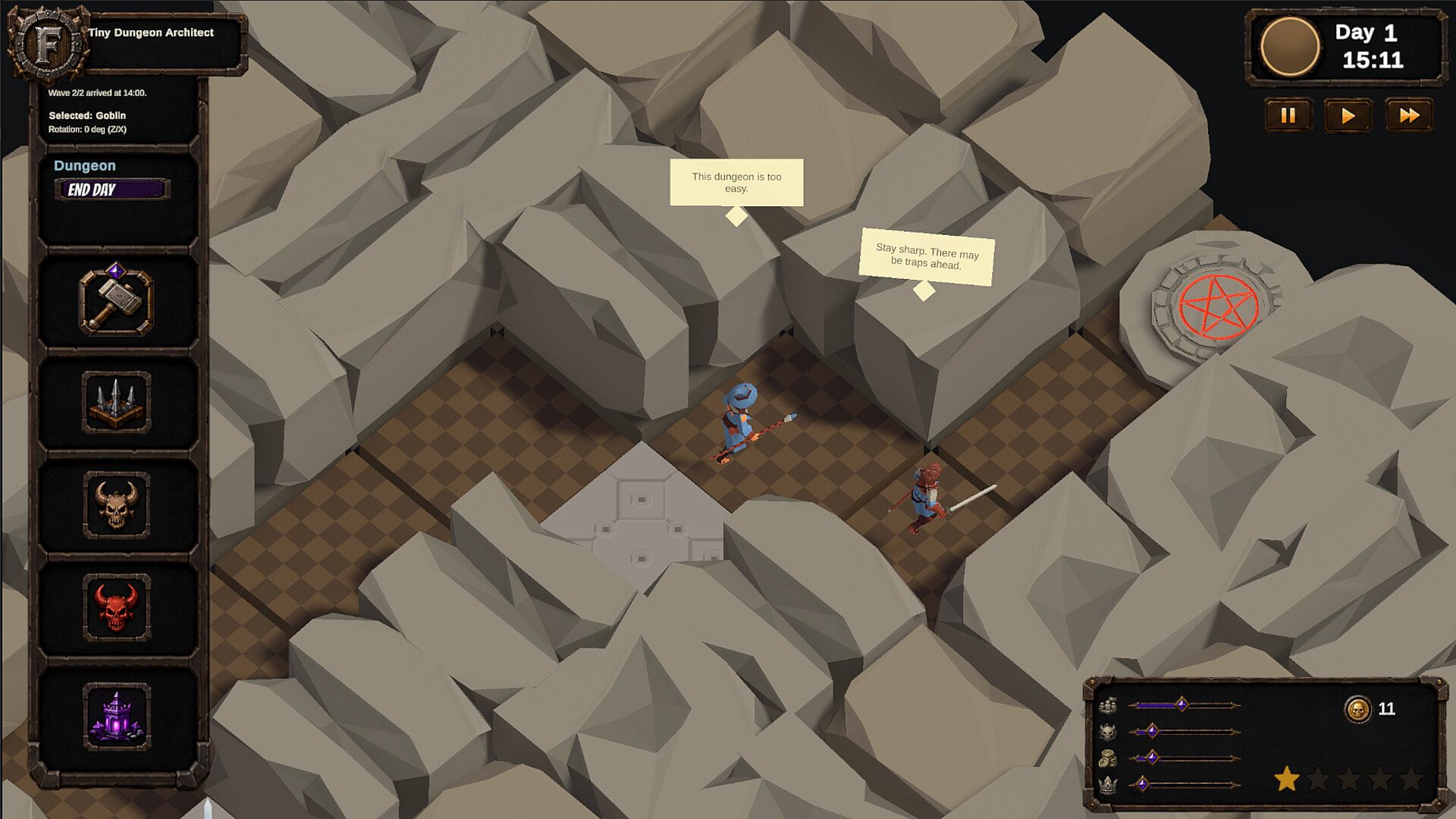
Mit Sonnenaufgang öffnen sich die Tore und Gruppen aus Kriegern, Schurken, Klerikern und Magiern treffen ein. Diese Gruppen folgen eigenen Verhaltens- und Entscheidungsmustern. Spieler steuern die Helden nicht direkt, sondern beobachten, welche Fallen umgangen, welche Schätze entdeckt und wie Panik oder Vorsicht in den Gruppen entsteht. Die gewonnenen Erkenntnisse fließen in die Anpassungen für die nächste Nacht ein. Dungeon-Punkte aus Siegen, erfüllten Zielen und cleveren Layouts schalten stärkere Monster, bessere Schätze, neue Raumtypen und Sonderereignisse frei.
Vier Ressourcen müssen gleichzeitig verwaltet werden: Ruhm, Furcht, Reichtum und Prestige. Zu viele Tötungen steigern die Furcht schnell und verringern die Besucherzahl, bis königliche Überfälle drohen, die den gesamten Dungeon zerstören können. Zu viele Fluchtmöglichkeiten erhalten zwar den Schatz, zehren aber am Reichtum und verhindern möglicherweise den nötigen Ruf, um größere Gruppen anzulocken. Die besten Layouts ermutigen die Gruppen, tiefer vorzudringen, ohne ihnen die sichere Vernichtung zu garantieren - und schaffen so Geschichten, die Abenteurer immer wieder zurücklocken.
Game Modes
Das Spiel ist eine fortlaufende Einzelspieler-Simulation, die auf dem wiederkehrenden Tag-Nacht-Rhythmus basiert. Es gibt keine separaten Wettbewerbs- oder Mehrspielermodi. Der gesamte Fortschritt findet innerhalb derselben Kernschleife statt: nächtlicher Bau gefolgt von tagsüberer Beobachtung. Spieler kommen voran, indem sie Leistungsziele erreichen, die weitere Raumtypen, Monstervarianten und Ereignisauslöser freischalten, während sie regelmäßige königliche Expeditionen überstehen, die die Bedrohlichkeit des Dungeons auf die Probe stellen.
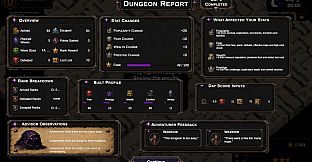
Tägliche Berichte liefern detaillierte Auswertungen zum Verhalten der Besucher, zur Wirksamkeit der Fallen und zu den Ressourcenveränderungen. Diese Berichte ermöglichen schrittweise Verbesserungen, ohne dass ein Neustart nötig ist. Die fortlaufende Kampagne fördert langfristige Planung über viele Zyklen hinweg, während der Dungeon an Größe und Komplexität zunimmt.
Design Philosophy and Progression
Jede Kammer und jeder Gang trägt zu einer größeren Erzählung bei, die die Besucher in die Tavernen tragen. Ein versteckter Abkürzung kann eine Gruppe retten oder sie in einen tödlicheren Abschnitt führen. Ein gut platzierter Ruhebereich kann erschöpfte Helden dazu bewegen, weiterzugehen statt umzukehren. Diese kleinen Entscheidungen summieren sich zum Gesamtruf des Dungeons. Mit steigendem Ruhm erscheinen stärkere Helden, die größere Belohnungen, aber auch größere Risiken mit sich bringen, falls das Layout nicht ausreicht.
Prestige ermöglicht Zugang zu raffinierteren Fallen und Elite-Monstern, während Reichtum Erweiterungen finanziert. Das System belohnt Layouts, die fair, aber einprägsam wirken, sodass der Dungeon ein Ziel bleibt und keine gemiedene Gefahr wird. Spieler analysieren Muster über mehrere Expeditionen hinweg, um ihr Vorgehen zu verfeinern und herauszufinden, welche Elemente stets die gewünschte Mischung aus Furcht und anhaltendem Interesse erzeugen.
Is It Worth Playing?
Fame & Fear: Dungeon Architect richtet sich an Spieler, die Management-Simulationen mit Fokus auf Beobachtung, Planung und schrittweise Verbesserung schätzen. Das Gameplay legt Wert auf durchdachte Raumgestaltung und Fallenplatzierung statt auf direkte Kämpfe oder schnelle Action. Wer gerne zusieht, wie Systeme interagieren, und seine Entwürfe anhand realer Ergebnisse anpasst, wird den täglichen Zyklus als spannend empfinden. Das Spiel befindet sich in aktiver Entwicklung, neue Inhalte werden regelmäßig über Updates hinzugefügt - eine gute Wahl für alle, die sich für Dungeon-Bau-Mechaniken interessieren, bei denen Rufmanagement und Konstruktion gleichermaßen zählen. Wer die Vorstellung reizt, eine Attraktion zu erschaffen, der Abenteurer nicht widerstehen können, findet hier eine fokussierte Erfahrung um genau diese kreative Herausforderung.