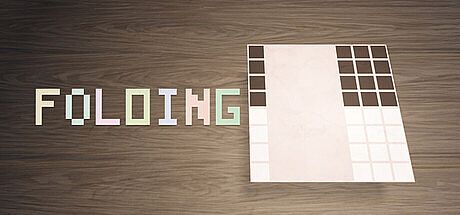


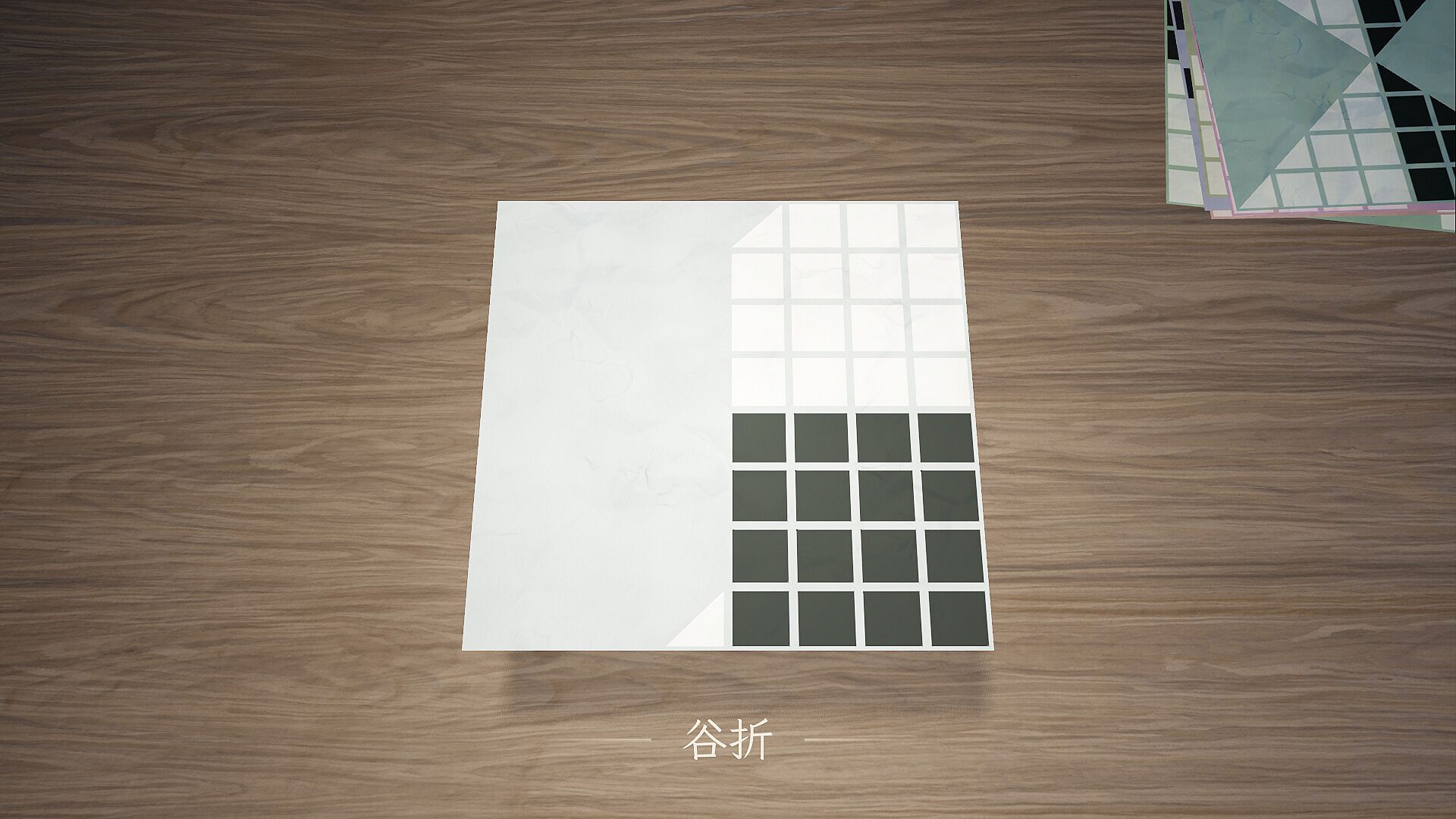
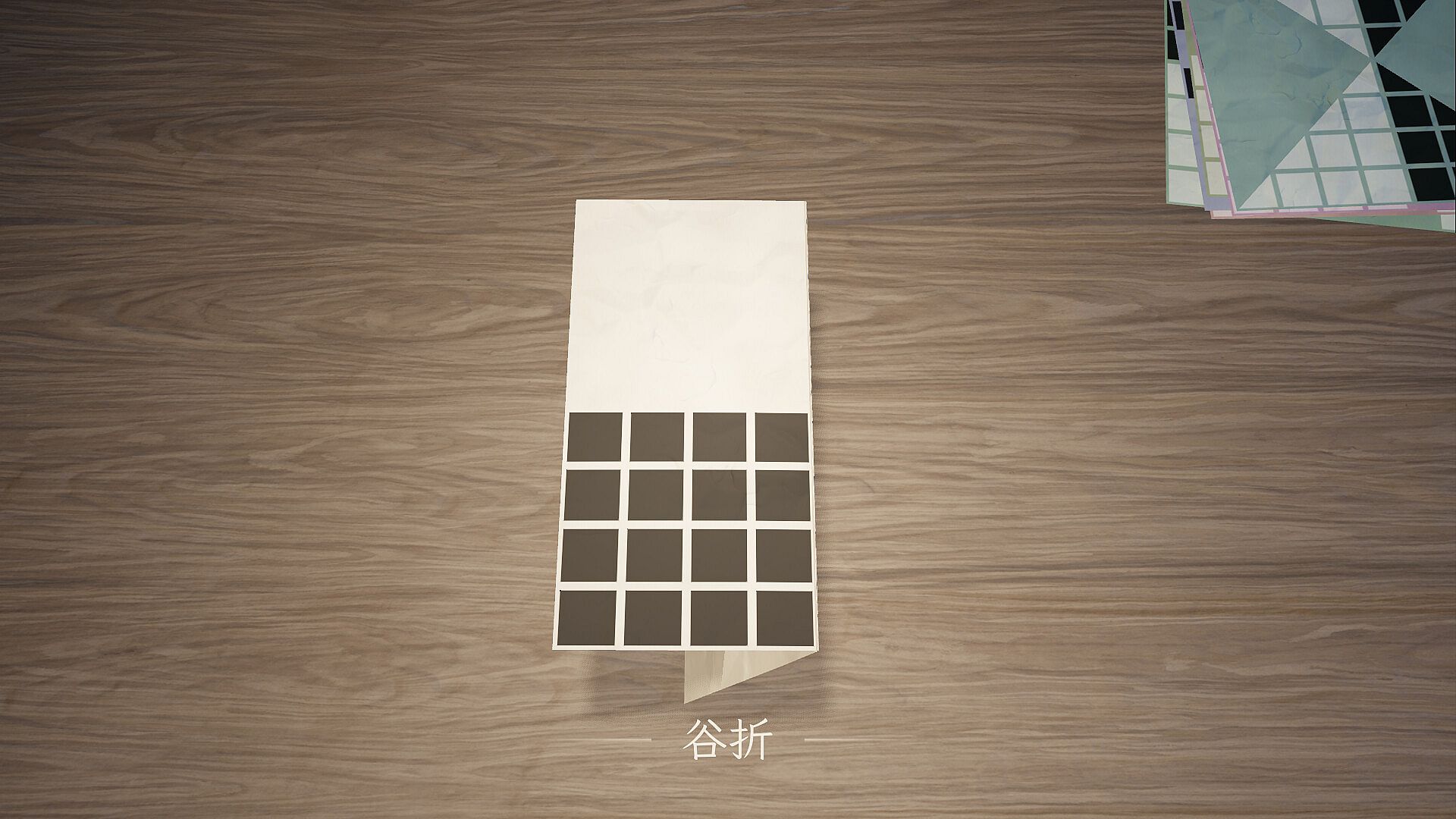
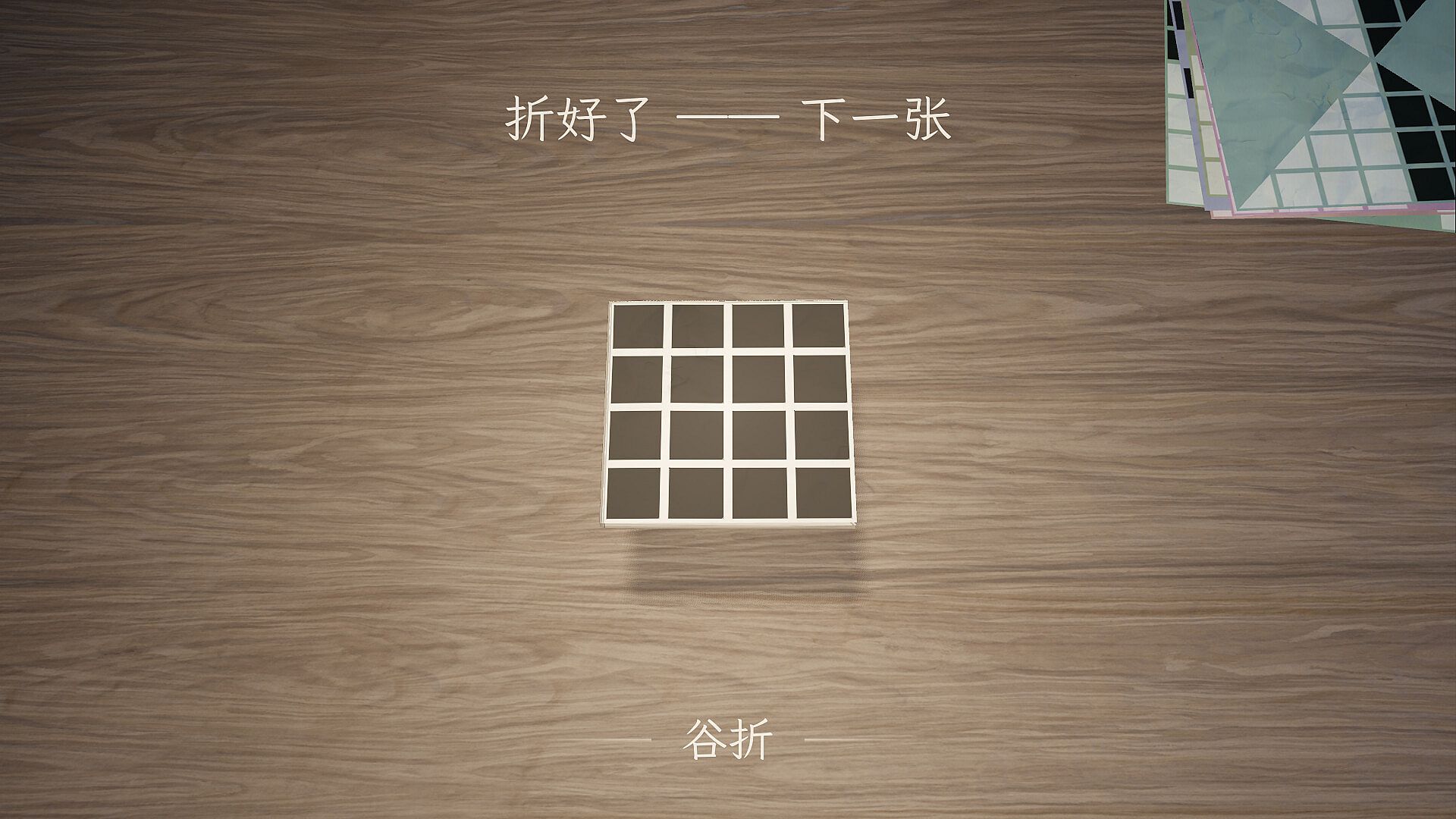
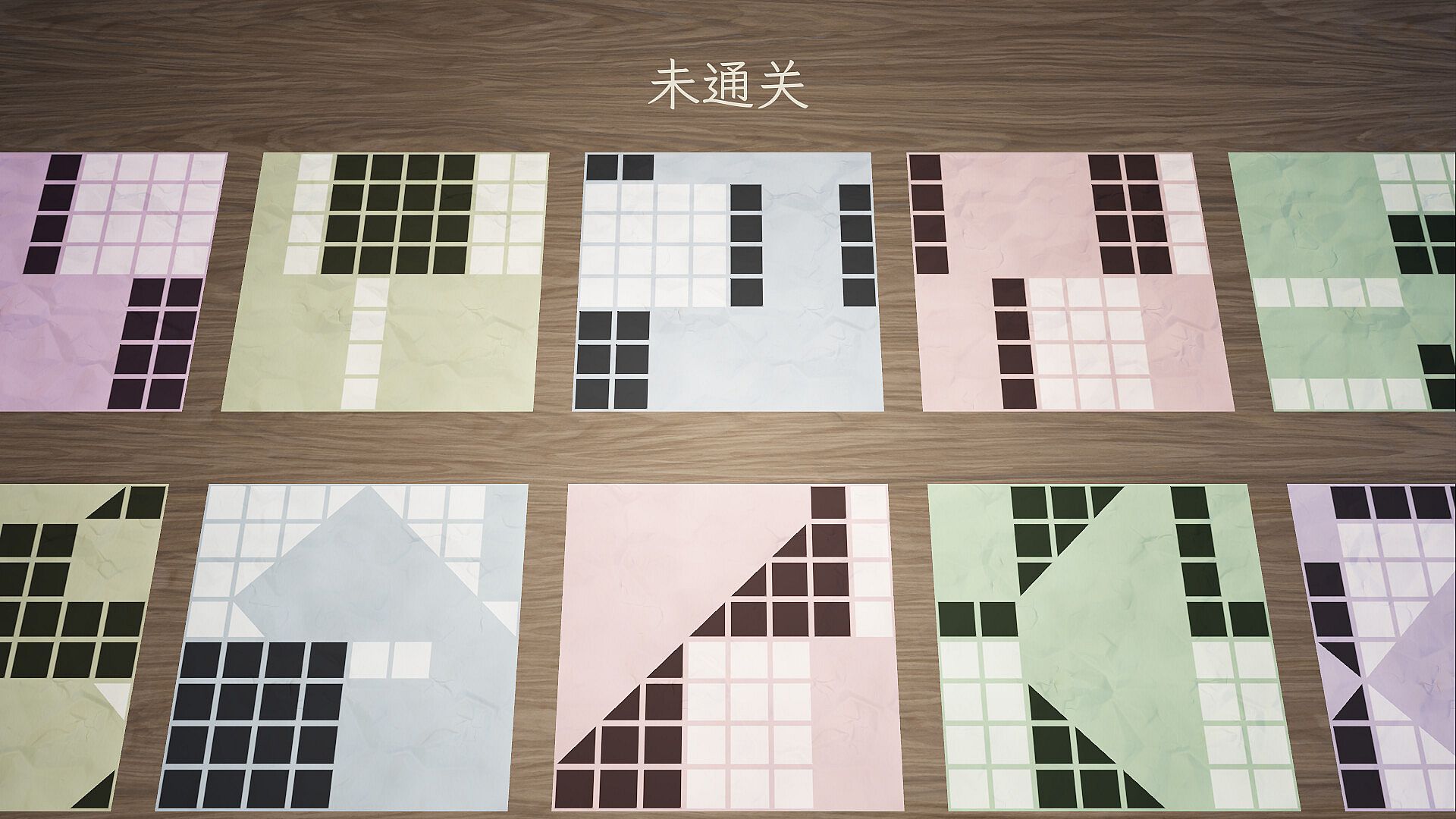
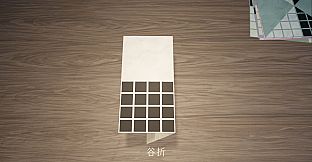
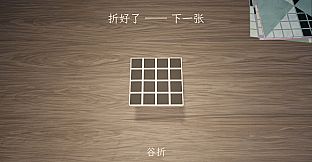
Folding: Paper Puzzle is an indie casual simulation game built around the precise mechanics of origami on PC. Players manipulate a single sheet of paper printed with black and white ink, aiming to fold it into a compact 4x4 square with black facing front and white on the back. The experience centers on a top-down view of a wooden desk where the paper floats above the surface, responding to direct mouse input in a physically grounded way.
Gameplay
The core loop revolves around drawing fold lines and adjusting the paper's orientation. Left-click and drag creates a fold line across the sheet, while right-click and drag rotates the entire piece for better alignment. These two actions drive every interaction, allowing players to stack layers, form creases, and watch the material settle according to its simulated thickness. The simulation enforces real origami rules, preventing any fold that would cause the paper to intersect itself during the process.
Layer ordering plays a key role as multiple folds build up, with ambient occlusion adding depth between stacked sections. A realistic fiber texture covers the surface, and lighting shifts subtly as the paper moves. When a puzzle reaches completion, a gentle glow appears before the folded result joins a growing stack of solved pieces. Unlimited undo removes any risk from experimentation, and smooth animations keep the motion fluid without abrupt jumps. All controls remain mouse-only, keeping the focus on deliberate, thoughtful placement rather than speed or complex inputs.
Game Modes
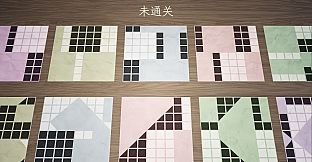
The game operates entirely in a single-player format centered on sequential puzzle solving. Each challenge presents the same core objective of achieving the target 4x4 folded square through accurate folds. There are no separate competitive modes, timed challenges, or scored variants. Instead, the structure emphasizes repeated practice of the same folding principles across different starting configurations, building familiarity with how layers interact and how rotation affects fold accuracy. Progress occurs through completing individual puzzles, with each solution feeding into a visual collection of finished pieces on the desk.
Visual and Audio Presentation
Soft studio lighting illuminates the wooden desk surface, creating a calm setting that highlights the paper's texture and the shadows cast by overlapping layers. The spotlight follows the cursor naturally, drawing attention to the active area during folding. No timers or pressure elements interrupt the pace, allowing players to study the paper's response at their own speed. Sound design supports the tactile feel through implied paper creasing and settling noises, though the primary emphasis stays on the visual feedback of the simulation itself.
Is It Worth Playing?
This title suits players who enjoy methodical, low-pressure puzzle experiences that reward careful observation and repeated attempts. The realistic physics simulation and self-intersection prevention create a genuine sense of working with physical paper, while the absence of scores or time limits removes any competitive edge. Mouse-only controls and unlimited undo make it accessible for extended sessions without frustration. As an upcoming release with no player reviews available yet, its appeal rests on the described contemplative style and precise mechanics rather than established community feedback. Those drawn to simulation-focused casual games centered on craft-like activities will find the core loop consistent with the provided details.