






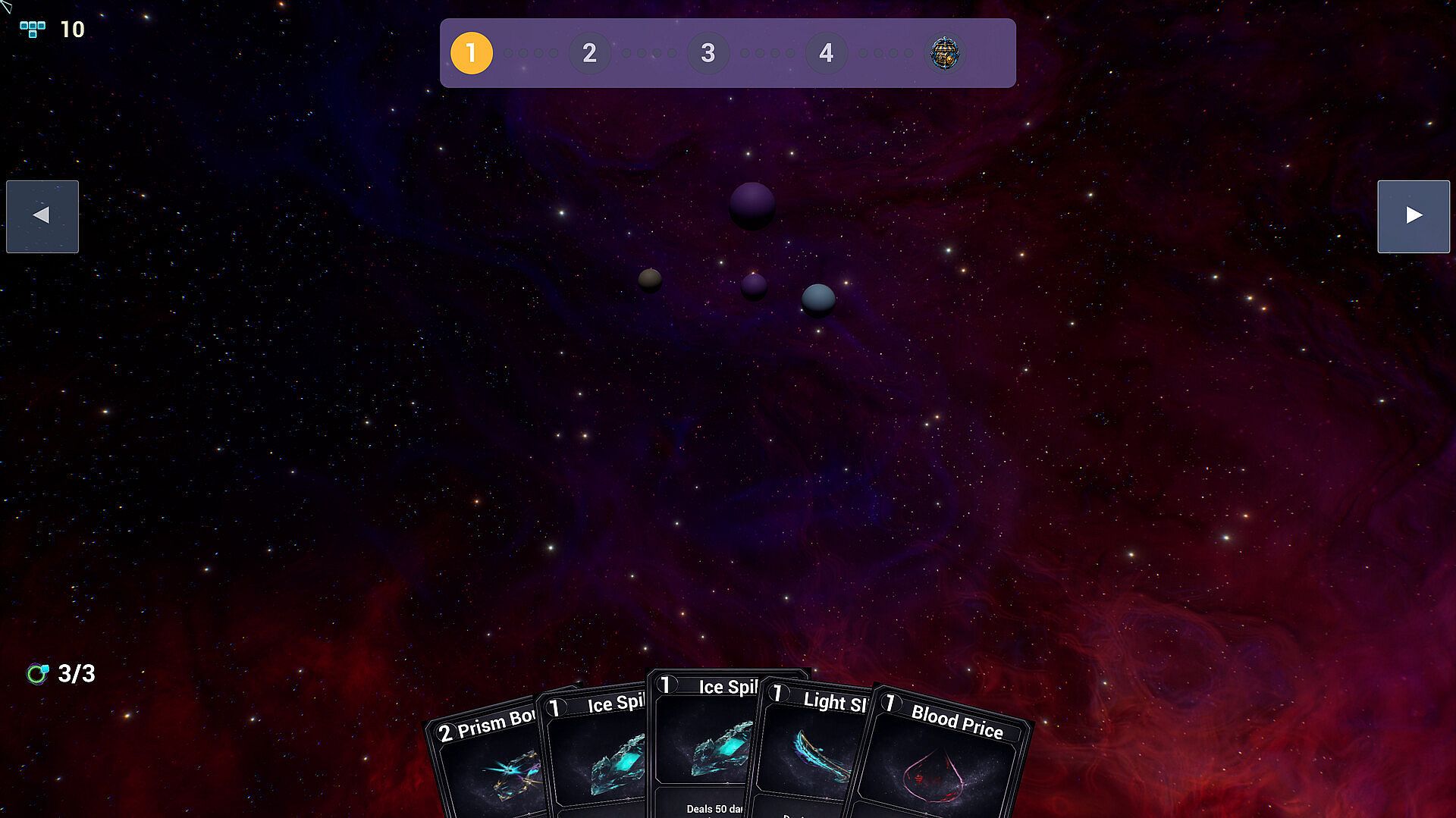
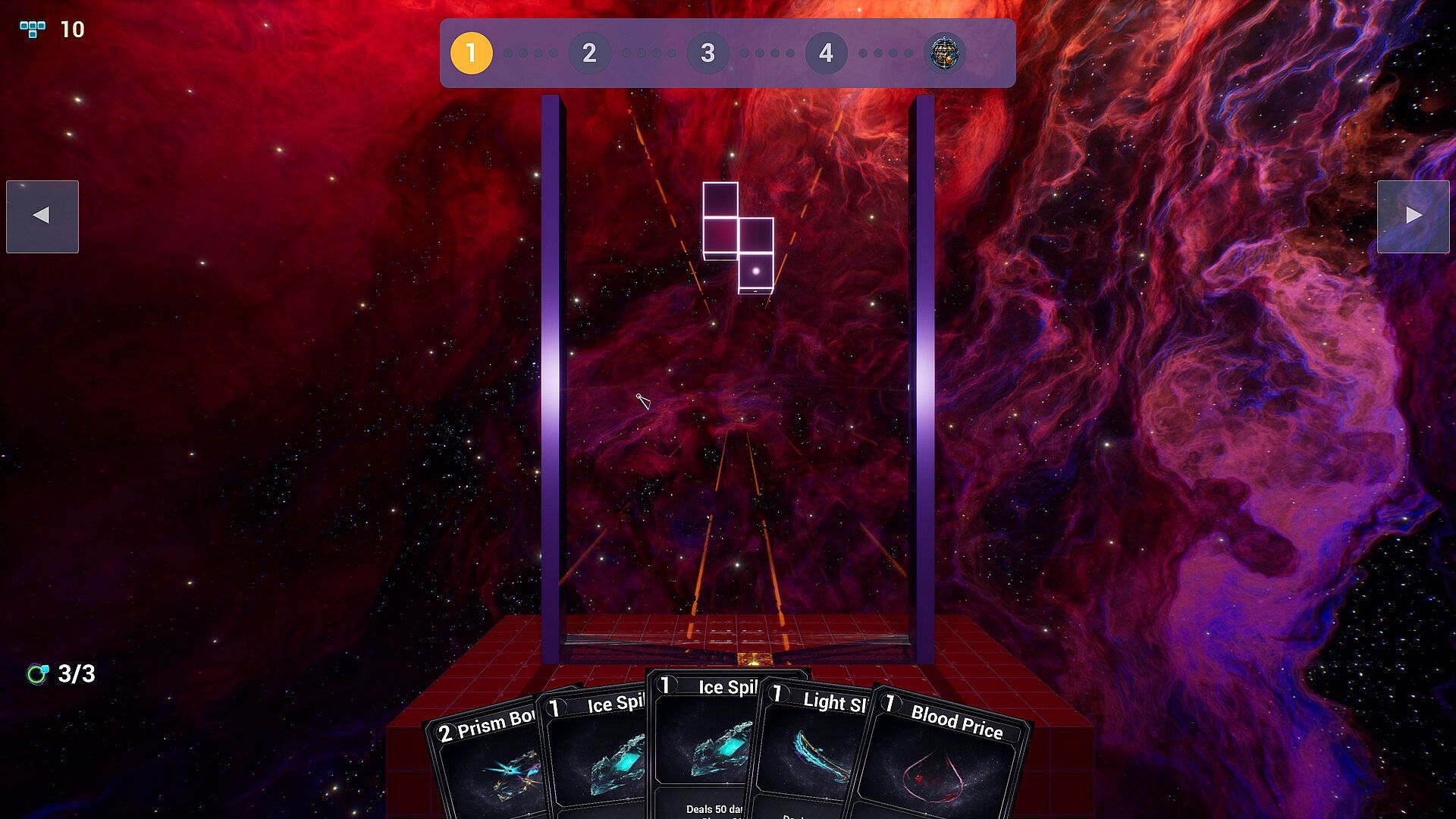
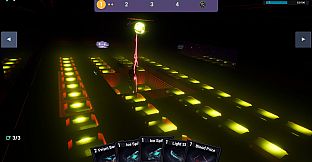
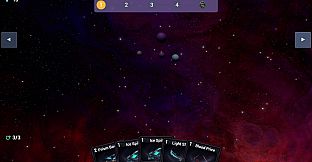
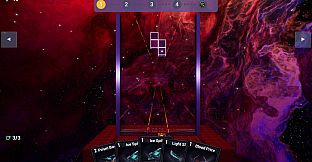
Galaxy Cube: Falling Blocks is a single-player strategy puzzle game that blends falling block placement with roguelite deckbuilding on a cosmic board. Players rotate pieces to complete lines while drawing from a deck of spells across six magic schools to manage space and handle escalating challenges. The experience emphasizes careful positioning, energy management, and adapting a growing collection of cards and artifacts across repeated attempts.
Gameplay
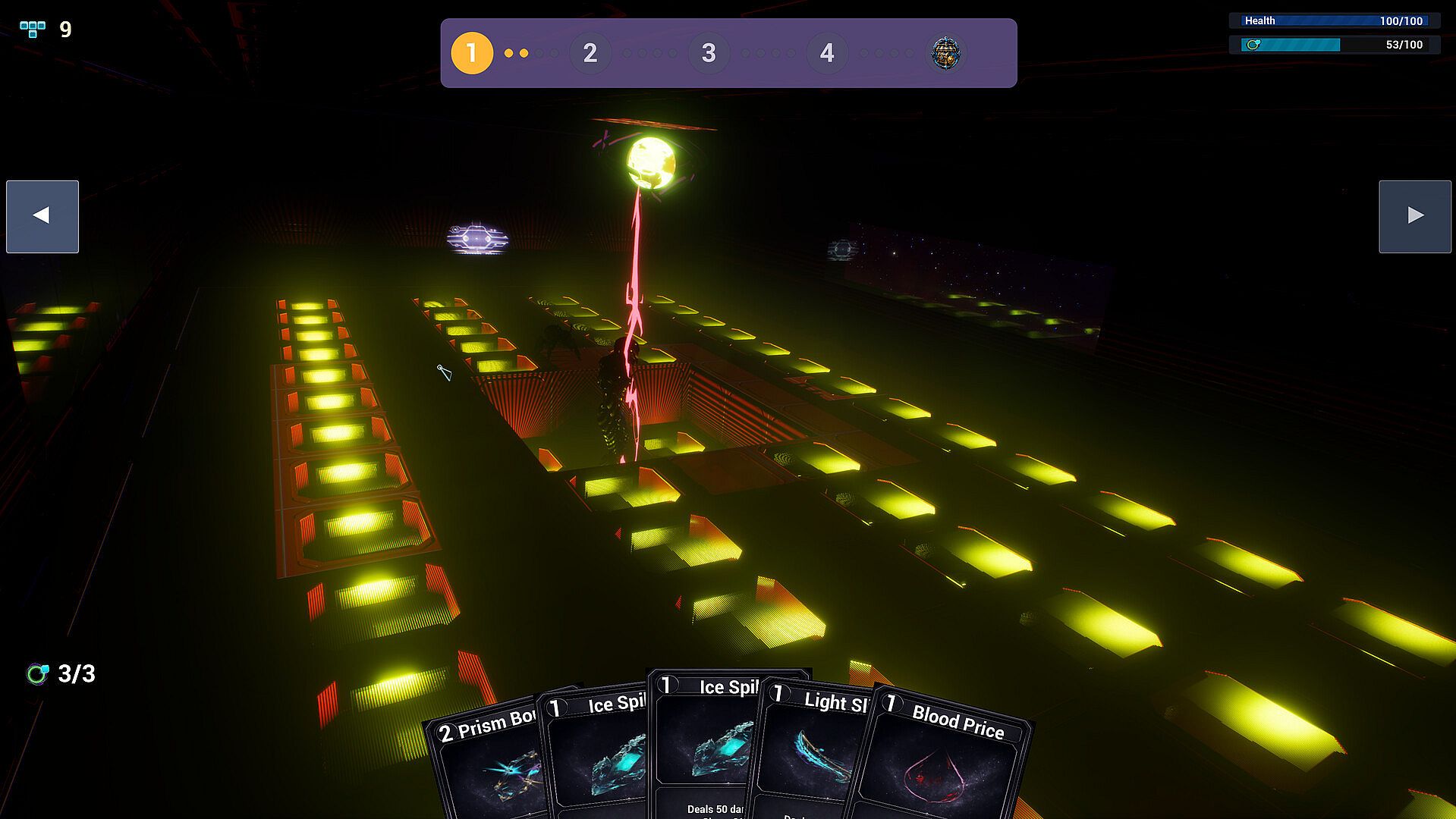
The core loop centers on dropping and rotating blocks to form complete lines for clearance, much like traditional falling block puzzles, but with added layers of card-based intervention. A well-placed spell can destroy single blocks, chain lightning across multiple targets, or slow incoming pieces to buy time. Energy must be balanced carefully, as casting at the right moment often turns a near-loss into continued progress.
Twenty-four cards span the schools of Fire, Ice, Lightning, Light, Dark, and Blight. Each offers distinct effects that players combine and upgrade during runs. The deck becomes a flexible tool rather than a fixed set, with choices in the shop determining whether to reinforce proven synergies or test fresh pairings. Artifacts provide further customization, while coin spending decisions shape the immediate run and long-term options.
Boss encounters introduce board-altering mechanics that integrate directly into the puzzle. Fog can hide threats, mirrored structures occupy cells, and shadow elements complicate targeting. These changes force players to treat spell casting and block placement as interconnected actions within the same sequence.
Game Modes
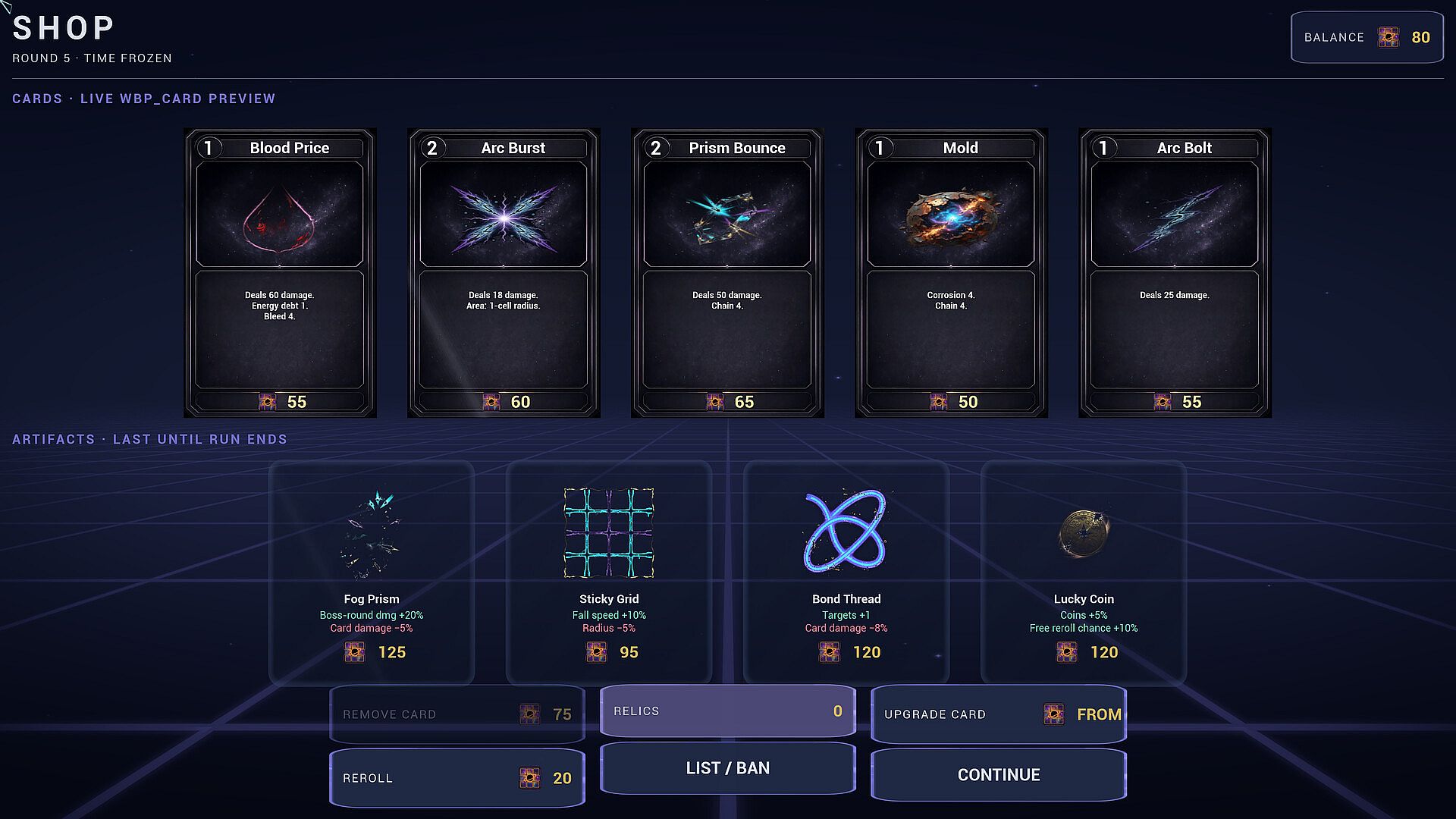
The game structures play around repeated runs that progress through waves of increasing difficulty. Between waves, a shop allows purchases of new cards, artifacts, and upgrades, along with the option to cull weaker cards from the deck. Each run ends either through successful wave completion or board overflow, after which permanent upgrades unlock for future attempts.
Bosses appear as key obstacles within these runs, each bringing unique field modifications that demand adjusted strategies. The format encourages experimentation across attempts, as different card combinations and artifact selections lead to varied approaches against the same threats. No separate competitive or cooperative modes exist beyond this single-player roguelite framework.
Progression and Customization
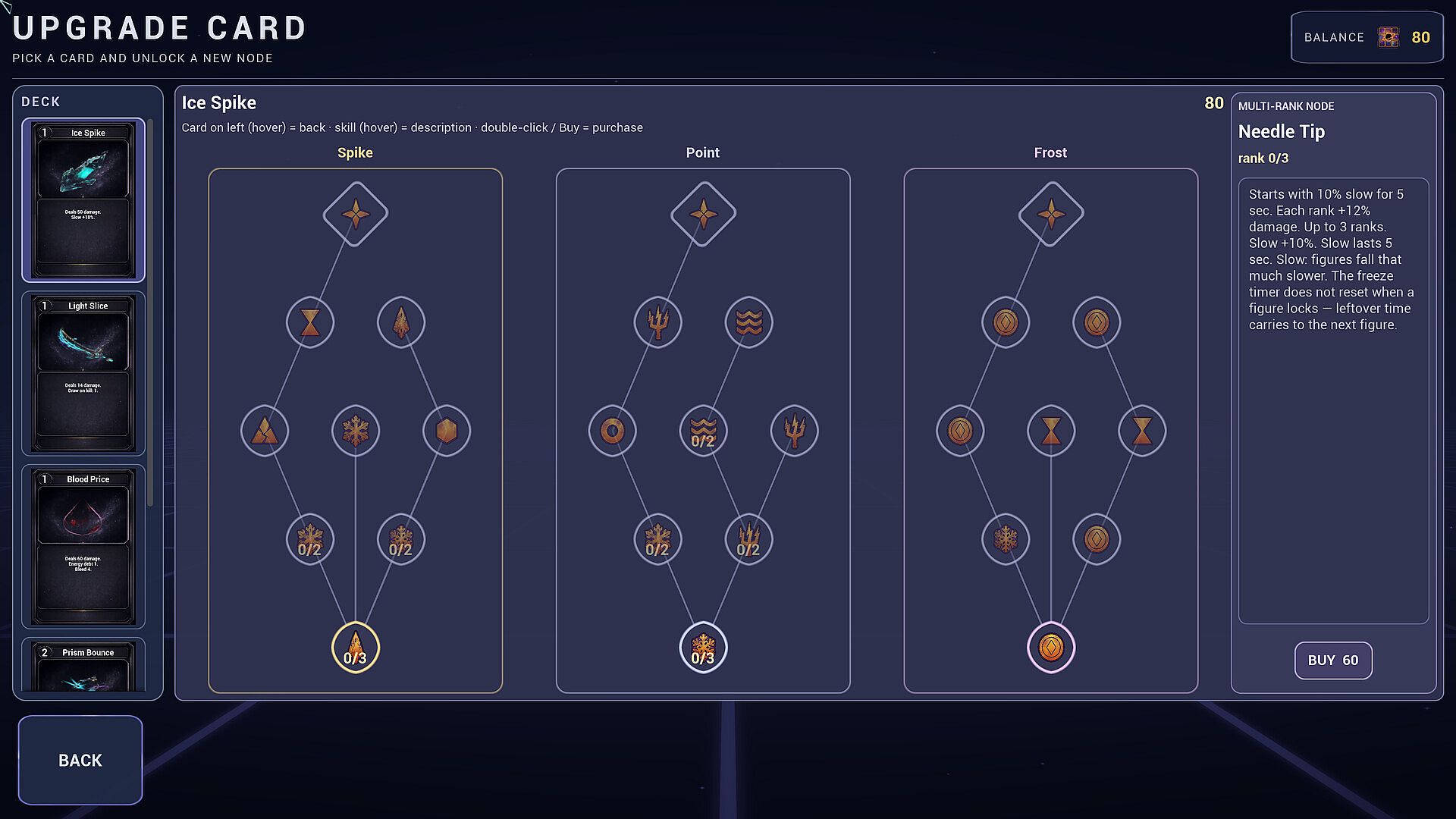
Between-run progression focuses on permanent unlocks that expand available options without altering the fundamental puzzle rules. Players accumulate resources to broaden their card pool and artifact selections, enabling fresh deck builds on subsequent runs. This system rewards both consistent strategies and riskier experiments, as removed cards and upgraded effects carry forward.
The six magic schools provide clear thematic groupings for effects, allowing players to lean into damage-focused paths, control-oriented builds, or hybrid approaches. Upgrades refine individual cards, while artifacts add passive or situational bonuses that interact with the falling blocks and spells alike.
Is It Worth Playing?
This title suits players who enjoy puzzle games with strategic depth and roguelite elements. The combination of precise block placement and deck management creates a loop that rewards planning and quick adaptation. Those drawn to casual strategy experiences with progression across attempts will find the core systems engaging, particularly when experimenting with card synergies from the six schools.
Since the game remains unreleased with no player reviews available, its appeal rests on the described mechanics of line-clearing, spell timing, and run-based upgrades. Fans of similar falling block titles enhanced by deckbuilding should consider adding it to a wishlist ahead of its November 2026 launch to evaluate the full experience firsthand.











