




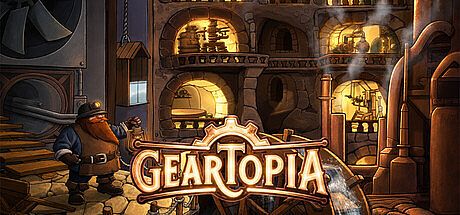


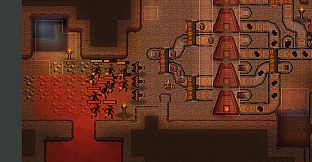
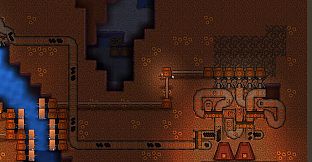
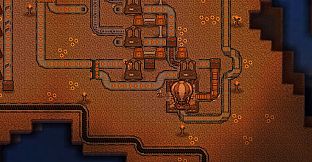
GearTopia is a strategy indie simulation game set on PC where players construct and manage a sprawling steampunk factory as a dwarf engineer. Everything operates through water wheels, steam, brass gears, and mechanical shafts rather than electricity, creating intricate production chains that deliver iron to besieged dwarven fortresses while fending off goblin incursions.
Gameplay
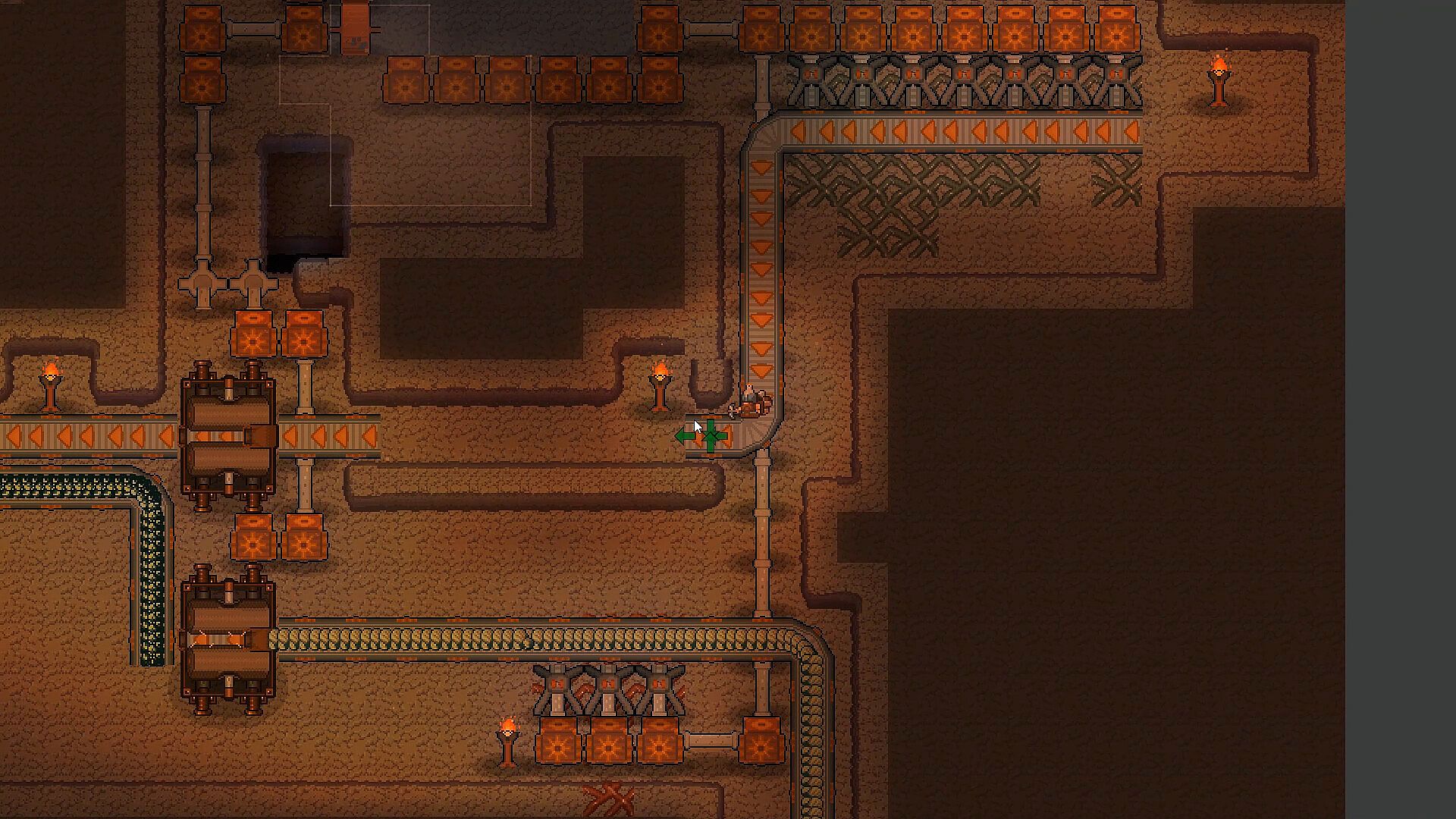
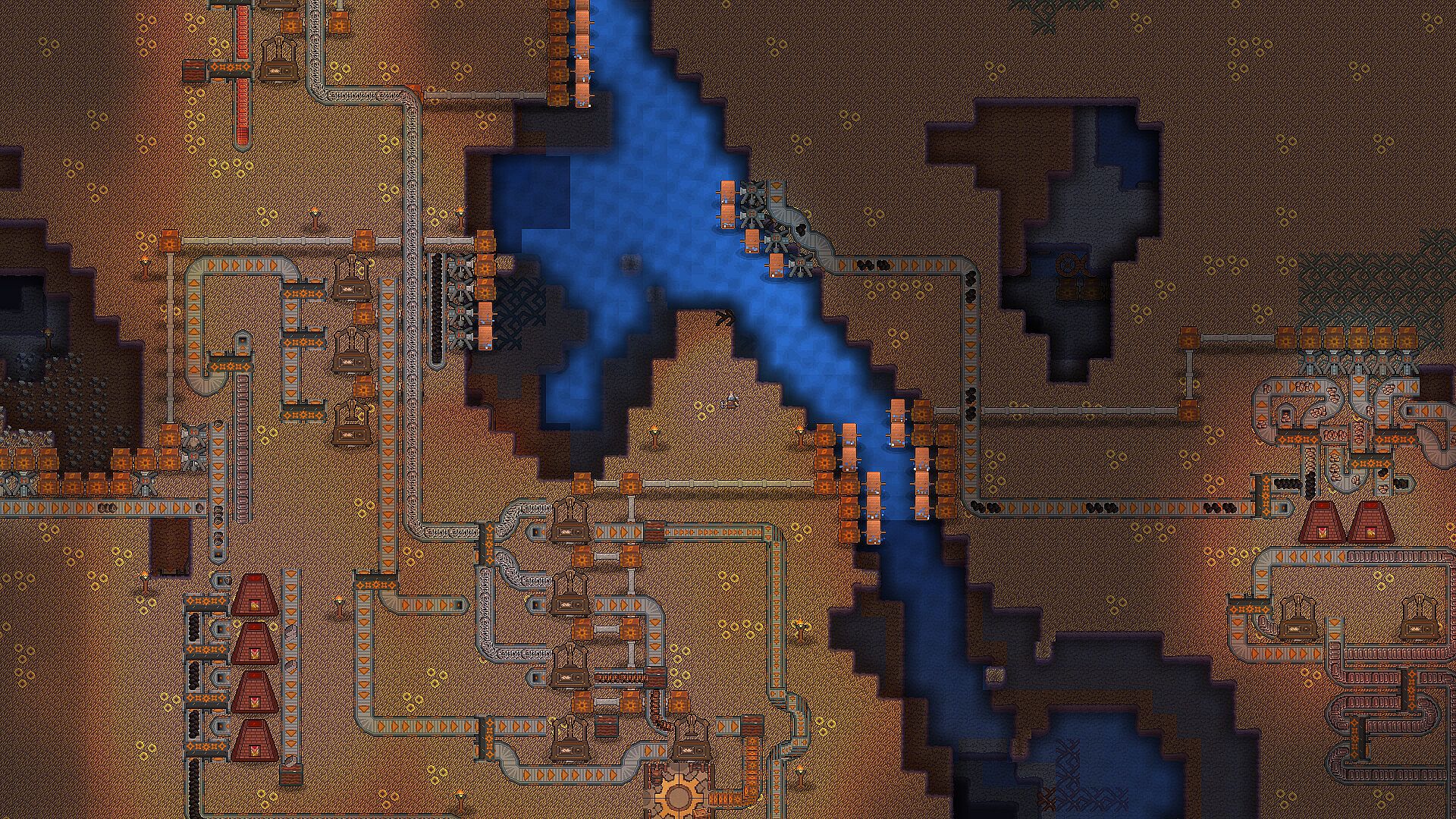
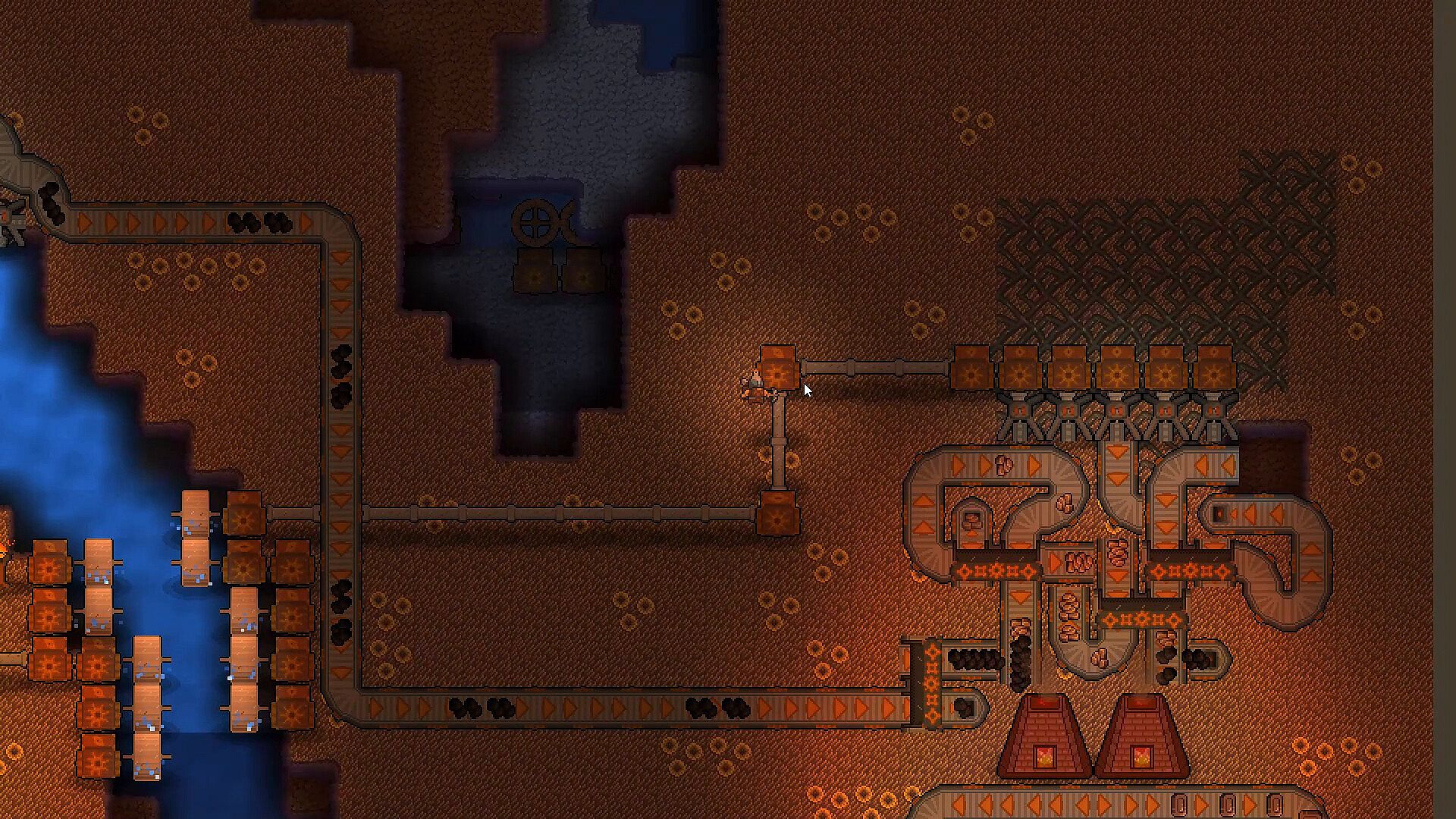
The core loop centers on resource extraction and processing powered by limited torque from shared water sources. A single water wheel drives shafts that branch across the map and through multiple underground levels, powering drills, furnaces, crushers, and conveyor belts. Adding too many machines to one line overloads the system and halts everything, forcing players to redesign gear ratios, reroute shafts, or locate stronger water flows. This constraint turns every expansion into a careful balancing act between output and stability.
Flat surface space quickly runs out, pushing construction downward into successive floors. Each new level requires transporting power, ore, and finished goods vertically through the shafts already dug for logistics. The multi-level layout allows simultaneous operation across depths, with visible activity on lower floors through openings created during excavation. Water flows freely between levels, spreading through any overlooked gaps and creating both opportunities for creative traps and risks of flooding critical machinery.
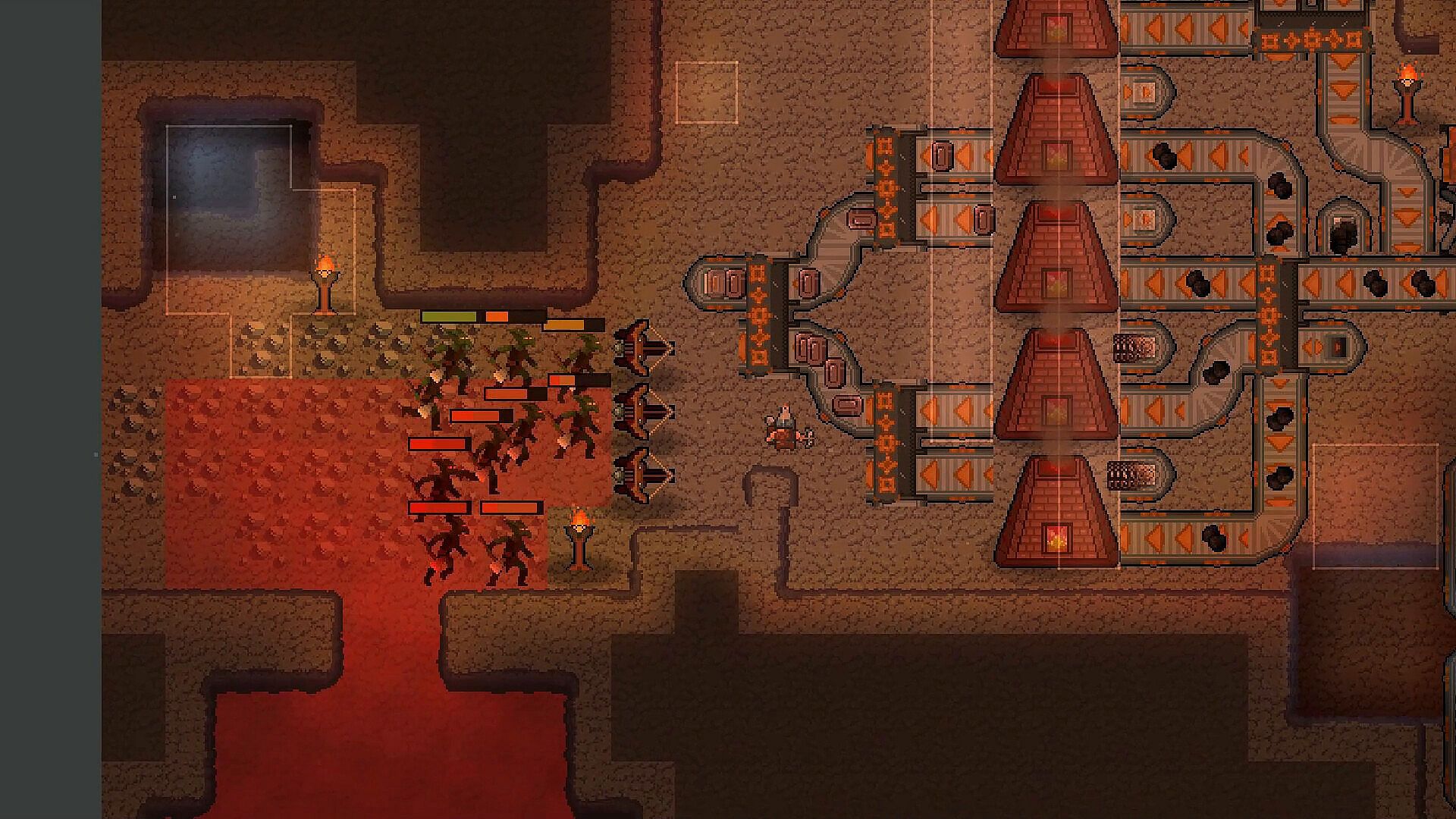
Goblin attacks scale directly with factory output, arriving in waves that use the same tunnels built for efficiency. Defense integrates into the production environment itself. Players can drop enemies down deep shafts, flood passages with controlled water releases, or channel them into lethal corridors using existing infrastructure. No separate defense phases exist; success depends on adapting the factory layout and water systems to handle threats while maintaining iron shipments.
Game Modes
GearTopia supports single-player sessions focused on solo factory development and fortress supply. Co-op allows multiple players to collaborate on the same map, sharing the challenges of torque distribution, vertical expansion, and goblin defense. Both modes emphasize the same integrated building and survival systems without distinct variants or separate campaigns.
Key Mechanics
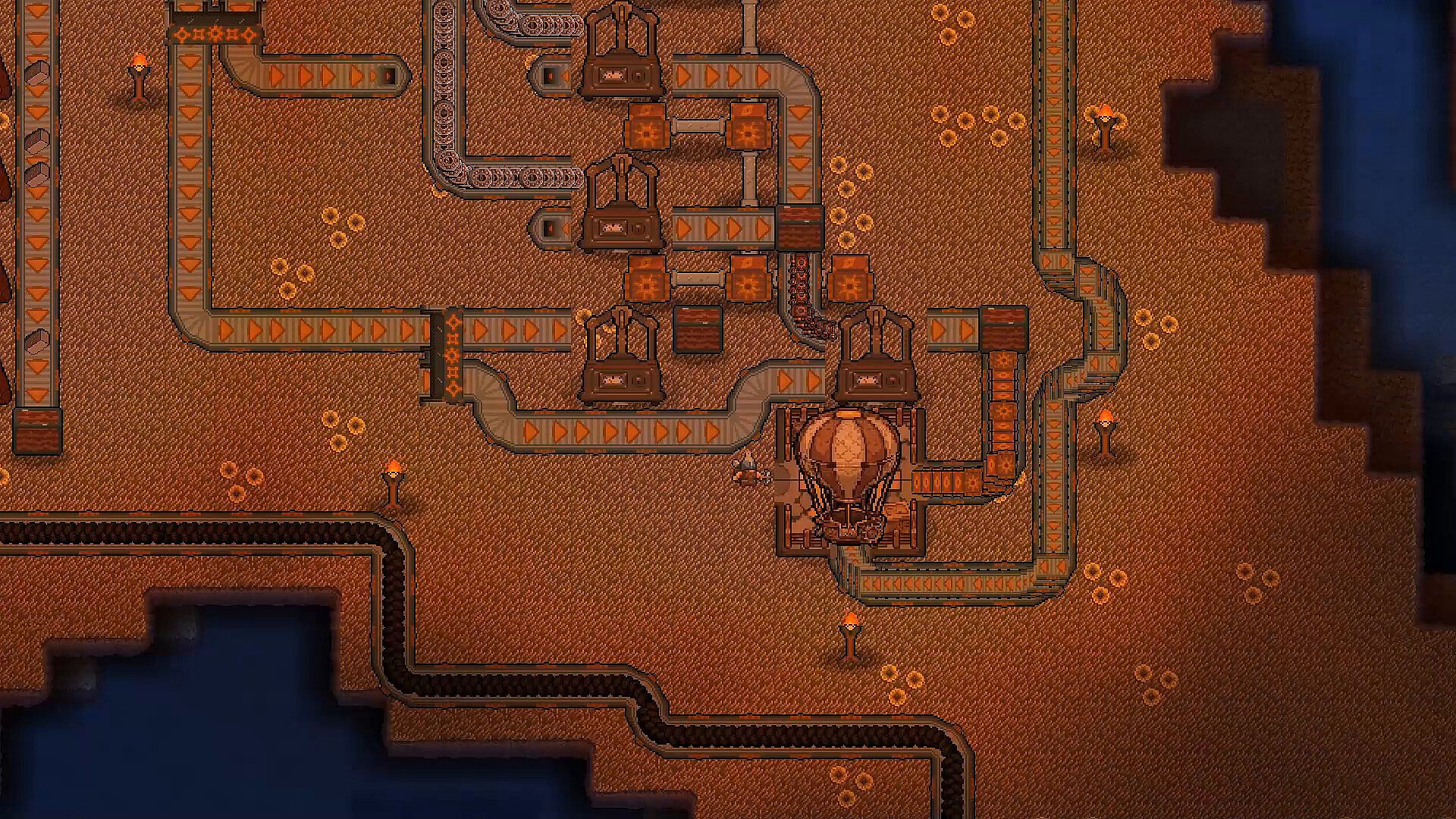
Power management forms the central tension, with one finite pool of rotation serving all machines. Players must experiment with shaft branches, gear swaps, and water source improvements to sustain growth. Fortress orders arrive at a single aerodock, presenting three choices at a time that represent specific iron demands from individual strongholds. Fulfilling them earns gold for research and expansion, while neglect can lead to a fortress falling silent permanently.
Water behaves realistically, flowing across floors and through goblin or player shafts alike. Pumps, pipes, and tanks provide control but never guarantee perfect results, adding layers of risk to trap designs or flood defenses. Gold functions purely as earned currency tied to contributions, funding upgrades that improve production efficiency or goblin countermeasures.
Is It Worth Playing?
GearTopia appeals to players who enjoy detailed factory simulation combined with real-time defensive elements in a single cohesive system. The emphasis on mechanical constraints, vertical building, and integrated threats creates a distinctive experience for those interested in steampunk automation and problem-solving under pressure. With its planned release in Q1 2027 and support for both solo and cooperative play, the game suits enthusiasts of indie strategy titles that reward careful planning and iterative redesign over quick sessions. Those drawn to resource chains, water physics puzzles, and creative use of the environment for combat will find the mechanics rewarding, while players seeking faster-paced or more conventional defense modes may prefer other options.











