

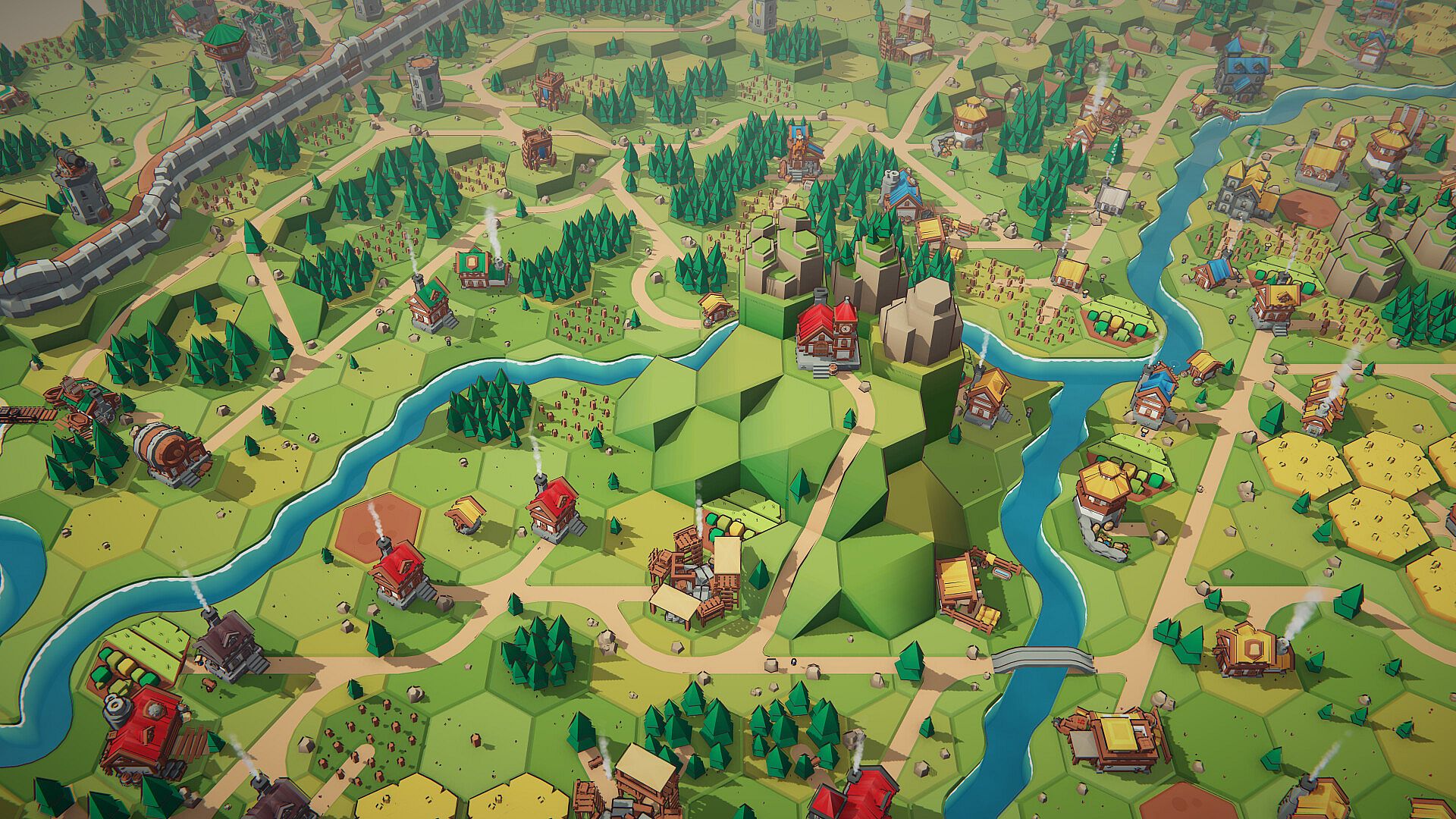
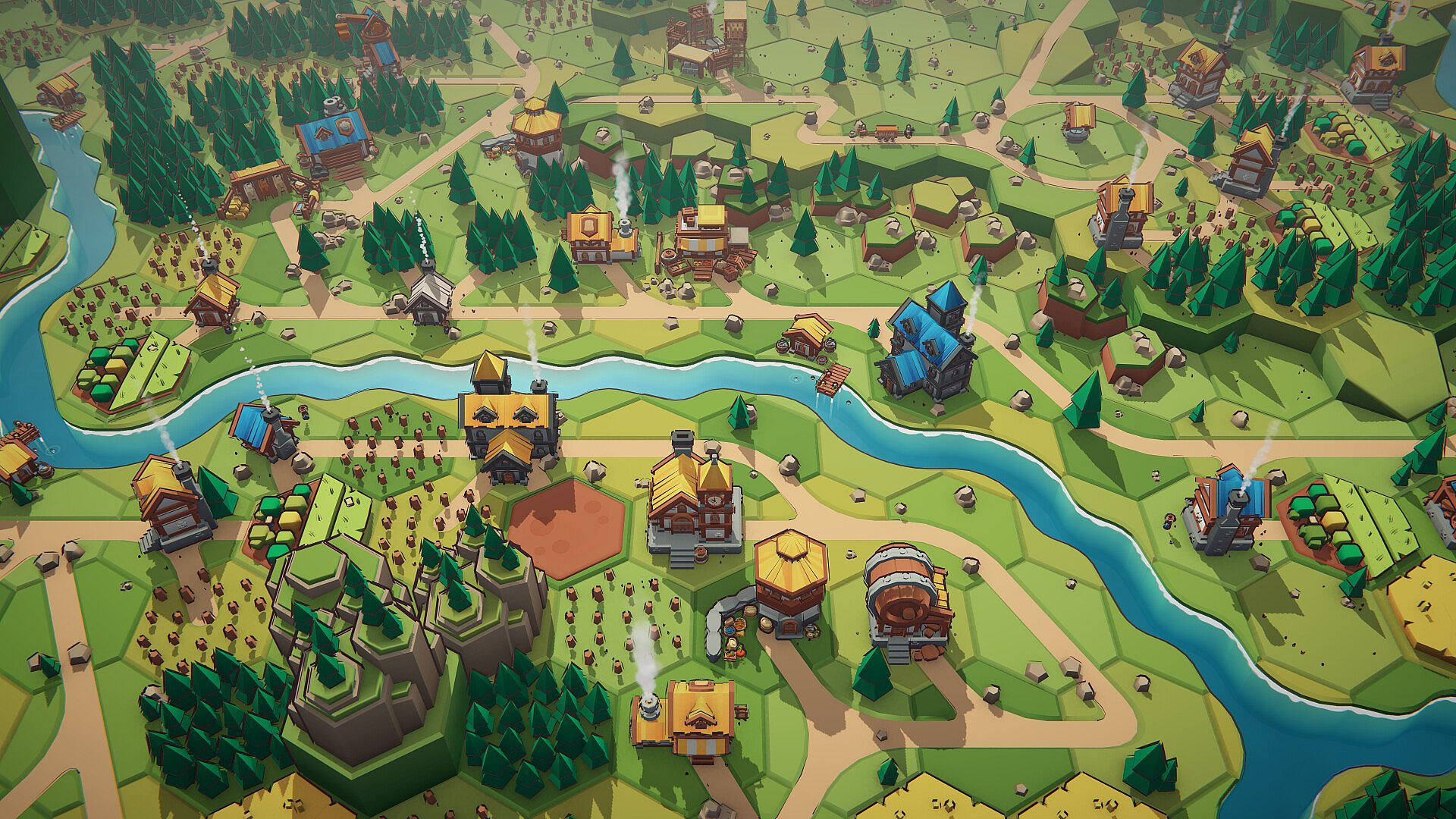
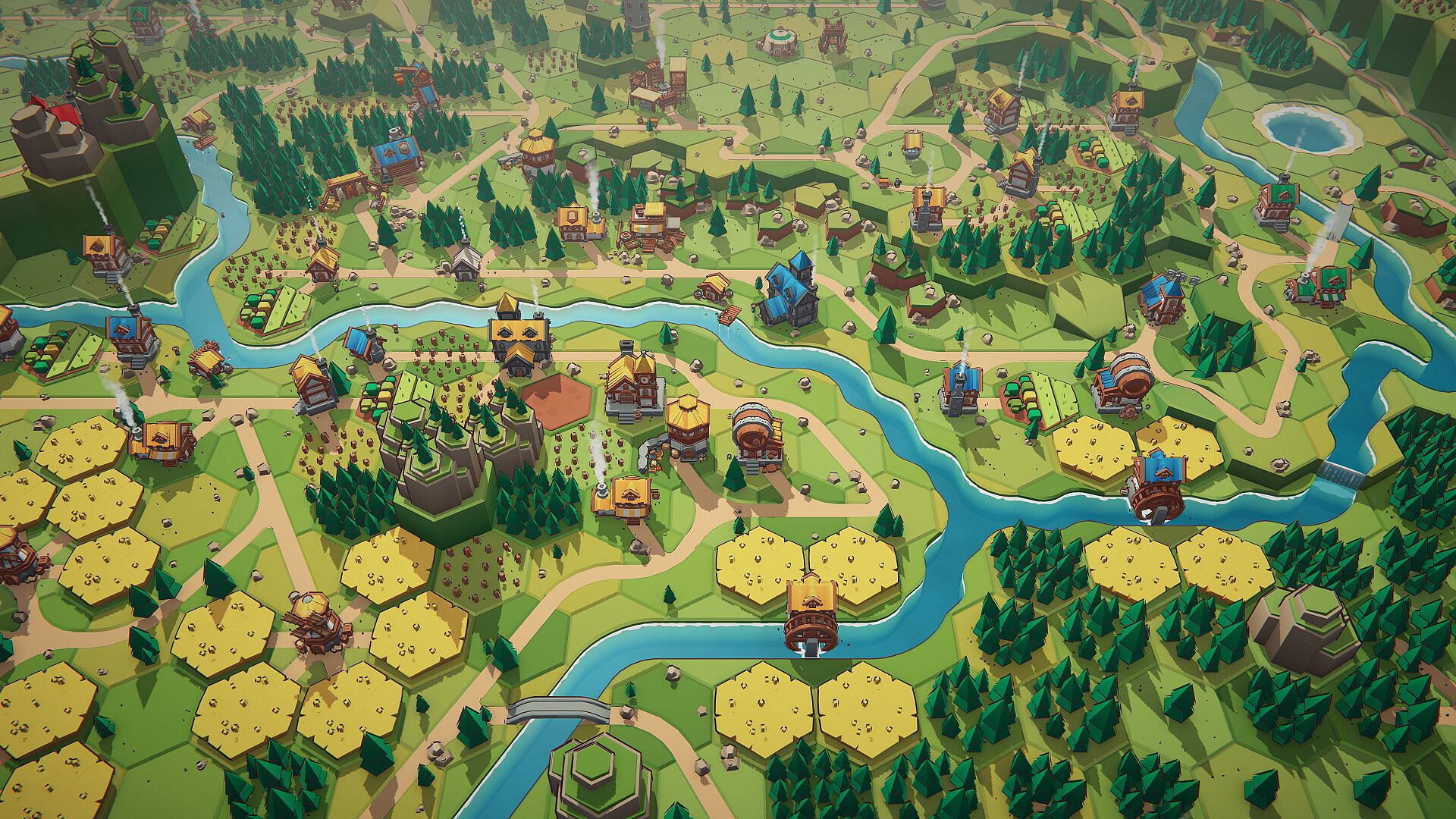
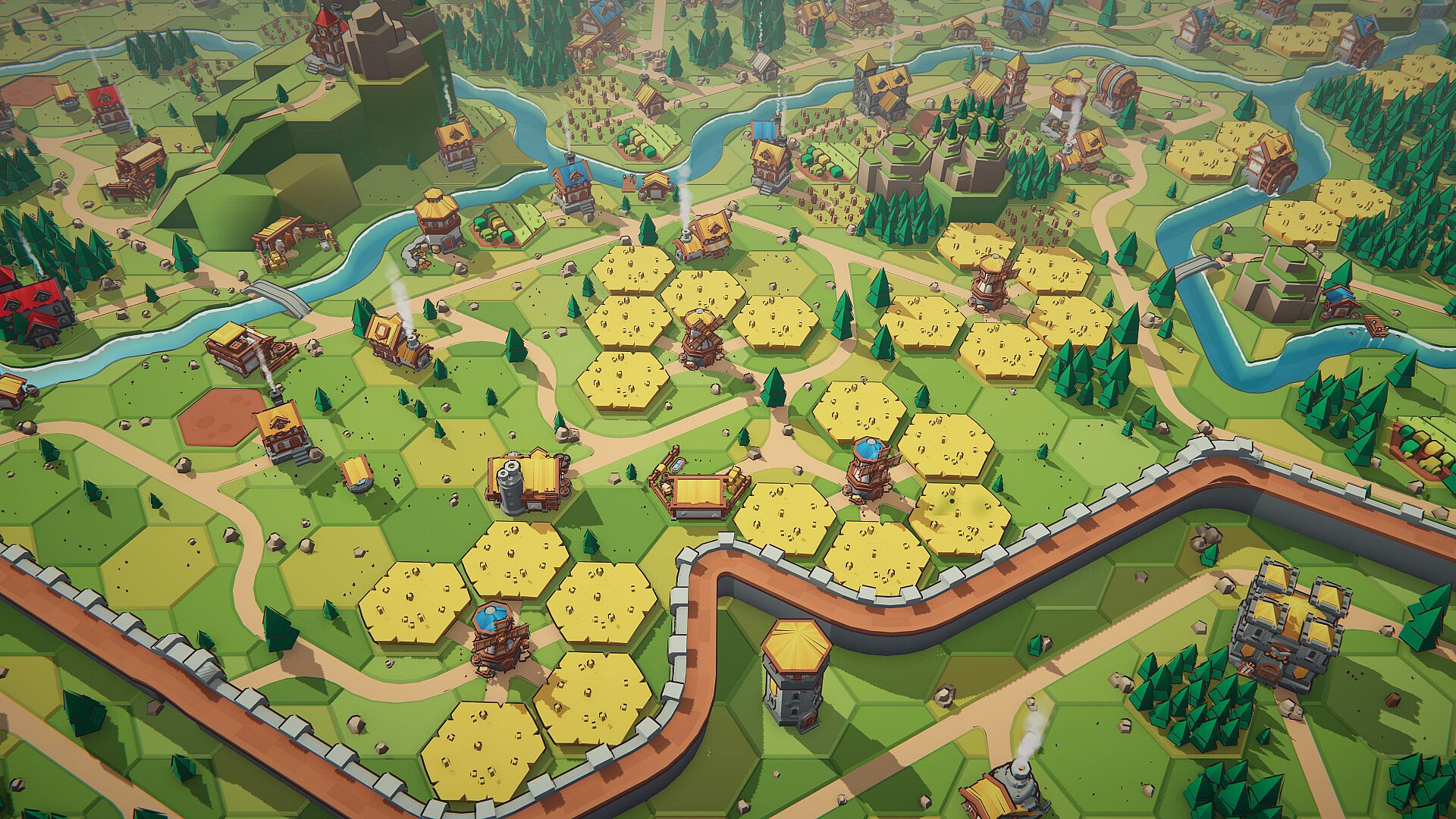
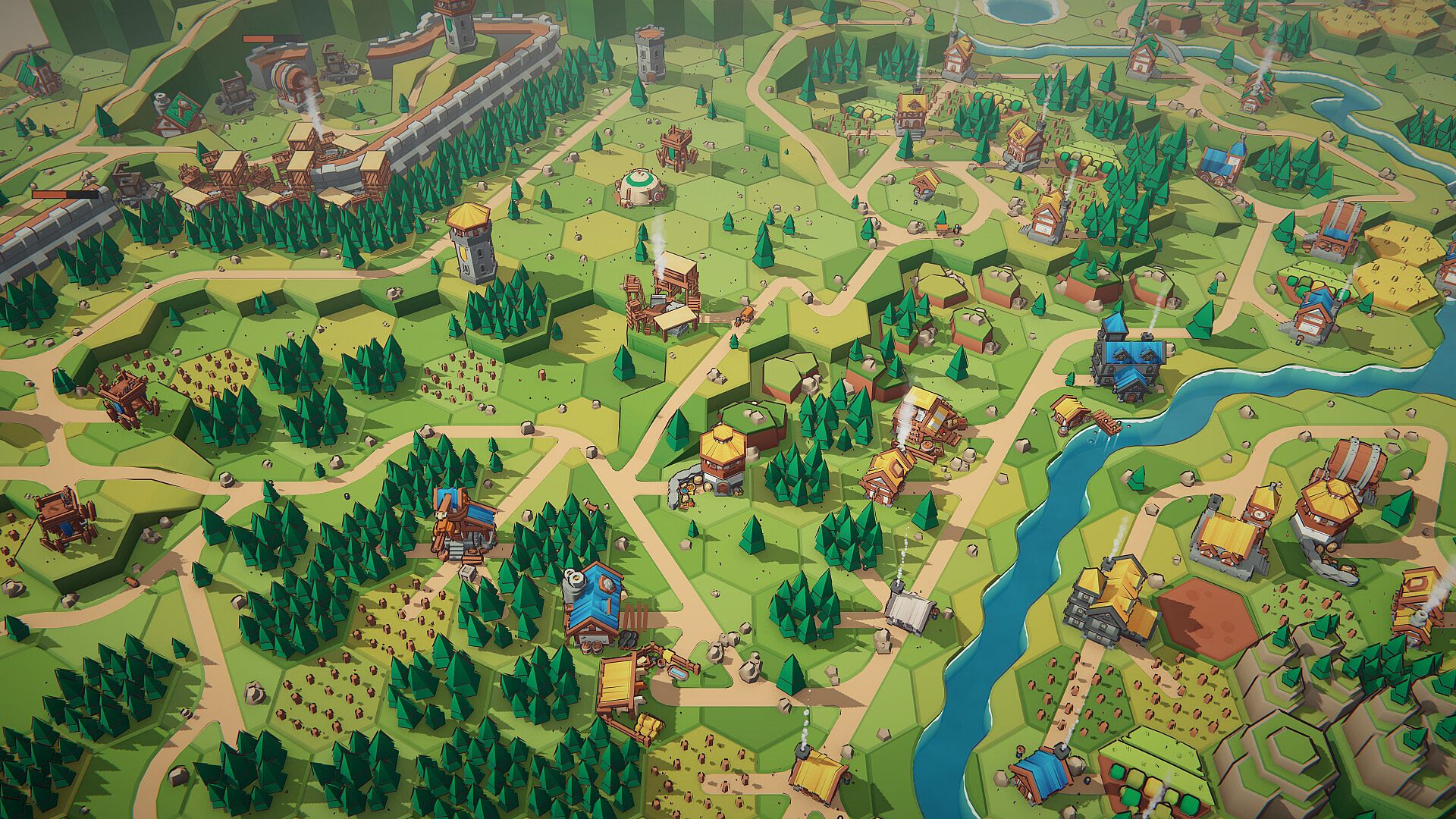

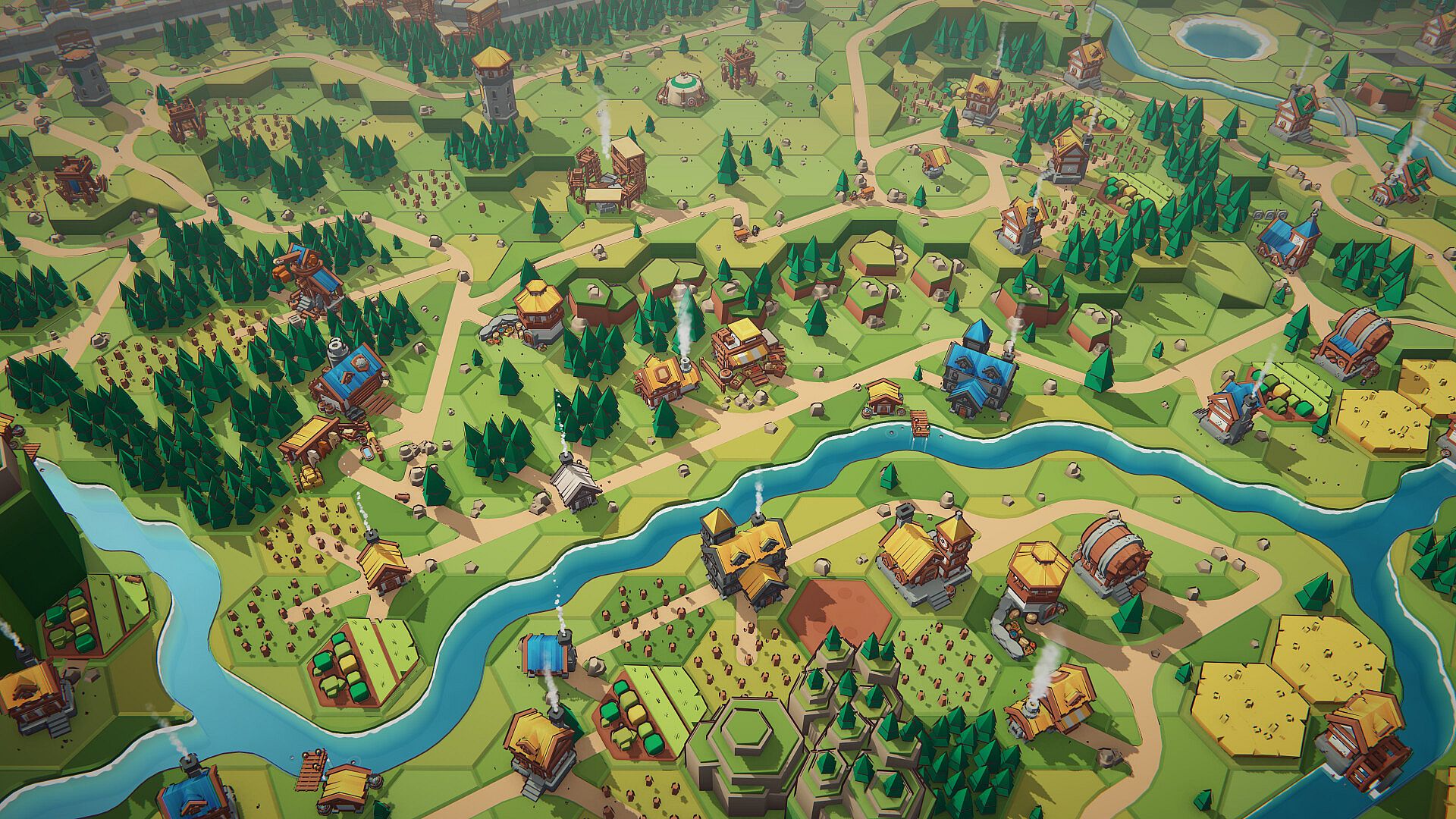
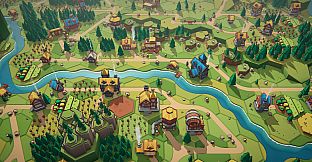
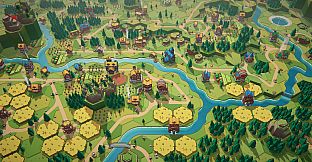
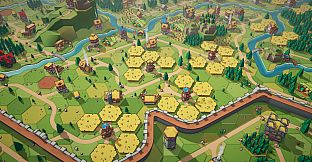
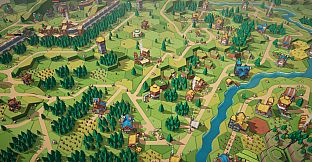
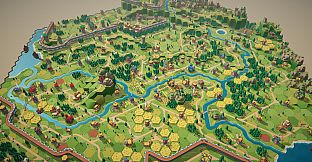
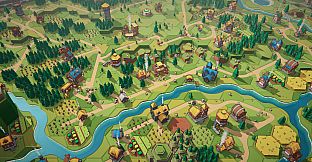
Hex and Hearth is a strategy, indie, casual, and simulation game centered on building villages across hexagonal tiles on PC. Players place tiles one after another to create interconnected settlements where structures support one another through simple adjacency rules. The experience emphasizes steady growth over competition or failure, with seasons cycling through summer greenery and winter snow while rain moves across rooftops.
Gameplay
The core loop begins with selecting a tile from an available selection and positioning it on an empty hex. Adjacent placements create functional links, such as a cottage drawing sustenance from a nearby garden or a mill processing wheat from an adjoining field. Roads extend toward wooded areas to expand options further. Families arrive once food needs are met, taking up work in fields and forests near their homes. Time advances through day and night cycles alongside the four seasons, altering the visual mood without halting progress. Food shortages slow activity temporarily, yet the settlement always stabilizes. The granary requires attention before winter arrives, providing the main point of focus amid otherwise open-ended placement.
Visuals adopt a light parchment style or a darker leather variant, paired with background music that suits the unhurried pace. A tutorial settlement introduces the mechanics gradually, allowing players to experiment at their own speed. Sixty distinct villages exist, each preserving its state automatically at the end of each day. Photo mode permits camera adjustments, time of day selection, and season changes to capture specific moments. Rankings display personal villages alongside community examples for viewing and optional upvotes.
Game Modes
Free building grants access to every tile type from the start, encouraging unrestricted expansion across the hex grid. Rule-based village founding introduces constraints that shape development. Village quests provide objectives that unlock additional tiles upon completion. Optional additions include disasters, raider events, designated building sites, or a wild coastline, each altering the environment without forcing participation. Players may select any combination or omit them entirely to maintain a purely constructive session.
Core Mechanics and Progression
Tile interactions form the foundation of growth, with each new placement potentially enhancing nearby elements through shared edges. Resource flows remain visible through these connections, guiding decisions on where to expand next. Seasonal shifts influence appearance and minor production rhythms, yet recovery from shortfalls occurs naturally. Quests serve as optional guides rather than requirements, revealing new tile varieties as rewards. The absence of timers or permanent setbacks keeps attention on arrangement and observation of how the village evolves over repeated sessions.
Is It Worth Playing?
Hex and Hearth suits players who prefer relaxed tile placement and settlement observation without risk of loss. Its design supports repeated short sessions or longer contemplative builds, with automatic saves preserving progress across the sixty villages. Optional rules and events allow customization of challenge level, while photo mode and community rankings add ways to appreciate completed work. The game delivers a consistent, low-pressure simulation focused on adjacency-driven interactions and seasonal atmosphere, appealing directly to those drawn to calm strategy and indie village builders on PC.