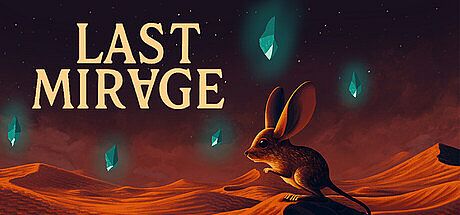


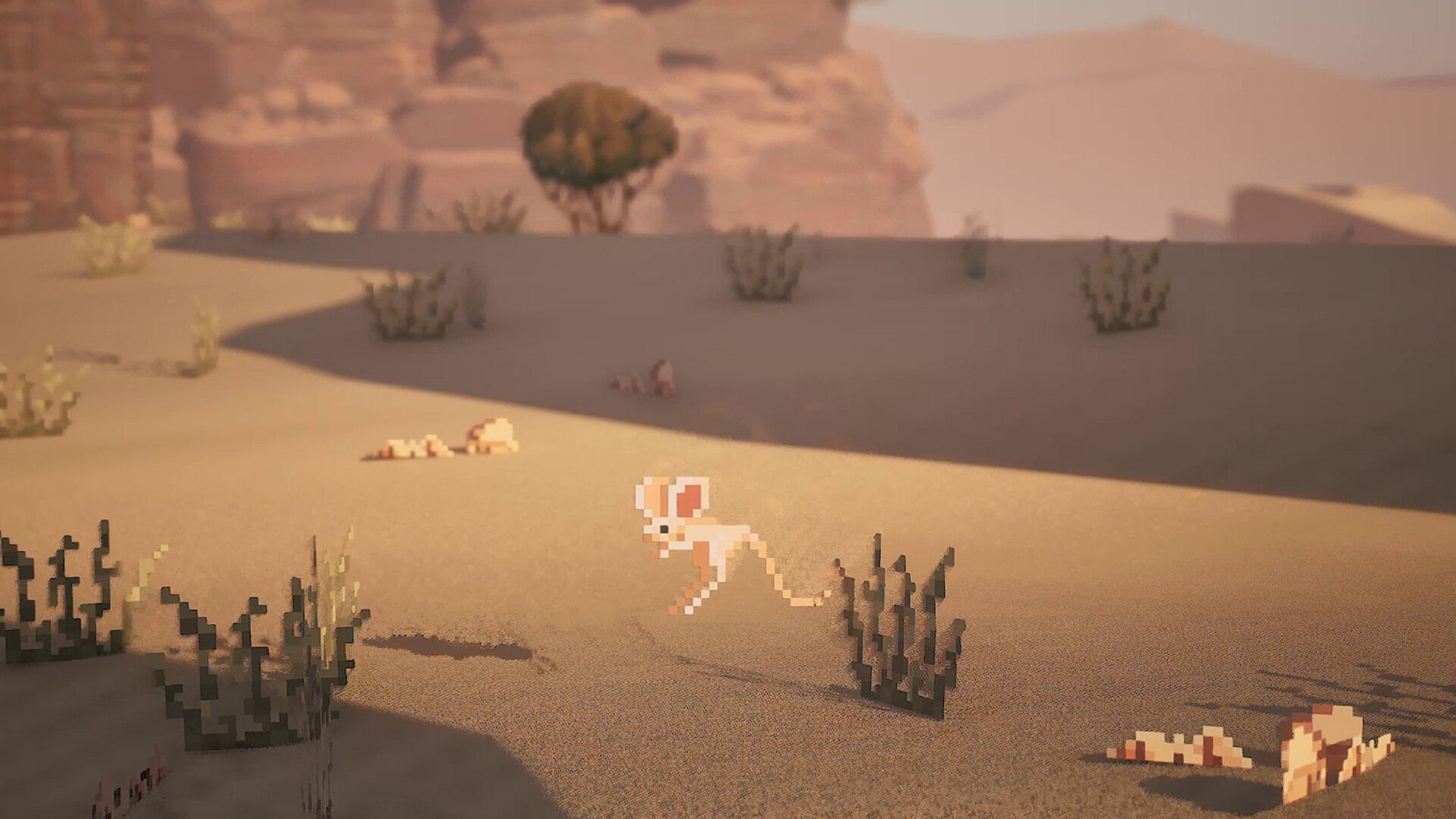
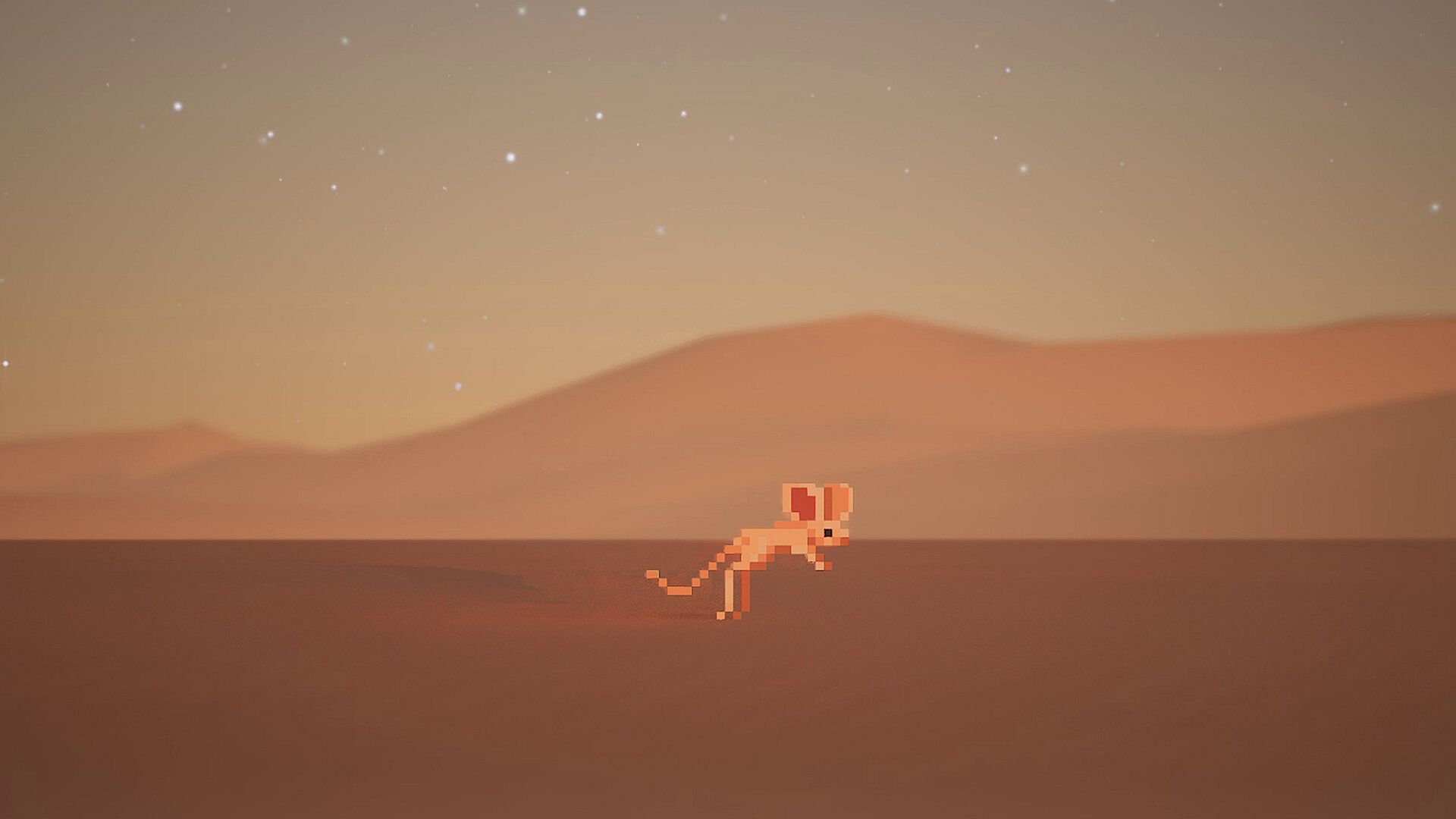
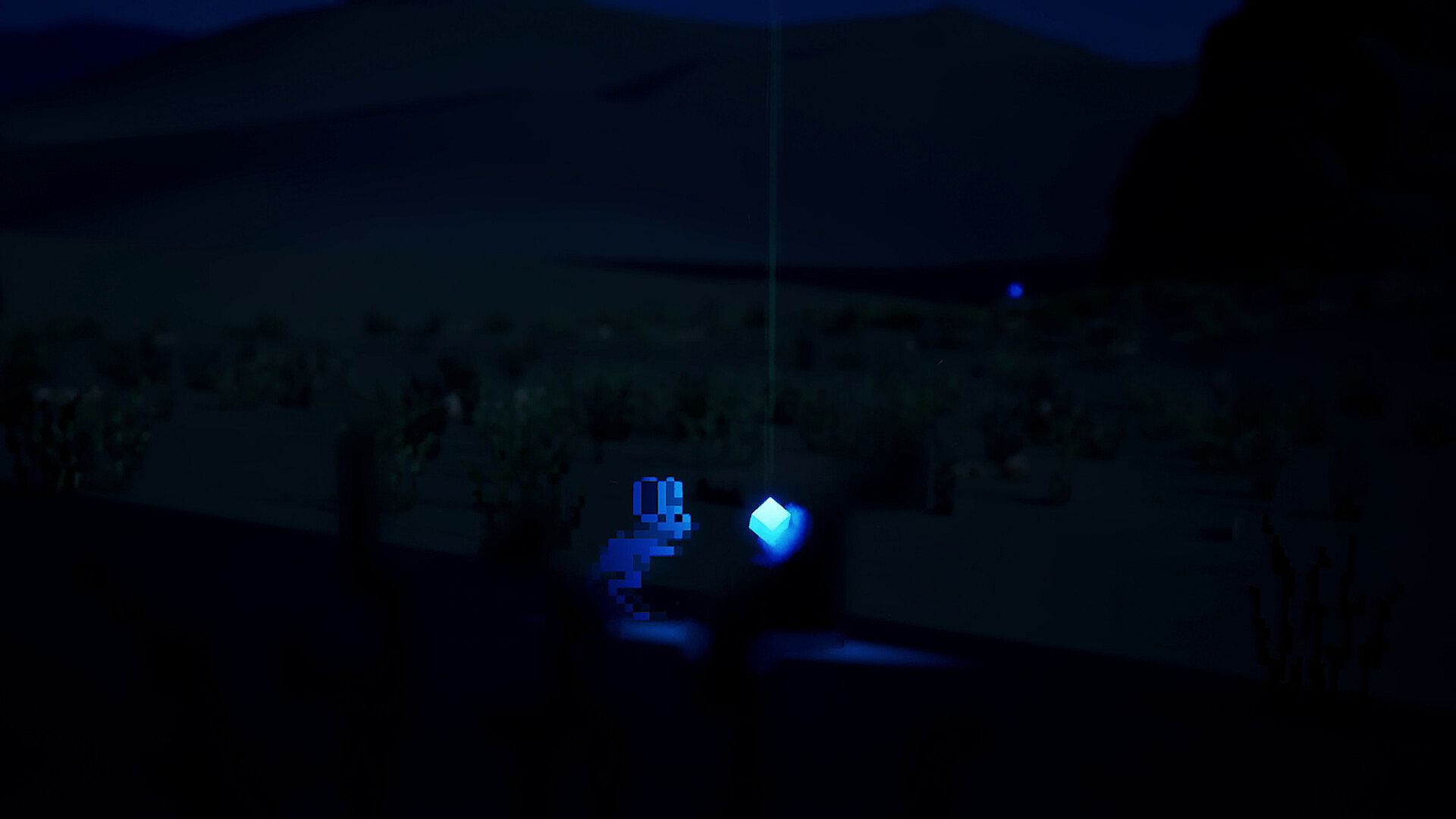
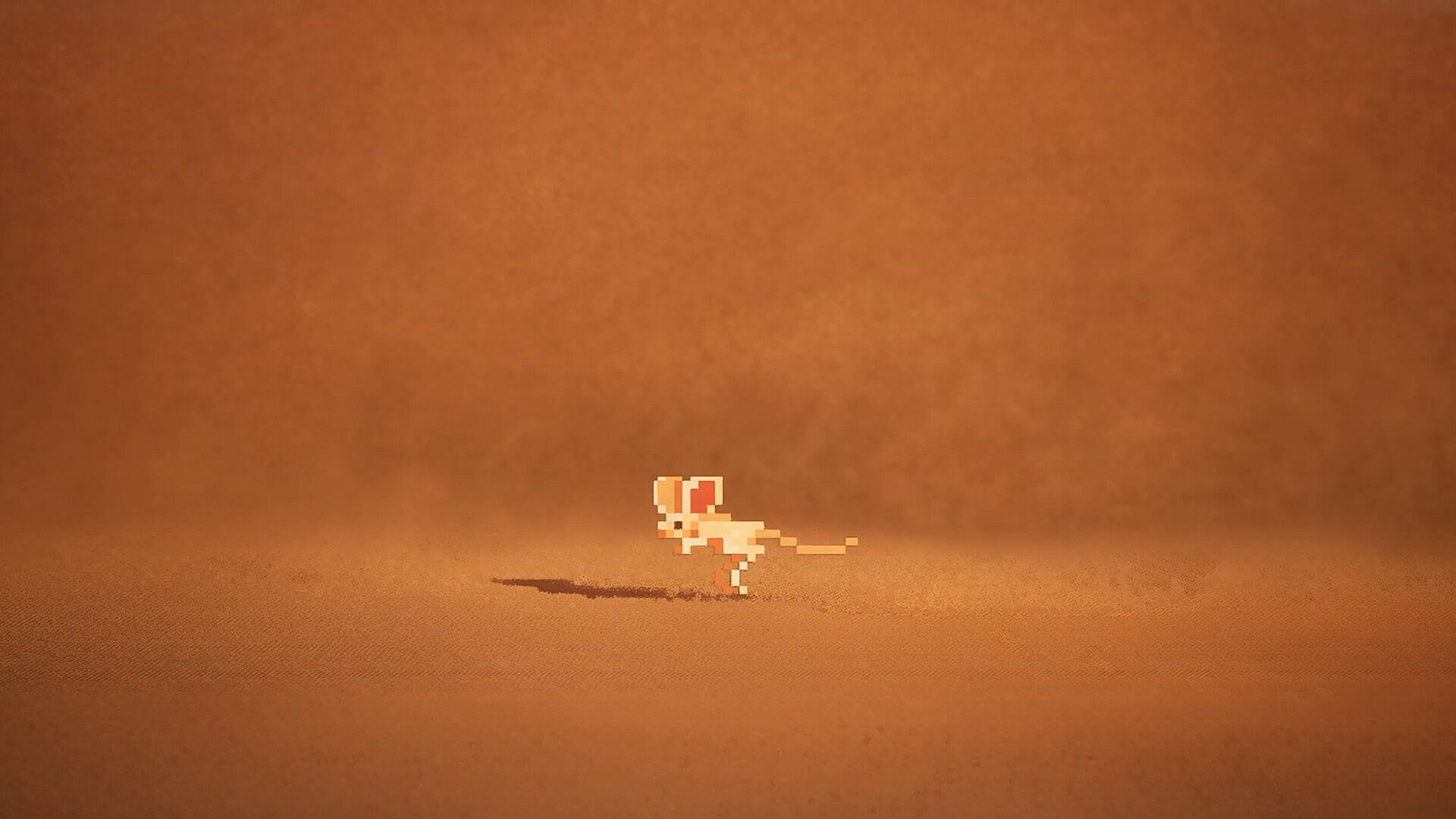
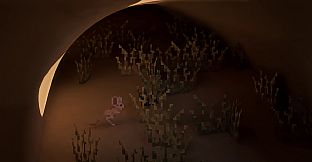
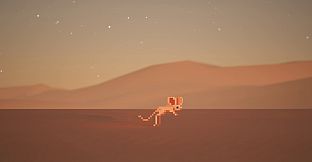
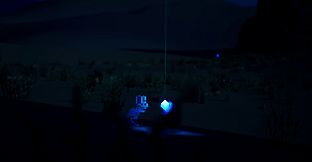
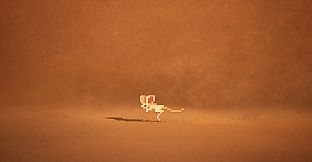
Last Mirage is a 2.5D action-adventure game that places players in the role of a small desert jumping mouse navigating a stylized world of sand and shadow. Developed as an indie title for PC, it blends casual accessibility with deliberate pacing focused on movement, awareness, and quiet discovery. The experience centers on traversing dunes and tunnels while listening for threats and interpreting the environment's subtle signals.
Gameplay
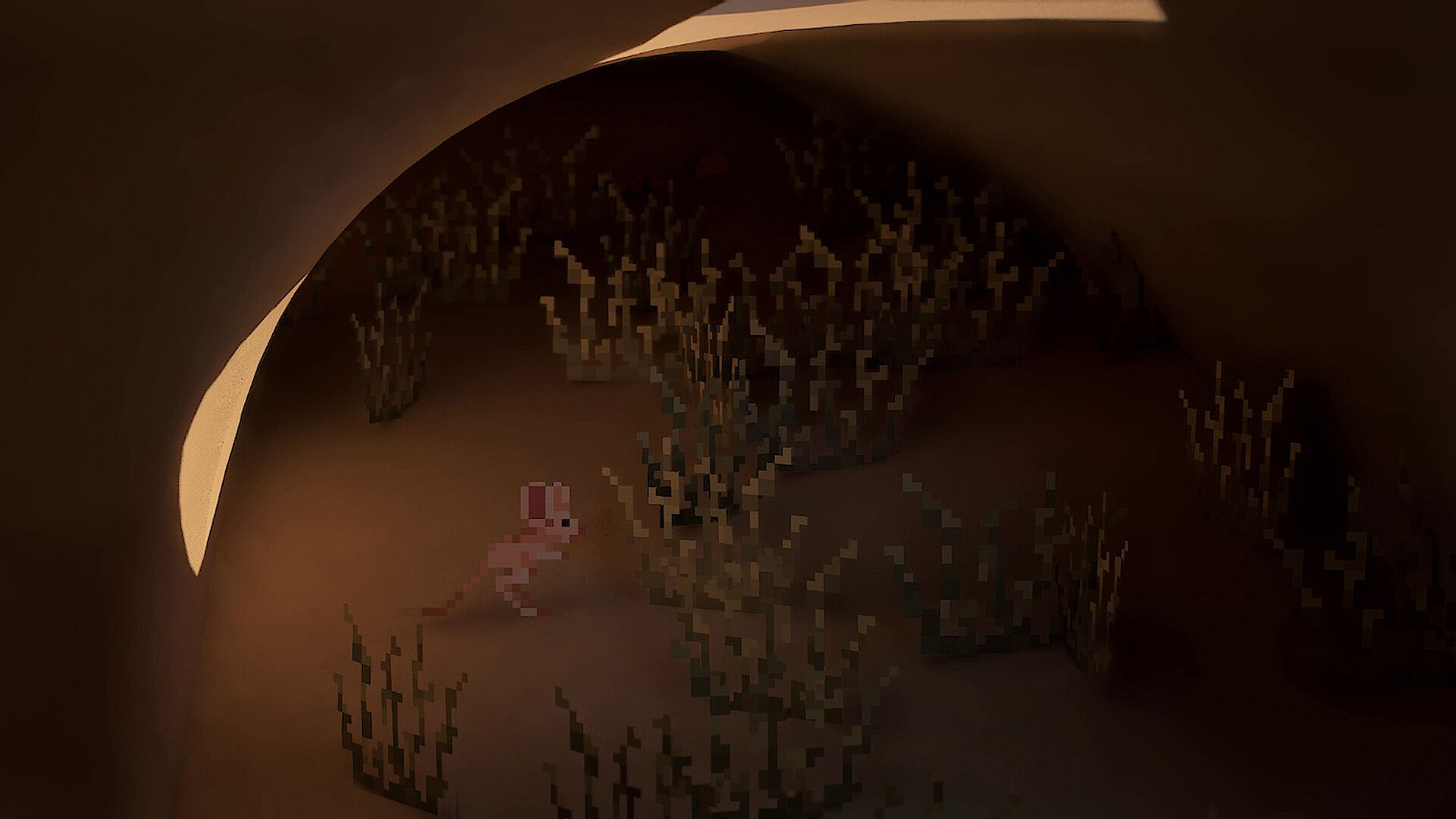
Core movement relies on swift leaps that allow the mouse to cross open sand dunes and squeeze through narrow underground passages. Agility becomes essential for reaching elevated spots, avoiding hazards, and locating concealed routes that branch off the main paths. Players must balance speed with caution because sudden motion or noise draws attention from predators such as birds of prey and snakes.
Stealth forms the foundation of survival. These hunters respond to both sound and visible movement, forcing careful timing and route selection rather than direct confrontation. The desert itself acts as an active participant, with shifting sands and moonlight altering visibility and creating temporary safe zones or new obstacles.
Exploration reveals a range of connected areas including broad dune landscapes, interconnected tunnel networks, seed fields near oases, and secluded paths that only appear under specific conditions. Some locations present illusions that appear inviting yet lead nowhere or introduce new risks, requiring players to evaluate each shelter before committing to it.
Game Modes
Last Mirage presents its content as a continuous single-player journey without separate competitive or cooperative modes. Progress unfolds through sequential exploration segments linked by the mouse's travels, with decisions about when to advance or remain in place shaping the immediate path forward. The structure emphasizes personal pacing over structured levels or rounds, allowing time to observe the surroundings and test different approaches to each challenge.
Choices appear organically through the environment rather than through menus or dialogue trees. A seemingly stable patch of ground might collapse under haste, while a quiet moment spent listening can reveal a safer route. This approach keeps the focus on the core loop of movement, observation, and incremental discovery.
Atmosphere and World Design
The desert setting receives careful attention through minimalist visuals and a soundscape built from wind, shifting sand, and distant nocturnal activity. These elements combine to create a consistent sense of place that rewards attentive play. Hidden paths and oases emerge gradually as players learn the rhythms of the world, turning each return visit into a more informed traversal.
Illusions add a layer of uncertainty without breaking the grounded tone. What looks like shelter may instead redirect progress or expose the mouse to new dangers, reinforcing the need for measured decisions. The overall design favors quiet tension over sudden scares, aligning with the casual adventure label while maintaining engagement through environmental storytelling.
Is It Worth Playing?
Last Mirage suits players who enjoy deliberate, observation-driven adventures in compact indie packages. Its emphasis on precise leaps, sound-based awareness, and environmental navigation offers a distinct contrast to faster-paced action titles. Those drawn to atmospheric exploration and light survival mechanics will find the short, focused sessions rewarding.
The game avoids complex systems or lengthy tutorials, making it approachable for casual sessions while still demanding attention to detail. Its current presentation as a self-contained experience means players can complete the journey at their own pace without ongoing updates or seasonal content altering the core loop. For anyone seeking a thoughtful desert trek centered on a nimble protagonist, the title delivers a cohesive and distinctive outing.