

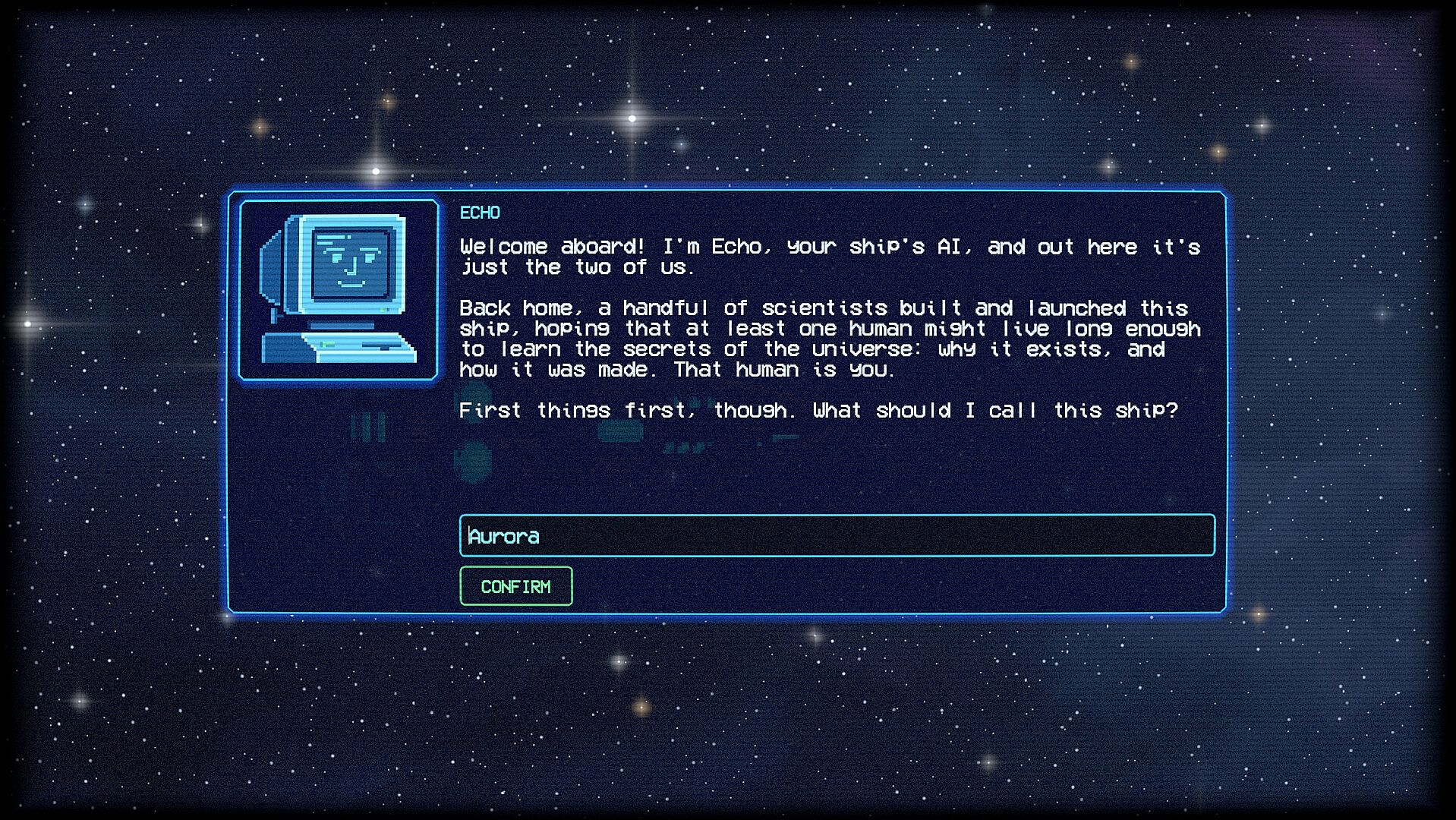
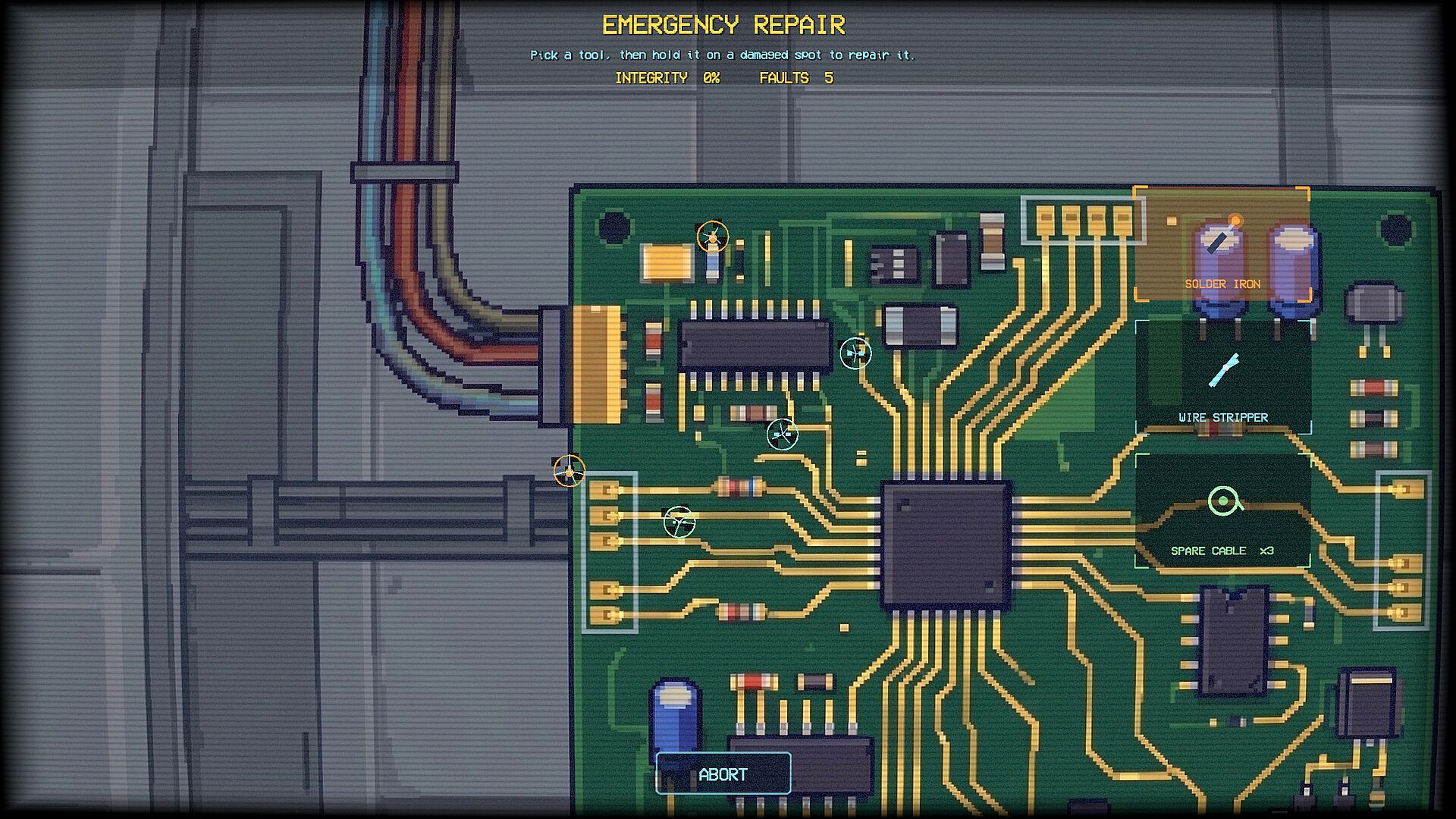
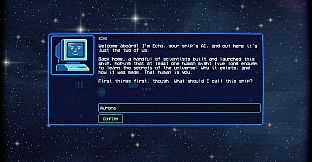
Lorentz Factor is an indie adventure game for PC that places players in command of a spacecraft on a one-way journey across vast interstellar distances. The experience centers on managing an ion drive and cold reactor while contending with the physical realities of approaching the speed of light, all framed by a narrative that unfolds through interactions with the ship's assistant, Echo.
Gameplay
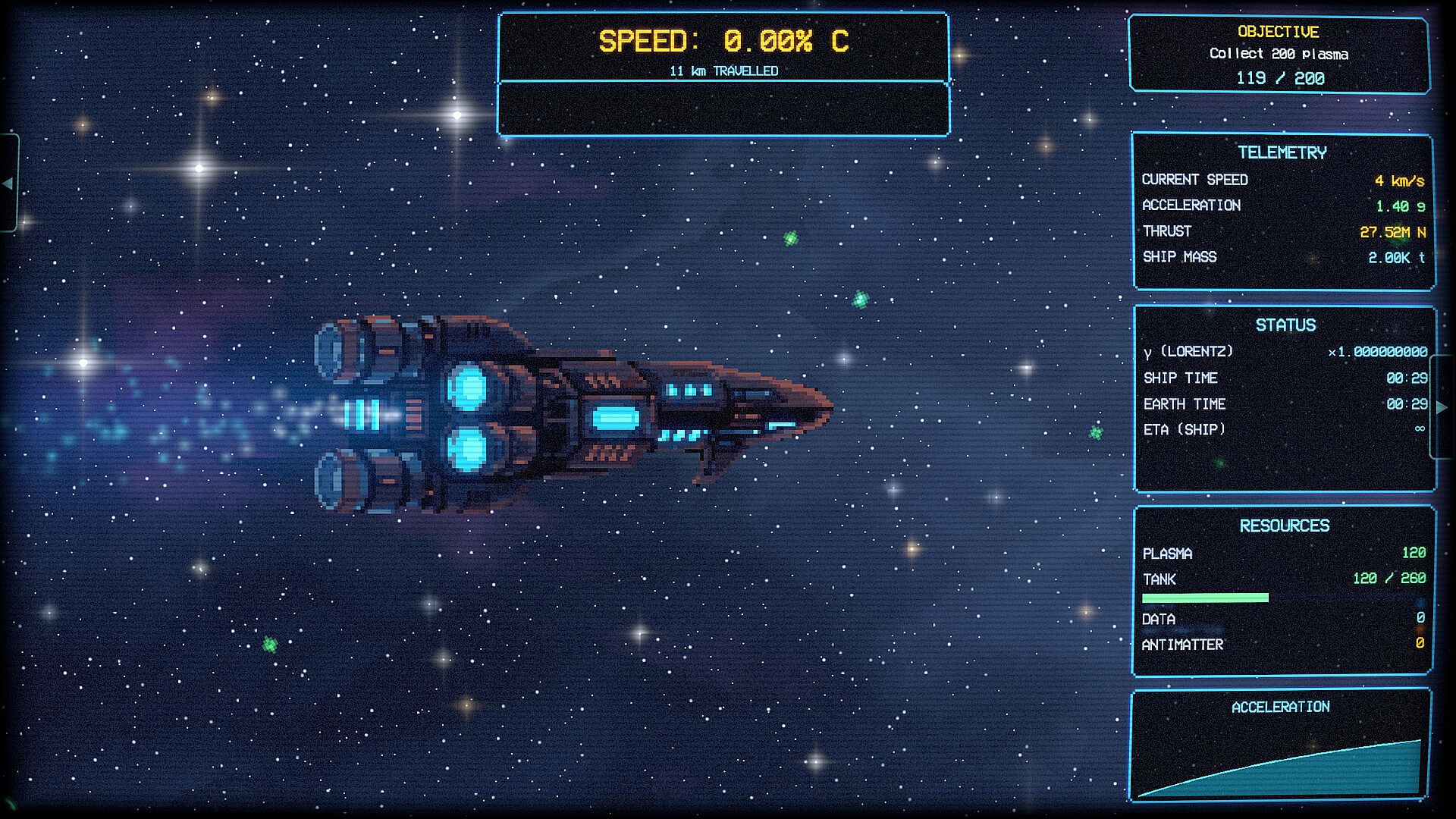
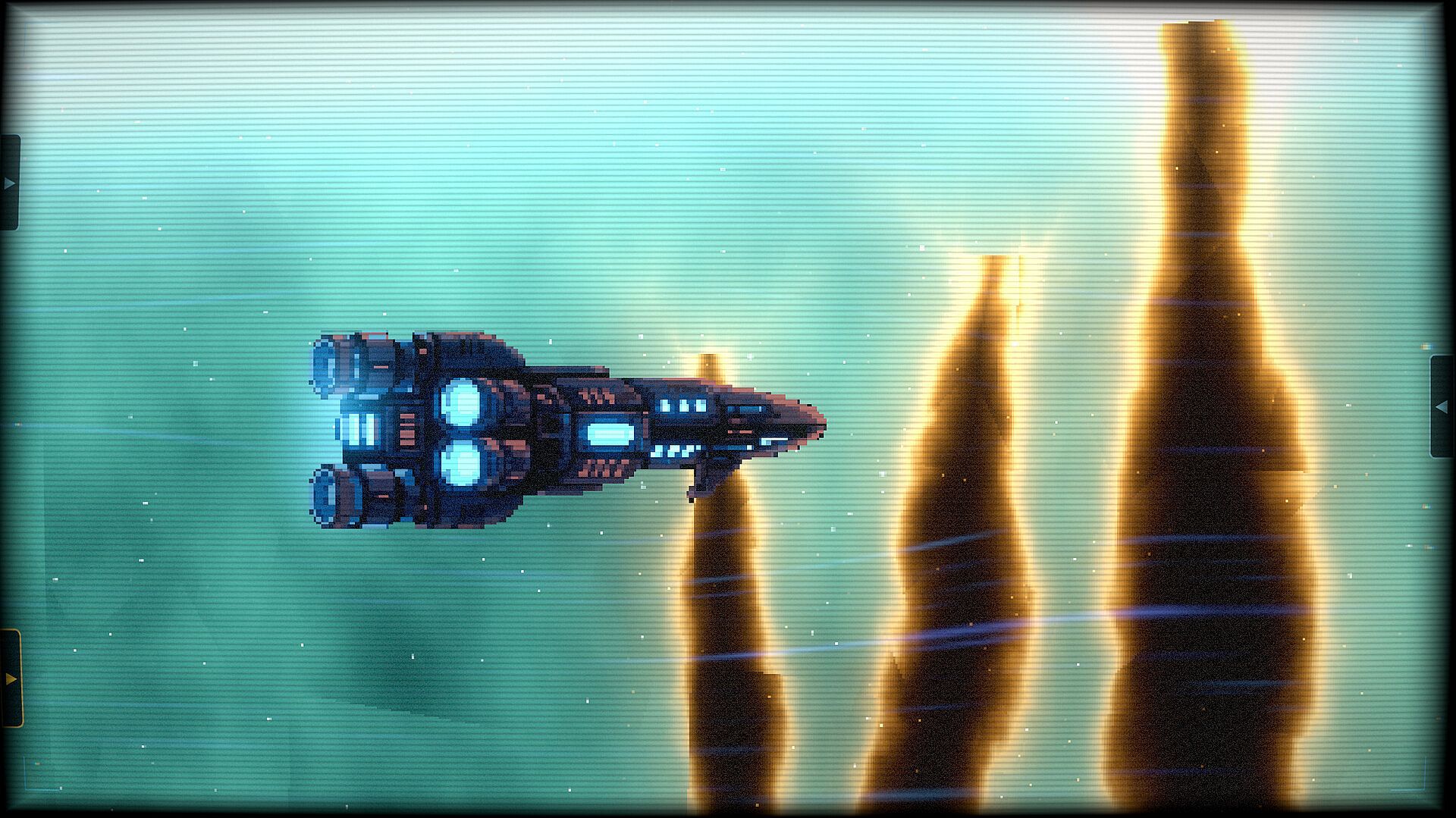
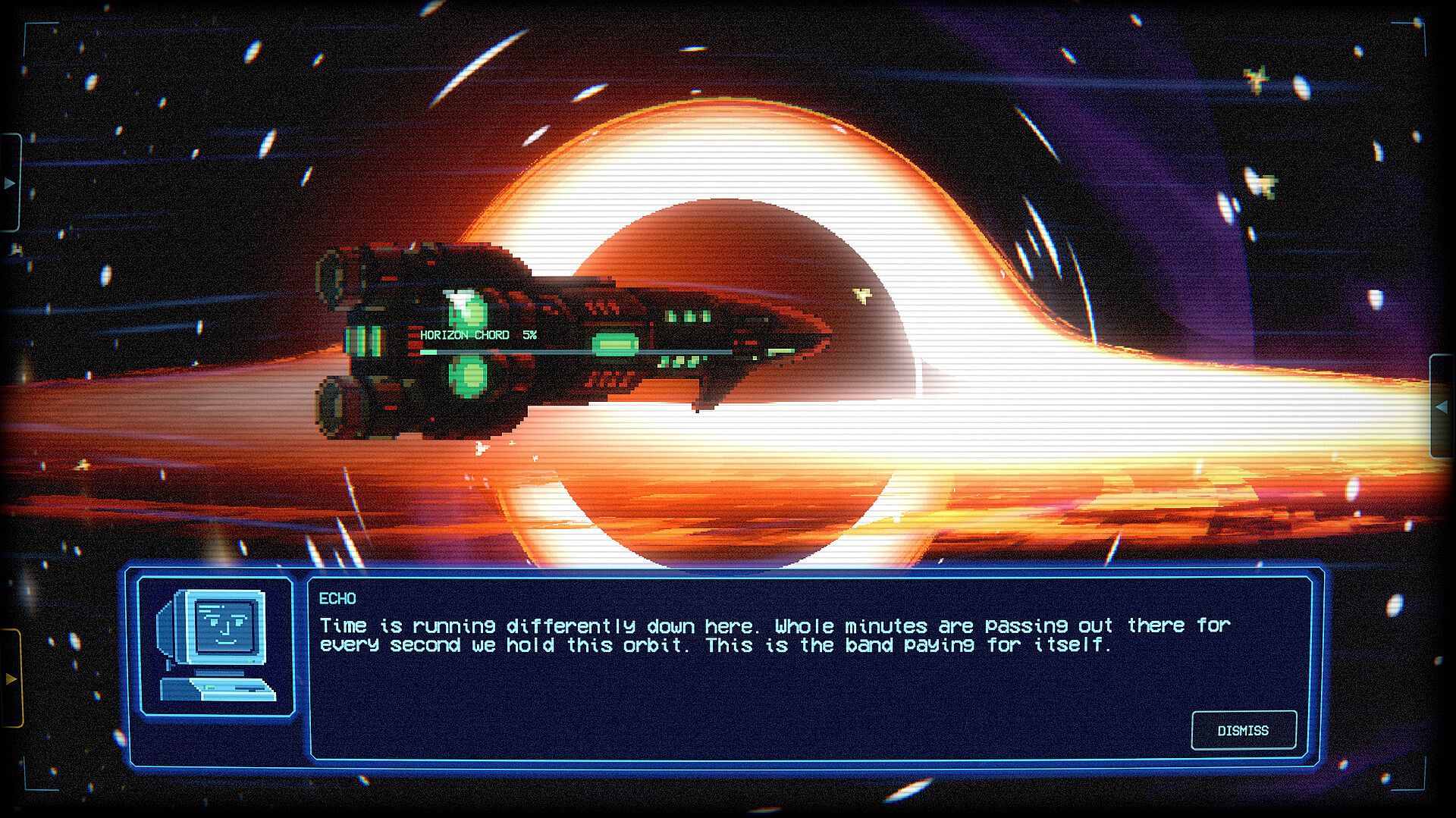
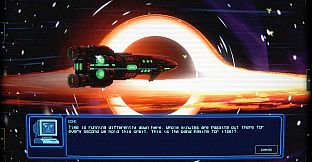
The core loop revolves around piloting the vessel, monitoring throttle settings, and sequencing research priorities during transit. Players observe cosmic phenomena such as pulsars, nebulae, and accretion disks as they appear at close range, using these encounters to build understanding that unlocks successive propulsion technologies. Ion drive performance gives way to fusion, then antimatter, and eventually warp capabilities, each advance earned through direct observation rather than simple resource collection. Time dilation becomes a practical concern once velocity exceeds 0.9c, with separate clocks tracking ship time against external time and communications from behind gradually losing relevance. Echo provides ongoing commentary on decisions ranging from engine discipline to research order, creating a relationship that influences the final choice at journey's end. The universe itself functions as the progression system, with no option to bypass physical limits through waiting or shortcuts.
Game Modes
The game presents a single continuous narrative journey without separate modes or branching campaigns. All activity occurs within one extended voyage that emphasizes sustained decision-making across the full distance of 46.5 billion light years. Players maintain a consistent focus on throttle control, instrument readings, and research sequencing from departure through the relativistic regime and into the final stages.
Narrative and Themes
Echo serves as the sole companion voice, offering perspectives on the player's choices that evolve over the course of the trip. The story explores the personal cost of leaving home behind while confronting the isolation and altered perceptions that accompany extreme velocities. The last decision centers explicitly on Echo, tying the accumulated observations and relationship into a concluding moment. Visual and auditory cues convey the shift from familiar signals to direct encounters with distant cosmic structures, reinforcing the theme that proximity changes everything previously known about the sky.
Is It Worth Playing?
This title suits players interested in a deliberate, physics-grounded adventure that prioritizes observation and consequence over combat or resource grinding. The emphasis on time dilation mechanics and earned propulsion upgrades rewards careful attention to the journey's progression. Those who appreciate narrative-driven experiences with a strong central relationship and a focus on real-world relativistic effects will find the structure engaging. The game remains a focused single-player adventure on PC with no additional content layers or seasonal updates confirmed at this stage.