




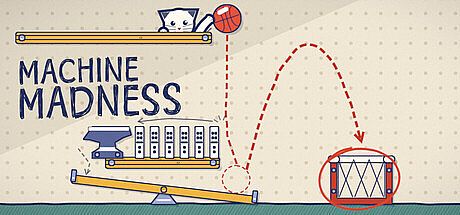


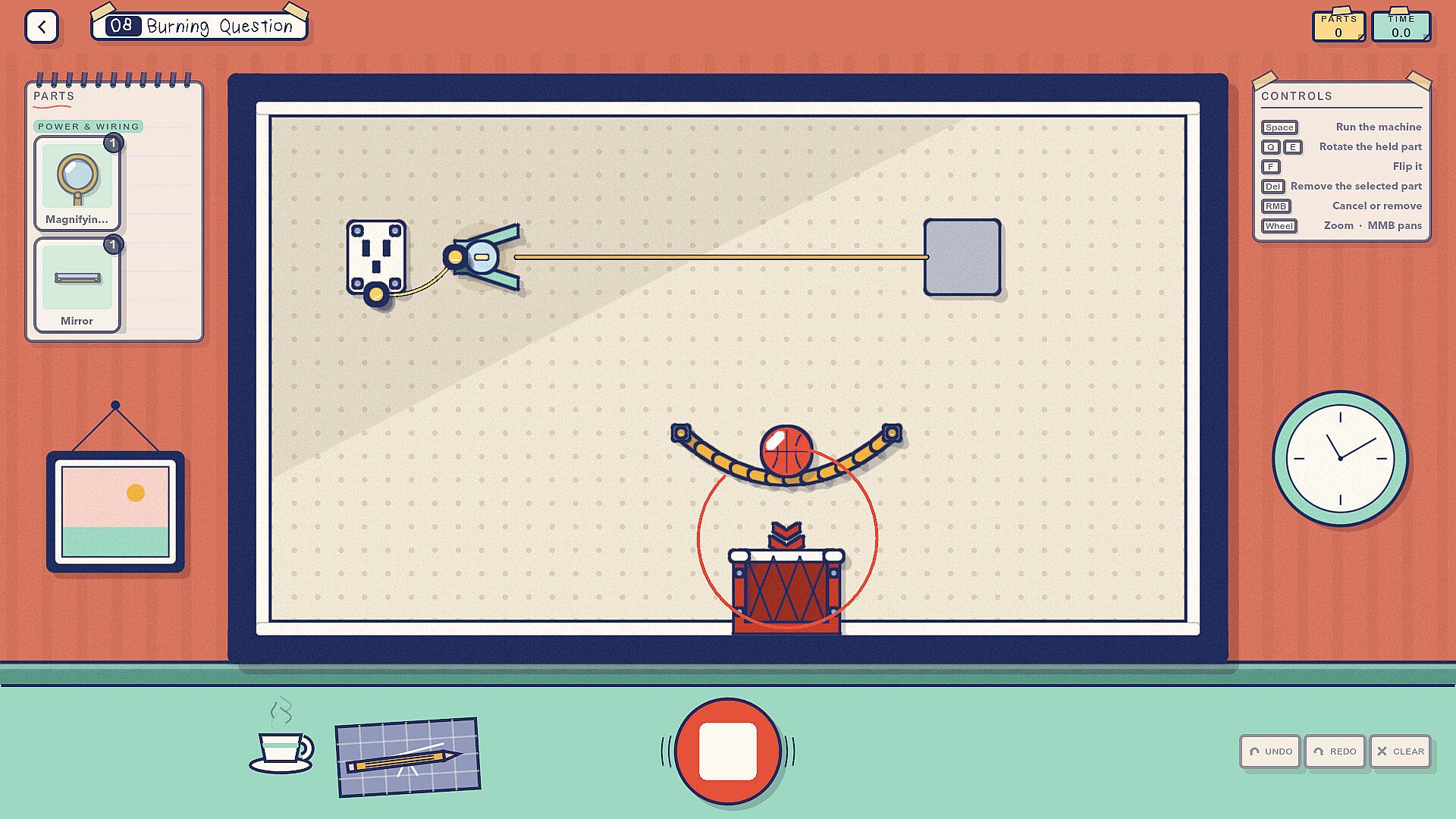
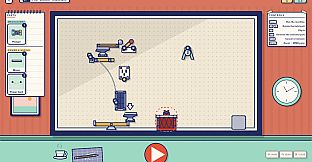
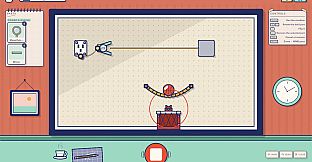
Machine Madness is a 2D physics-based simulation game focused on machine building and experimentation. Players place components on a board, connect them into working mechanisms, and observe how real physics governs the outcome of every design. The experience centers on trial and error, with no lives, currency, or timers to pressure decisions.
Gameplay
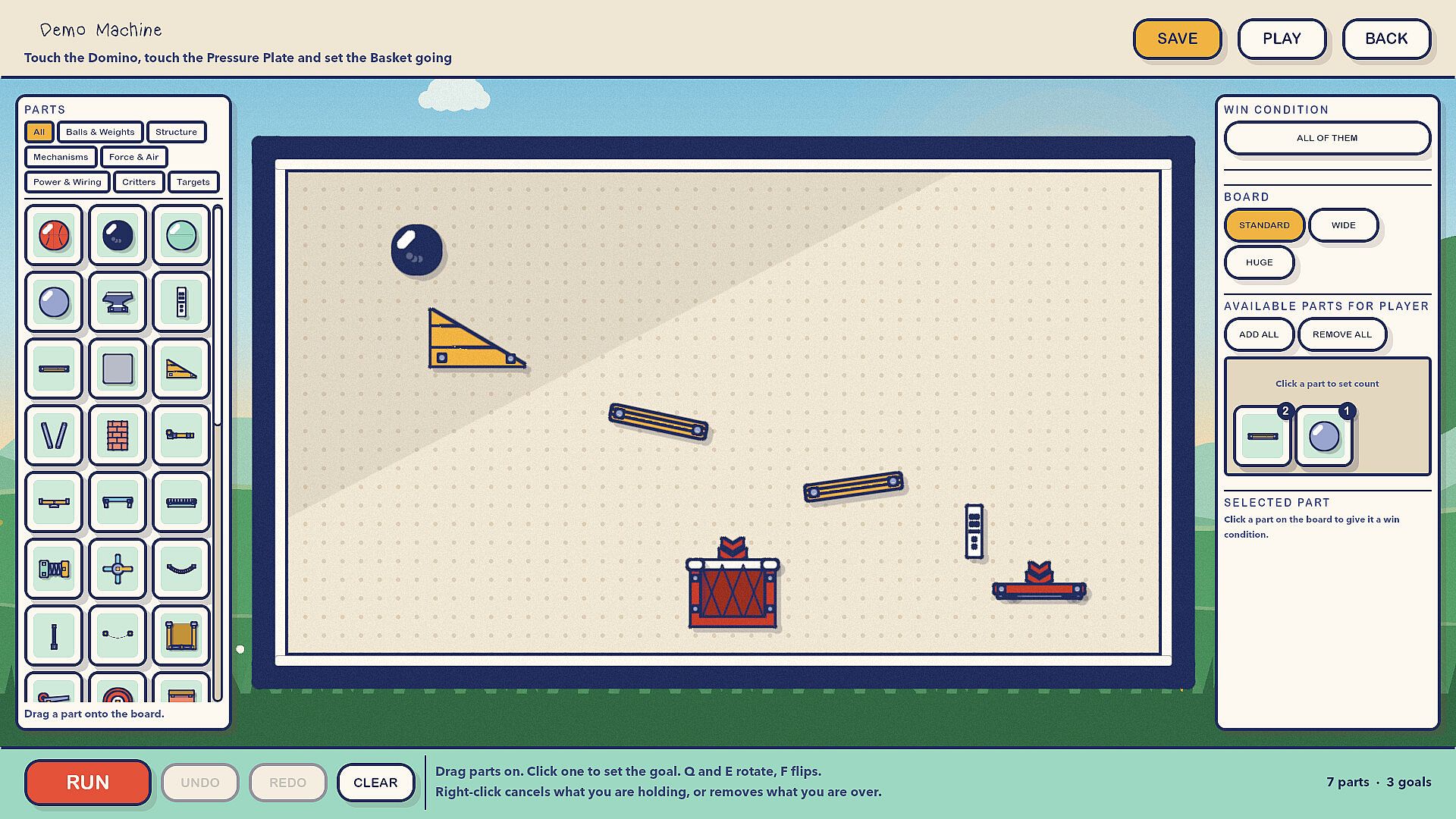
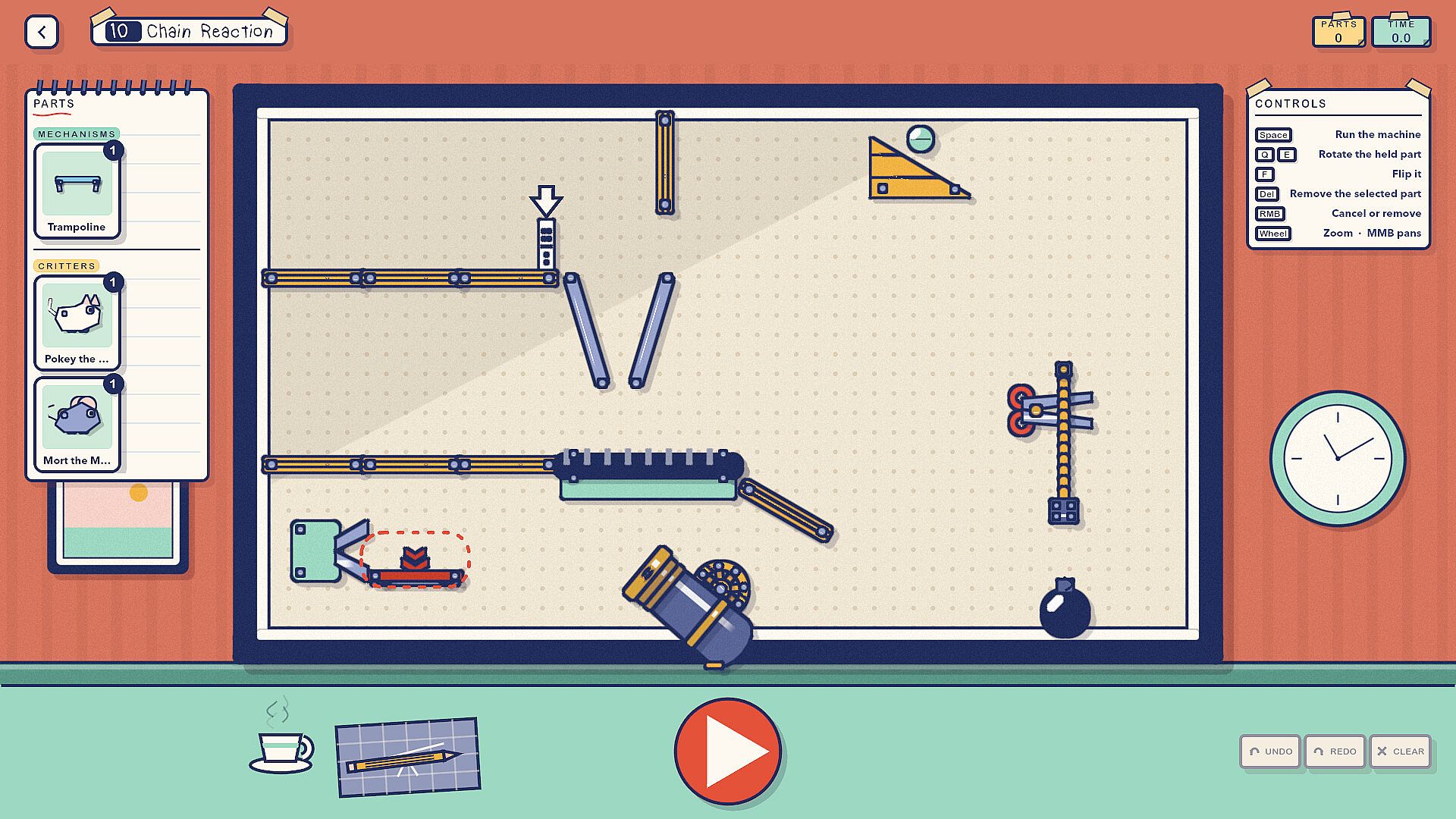
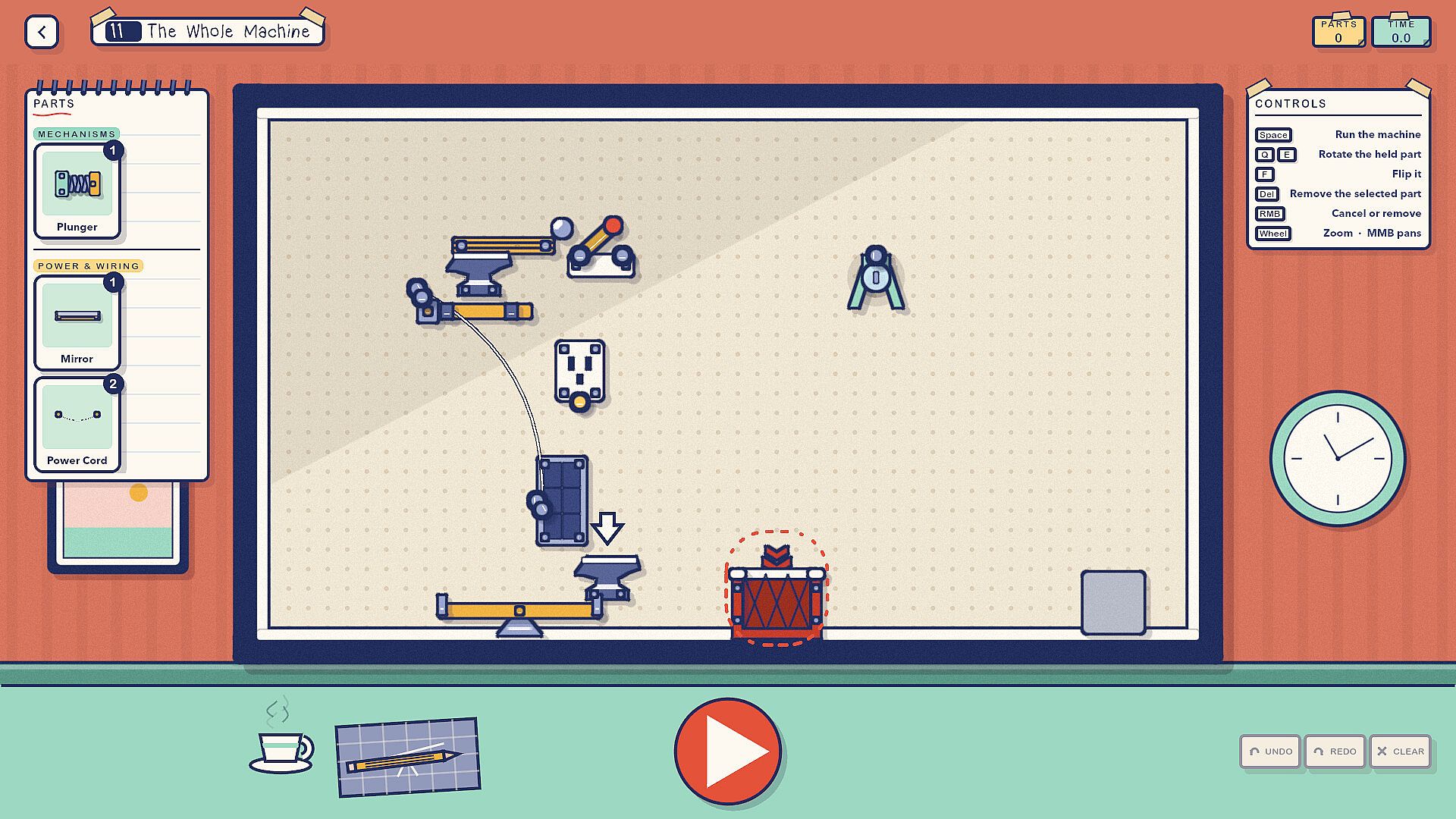
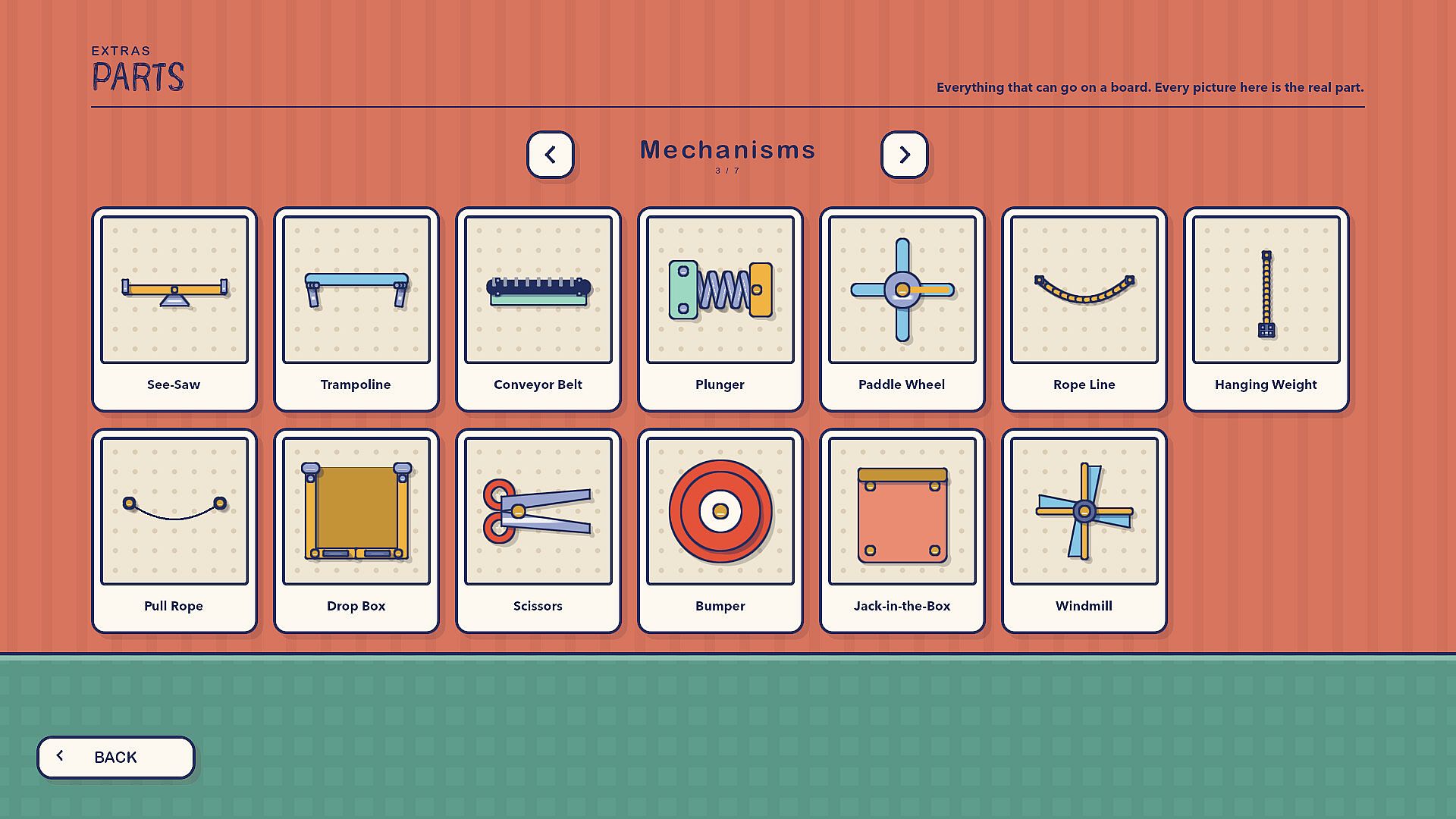
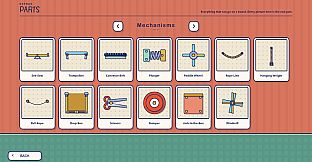
Core play revolves around dragging parts onto the board, rotating or flipping them as needed, and fine-tuning positions until the machine runs under the physics engine. Outcomes emerge naturally from component interactions rather than scripted events, so small adjustments can produce dramatically different results. Over fifty distinct parts fall into categories such as Balls and Weights, Structure, Mechanisms, Force and Air, Power and Wiring, Critters, and Targets. Each part includes its own description available in the in-game Parts Gallery for reference during builds.
Every component responds to the simulation in its own way, encouraging players to test ideas repeatedly. Failure often reveals more useful information than immediate success, turning the process into an iterative experiment rather than a linear challenge.
Game Modes
Campaign mode presents a series of hand-built puzzles. Each puzzle tracks the player's personal records for fewest parts used and fastest completion time, with the only benchmark being the player's own previous attempts.
Sandbox mode grants full access to the entire parts catalogue without placement limits. Boards reach up to 3200 by 1600 units and support as many as 400 parts in one machine. Players can add win conditions to any part, requiring it to be touched or activated, and combine multiple conditions so that all or any must be met. The game automatically generates an objective description from those conditions. Additional tools let users stock limited quantities of parts for others to use, name completed machines, copy designs, and replay them locally.
Controls and Options
Placement feels direct, with simple drag, rotate, and nudge actions that let designs evolve quickly. Settings cover display modes including windowed, borderless, and exclusive fullscreen, along with resolution choices, vertical sync, and frame rate caps. Graphics quality offers two tiers, while accessibility options include keyboard rebinding, interface scaling, screen-shake adjustment, and a reduce-motion toggle.
Professor Otto Correct oversees the workshop setting, with his cat Bracket appearing as a recurring presence in the environment.
Is It Worth Playing?
Machine Madness suits players who enjoy open-ended building and physics experimentation in a single-player format. The absence of external progression systems keeps focus on personal creativity and problem solving across both structured puzzles and freeform construction. Early Access status means the core loop of placing parts and watching physics unfold is already available, with further refinements expected over time. Those drawn to casual simulation titles that reward patience and iterative testing will find the most consistent engagement here.











