



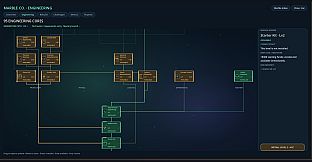
MARBLE CO. is a physics-based incremental factory simulation game for PC that blends strategy, casual play, and simulation elements into a single-player experience centered on building and optimizing marble-driven production systems.
Gameplay
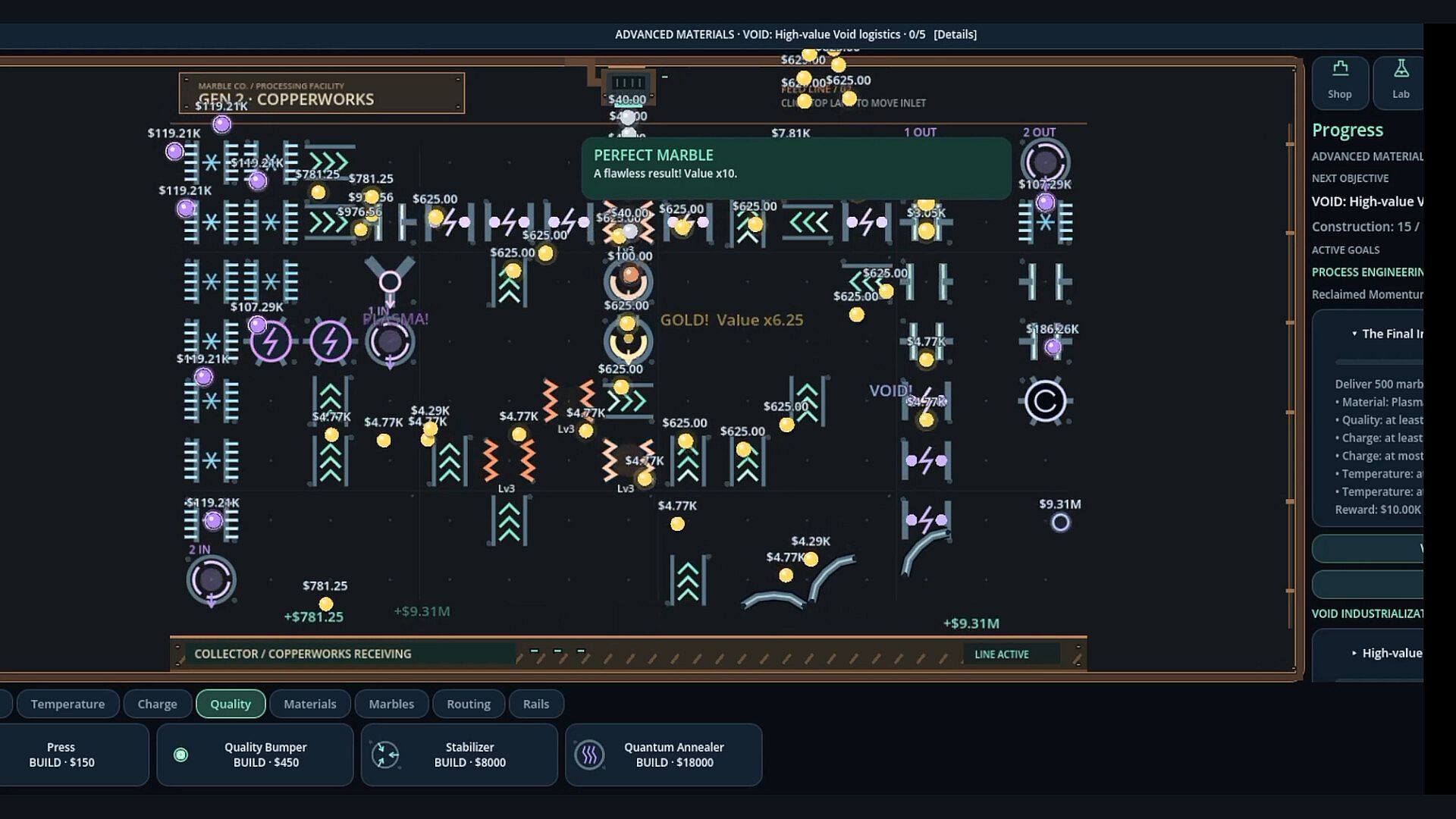
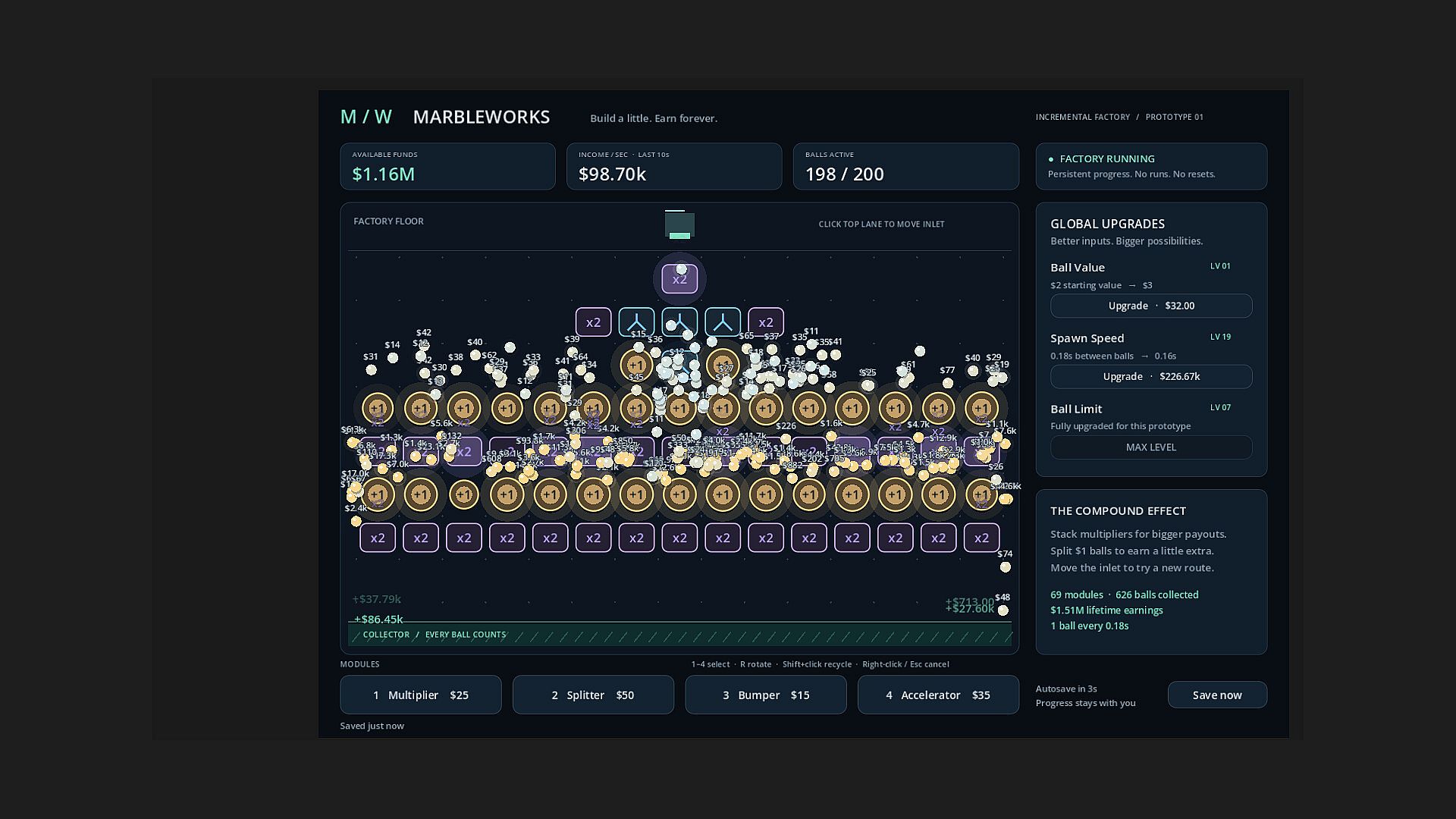
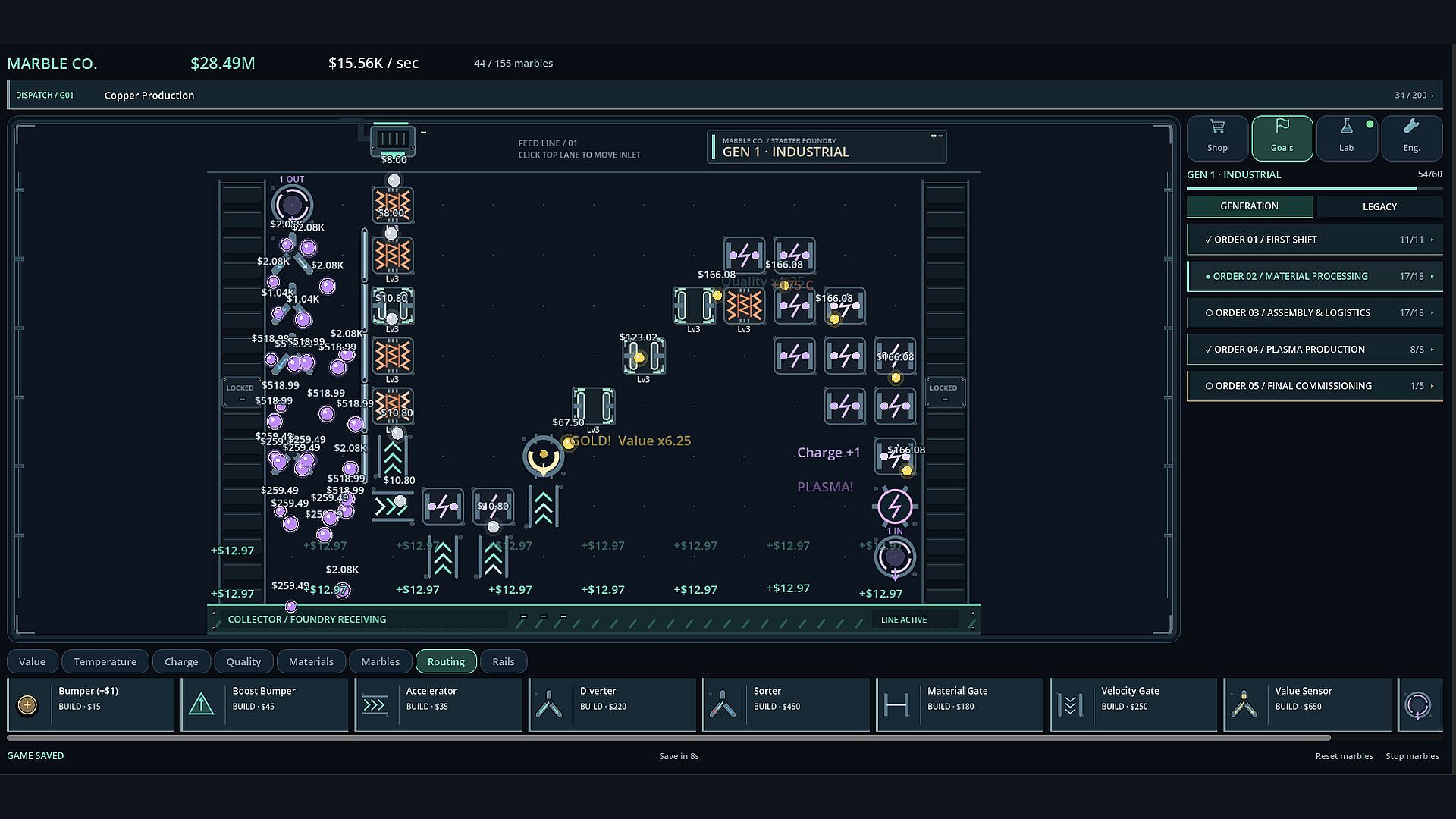
The core loop revolves around constructing functional factories where individual marbles act as physical objects traveling through custom-built machines. Players begin with basic setups using droppers, bumpers, gates, and processing stations, then expand by routing marbles along efficient paths while respecting real physics rules for movement and interaction. Experimentation with layouts helps resolve flow issues, allowing the factory to scale from simple lines into complex networks that process raw inputs into refined outputs.
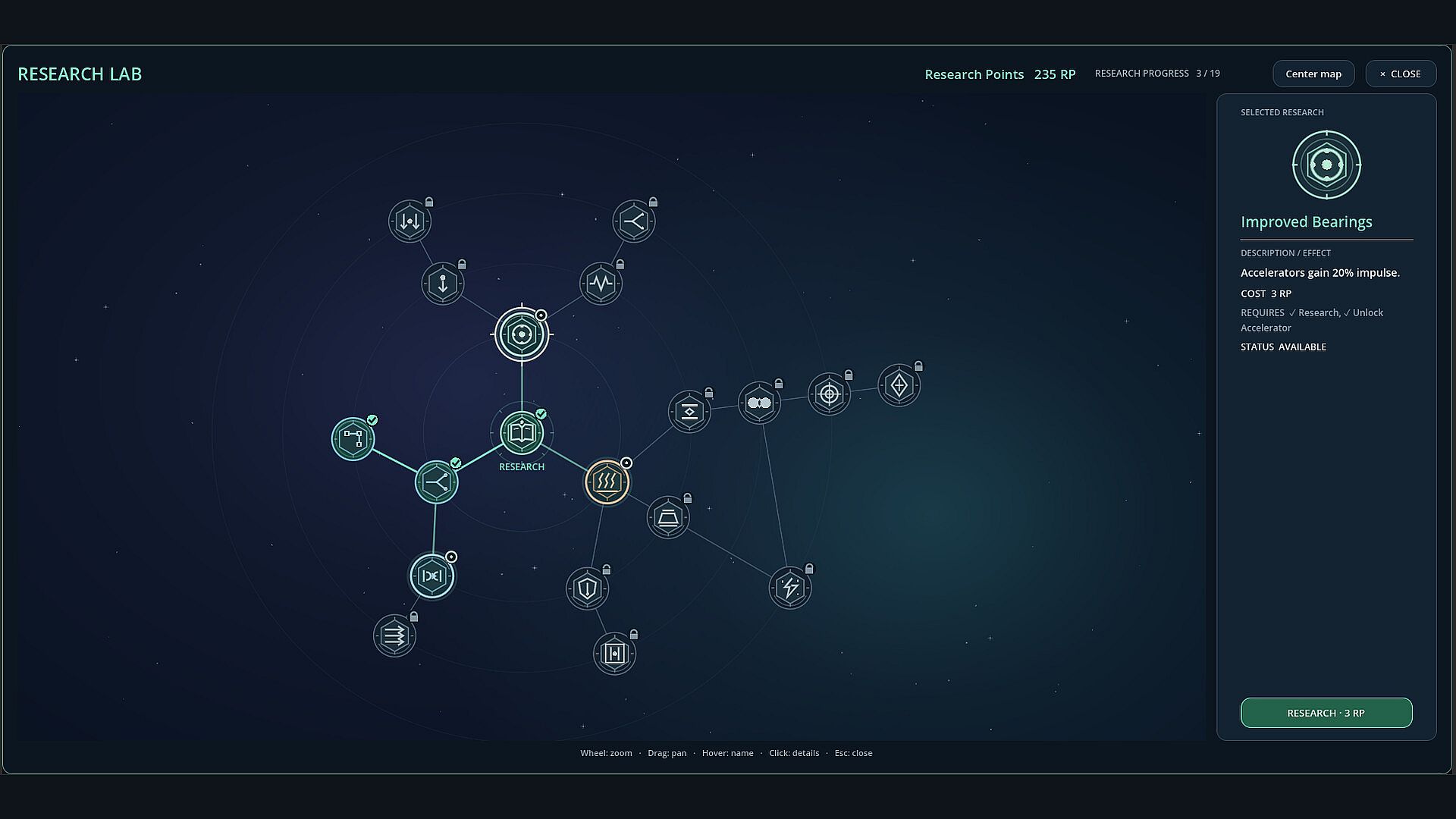
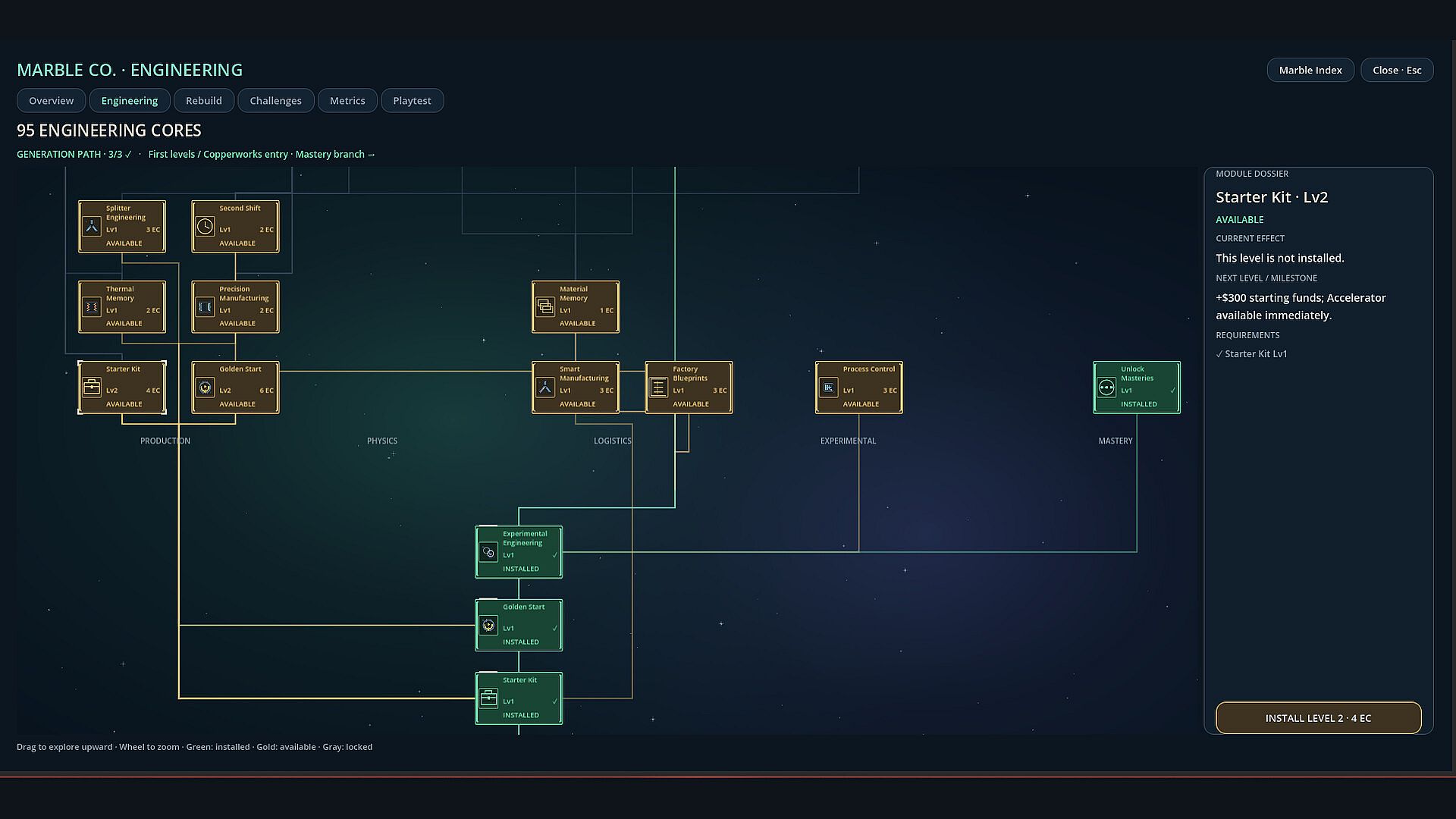
Material transformation forms a key layer of depth. Machines apply operations such as heating, cooling, charging, pressing, and combining to convert marbles into new resources. Each addition to the production chain introduces fresh constraints and opportunities, encouraging players to redesign sections for better throughput. Upgrades improve machine performance, while objectives provide direction and generate income for further expansion. The system supports both methodical engineering and more freeform arrangements, with persistent progress tied to Engineering Cores earned through generational resets that carry forward permanent upgrades.
Tracking occurs via the Marble Index, a collection system that logs discovered materials and production milestones. This encourages systematic exploration of all possible outputs without forcing a rigid path, letting players focus on automation efficiency or creative problem-solving as they prefer.
Game Modes
MARBLE CO. operates as a single-player title with no separate multiplayer or competitive modes. Progression unfolds through iterative factory builds, where each generation of technology adds new machines and challenges that prompt a full redesign. Objectives guide early play by rewarding specific production goals, while later stages emphasize optimization and scaling across increasingly intricate chains.
The experience centers on continuous refinement rather than distinct modes. Players shift between planning layouts, observing marble flow in real time, and managing upgrades to unlock broader capabilities. This unified structure supports both short sessions focused on targeted improvements and longer engagements aimed at mastering entire material sets.
Key Mechanics and Progression
Physics simulation underpins every decision, making placement and routing critical for avoiding jams or wasted motion. Incremental elements reward steady expansion, with money from completed tasks funding new machines and upgrades. Rebuilding after each technological leap grants Engineering Cores that enhance future runs, creating a loop of short-term gains feeding into long-term power increases.
Material discovery and the Marble Index add a completionist angle, turning factory work into a cataloging effort alongside pure efficiency play. The absence of time pressure in core building allows careful iteration, while the physics foundation keeps outcomes unpredictable enough to demand repeated adjustments.
Is It Worth Playing?
MARBLE CO. suits players who enjoy incremental factory builders with a strong emphasis on physical simulation and iterative redesign. Its single-player focus and lack of external competition make it ideal for those seeking a self-paced engineering sandbox rather than fast-paced action or social features. The described systems of machine placement, material processing, and generational upgrades provide clear depth for fans of games that reward observation and optimization over combat or narrative.
Since the title remains in development with no released version or player feedback available, its appeal rests on how well the physics and progression deliver in practice. Those drawn to casual simulation titles that combine automation with creative problem-solving will likely find the core loop engaging once it launches.