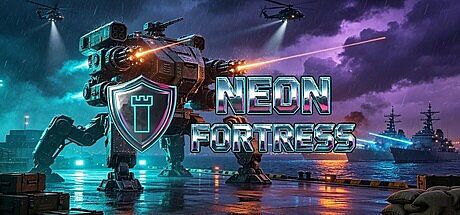



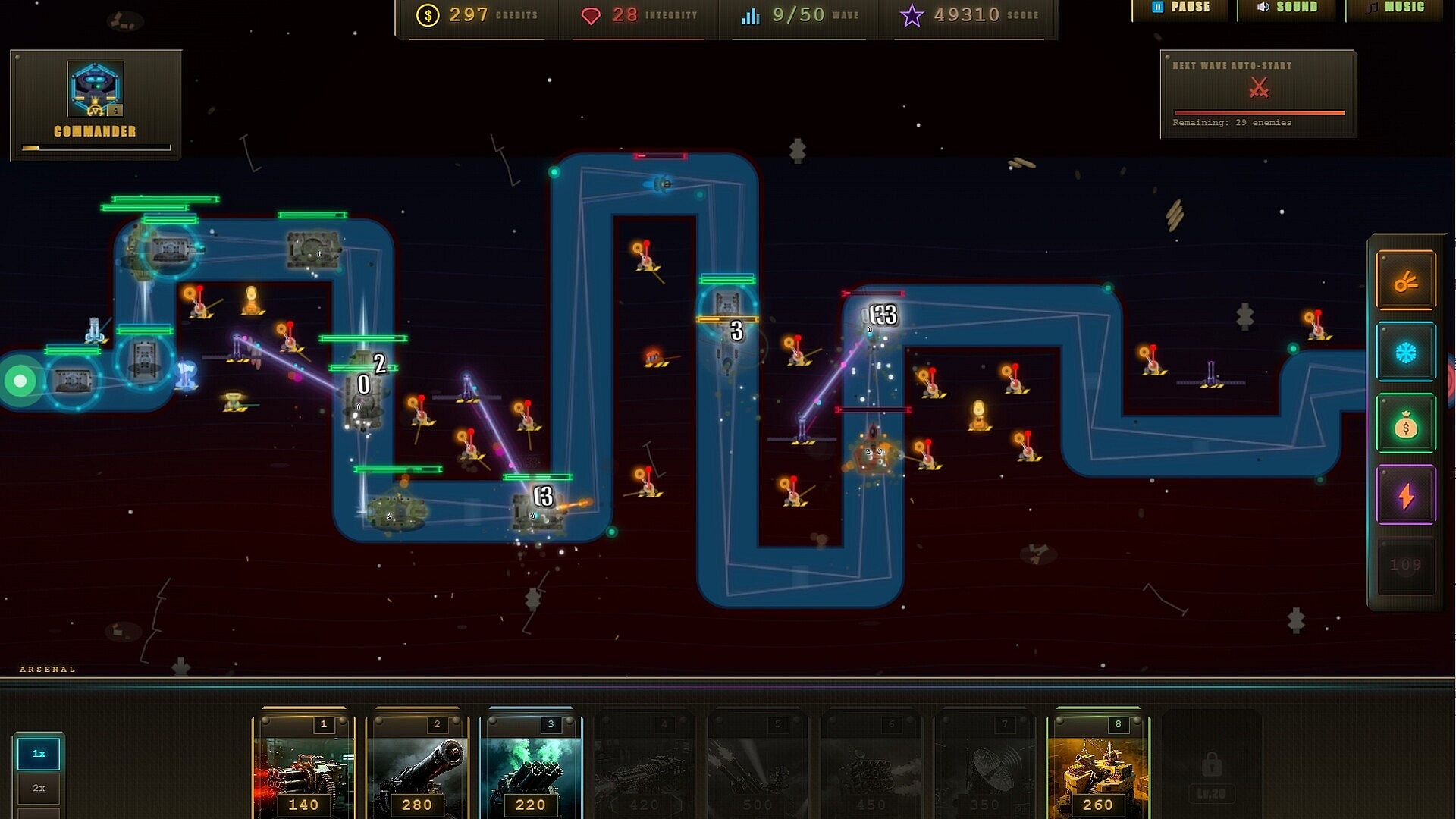
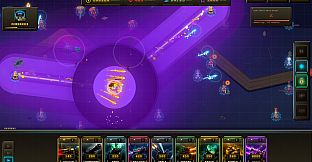
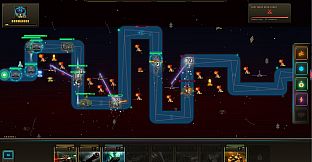
NEON FORTRESS ist ein Singleplayer-Tower-Defense-Spiel im Cyberpunk-Setting für den PC. Die Spieler übernehmen die Verteidigung auf neonbeleuchteten Schlachtfeldern, auf denen Bodentruppen, Luftfahrzeuge und Seeeinheiten durch mehrere Kampfgebiete vorrücken. Im Mittelpunkt steht das Platzieren und Aufwerten von Türmen, um automatisch eintreffenden Gegnerwellen standzuhalten.
Gameplay
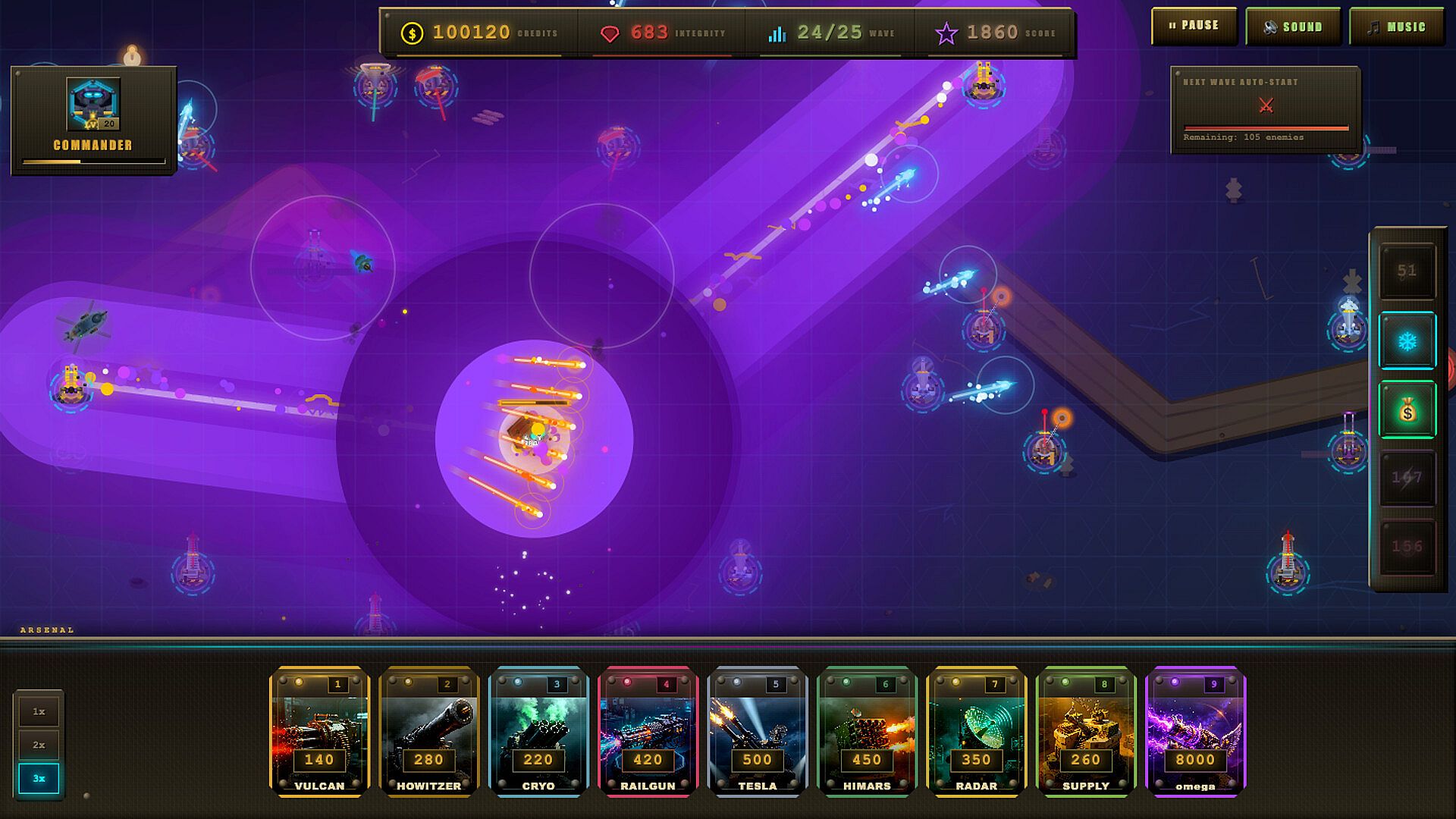
Acht verschiedene Verteidigungstürme stehen zur Verfügung: der M134 Vulcan Minigun für Dauerfeuer, die M777 Howitzer als schwere Artillerie, der Cryo Launcher zum Verlangsamen von Zielen, der M61 Vulcan AA zur Luftabwehr, die Railgun für Präzisionsschläge, der M270 HIMARS für Raketensalven, das Command Radar zur Aufklärung und Unterstützung sowie das Ammo Supply Depot zur Ressourcenverwaltung. Jeder Turm bietet zwei Aufstiegspfade mit je drei Stufen, die zwischen roher Feuerkraft und Spezialeffekten wie größerer Reichweite oder Flächenwirkung unterscheiden.
Fünf taktische Fähigkeiten stehen während der Missionen bereit: Orbital Strikes für konzentrierten Schaden von oben, Time Freeze zum Anhalten gegnerischer Bewegungen, Supply Drops für sofortige Ressourcen, EMP Blasts zur Abschaltung von Schilden und Betäubung von Einheitengruppen sowie Tactical Nukes zur großflächigen Bereinigung. Alle Fähigkeiten haben Abklingzeiten, deren Timing entscheidend ist.
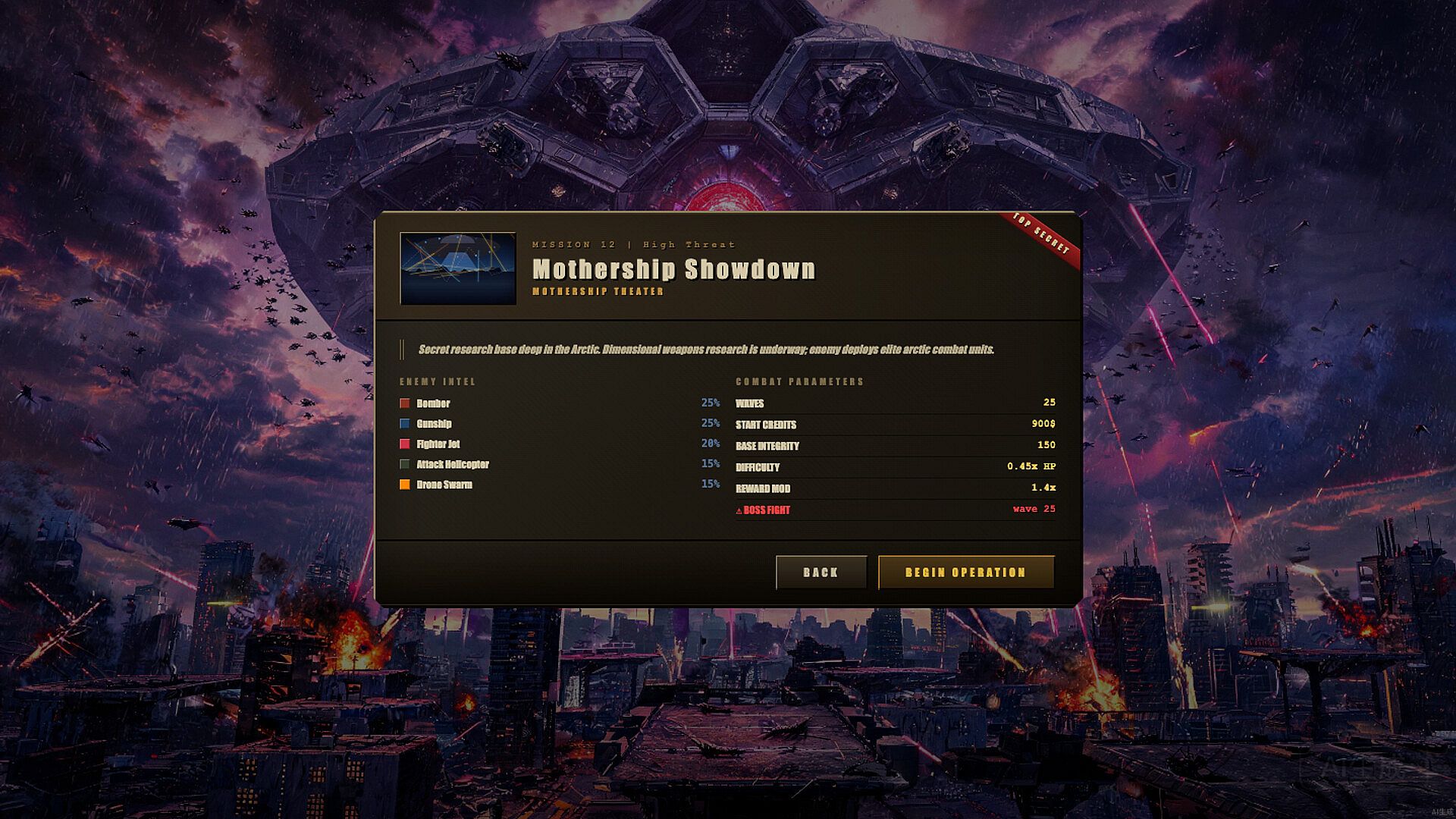
Mehr als zwanzig Gegnertypen treten in den Bereichen Boden, Luft und See auf. Bodeneinheiten reichen von schnellen Spähdrohnen und Infanterie über abgeschirmte Truppen und Sanitäter bis hin zu massiven Dreadnought-Mechs. In der Luft erscheinen Hubschrauber, Jets, Bomber, AC-130 Gunships und Sky Fortresses. Auf See kämpfen Patrouillenboote, U-Boote, Schlachtschiffe, Hovercraft, Flugzeugträger und Leviathans. Jede Einheit besitzt eigene Bewegungs- und Schwächemuster, die gezielte Turmplatzierung und Aufwertungen belohnen.
Die Wellen laufen automatisch ab, ohne manuelle Auslösung. Gegner durchlaufen dreißig Schwierigkeitsstufen, die Gesundheit, Geschwindigkeit, Spawn-Rate und Belohnungen erhöhen. Das visuelle Design kombiniert gebürstete Metalloberflächen mit Cyan- und Magenta-Neonakzenten, detaillierte Waffemodelle sowie aufwändige Explosions- und Lasereffekte.
Spielmodi
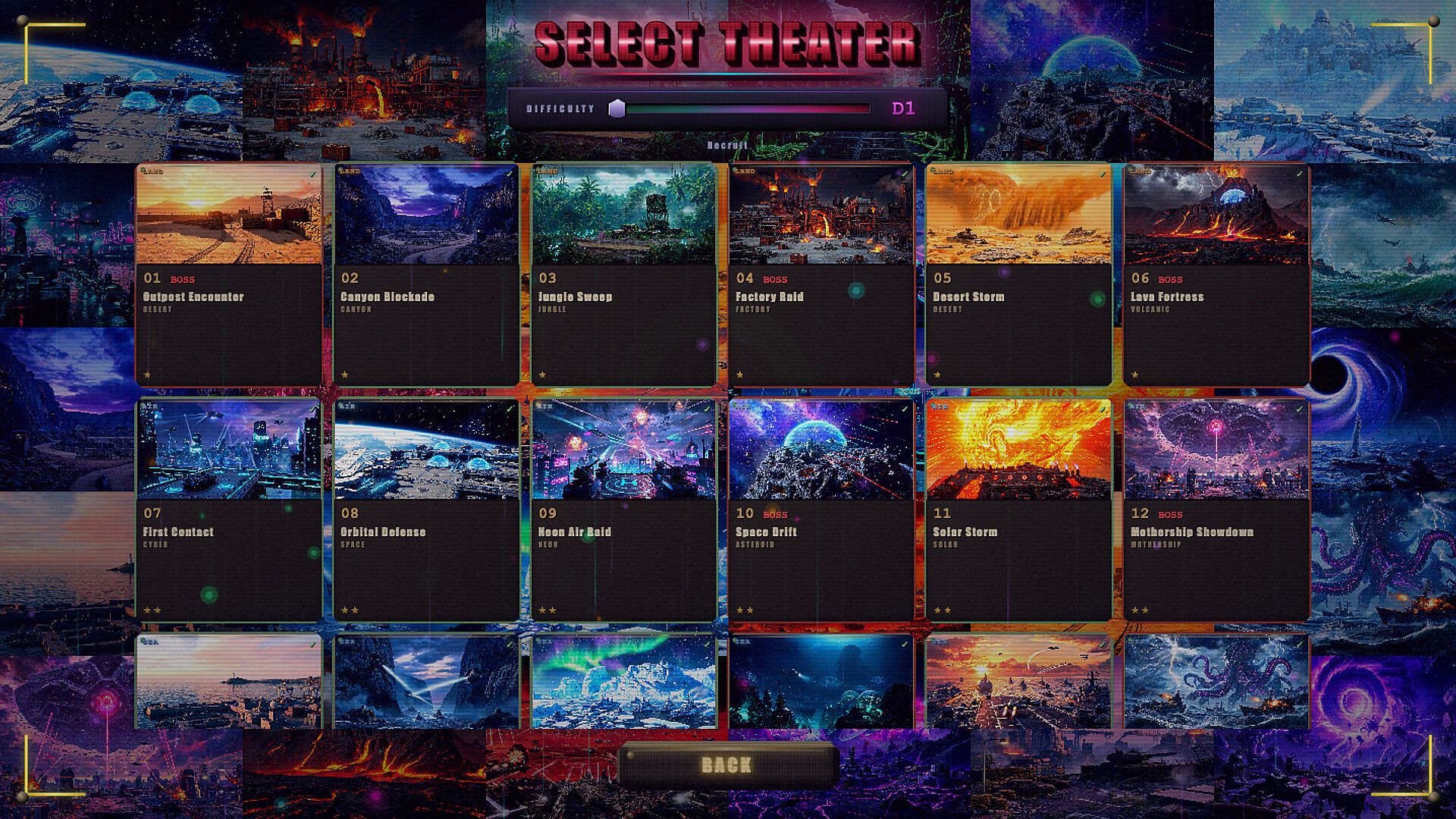
Dreißig handgefertigte Missionen verteilen sich auf fünf Kriegsmodi mit unterschiedlichen Umgebungen. Land Warfare spielt in Wüstencanyons und vulkanischen Außenposten mit Schwerpunkt auf Bodeneinheiten. Air Supremacy stellt Luftbedrohungen in Neon-Stadtlandschaften und offenem Himmel in den Mittelpunkt. Naval Operations richtet sich gegen Angriffe von See aus. Land-Air Combined Arms mischt Boden- und Luftkräfte, während Sea-Air Hybrid Warfare See- und Lufteinheiten in Risszonen wie Asteroidengürteln und dimensionalen Anomalien kombiniert. Jeder Modus erfordert angepasste Turmzusammenstellungen und Fähigkeitseinsätze.
Fortschritt und Unterstützung
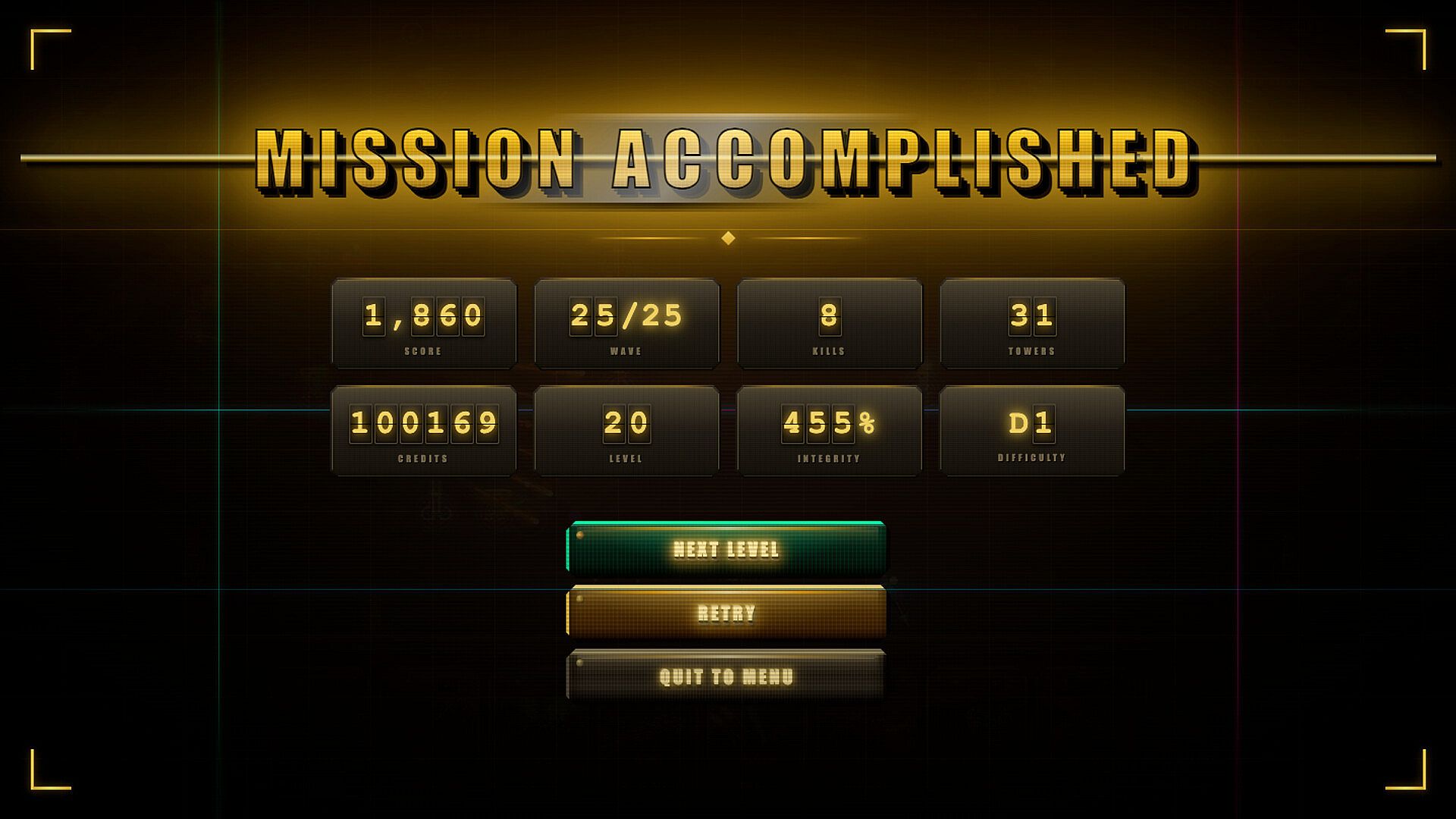
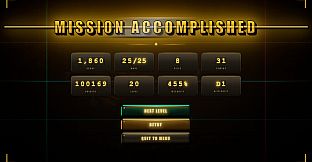
Die Schwierigkeit steigt über dreißig Stufen und verändert Gegnerwerte sowie Ressourcengewinne. Spieler passen ihre Ausrüstung zwischen den Missionen an, um mit den steigenden Anforderungen Schritt zu halten. Das Spiel unterstützt Vollständige Lokalisierung in Englisch, Chinesisch (vereinfacht), Französisch, Italienisch und Spanisch mit sofortigem Sprachwechsel ohne Neustart. Die Systemanforderungen bleiben moderat und laufen auf Windows, macOS und Linux bereits mit integrierter Grafik.
Lohnt sich das Spiel?
NEON FORTRESS richtet sich an Spieler, die Singleplayer-Tower-Defense mit vielschichtigen Aufstiegssystemen und gegnerischer Vielfalt über mehrere Domänen suchen. Das automatische Wellensystem und die verzweigten Aufstiegspfade sorgen für kontinuierliche Entscheidungen ohne Leerlauf. Da vor der Veröffentlichung im August 2026 noch keine Nutzerbewertungen vorliegen, spricht das Spiel vor allem Fans eines fokussierten Casual-Strategietitels an, der auf präzise Turmplatzierung und Fähigkeitstiming in unterschiedlichen Missionen setzt. Wer manuelle Wellenauslösung oder Mehrspieler-Elemente bevorzugt, wird die Struktur eingeschränkter finden, während Liebhaber von Cyberpunk-Ästhetik und steigenden Solo-Herausforderungen die Kernmechanik direkt treffen.