







Payload Architect is a roguelite auto-battler that blends inventory management with exponential scaling in a pure strategy format. Players build and optimize logic grids using code blocks to generate massive payloads across repeated runs on PC.
Gameplay
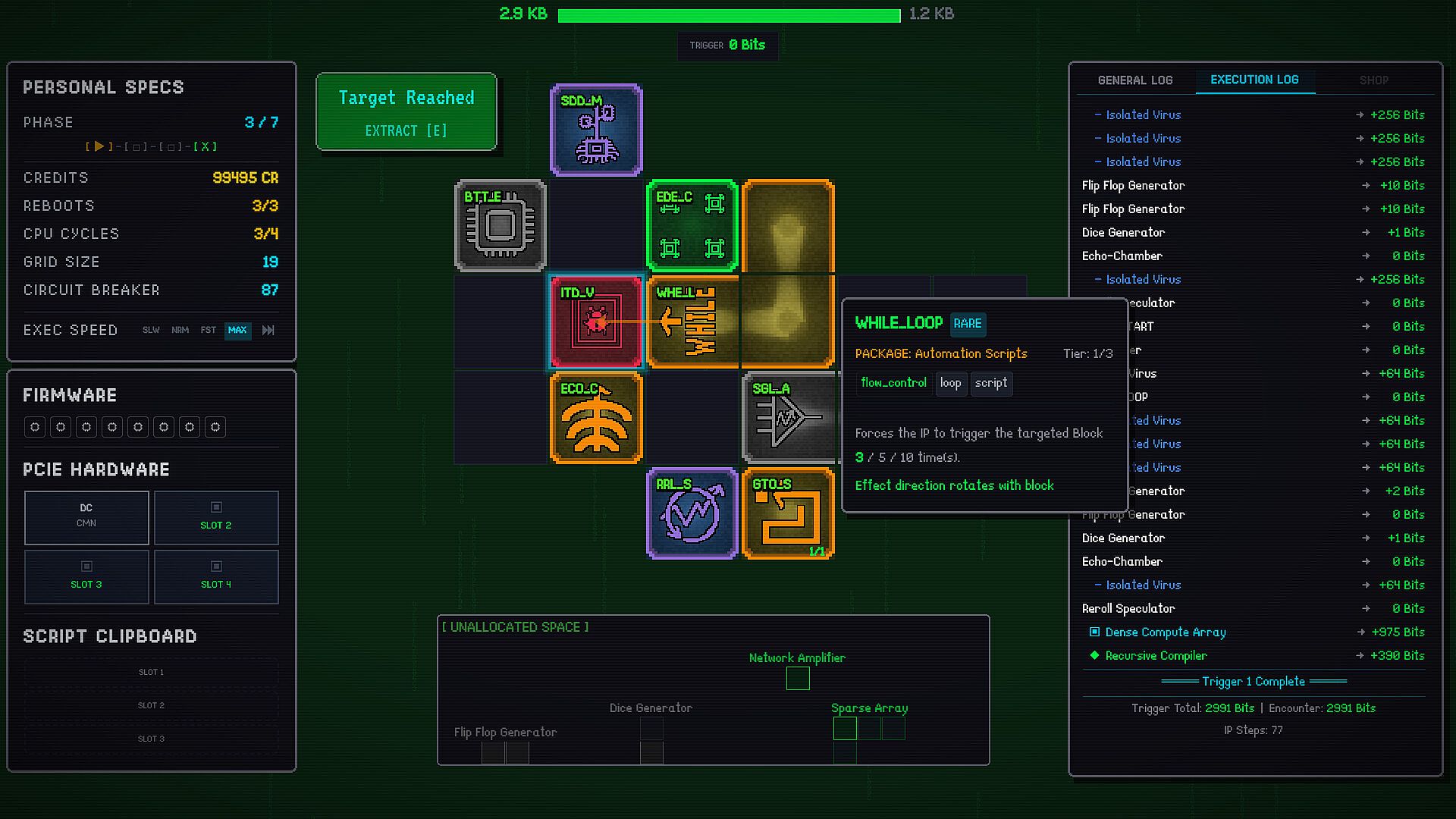
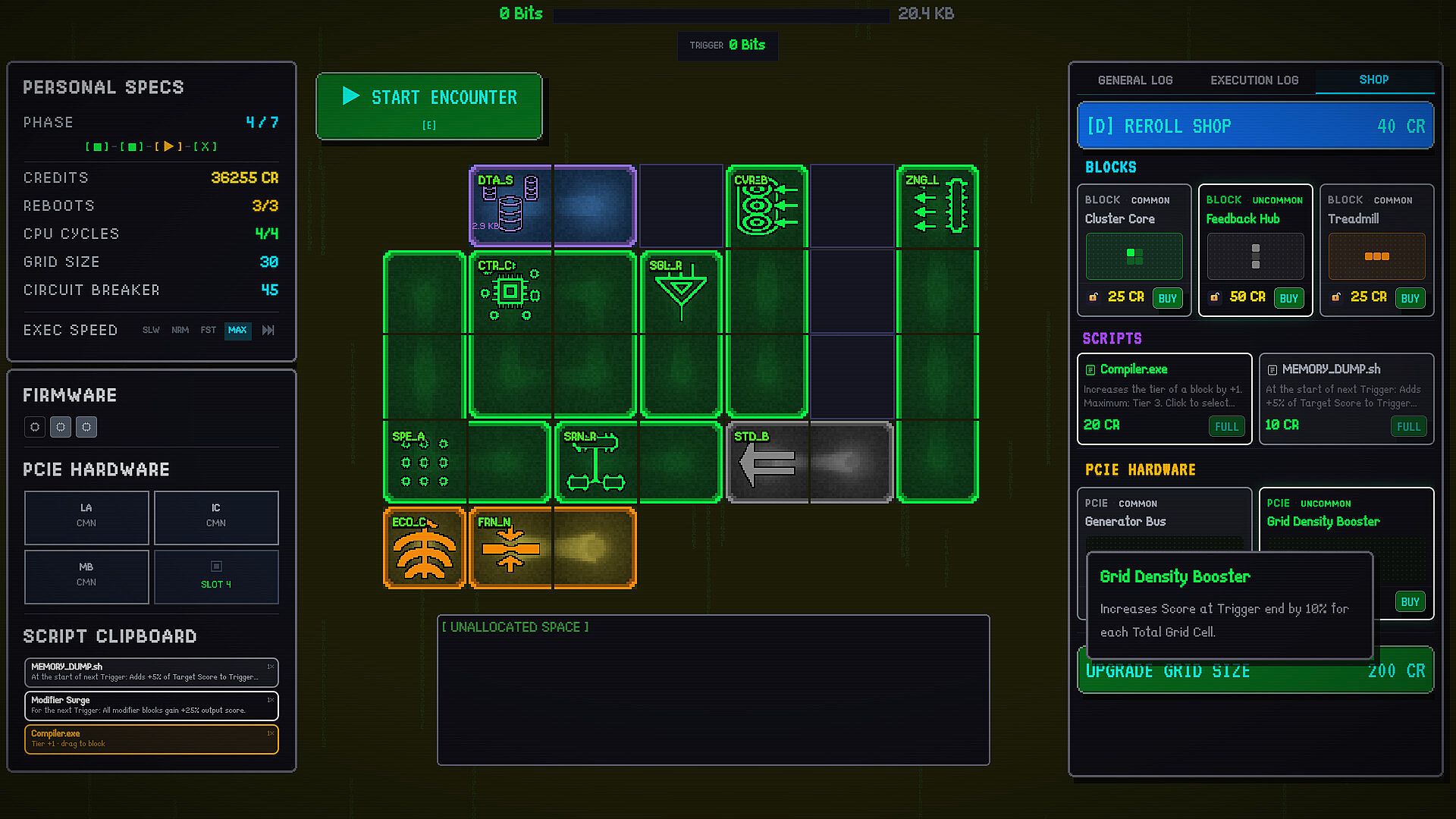
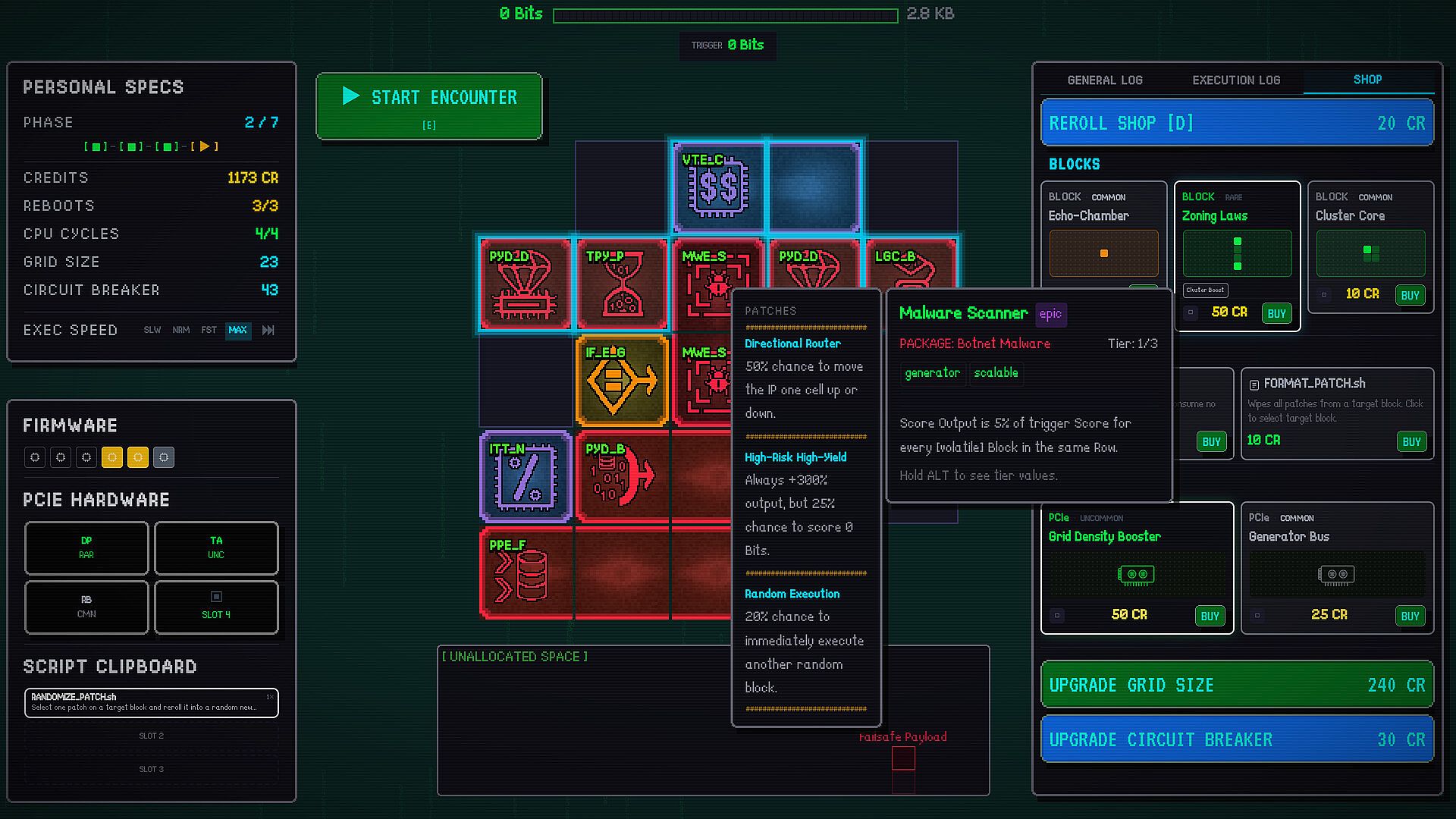
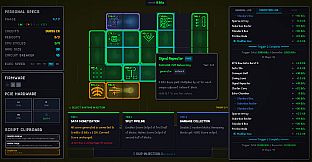
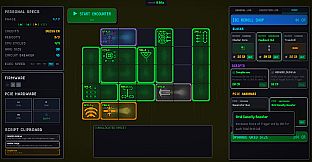
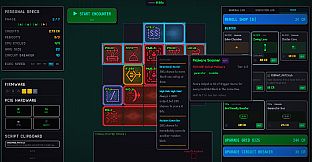
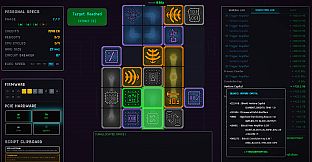
The core loop centers on constructing a grid from scratch each run. Players purchase and position unique code blocks to create synergies, adjacency bonuses, and global effects. Placement determines execution order and efficiency, with every decision influencing how blocks interact during automated cycles.
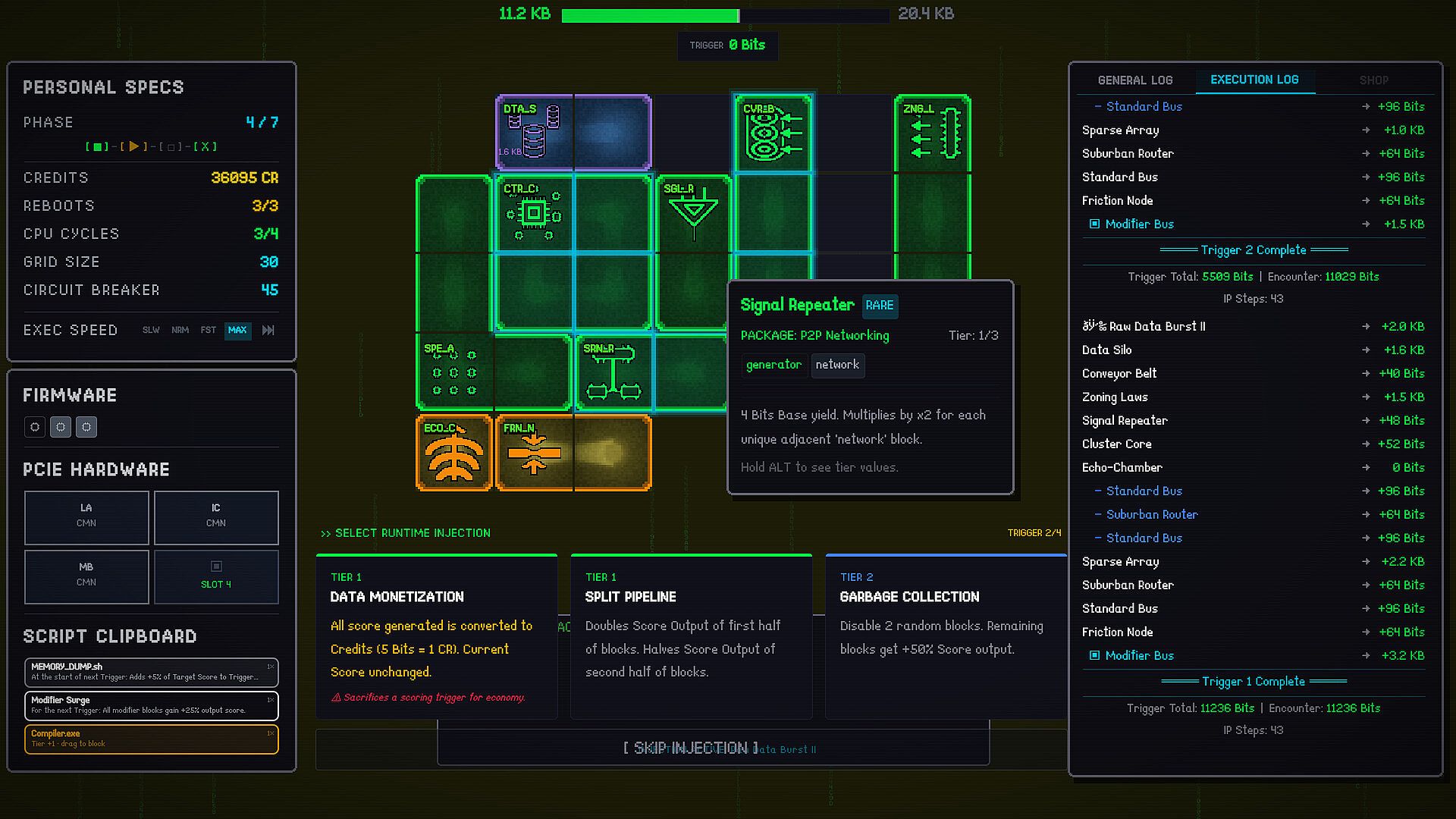
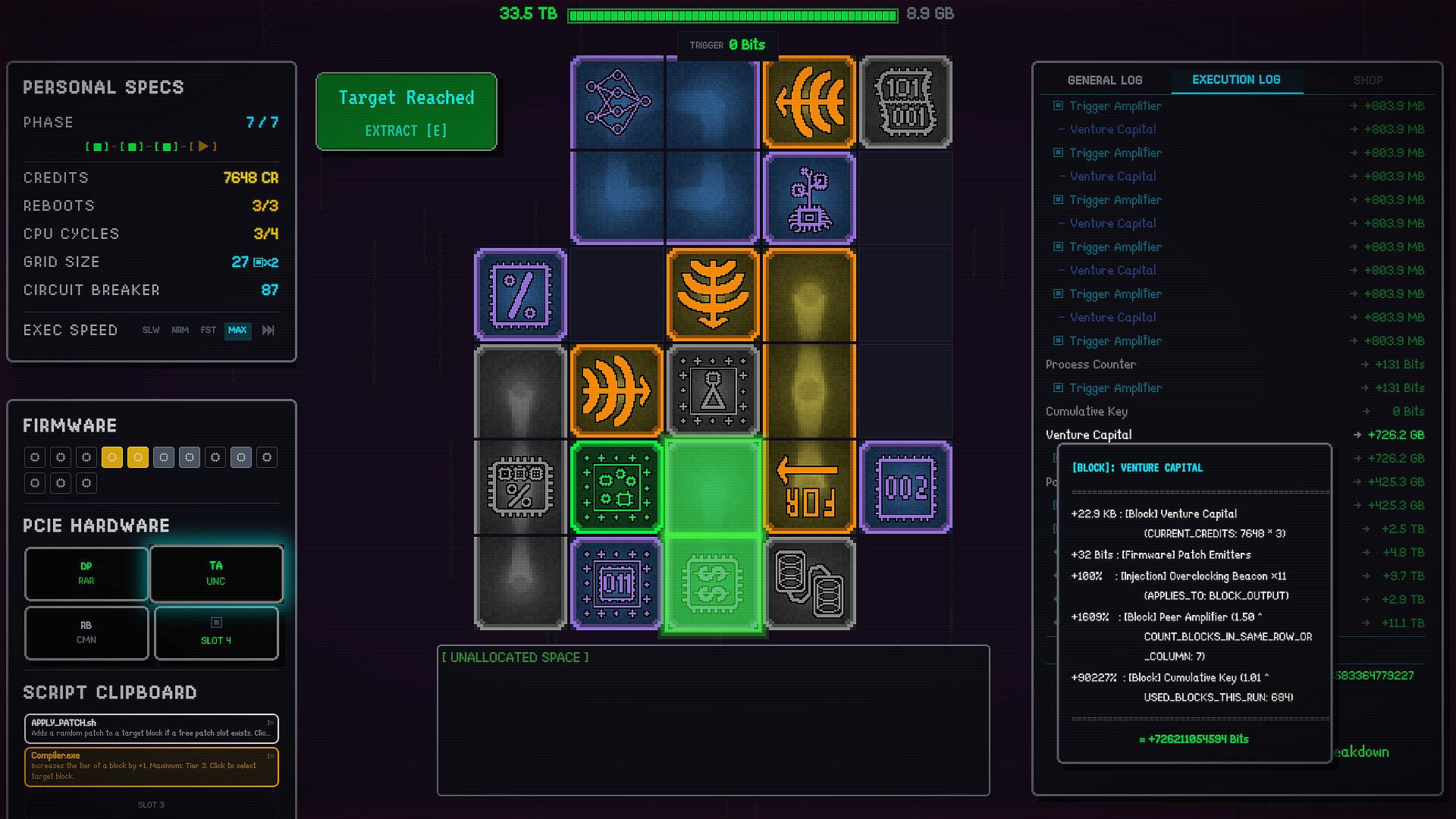
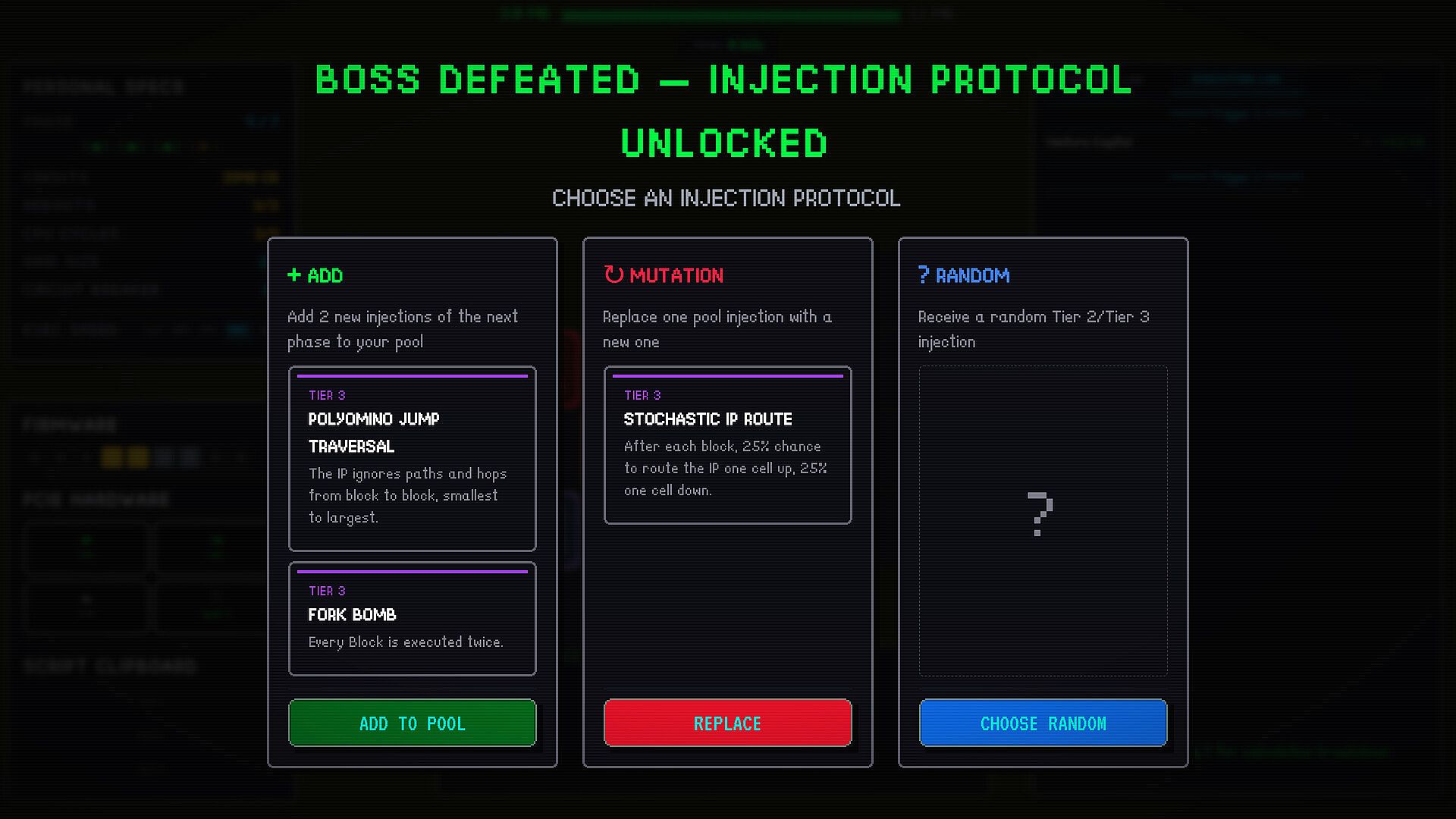
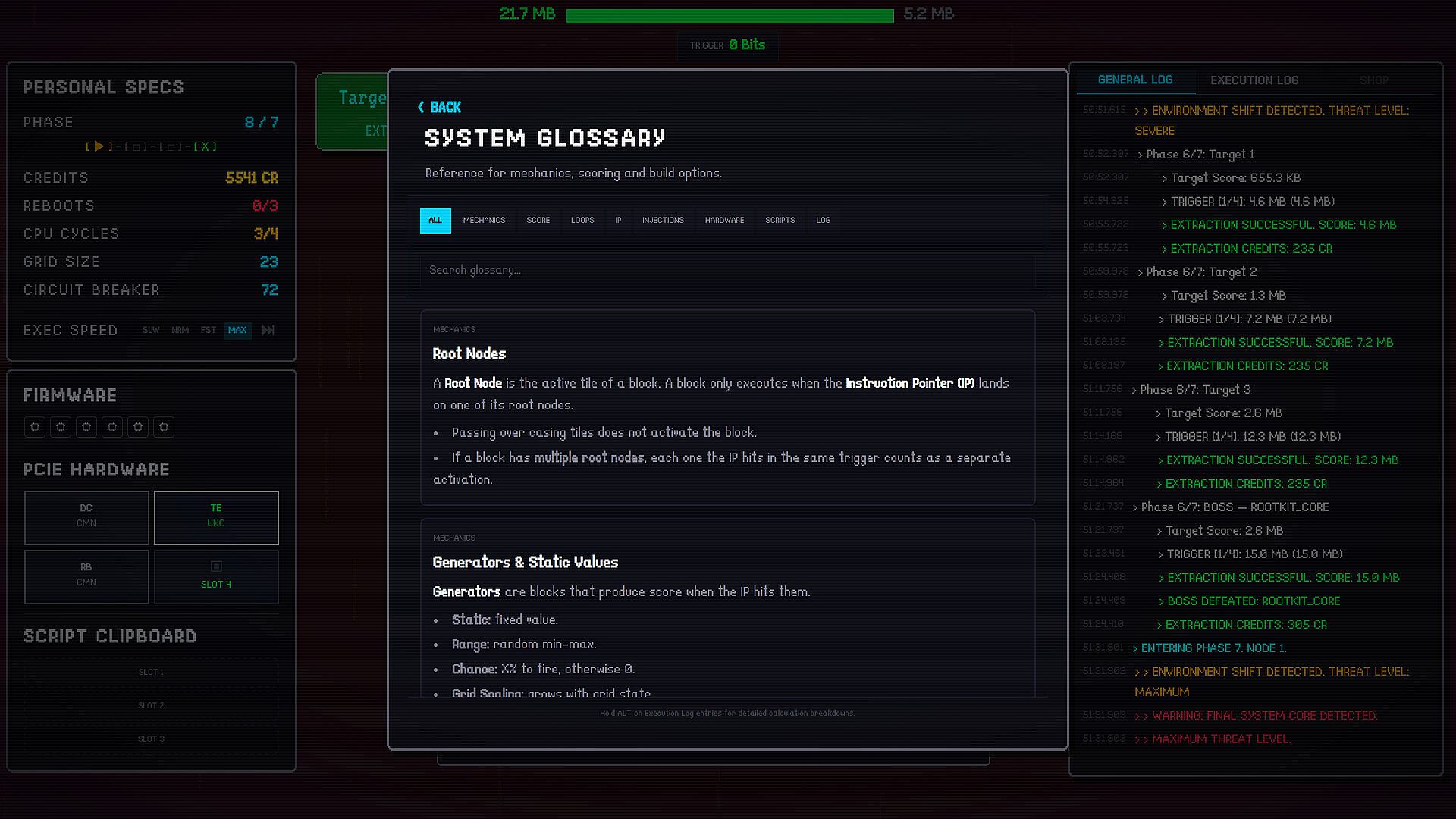
After setup, a trigger activates the instruction pointer, which traverses the grid and processes blocks automatically. Control structures enable loops, while stateful operators introduce scaling that grows stronger over time. Runtime injections selected before each cycle modify grid parameters, adding multipliers or chaotic variables that force adaptation without altering the build phase itself.
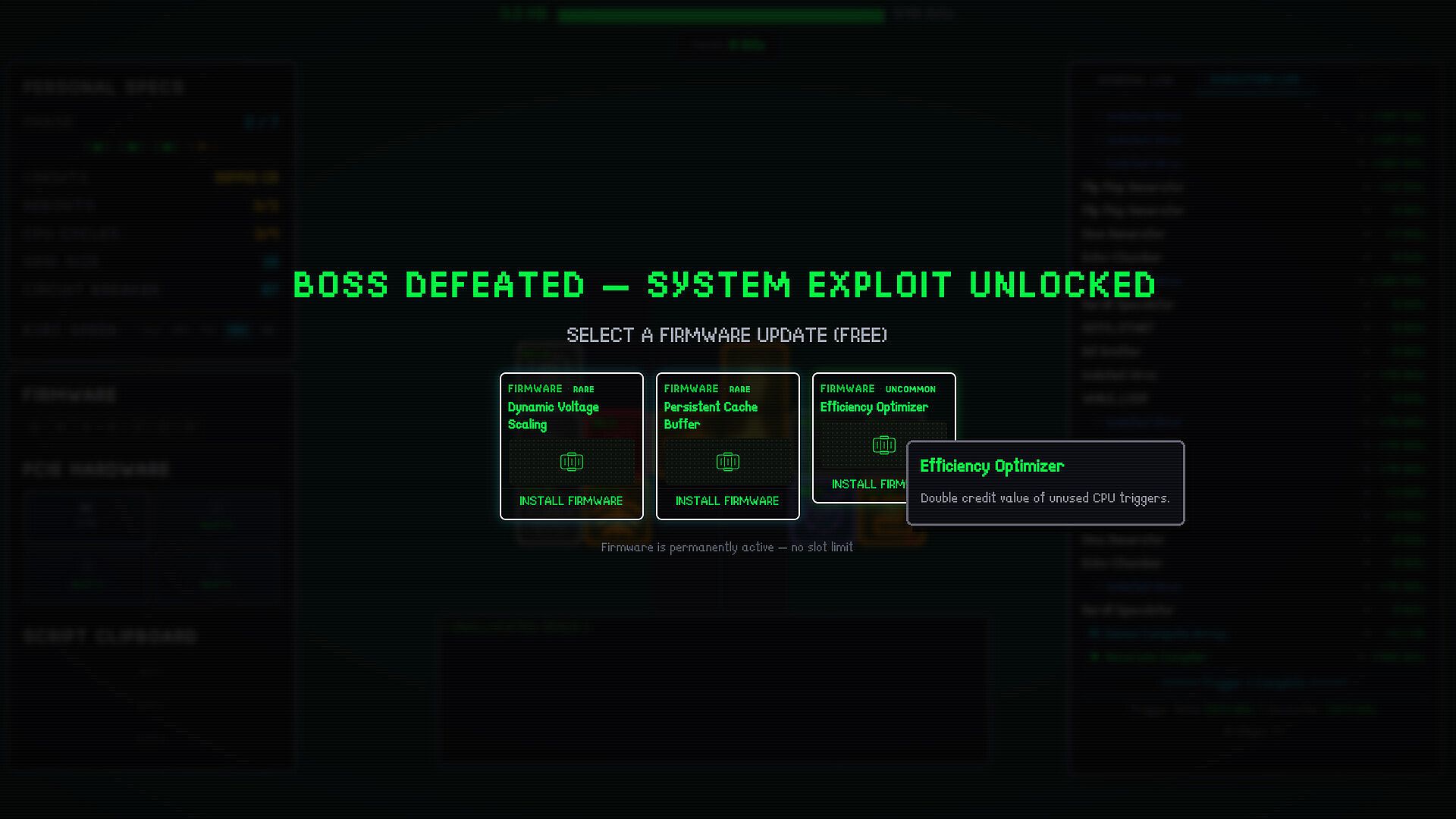
Hardware choices shape the foundation before runs begin. Mainboards and software packages alter shop offerings and available blocks, while accessory slots accept components that adjust global parameters. Scripts deployed during pauses provide further tactical adjustments to upcoming triggers.
Game Modes
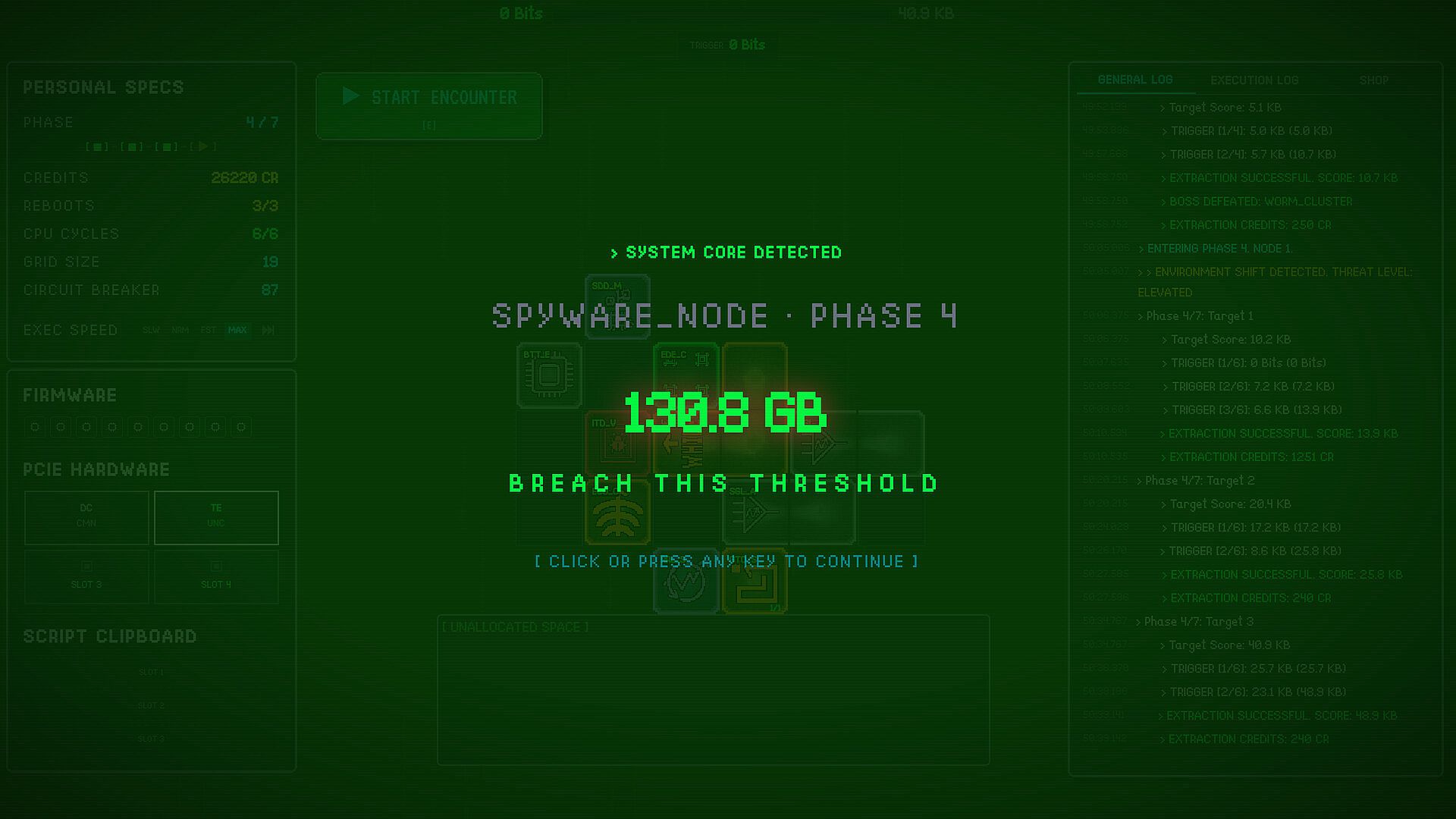
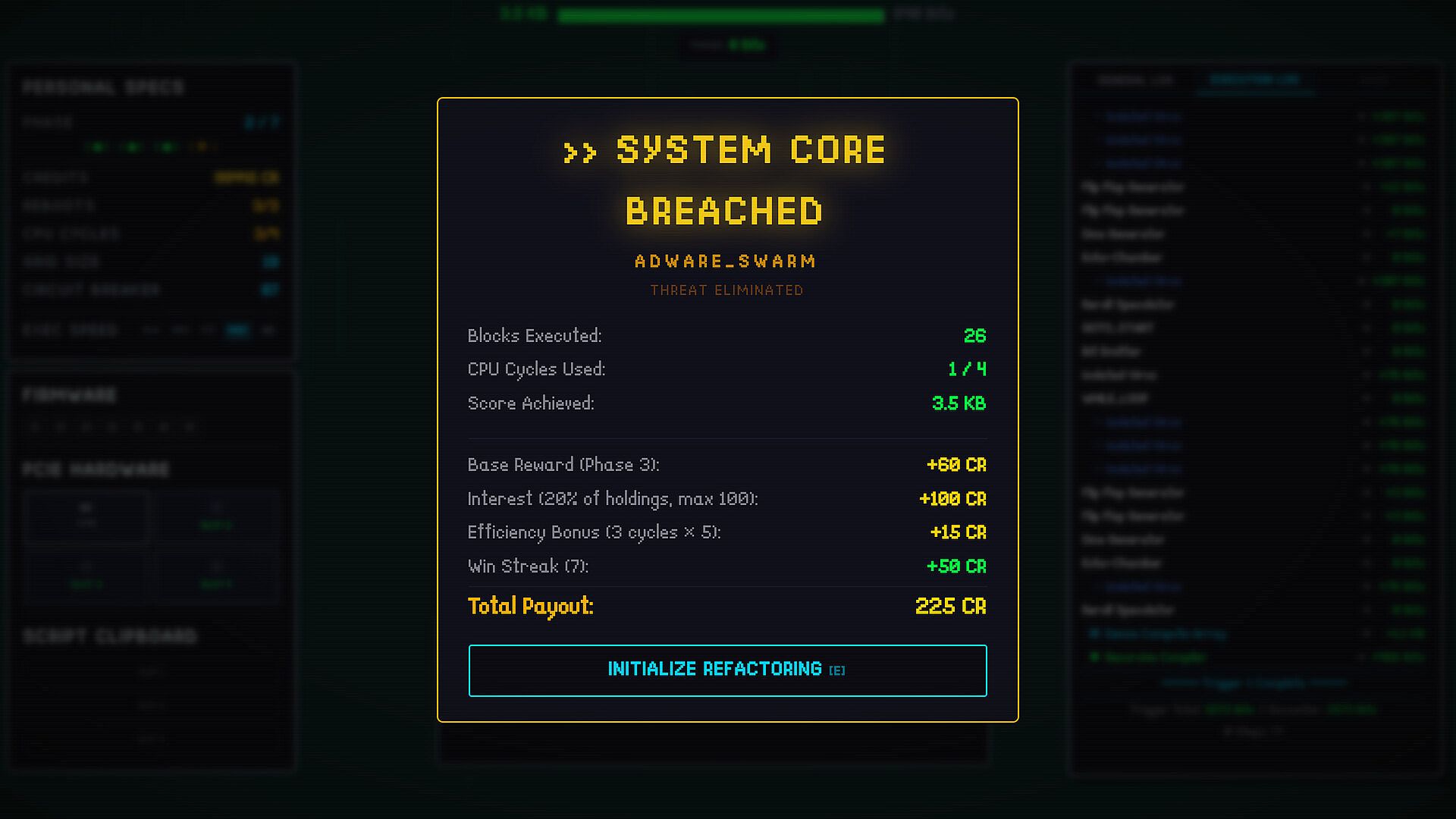
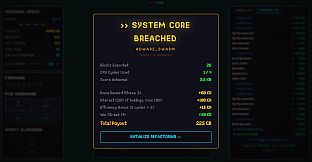
The experience unfolds through repeated single-player runs in a roguelite structure. Each attempt starts with hardware selection that influences available options and drop pools, then proceeds through build phases and execution cycles until the payload target is met or reboots are exhausted.
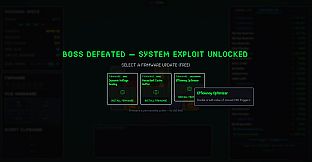
Progression relies on drafting from a pool of one hundred code blocks across multiple categories. Spatial operators, temporal generators, and control structures combine in different configurations, with firmware upgrades and PCIe installations providing meta-level scaling between runs.
Core Mechanics and Systems
Inventory management forms the backbone, as blocks must be arranged for maximum impact without timers or interruptions during planning. Success depends entirely on logical grid design and synergy creation rather than reflexes or chance events in the build stage.
Exponential growth emerges from stateful operators and looped execution paths. Players route the pointer through control blocks to sustain or expand effects, turning initial setups into compounding systems that deliver the required payload output.
Replayability stems from hardware variety and injection choices. Different mainboard and package combinations shift probabilities and block availability, encouraging experimentation across runs while maintaining the same core grid-building focus.
Is It Worth Playing?
This title suits players who enjoy deliberate, logic-driven strategy without time pressure or external randomness during setup. The roguelite structure rewards careful optimization and adaptation through injections, with hardware selections providing meaningful variety in how each run unfolds.
Zero time pressure during builds emphasizes pure grid management and synergy engineering. Those drawn to systems that scale exponentially through placement and routing will find depth in the one hundred available blocks and supporting systems like firmware and scripts.
As an upcoming indie release focused on single-player roguelite auto-battler mechanics, it appeals to fans of grid-based optimization and exponential payoff loops. The absence of timers and emphasis on logical decisions make it a strong fit for strategy enthusiasts seeking replayable, skill-focused sessions.











