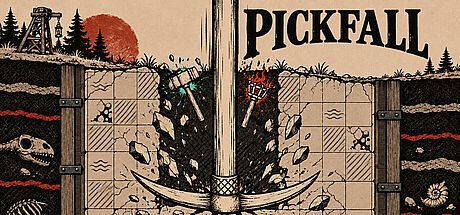


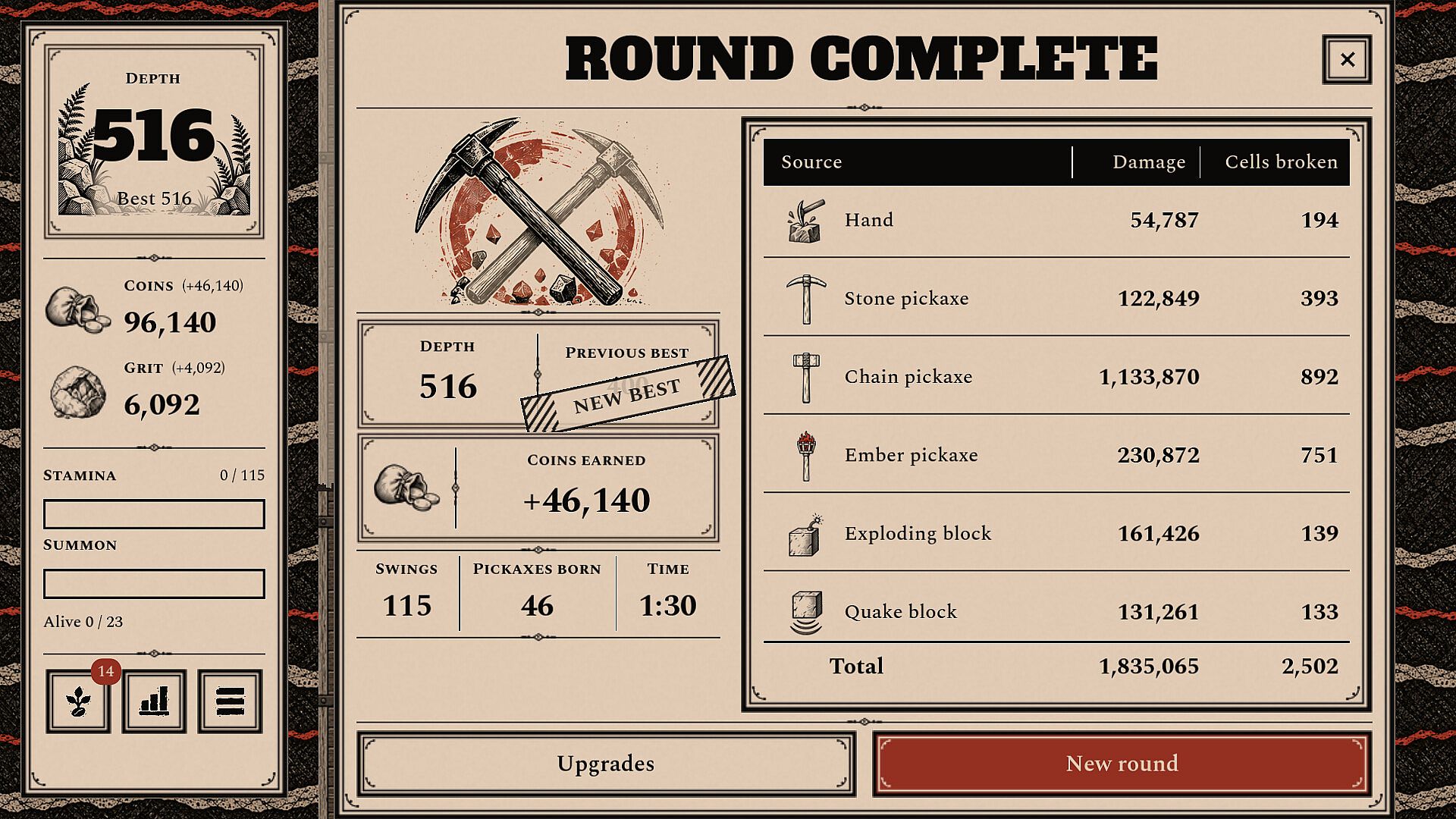
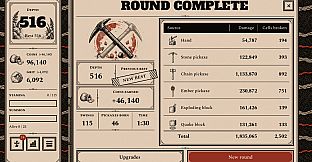
Pickfall is an indie casual mining game for PC that centers on incremental digging through procedurally generated rock shafts. Players swing a pickaxe to break cells, charge a bar, and launch thrown pickaxes that continue digging on their own. The loop emphasizes short sessions of breaking rock, collecting drops, and upgrading before each new round that starts again at the surface.
Gameplay
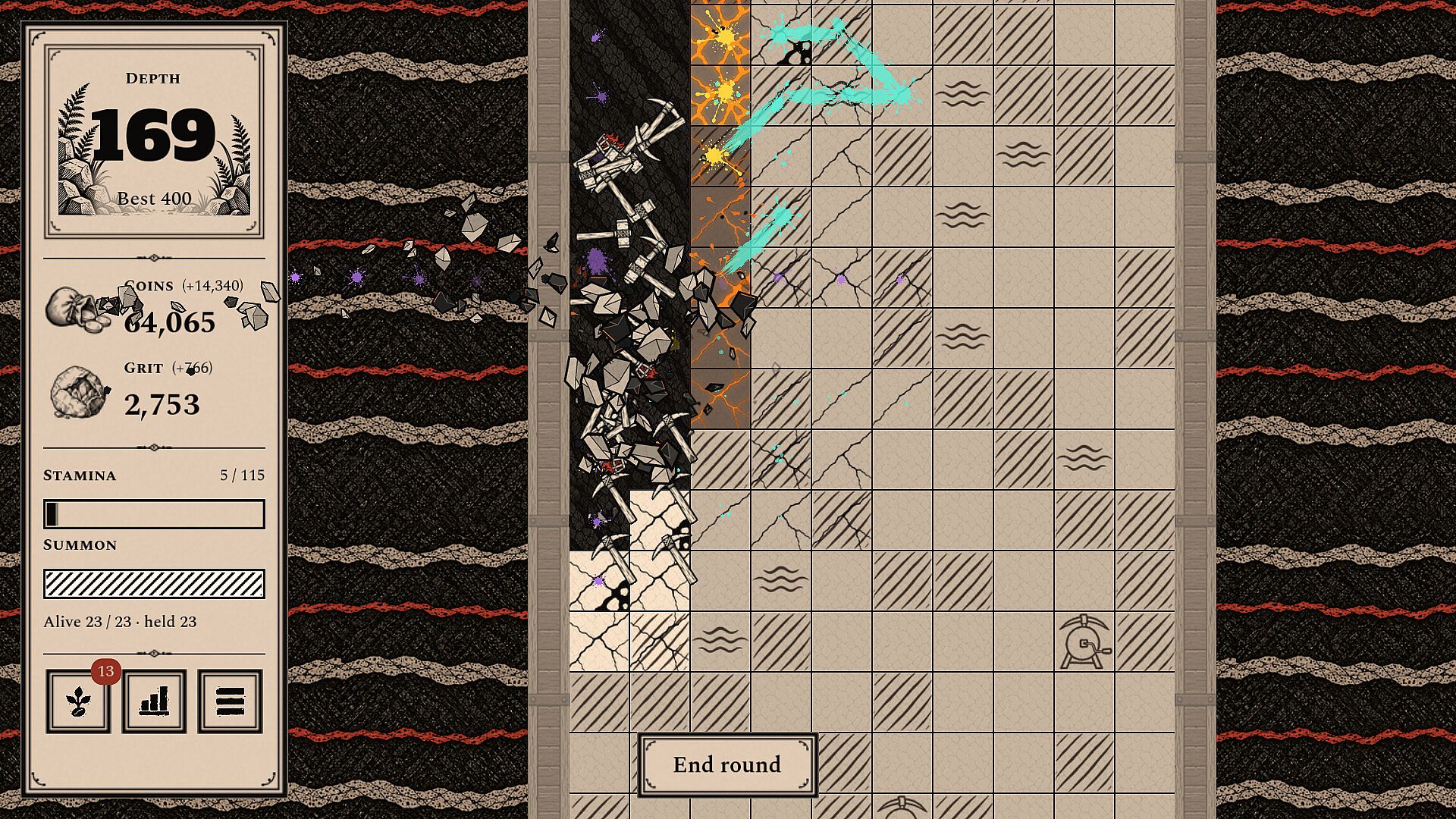
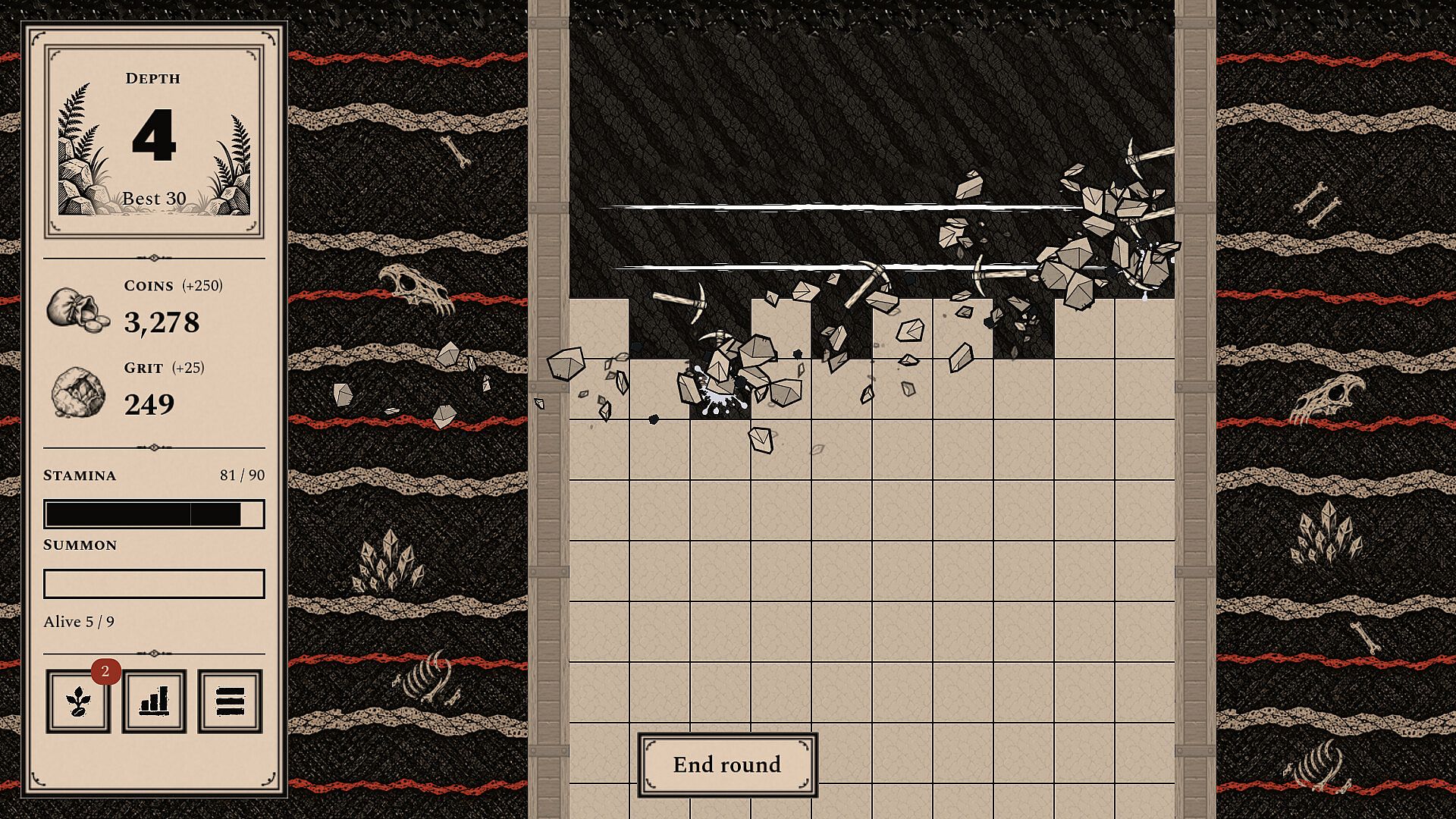
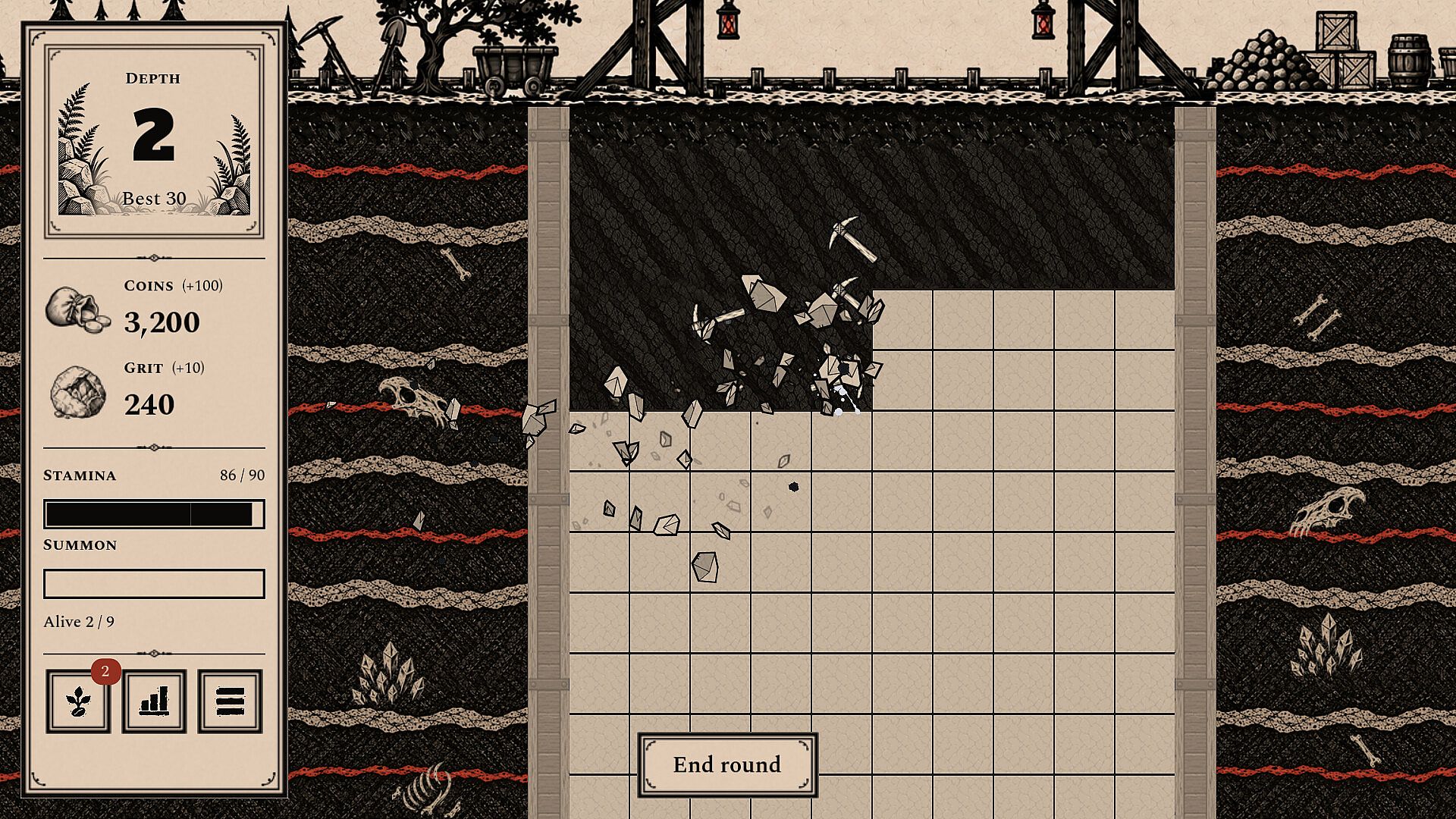
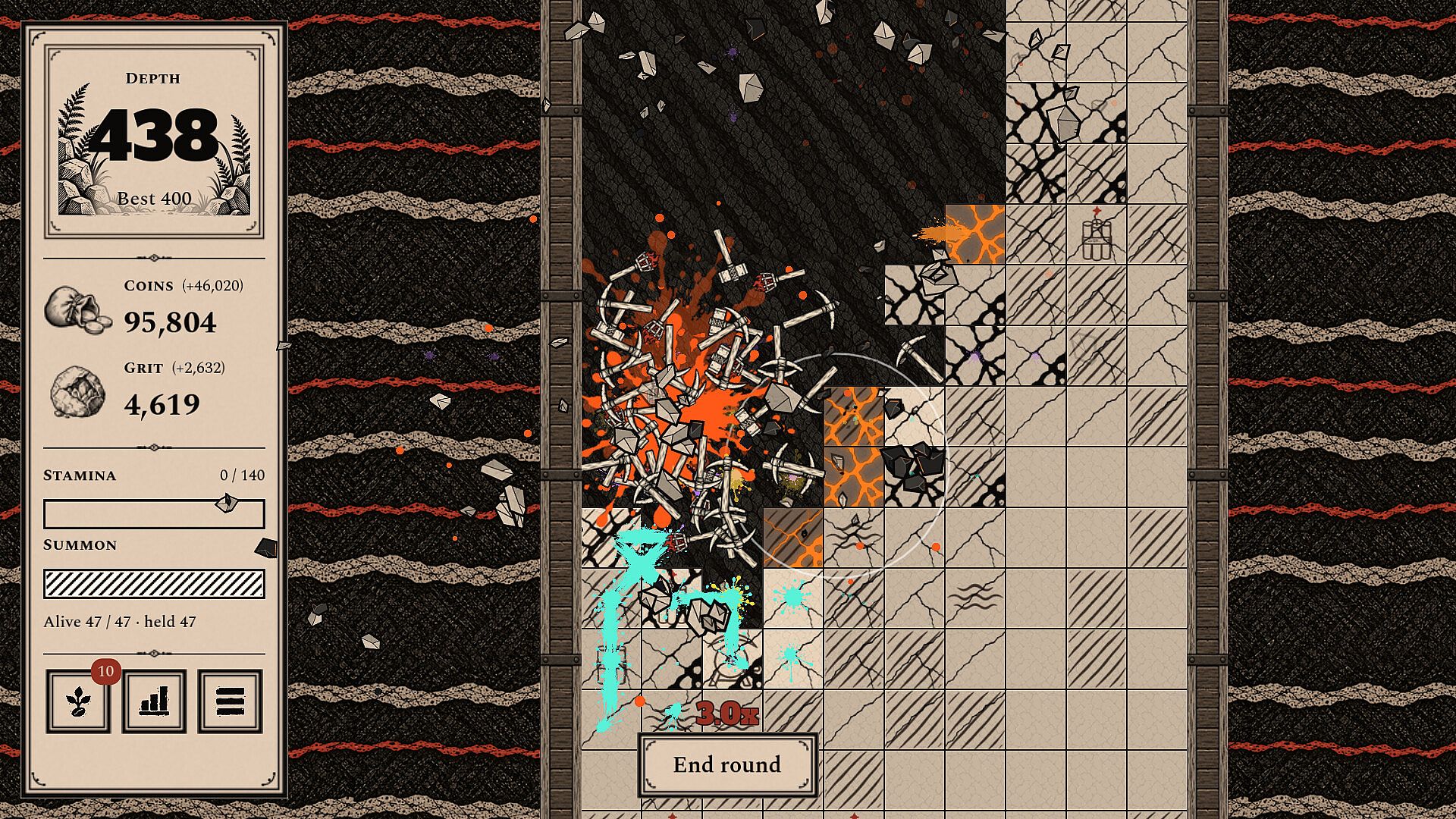
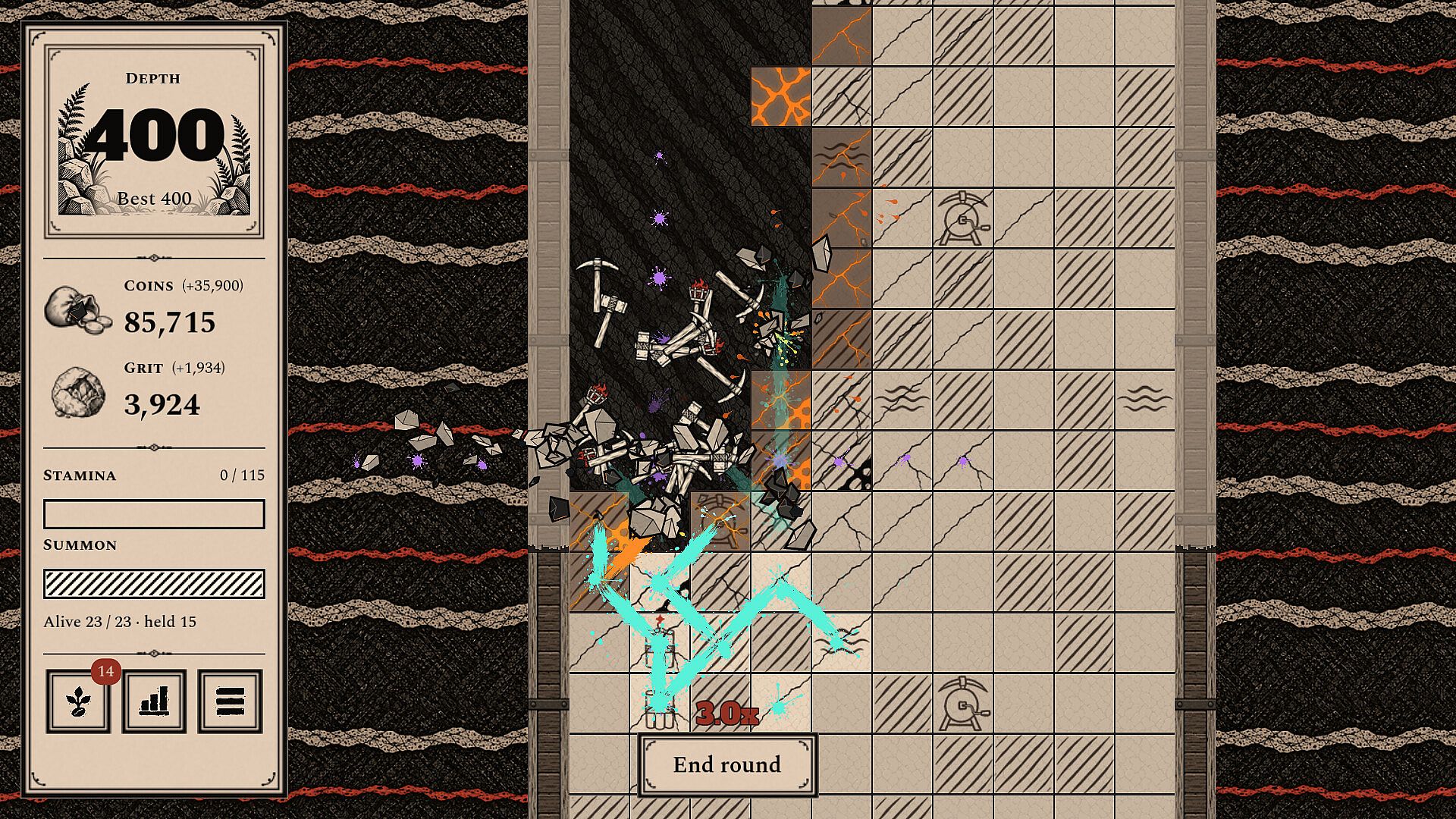
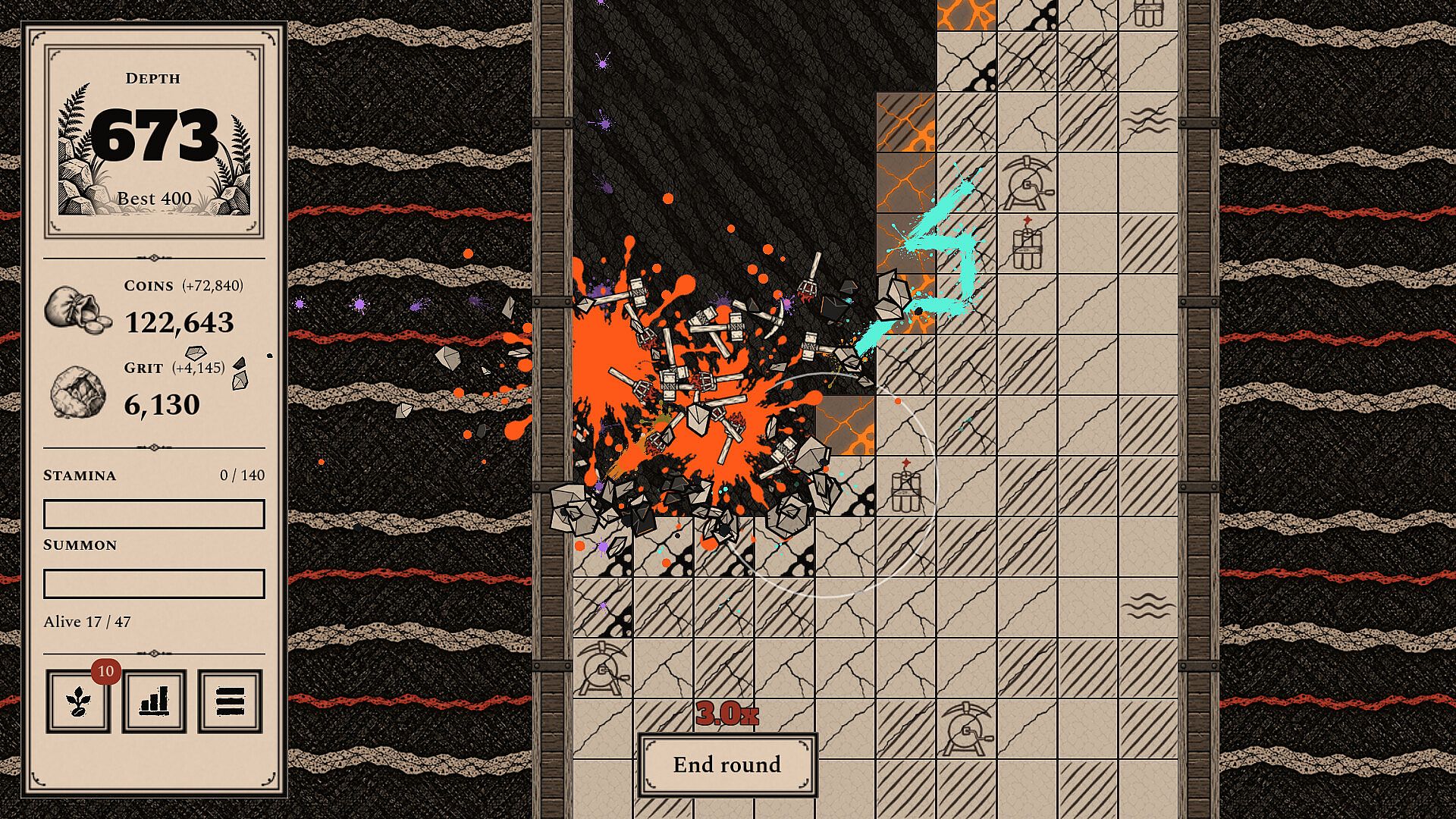
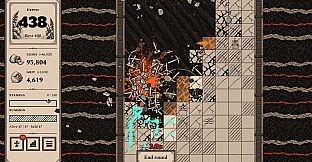
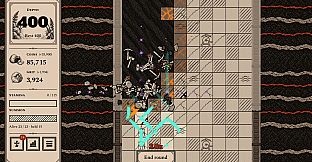
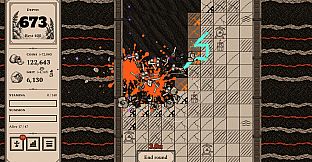
The core loop begins with direct swings at the rock face. Breaking cells fills a bar that releases a thrown pickaxe from the broken spot. These thrown tools bounce and dig onward until they shatter, extending progress without constant input. Different pickaxe behaviors appear through upgrades, such as chain jumps to adjacent cells or ember effects that set rock burning. Each break from these tools feeds back into the bar for further launches.
Hidden elements within the rock trigger cascades when struck. Blasts, quakes, and whetstones create chain reactions that clear large areas at once. Progress tracks visibly on screen through changing numbers tied to each level. Coins purchase rows for hands and pickaxes while grit funds a tree of upgrades. Every round resets to the surface, but strength carries forward from prior attempts. The shaft wall records the deepest reach, and a floor exists at the bottom of each shaft.
Visuals use an ink-on-paper style with procedural stone and ore patterns. Controls focus on timing swings and positioning throws to maximize depth before tools break. The finite nature of each drop encourages careful steering around hazards to reach better ore veins.
Game Modes
Pickfall structures play around repeated rounds that always begin at the surface. Each round functions as a self-contained digging attempt that builds on permanent upgrades from previous efforts. The only progression path downward requires outperforming the last attempt, with the record marked directly on the shaft wall.
Within rounds, the emphasis stays on single-shaft exploration. No separate competitive or cooperative modes appear in the available details. The experience stays focused on solitary incremental digging sessions that reward efficient chain reactions and upgrade choices before resetting for the next surface start.
Progression and Upgrades
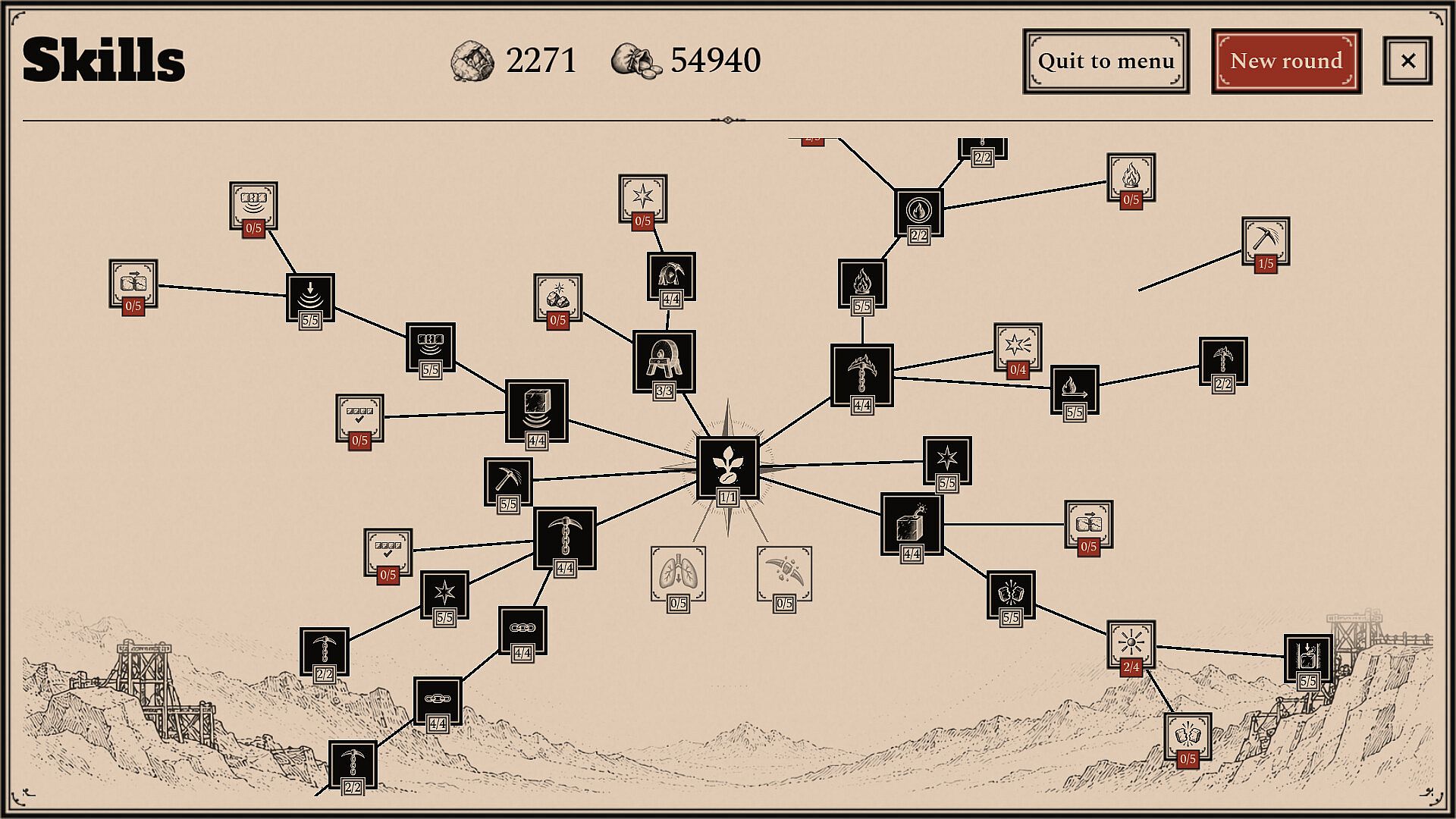
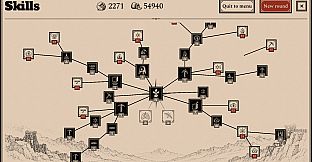
Upgrades split between visible purchases and a tree system. Coins directly improve hand and pickaxe rows for better immediate performance. Grit accumulates to unlock nodes in the tree that persist across maps. Every level alters on-screen values that players can track in real time, making the impact of choices immediately apparent.
The full version plans additional shafts, each with unique rock types and ores. A permanent unlock tree carries forward between these maps. New pickaxe types and block interactions expand the chain-reaction possibilities. Content below the shaft floor remains unrevealed in current announcements.
Is It Worth Playing?
Pickfall suits players who enjoy short, focused incremental sessions built around physical digging mechanics and visible feedback. The reset-to-surface structure keeps rounds quick while upgrades provide steady forward momentum. With the full game scheduled for 2027 on Windows and a demo planned soon, interested players can wishlist the Steam page to follow updates. Those drawn to casual mining loops with chain-reaction depth will find the core systems align closely with the described experience. Early mobile versions of similar concepts have drawn positive comments on addictiveness, though the PC release stands as its own title.