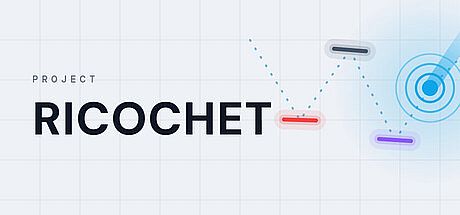


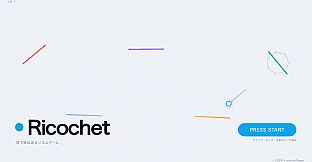
Project Ricochet is an indie rhythm game for PC that centers on precise timing and a single input. Players guide a ball through tracks by pressing one button at the exact moment it strikes a wall, syncing each bounce to the music and maintaining a chain of perfect hits until the track ends.
Gameplay
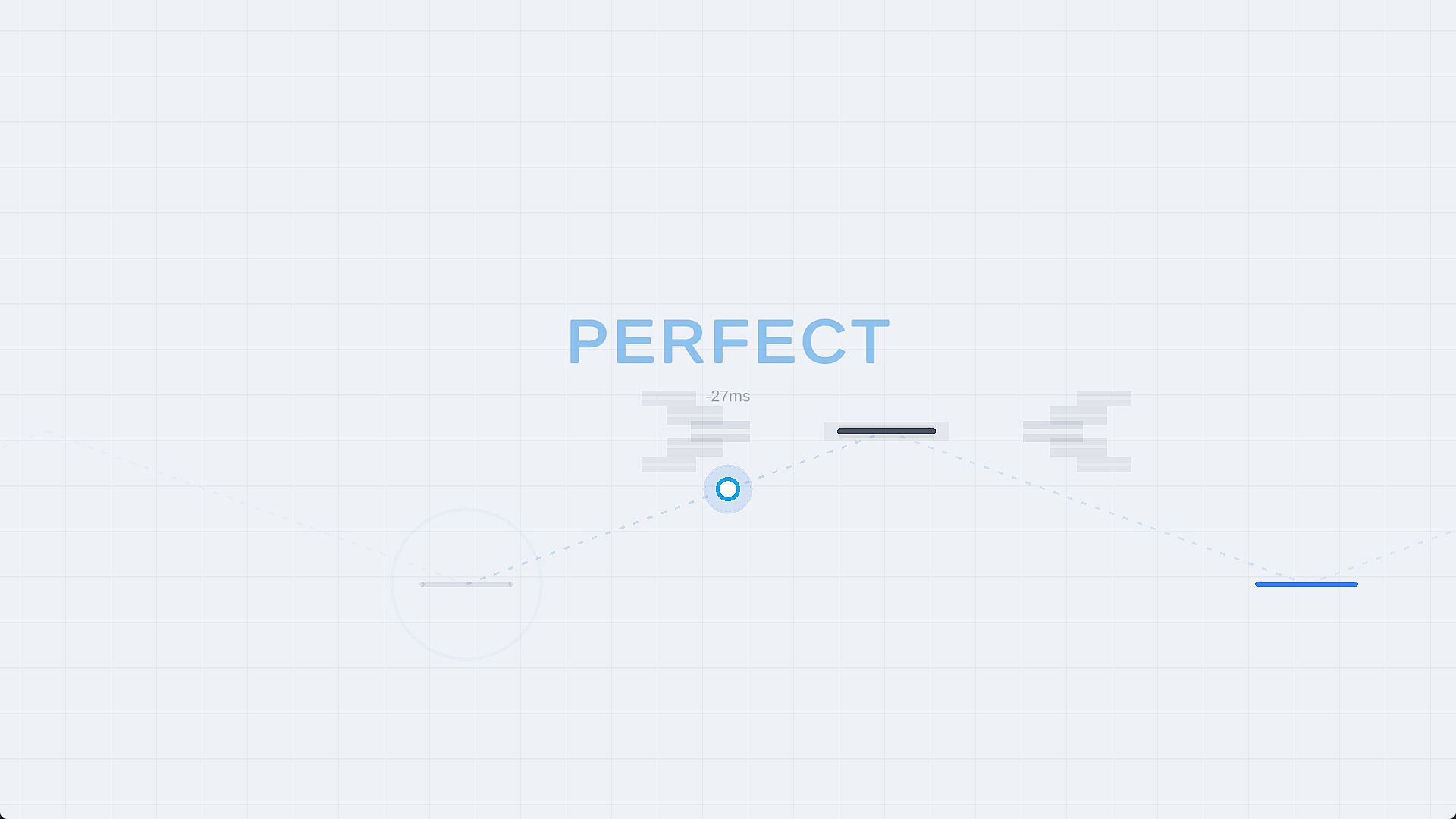
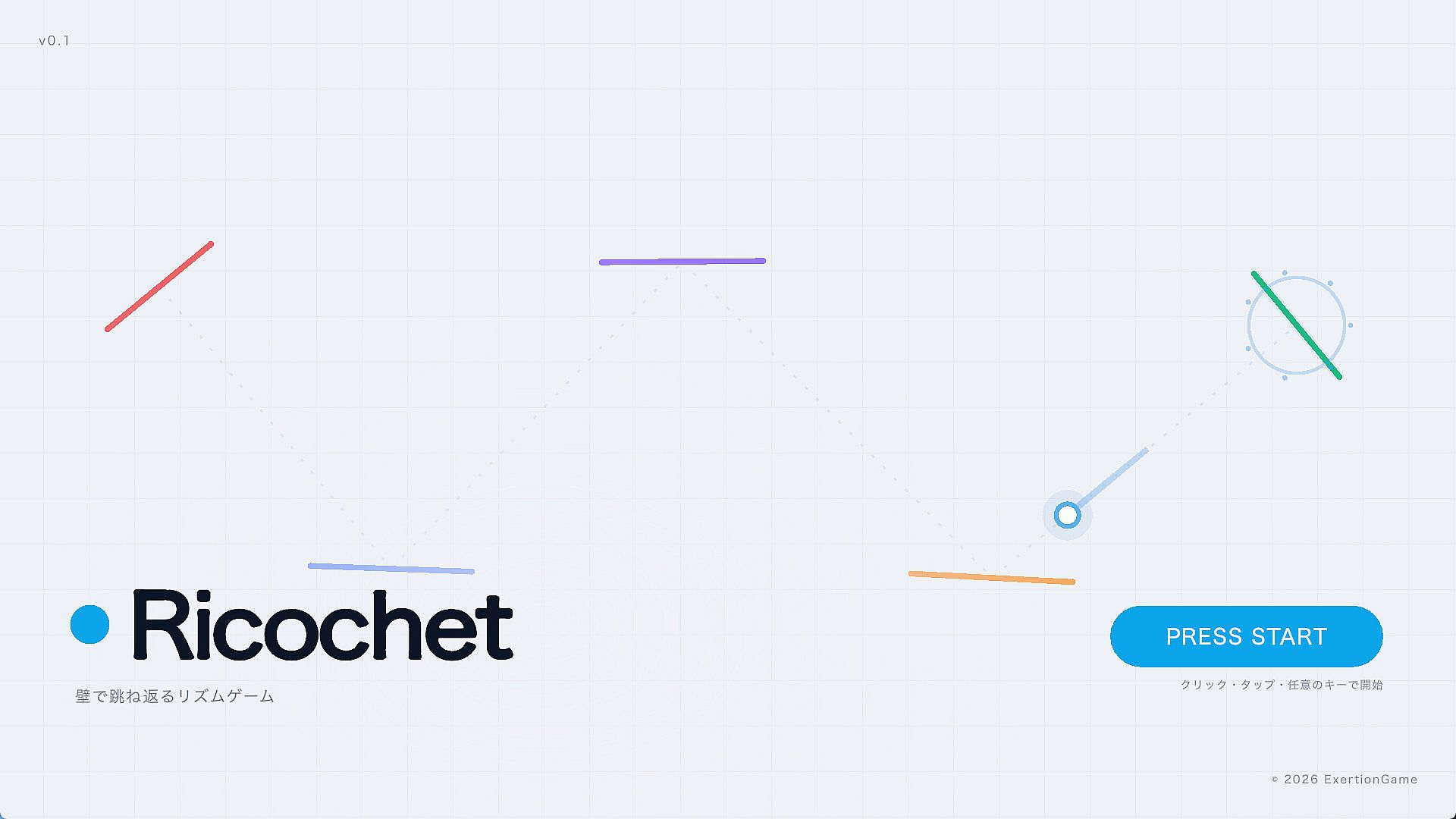
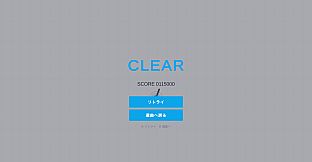
The core loop revolves around rhythm-powered ricochet action. A ball travels along a path lined with walls, and the player must time a button press for every impact. Success builds a streak of perfect hits that aligns with the beat, while any mistimed input ends the attempt immediately. The design keeps controls minimal so that focus stays on reading the chart and anticipating the rhythm. Keyboard, mouse, or gamepad inputs all work equally well, and the basics become clear within seconds of the first attempt.
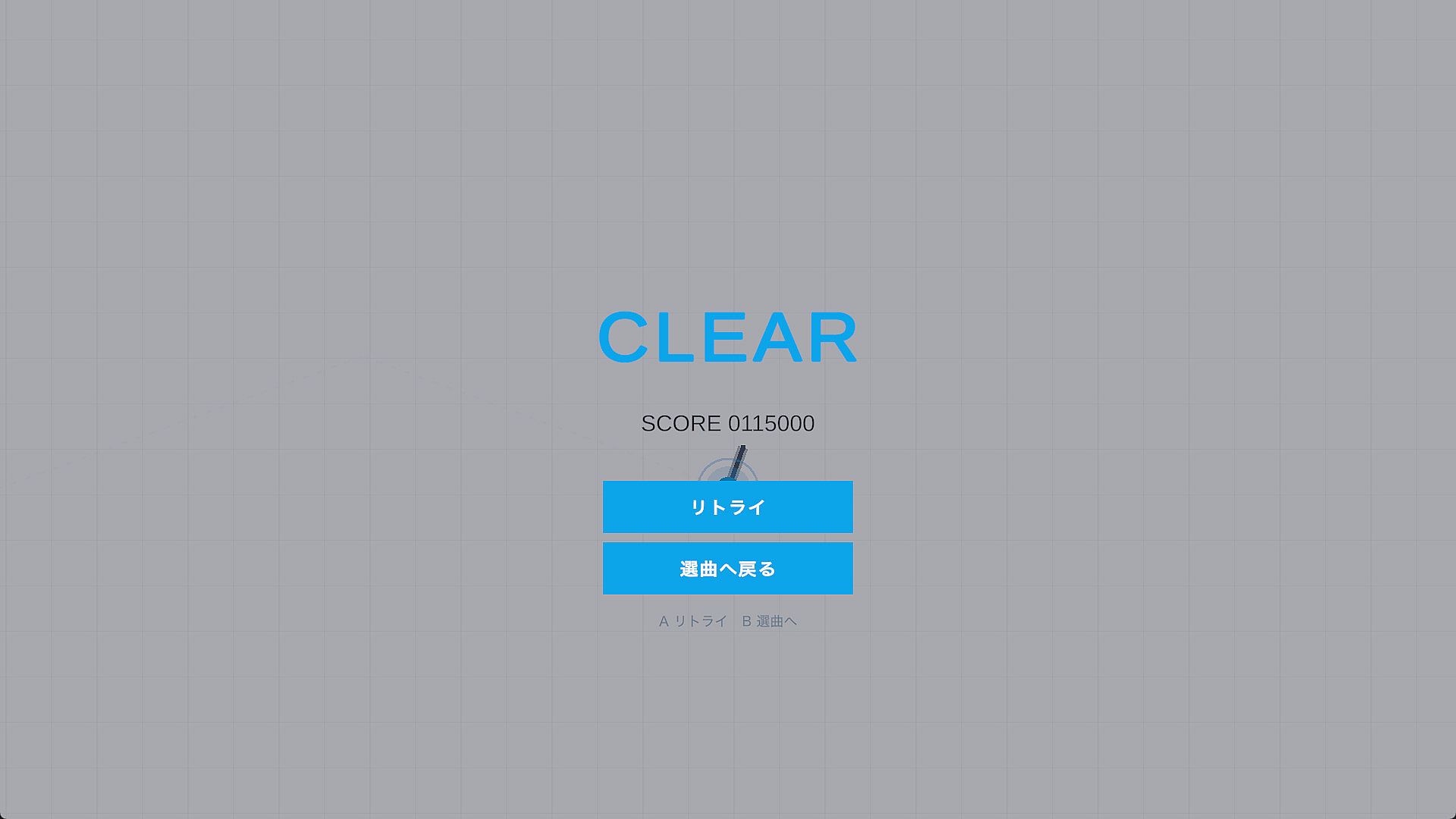
Each track presents a self-contained challenge that demands sustained concentration. Charts vary in complexity, with denser sequences of walls testing reaction speed and pattern recognition. A single miss resets the run, which encourages repeated practice on difficult passages. Instant retries support this iterative process, letting players isolate tough sections and refine their timing until the entire track flows smoothly.
Game Modes
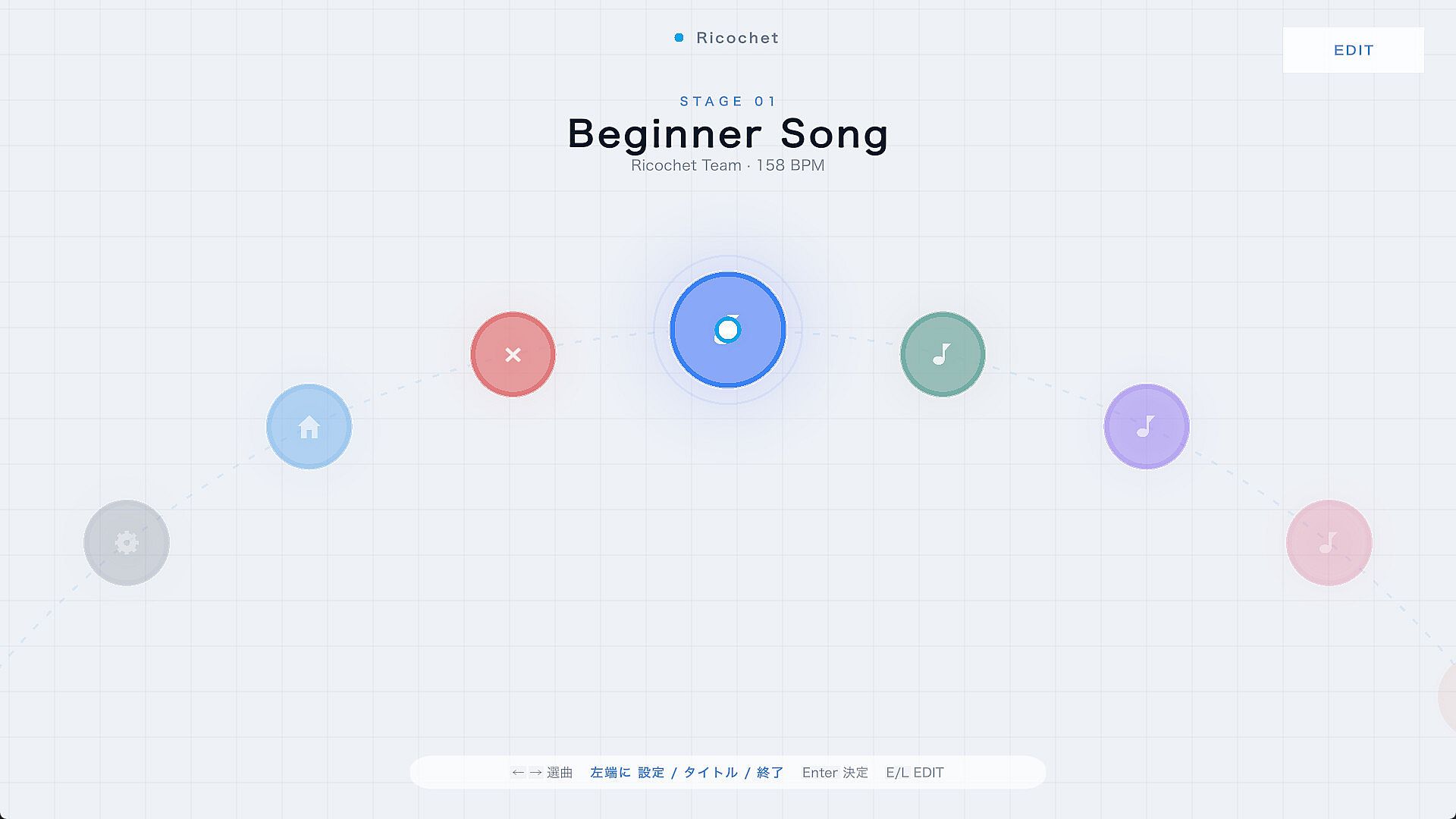
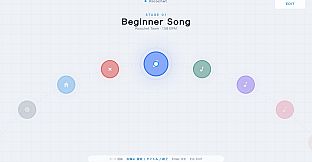
Project Ricochet operates as a single-player experience built around pre-made and user-created charts. The primary activity involves selecting a track and attempting to complete it without error. Success depends entirely on maintaining the ricochet chain from start to finish.
An integrated editor allows placement of walls to construct new charts. These creations can be published for others to download and play. The system turns the game into a platform for community content, where players both consume and contribute stages that match different musical styles and difficulty levels. No additional structured modes exist beyond this core loop of playing and creating charts.
Controls and Accessibility
One-button controls form the foundation of the experience. The input method remains consistent across all tracks, removing the need to memorize complex button combinations. This simplicity suits casual sessions while still supporting high-level precision required for demanding charts. The game runs on Windows, macOS, and Linux, with modest system requirements that make it accessible on a wide range of PCs.
Steam Workshop integration handles chart sharing and discovery. Players can browse, download, and rate community creations directly through the platform. Achievements track progress such as clearing specific tracks or reaching certain chain lengths, providing additional goals without altering the fundamental one-miss-fail structure.
Is It Worth Playing?
Project Ricochet appeals to players who enjoy rhythm games that reward exact timing and repeated practice. The one-button mechanic lowers the barrier to entry compared with traditional rhythm titles that require multiple inputs or complex sequences. At the same time, the all-or-nothing failure condition creates tension that keeps each attempt engaging.
The level editor and Workshop support extend replay value through user-generated content. Those who like experimenting with creation tools or exploring stages made by others will find ongoing variety once the base tracks are mastered. Because the game remains in development with a release date to be announced, prospective players can follow updates through the official Steam page to learn when charts and features become available.
Overall, the title suits anyone seeking a focused, high-stakes rhythm challenge on PC. Its minimal controls and emphasis on personal improvement make it a strong fit for short play sessions or longer practice runs aimed at perfect clears. Community chart creation adds a layer of longevity for players interested in both performing and designing content.