






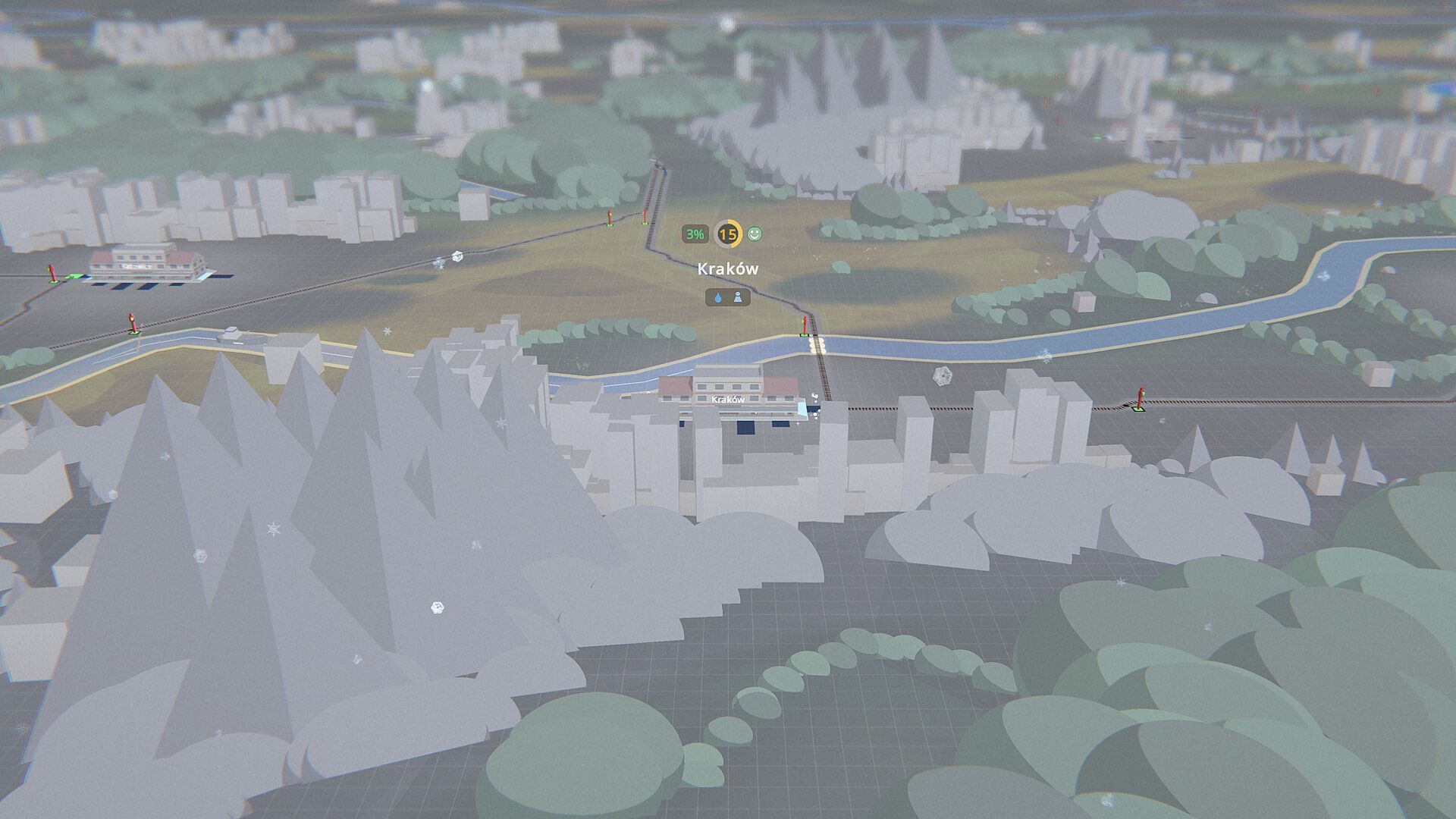
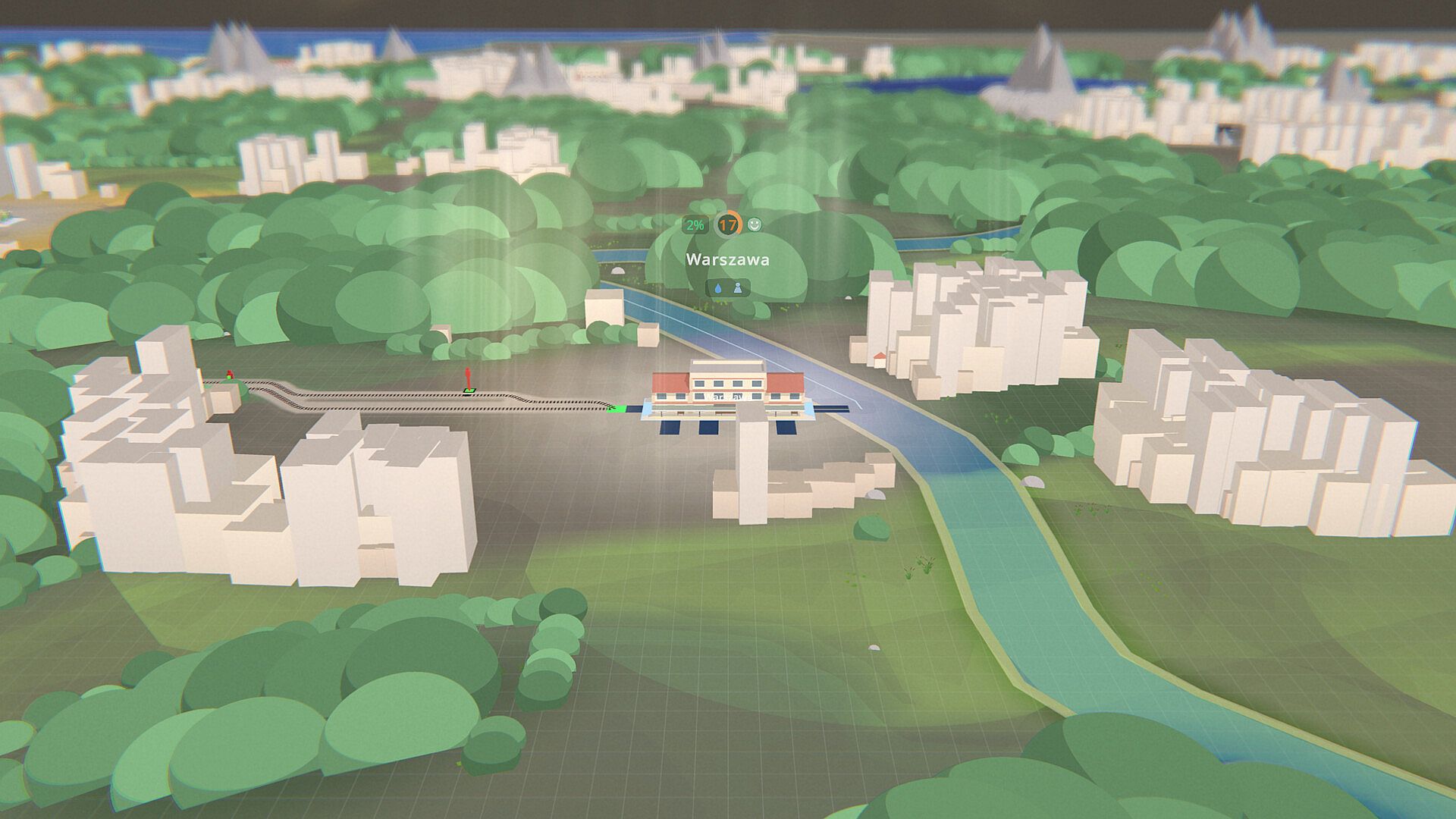
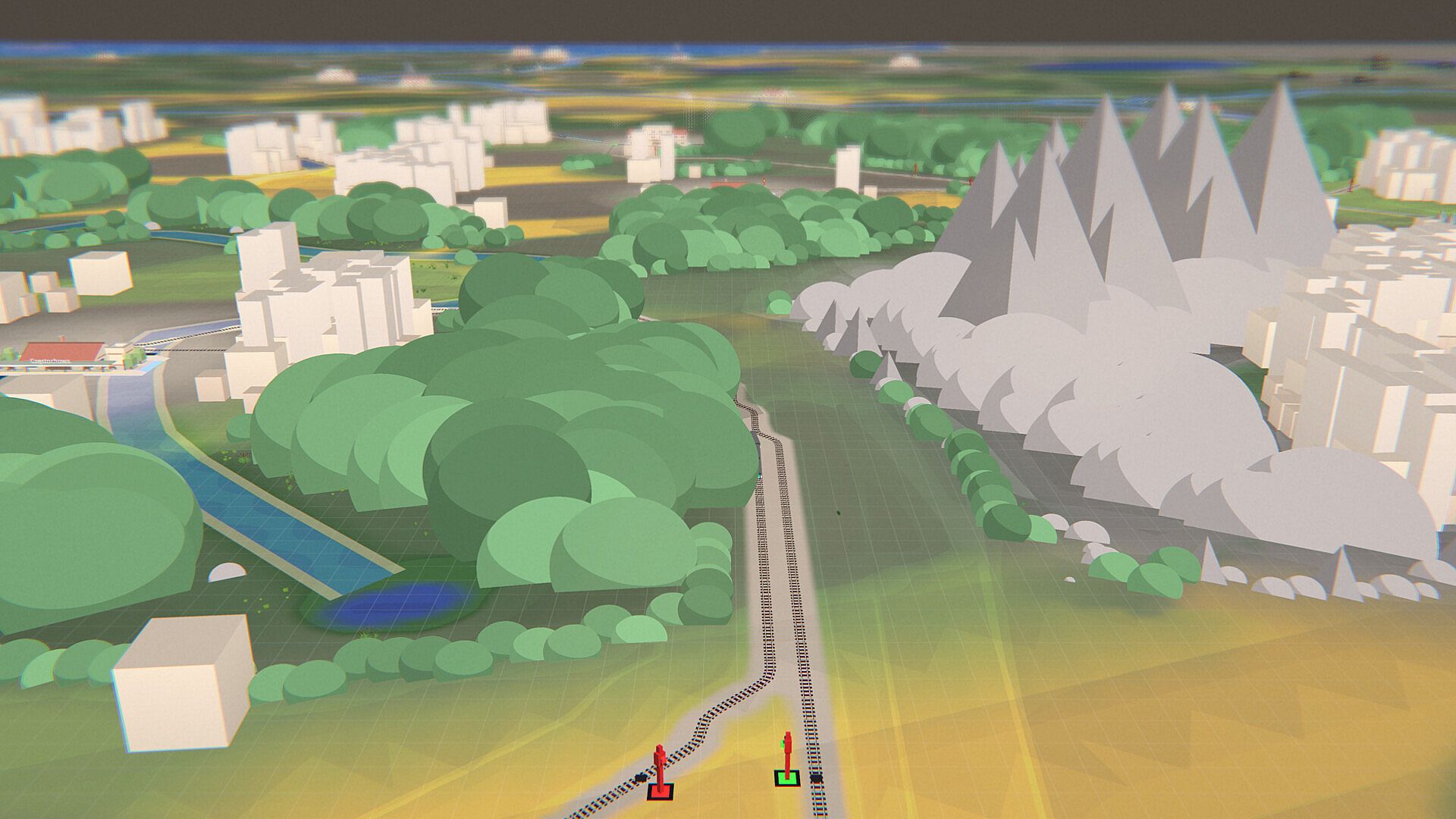
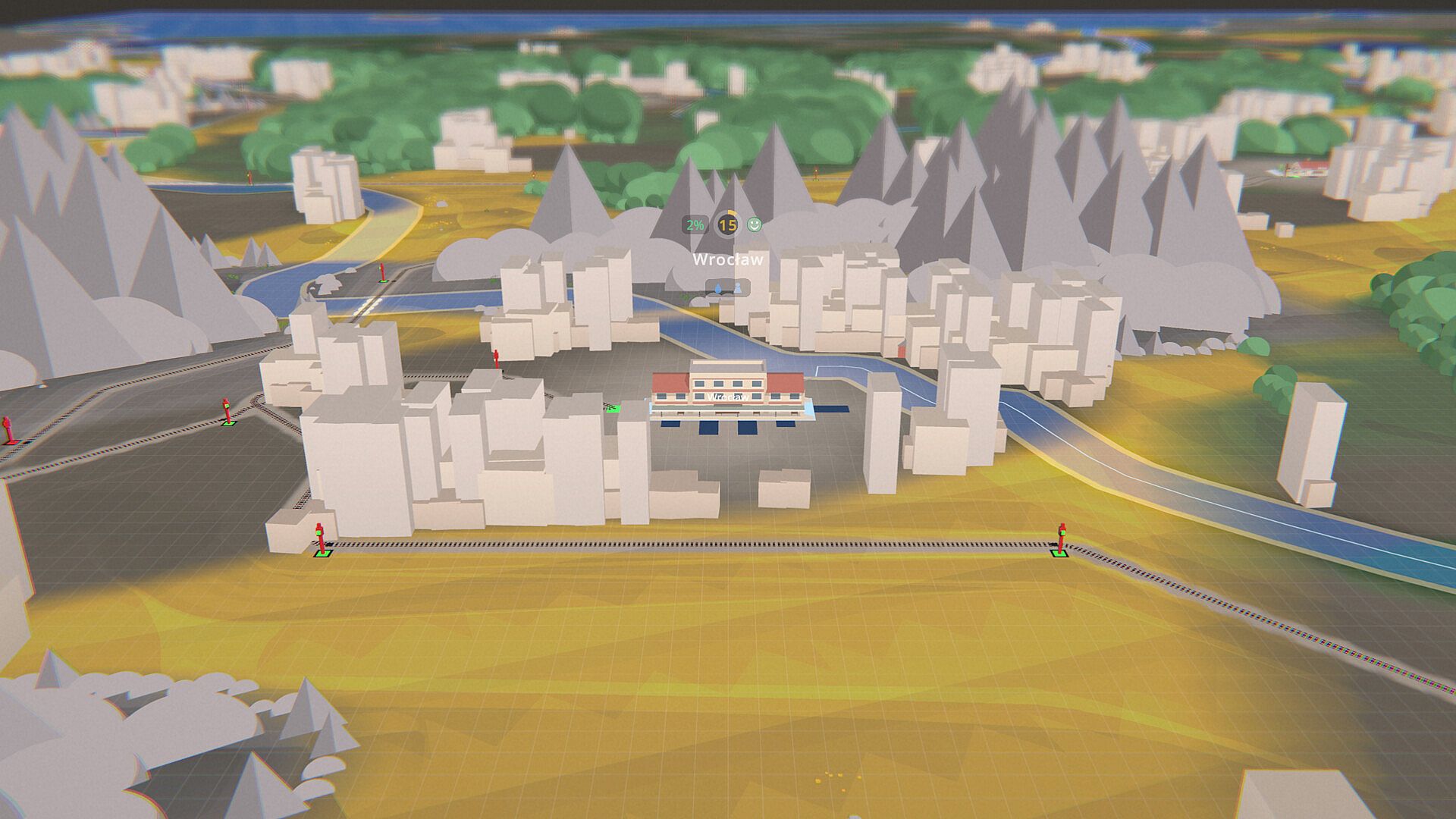
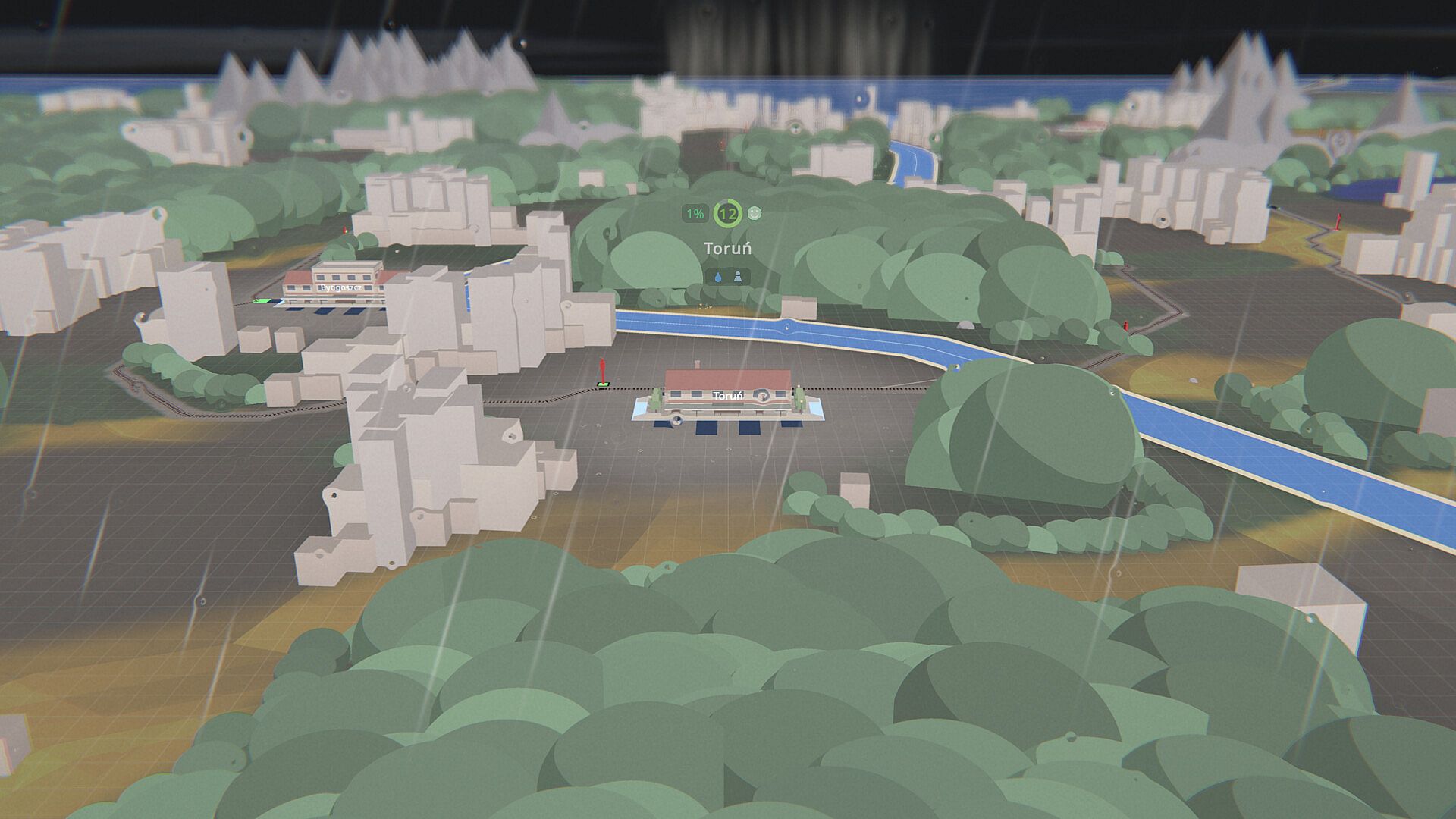
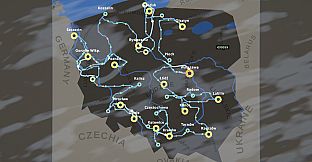
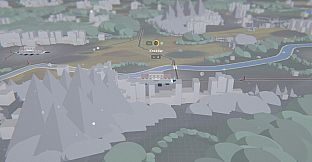
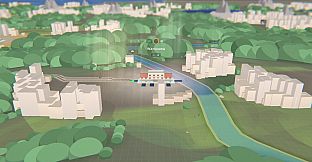
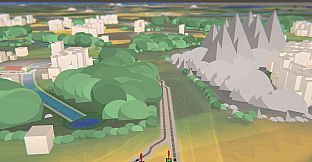
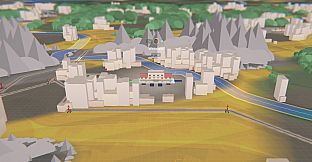
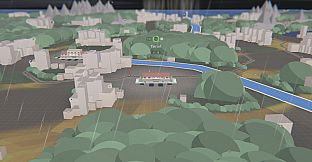
RailGame is a strategy, indie, casual, and simulation title for PC that centers on constructing and operating a rail network across a map of Poland drawn from real geography. Players draw track cell by cell while managing trains that cannot reverse direction, creating a network that must support ongoing passenger movement without loops or dead ends stranding cars. The core loop involves careful planning of routes, junctions, and signals to keep everything running smoothly under changing conditions.
Gameplay
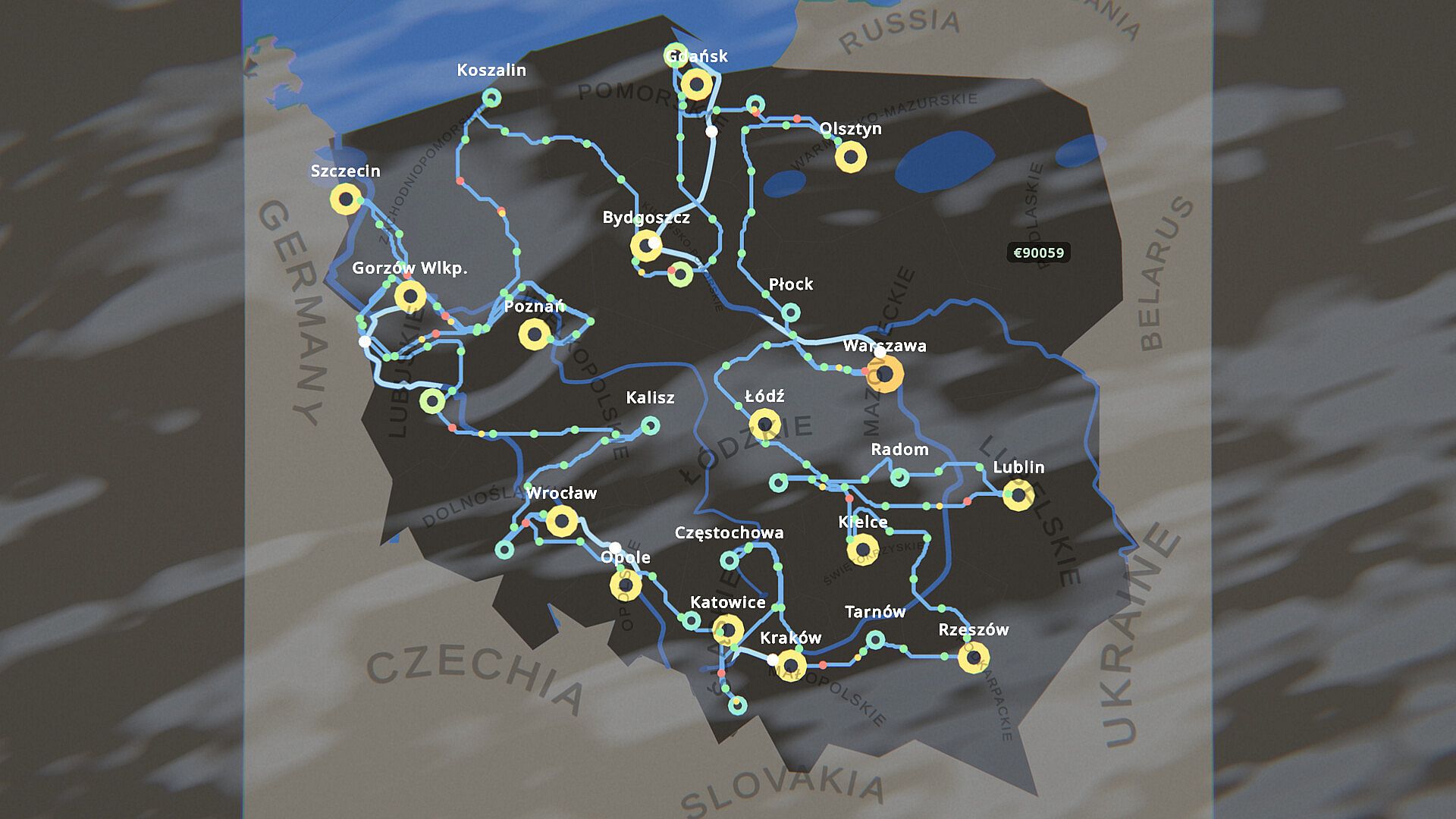
Building begins with the selection of a starting voivodeship, after which adjacent provinces and the cities within them are purchased. Each purchase increases the cost of the next, turning expansion into a strategic decision about where to focus growth. Track is laid segment by segment, splitting terrain and forming junctions where lines intersect. Signals control cells around them, and routes can be rebuilt while traffic continues without breaking existing paths.
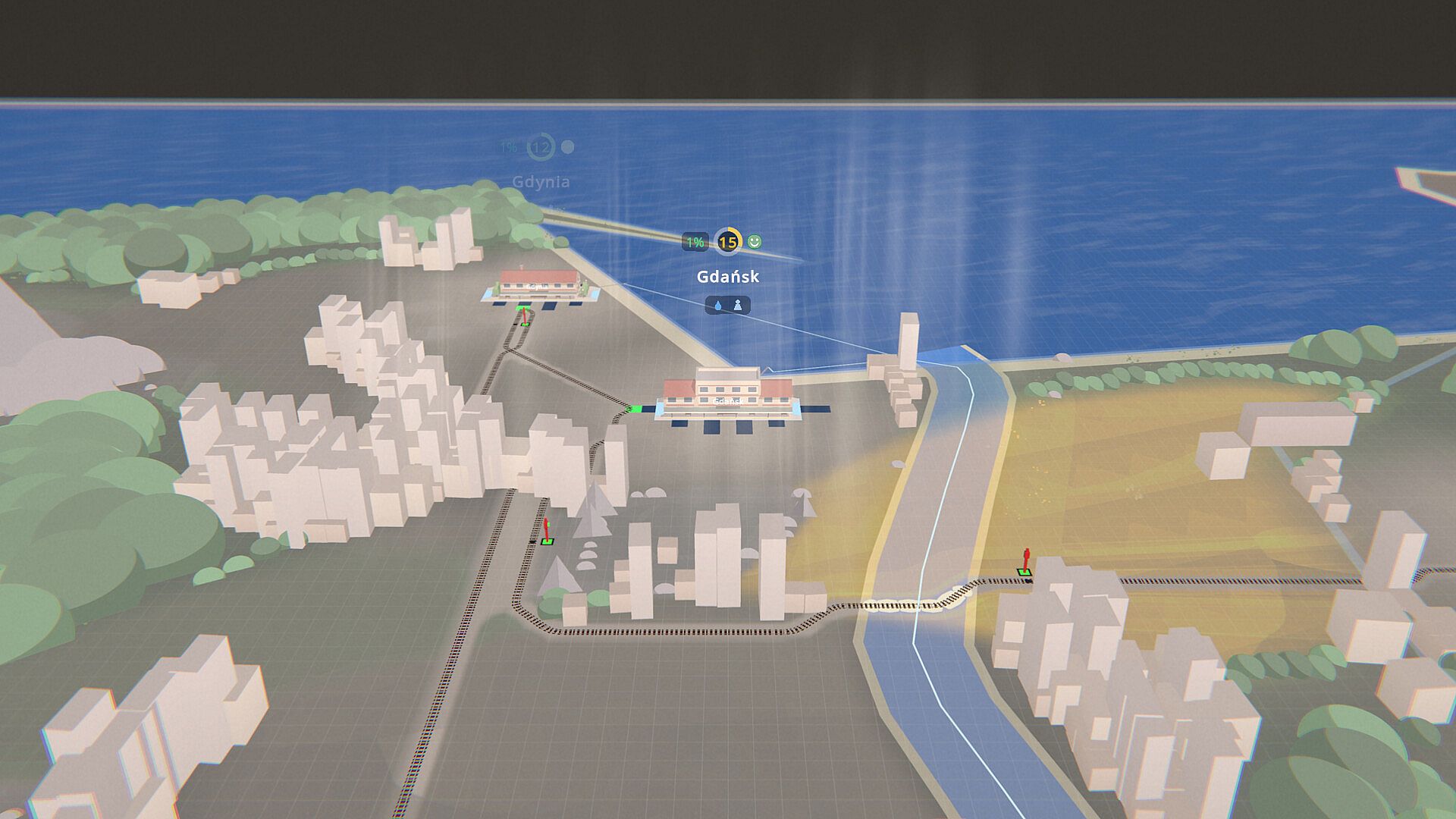
Every passenger carries a ticket to one specific named city, with payment collected only upon arrival. Trips may require multiple changes depending on the network layout, and unreached cities naturally suggest the next line to extend. Trains follow the drawn paths without reversing, so loops, passing lanes, and multi-lane station approaches become essential for avoiding dead ends. Route planning includes choosing the dock and entry direction for each stop.
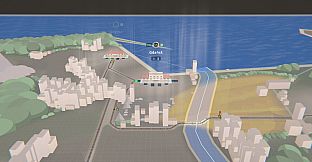
Rivers such as the Vistula, Oder, and Warta are crossed by bridges rather than followed along their banks. Ports along these waterways and the Baltic coast integrate ship routes alongside the trains. Weather changes daily by region, bringing rain or snow that slows trains and occasional storms or short-lived breakdowns. The day cycle runs from sunrise to midnight in just 24 seconds of real time.
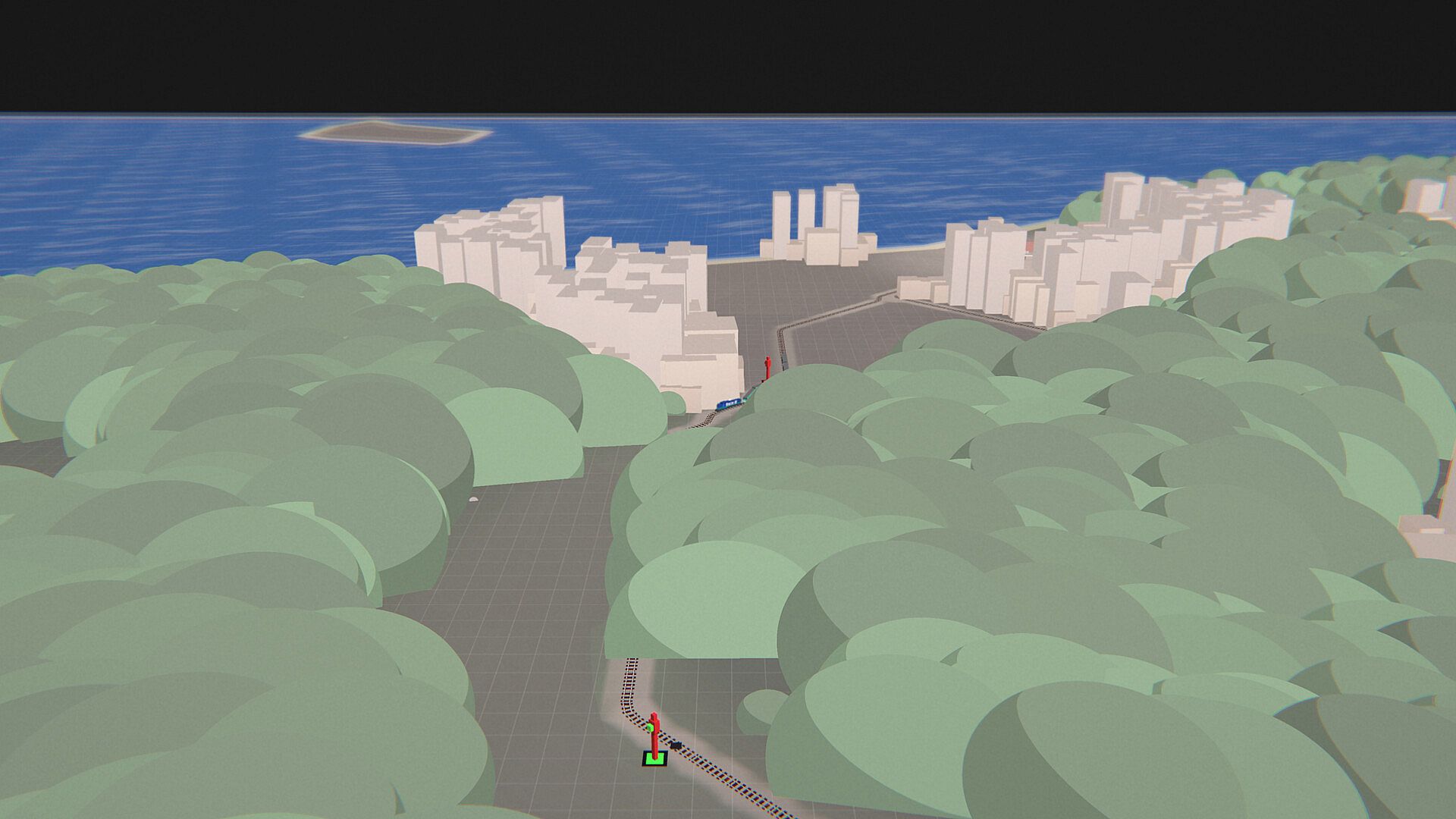
Camera controls allow tilting down to inspect a single station or pulling back for a full line-diagram view of the country. A photo mode places the camera at ground level beside a train. Tutorials appear on dedicated maps that dim the screen and highlight one control at a time.
Game Modes
Contracts appear on a board for players to accept and complete before deadlines, providing focused delivery goals within the larger network. A campaign runs until every city has sent a passenger to Warszawa, serving as the main structured experience. The game offers no lose screen, so issues like crowded platforms or crashes only cost time rather than ending the session.
Additional maps use the same engine and cover France, Germany, Britain, Japan, India, Rome, Australia, Canada, the United States, Siberia, the Wild West, the whole of Europe, and various invented worlds. Everything from map layout to economy, contracts, campaign structure, textures, music, and translations is stored in a simple folder package, making the entire system moddable by replacing any component.
Core Mechanics and Features
The network created is the only one available to run, so every cell drawn affects operations permanently. Junctions and signals must be placed thoughtfully because trains maintain their direction. Rebuilding under traffic keeps routes functional by re-anchoring them instead of interrupting service. This creates a continuous management layer where the player balances expansion, passenger flow, and environmental factors simultaneously.
Plain terms define the experience: no account required, no network connection needed, and no telemetry collected. Support for 25 languages ensures accessibility across a wide audience. The emphasis remains on deliberate track placement and operational efficiency rather than speed or competition.
Is It Worth Playing?
RailGame suits players who enjoy deliberate strategy and simulation in a rail-building context. The cell-by-cell construction, province purchasing system, and requirement that trains never reverse reward careful long-term planning over quick decisions. Those interested in managing passenger routes, integrating river shipping, and adapting to daily weather will find depth in the systems described. The campaign provides a clear endpoint while contracts offer repeatable challenges, and the moddable maps extend play through community or personal creations. Availability on PC with straightforward controls and tutorial support makes it approachable for the target genres without unnecessary complexity.











