

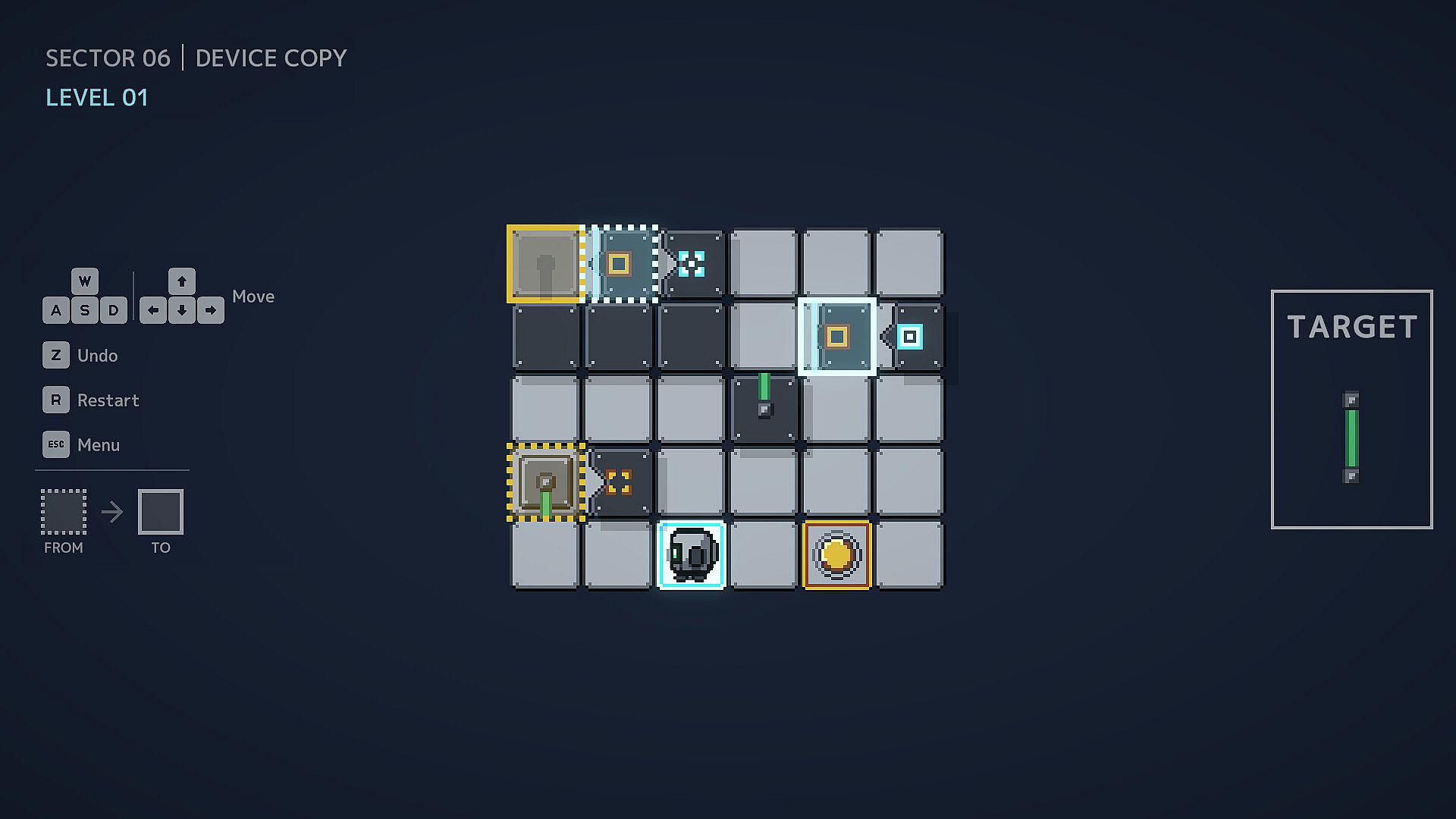
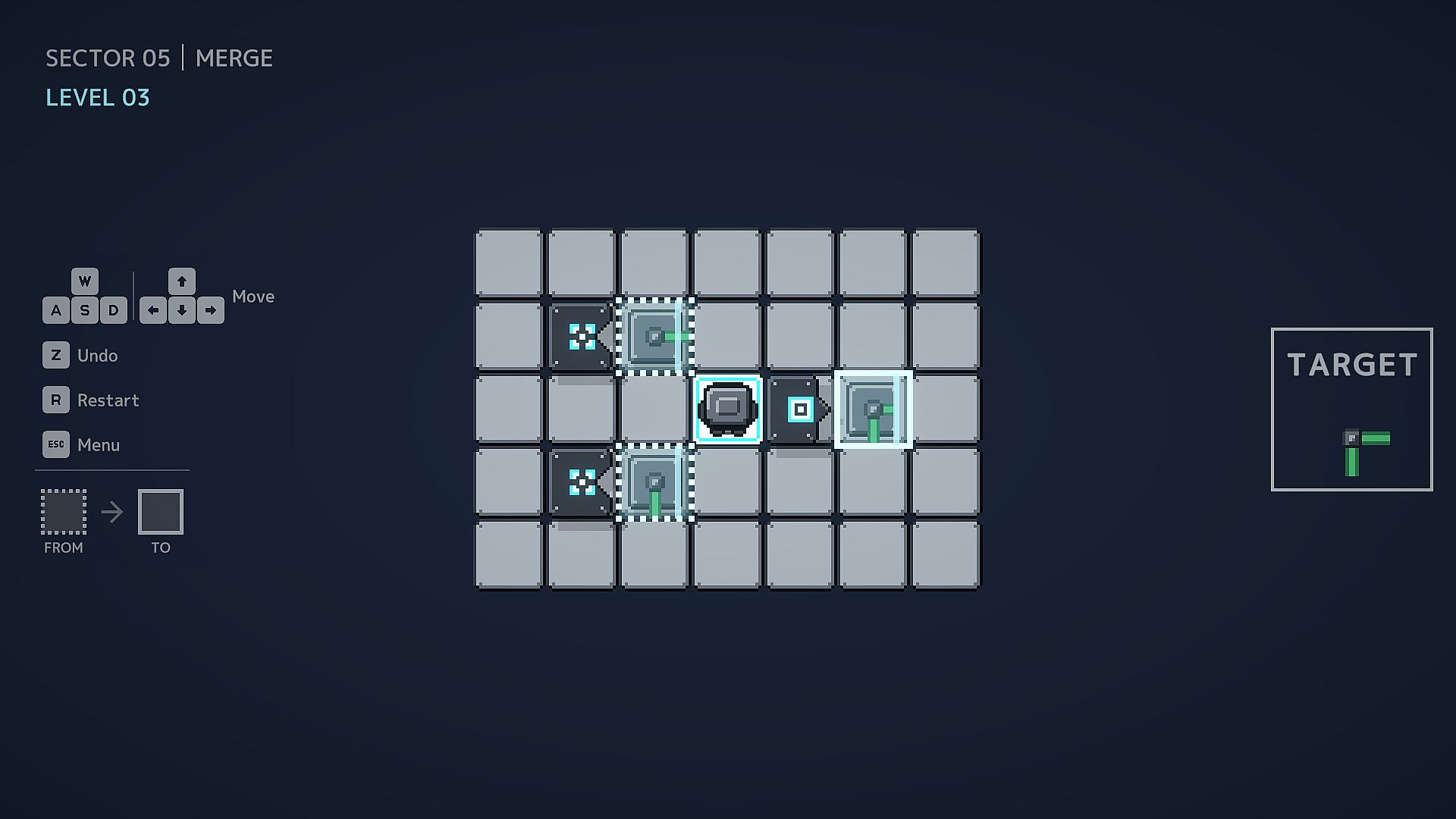
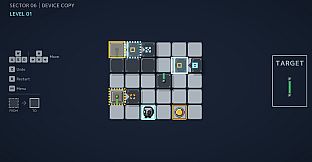
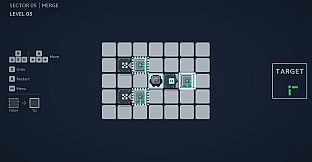
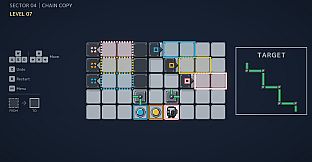
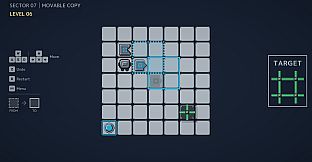
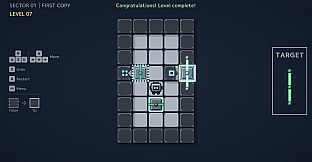
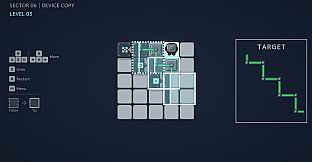
RE:COPY is an indie casual puzzle game built around Sokoban mechanics with a distinctive copying system. Players control a robot on a grid and must rearrange boxes, walls, switches, and other elements to match a target pattern shown on the level. The core loop centers on planning sequences of moves that account for how each action alters the entire layout, with no timers or pressure to rush decisions.
Gameplay
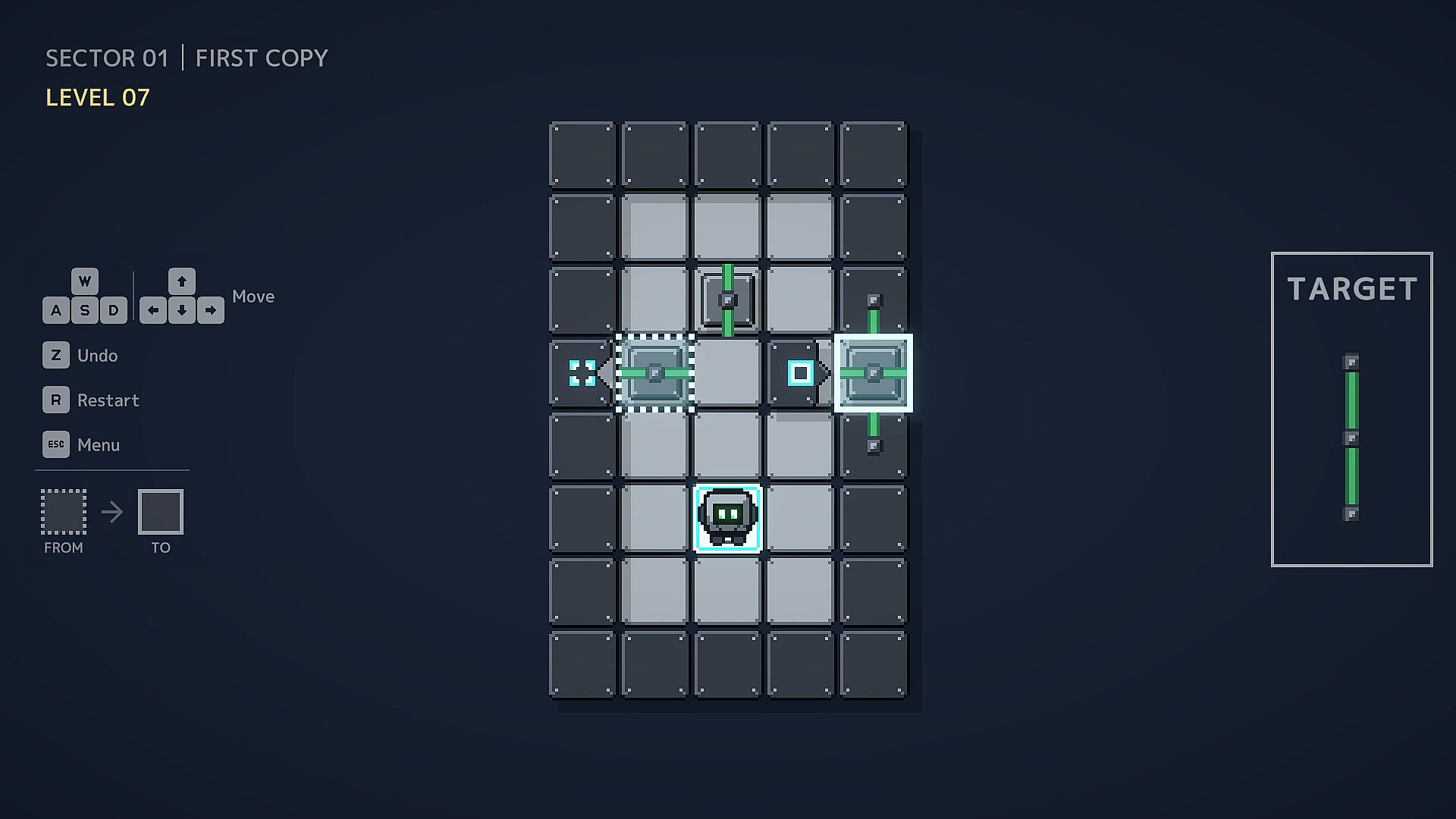
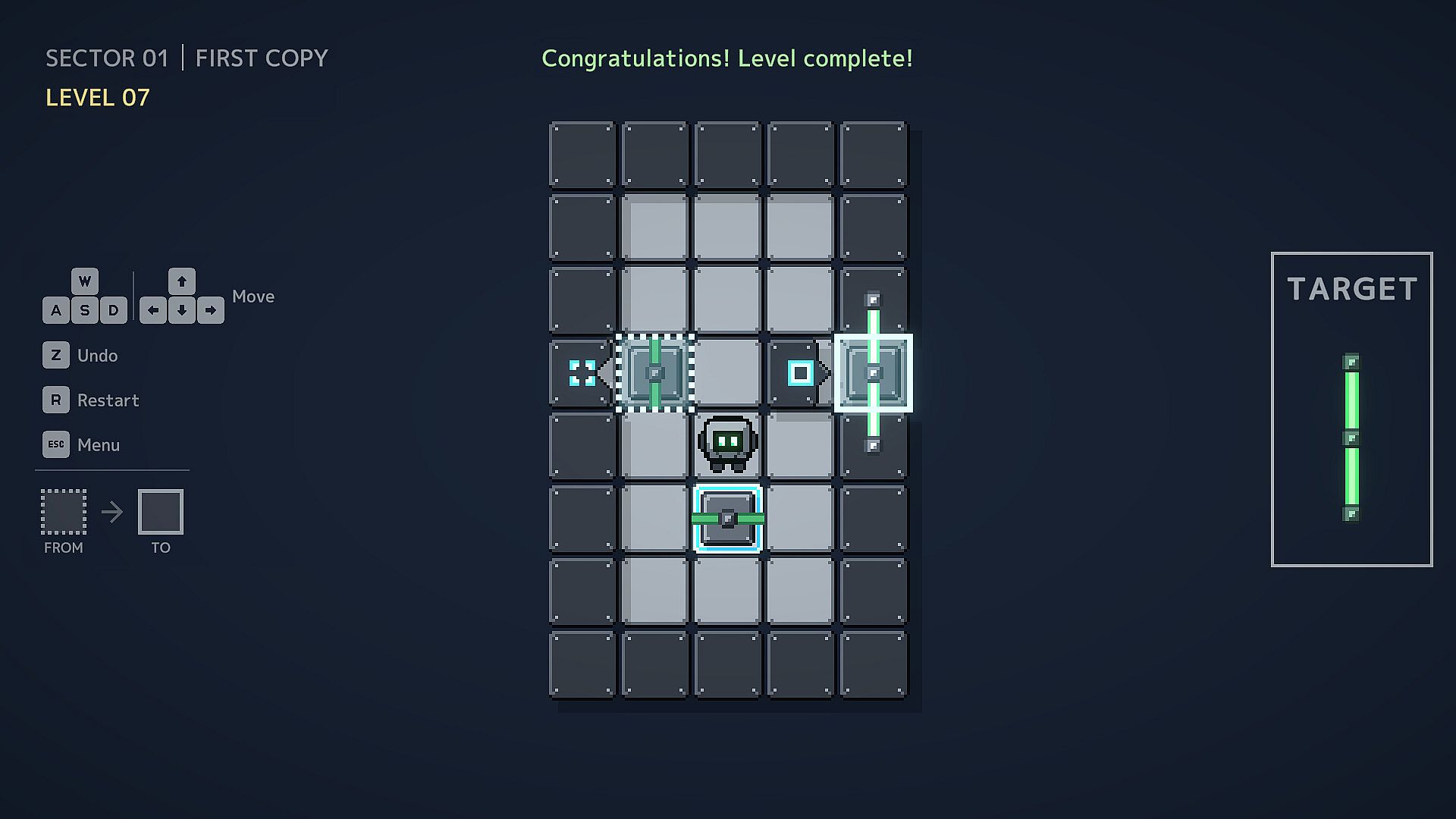
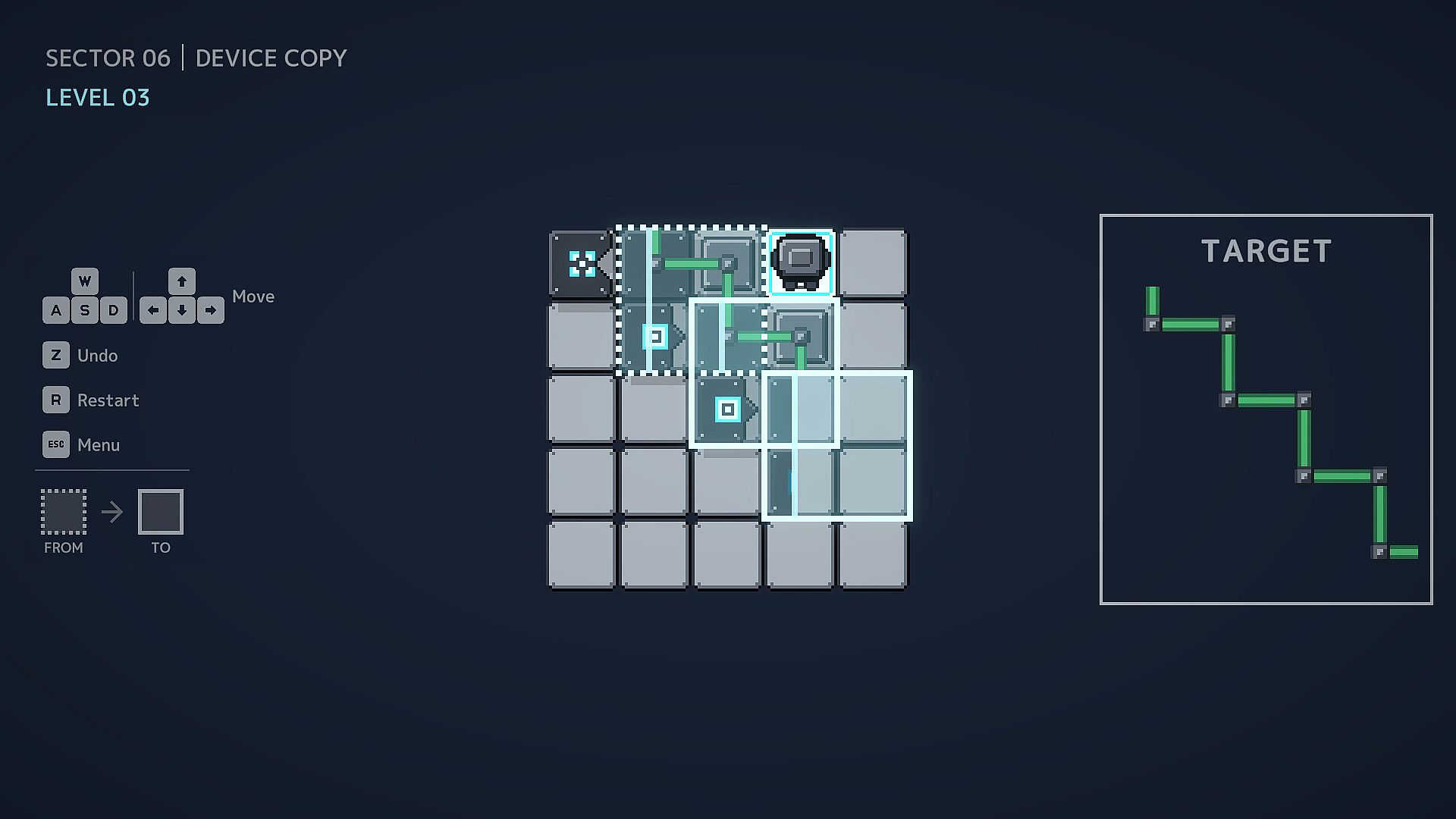
The experience revolves around pushing boxes into position while using scan and print devices to duplicate sections of the grid. A player steps on a switch to copy everything inside a dotted outline and paste it into a solid outline area. This allows replication of box arrangements, walls, switches, and other objects to solve spatial challenges that would otherwise be impossible through pushing alone.
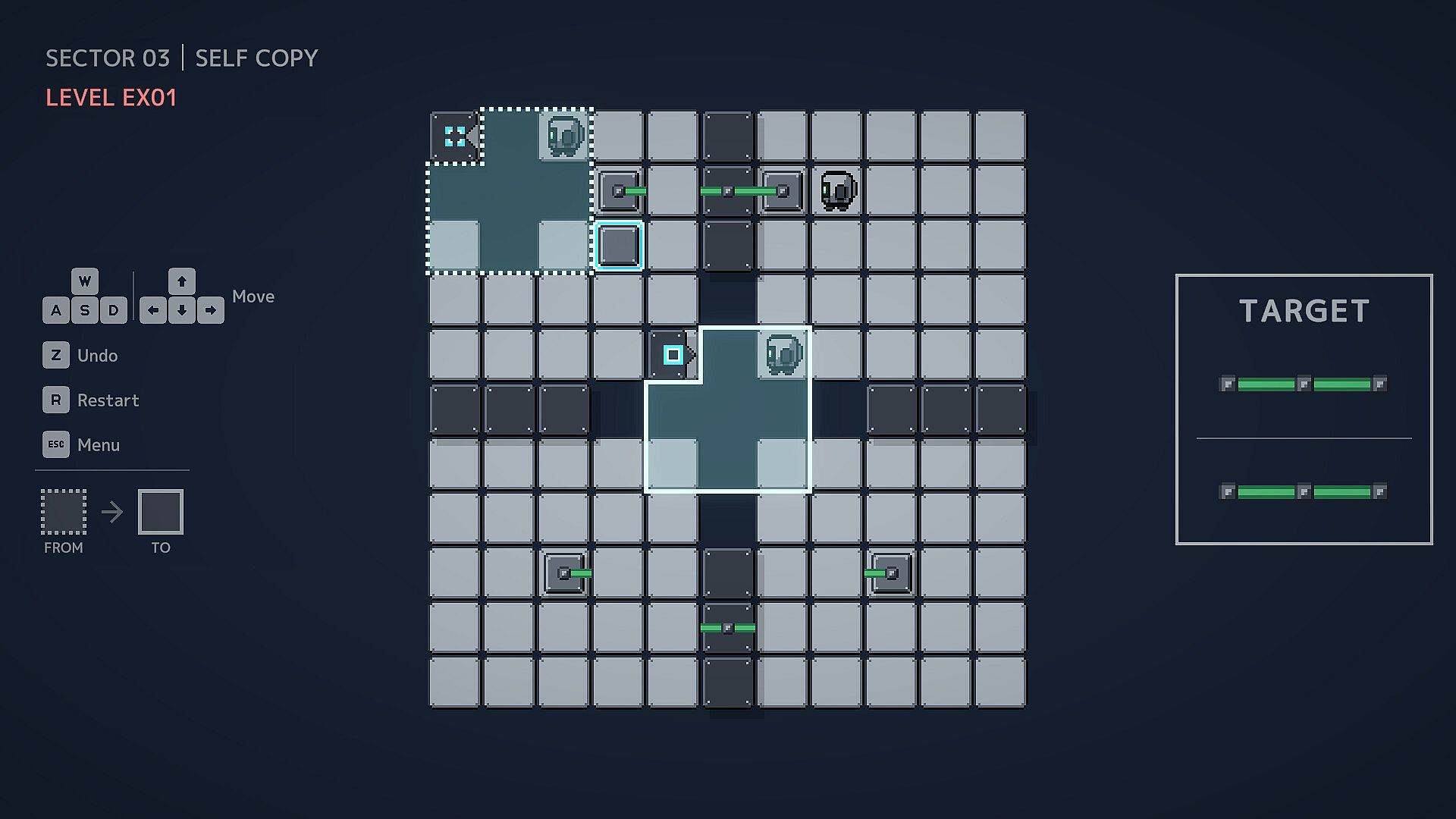
Copying extends to the robot itself. When the player duplicates their character, every subsequent move applies simultaneously to all copies on the grid. This creates opportunities to push boxes or trigger switches in separate areas at the same time, requiring careful consideration of how one action influences multiple locations.
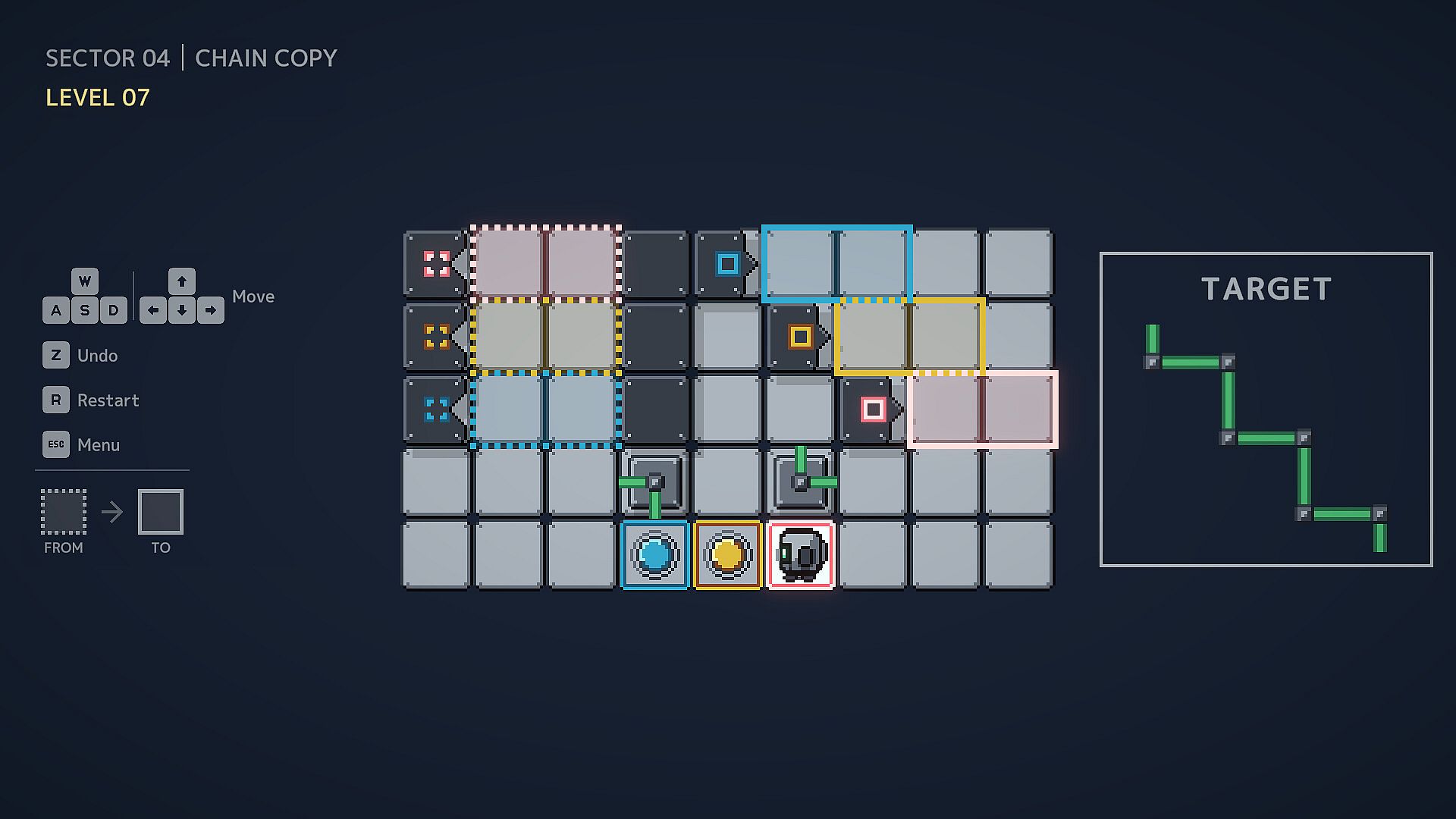
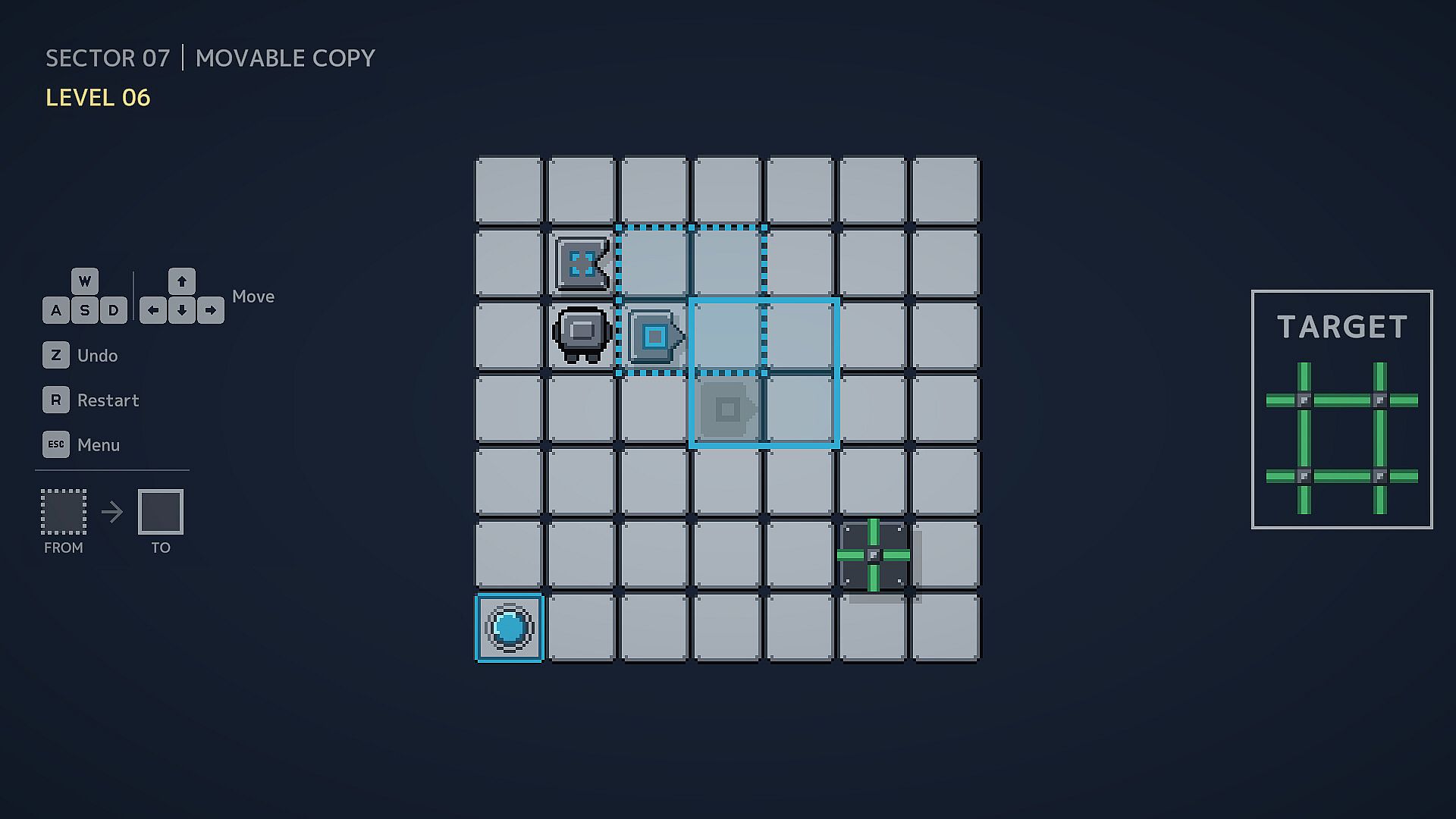
Later levels introduce the ability to copy the scan and print devices themselves. Players must sometimes use an initial copy to establish the tools or configurations needed for a follow-up duplication. The process builds progressively, with early puzzles focusing on basic arrangements and later ones layering multiple copy operations together.
Levels emphasize deliberate planning. Players study the grid, test arrangements in the scan area to produce the desired shape in the print area, and account for how each copy modifies the overall layout. The absence of time limits supports this methodical approach across the full set of puzzles.
Game Modes
RE:COPY consists entirely of single-player puzzle levels with no separate modes or variations beyond the core progression. All content takes place in the same grid-based environment where the goal remains matching the target pattern through pushing and copying.
The structure begins with straightforward copying tasks and gradually incorporates robot duplication and device replication. Each level presents a self-contained challenge that builds on previous mechanics without introducing new categories of play.
Puzzle Design and Progression
More than one hundred levels guide players through the mechanics in a measured way. Initial stages teach basic scanning and printing of box patterns. Subsequent stages add robot copies that move in unison, then allow duplication of the copying devices themselves.
Many solutions require setting up one copy to enable the next step. This creates chains of dependencies where players must foresee how an early duplication prepares the grid for later operations. The design rewards foresight and experimentation within the no-time-limit format.
Is It Worth Playing?
RE:COPY suits players who enjoy deliberate, thinking-heavy puzzle games in the Sokoban tradition. The copying mechanics add a fresh layer to box-pushing without complicating the fundamental rules, and the ability to duplicate the robot and devices creates satisfying multi-part solutions.
The game offers a relaxed pace with no timers or failure penalties beyond restarting a level. Its focus on spatial planning and sequential copying appeals to those who like studying layouts and working out sequences at their own speed. Availability on PC makes it accessible for anyone seeking a focused indie puzzle experience built around these specific systems.