


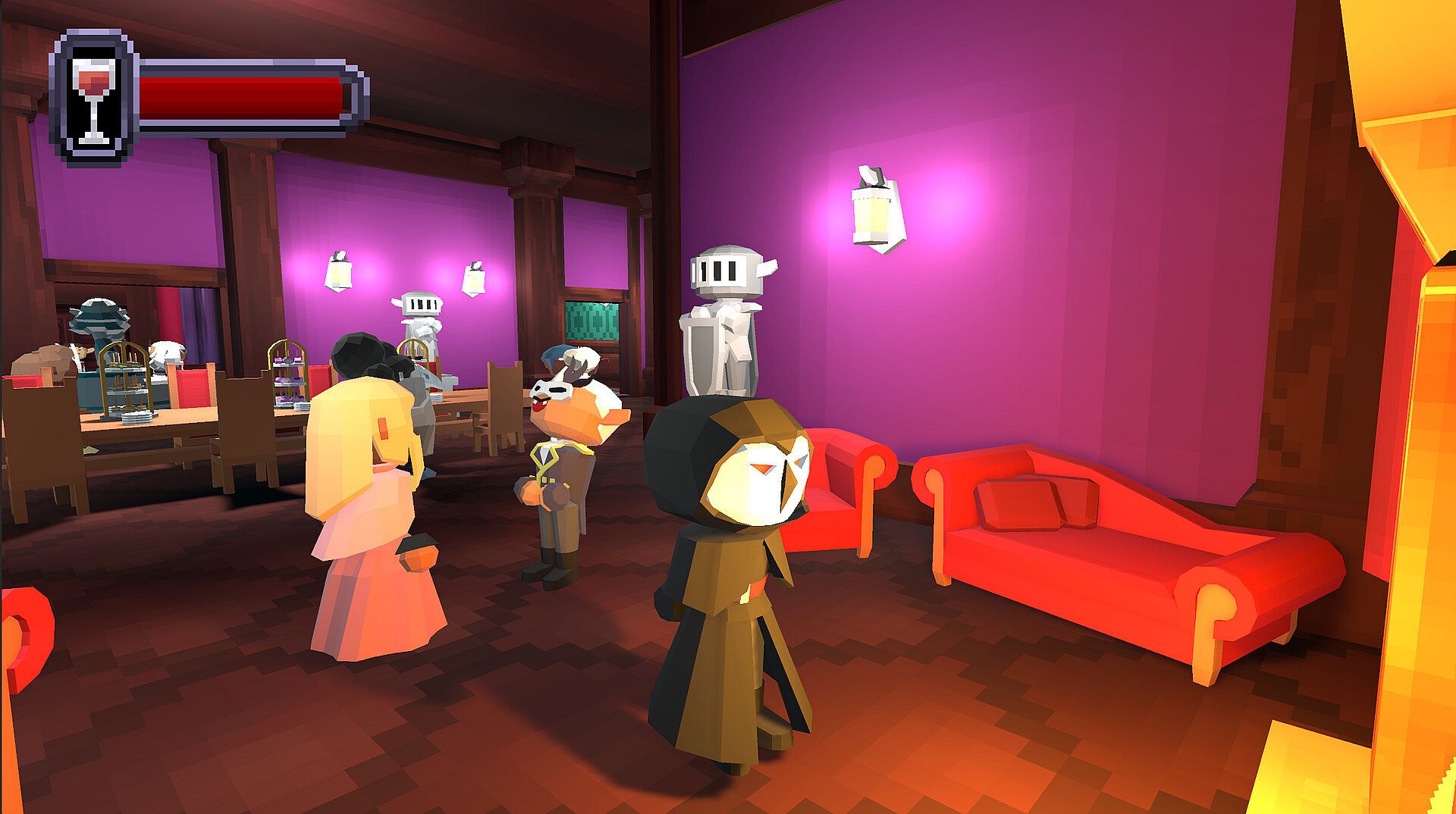








Sanguine Masquerade is a strategy indie casual game for PC that places players in the role of a host managing lavish parties while rooting out hidden vampire hunters among the guests. The experience combines careful observation, note-taking, and discreet action in a singleplayer setting focused on deduction and social navigation within a vampire-themed manor.
Gameplay
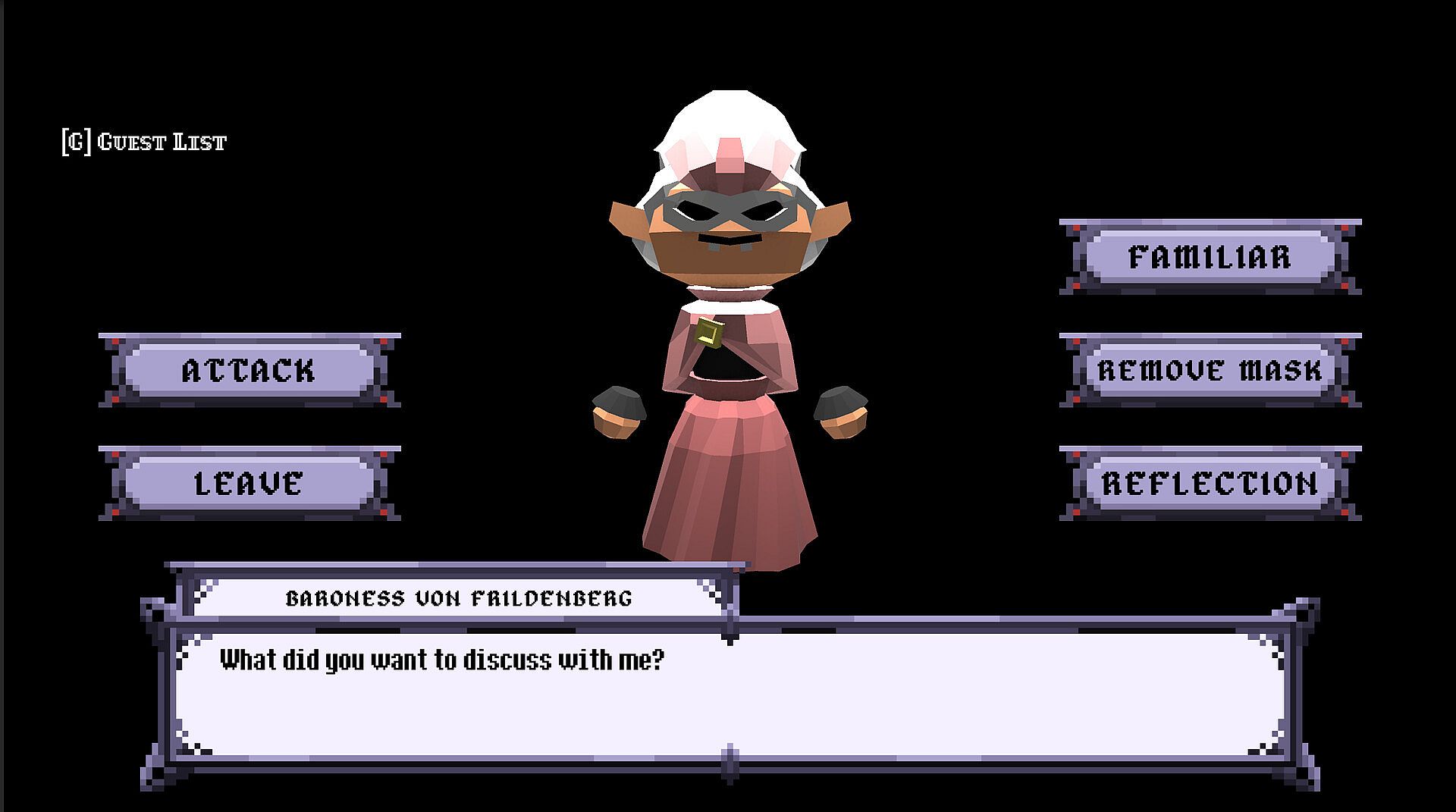
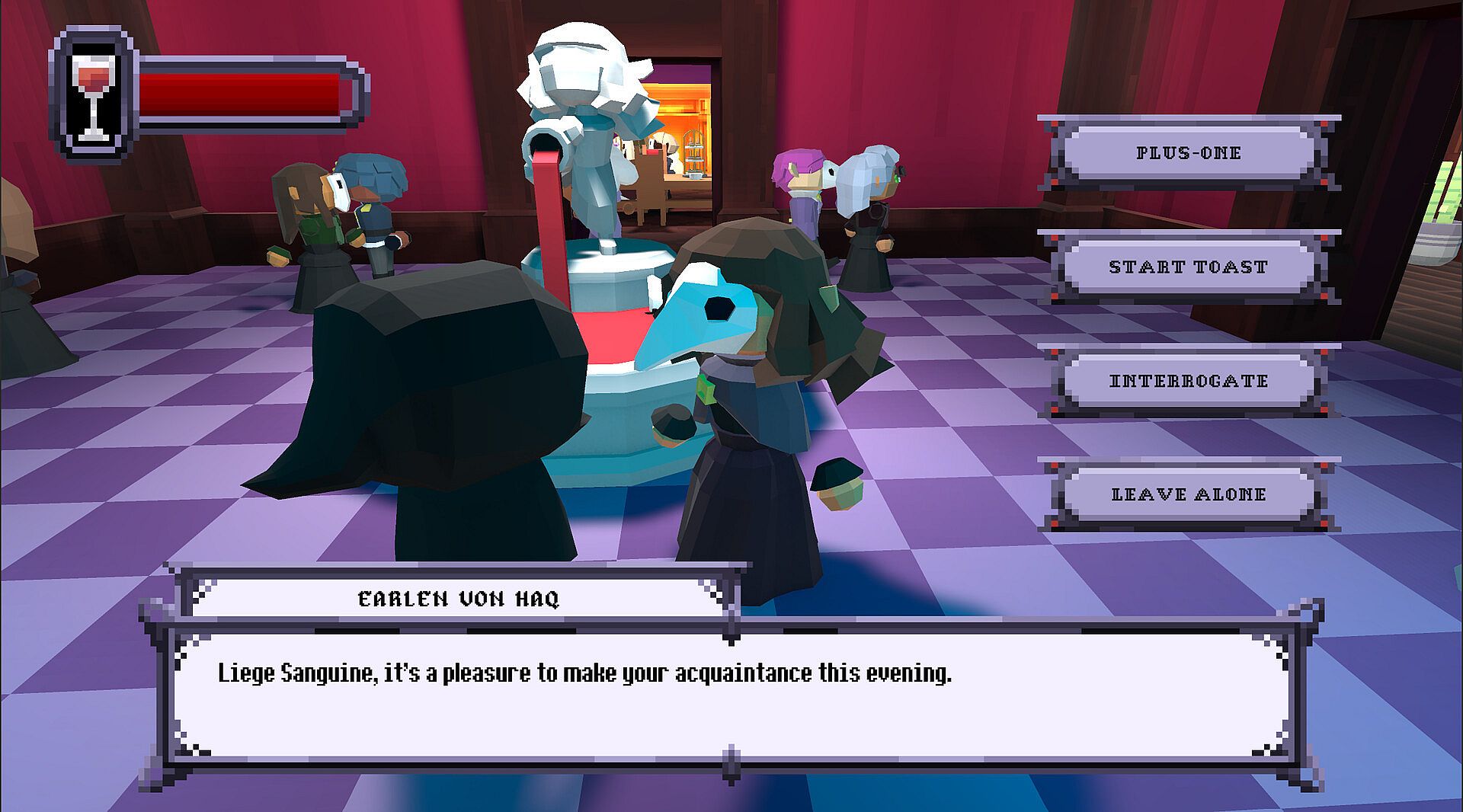
Players track guests by marking notes on physical features and behaviors during the events. Identification relies on spotting telltale signs such as fangs or the use of abilities like telekinesis, along with checking for reflections that reveal non-human nature. Interrogations happen in private to confirm suspicions without alerting the rest of the gathering. Once intruders are identified, they are removed politely to avoid disrupting the other attendees or drawing unwanted attention to the proceedings.
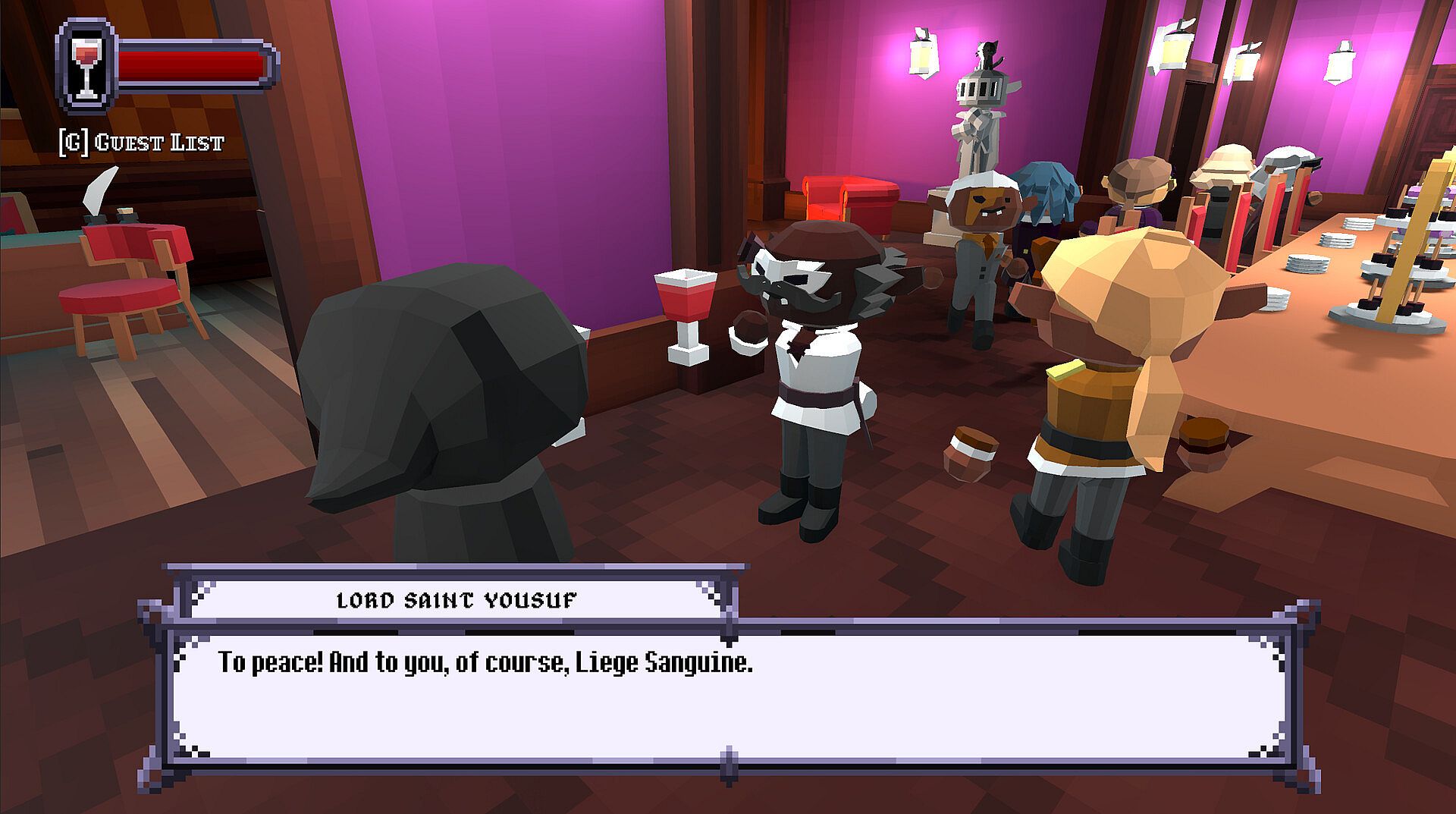
The core loop emphasizes quiet efficiency. Players move through the manor spaces, observe conversations and movements, and build profiles on each guest. Decisions about when and how to act carry weight, as hasty moves risk disturbing the atmosphere of the party. The system rewards methodical tracking and precise timing rather than direct confrontation.
Game Modes
The game centers on a singleplayer campaign that follows the story of Lord Sanguine and his loyal aide Sir Frederick. Long-buried elements of Sanguine's past surface during the parties, drawing players into a narrative involving shifting alliances and a conspiracy among the Four Clans. Progress unfolds through successive events where the identification and removal mechanics advance both the immediate party objectives and the larger plot.
Within this structure, each gathering serves as a self-contained challenge that contributes to the ongoing story. Players revisit familiar spaces with new guests and escalating complications, using accumulated knowledge to refine their approach across multiple nights.
Story and Setting
The narrative explores themes of loyalty, deception, and buried secrets in Lord Sanguine's domain. As the parties continue, players uncover connections between the guests and the broader clan conflicts. Allies may turn out to be unreliable while certain enemies become useful tools in navigating the intrigue. The story builds toward revelations that question why some truths were hidden in the first place.
Atmosphere plays a key role through the contrast between the elegant social gatherings and the underlying tension of the hunt. The setting remains focused on the manor and its immediate surroundings, keeping attention on the interpersonal dynamics and the gradual piecing together of clues.
Is It Worth Playing?
Sanguine Masquerade suits players who enjoy strategy games built around observation, deduction, and careful resource management in a casual singleplayer format. The mechanics of guest profiling and discreet removal provide a distinctive loop that rewards attention to detail and patience. Those drawn to indie titles with narrative depth and vampire-themed intrigue will find the combination of party management and unfolding clan conspiracy engaging.
The game delivers a focused experience without unnecessary complexity, making it accessible for shorter sessions while offering enough progression through the story to encourage completion. Fans of casual strategy with strong thematic cohesion are likely to appreciate its approach to blending social simulation elements with investigative gameplay.