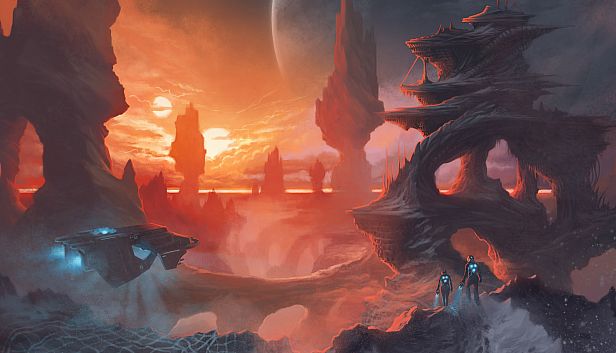











Stellaris is a grand strategy game that places players in command of an interstellar empire in a procedurally generated galaxy. Developed by Paradox Development Studio, it combines 4X elements with deep empire management, where the focus lies on exploration, colonization, technological advancement, and interactions with other civilizations through diplomacy or conflict.
Gameplay
The core loop centers on sending science ships to survey star systems and uncover anomalies, resources, and potential colony sites. Construction ships follow to establish mining and research stations, while players manage planetary populations through job assignments, resource production, and infrastructure development. Economy revolves around balancing energy, minerals, food, and strategic resources to support expansion and fleet maintenance.
Ship design allows extensive customization of vessels across classes from corvettes to battleships, with modules for weapons, defenses, and utilities that adapt to different combat scenarios. Diplomacy involves negotiations, trade deals, alliances, and federations, while ethics and civics shape government policies, species rights, and internal factions that influence stability and decisions. Technology research progresses through a card-based system that branches based on prior choices and empire focus.
Leaders and governors provide bonuses to sectors and fleets, and traditions unlock permanent empire-wide improvements. Events and situations arise from exploration or interactions, adding narrative layers to the simulation without scripted linearity.
Game Modes
Stellaris supports single-player campaigns where one empire navigates the galaxy against AI opponents, with options for ironman mode to lock achievements and prevent saves. Multiplayer allows sessions with friends or public lobbies, supporting cooperative or competitive play across the same systems.
Galaxy generation offers choices in size, shape, and density, ranging from smaller maps to vast 1000-star configurations. Players select starting species traits, ethics, origins, and government types before launch, which set the foundation for long-term strategy. Victory conditions include domination through planetary control, forming powerful federations, or outright conquest of rivals.
Exploration and Conflict
Hyperlane networks dictate travel routes, making strategic chokepoints important for defense and expansion. Spaceborne threats, fallen empires, and marauders introduce mid-to-late game challenges that require fleet readiness and diplomatic maneuvering. Warfare features fleet combat with real-time elements, where positioning, weapon loadouts, and support craft determine outcomes.
Players encounter pre-FTL civilizations, enclaves offering services, and guardians protecting ancient sites. Relics and archaeological discoveries provide powerful bonuses or story branches that reward thorough exploration.
Is It Worth Playing?
Stellaris has received generally favorable player reception for its depth and replayability, with user scores reflecting appreciation for the strategic layers and sci-fi setting. The game receives regular updates and expansion content that refine mechanics and add new origins, civics, and scenarios. It suits players who enjoy long sessions of empire building, resource optimization, and emergent storytelling in a space context.
Those drawn to grand strategy titles with customizable factions and complex diplomacy will find substantial engagement here. The learning curve rewards persistence, and the ongoing development keeps the experience fresh for veterans and newcomers alike. If empire management across generations of leaders and evolving galactic politics appeals, Stellaris delivers a compelling package on PC.