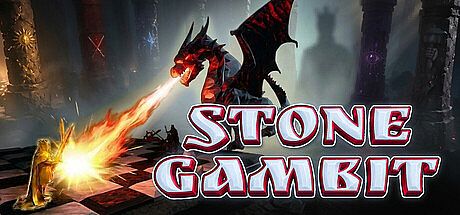


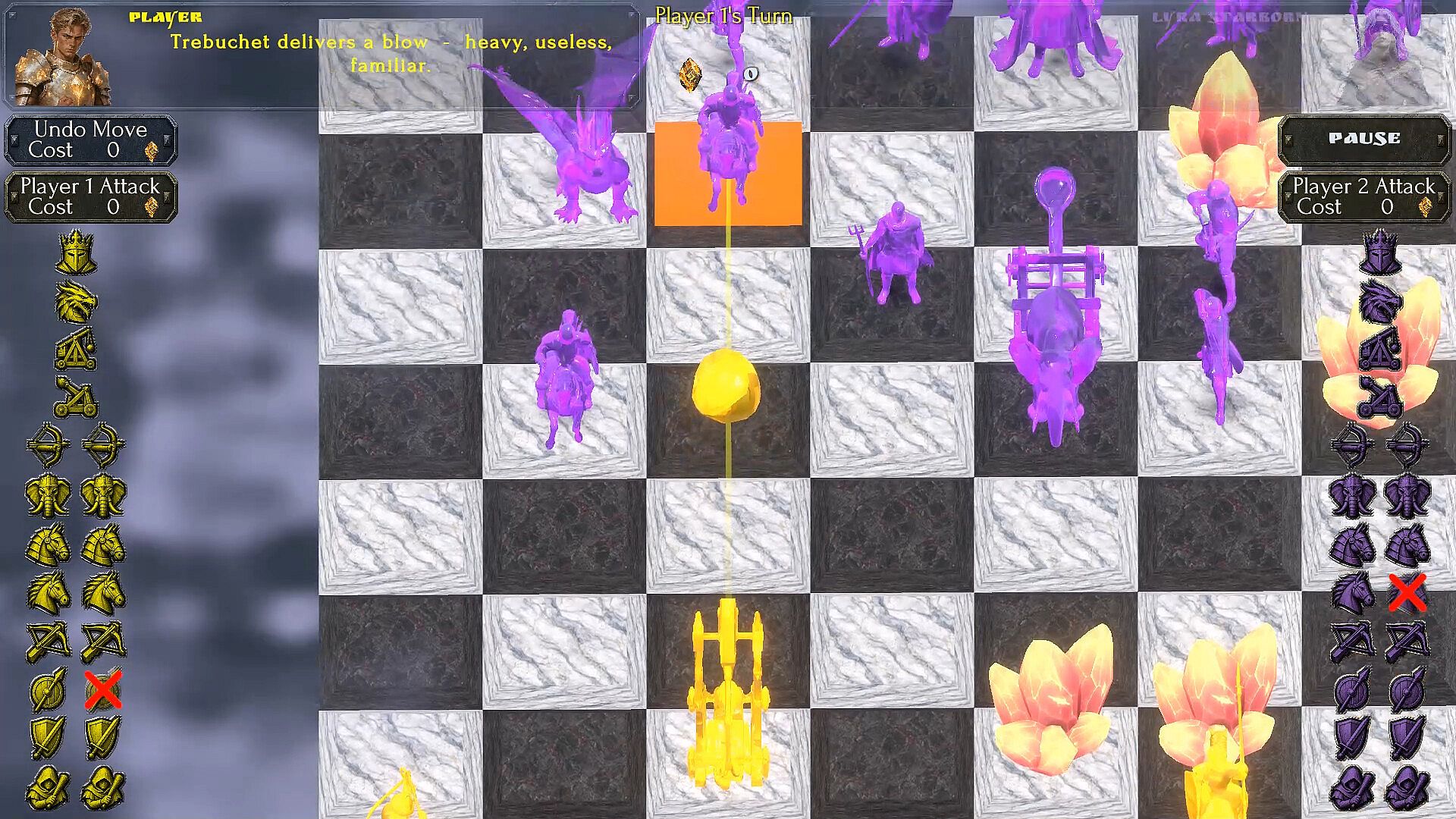
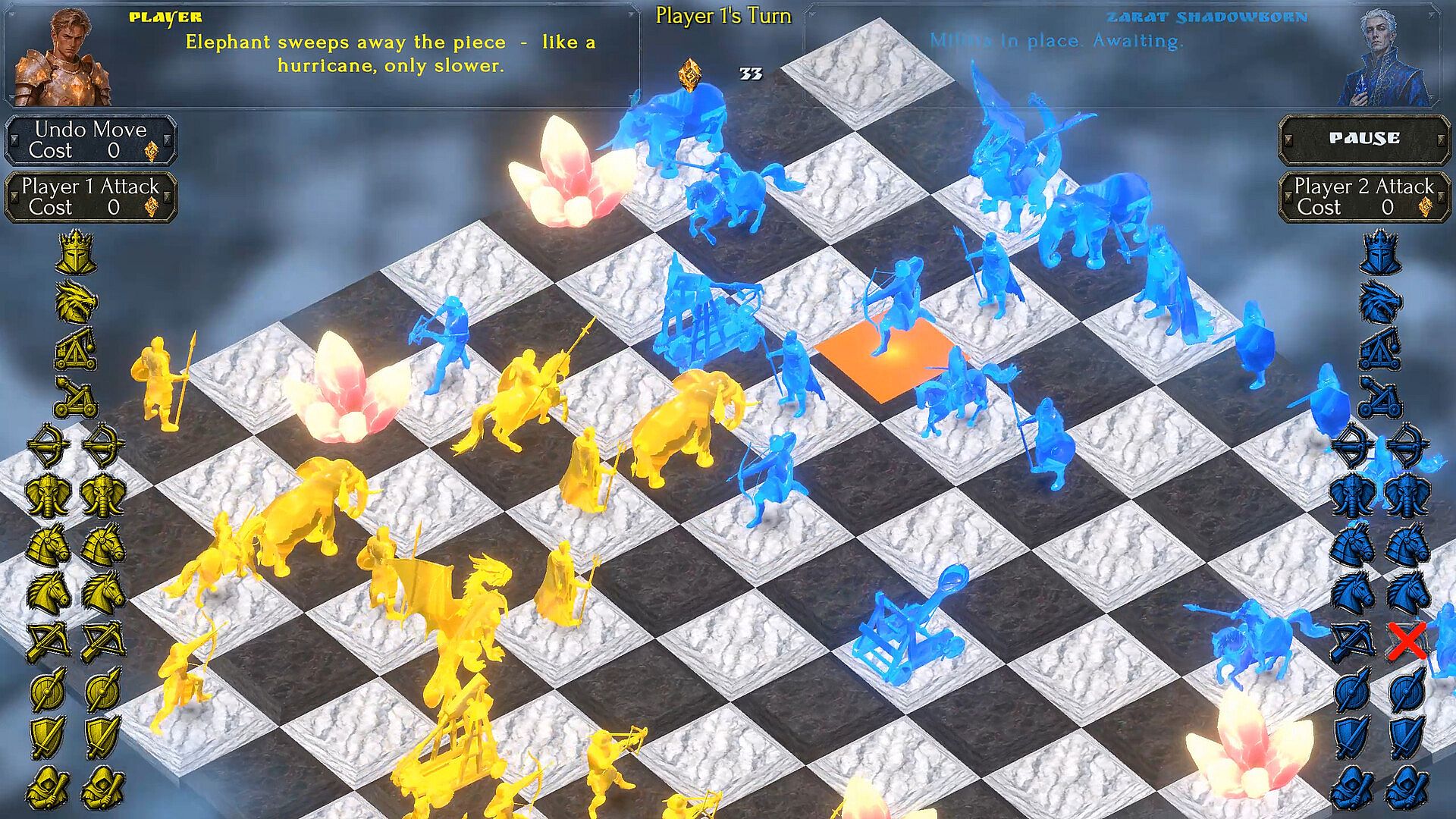
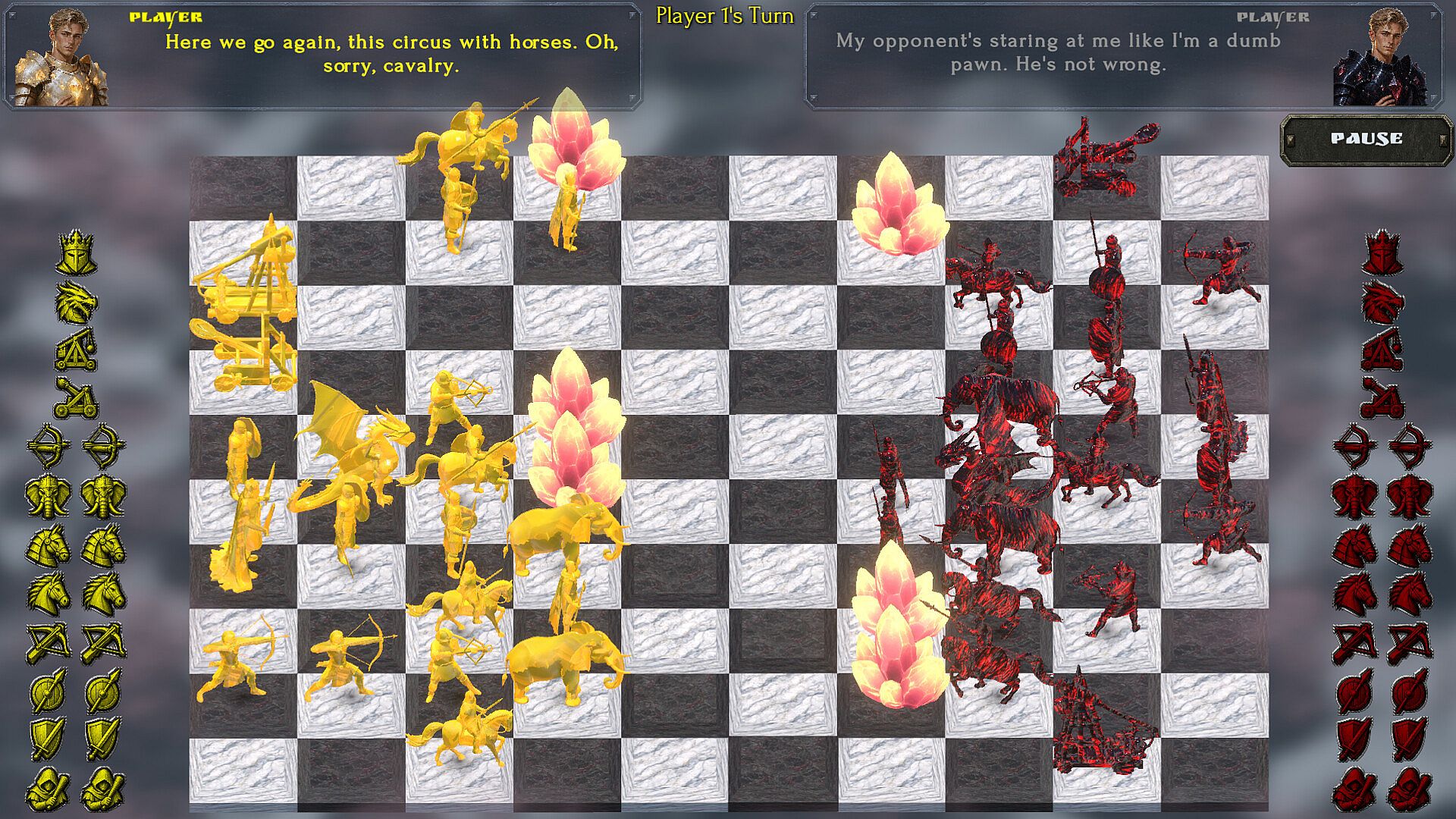
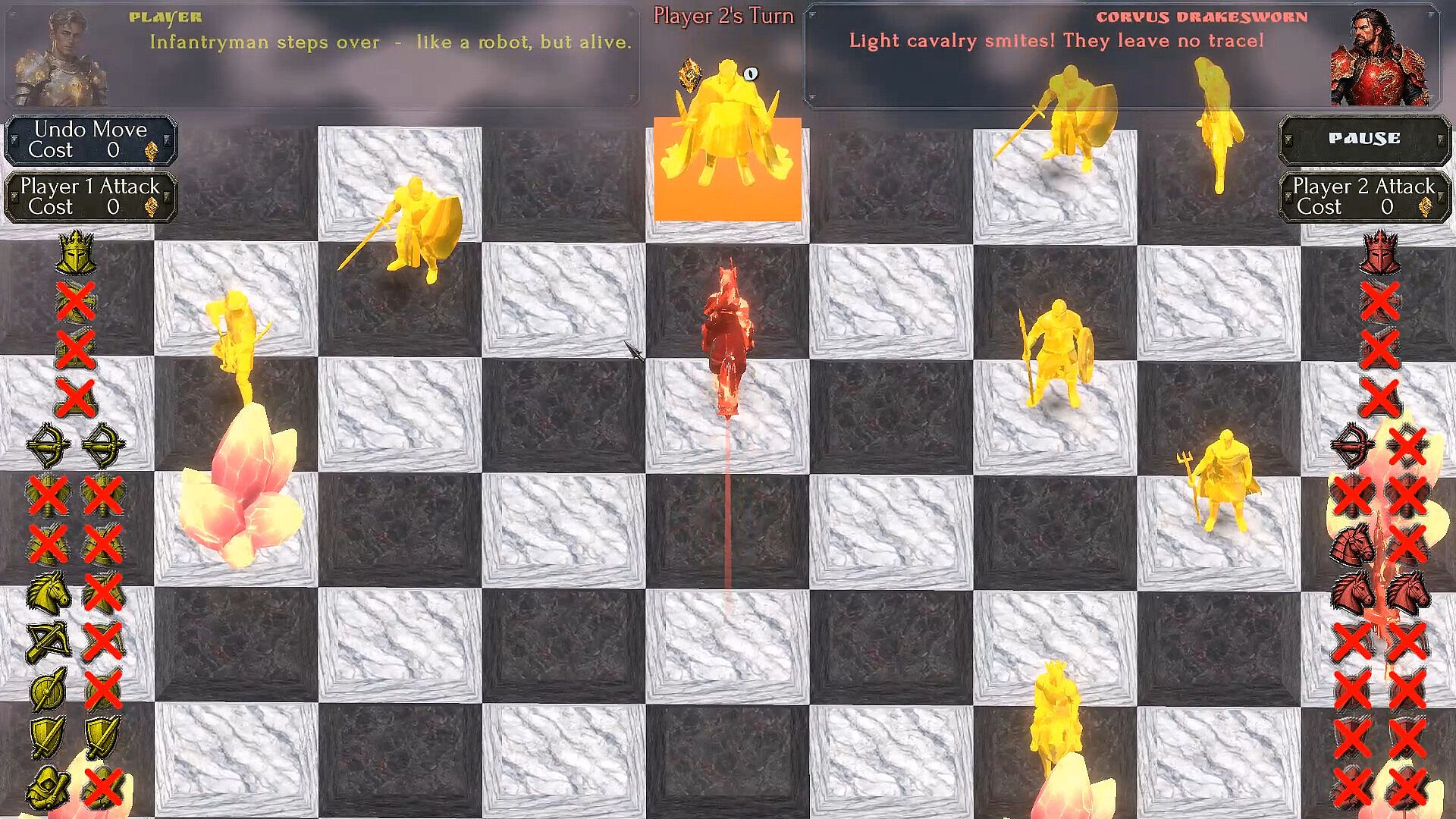
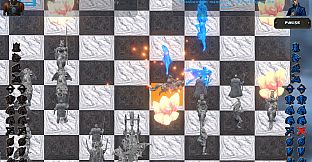
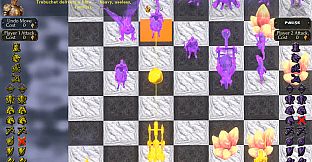
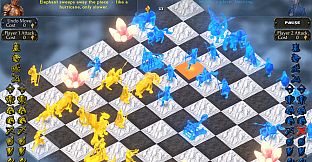
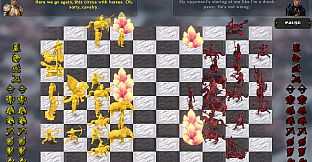
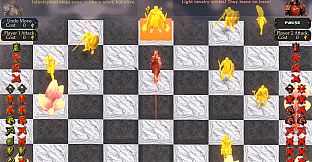
Stone Gambit is a turn-based strategy game that takes the core ideas of chess and expands them into a fantasy setting on PC. Players assemble armies, shape the battlefield in advance, and outthink opponents across a 10 by 10 board with 20 pieces per side and 12 distinct unit types. The game emphasizes preparation before any piece moves, with crystal runes adding layers of fortifications and traps that alter the flow of each encounter.
Gameplay
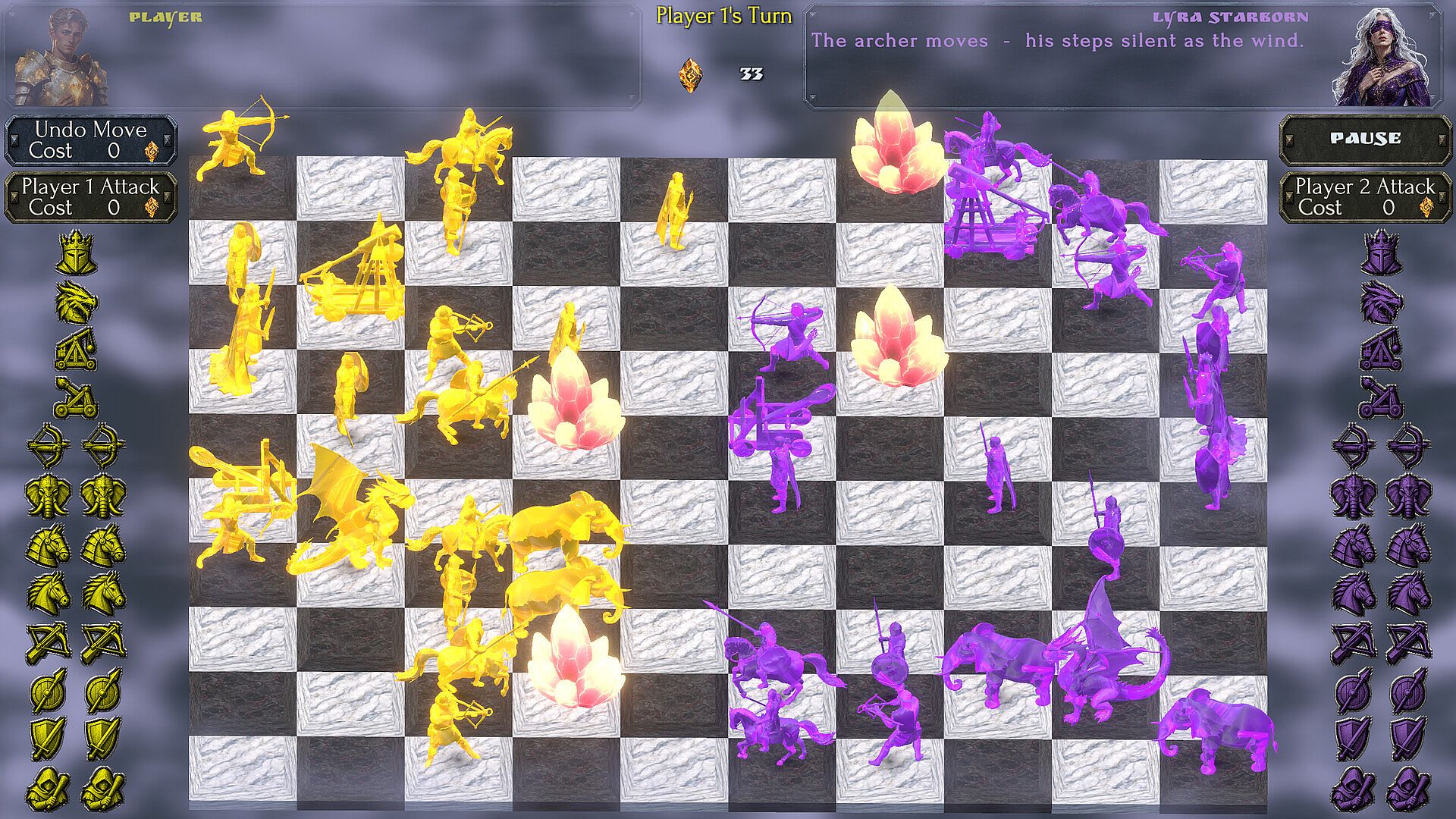
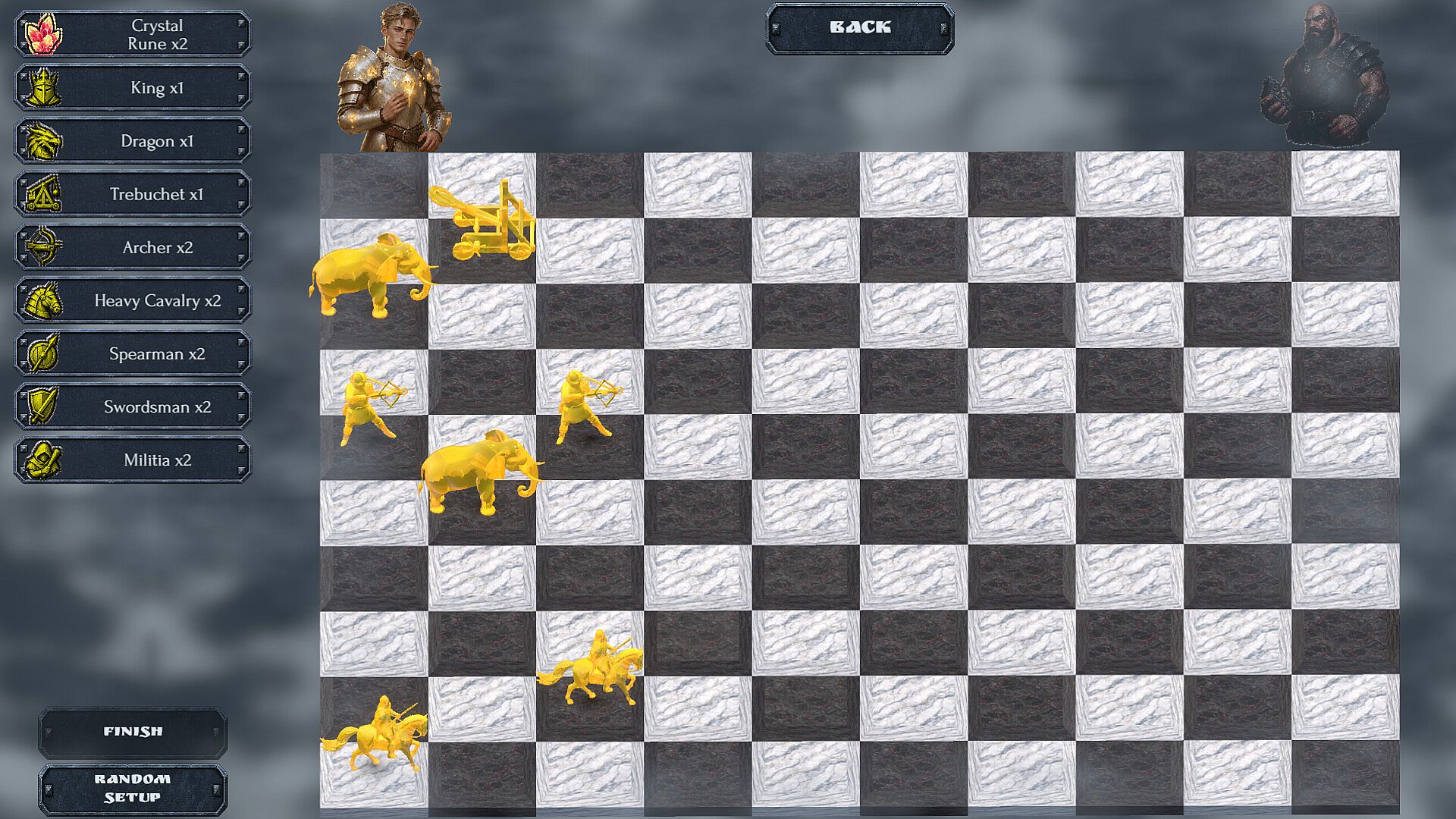
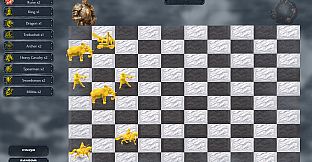
The match in Stone Gambit truly begins before the first move. Both players secretly deploy their armies and place crystal runes on the board. This hidden phase lets each side block routes, create narrow passages, and set up strong positions for ranged units without the opponent knowing the full layout until deployment ends. Once the board is revealed, the real contest starts on a larger grid than traditional chess, where positioning and foresight matter more than raw speed.
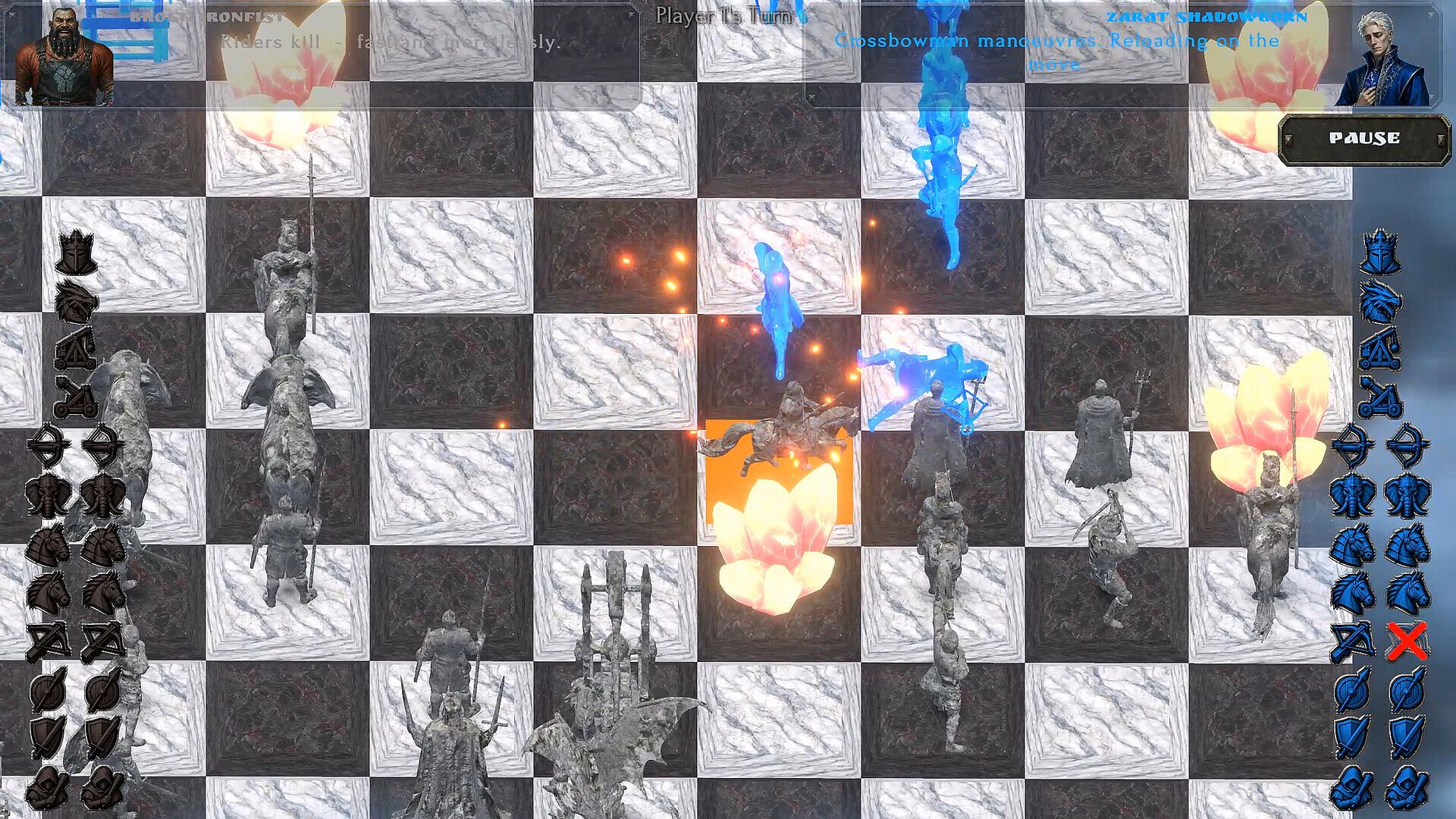
Twelve unit types bring variety to every army. Swordsmen hold the line in close combat, while Cavalry leaps over formations to strike from unexpected angles. Archers deliver ranged attacks from safety, Dragons fly over defenses to threaten key areas, and heavy siege engines control entire lanes. Elephants add bulk and power in the center. Success comes from combining these abilities rather than relying on any single piece. A well-timed leap by Cavalry can open a path for Archers, while siege engines pin down enemy advances and allow Dragons to exploit gaps.
Crystal runes serve as the main tool for battlefield control. Players place them during the secret deployment phase to turn open space into a maze of obstacles and traps. These elements force opponents into predictable paths or create safe zones for ranged support. The result is a game where reading the opponent's likely setup becomes as important as executing moves on the board itself.
Game Modes
Stone Gambit offers several paths to victory in each match. The most direct route is capturing the enemy King, but players can also win by eliminating the entire opposing army or by holding the advantage when time expires. Special conditions and challenges appear between matches to alter the standard rules, introducing new objectives or restrictions that keep encounters fresh.
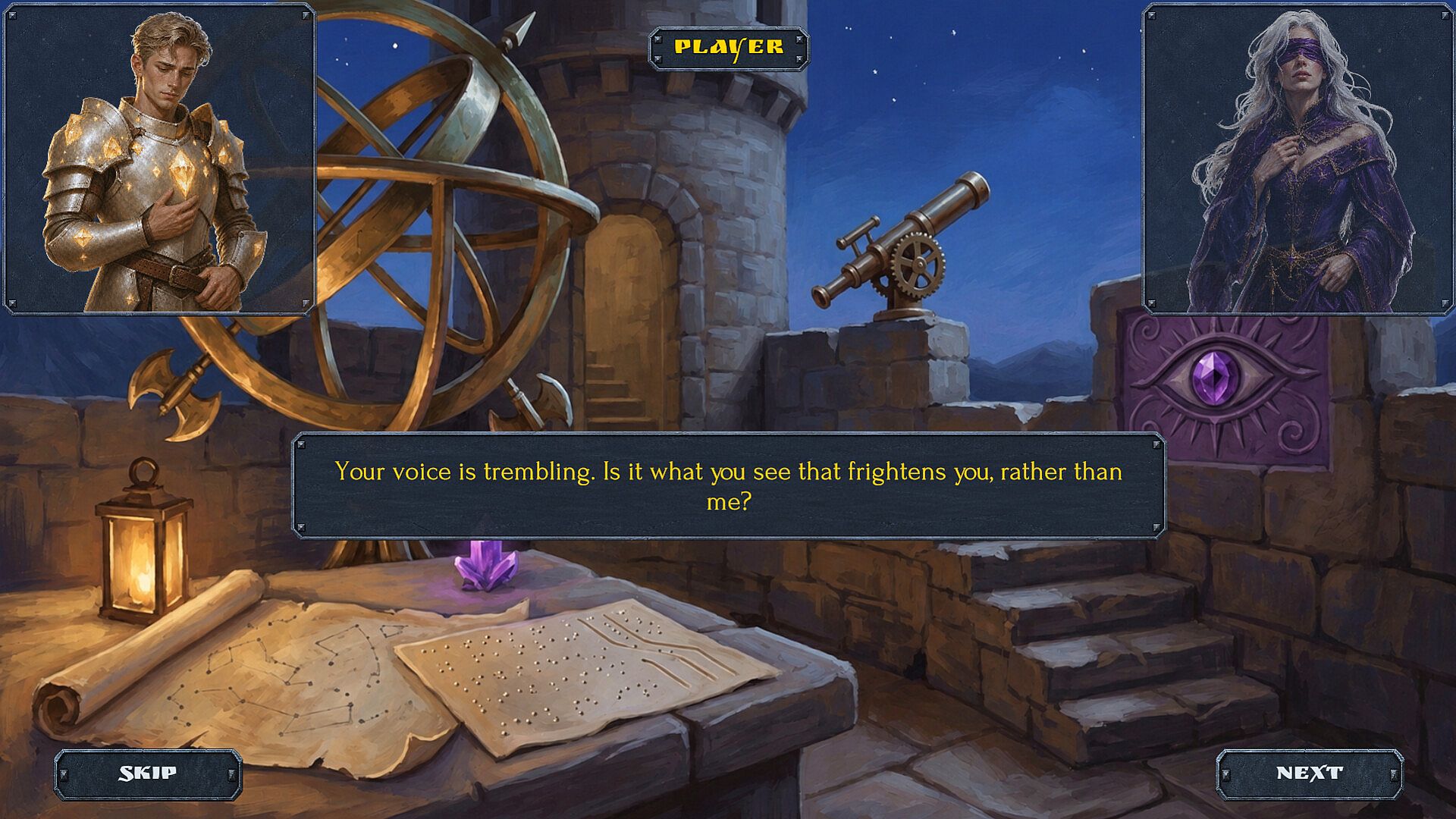
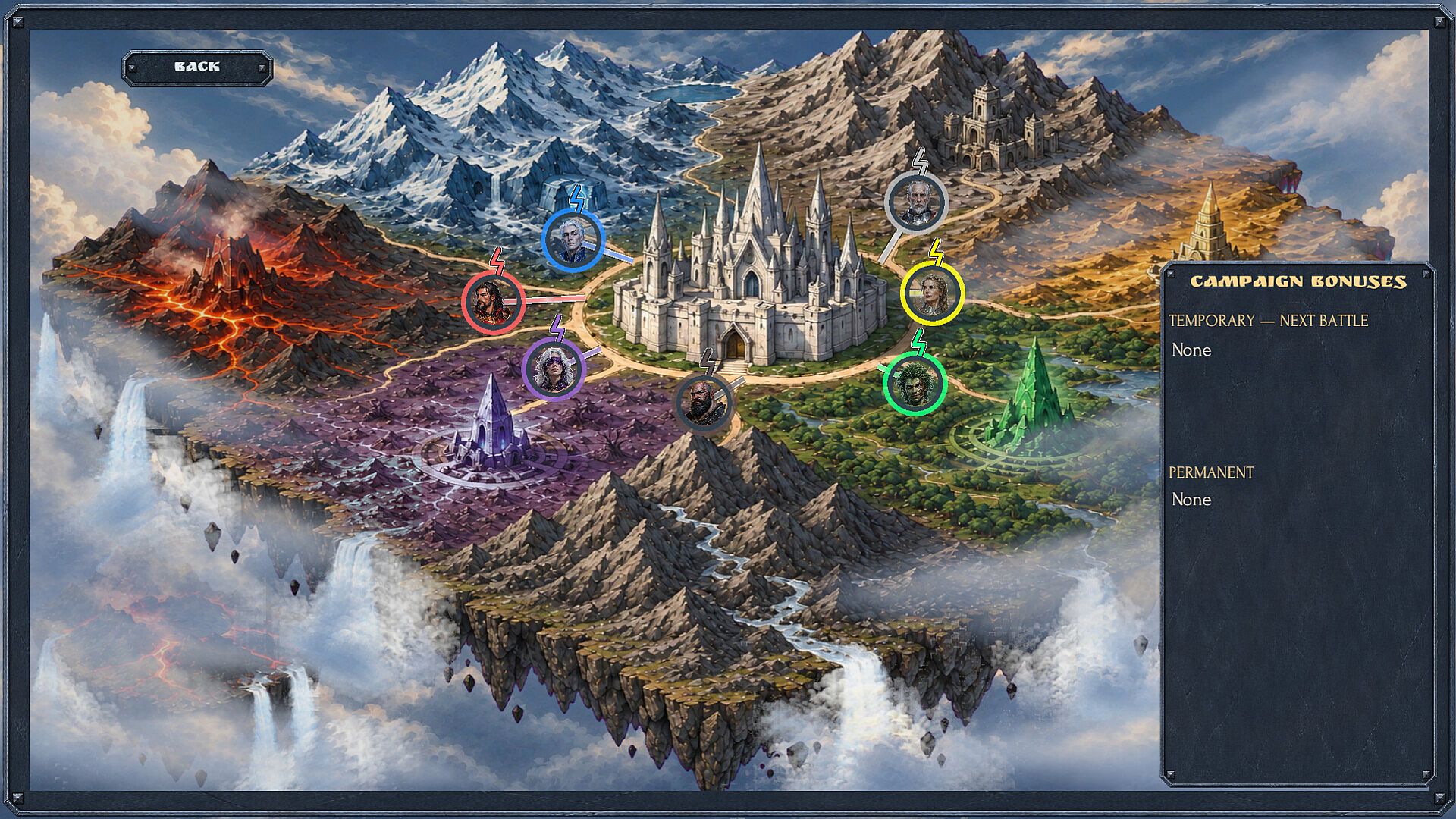
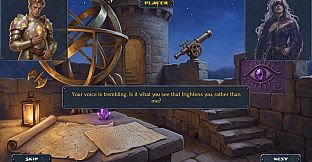
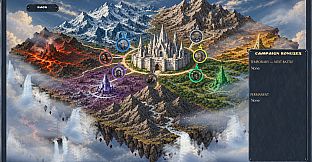
The single-player experience centers on a campaign against 23 opponents drawn from the Seven Great Clans. Each opponent brings a distinct personality, army composition, and preferred playstyle. Matches unfold as a series of tactical puzzles where the player must adapt to shifting formations and goals. Between fights, crystals earned from victories unlock new options that expand strategic choices for future battles.
Positions, armies, and objectives shift across the campaign, yet the core demand to think several moves ahead stays constant. The hidden deployment phase adds a layer of bluffing and anticipation that standard chess lacks, turning every game into a test of preparation as much as execution.
Strategic Preparation
Before any piece advances, the secret deployment phase rewards careful planning. Players must anticipate how an opponent might arrange their forces and place runes accordingly. This pre-match stage encourages experimentation with different army layouts and rune configurations, since the 10 by 10 board offers more space for creative setups than smaller grids.
Each unit type demands specific positioning to reach its potential. Ranged pieces benefit from clear lines of sight created by rune placement, while mobile units like Cavalry need open paths or obstacles to leap. Siege engines thrive when they can dominate long lanes, and flying units ignore many ground-based barriers. Mastering these interactions turns an army from a collection of pieces into a coordinated force.
Is It Worth Playing?
Stone Gambit suits players who enjoy deep tactical planning and the satisfaction of outmaneuvering an opponent through preparation rather than reaction alone. The expanded board, varied unit abilities, and hidden deployment phase create a fresh take on familiar strategy mechanics that rewards repeated play. The campaign structure against 23 unique opponents provides a clear progression path where each victory builds toward the final confrontation.
Those who appreciate games that blend chess-like calculation with fantasy elements will find the combination of rune placement, multi-unit synergies, and multiple win conditions engaging. The emphasis on thinking several moves ahead carries through every match, making the experience consistent even as special conditions introduce variety. For strategy fans seeking a single-player focused title with meaningful pre-battle decisions, the game delivers a solid foundation built on thoughtful mechanics.