







The Fabricator ist ein Einzelspieler-Strategie- und Simulationsspiel, in dem Spieler eine kleine Metallverarbeitungswerkstatt leiten. Als Indie-Titel mit Schwerpunkt auf Produktionsplanung und entspannter Simulation fordert es die Spieler heraus, auf dem PC eine effiziente Fertigung von Grund auf aufzubauen. Im Mittelpunkt stehen Auftragsannahme, Materialbeschaffung, Maschineneinrichtung und die Überwachung aller Fertigungsschritte bei gleichzeitiger Einhaltung von Terminen und Kosten.
Gameplay
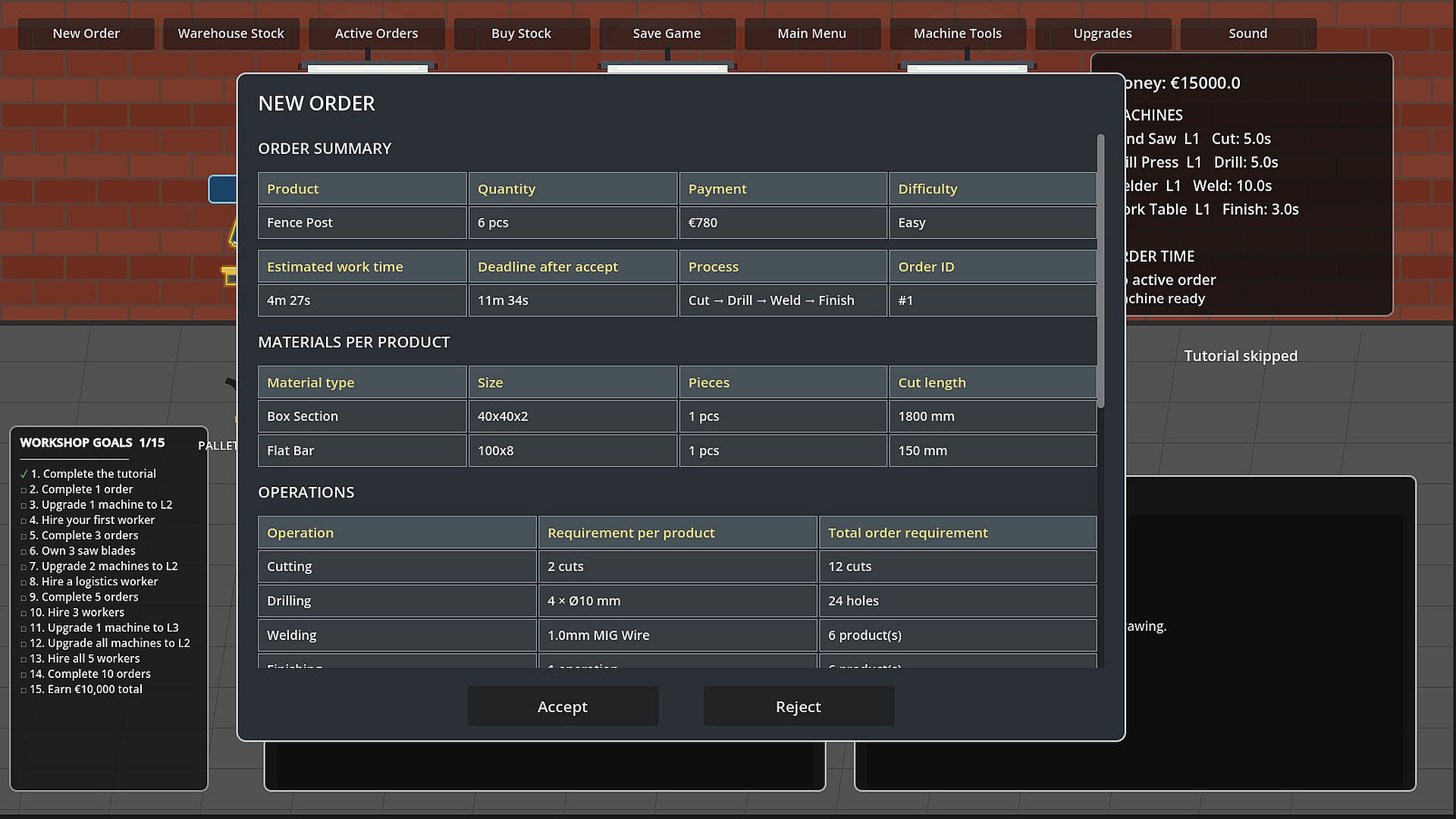
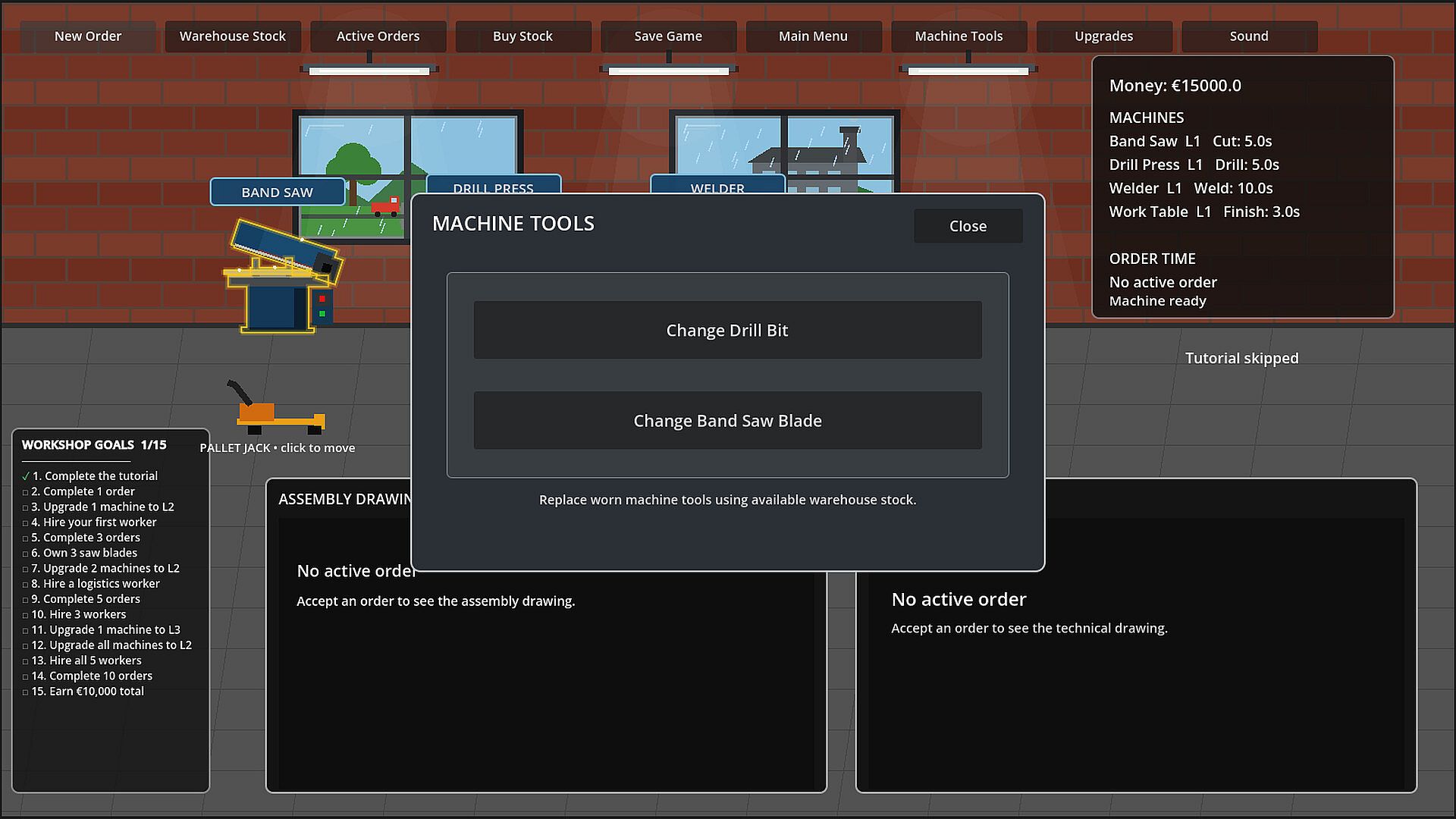
Zu Beginn steuern Spieler jeden Schritt der Fertigungslinie manuell. Aufträge geben genaue Vorgaben für Materialien wie Kastenprofile, Flachstahl, Rundstahl und Bleche sowie für Schnittlängen, Lochdurchmesser, Schweißarbeiten und Stückzahlen. Die Teile durchlaufen nacheinander Bandsäge, Ständerbohrmaschine, Schweißgerät und Werkbank, während der Transport per Hubwagen oder durch angestelltes Personal erfolgt.
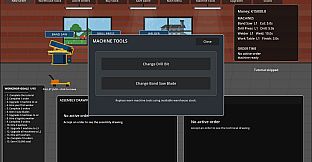
Die Maschineneinstellung erfordert Präzision: Falsche Materialstärke, Schnittlänge, Lochdurchmesser oder Schweißdraht führen zu Ausschuss, der nachgearbeitet oder entsorgt werden muss. Ein farbiges System zeigt den Maschinenstatus in Echtzeit an: gelb für Leerlauf, grün für bereit, blau für in Betrieb und rot für Fehler. Anzeigen für wartende Teile an jeder Station helfen, Engpässe frühzeitig zu erkennen.
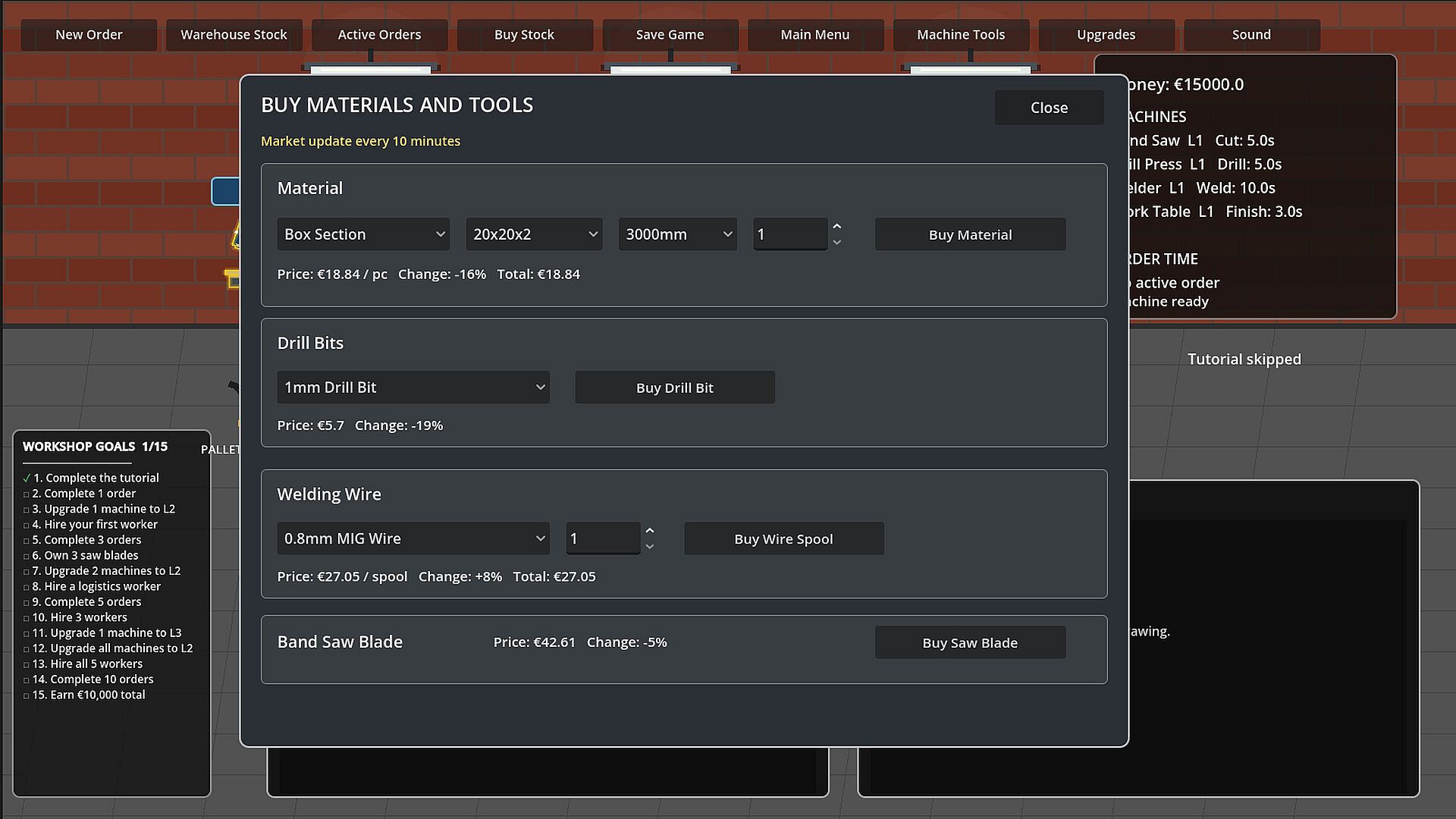
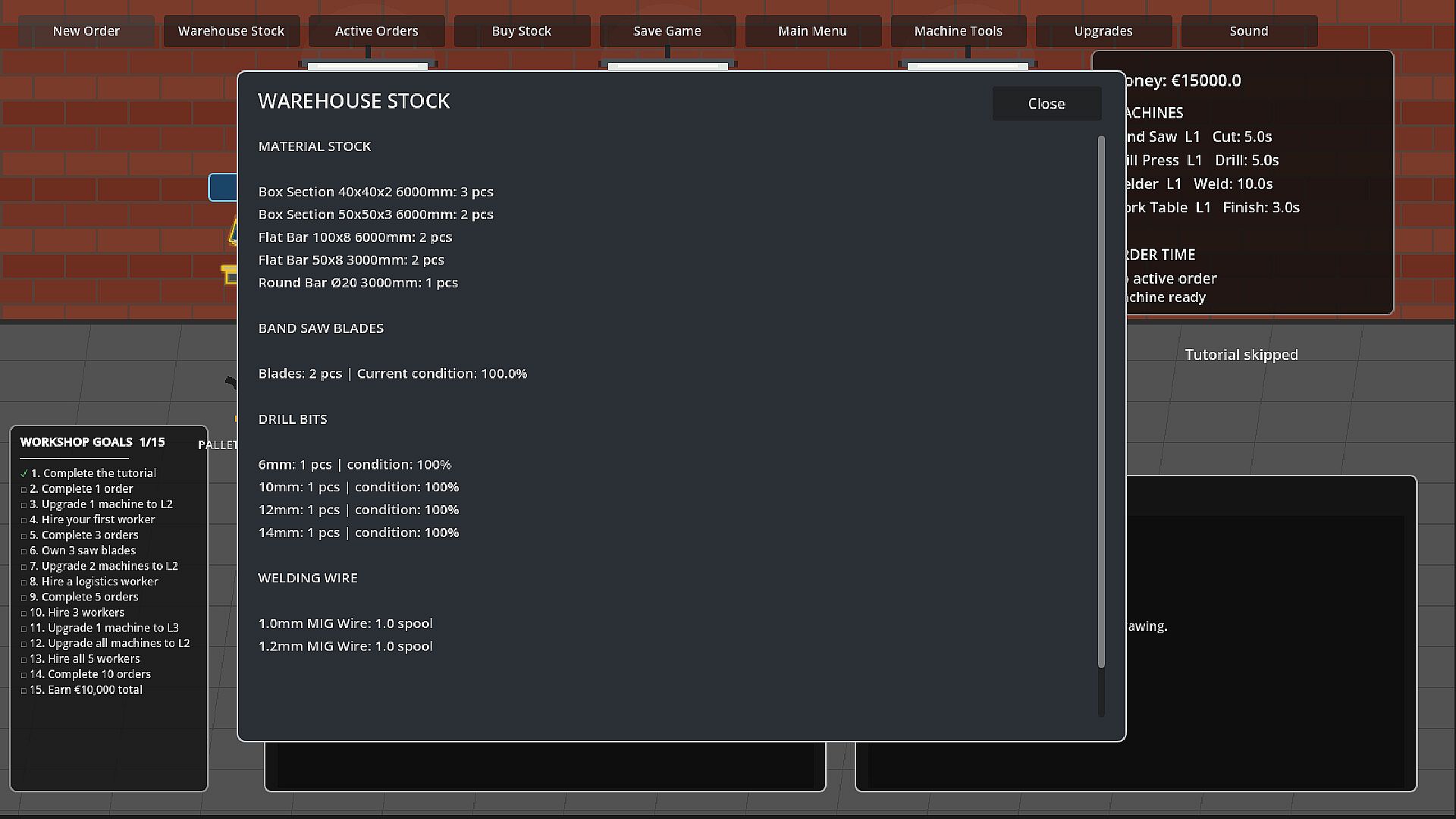
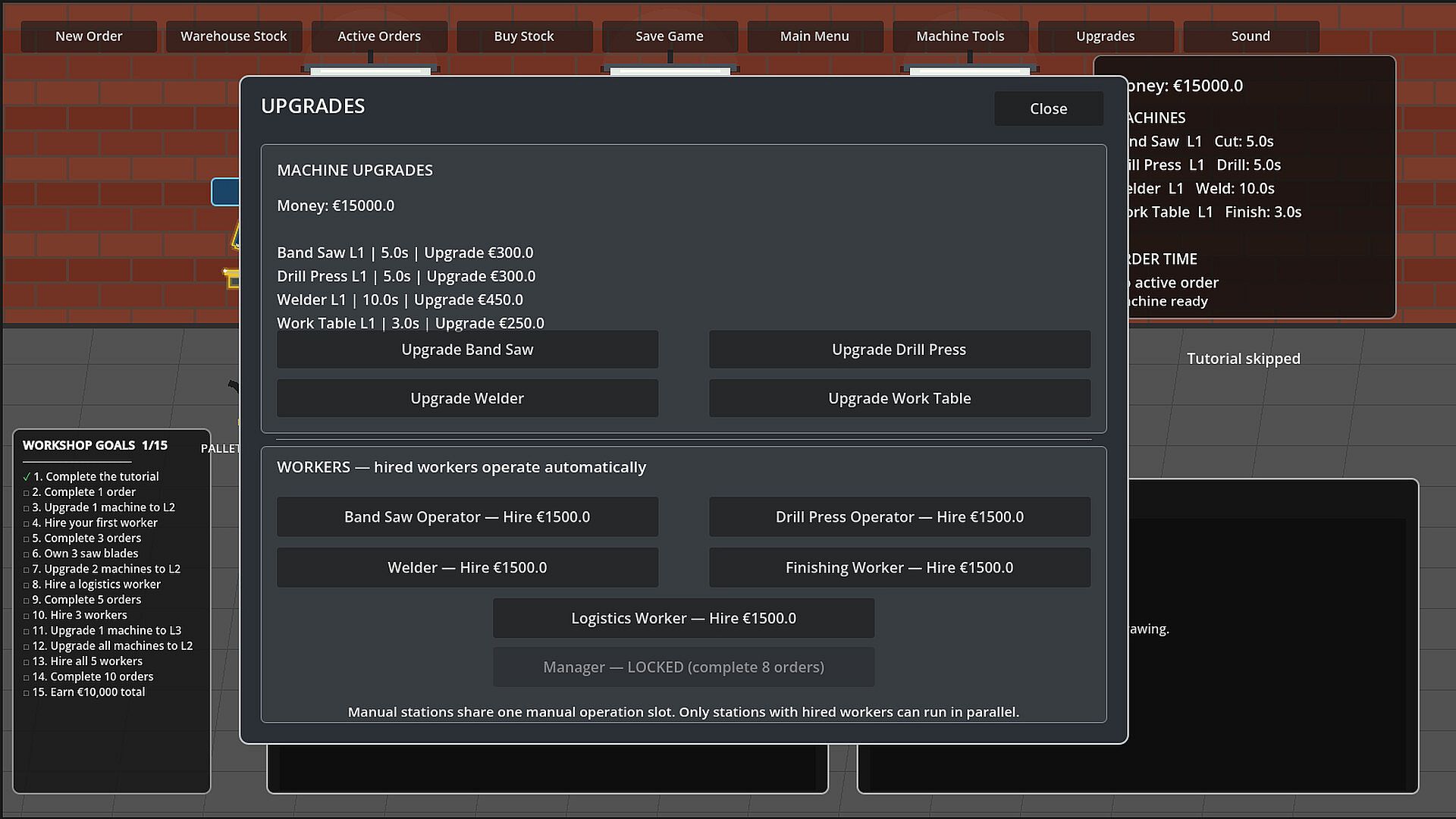
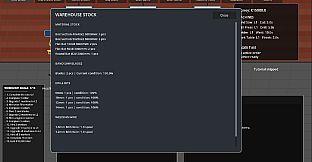
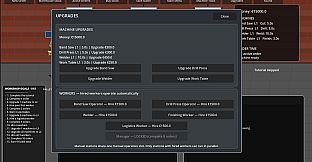
Neben Rohstahl müssen auch Verbrauchsmaterialien wie Sägeblätter, Bohrer und Schweißdraht verwaltet werden, die mit der Nutzung verschleißen. Der Ingame-Shop bietet diese Artikel zu schwankenden Marktpreisen an, sodass der richtige Einkaufszeitpunkt entscheidend für die Rentabilität ist. Mit dem Wachstum der Werkstatt können Fachkräfte für Säge, Bohrer und Schweißer sowie für Logistik und Verwaltung eingestellt werden, die Teilaufgaben automatisieren und Nachschub organisieren.
Upgrades steigern Geschwindigkeit und Kapazität der Maschinen, doch ein unausgewogener Produktionsfluss führt zu Verzögerungen. Werkzeugverschleiß, Lagerbestände und Personalzuweisung bestimmen, ob ein Auftrag Gewinn bringt oder durch Ausschuss und Notkäufe Verluste verursacht.
Spielmodi
Das Spiel bietet eine Kampagne mit 20 Aufträgen, deren Anforderungen stetig steigen. Die ersten Jobs beschränken sich auf einfaches Schneiden und Bohren, spätere Aufträge umfassen komplexe Baugruppen wie Industriegestelle, Laufstege, Maschinenfundamente, Schutzzäune, landwirtschaftliche Plattformen und Wartungsbühnen. Diese erfordern mehrere Materialarten, zahlreiche Einzelteile, wiederholtes Bohren und umfangreiche Schweißarbeiten.
Nach Abschluss aller Aufträge wechselt die Werkstatt in einen endlosen Produktionsmodus. Marktbedingungen ändern sich weiterhin, sodass Effizienz, Lagerplanung und Termintreue dauerhaft im Fokus stehen.
Wichtige Mechaniken und Fortschritt
Erfolg hängt davon ab, das Fenster „Aktive Aufträge" im Blick zu behalten, um Fortschritt, Teilepositionen und Fristen in Echtzeit zu verfolgen. Spieler müssen neue Aufträge gegen die aktuelle Kapazität abwägen, um Überlastung zu vermeiden. Ein Tutorial und das Hilfemenü erklären Einrichtung und Qualitätskontrolle, während Speichern und Laden Experimente mit unterschiedlichen Strategien ermöglichen.
Mehrere Aufträge können parallel laufen, sobald Automatisierung und Upgrades vorhanden sind, doch schlechte Planung führt weiterhin zu Warteschlangen oder verpassten Lieferterminen. Der Schwerpunkt liegt auf der Reduzierung von Fehlern, der Optimierung des Materialflusses und dem gezielten Ausbau des Betriebs durch kluge Investitionen.
Lohnt sich das Spiel?
The Fabricator richtet sich an Spieler, die detaillierte Management-Simulationen und methodisches Problemlösen schätzen. Der Einzelspieler-Fokus bietet ein in sich geschlossenes Erlebnis rund um Produktionsplanung, Ressourcenverteilung und schrittweise Verbesserung. Da vor der Veröffentlichung im August 2026 noch keine Rezensionen vorliegen, spricht das Spiel vor allem Fans realistischer Werkstattsimulationen an, die den Reiz einer kleinen Anlage bis hin zu einem zuverlässigen Betrieb suchen.
Spieler, die schnelle Action oder soziale Elemente bevorzugen, könnten das ruhige Tempo und den Fokus auf Präzision weniger ansprechend finden. Für Liebhaber von Strategie- und Simulationsspielen, die sorgfältige Beobachtung und langfristige Optimierung belohnen, bietet The Fabricator eine konzentrierte Alternative zu umfangreichen Fabrikbauspielen.












